腾景科技

Search documents
腾景科技8个交易日大涨65%,市场资金在“炒作”什么?|掘金百分百
Hua Xia Shi Bao· 2025-11-26 14:34
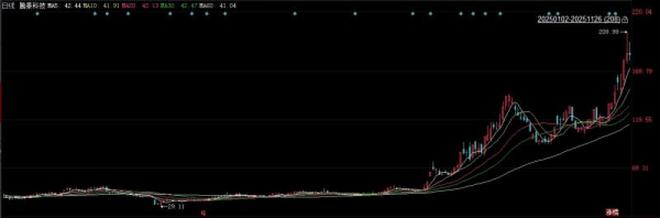
Core Viewpoint - The rapid growth of AI computing power has led to a significant boom in the optical communication module sector, with stock prices in this segment rising over 60% this year, highlighting the sector's attractiveness to investors [2][5]. Company Performance - Tengjing Technology, a leader in precision optical components, has seen its stock price surge dramatically, with a 64.59% increase over just eight trading days in November, reaching a high of 209.99 yuan per share [2]. - The company's revenue and net profit for 2024 are projected to grow by 30.96% and 66.53% respectively, driven by increased demand for high-speed optical communication components due to AI computing needs [3]. - For the first three quarters of 2025, Tengjing Technology reported revenues of 4.25 billion yuan and a net profit of 640 million yuan, reflecting year-on-year growth of 28.11% and 15% [3]. Financial Health - The net cash flow from operating activities for Tengjing Technology has shown consistent growth, reaching 950 million yuan by the third quarter of 2025 [4]. - As of the end of the third quarter of 2025, the company had cash reserves of 1.08 billion yuan [4]. Industry Trends - The optical communication module sector has become a "star concept" in the market, with multiple companies in this space experiencing significant stock price increases this year [5]. - The growth in this sector is attributed to a combination of surging AI computing demand, technological advancements, and supportive policies, which have collectively driven explosive order growth [8]. Investor Sentiment - Investor sentiment regarding Tengjing Technology's stock performance is mixed, with some expressing concern over the rapid price increase while others remain optimistic about its potential to reach 400 yuan [9].


谷歌强势崛起,英伟达是机遇OR风险?
格隆汇APP· 2025-11-26 10:54
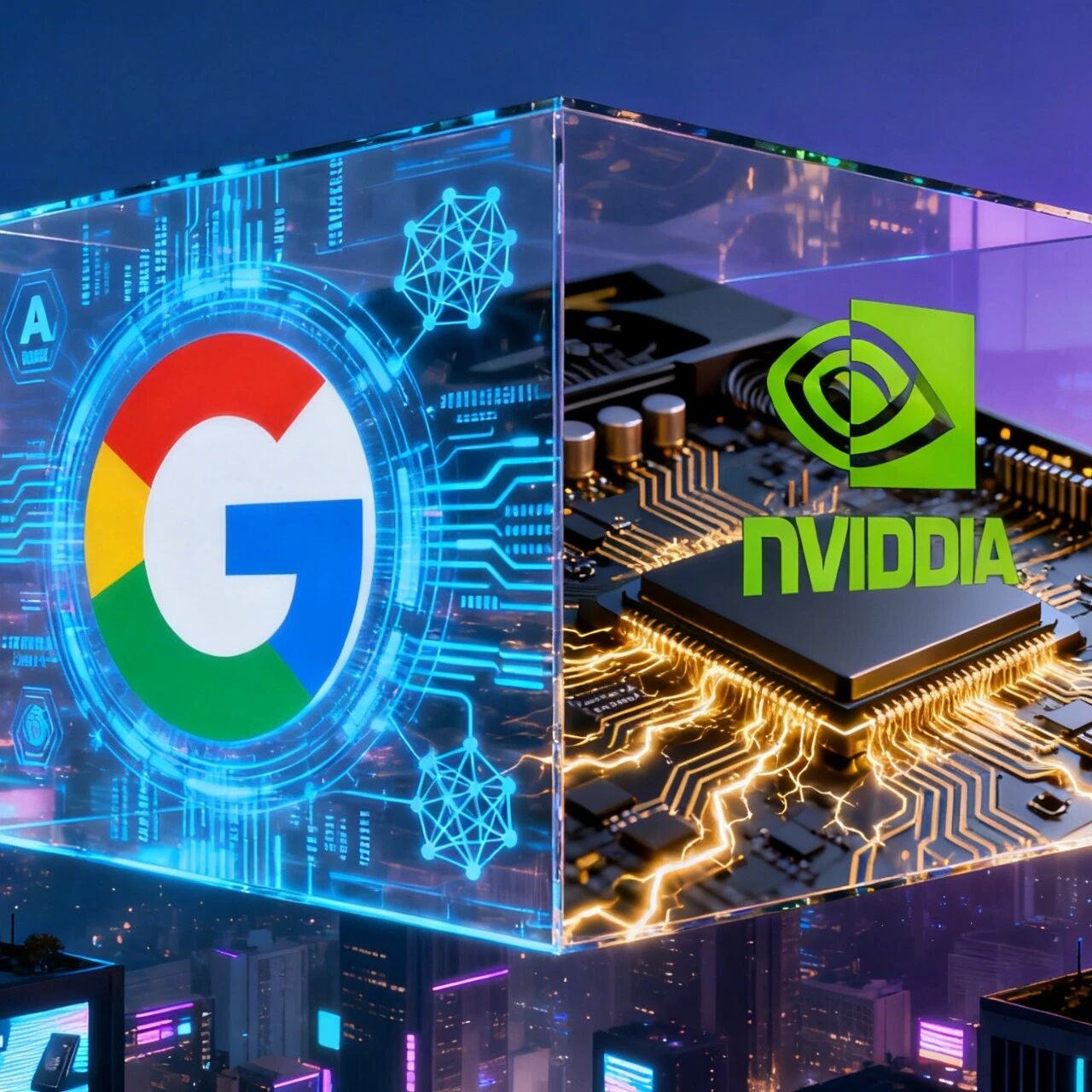
Core Viewpoint - The AI industry is experiencing rapid developments, with Google and Nvidia emerging as key players. The competition is characterized by differentiation and collaboration rather than a zero-sum game [2][4][14]. Group 1: Nvidia's Competitive Advantages - Nvidia holds a dominant position in the AI computing market due to its GPU technology, which is preferred for AI training and inference due to its parallel computing efficiency [5]. - The company has established a comprehensive AI ecosystem, integrating hardware, software, and applications, with its CUDA platform becoming the standard for AI development [6]. - Nvidia's diverse revenue streams, including data centers and gaming, provide it with a robust risk management capability compared to Google's current focus on capital expenditures for AI [8]. Group 2: Google's Strategic Positioning - Google's AI strategy focuses on building an AI infrastructure that supports its core business areas, such as search and cloud services, rather than competing for the global general-purpose computing market [7]. - The TPU technology developed by Google is tailored for specific applications, limiting its compatibility and general applicability compared to Nvidia's GPUs [7]. - Google's approach is more about creating a closed ecosystem, while Nvidia adopts an open ecosystem strategy, allowing for broader market coverage and collaboration [7]. Group 3: Market Trends and Investment Opportunities - The AI industry is expected to see a surge in computing power demand, with both general-purpose and specialized computing coexisting in the market [8][14]. - Investment opportunities in the AI sector are identified in areas such as Nvidia's supply chain, liquid cooling technology, and AI application software [9][11]. - The growth of Google's OCS (Optical Circuit Switching) industry chain is anticipated to create significant opportunities for related vendors, particularly in optical modules [10].


谷歌强势崛起,英伟达是机遇OR风险?
3 6 Ke· 2025-11-26 10:45
Core Insights - The AI industry is experiencing a dynamic phase where concerns about a "bubble" have shifted to worries about Google's rise impacting NVIDIA's future in AI. However, the "catalyst effect" suggests that both companies can drive the AI industry to new heights together [1] Group 1: Google & NVIDIA Competition - Google and NVIDIA are positioned as "absolute rivals" rather than a zero-sum game, with Google's recent advancements in AI computing power and model capabilities indicating intensified competition. However, NVIDIA's core advantages and industry positioning suggest that Google's efforts are unlikely to disrupt NVIDIA's leading status, leading to a scenario of "differentiated competition and collaborative development" [2][3] Group 2: NVIDIA's Competitive Advantages - NVIDIA holds a dominant position in the computing power market due to its absolute advantage in GPU technology, which is preferred for AI training and inference due to its parallel computing efficiency. Continuous technological iterations have further solidified NVIDIA's lead, as evidenced by the successful performance of its GB300 and RTX300 series products [3] - NVIDIA has established a comprehensive AI ecosystem, creating a "hardware-software-application" advantage. The CUDA platform has become the standard tool for AI development, with millions of developers relying on it, creating a strong network effect that is difficult for competitors to replicate [3][4] Group 3: Google's Differentiated Positioning - Google's AI strategy focuses on building an "all-in-one AI infrastructure" to support its core businesses, such as search and cloud services, rather than competing for the global general-purpose computing market. The TPU is tailored for specific AI models and applications, limiting its compatibility and general applicability compared to NVIDIA's GPUs [5] - NVIDIA's GPUs are characterized by strong versatility and a well-established ecosystem, catering to a wide range of clients, including cloud service providers and various industries, thus presenting a larger market opportunity than Google's TPU [5] Group 4: Financial Performance and Market Outlook - NVIDIA's revenue structure demonstrates resilience, with its data center business being a core growth engine, while also maintaining stable income from traditional sectors like gaming and professional visualization. In contrast, Google's AI investments are primarily reflected in increased capital expenditures, with commercial monetization of its AI business requiring time to validate [6] - The long-term outlook suggests a diversification in computing power demand, with both general-purpose and specialized computing coexisting. NVIDIA is expected to continue leading the general-purpose computing market, while Google's TPU will serve specific scenarios, together addressing the market's diverse needs [7] Group 5: Investment Opportunities - Investment opportunities in the A-share AI and related industries are concentrated in several areas, including: - Core hardware targets related to NVIDIA's supply chain, focusing on hardware manufacturers and key component suppliers benefiting from GPU demand growth [8] - Liquid cooling technology, which is essential for efficient data center cooling, with increasing market demand as AI computing density rises. Companies with strong partnerships with NVIDIA and those entering the supply chain are recommended for investment [8] - The communication computing chain, which is expected to benefit from Google's OCS industry chain expansion, with specific companies poised for significant growth due to their involvement in this sector [9] - AI application end, particularly C-end tool software and ecosystem companies, which are expected to thrive due to the explosive growth of AI applications [10] Conclusion - The AI industry is entering a golden era, characterized by explosive growth in computing power demand, accelerated application deployment, and collaborative upgrades across the industry chain. Google's strong push in AI computing and models is not expected to undermine NVIDIA's leading position but will instead drive overall industry expansion, creating a favorable competitive landscape [13]
AI小二 | 果链、T链、达链后,歌链正在崛起!
新财富· 2025-11-26 08:31
Core Viewpoint - The article discusses the recent interest in A-share stocks related to Google's TPU collaboration and highlights potential investment opportunities within the AI infrastructure and related sectors in China [5]. Group 1: A-share Google Industry Chain Concept Stocks - A-share Google industry chain concept stocks are primarily focused on AI computing infrastructure, particularly self-developed TPU chips and optical switching technology (OCS), cloud computing services, and large model ecosystems [8][10]. - The current capital market attention is concentrated on optical communication and advanced packaging segments [8]. Group 2: Investment Logic and Related Companies - **Optical Modules/Devices**: The core demand for Google's TPU clusters and data center expansion is driving the need for optical modules, with a speed upgrade to 1.6T. Companies benefiting include Zhongji Xuchuang, Xinyisheng, Tianfu Communication, and others [10]. - **OCS Optical Switching**: Google's technological innovation in OCS aims to replace traditional switches, significantly improving efficiency and reducing power consumption and capital expenditure. Key companies include Tengjing Technology, Dekeli, and others [10]. - **Chip Design and Manufacturing**: Benefiting from the high demand for global AI computing power and domestic substitution logic, companies like Northern Huachuang, Zhaoyi Innovation, and SMIC are highlighted [10]. - **PCB/Servers**: Companies providing mainboards and PCB hardware support for Google's data centers include Huadian Co., Industrial Fulian, and Shenzhen South Circuit [10]. - **Liquid Cooling Solutions**: The high-density computing demand is promoting the adoption of liquid cooling solutions in data centers, with companies like Yingweike being key players [10].

领先市场太多 也很苦恼
小熊跑的快· 2025-11-26 03:45
Group 1 - The article highlights the performance of Tengjing Technology (688195.SH), which has shown negative contributions in recent evaluations, with a significant drop of -19.59% over a holding period of 6 days and -12.36% over 4 days [1][2]. - There is a sentiment that the market has already priced in the gains for Google and its related chains, indicating that the stock may have reached a saturation point [2]. - The author expresses frustration about being ahead of the market, suggesting that being too early can lead to missed opportunities, as others may not respond to insights until much later [4]. Group 2 - There is optimism regarding a new AI application that is expected to gain traction, although it is anticipated that the market may take time to react to this development [5].
共封装光学(CPO)板块短线拉升,赛微电子涨超10%
Mei Ri Jing Ji Xin Wen· 2025-11-26 02:16
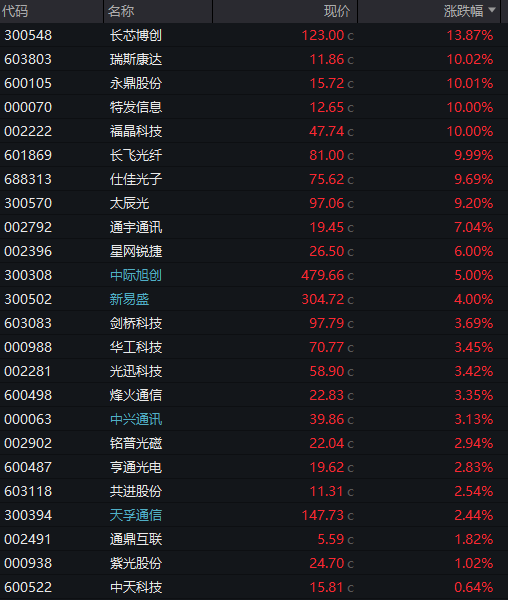
Core Viewpoint - The CPO (Chip Packaging and Optical) sector experienced a short-term surge, with notable gains in several companies, indicating a positive market sentiment in this industry [1]. Company Performance - Saiwei Electronics saw a rise of over 10% in its stock price, reflecting strong investor interest and confidence in its performance [1]. - Other companies in the CPO sector, including Zhongfu Circuit, Guangku Technology, Liante Technology, Tengjing Technology, and Lingyun Optical, also experienced stock price increases, suggesting a broader trend of growth within the sector [1].

光量子计算机将迎批量生产
Shang Hai Zheng Quan Bao· 2025-11-26 00:41
Core Insights - The quantum technology sector in A-shares has seen significant gains, with multiple companies reaching their daily price limits, indicating strong market interest and investment potential [2] - The inauguration of China's first large-scale dedicated optical quantum computer manufacturing facility marks a pivotal shift from laboratory research to industrial production, with an expected annual output of several dozen optical quantum computers [2][3] - The facility, covering approximately 5,000 square meters, integrates research, manufacturing, and testing, aiming to achieve standardized and scalable production of optical quantum computers [2][3] Company Developments - Bosi Quantum, the company behind the new manufacturing facility, has established a comprehensive engineering system for optical quantum computing, focusing on key technologies such as coherent light sources and low-loss optical paths [3][5] - The manufacturing plant consists of three main components: module development, complete machine production, and quality control/testing systems, ensuring high standards in production and performance [5] - Bosi Quantum recently completed a significant A++ financing round, raising several hundred million yuan, which will be used to further develop specialized and general optical quantum computers, as well as to enhance quantum computing chip technology [5] Industry Context - China is recognized as one of the few countries achieving "quantum supremacy," with advancements in both superconducting and optical quantum computing technologies [6] - The recent launch of the "Tianyan-287" superconducting quantum computer, which operates at a speed 450 million times faster than the fastest supercomputers, highlights China's progress in practical quantum computing applications [6] - The upcoming launch of the "Benyuan Wukong," a third-generation superconducting quantum computer, signifies the establishment of a nearly complete domestic supply chain for quantum computing technology in China [6]
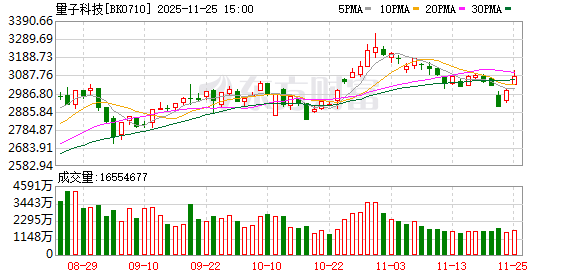
A股年内累计回购超1300亿元
证券时报· 2025-11-26 00:06
Core Viewpoint - The A-share market has experienced a significant wave of stock buybacks, with total buyback amounts exceeding 130 billion yuan this year, marking the second-highest level in history [1][4]. Group 1: Buyback Trends - The total buyback amount in the A-share market has reached 134.225 billion yuan since 2025, with over 1,400 companies participating in buybacks [4]. - This year, the buyback amount is projected to be the second highest in history, following 2024's 165.877 billion yuan [4]. - The pharmaceutical industry leads in the number of companies conducting buybacks, with 156 companies, followed closely by electronics and machinery sectors [4]. Group 2: Performance Impact - Stock buybacks have significantly boosted the performance of listed companies, with the Wind stock buyback index rising over 27% this year, outperforming the Shanghai Composite Index [2]. - Companies that implemented buybacks and saw their stock prices double exceed 100, with notable performers including Shenghong Technology, which surged over 530% [2]. Group 3: Industry Analysis - The pharmaceutical and biological sector has the highest buyback amount at 14.349 billion yuan, with other sectors like electric equipment, electronics, and machinery also exceeding 10 billion yuan in buybacks [5][6]. - The electric equipment and electronics sectors have seen index increases of over 30% this year, while the machinery sector has risen over 20% [6]. Group 4: Major Companies Involved - Midea Group leads in buyback amounts with over 9.6 billion yuan, having announced two buyback plans this year [8]. - Other notable companies with buybacks exceeding 1 billion yuan include Kweichow Moutai, CATL, and XCMG [8].



A股年内累计回购超1300亿元 超百家实施公司股价翻倍
Zheng Quan Shi Bao· 2025-11-25 21:05
回购显著提振了上市公司的股价表现,股票回购指数年内大涨超27%,创出历史新高,表现远强于同期 上证指数。年内实施回购且股价翻倍的公司超过百家,胜宏科技以超530%的年内涨幅居于首位,腾景 科技、海科新源、瑞晟智能等均涨超3倍,浙江荣泰、振德医疗、德明利等均涨超两倍。 五大行业回购额均超百亿元 据证券时报·数据宝统计,以最新公告时间统计,2025年以来A股市场共有1400多家实施了回购,已回购 金额合计达到1342.25亿元。这是A股历史上第4次年度回购金额超过千亿元,2021年、2022年和2024年 回购金额分别为1206.89亿元、1019.08亿元和1658.77亿元。也就是说,今年A股回购金额将达到历史第 二高水平。 从回购公司数量来看,医药行业实施回购的公司数量居首,今年以来有156家公司实施了回购;电子、 机械设备、基础化工、电力设备等行业紧随其后,实施回购的上市公司数量分别为155家、146家、123 家和118家。 从回购金额来看,医药生物行业已回购金额居首,达到143.49亿元,电力设备、电子、家电、机械设备 等行业回购金额均超百亿元。 近年来,在政策鼓励和推动下,A股掀起了一波又一波回购潮 ...
AI“新王”登基,A股谷歌链集体起飞!
Hua Er Jie Jian Wen· 2025-11-25 11:46
Core Insights - The recent upgrade of Google's AI model Gemini 3 has significantly impacted the optical communication sector in the A-share market, leading to a surge in stock prices for various companies in this industry [1][3]. Group 1: Market Reaction - The optical communication sector in A-shares experienced a substantial increase, with companies like Guangku Technology and Tengjing Technology hitting their historical highs, with gains of 20% and over 15% respectively [1]. - Other companies such as Dekeli, Changguang Huaxin, and Changfei Fiber also saw their stocks reach the daily limit, indicating strong market enthusiasm for the sector [1]. Group 2: Google's AI Model Upgrade - Google's Gemini 3 model, trained on TPU chips, has shown performance that approaches or even surpasses OpenAI's ChatGPT, prompting investors to reassess the AI chip market landscape [3]. - The model supports a context window of 1 million tokens and enhances capabilities in programming, application development, and image generation, making it suitable for advanced applications [4][7]. Group 3: TPU Chip Strategy - Google is promoting its TPU chips to major clients like Meta, with potential negotiations for a multi-billion dollar deal to use these chips in their data centers [8]. - The introduction of the "TPU@Premises" program aims to facilitate the use of TPU chips in client data centers, enhancing Google's cloud service offerings [8]. Group 4: Optical Switching Technology - The integration of optical switching (OCS) technology in Google's TPU interconnects is expected to benefit the optical communication supply chain, with a projected market size exceeding $1.6 billion by 2029 [9]. - The OCS technology allows for direct switching of optical signals without the need for electro-optical conversion, enhancing the efficiency of data processing [9].