
鸿蒙智行

Search documents
【鸿蒙智行:不予置评】7月25日讯,鸿蒙智行官方微博疑似回应懂车帝测试:已看到某平台所谓“测试”,不予置评。
news flash· 2025-07-25 07:19
Core Viewpoint - Hongmeng Zhixing has chosen not to comment on the recent testing conducted by Dongche Di, indicating a stance of non-engagement with the claims made by the platform [1] Group 1 - Hongmeng Zhixing's official Weibo account acknowledged awareness of the so-called "testing" by a certain platform [1] - The company has decided not to provide any comments regarding the testing results [1]

豪车税起征点降至90万元 车企火速“兜底”
Mei Ri Shang Bao· 2025-07-23 22:16
Core Viewpoint - The new luxury car consumption tax policy, effective from July 20, reduces the tax threshold from 1.3 million yuan to 900,000 yuan, expanding the range of luxury vehicles subject to taxation, impacting brands like Mercedes-Benz, BMW, and Porsche, as well as some domestic electric luxury cars like the Yangwang U8 [1][2]. Group 1: Tax Policy Changes - The new tax policy includes a 10% consumption tax on luxury cars priced between 900,000 yuan and 1.3 million yuan, which previously were exempt from this tax [2]. - Vehicles with a retail price of 1,017,000 yuan or more (including a 13% VAT) will now incur additional taxes, resulting in a tax burden of 90,000 to 130,000 yuan for affected models [2]. Group 2: Market Response - Following the announcement, there has been a noticeable increase in foot traffic at luxury car dealerships, with many models like the BMW 7 Series and X7 selling out quickly [3]. - Brands such as Tesla have responded by lowering the starting price of the Model X to 899,000 yuan to avoid the tax threshold, while others like Jaguar Land Rover and Mercedes-Benz have introduced temporary subsidies to cover the new tax costs for consumers [4][5]. Group 3: Industry Insights - Industry experts support the tax adjustment, stating it reflects market changes and ensures tax stability without significantly increasing the tax base [3][5]. - The luxury car segment represents only about 0.1% of the overall car market, indicating that the tax changes will have minimal impact on average consumers [5].



上半年新势力车企销量大洗牌 零跑鸿蒙理想高居前三名
Zhong Guo Chan Ye Jing Ji Xin Xi Wang· 2025-07-20 00:41
Core Insights - The landscape of China's new energy vehicle market has undergone significant changes in the first half of the year, with the previous "Wei Xiaoli" trio being disrupted by new leaders [1][2] - The top three new energy vehicle companies by sales volume in the first half of the year are Leap Motor, Hongmeng Zhixing, and Li Auto, with deliveries of 221,664, 204,658, and 203,938 units respectively [1][2] - The market is experiencing intense competition, shifting focus from price wars to technology, service, and ecosystem development [1][7] Group 1: Company Performance - Leap Motor achieved a remarkable 155.7% year-on-year growth, becoming the largest player with 221,664 units delivered, and aims to maintain a monthly delivery of over 50,000 units in the second half of the year [2][3] - Hongmeng Zhixing ranked second with 204,658 units sold, but faces pressure to meet its ambitious annual target of 1 million units, having completed only 20.5% in the first half [2][4] - Li Auto, with 203,938 units delivered, saw a slower growth rate of 7.9% and aims to launch new electric models to enhance its market position [2][3] Group 2: Market Trends - June saw a collective surge in sales among new energy vehicle companies, with Hongmeng Zhixing leading with 52,747 units delivered, marking a 20% year-on-year increase [4][5] - The overall market for new energy vehicles is expected to continue growing, driven by technological advancements and improved infrastructure [6][7] - The competition is anticipated to shift from scale to technology, with new models from various companies set to launch in the second half of the year [7][8] Group 3: Future Outlook - The penetration rate of new energy vehicles reached approximately 55% in June, with significant promotional activities contributing to sales growth [7] - Companies are focusing on building differentiated competitive advantages in smart driving, charging networks, and user ecosystems [8] - The global expansion of companies like Leap Motor and Xiaomi is expected to enhance their market presence, with predictions of significant growth in exports by 2025 [7][8]
特斯拉入场 谁与争锋?中大型纯电动六座SUV开“卷”
Hua Xia Shi Bao· 2025-07-19 02:56
Core Insights - The demand for mid-to-large pure electric six-seat SUVs in China is rapidly increasing, driven by changing family structures and consumer preferences [2][3] - The market for these vehicles is expected to grow significantly, with projections indicating that by mid-2025, approximately 1.2 million units will be sold, representing a 28% year-on-year increase [2] - Major players like Tesla and Li Auto are launching competitive models to capture this growing market segment, indicating a shift in the automotive landscape [4][5] Industry Trends - The six-seat SUV has become a new trend in the electric vehicle market, with over 70% of sales coming from this category, particularly among families with multiple children [2][3] - The rise of intelligent and electric technologies, along with improved charging infrastructure, is making it easier for consumers to adopt mid-to-large electric SUVs [3] - The competition in the six-seat electric SUV market is intensifying, with multiple brands introducing new models to meet consumer demand [3][4] Company Developments - Tesla has announced the launch of its Model YL, a large six-seat electric SUV, expected to retail between 300,000 to 400,000 yuan, with a focus on meeting the needs of consumers who previously overlooked the brand [4][6] - Li Auto's first large electric six-seat SUV, the Li i8, has begun pre-sales, priced at 350,000 to 400,000 yuan, showcasing strong performance specifications [5][6] - Leado's L90, positioned as a flagship family space vehicle, is set to launch with a starting price of 279,900 yuan, indicating a competitive pricing strategy aimed at capturing market share [5][6]
这可能是全网最全的年中盘点
3 6 Ke· 2025-07-16 04:08
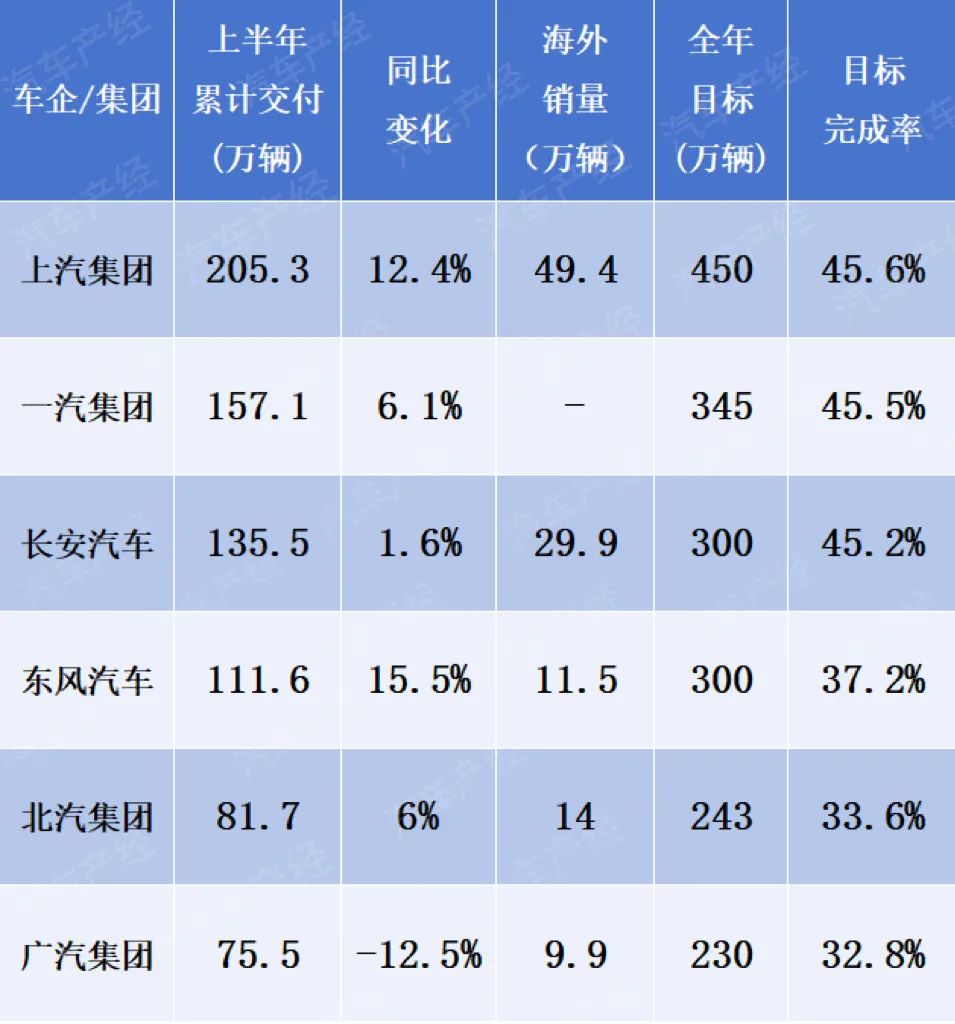
Core Insights - The Chinese automotive market has shown strong performance in the first half of 2025, with retail sales of narrow passenger cars reaching 10.901 million units, a year-on-year increase of 10.8% [1] - Domestic brands have captured a significant market share of 64%, indicating their dominance in the Chinese market [1] - BYD leads the sales chart with 2.146 million units sold, while Geely has seen a remarkable growth rate of 47% year-on-year [1][12] - New energy vehicle sales are on the rise, with companies like Leap Motor and XPeng showing significant growth [1][19] Group 1: Overall Market Performance - As of June 2025, the cumulative retail sales of narrow passenger cars in China reached 10.901 million units, reflecting a 10.8% increase compared to the previous year [1] - Domestic brands have increased their market share to 64%, solidifying their position in the market [1] - BYD has achieved a sales volume of 2.146 million units, maintaining its position as the top seller [12] - Geely's sales have surged by 47%, prompting the company to raise its annual sales target to 3 million units [1][12] Group 2: Performance of New Energy and Emerging Brands - Leap Motor has emerged as a leader among new energy vehicle manufacturers, with monthly sales nearing 50,000 units [1] - XPeng has also shown impressive growth, selling more vehicles in the first half of 2025 than in the entire previous year [1] - The new energy vehicle segment is experiencing rapid growth, with companies like BYD and Geely leading the charge [12][19] Group 3: Traditional Automakers' Performance - Some traditional automakers are showing signs of recovery, with brands like FAW-Volkswagen and SAIC Volkswagen reporting positive year-on-year growth [1][9] - FAW Toyota has seen a significant increase of 16% in sales, indicating a rebound in the joint venture segment [1][9] - However, brands like GAC are struggling, with a decline in sales, highlighting the challenges faced by traditional automakers [1][9] Group 4: Export Performance - SAIC has become a leader in overseas sales, with 494,000 units sold, accounting for nearly 25% of its total sales [10] - Changan has also made strides in international markets, with overseas sales exceeding 300,000 units, a growth of over 45% [10] - GAC has reported a 45.6% increase in overseas sales, completing 55% of its annual export target [10]






鸿蒙智行多地发放7月购车现金补贴
第一财经· 2025-07-15 09:30
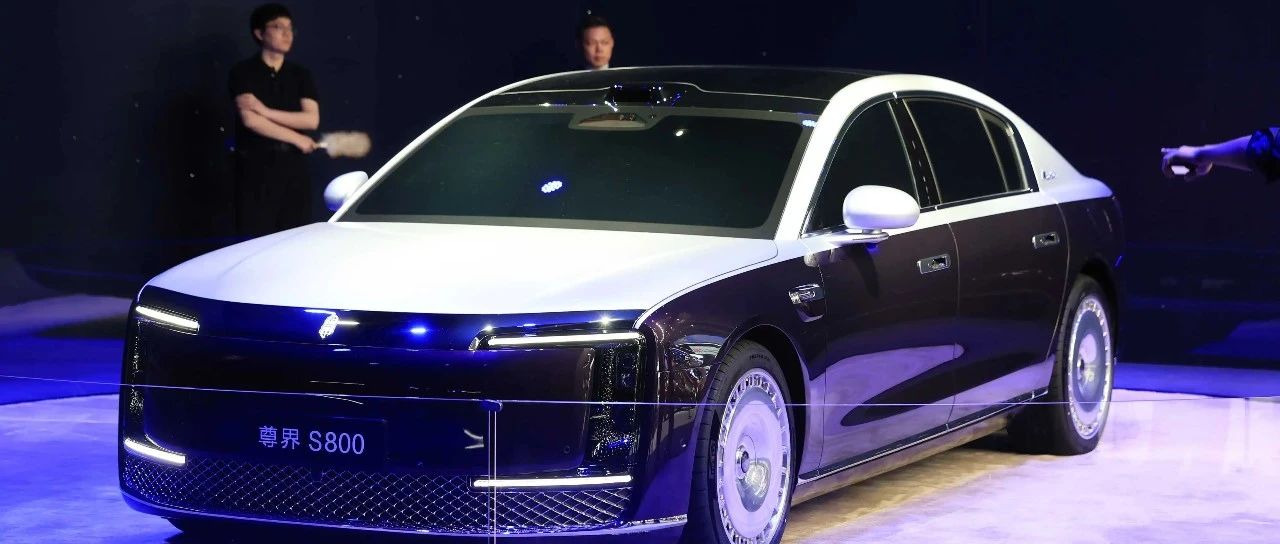
Core Viewpoint - The article discusses the recent launch of cash purchase subsidies for Hongmeng Intelligent vehicles across multiple provinces and cities in China, aimed at boosting sales during July 2025 [1][2]. Group 1: Subsidy Details - Various provinces and cities have initiated a cash subsidy program for Hongmeng Intelligent vehicles, offering a cash rebate of 3,000 yuan per vehicle for purchases made between July 1 and July 31, 2025 [1][2]. - The number of vehicles eligible for the subsidy in each province is limited, typically ranging from 1,000 to 2,000 units [1]. - The subsidy program in Henan province specifies that it applies to new energy vehicles priced at 200,000 yuan or above, equipped with the Hongmeng vehicle system and Huawei's Tuling platform [1]. Group 2: Participation and Impact - At least ten provinces and cities, including Henan, Anhui, Yunnan, Hebei, Hunan, Tianjin, and others, have announced similar cash subsidy activities for Hongmeng Intelligent vehicles [2]. - The funding for these subsidies is sourced from local sales enterprises related to Hongmeng Intelligent [2]. - In addition to the provincial subsidies, Hongmeng Intelligent is offering a cash discount of 20,000 yuan on all models from June 27 to July 31, 2025, which includes regional subsidies [2]. Group 3: Sales Performance - In June 2025, Hongmeng Intelligent achieved a total delivery of 52,747 vehicles, marking a year-on-year increase of 20% [2].
鸿蒙智行多地发放7月购车现金补贴
news flash· 2025-07-15 08:44
Core Insights - Multiple provinces and cities have launched cash purchase subsidy activities for Hongmeng Zhixing models during July, offering a subsidy of 3,000 yuan per vehicle for purchases made between July 1 and July 31 [1] Summary by Category Subsidy Program - The cash purchase subsidy of 3,000 yuan is applicable to specific models of Hongmeng Zhixing [1] - The number of vehicles eligible for the subsidy in each province and city is limited, typically ranging from 1,000 to 2,000 units [1]
宜信好望角:传统车企反攻!25年汽车市场格局重塑
Jin Tou Wang· 2025-07-15 01:37
2025年上半年中国汽车市场呈现差异化发展态势,头部企业持续领跑,新兴品牌加速追赶,市场竞争在 技术升级与消费需求变化中不断深化。各大厂商的半年业绩既反映出行业格局的稳定性,也揭示了转型 期的挑战与机遇。 比亚迪上半年销量表现突出,以超过200万辆的交付量保持行业领先,同比增长33%,其全产业链布局 与技术迭代能力成为核心竞争力。吉利汽车则通过新能源业务的突破实现快速增长,上半年销量达141 万辆,同比增幅47%,其中新能源车型销量同比增长126%,并据此上调全年目标至300万辆,显示出对 市场趋势的积极响应。传统车企凭借供应链掌控力与渠道优势,在巩固传统燃油车市场的同时,加速向 新能源领域渗透,形成多元产品矩阵。 在行业转型的关键期,汽车厂商的战略选择与执行效率将直接影响市场地位。面对复杂的竞争环境,唯 有持续优化产品结构、提升技术实力、精准把握消费趋势,才能在分化加剧的市场中占据主动,实现可 持续发展。 新兴品牌竞争呈现明显分层。零跑汽车以22.17万辆的交付量成为上半年新势力销量冠军,其以高配 置、性价比为核心的产品策略在10万元级市场获得认可。小鹏汽车实现阶段性复苏,半年销量超过去年 全年水平,成为新 ...
鸿蒙智行,价格暗战
Zhong Guo Qi Che Bao Wang· 2025-07-14 01:14
Core Insights - The launch of Xiaomi's YU7 has significantly impacted the market, leading to increased order volumes and competitive pressure on rivals like Hongmeng Zhixing [1] - Hongmeng Zhixing's response to the competitive landscape indicates potential adjustments in pricing strategies across its brands, suggesting that price competition may become a norm in the future [1][3] - The internal competition among brands under Hongmeng Zhixing is likely to drive price adjustments, as brands face pressure to innovate and differentiate themselves in a crowded market [4][5] Group 1 - The rapid increase in orders for Xiaomi YU7 has shocked the industry and created anxiety among competitors [1] - Hongmeng Zhixing's initial promotional response included a cash subsidy of 20,000 yuan, which was quickly retracted, signaling a potential shift in pricing strategy [1] - The event highlights the possibility of ongoing price adjustments within Hongmeng Zhixing's brands, especially as new models are introduced [1][3] Group 2 - Industry insiders reveal that multiple brands under Hongmeng Zhixing, including Aito, are engaging in covert promotional activities, with discounts exceeding 10,000 yuan available through referral purchases [3] - The automotive market's supply-demand dynamics will likely lead to inevitable price reductions if oversupply occurs, whether through proactive price cuts by manufacturers or hidden discounts by dealers [3] - The competitive landscape is further complicated by the performance of different brands within Hongmeng Zhixing, which will influence each other's pricing strategies [3][4] Group 3 - Internal competition among brands, such as Huawei's retail control and departmental pressures, is pushing brands to seek transformation in response to poor sales [4] - Different brands within Hongmeng Zhixing are likely to adopt varied pricing strategies based on their market positioning, with more affordable brands like Aito potentially implementing larger price cuts [4][5] - The overlap of models within Hongmeng Zhixing's product lineup is becoming more apparent, raising concerns about differentiation and competition among similar offerings [5][6] Group 4 - The issue of product homogeneity is becoming increasingly serious, with differentiation relying more on design rather than substantial features, making it difficult to stand out in a competitive market [6][7] - Brands may need to explore price reductions to attract customers, especially in the 200,000 to 400,000 yuan range, where competition is fierce [6][7] - The market performance of Aito has been strong due to its association with Huawei, while other brands like Aito face challenges in achieving significant sales growth [7] Group 5 - The "order siphoning" phenomenon caused by Xiaomi YU7 has depleted the potential customer base in the 200,000 to 300,000 yuan price range, leading to reduced sales for competing brands [8] - This situation compels brands like Hongmeng Zhixing to adjust their strategies, either through price reductions or enhanced customer incentives to capture remaining customers [8][9] - A combined pricing strategy that includes both soft and hard price adjustments is emerging, with brands offering extended financing options and subsidies to attract buyers [9] Group 6 - Future strategies for Hongmeng Zhixing may involve a "technology layering + price positioning" approach to mitigate internal competition and differentiate brands [9] - By focusing on distinct market segments, such as high-end and mid-range offerings, Hongmeng Zhixing can avoid direct price competition while enhancing value propositions through exclusive benefits [9]
