华能国际

Search documents
5年5倍,四川新能源装机容量在“十四五”实现爆发式增长 “风光四川”的跨越密码
Si Chuan Ri Bao· 2026-01-06 00:27
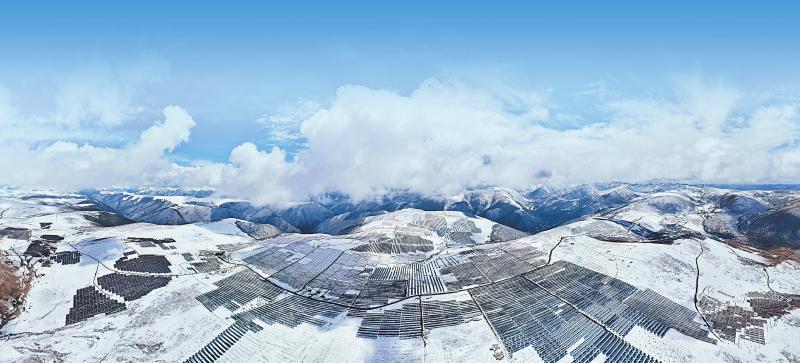
Core Viewpoint - Sichuan's renewable energy capacity has experienced a remarkable fivefold increase over the past five years, reaching 32 million kilowatts, marking a significant transition from supplementary to a primary energy source, now accounting for over 20% of the province's total power generation capacity [4][5][10]. Group 1: Capacity Growth - The recent commissioning of multiple large-scale photovoltaic projects, including the 1.2 million kilowatt Batang project, has contributed to this growth, with Sichuan's renewable energy capacity increasing from approximately 6 million kilowatts at the beginning of the 14th Five-Year Plan to 32 million kilowatts [3][4][9]. - The total renewable energy capacity of 32 million kilowatts is equivalent to 1.4 Three Gorges dams, highlighting its significance in the national context, despite not being the largest in absolute terms compared to regions like Inner Mongolia and Xinjiang [5][6]. Group 2: Industry Development - Sichuan has developed a robust renewable energy industry chain, with nearly 200 companies in sectors such as photovoltaics, wind energy, and hydrogen, leading to an estimated revenue of 207.9 billion yuan in 2024 [6][7]. - The province's photovoltaic production capacity ranks among the top three in the country, with a sixth of the national capacity in battery production, and significant advancements in wind energy installations [6][7]. Group 3: Strategic Shift - The strategic shift towards integrated development of hydropower, wind, and solar energy has been a key factor in the rapid growth of renewable energy capacity, particularly following the electricity shortages experienced in the summer of 2022 [7][8]. - The provincial government has prioritized renewable energy development as a critical component for ensuring energy security and addressing power shortages during dry seasons [8][10]. Group 4: Future Projections - By 2030, Sichuan aims to achieve a renewable energy capacity of 82 million kilowatts, which would represent over 45% of the total power generation capacity, transitioning to a dual-mainstay energy structure of hydropower and renewables [10][11]. - This ambitious target implies an additional 50 million kilowatts of renewable energy capacity will need to be added in the next five years, presenting both opportunities and challenges for the energy sector [10][11]. Group 5: Challenges Ahead - Key challenges include ensuring the compatibility of the power grid with the increased capacity, addressing land and ecological constraints, and maintaining the stability of the power system amidst the variability of renewable energy sources [11][12]. - The need for technological innovation in energy storage and grid management will be crucial to support the anticipated growth and ensure a reliable energy supply [12].

“绿色长城”根基越扎越深 ——内蒙古筑牢北方重要生态安全屏障调查
Jing Ji Ri Bao· 2026-01-05 22:39
Core Viewpoint - Inner Mongolia has transformed from a region severely affected by desertification to one of the most successful provinces in combating desertification in China, achieving a historic shift from "desert advancing, people retreating" to "green advancing, desert retreating" [1][2]. Group 1: Achievements in Desertification Control - Inner Mongolia has completed 1.23 million acres of the "Three-North" project during the 14th Five-Year Plan, with 6.688 million acres specifically for desertification control [1]. - The region is responsible for 60% of the national comprehensive management tasks for desertified land, with plans to complete 3.06 million acres in 2024 and 2.368 million acres in 2025 [2]. - The Alxa League has constructed a 1,856-kilometer sand control belt, marking a significant achievement in desertification management [3][5]. Group 2: Innovative Techniques and Strategies - Alxa League has implemented grass grid technology to stabilize shifting sands and promote the growth of drought-resistant vegetation, creating a multi-layered protective system [4]. - The region has adopted aerial seeding techniques to enhance afforestation efforts in areas with annual rainfall below 200 mm, achieving significant increases in forest and grassland coverage [6]. - The "308 Locking Edge Forest Belt" project in the Ulan Buh Desert has been developed to prevent sand encroachment, showcasing a collaborative approach to ecological restoration [8][9]. Group 3: Economic and Ecological Benefits - The comprehensive management of the Kubuqi Desert has led to the establishment of a "photovoltaic wall," integrating renewable energy development with desertification control, capable of generating 2,000 billion kilowatt-hours of green electricity annually [11]. - The ecological restoration efforts in the Horqin Sandy Land have resulted in a forest coverage rate of 15.17% and an average grassland coverage of 69.4%, contributing to local economic development [12]. - The introduction of the "grass-light complementary" ecological governance model in Xilingol League has transformed sandy areas into productive ecological economic zones [13]. Group 4: Future Directions and Recommendations - Future strategies for desertification control in Inner Mongolia will focus on integrated protection and systematic governance of mountains, waters, forests, fields, lakes, grasslands, and sands [2]. - The development of a comprehensive monitoring and management system that encompasses all ecological factors is recommended to enhance the effectiveness of desertification control projects [10]. - Emphasis on technological innovation in the sand industry is seen as crucial for merging ecological civilization with industrial development, promoting sustainable economic growth in desert regions [14].
我省去年新增火电装机规模创新高
Xin Hua Ri Bao· 2026-01-05 22:02
Core Insights - The new coal-fired power generation capacity in Jiangsu province is set to reach 10.4 million kilowatts by the end of 2025, marking the highest increase in nearly 20 years [1] - Renewable energy sources, primarily wind and solar, have become the largest power source in the province, although coal remains a crucial support and regulatory power source [1] - The peak output of coal power during the winter season is projected to reach 84.5 million kilowatts, an increase of 11.5% year-on-year, providing essential support for the expected maximum electricity load of 138 million kilowatts in the province [2] Group 1 - The commissioning of Guoxin Jingjiang Power Co., Ltd. Unit 4 and Jiangyin Ligang Power Co., Ltd. Unit 10 will contribute to a total of 10.4 million kilowatts of new coal-fired capacity in Jiangsu by December 30, 2025 [1] - In August 2022, during a peak demand period, coal-fired power plants operated at an average load factor exceeding 96%, contributing to 85% of the total output from the main power sources in the province [1] - Jiangsu has announced two batches of coal power projects since 2022, with a total planned capacity of 23.94 million kilowatts, alongside previously approved coal and gas projects, aiming for a total new coal-fired capacity of 33.94 million kilowatts [1] Group 2 - The coal power peak output is expected to support the anticipated maximum electricity load of 138 million kilowatts during the winter peak season [2] - The increase in coal power output is essential for maintaining the balance of electricity supply and demand, especially during high-demand periods [2]

写好生态与发展共荣的尖扎答卷
Xin Lang Cai Jing· 2026-01-05 18:44
Core Viewpoint - The article emphasizes the importance of ecological protection and high-quality development in the Yellow River Basin, particularly focusing on the strategies and initiatives being implemented in Qianzhai County to balance ecological preservation with economic growth [1][2][3][4][5][6] Group 1: Ecological Protection - Qianzhai County is committed to ecological priority, with a significant portion of its land designated for ecological protection, facing challenges such as limited developable land and high soil and water conservation pressure [1] - The county has completed afforestation of 545,300 acres and has achieved a forest coverage rate of 37.8% and a grassland vegetation coverage rate of 91.6% [1] - Future plans include integrated management of natural resources and the establishment of an ecological monitoring system to ensure effective implementation of ecological protection measures [1] Group 2: Industrial Upgrade - Industrial upgrade is identified as a core driver for high-quality development, with Qianzhai County focusing on developing unique agricultural products and clean energy projects [2] - The county has established clean energy projects with a capacity of 400,000 kilowatts and is advancing a 1,000,000-kilowatt rural revitalization wind power project [2] - Plans for the future include fostering a modern industrial system, enhancing brand recognition for local products, and exploring innovative agricultural models [2] Group 3: Urban-Rural Coordination - Urban-rural coordination is crucial for balanced development, with over 80% of the county's financial resources allocated to public welfare [3] - The county aims to improve infrastructure and public services in rural areas, addressing disparities in education and healthcare [3] - Future initiatives will focus on creating a coordinated development mechanism with neighboring counties and enhancing transportation and service accessibility [3] Group 4: Cultural and Tourism Integration - Cultural and tourism integration is seen as a pathway to unlock cultural and ecological value, with Qianzhai County possessing significant tourism resources [4][5] - The county plans to develop an international eco-tourism destination and enhance the integration of sports and tourism [5] - Future strategies include upgrading the tourism experience and promoting cultural heritage through various initiatives [5] Group 5: Party Leadership - Party leadership is viewed as essential for governance and development, with efforts to strengthen grassroots party organizations [6] - The county aims to enhance community participation in development and establish a collaborative governance mechanism [6] - Future actions will focus on promoting policy awareness and community engagement to foster a shared development environment [6]
汕头市向千亿级新能源产业集群和世界级海上风电高端装备产业集群目标稳步迈进
Zhong Guo Fa Zhan Wang· 2026-01-05 16:56
Core Insights - Shantou aims to establish itself as a modern marine city by 2025, focusing on the development of the offshore wind power industry, with the goal of creating a robust industrial ecosystem and contributing to high-quality development in the new energy sector [1][2] Group 1: Offshore Wind Power Development - By the end of 2025, Shantou will have completed three major offshore wind farms, contributing to Guangdong's position as the leading province in offshore wind power capacity in China, with a total installed capacity of 1.2 million kilowatts [2] - The newly operational projects include the first large-scale application of 13 MW turbines and the first use of 16 MW super-large capacity turbines in the region, marking significant advancements in deep-sea wind power technology [2] Group 2: Industrial Ecosystem Enhancement - Shantou is building a comprehensive "1+3+3" industrial ecosystem for offshore wind power, integrating research, design, manufacturing, and certification processes, with plans for a 40 MW wind turbine testing platform to address key technological challenges [3] - The construction of dedicated wind power berths at Shantou Port is set to enhance the region's role as a hub for wind power equipment exports to Southeast Asia [3] Group 3: Marine Economy Diversification - Shantou is pioneering a "wind-fish integration" model, successfully launching the "Sheng Tang No. 1" marine ranch, which combines offshore wind power with marine aquaculture, projected to yield 180 tons of high-value fish annually [4] - The city is exploring various utilization models for offshore wind power, including hydrogen and ammonia production, to expand its high-quality development in the new energy sector [4] Group 4: International Cooperation - Shantou is leveraging overseas Chinese resources to connect with Southeast Asia's wind power market, hosting the 22nd World Wind Energy Conference to foster international collaboration and establish a permanent global wind energy cooperation dialogue mechanism [5]
公用事业行业跟踪周报:重视商业航天特燃特气价值长期提升,国家级零碳园区建设名单公布-20260105
Soochow Securities· 2026-01-05 10:20
Investment Rating - The report maintains an "Accumulate" rating for the public utility sector [1] Core Insights - The report emphasizes the long-term value enhancement of special fuels and gases in commercial aerospace, recommending Jiufeng Energy as a key investment opportunity. The company has made significant progress in supplying special fuels and gases for the Hainan commercial aerospace launch site, with production starting in 2025 and multiple successful launches already supported [4] - The first batch of national-level zero-carbon park construction lists has been published, involving 52 parks, with guidelines for energy supply optimization and infrastructure planning to meet zero-carbon goals [4] Industry Data Tracking - **Electricity Price**: The average national grid purchase price in November 2025 decreased by 2% year-on-year but increased by 2.8% month-on-month [4][38] - **Coal Price**: As of December 31, 2025, the price of thermal coal at Qinhuangdao port was 678 RMB/ton, down 11.37% year-on-year and 0.44% week-on-week [4][46] - **Water Conditions**: The water level at the Three Gorges Reservoir was 170.59 meters as of December 31, 2025, with inflow and outflow rates showing a year-on-year decrease of 27% and 5.3%, respectively [4][53] - **Electricity Consumption**: Total electricity consumption from January to November 2025 was 9.46 trillion kWh, reflecting a year-on-year increase of 5.2% [4][13] - **Power Generation**: Cumulative power generation from January to November 2025 was 8.86 trillion kWh, with a year-on-year increase of 2.4% [4][23] - **Installed Capacity**: As of November 30, 2025, the cumulative installed capacity of thermal power reached 1.52 billion kW, with a year-on-year increase of 5.9% [4][48] Investment Recommendations - **Green Power**: Focus on companies like Longyuan Power, Zhongmin Energy, and Sanxia Energy, with a strong recommendation for Longjing Environmental Protection [4] - **Thermal Power**: Explore the reliability and flexibility value of thermal power, with attention to Huaneng International and Huadian International [4] - **Hydropower**: Recommend Changjiang Power due to low costs and strong cash flow [4] - **Nuclear Power**: Highlight China Nuclear Power and China General Nuclear Power as key growth opportunities [4] - **Solar Assets and Charging Stations**: Suggest companies like Southern Power Grid Energy and Longxin Group for potential value reassessment [4]
绿证交易量增价稳,行业长期价值稳固
Changjiang Securities· 2026-01-04 23:30
Investment Rating - The report maintains a "Positive" investment rating for the utility sector [10] Core Insights - In November, the national trading volume of green certificates reached 132.12 million, a year-on-year increase of 143%, marking a historical high for monthly trading scale. From January to November, the trading of green certificates accounted for 41.81% of the issued tradable scale, an increase of 27.65 percentage points compared to the entire year of 2024, indicating a continuous alleviation of the oversupply issue in green certificates [2][12] - The average trading price of green certificates in November was 4.96 yuan per certificate, showing a month-on-month increase of 10.80%. The improvement in both supply and demand sides is expected to provide long-term support for green certificate prices, further catalyzing the recovery of the utility sector's attributes and growth narrative [2][12] - The report highlights a significant increase in new installed capacity for thermal power, with a historical high of 77.52 million kilowatts added from January to November, representing a year-on-year growth of 63.41%. This expansion is expected to enhance the power system's regulation capacity and alleviate the pressure on renewable energy consumption and electricity prices [2][12] Summary by Sections Green Certificate Trading - The trading volume of green certificates in November reached 132.12 million, a 143% increase year-on-year, with the trading scale hitting a historical high. The trading of green certificates from January to November totaled 728 million, a 119% increase year-on-year. The proportion of traded green certificates to the issued tradable scale reached 41.81%, up 27.65 percentage points from 2024 [2][12] - The average trading price for green certificates in November was 4.96 yuan per certificate, reflecting a month-on-month increase of 10.80%. The price stability is supported by the synchronized improvement in supply and demand, with expectations of rational expansion in supply due to policy changes [2][12] Installed Capacity - From January to November, the total new installed capacity was 44.557 million kilowatts, with November alone contributing 4.773 million kilowatts, a year-on-year increase of 27.86%. Wind and solar power installations saw significant growth, with wind power increasing by 59.42% and solar power by 33.25% year-on-year [2][12] - The report emphasizes that the substantial expansion of thermal power capacity will significantly enhance the power system's ability to accommodate fluctuating renewable energy outputs, thereby stabilizing electricity prices [2][12] Investment Recommendations - The report recommends focusing on quality thermal power operators such as Huaneng International, Datang Power, Guodian Power, and Huadian International, as well as hydropower companies like Yangtze Power and State Power Investment Corporation. It also highlights opportunities in the renewable energy sector, suggesting companies like Longyuan Power and New天绿色能源 [2][12]




别卷峰谷价差了!储能“新路子”席卷!下一轮赢家是它?
Xin Lang Cai Jing· 2026-01-04 11:30
Core Insights - The Guangdong electricity spot market has welcomed the first five power generation virtual power plant trading units, with a total capacity of approximately 33 million kilowatts, marking a significant step towards fair market entry for distributed renewable energy resources [1][10] - The virtual power plants, formed by aggregating distributed photovoltaic, user-side energy storage, and charging piles, allow for active market participation, transforming previously passive grid resources into responsive market entities [1][10] - The Jiangsu province has also accelerated its virtual power plant development, aiming for a regulation capacity of over 5 million kilowatts by 2030, with an initial investment of approximately 10.39 million yuan for 100 projects [1][10] Group 1: Market Dynamics - The traditional peak-valley arbitrage model for commercial energy storage is losing its certainty due to changes in market conditions, with the installed capacity of renewable energy expected to exceed 1.2 billion kilowatts by 2025 [3][12] - The price of electricity during peak hours has risen, while daytime prices have dropped below 0.2 yuan per kilowatt-hour, making it challenging for energy storage to maintain profitability [3][12] - Policy adjustments have further weakened the economic viability of projects relying solely on peak-valley price differences, as new regulations remove the safety net of government-mandated time-of-use pricing [4][13] Group 2: Virtual Power Plant Benefits - Virtual power plants are redefining energy storage revenue models by combining aggregation of distributed resources with intelligent scheduling, leading to a composite revenue model that includes basic arbitrage and various ancillary services [5][14] - The accuracy of power forecasting for aggregated resources has reached over 92%, with deviation assessment costs reduced by 67% [5][14] - The revenue sources for virtual power plants include dynamic basic arbitrage, peak shaving services, frequency regulation, and demand response, showcasing a shift from single arbitrage tools to flexible adjustment assets [7][16] Group 3: Industry Transformation - Leading companies in the energy storage sector are transitioning from equipment manufacturing to service-oriented business models, enhancing their capabilities across the entire value chain [8][18] - Major players like Envision and Huawei are integrating hardware, software, and operational services to maximize the lifecycle value of energy storage systems [8][18] - Cross-industry players, including state-owned enterprises, are leveraging their resources to establish a comprehensive advantage in the virtual power plant market [8][19] Group 4: Policy and Technological Drivers - National policies have set ambitious targets for virtual power plant regulation capacity, aiming for 20 million kilowatts by 2027 and over 50 million kilowatts by 2030 [9][19] - Local governments are exploring differentiated policies, such as Guangdong's open load-type virtual power plant trading and Jiangsu's focus on cultivating demonstration projects [9][19] - The future of energy storage is seen as promising, with virtual power plants enabling scale effects and transitioning from single arbitrage to diversified revenue streams, supported by ongoing technological advancements and policy improvements [9][19]
媒体报道丨能源投资“点绿成金” 助力保供和经济增长
国家能源局· 2026-01-04 10:11
Core Viewpoint - The article emphasizes the rapid growth of clean energy projects in China, which are crucial for ensuring energy supply during peak winter demand and stimulating economic growth through green initiatives [2][4][5][6]. Group 1: Clean Energy Capacity Growth - As of November 2025, China's total installed power generation capacity reached 3.79 billion kilowatts, a year-on-year increase of 17.1% [2]. - Solar power capacity reached 1.16 billion kilowatts, growing by 41.9% year-on-year, while wind power capacity increased to 600 million kilowatts, up by 22.4% [2]. - Hydropower capacity stood at 440 million kilowatts, with a 3% year-on-year growth, and nuclear power capacity reached 60 million kilowatts, growing by 7.6% [2]. Group 2: Nuclear Power Projects - The Zhangzhou Nuclear Power Phase I project has been completed, with the second unit of the project expected to provide approximately 60 billion kilowatt-hours of clean electricity annually [4]. - The construction of the world's largest "Hualong One" nuclear power base is underway, with plans for six units [4]. Group 3: Energy Storage Developments - The largest all-vanadium flow battery energy storage station in China, located in Xinjiang, is set to enhance the utilization rate of associated photovoltaic power stations by over 10%, potentially generating an additional 230 million kilowatt-hours of clean energy annually [4]. Group 4: Solar Energy Projects - The first flexible support photovoltaic project in sandy areas, with a capacity of 2 million kilowatts, is expected to generate 2.96 billion kilowatt-hours of electricity annually, reducing carbon dioxide emissions by over 2.68 million tons [4]. - The first million-kilowatt offshore photovoltaic project in China is projected to meet 60% of the electricity demand in its locality, generating 1.78 billion kilowatt-hours annually [4]. Group 5: Hydropower Projects - The Yebatan Hydropower Station, the highest arch dam power station under construction in China, has begun operations, with an expected annual generation of over 10.2 billion kilowatt-hours, saving approximately 3.1 million tons of standard coal and reducing carbon emissions by over 8.3 million tons [5]. Group 6: Investment Growth in Clean Energy - From January to November 2025, investment in the electricity, heat, gas, and water production and supply sectors grew by 10.7%, contributing 0.8 percentage points to overall investment growth [5]. - Investment in solar, wind, nuclear, and hydropower collectively increased by 7.4% [5]. Group 7: Infrastructure Projects - Recent approvals for major infrastructure projects, including the Zhejiang UHV AC ring network project and the Dadu River Danba hydropower station, involve total investments exceeding 400 billion yuan, aimed at enhancing China's modern infrastructure system [6]. Group 8: Economic Implications - The rapid growth in clean energy investment is significant for economic stability, leveraging China's large market to enhance the competitiveness of clean energy and stimulate related industries [6].

光伏"反内卷"成效几何
Jing Ji Guan Cha Bao· 2026-01-04 03:21
光伏产业一向以"降本"为傲,20多年的时间里将光伏组件每瓦成本从超过20元做到不足0.8元。但2026 年的关键词是:提价。 历经两年多"内卷"的煎熬后,2025年年底光伏行业传来一系列好消息。 首先是2025年12月10日,光和谦成公司注册成立,这个"多晶硅产能整合收购平台"将按计划收购硅料产 能并将其关停,以实现将行业总产能保持在一定水平,进而实现硅料价格上涨的目标。 光伏行业"反内卷"的决心是坚定的。硅料收储企业有可能以较2025年年中传言的"硅料收储"方案更高的 资金量收储,收储产能数量则可能略低于预期。光伏龙头企业也可能用价格替代出货量,推动新一轮的 自律协议。 组件环节正在以组件效率为标准进行产能汰换。比如根据华能集团最新发布的一项招投标公告,组件转 换效率小于22%的标段已经被取消,更多的份额被分到了转换效率在23.8%以上的标段。 天合光能董事长高纪凡在2026年新年致辞中说,新的一年(2026年),要进一步提升"反内卷"成效,推进 行业自律,实现以需定产;深化上下游协同,提升行业整体利润…… 另一个问题是:终端市场该如何消化光伏产业反内卷带来的成本增长?根据上海有色网数据,2025年12 月 ...