
国家开发银行

Search documents
详解新一轮政策性金融工具
2025-10-13 01:00
Summary of Policy Financial Instruments Conference Call Industry Overview - The conference call discusses the new round of policy financial instruments aimed at addressing capital shortfalls for enterprises and stimulating infrastructure construction and consumption to counteract the impacts of international trade friction [1][3]. Key Points and Arguments - **Objective of Policy Financial Instruments**: The instruments are designed to support infrastructure and consumption scene transformation, thereby stimulating domestic demand and consumption [1][3]. - **Project Application Process**: Local governments and enterprises submit project applications, which are reviewed by the National Development and Reform Commission (NDRC) and then allocated to three policy banks for investment decisions [1][4]. - **Expected Impact on Loans**: The new instruments are projected to increase the growth rate of medium- to long-term loans to approximately 12%, alleviating the current credit asset shortage [1][6]. - **M1 Growth Rate**: The revival of M1 growth is expected to activate deposits, reducing banks' liability costs and improving net interest margins and revenue growth [1][6]. - **Investment in Fixed Assets**: The policy instruments are anticipated to boost fixed asset investment growth by about 10 percentage points, with private fixed asset investment growth benefiting by approximately 4 percentage points [1][7]. - **Focus on Technological Innovation**: Unlike previous rounds that focused on infrastructure, this round emphasizes supporting technological innovation, including sectors like artificial intelligence [3]. Additional Important Content - **Financial Tool Operation**: The operation involves several steps, including project application, NDRC review, and the establishment of Special Purpose Vehicles (SPVs) for project funding [4][5]. - **Impact on Local Government Finances**: The issuance of financial instruments is expected to help local governments cope with fiscal pressures by providing necessary capital for investments [3]. - **Long-term Economic Effects**: The investments are projected to have a long-term impact, with actual driving force expected to be around two to three percentage points annually over the next 3 to 5 years [7]. - **Inflation Outlook**: If all investments convert to demand deposits, M1 growth could increase by about 4.5 percentage points, potentially leading to a rise in inflation in the following six months [2][7].
绿色债券周度数据跟踪-20251011
Soochow Securities· 2025-10-11 07:33
Report Summary 1. Report Industry Investment Rating No industry investment rating is provided in the report. 2. Core View of the Report The report presents a weekly data tracking of green bonds from September 29, 2025, to October 10, 2025, covering primary market issuance, secondary market trading, and valuation deviation of the top 30 individual bonds [1][2][3]. 3. Summary by Relevant Catalogs Primary Market Issuance - **Number and Scale**: A total of 11 green bonds were newly issued in the inter - bank and exchange markets, with a total issuance scale of approximately 15.25 billion yuan, a decrease of 15.724 billion yuan compared to the previous week [1]. - **Issuance Terms**: Most issuance terms were 3 years [1]. - **Issuer Nature**: Issuers included local state - owned enterprises, large private enterprises, and central financial enterprises [1]. - **Subject Ratings**: Most subject ratings were AAA and AA+ [1]. - **Issuer Regions**: Issuers were from Guangdong, Beijing, Zhejiang, Jiangsu, and Henan [1]. - **Bond Types**: Bond types included medium - term notes, commercial bank ordinary bonds, enterprise ABS, and ABN of the National Association of Financial Market Institutional Investors [1]. Secondary Market Trading - **Total Turnover**: The weekly turnover of green bonds was 41.8 billion yuan, a decrease of 28.5 billion yuan compared to the previous week [2]. - **By Bond Type**: The top three in trading volume were non - financial corporate credit bonds (22.9 billion yuan), financial institution bonds (14.4 billion yuan), and interest - rate bonds (3.9 billion yuan) [2]. - **By Issuance Term**: Green bonds with a term of less than 3 years had the highest trading volume, accounting for approximately 88.62% [2]. - **By Issuer Industry**: The top three industries in trading volume were finance (16.2 billion yuan), public utilities (9.7 billion yuan), and transportation equipment (1.5 billion yuan) [2]. - **By Issuer Region**: The top three regions in trading volume were Beijing (15.9 billion yuan), Guangdong (4.1 billion yuan), and Hubei (4 billion yuan) [2]. Valuation Deviation of the Top 30 Individual Bonds - **Overall Situation**: The overall valuation deviation of the weekly average trading price of green bonds was not significant. The discount trading amplitude was smaller than the premium trading amplitude, and the discount trading proportion was greater than the premium trading proportion [3]. - **Discount Bonds**: The top three discount bonds were 20 Yichun Venture Capital Green Bond (-0.4666%), GC Sanxia K2 (-0.4627%), and 24 China Power GN003 (Carbon - Neutral Bond) (-0.1594%). The subject industries were mainly finance, public utilities, and energy, and the regions were mainly Guangdong, Beijing, and Tianjin [3]. - **Premium Bonds**: The top three premium bonds were 25 Rongwang G1 (0.7270%), 19 Tianjin 32 (0.3605%), and 25 Xiangyu GN010 (0.3512%). The subject industries were mainly finance, construction, and transportation, and the regions were mainly Beijing, Zhejiang, and Jiangsu [3].
跨境债券专辑丨点心债助力离岸人民币市场稳步发展
Xin Lang Cai Jing· 2025-10-10 23:03
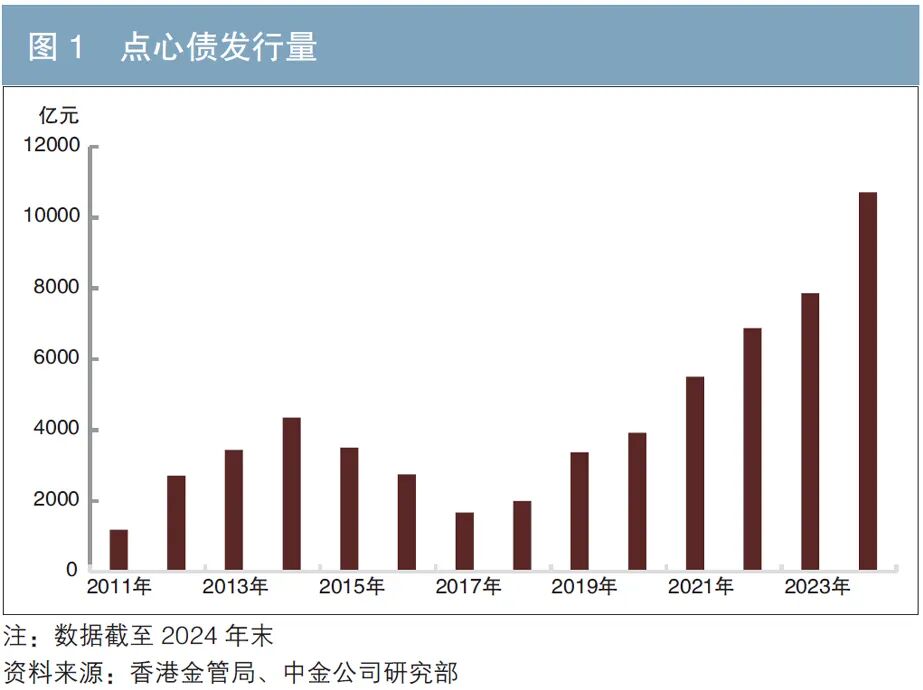
Core Viewpoint - The development of the dim sum bond market has been steady, driven by policies promoting financial market openness and the internationalization of the RMB, with significant growth in issuance and market size observed since 2021 [1][8]. Dim Sum Bond Development History - The dim sum bond market began in 2007, initially dominated by Chinese policy banks and commercial banks, with the first issuance occurring in June 2007 [5]. - From 2010 to 2014, the market experienced rapid growth, with a 27% increase in issuance volume in 2014, reaching 434.7 billion RMB [6]. - The period from 2015 to 2017 saw a slowdown in growth due to economic challenges and currency depreciation, leading to decreased attractiveness of dim sum bonds [7]. - Since 2018, the market has expanded again, with the introduction of the Bond Southbound Connect in September 2021 facilitating foreign investment in Hong Kong's bond market [7][10]. RMB Internationalization Process - The growth of the dim sum bond market is closely linked to China's financial market opening policies and infrastructure improvements, allowing for more diverse participation from domestic investors [8][9]. - The Qualified Domestic Institutional Investor (QDII) system initiated in 2006 has enabled domestic institutions to invest in offshore fixed-income products, including dim sum bonds [9]. - The Southbound Bond Connect has further enhanced access for domestic investors to offshore bonds, promoting market development [10]. Role of Dim Sum Bonds in Offshore RMB Market - Dim sum bonds play a crucial role in creating an effective offshore RMB financing loop, enhancing the RMB's functions as a medium of exchange and store of value [11]. - The issuance of dim sum bonds by the Ministry of Finance has increased, attracting more foreign investors and enhancing the RMB's status as a reserve currency [12]. - The market has diversified, with a growing number of issuers and an increasing presence of foreign sovereign funds and ESG-focused investors [17]. Investment and Trading Value of Dim Sum Bonds - The dim sum bond market is expected to continue growing, with its trading value increasing due to its relative advantages in risk diversification and currency stability [14][15]. - The market has seen a rise in secondary liquidity, with trading volumes significantly increasing since 2022, indicating a more active market [18]. - The Ministry of Finance's increased issuance of offshore RMB bonds has created a demonstration effect, attracting more participants to the offshore market [14][16]. Recommendations for Market Expansion - To further enhance the dim sum bond market, it is recommended to simplify issuance procedures, lower barriers, and improve regulatory frameworks [20]. - Expanding the Southbound Bond Connect to include more long-term funds and increasing QDII quotas could attract a broader range of investors [21]. - Developing a more diverse market structure, including the issuance of sovereign bonds from other countries in RMB, could stimulate international investment [21].

服务实体经济成效显著 "十四五"我国银行业交出亮眼答卷
Zhong Guo Jing Ji Wang· 2025-10-10 08:09
Core Viewpoint - During the "14th Five-Year Plan" period, China's banking industry has shown strong resilience and is committed to high-quality development, enhancing its stability while providing quality financial services to support economic and social development [1][2]. Group 1: Banking Industry Performance - As of June 2025, China's banking industry total assets are nearly 470 trillion yuan, ranking first globally, with 143 Chinese banks listed among the world's top 1,000 banks, including 6 in the top 10 [2]. - The banking sector has improved its service quality to the real economy, with a focus on differentiated development and complementary advantages, leading to significant enhancements in overall strength [2][3]. - The loan balance of financial institutions increased from 178.4 trillion yuan at the end of 2020 to 273.02 trillion yuan by August 2025, indicating a robust growth in loan issuance [4]. Group 2: Structural Changes in Lending - The banking industry's credit allocation has shifted from the traditional "infrastructure-real estate-finance" model to a new "technology-industry-finance" model, with loans in technology, green, inclusive, pension, and digital sectors accounting for about 70% of new credit [3][4]. - Key areas such as scientific research technology loans, medium to long-term loans for manufacturing, and infrastructure loans have seen annual growth rates of 27.2%, 21.7%, and 10.1%, respectively [4]. Group 3: Support for Small and Medium Enterprises - The balance of inclusive loans for small and micro enterprises reached 36 trillion yuan, which is 2.36 times that of the end of the "13th Five-Year Plan," with interest rates decreasing by 2 percentage points [4][5]. - Agricultural Bank of China has prioritized inclusive finance for agriculture, with a balance of 3.82 trillion yuan in inclusive loans for small and micro enterprises by June 2025 [5]. Group 4: Risk Management and Regulatory Measures - The number of high-risk small and medium financial institutions has significantly decreased, with over 40% more non-performing assets disposed of compared to the "13th Five-Year Plan" period, and total capital and provisions exceeding 50 trillion yuan [7][9]. - Regulatory measures have focused on preventing systemic risks, with a strategy of "stabilizing the overall situation, coordinating efforts, and precise dismantling" leading to significant progress in risk management [7][9]. Group 5: Reform and Development of Financial Institutions - The reform of rural credit cooperatives has progressed steadily, with over half of the provinces establishing provincial-level legal entities, while city commercial banks are undergoing orderly restructuring [8]. - The ultimate goal of these reforms is to enhance the service capabilities of small and medium financial institutions, which have shown improved profitability and service levels, thereby supporting the healthy development of the real economy [9].
前三季度房企融资规模3072亿元丨楼市周报
Sou Hu Cai Jing· 2025-10-09 16:50
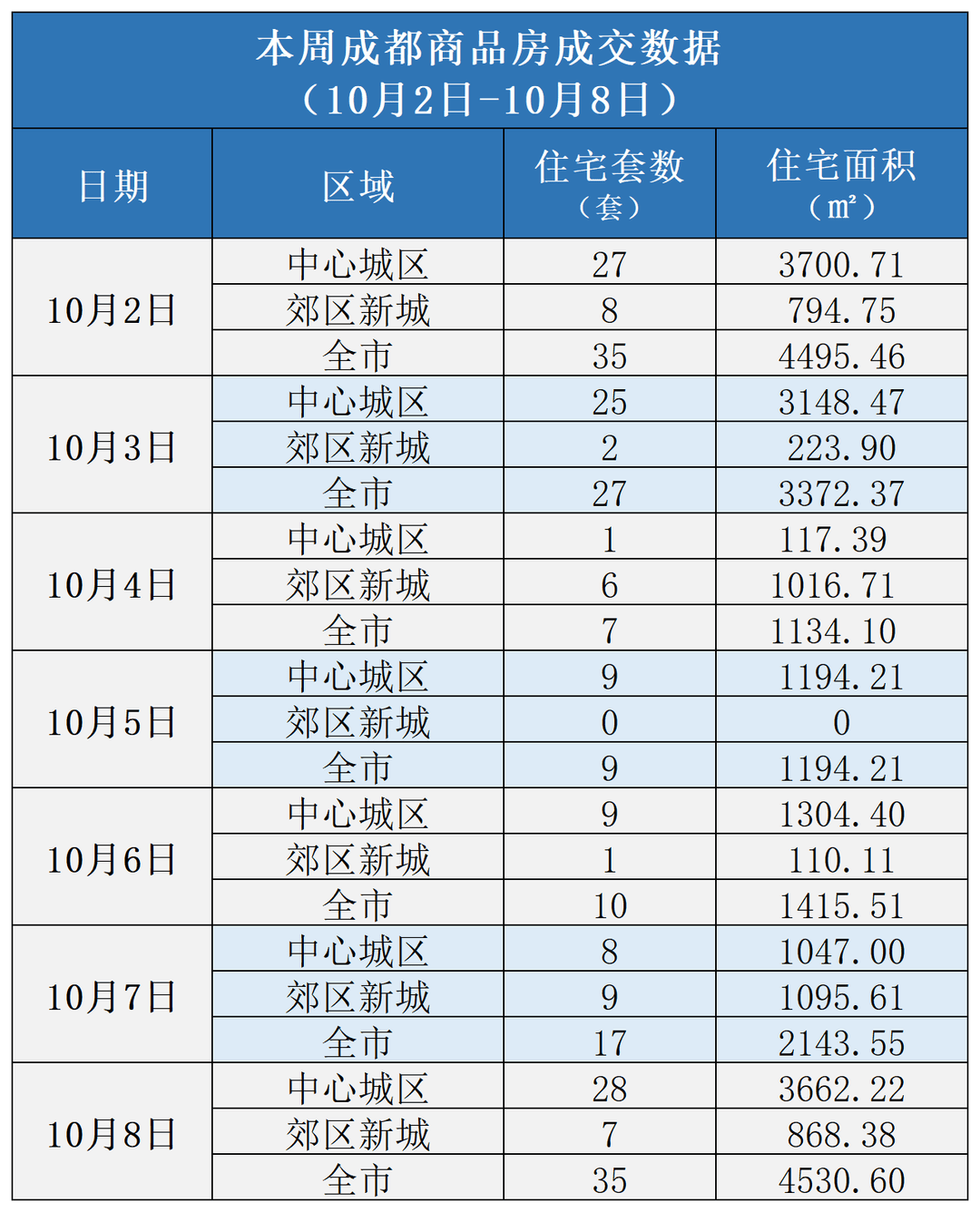
Core Insights - The real estate market in Chengdu has shown a significant decrease in transaction volumes for both new and second-hand properties during the week of October 2 to October 8, primarily due to the impact of the holiday season [4][5]. Group 1: Land Market - No land transactions occurred in Chengdu from October 2 to October 8 [2]. Group 2: Transaction Data - Total new residential property transactions in Chengdu for the week amounted to 140 units, with a total area of 18,285.80 square meters [4]. - Daily breakdown of transactions shows fluctuations, with the highest number of transactions occurring on October 8, where 35 units were sold, covering an area of 4,530.60 square meters [3]. Group 3: Second-hand Housing - There were no transactions for second-hand properties in Chengdu during the same week, indicating a notable decline in market activity [5]. Group 4: New Pre-sales - No new pre-sale permits were issued in the greater Chengdu area during the week of October 2 to October 8 [5]. Group 5: Major Events - The National Development Bank reported that since the beginning of the 14th Five-Year Plan, it has issued 978.1 billion yuan in special loans for urban village renovations, supporting 816 projects and providing 176.9 thousand units of resettlement housing [6]. - A report from CRIC Research Center indicated that real estate financing for the first three quarters of 2025 totaled 307.2 billion yuan, reflecting a year-on-year decline of 30% [6]. - Greentown China announced a total contract sales amount of 178.5 billion yuan for the first nine months of 2025, with a sales area of approximately 8.41 million square meters [6].
5000亿新型政策性金融工具陆续投放,或带来四大影响
Xin Lang Cai Jing· 2025-10-09 12:25
Core Viewpoint - The establishment of a new type of policy financial tool aims to stabilize credit and investment, with an expected total investment of 500 billion yuan by the end of October 2023 [1][2]. Group 1: Establishment and Purpose - Three major policy banks, including the National Development Bank, Agricultural Development Bank, and Export-Import Bank, registered the new financial tool company on September 29, 2023, with a total scale of 500 billion yuan dedicated to project capital [2][4]. - The new financial tool is designed to support technological innovation, expand consumption, and stabilize foreign trade, as proposed in the April 2023 Central Political Bureau meeting [2][5]. Group 2: Funding and Investment - The National Development Bank's new financial tool company has already begun funding projects, with the first investment of 20.76 million yuan allocated to a water supply project in Taicang City [4]. - The financial tool will not only target traditional infrastructure but also emerging sectors such as digital economy, artificial intelligence, and low-altitude economy [6]. Group 3: Market Impact - The new financial tool is expected to lead to a resurgence in the growth of pledged supplementary loans (PSL), which had decreased to 1.1 trillion yuan by the end of August 2023 [7][10]. - The introduction of the financial tool may result in a significant increase in entrusted loans under social financing, as funds will be injected into projects through shareholder loans or equity investments [10][11]. - The financial tool is projected to stabilize public loan increments and attract social capital, enhancing the financing model of policy banks and commercial banks [11][12]. Group 4: Infrastructure Investment - The new financial tool is estimated to have a multiplier effect of approximately 3.5 times on infrastructure investment, potentially driving 1.5 to 2 trillion yuan in fixed asset investment [11][12]. - Recent data indicates a decline in infrastructure investment growth, with a 2% increase from January to August 2023, compared to a 3.6 percentage point drop from earlier in the year [12].
5000亿新型工具落地,有望拉动超5万亿投资
21世纪经济报道· 2025-10-09 11:03
9月29日,国家发展改革委对外宣布, 新型政策性金融工具规模共5000亿元,全部用于补充项 目资本金 。当天,国家开发银行、中国农业发展银行、中国进出口银行全额出资的专门公司 成立,分别是国开新型政策性金融工具有限公司、农发新型政策性金融工具有限公司、进银新 型政策性金融工具有限公司。 随后,新型政策性金融工具在加快投放。9月29日以来, 江苏、安徽、广西、广东、河 北、海南、福建、重庆等 多地对外宣布,首批新型政策性金融工具资金完成投放。这些资 金 投向了城市更新、交通、水务、物流、能源、农业农村、供热管网、环境保护等领域的 项目 。 21世纪经济报道记者梳理地方披露信息发现,新型政策性金融工具的融资期限较长, 部分项 目获批融资期限在15—20年;该新型工具全部用于重点领域重大项目资本金,但是不得超过全 部资本金比例的50% ——这些资金能较大缓解项目资本金不足的问题,还能与项目回报周期 较长的状况相匹配。 新型工具跑步前进 从地方披露信息来看, 交通、城市更新、能源等领域项目较快落地 。 无锡市发展改革委消息显示,无锡至宜兴城际轨道交通工程此次获批新型政策性金融工具资金 31.99亿元(其中一期14.3 ...
前三季银行业被罚超16亿,股份行占三成!违规重灾区有哪些
Nan Fang Du Shi Bao· 2025-10-09 10:20
Core Insights - The banking industry in China has faced significant regulatory penalties in 2023, with a total of 16.64 billion yuan in fines, marking a 14.71% increase compared to the same period last year [2][5][6]. Summary by Category Regulatory Penalties Overview - In the first three quarters of 2023, the banking sector received 4,583 regulatory fines, with September alone accounting for 4.37 billion yuan, which is 26.26% of the total fines for the year [2][5]. - The total fines for the banking industry have surpassed 16 billion yuan, indicating a growing trend in regulatory scrutiny [2]. Breakdown by Bank Type - Joint-stock banks have been the most penalized, with fines totaling 4.97 billion yuan, representing 30% of the total fines. They received 271 fines, with an average penalty of 1.85 million yuan [5][6]. - Agricultural commercial banks were fined 4 billion yuan, with 552 penalties issued and an average fine of 728,700 yuan [6]. - State-owned banks faced fines of 2.74 billion yuan, with 406 penalties and an average fine of 682,300 yuan [6]. - City commercial banks received fines totaling 1.88 billion yuan, with 169 penalties and an average fine of 1.13 million yuan [6]. Foreign and Policy Banks - Foreign banks had a high average penalty of 1.76 million yuan, with 13 fines issued. Notably, Yuanta Bank was fined 14.85 million yuan for regulatory violations [7]. - Policy banks received 52 fines with an average penalty of 1.46 million yuan [7]. Common Violations - The most frequent violations were related to credit business, with 349 fines issued for inadequate loan checks, accounting for 20% of all penalties [9]. - There were 54 fines related to inaccurate classification of credit assets, which can obscure the true risk faced by banks [9][10]. - Violations in anti-money laundering practices were also common, with 16% of penalties related to failure to properly identify customer identities [10].
国开、农发、进出口银行新设新型政策性金融工具公司
Qi Cha Cha· 2025-10-09 02:20
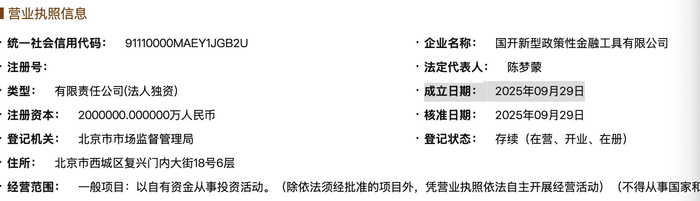
企查查APP显示,近日,国开新型政策性金融工具有限公司、农发新型政策性金融工具有限公司、进银 新型政策性金融工具有限公司成立,注册资本分别为200亿元、100亿元、50亿元,经营范围均为以自有 资金从事投资活动。企查查股权穿透显示,三者分别由国家开发银行、中国农业发展银行、中国进出口 银行全资持股。 (原标题:国开、农发、进出口银行新设新型政策性金融工具公司) ...
“十四五”发放城中村改造专项借款9781亿元
Qi Lu Wan Bao· 2025-10-08 21:53
Core Insights - The National Development Bank has actively provided financial services for three major projects, issuing a total of 48 billion yuan in housing loans, 978.1 billion yuan in urban village renovation loans, and 40.7 billion yuan in public infrastructure loans since the beginning of the 14th Five-Year Plan [1] Housing Loans - Since the start of the 14th Five-Year Plan, the National Development Bank has issued housing loans that support 74 projects, contributing to the construction of 62,000 affordable housing units [1] Urban Village Renovation - The bank has provided 978.1 billion yuan in special loans for urban village renovation, supporting 816 projects and facilitating the construction of 1.769 million resettlement houses, benefiting 942,000 households in urban villages [1] Public Infrastructure - The National Development Bank has issued 40.7 billion yuan in loans for "dual-use" public infrastructure construction, indicating a commitment to enhancing public facilities [1]