欧莱雅

Search documents
植物医生冲击深主板,开4300多家门店!上市前突击分红
Ge Long Hui· 2025-12-02 09:21
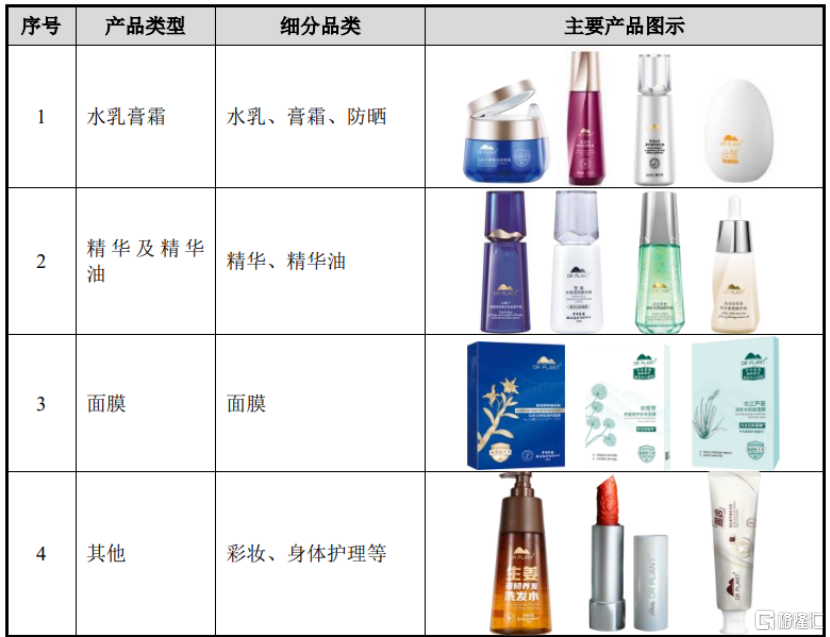
Core Insights - The skincare and cosmetics market in China is rapidly growing, becoming the second largest globally, with significant potential for future growth due to increasing consumer spending and beauty care habits [1][12] - Beijing Plant Doctor Cosmetics Co., Ltd. is preparing for an IPO, focusing on high-altitude plant skincare products, with projected revenue exceeding 2.1 billion yuan in 2024 [1][20] Industry Overview - The cosmetics industry is segmented into various categories, with skincare products accounting for 50.49% of the total market, projected to reach 271.2 billion yuan in 2024 [4] - The market is characterized by intense competition, with both international brands like L'Oréal and domestic brands like Proya and Pechoin vying for market share [12][17] Company Profile - Plant Doctor specializes in skincare, offering products derived from high-altitude plants, with a diverse product range including creams, serums, and masks [4][5] - The company has established a research center in collaboration with the Kunming Institute of Botany and has multiple R&D bases across China and Japan [5] Financial Performance - Plant Doctor's revenue has shown slow growth, with figures of approximately 2.12 billion yuan in 2022, 2.15 billion yuan in 2023, and 2.16 billion yuan in 2024 [14] - The company's gross profit margin has fluctuated, with rates of 55.22% in 2022, 60.34% in 2023, and 58.9% in 2024, which is lower than some competitors [14][15] Sales and Distribution - The company employs a mixed sales model, with 64% of revenue from distribution and 36% from direct sales, indicating a reliance on distributors [6][10] - Despite the growth of e-commerce in the cosmetics sector, Plant Doctor still derives over 70% of its revenue from offline sales [10] Management and Ownership - The company was founded in 2016 and has undergone structural changes, with key management holding significant shares and control over the company [21][22] - Recent cash dividends have primarily benefited major shareholders, raising questions about the allocation of funds [22] Future Outlook - The IPO aims to raise approximately 999.8 million yuan for marketing, brand development, and production upgrades, indicating a strategic focus on enhancing market presence and operational efficiency [20]

华伦天奴大中华区CEO遭员工举报
Sou Hu Cai Jing· 2025-12-02 02:15
Group 1 - Valentino's CEO Janice Lam is accused of performance fraud and workplace bullying by employees in a whistleblower letter sent to the brand's headquarters and parent company Kering [1] - The letter claims that Lam manipulated sales figures through various unethical practices, including discount sales at the company's expense and using employee discounts for customers [1] - Kering's acquisition of a 30% stake in Valentino for €1.7 billion from Mayhoola in Qatar is now delayed, with plans to acquire the remaining 70% pushed to 2029 [1] Group 2 - Valentino's financial performance is declining, with a projected revenue of €1.31 billion for 2024, a 2% decrease year-on-year, and a significant drop in operating profit by 22% to €246 million [1] - Kering is also facing severe market pressures, with a 46% drop in net profit for the first half of 2025, and its key brands Gucci and Saint Laurent experiencing double-digit declines [2] - New CEO Luca de Meo is implementing major reforms, including delaying the acquisition of Valentino and selling the fragrance and beauty licenses of its iconic brands to L'Oréal for €4 billion [2]
2025,投资人不爱美妆品牌了
3 6 Ke· 2025-12-02 00:56
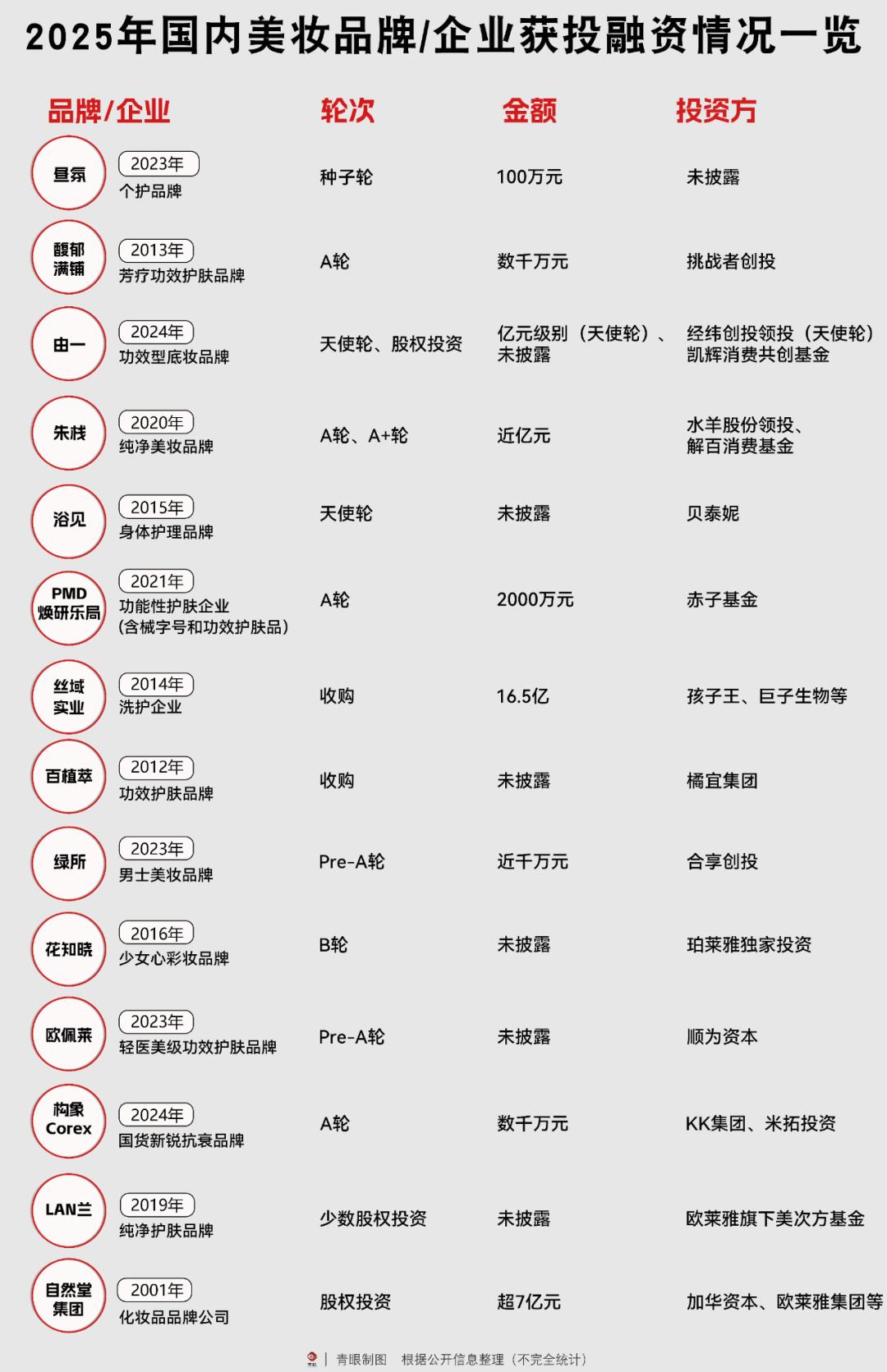
Core Insights - The investment landscape for beauty brands in China has cooled significantly, with only 14 beauty brands receiving funding from January to November 2023, representing less than 20% of total investments in the sector [1][5][22] - In contrast, upstream raw material companies have attracted over 60% of the 71 investment and acquisition events in the same period, indicating a shift in capital focus towards these suppliers [1][5][19] Investment Trends - A total of 71 investment and acquisition events occurred in the beauty sector from January to November 2023, with 43 events (over 60.6%) involving raw material companies [1][5] - The beauty brands that did receive funding primarily focused on functional skincare, with notable examples including PMD, Corex, and LAN [5][19] - The only male beauty brand to secure investment this year was GREENLAB, which completed a Pre-A round financing of nearly 10 million yuan [5][19] Funding Amounts - Among the 71 investment events, 53 companies disclosed their funding amounts, with 31 companies receiving less than 100 million yuan, accounting for 43.1% of the total [16][19] - Notably, 15 companies received over 100 million yuan in funding, maintaining the same number as the previous year [16][19] Focus on Synthetic Biology - Synthetic biology has emerged as a hot investment area, with 20 out of 43 upstream companies receiving funding in this field, representing over 46.5% of total investments [19][21] - Companies like 瑞德林 and 巨微生物 have attracted significant investments, highlighting the growing interest in innovative raw materials for cosmetics [19][20] Market Dynamics - The shift in investment focus reflects a broader trend where capital is moving from short-term brand growth strategies to long-term technological advancements in the raw material sector [22] - Industry experts suggest that the current investment climate is becoming more rational, emphasizing research capabilities and innovation potential over mere brand popularity [22]

L'Oreal will start work on potential Armani deal ‘very soon', says CFO
Reuters· 2025-12-02 00:15
Core Viewpoint - French cosmetics group L'Oreal is considering an investment in Italian fashion group Armani and plans to initiate discussions soon [1] Group 1 - L'Oreal's Chief Financial Officer Christophe Babule confirmed the company's intention to explore the investment opportunity in Armani [1] - The investment discussions are expected to commence in the near future, indicating L'Oreal's proactive approach towards potential acquisitions [1]

独家专访欧莱雅集团副CEO:科技创新是穿越周期的灯塔
FBeauty未来迹· 2025-12-01 09:27
Core Viewpoint - The article highlights the innovative strategies and leadership of Barbara Lavernos at L'Oréal, emphasizing the company's commitment to research and development as a key driver for future growth in the beauty industry [2][3][4]. Group 1: Leadership and Innovation - Barbara Lavernos has been pivotal in L'Oréal's transformation, overseeing a research team of over 4,000 scientists and managing an annual R&D budget exceeding €130 million (approximately 1.1 billion RMB) [4][6]. - Under her leadership, L'Oréal has launched over 3,000 new products annually, contributing 10% to 15% of the company's revenue from new products [6][7]. - The company has maintained a strong focus on quality, safety, and performance in its products, with a significant emphasis on patent applications as a measure of innovation [7][11]. Group 2: Research and Development Focus - L'Oréal's R&D strategy includes investments in life sciences, artificial intelligence, beauty technology, and sustainability, with a notable increase in patent applications, reaching 694 in 2024 [11][12]. - The company has established a comprehensive technology matrix for its "New Age Beauty" initiative, integrating cutting-edge research into consumer products [17][20]. - L'Oréal's Chinese R&D center has been instrumental in driving innovation, with 372 patent applications filed in 2024, showcasing the center's significant contributions to the company's global innovation strategy [24][31]. Group 3: Strategic Initiatives - The BIG BANG initiative launched in China aims to foster open innovation by collaborating with promising startups in AI, biotechnology, and pharmaceutical technology [29][30]. - L'Oréal's commitment to long-term research in longevity science positions it as a leader in the beauty industry's future, focusing on the aging process and its implications for skincare [14][15]. - The integration of AI into L'Oréal's R&D processes has significantly accelerated product development, allowing for the evaluation of 150 molecules in a fraction of the time previously required [21][22].

扩大产能加码研发 外资企业“链”上深耕中国市场
Zhong Guo Zheng Quan Bao· 2025-11-30 23:36
Core Insights - Foreign companies are deepening their commitment to the Chinese market through investments in production capacity and R&D centers, reflecting a long-term strategy to enhance local manufacturing and collaboration with Chinese clients [1][2][4]. Group 1: Expansion of Production Capacity - Alleima has officially launched its second-phase factory in Jiangsu, China, emphasizing its long-term commitment to the Chinese market and improved supply reliability [1]. - Korean company Ailotte signed a contract to invest approximately 50 million yuan in a semiconductor vacuum pump manufacturing base in Xi'an, enhancing its service capabilities for Chinese clients [2]. - AstraZeneca announced an additional investment of about 136 million USD to expand its production capacity in Qingdao, showcasing its confidence in the Chinese market [2]. Group 2: Establishment of R&D Centers - Porsche has opened its first strategic overseas R&D center in Shanghai, aiming to integrate German engineering with China's digital future and significantly reduce its R&D cycle from years to months [3]. - Johnson & Johnson established its first "industry-academia-research-use" innovation center in Beijing, focusing on advanced medical technologies such as AI and digital surgical assistance [3]. Group 3: Positive Outlook on the Chinese Market - The vast and continuously upgrading consumer market in China is a fundamental attraction for foreign investment, with over 1.4 billion people contributing to its status as the world's second-largest consumer market [4][5]. - The comprehensive industrial ecosystem in China provides essential support for foreign companies, facilitating a "one-stop" solution from raw materials to logistics [5]. - The alignment of China's industrial innovation support with the strategic needs of foreign enterprises is seen as a significant advantage for companies aiming for high-quality development in sectors like healthcare [5].


扩大产能 加码研发 外资企业“链”上深耕中国市场
Zhong Guo Zheng Quan Bao· 2025-11-30 20:33
Group 1: Expansion of Production Capacity - Alleima's new production facility in Jiangsu, China, highlights the company's long-term commitment to the Chinese market, aiming to enhance local manufacturing capabilities and improve delivery reliability [1] - Korean company Ailotte has signed a contract for a LOTVACUUM manufacturing project in Xi'an, with an initial investment of approximately 50 million yuan, focusing on semiconductor vacuum pump R&D and production [2] - AstraZeneca plans to invest an additional $136 million to expand its production capacity in Qingdao, reinforcing its commitment to the Chinese market [2] Group 2: Establishment of R&D Centers - Porsche has opened its first strategic overseas R&D center in Shanghai, aiming to enhance its R&D capabilities and respond more quickly to changing customer demands in China [3] - Johnson & Johnson has established its first 'industry-academia-research-application' innovation center in Beijing, focusing on advanced medical technologies such as AI and digital-assisted diagnosis [3] Group 3: Positive Outlook on the Chinese Market - Foreign companies are increasingly investing in China due to its vast consumer market and well-established industrial ecosystem, with over 1.4 billion people contributing to its status as the world's second-largest consumer market [4] - The comprehensive industrial ecosystem in China provides essential support for foreign enterprises, facilitating a "one-stop" solution from raw material supply to logistics [5] - The alignment of China's industrial innovation direction with the strategic needs of foreign companies is seen as a significant advantage for growth and innovation in sectors like healthcare [5]
外资企业“链”上深耕中国市场
Zhong Guo Zheng Quan Bao· 2025-11-30 20:21
Core Insights - Foreign companies are deepening their commitment to the Chinese market through increased local manufacturing capabilities and R&D investments, highlighting China's importance as a growth market [1][2][3] Expansion of Manufacturing Capacity - Alleima's new production facility in Jiangsu, China, emphasizes the company's long-term commitment to the Chinese market, aiming to shorten delivery times and enhance supply reliability [1] - Korean company Ailotte is investing approximately 50 million yuan in a semiconductor vacuum pump manufacturing base in Xi'an, which will expand its service capabilities for Chinese customers [1] - AstraZeneca plans to invest an additional $136 million to expand its production capacity in Qingdao, reflecting its confidence in the Chinese market [1][2] Establishment of R&D Centers - Porsche has opened its first strategic overseas R&D center in Shanghai, aiming to enhance its R&D capabilities and respond more quickly to changing customer demands in China [2] - Johnson & Johnson established its first "industry-academia-research-application" innovation center in Beijing, focusing on advanced medical technologies such as AI and digital healthcare [3] Positive Outlook on the Chinese Market - The large and continuously upgrading consumer market in China is a significant attraction for foreign investment, with over 1.4 billion people contributing to its status as the world's second-largest consumer market [3] - L'Oréal views China as a key growth engine and strategic market, highlighting its strong performance in innovation, digitalization, and talent development [3] Alignment with New Productive Forces - The development direction of new productive forces in China aligns well with the strategic needs of foreign companies, particularly in the healthcare sector, which is seen as a growth engine and a hub for medical innovation [4]
耐用消费产业行业研究:消费品供需适配性方案提供消费板块切换与成长方向
SINOLINK SECURITIES· 2025-11-30 11:32
Consumer Macro Strategy - The overall performance of the discretionary consumption sector is flat as the year-end approaches, but high-end consumption, including duty-free shopping in islands, is expected to gradually stabilize overall consumption [2][10] - The implementation plan released on November 26 aims to enhance the adaptability of supply and demand for consumer goods, with a goal to optimize the supply structure by 2027, creating three trillion-yuan consumption fields and ten hundred-billion-yuan consumption hotspots [2][10] - By 2030, a high-quality development pattern of mutual promotion between supply and consumption is expected to be established, with consumption steadily contributing to economic growth [2][10] New Consumption Manufacturing - The pet economy continues to thrive, with companies like Guobao Pet investing in high-end pet food factories in New Zealand, enhancing competitiveness in international markets [23][24] - The AI and 3D printing sector is rapidly evolving, with significant advancements expected in consumer-grade 3D printing by 2026, driven by companies like Huina Technology and Snapmaker [25][26] - The integration of AI with 3D printing is being promoted in educational settings, expanding the supply space for the industry [25] Light Industry Manufacturing - The home appliance sector is facing weak domestic demand, but there are opportunities for companies with overseas production capabilities and brand advantages as demand recovers [26][27] - The new tobacco sector is experiencing growth, particularly in e-cigarette exports to the U.S., which saw a significant increase in October [27][28] - The packaging industry is showing signs of profitability improvement despite a slight decline in revenue, driven by leading companies capturing market share from smaller firms [28] Textile and Apparel - The apparel sector is experiencing fluctuations in consumer demand, with a focus on companies that can demonstrate unique advantages in the market [30][31] - The export market remains under pressure due to trade tensions, but leading textile manufacturers are expected to present investment opportunities as they maintain strong positions in the industry [31] Beauty and Personal Care - The beauty sector shows positive fundamentals, with a 9.6% year-on-year increase in retail sales for cosmetics in October, although valuations have been affected by the new consumption sector [32][33] - The medical beauty segment is expanding, with new products gaining regulatory approval, indicating growth potential in the market [33] Home Appliances - Focus on two directions: resilient white goods leaders with strong cash flow and black goods leaders benefiting from optimized domestic sales and stable costs [34][35] - The white goods sector is facing pressure in domestic sales, while black goods are seeing improvements in average prices and export recovery [36][37]
冯卫东:我们投的鲍师傅,找到了不依赖上市的盈利方式
创业家· 2025-11-30 10:01
Core Insights - The article emphasizes the long-term value of consumer investment despite recent challenges in the sector, suggesting that patience will lead to opportunities as other institutions exit the market [1] - The company has diversified its investment strategy by expanding into biomedicine and low-altitude economy sectors, categorizing consumer investments into technology and non-technology segments [1] - A new strategy has been established to find investment methods that do not rely on IPOs, recognizing the lengthy and uncertain nature of the IPO process [3] Investment Strategies - The first strategy involves establishing a merger and acquisition (M&A) fund, sourcing projects from diversified groups and entrepreneurs looking to sell their businesses [4][5] - The second strategy is the creation of an industrial integration fund, collaborating with industry leaders and local governments to invest in early and growth-stage companies [8] - The third strategy focuses on a pure dividend strategy, allowing for cash flow returns even when exit opportunities are limited [9] Market Conditions - The current market for leveraged financing tools is limited, resulting in low frequency of M&A transactions [6] - The company has been operating an M&A team since 2017, with only two ongoing controlling M&A projects, one being the acquisition of Yuno yogurt, which has shown significant recovery in performance [7] New Investment Products - The company has launched a SPAC product in Macau, utilizing a revenue-based financing model for investment distribution [11] - There is active subscription interest in this product, although the bottleneck lies in the availability of quality assets rather than funding [14] Strategic Adjustments - The company has adjusted its investment strategy to broaden the range of potential investments, allowing for the inclusion of previously excluded quality assets [15] - The introduction of dividend structures has enabled the company to realize returns on investments that were previously only reflected on paper [16] - The changing transaction structures and investment strategies are expected to become a consensus in the industry, with new strategies already being validated [19]