瑞幸咖啡

Search documents
消费复苏需要一场差异化创新
Sou Hu Cai Jing· 2026-01-25 01:32
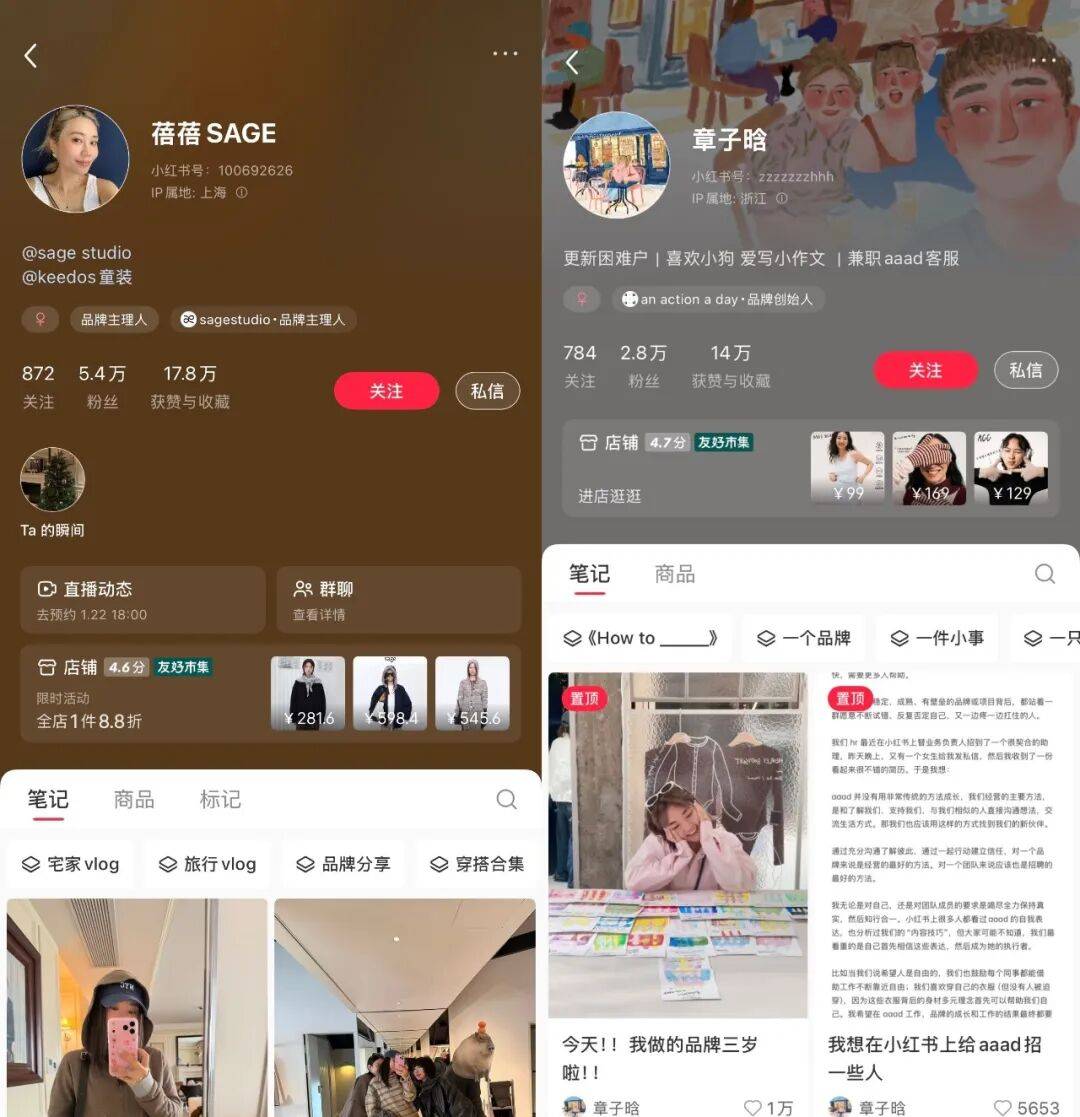
Core Insights - The article discusses the evolving consumer sentiment towards authenticity and emotional value in the market, highlighting a shift from superficial branding to genuine, relatable experiences [1][2][3] Group 1: Brand Expression and Authenticity - The trend of "humanized" brand expression is emerging, where real dialogue replaces scripted marketing, with founders and employees becoming vital carriers of brand values [1][4][5] - Consumers are increasingly discerning, able to differentiate between brands that genuinely believe in their values and those that merely use them for marketing purposes, as illustrated by the backlash against brands like "始祖鸟" [4][5] - The rise of social media platforms allows founders to engage directly with consumers, fostering a sense of community and trust [5][7] Group 2: Local Cultural Renaissance - There is a resurgence of local flavors and cultural heritage, with consumers seeking experiential tourism and local products, as evidenced by a 1493% increase in searches for "贵州深度游" [11][14] - The concept of "bistro" has been localized in China, leading to the emergence of various regional bistros that cater to consumer preferences for local cuisine [12][14] - Local cultural elements are being integrated into mainstream commercial settings, enhancing the value of local products and crafts [16] Group 3: Return to Offline Experiences - The trend of returning to offline experiences is driven by a desire for social interaction and immersive experiences, with events like concerts and pop-up activities gaining popularity [17][18] - Brands are increasingly opening flagship stores that offer unique experiences, moving beyond traditional retail to create engaging environments [18][20] - The shift back to offline is also a response to the saturation of online content and the need for differentiated experiences that cannot be replicated online [22] Group 4: Non-standard Commercialization and Community Business - The non-standard commercial sector is facing challenges, with discussions around its sustainability and the need for unique, engaging experiences to attract consumers [23][24] - Successful non-standard commercial ventures often rely on tourism and local cultural appeal, as seen in cities like Bangkok [24][26] - Community-oriented businesses are emerging as a bright spot in the market, focusing on stable user bases and localized offerings [30][31] Group 5: Opportunities for Small Brands - The current market environment presents opportunities for small and medium-sized brands to thrive by focusing on differentiation and emotional value [31] - The rise of niche brands that cater to specific consumer interests and preferences is expected, as consumers increasingly seek personalized and authentic experiences [31]

蜜雪、瑞幸、茶颜都在推,“老人味”水果意外走红!
东京烘焙职业人· 2026-01-24 08:33
Core Viewpoint - The beverage industry is witnessing a surge in interest towards banana-based drinks, with major brands launching new products that highlight the fruit's versatility and appeal to a wide consumer base [6][10][24]. Group 1: Product Launches and Market Trends - Major brands like Mixue Ice City and Cha Yan Yue Se have recently introduced banana-flavored products, with Mixue launching three new banana drinks that quickly became top sellers in test stores [6][11][17]. - Other brands such as Luckin Coffee and 1点点 have also embraced banana in their offerings, indicating a broader trend across both tea and coffee sectors [19][22][24]. - The banana drink category is gaining traction, with products like banana lattes and banana milk gaining popularity due to their unique flavor profiles and nostalgic appeal [20][30]. Group 2: Consumer Appeal and Health Trends - Bananas are recognized for their high consumer acceptance and versatility, making them suitable for various beverage combinations, appealing to all age groups [28][30]. - The natural sweetness of bananas aligns with current health trends, allowing for reduced sugar content in drinks while still providing a satisfying flavor [35][41]. - The nutritional benefits of bananas, such as quick energy and satiety, enhance their appeal in meal replacement scenarios [35][37]. Group 3: Challenges and Industry Responses - Despite the growing popularity, banana beverages face challenges such as oxidation, flavor intensity, and quality control, which can affect consumer perception [42][43][46]. - The industry is exploring solutions like adding lemon juice to delay oxidation and using complementary flavors to balance sweetness [49][50]. - The stable supply chain and high recognition of bananas position them favorably in the beverage market, provided that brands can effectively address these challenges [51][52].



中国消费策略:马年股票投资思路-China Consumer Strategy_ Stock Ideas for the Year of the Horse
2026-01-23 15:35
Summary of the Conference Call Industry Overview - **Sector**: China Consumer Sector - **Key Themes for 2026**: 1. **Lukewarm Demand**: Overall retail sales growth slowed to 1.3% YoY in November 2025, down from 2.9% in October 2025, with forecasts of 2.6% growth in 2026 and 2.5% in 2027, reflecting a deceleration in GDP growth to 4.5% in 2026 and 4.1% in 2027 [10][10] 2. **Price Deflation**: Persistent price deflation in consumer products, with significant price drops in categories like apparel and catering, impacting overall industry profitability [10][10] 3. **Consumer Preferences**: Young adults are prioritizing differentiated design, experience, and social value in their purchases [2][2] 4. **Overseas Expansion**: Companies are expected to expand internationally to counteract slow domestic growth, facing operational risks such as tariffs and supply chain management [10][10] 5. **Aging Demographics**: Challenges and opportunities arise from an aging population, with a decline in birth rates and a growing proportion of individuals over 65 years old [10][10] Financial Projections - **Earnings Growth**: Sector sales and earnings are projected to grow by 7.1% and 12.2% YoY in 2026, respectively, with a projected earnings CAGR of 10.3% from 2025 to 2027 [6][6] - **Valuation**: China consumer stocks are trading at 17x 2026E P/E, compared to ASEAN's 19x, Japan's 28x, and India's 54x, with a dividend yield of 4.2% [6][6] Investment Recommendations - **Top Picks**: - **Laopu**: Expected to benefit from experience-led growth with a disciplined store count and strong earnings growth of 40% in 2026 [20][20] - **Luckin**: Forecasted to achieve a 28% increase in net profit, driven by a consumer-centered vision and strong digitalization [20][20] - **Guming**: Anticipated to net add 3.3k stores in 2026, with a 20% YoY increase in core net profit [20][20] - **Mao Ge Ping (MGP)**: Positioned to benefit from experience-driven consumption trends, expecting 30% earnings growth in 2026 [20][20] - **YUMC**: Strong growth expected from KFC and a turnaround for Pizza Hut, with a target of 30K stores by 2030 [20][20] - **Pop Mart**: Despite recent stock price declines, expected to maintain strong earnings with a focus on new product launches [20][20] - **Top Avoids**: - **Bud APAC**: Concerns over weak consumption sentiment and high-end market exposure, with forecasts of declining sales and EBITDA [27][27] - **Yanghe**: Risks associated with channel inventory build-up and rising competition [27][27] Additional Insights - **Consumer Behavior**: Consumers are expected to continue spending on affordable treats and differentiated products, with a focus on experiences rather than price [10][10] - **Market Dynamics**: Increased competition is leading to accelerated consolidation within the industry, with leaders expected to gain market share through cost-saving initiatives and digital technologies [10][10] - **Demographic Trends**: Marriage registrations dropped significantly, indicating a shrinking young population and potential further declines in birth rates [12][12] This summary encapsulates the key points from the conference call, highlighting the current state and future outlook of the China consumer sector, along with specific investment recommendations and potential risks.


死在黎明前的100个品牌,都有一个不给公关预算的老板
新消费智库· 2026-01-23 13:00
Core Viewpoint - The importance of public relations (PR) in consumer goods companies has surpassed that of direct advertising spending, as neglecting PR can lead to severe brand crises and losses [6][9][32] Group 1: The Shift in Consumer Goods Management - Many consumer goods executives believe that having a good product is sufficient, but this mindset is outdated in the current media environment [2][4] - Companies face rapid backlash from the public due to minor issues, such as packaging or labor disputes, which can lead to significant financial losses [5][9] - The lack of respect for public opinion and inadequate communication strategies can result in catastrophic consequences for brands [5][9] Group 2: Financial Implications of PR - A budget of 10 million yuan in advertising may yield 100 million yuan in gross merchandise value (GMV), but a PR crisis can incur losses far exceeding that amount [7][9] - Direct sales losses from a crisis can include returns, consumer boycotts, and platform delistings, while indirect losses can affect brand trust and employee morale [9] - Investing in PR builds long-term consumer trust, which is more valuable than short-term advertising gains [9][10] Group 3: Media Relations and Budgeting - Many executives mistakenly view media spending as a form of extortion rather than a necessary investment for professional services [10][13] - Proper media investment should focus on reputable outlets that provide in-depth analysis and have a strong audience trust [13][20] - Establishing good relationships with influential media can be crucial during a crisis, as they are more likely to provide fair coverage [22][30] Group 4: The Role of Content in Crisis Management - Long-form media, such as articles on public platforms, can provide deeper analysis and context during crises, unlike short videos that may oversimplify issues [14][15] - Companies should balance their media strategies by using short videos for daily engagement while relying on in-depth articles for brand building and crisis management [16] Group 5: Building Relationships Before Crises - Companies often prioritize immediate sales over building long-term media relationships, which can leave them vulnerable during crises [18][20] - Establishing genuine connections with media and KOLs (Key Opinion Leaders) is essential for effective crisis management [25][26] - Companies should invest time and resources in nurturing these relationships to ensure support during challenging times [21][26] Group 6: Leadership's Role in PR - The involvement of company leadership in PR is critical for understanding media dynamics and ensuring that PR is prioritized within the organization [28][30] - Leaders should elevate PR to a strategic priority, enabling quick decision-making during crises and fostering a culture of awareness among all employees [30][31] - Every employee's actions can impact the brand's reputation, making it essential for leadership to instill a collective responsibility for public relations [31]

澳网商业化改革的B面:人潮与钞票齐飞,拥堵与抱怨共舞
3 6 Ke· 2026-01-23 11:37
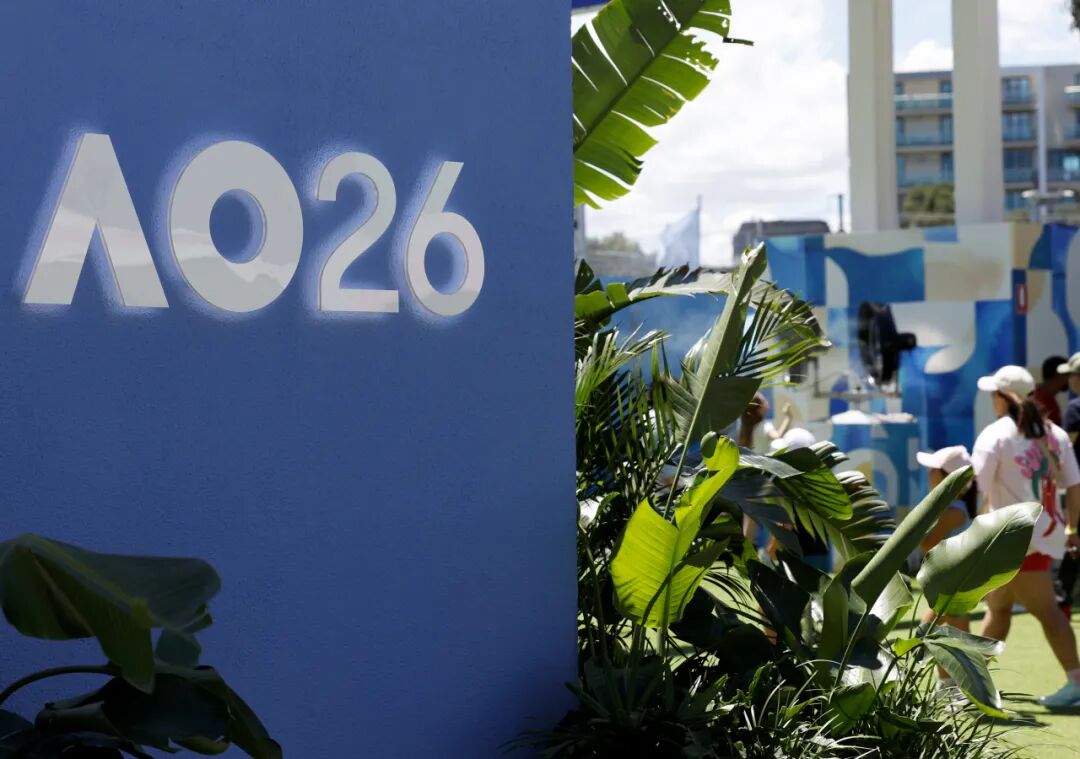
Core Insights - The Australian Open has seen a significant increase in attendance, with over 101,700 spectators on the second day, surpassing last year's record of 95,300 [1] - The event has evolved from a sports competition to a comprehensive entertainment festival, integrating music, food, and entertainment, which has led to a rise in both attendance and commercial revenue [1][15] - However, the surge in attendance has raised concerns about the spectator experience, with reports of long wait times, overcrowding, and inadequate facilities [2][12] Attendance and Ticket Pricing - The first day of the Australian Open set a record with 73,200 attendees, marking the highest attendance for an opening day in the event's history [3] - Ticket prices have significantly increased, with the lowest price for the men's singles final reaching AUD 1,299 and the highest at AUD 8,999, compared to AUD 305 in 2019 [5][6] - Despite high ticket prices, many fans still consider ground passes under AUD 100 as a value option, allowing access to outer courts and the vibrant atmosphere of the venue [6] Commercialization and Sponsorship - The Australian Open's revenue reached USD 693 million in 2025, reflecting a year-on-year increase of USD 102 million, with expectations for further growth in 2026 [15] - The number of sponsors has expanded to 46, including new partnerships with brands like ANZ Bank and Didi Chuxing, covering various sectors such as finance and luxury goods [17] - The commercial success of the event is heavily reliant on the spectator experience, as audience engagement drives sponsorship value and media rights [17] Challenges and Criticism - Many fans have expressed dissatisfaction with their experience, citing overcrowding and long wait times as significant issues, leading to a perception that commercial interests are prioritized over spectator comfort [12][14] - The Australian Open's strategy of overselling tickets to maximize attendance may boost short-term revenue but risks alienating fans and damaging the event's reputation [18] - The introduction of a paid "opening week" has sparked debate, as it blurs the lines between qualifying rounds and main events, raising concerns about the value proposition for fans [18]
2026年,头部茶咖品牌还要继续比拼开店?
3 6 Ke· 2026-01-23 10:06
Core Insights - The tea and coffee industry is experiencing rapid expansion, with multiple brands achieving significant milestones in store openings, indicating a competitive landscape focused on growth and market penetration [1][2][4][6]. Group 1: Company Expansion - Gu Ming has successfully opened 3,000 new stores in 2025, bringing its total to 13,000 stores nationwide, with a focus on expanding beyond its traditional strongholds in Jiangsu, Zhejiang, and Shanghai [1]. - Other brands like Hu Shang A Yi and Luckin Coffee have also joined the "10,000 store club," with Hu Shang A Yi reaching over 10,000 stores and planning to add 2,000-3,000 more in 2026 [2][4]. - Luckin Coffee expanded from approximately 4,500 stores to 10,000 in just over 10 months, showcasing a rapid growth strategy [4]. Group 2: Market Trends - The tea and coffee sector saw a total of over 990,000 operating stores by the end of 2025, reflecting a year-on-year growth of 6.58% [6]. - The competitive landscape is characterized by brands innovating in store locations, with many moving away from traditional high-traffic areas to more unconventional sites like transportation hubs and scenic spots [8][11]. - The trend of "store-in-store" models is gaining traction, allowing brands to expand with lower capital investment by embedding their offerings within existing retail spaces [9][12]. Group 3: Product Innovation - Brands are diversifying their product offerings, with companies like Heytea introducing baked goods alongside their tea products, while Nayuki focuses on light meals [12]. - Tea Yan Yue Se has launched a new retail model that combines beverage sales with snack offerings, creating a unique shopping experience [12]. - The emphasis on product innovation and customer experience is becoming crucial for brands to differentiate themselves in a crowded market [13].

中金:2025年餐饮品牌分化持续 看好现制饮品头部品牌
智通财经网· 2026-01-23 05:52
古茗计划延展咖啡和早餐时段、举行堂食营销活动和升级六代店型以提振同店和提升堂食销售占比,该 行预计26年同店收入有望同比持平。该行预计古茗25年门店净增近3500家,26年净新增门店数有望维持 25年水平。此外建议关注茶百道和沪上阿姨等品牌边际改善持续性:茶百道25年来产品上新机制调整取 得一定成效,计划26年向下拓宽产品价格带并持续优化运营;沪上阿姨指引26年新开2000-3000家。 智通财经APP获悉,中金发布研报称,2025年餐饮品牌分化持续,4Q25外卖退坡下现制饮品好于预 期,部分正餐边际改善。该行看好现制饮品头部品牌维持好于行业的同店和开店表现,关注部分品牌调 改效果和新品牌潜力。维持已覆盖标的投资评级、盈利预测和估值不变。 中金主要观点如下: 分化持续,4Q25外卖退坡下现制饮品表现好于预期,部分正餐迎来边际改善 该行估计4Q25沪上/古茗/茶百道/瑞幸/奈雪同店收入分别同比增长超20%/接近20%/双位数/10%/3%;锅圈 同店同比增速高单位数;海底捞受益于基数回落及调整举措,翻台同比持平;达势股份一线城市同店同比 正增长;太二受益于新店型调改,11月底开始同店转正、12月同店同增高单位数 ...
幸运咖涨价,最贵16元,哦,原来是手冲
3 6 Ke· 2026-01-23 04:44
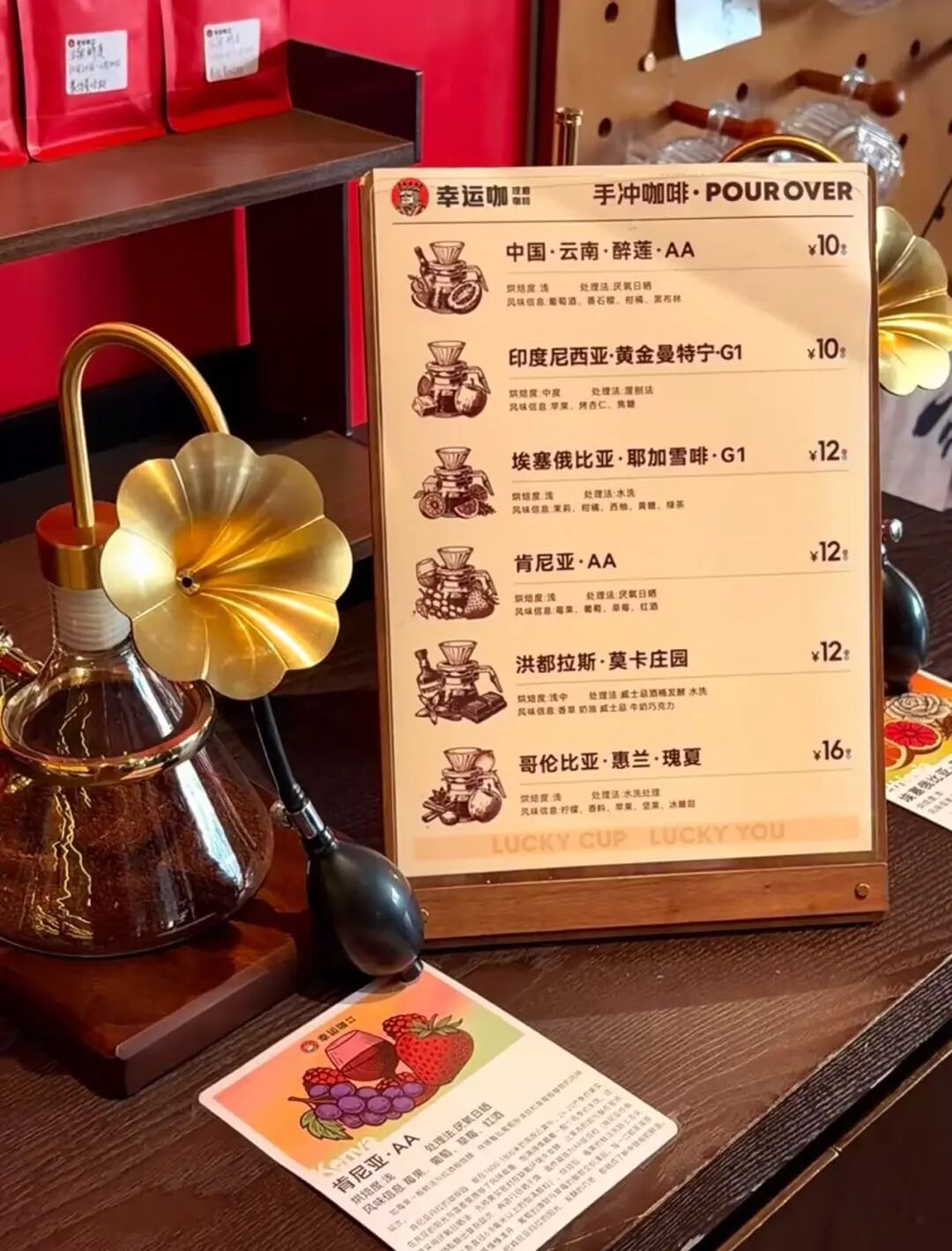
Core Insights - The launch of hand-brewed coffee priced at 10-16 yuan by Luckin Coffee's flagship store in Zhengzhou is a strategic move to attract consumers and challenge the perception of high-end coffee [1][3] - This initiative comes after Luckin Coffee surpassed 10,000 global stores, indicating a shift from mere expansion to seeking new revenue streams amid market saturation [3][16] Pricing Strategy - The introduction of hand-brewed coffee at a low price point is seen as an attempt to break the "low-price" label and explore new revenue growth avenues [3][12] - The pricing strategy aims to capture the "high-quality affordable" market segment, especially as competitors like Starbucks adjust their pricing [10][11] Product Diversification - Luckin Coffee has expanded its product offerings beyond low-priced items, introducing various series such as "True Fruit Coffee" and "Lucky Latte Season," indicating a shift towards a comprehensive product layout [3][4] - The sales of the "Green Grape" series alone exceeded 200 million yuan, showcasing the effectiveness of their diversified product strategy [4] Supply Chain Advantage - The company's supply chain capabilities allow it to offer high-quality coffee at competitive prices, with plans to invest 4 billion yuan in coffee bean procurement over the next 3-5 years [8] - The establishment of self-owned roasting facilities and a nationwide logistics network contributes to cost efficiency, enabling the pricing of premium coffee at lower rates [8][10] Market Trends - The hand-brewed coffee market is experiencing significant growth, with transaction volumes exceeding 1 billion yuan in 2023, reflecting a shift in consumer preferences towards quality and affordability [10] - The competitive landscape is evolving, with brands like Luckin Coffee aiming to fill the gap in the "high-quality affordable" segment, moving away from traditional price wars [10][11] Challenges Ahead - Despite the potential, Luckin Coffee faces challenges related to quality perception, as low prices may lead to skepticism about the quality of coffee beans and brewing standards [12][15] - The company must balance the operational complexities of maintaining quality in hand-brewed coffee while keeping prices low, which poses a significant operational challenge [15][16] - The brand's established image as a budget-friendly option may deter higher-end consumers seeking quality and emotional value in their coffee experience [15][18]
被连锁咖啡馆“贴脸”的独立咖啡店,还怎么存活下来?
东京烘焙职业人· 2026-01-22 08:33
Core Insights - The article discusses the rapid expansion of chain coffee brands like Luckin and Kudi, which has shifted consumer habits towards affordable coffee options, while independent coffee shops struggle to survive in this competitive landscape [1][5]. Independent Coffee Shops' Dilemma - The growth of chain coffee brands has led to a significant increase in competition for independent coffee shops, with a reported closure rate of 40% among coffee-related businesses in China [1][9]. - Luckin Coffee achieved a record net increase of 3,008 stores in Q3 2025, bringing its total to 29,214 stores globally, indicating a fierce competitive environment for new entrants [1][5]. Factors Contributing to Competition - **Location Strategy**: Chain coffee brands utilize comprehensive location strategies based on foot traffic, convenience, and competition density, often leading to independent shops being overshadowed shortly after opening [5]. - **Customer Overlap**: The target demographics for both independent and chain coffee shops largely overlap, with students and office workers being the primary consumers. Chain brands effectively capture this market through standardized products and efficient service [9][15]. - **Cost Efficiency**: Chain brands benefit from economies of scale, allowing them to offer lower prices, such as the common 9.9 yuan coffee, which alters consumer price expectations and makes it difficult for independent shops to compete [9][15]. Strategies for Independent Coffee Shops - **Focus on Quality**: Independent coffee shops can differentiate themselves by emphasizing the quality of their coffee and brewing techniques, appealing to consumers who prioritize taste over price [17]. - **Enhance Value Proposition**: By improving the perceived value and experience, independent shops can attract customers who may otherwise opt for cheaper chain options. This includes offering better ingredients and unique experiences [18]. - **Differentiated Services**: Independent coffee shops can leverage their flexibility to provide diverse offerings, such as light meals and personalized service, creating a unique atmosphere that contrasts with the standardized experience of chain brands [20][21]. Conclusion - Despite the dominance of chain coffee brands, there remains a viable market for independent coffee shops that can capitalize on their unique strengths and adapt to consumer preferences. By focusing on quality, value, and differentiation, these shops can carve out a niche in a competitive landscape [24].
纳斯达克中国金龙指数升逾2% 热门中概股普遍拉升 哔哩哔哩、百度涨超6%
Xin Lang Cai Jing· 2026-01-22 01:23
Group 1 - The Nasdaq China Golden Dragon Index increased by over 2% [1] - Popular Chinese concept stocks generally rose, with Bilibili up 6.74%, Baidu up 6.59%, and GDS Holdings up 4.98% [1] - Other notable gains include Kingsoft Cloud rising by 4.14% and Miniso increasing by 4.06% [1] Group 2 - Legend Biotech experienced a significant decline, falling by 10.76% [1] - NetEase and Luckin Coffee both dropped nearly 3% [1] - Amer Sports saw a decrease of 1.63% [1]