
京东健康

Search documents
同步内地市场,高开低走
Ge Long Hui· 2026-01-17 05:13
恒生医疗小幅高开后只需跳水,随后全天维持在低位盘整,截至收盘下跌0.83%。三生制药下跌 1.78%,百济神州下跌1.36%,京东健康下跌1.03%,康方生物、中国生物、药明生物等股均小幅收跌。 同步内地市场,高开低走后恒生指数收跌0.29%。恒生医疗跌幅居前,互联网、大消费、银行、科技等 均小幅收跌。 恒生科技高开低走后一路回撤,盘中所有反弹,但力度有限,截至收盘下跌0.13%,其中小米集团下跌 2.01%,快手下跌1.51%,京东集团下跌1.3%。 内容只是个人观点,仅供参考,不作为投资依据!欢迎关注交流,互相学习、共同探讨! 恒生银行冲高回落后全天震荡下行,截至收盘下跌0.28%。其中重庆银行下跌2.85%,光大银行下跌 2.4%,浙商银行、招商银行、中信银行等股跌幅均在1%上方;大新银行逆势上涨1.89%。 ...

京东健康发布循证医学AI产品“知医” 助力医生临床与科研场景
Zhi Tong Cai Jing· 2026-01-17 04:10
Core Viewpoint - JD Health launched an AI product named "Zhi Yi" specifically designed for doctors, focusing on clinical decision-making and academic research [1] Group 1: Product Overview - "Zhi Yi" integrates millions of authoritative medical data globally, enabling rapid screening and high-level integration of vast literature and guidelines [1] - The product aims to enhance the quality and efficiency of clinical diagnosis and provide strong support for scientific research exploration [1] Group 2: Accessibility - "Zhi Yi" will be fully integrated into the JD Doctor APP, allowing all doctors to experience the product regardless of their affiliation with JD Internet Hospital [1]

AI应用短线分歧,阿里站稳“中国AI第一”!资金密集涌入高“含BA量”港股互联网ETF(513770)
Xin Lang Cai Jing· 2026-01-16 11:24
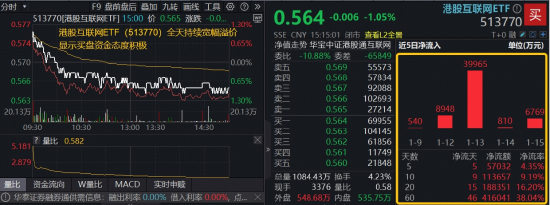
Core Viewpoint - The Hong Kong stock market's AI sector has experienced fluctuations, with the Hong Kong Internet ETF (513770) showing a net inflow of 1.137 billion yuan over the past 10 days, indicating strong buying interest [1][11]. Group 1: Market Performance - As of January 14, 2026, the Hong Kong Internet ETF (513770) has risen by 12.25% year-to-date, outperforming the Hang Seng Tech Index, which increased by 7.11% [3][14]. - The Hong Kong stock market opened positively but closed down by 1.05% on January 16, 2026, despite Alibaba-W and Bilibili-W showing gains [1][11]. Group 2: Key Companies and Their Roles - The Hong Kong Internet sector includes major tech giants like Alibaba, Tencent, and Kuaishou, which possess computational resources and model capabilities, as well as AI ecosystem companies like Bilibili and JD Health [3][15]. - Alibaba has announced the integration of its Qianwen App with various services, becoming the first company globally to offer multi-category AI shopping features, showcasing its competitive edge in the AI race [15]. Group 3: Investment Insights - Analysts believe that 2026 will be a pivotal year for AI applications, driven by the maturation of large models, supportive policies, and market demand [15]. - The top ten holdings in the Hong Kong Internet ETF include Alibaba-W (14.71% weight), Tencent Holdings (14.64%), and Xiaomi Group (12.29%), collectively accounting for nearly 77% of the ETF [6][16]. Group 4: Fund Performance and Strategy - The latest fund size of the Hong Kong Internet ETF is 14.688 billion yuan, with an average daily trading volume exceeding 600 million yuan since 2025, indicating good liquidity [16]. - For investors looking to reduce volatility while still engaging with tech stocks, the Hong Kong Large Cap 30 ETF (520560) is recommended, combining high-growth tech stocks with stable dividend-paying companies [16].
脑机接口、AI医疗接力助攻,港股通医疗ETF华宝(159137)上市首周跑赢大市!机构:2026年看好医疗硬科技
Xin Lang Cai Jing· 2026-01-16 11:17
Core Viewpoint - The Hong Kong stock market continues to adjust, with the pharmaceutical sector declining alongside the market, particularly affected by a short-term cooling of AI medical concepts [1][12]. Group 1: Market Performance - The Hong Kong Medical ETF Huabao (159137) fell by 0.93%, marking two consecutive days of decline, while the Hong Kong Innovation Drug ETF (520880) dropped by 1.08% [1][12]. - The medical sector saw 13 stocks rise and 37 fall, with Ark Health, a hot stock in AI medical concepts, leading the decline at 6.98%, and Alibaba Health also falling by 5.16% [2][13]. - The Hong Kong Medical Theme Index achieved a record nine consecutive days of gains before experiencing a pullback, with the Medical ETF Huabao having a cumulative increase of 6.9% in its first week, outperforming the Hang Seng Index [3][14]. Group 2: Sector Analysis - The Hong Kong Medical ETF Huabao covers 50 leading stocks across various medical fields, including CXO, AI medical, medical devices, and innovative drugs, indicating a comprehensive approach to capturing market trends [5][16]. - The medical sector has shown significant recovery since 2026, driven by hot themes like brain-computer interfaces and AI medical, with increasing investment value [6][17]. - The CXO sector is expected to see a "Davis Double Play" with both profit and valuation improvements, as demand gradually recovers and supply has been cleared over the past three years [18]. Group 3: Future Outlook - Analysts predict that by 2026, key areas of growth will include innovative overseas expansion and hard technology sectors such as AI medical and brain-computer interfaces, with a focus on monitoring the expansion of medical insurance and essential drug directories [18]. - The Medical ETF Huabao is positioned as a high-elasticity tool for capturing new opportunities in the medical field, particularly in AI medical, brain-computer interfaces, and innovative drug supply chains [18]. - The total scale of the medical ETF fund reached 27 billion yuan, making it the largest in the market for medical-related ETFs [19].

大厂AI,激战医疗
Sou Hu Cai Jing· 2026-01-16 10:51
Core Insights - Ant Group's AI health application "Afu" gained significant market attention with a monthly active user (MAU) count of 30 million within a month of its December 2025 release, indicating a strong interest in AI applications in health management [2] - Major tech companies like Baidu, JD Health, ByteDance, and others are increasingly active in the medical AI sector, reflecting a resurgence of interest in this field [3] - The strategic focus of these companies has shifted from merely replacing healthcare professionals to enhancing and empowering them, aiming for an integrated service model that connects medical, pharmaceutical, insurance, and testing services [3][4] Company Strategies - Ant Group's "Afu" offers three core functions: health companionship, health Q&A, and health services, leveraging its ecosystem to provide end-to-end service from consultation to payment [5] - Baidu's "Wenxin Health Manager" utilizes its search engine traffic and AI technology but faces challenges in converting users from information seekers to service users [6] - JD Health's "Kangkang" has achieved stable profitability, primarily through pharmaceutical retail, while its AI services enhance efficiency [6] Market Dynamics - The medical AI sector is characterized by a divide between horizontal platform players (like Ant Group and Baidu) and vertical specialists (like ByteDance and iFlytek), each pursuing different strategic paths [4][7] - The demand for AI in healthcare is driven by the need for efficiency in a system facing resource distribution challenges, with 71% of Chinese clinicians relying on AI tools to alleviate work pressure [8][9] - AI applications are expanding from disease treatment to proactive health management, creating broader opportunities for user engagement [8] Challenges and Opportunities - Despite the potential, the commercialization path for medical AI remains unclear, with issues such as low willingness to pay in primary care and regulatory hurdles [15][16] - The integration of AI in healthcare requires high-quality, standardized data, which is often difficult to obtain due to privacy and sharing constraints [13][16] - The sector's complexity necessitates a deep understanding of medical industry regulations and ethical considerations, making it a challenging landscape for tech companies [16]



价值700亿美元的AI+医疗仍有很长的路要走丨ToB产业观察
Tai Mei Ti A P P· 2026-01-16 09:38
Core Insights - The Chinese government has officially launched the "Artificial Intelligence +" initiative, focusing on enhancing the healthcare sector through AI applications, aiming to improve the quality of life and healthcare services [2] - The healthcare industry is becoming a primary area for AI technology implementation, transitioning from optional to essential applications, with significant growth expected in the AI healthcare market [2][3] Industry Overview - The healthcare sector faces critical challenges such as uneven resource distribution, high physician workloads, and low research translation efficiency, creating ample opportunities for AI applications [3] - By 2025, the global AI application market is projected to reach $127 billion, with the healthcare sector accounting for 20% of this total [2] - The "AI + healthcare" market is expected to grow at a compound annual growth rate of over 29%, reaching $70 billion by 2032 [2] AI Applications in Healthcare - AI applications in healthcare have evolved through various stages, with clinical decision support systems (CDSS) being a key area of focus, addressing the knowledge gap between medical advancements and physician expertise [3][4] - The introduction of large language models has significantly improved the capabilities of CDSS, allowing for real-time updates and broader disease coverage, with accuracy rates surpassing 91% in some cases [5][11] - Medical imaging AI has matured, transitioning from basic disease screening to advanced multi-modal analysis, enhancing diagnostic precision and patient outcomes [6][7] Business Models and Commercialization - The commercialization of medical imaging AI is shifting from product sales to service-based models, driven by the integration of AI into healthcare workflows [7][10] - Companies like Ping An are leveraging AI to enhance patient services, streamline processes, and improve healthcare accessibility, with AI assisting in over 50% of family doctor tasks [8][11] - The AI healthcare market is facing challenges related to high development costs, long return on investment periods, and difficulties in monetization due to varying payment capabilities across healthcare institutions [21][22] Challenges and Future Outlook - Despite advancements, the integration of AI in healthcare faces hurdles such as data quality, regulatory issues, and the need for explainability in AI decision-making [16][19] - The lack of standardized, high-quality data across healthcare institutions hampers the training of AI models, necessitating improvements in data governance and sharing mechanisms [18][19] - The AI + healthcare sector is expected to enter a new phase of large-scale implementation by 2026, driven by collaborative efforts and continuous technological innovation [22]



集体大跌!002195,640万手封死跌停
中国基金报· 2026-01-16 05:01
Market Overview - The A-share market experienced fluctuations, with the Shanghai Composite Index down by 0.22% to 4103.45, the Shenzhen Component Index down by 0.1% to 14293.08, and the ChiNext Index down by 0.01% to 3367.45 [2][3] - The total trading volume reached 2.01 trillion CNY, with a predicted increase to 3.17 trillion CNY, an increase of 229.2 billion CNY [3] Semiconductor Sector - The semiconductor sector showed a strong upward trend, with notable stocks such as Tianyue Advanced hitting a 20% limit up, and other companies like Pai Rui Shares and Yubang New Materials also seeing significant gains [8][9] - Storage chip stocks also rallied, with Jin Tai Yang reaching a 20% limit up and Bai Wei Storage increasing over 10% [10][12] Automotive Parts Sector - The automotive parts sector strengthened, with stocks like Fusi Technology hitting a 20% limit up, and other companies such as Ningbo Huaxiang and Hai'an Group also achieving significant gains [15][16] - The China Association of Automobile Manufacturers reported that by 2025, China's automobile production and sales are expected to exceed 34 million units, maintaining its position as the world's largest market for 17 consecutive years [15] AI Application Sector - The AI application sector collectively adjusted downwards, with significant declines in cultural media, internet, and virtual human segments [20][21] - Stocks such as Xinhua Net and Vision China experienced a 10% drop, with several companies hitting the daily limit down [21][22] Notable Stock Movements - N Koma listed on the Beijing Stock Exchange and saw a dramatic increase of over 580%, currently priced at 66.88 CNY per share [17][18] - The stock of Rock Mountain Technology faced a limit down, with a significant drop of 10.03% [23][24]


ETF盘中资讯|AI应用元年启幕,港股互联网显著跑赢恒生科技!高人气513770暴力揽金逾11亿元
Sou Hu Cai Jing· 2026-01-16 02:06
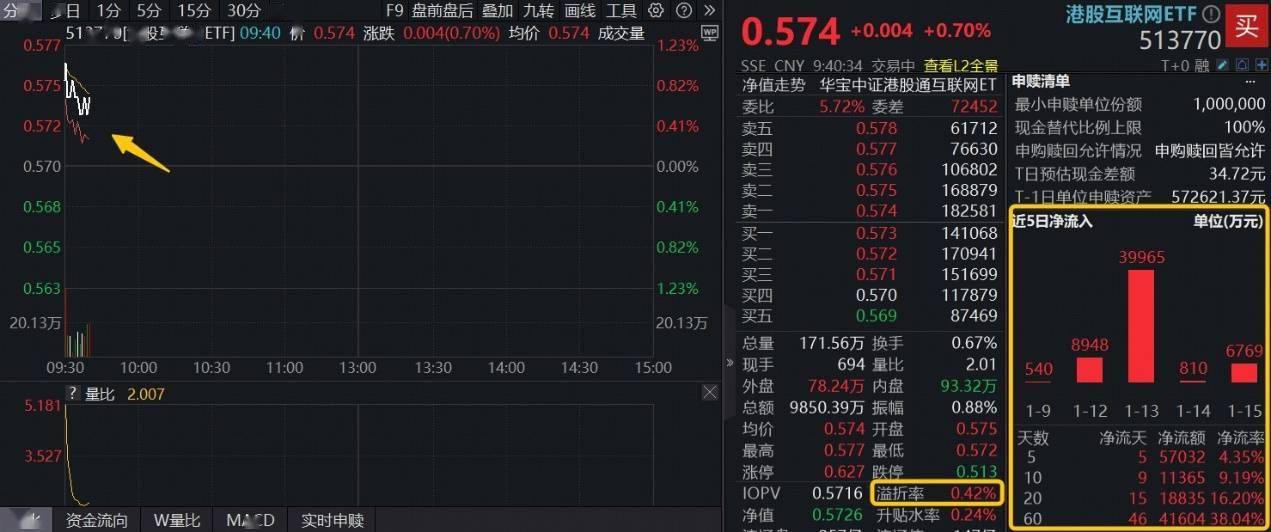
Group 1 - The core viewpoint of the article highlights the strong performance of Hong Kong stocks, particularly in the AI sector, with significant inflows into the Hong Kong Internet ETF (513770) and a notable increase in stock prices for major companies like Alibaba and Tencent [1][4][5] - As of January 15, the Hong Kong Internet ETF has seen a year-to-date increase of 10.15%, outperforming the Hang Seng Tech Index, which rose by 5.66% [1][3] - The fund manager of the Hong Kong Internet ETF noted that the market is currently undervalued, with a price-to-earnings ratio (PE) of 26.29, significantly lower than other major markets, indicating a potential for valuation increases [4][5] Group 2 - Alibaba has announced the integration of its Qianwen App with various platforms within its ecosystem, positioning itself as a leader in AI-driven shopping functionalities [3][5] - The top ten holdings in the Hong Kong Internet ETF include major tech companies such as Alibaba, Tencent, and Xiaomi, which collectively account for nearly 77% of the fund's weight, showcasing the dominance of these firms in the AI application space [5][6] - The total fund size of the Hong Kong Internet ETF reached a historical high of 14.899 billion yuan, reflecting strong investor interest and liquidity in the market [6]
AI应用元年启幕,港股互联网显著跑赢恒生科技!高人气513770暴力揽金逾11亿元
Xin Lang Cai Jing· 2026-01-16 02:04
Core Viewpoint - The Hong Kong stock market is experiencing a strong interest in AI-related assets, particularly the Hong Kong Internet ETF, which has seen significant capital inflows and outperformed other indices in early 2026 [1][11]. Group 1: Market Performance - The Hong Kong Internet ETF (513770) has gained 10.15% year-to-date, outperforming the Hang Seng Tech Index, which increased by 5.66% [3][11]. - The ETF has recorded a net inflow of 1.137 billion yuan over the past 10 days, indicating strong buying interest [1][11]. - As of January 14, the fund size of the Hong Kong Internet ETF reached a historical high of 14.899 billion yuan, with an average daily trading volume exceeding 600 million yuan since 2025 [6][12]. Group 2: Key Companies and Weightings - Alibaba-W is the largest holding in the Hong Kong Internet ETF, with a weight of 14.71%, followed closely by Tencent Holdings at 14.64% and Xiaomi Group at 12.29% [5][13]. - The top ten holdings in the ETF account for nearly 77% of the total weight, showcasing the dominance of major tech companies in the fund [5][12]. Group 3: Future Outlook - Analysts predict that 2026 will be a pivotal year for AI commercialization, with significant investments expected in AI applications from leading internet companies [3][11]. - The valuation of Hong Kong AI assets remains low compared to global markets, with the latest PE ratio of the Hong Kong Internet Index at 26.29, significantly lower than that of the A-share and NASDAQ indices [4][12]. - The Hong Kong capital market is expected to remain active, with potential for increased trading volume if capital flows from the A-share market [4][11].
智通港股沽空统计|1月16日
智通财经网· 2026-01-16 00:28
Group 1 - The top short-selling ratios are led by China Resources Beer (100.00%), Lenovo Group (95.24%), and JD Health (94.15%) [1] - The highest short-selling amounts are recorded for Alibaba (3.923 billion), Tencent Holdings (2.552 billion), and Trip.com Group (1.172 billion) [1][2] - Meituan, Kanglong Chemical, and Haitong Securities have the highest deviation values at 55.33%, 50.16%, and 48.65% respectively [1] Group 2 - The top ten short-selling ratios include China Resources Beer (100.00%), Lenovo Group (95.24%), and JD Health (94.15%) with respective amounts of 11,700, 7,019,200, and 150,000 [2] - The top ten short-selling amounts show Alibaba at 39.23 billion, Tencent at 25.52 billion, and Trip.com at 11.72 billion with respective short-selling ratios of 17.78%, 15.59%, and 7.41% [2] - The top ten deviation values highlight Meituan (55.33%), Kanglong Chemical (50.16%), and Haitong Securities (48.65%) with their respective short-selling amounts [2]



