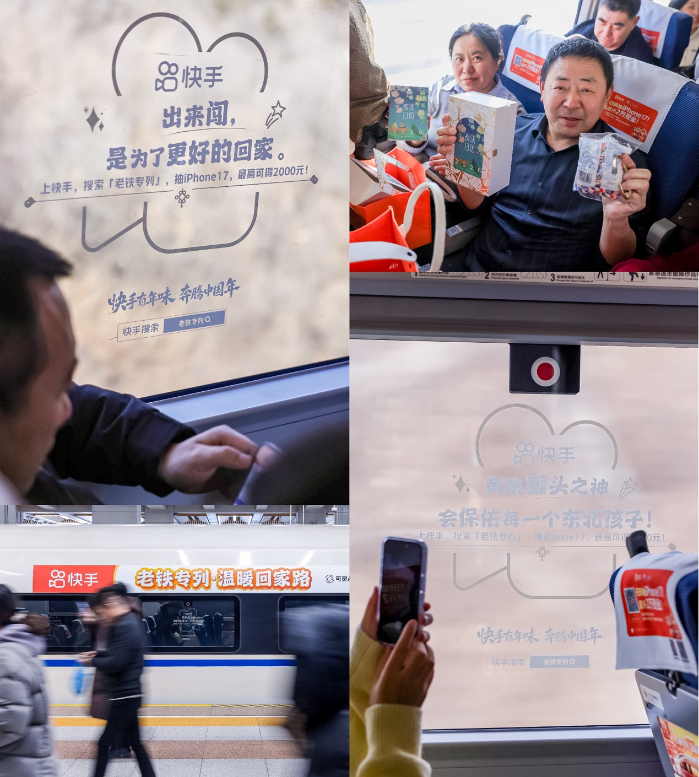
快手

Search documents
黑猫投诉2025年度影音直播领域投诉数据报告:投诉超11万件自动续费问题突出
Xin Lang Cai Jing· 2026-02-14 12:49
Core Insights - The report indicates a significant increase in complaints within the audio-visual live streaming sector, with a total of 110,400 complaints in 2025, marking a 13.55% rise compared to 2024 [1][8] Complaint Trends - Complaints peaked in May due to a specific event related to QQ Music, with high complaint volumes sustained during July and August due to summer programming [1][8] - The overall trend shows an initial rise in complaints followed by a decline, with fluctuations at high levels in the middle [1][8] Common Complaint Issues - Frequent complaints include issues such as automatic renewal without notification, inadequate after-sales service, and delayed withdrawals, indicating a need for improved compliance management and user rights protection [2][9] Complaint Amount Distribution - Over 57.6% of complaints involve amounts under 100 yuan, while 18.4% involve amounts over 500 yuan. The distribution shows a "high-low-high" pattern, with low-value complaints often related to subscription issues and high-value complaints linked to equipment purchases [3][10] Major Platforms and Complaint Volume - A total of 127 audio-visual live streaming platforms received complaints, with 15 major platforms accounting for over half of all complaints due to their large user bases [4][11] Response Rates of Platforms - Among major platforms, Youku leads with a 100% response rate, while QQ Music has the lowest at 56.77%, indicating varying levels of customer service effectiveness [5][12] Geographic Distribution of Complaints - The majority of complaints originate from economically developed provinces such as Guangdong, Shandong, and Jiangsu, which have high consumer demand [6][13] Demographic Profile of Complainants - The primary demographic for complaints consists of young to middle-aged individuals, particularly those aged 20-25, 26-30, and 31-40, who are frequent users of video platforms and sensitive to service quality [7][14]

春晚成了比拼舞台,上市公司谁能胜出?
Sou Hu Cai Jing· 2026-02-14 10:54
Group 1 - The core idea is that data-driven approaches, similar to how Kuaishou utilizes big data for the Spring Festival Gala, can transform investment decision-making by focusing on the behavior of institutional funds rather than just stock price fluctuations [1][2][14] - The concept of "institutional inventory" is highlighted as a key indicator in quantitative big data, reflecting the activity level of institutional funds; its presence indicates active participation, while its absence suggests a decline in participation willingness [2][6] - The relationship between stock price movements and institutional fund participation is emphasized, where a lack of institutional support leads to downward price trends, akin to a Spring Festival Gala losing audience interaction [6][10] Group 2 - Quantitative models have the ability to separate different trading behaviors, allowing for precise identification of fund behavior patterns, which traditional investment methods struggle to achieve [8][10] - The importance of capturing behavioral signals early is discussed, as it enables investors to make more informed decisions, similar to how Kuaishou anticipates user content needs for the Spring Festival [8][13] - The value of quantitative big data lies in its ability to convert abstract fund intentions into visible behavioral characteristics, helping investors establish stable decision-making logic without relying on subjective guesses [10][14] Group 3 - The article illustrates that maintaining awareness of institutional fund behavior can help investors remain composed during market fluctuations, as demonstrated by cases where active institutional participation led to price recoveries despite apparent volatility [13][14] - The overarching trend is the shift towards data-driven investment strategies, which allows ordinary investors to move away from anxiety over price predictions and develop a more objective understanding of market dynamics [14]


AI视频行业深度报告:技术跃迁驱动内容革命,把握产业变革新机遇
China Post Securities· 2026-02-14 10:32
Investment Rating - The report maintains a strong buy rating for the media industry, indicating a positive outlook for investment opportunities in the AI video sector [2]. Core Insights - The AI video generation technology is evolving rapidly, transitioning from GAN to DiT architectures, which are crucial for advancing towards AGI. This evolution is expected to significantly enhance the capabilities of AIGC (AI-Generated Content) [3][9]. - The global AI video generation market is projected to reach $296 million by 2026, with a year-on-year growth of 35.16%. The industry is exploring both consumer (C-end) and business (B-end) revenue models, with significant advancements in commercial applications expected in the near future [3][4]. Summary by Sections 1. Video Generation Evolution - Video generation integrates multiple modalities, including text, images, and audio, which enhances its complexity and expressiveness, representing the upper limit of AIGC capabilities [7]. - The technology has progressed from early GAN models to the current DiT architecture, marking a significant turning point in the industry with the introduction of models like OpenAI's Sora [9][25]. 2. Technical Progress - Current AI video generation models can produce short segments that approach professional production quality, with resolutions supporting 1080p and frame rates reaching 30fps. However, challenges remain in generating longer videos and maintaining physical realism [34][36]. - The emergence of world models is anticipated to address existing limitations in video generation, potentially leading to a new phase of technological advancement [33]. 3. Commercialization Progress - The AI video generation market is expanding rapidly, with both consumer and business segments progressing simultaneously. The C-end focuses on subscription models, while the B-end primarily utilizes APIs for applications in advertising and e-commerce [3][4]. - The industry is witnessing a shift towards integrating AI capabilities into film production, with significant projects already generating substantial revenue, such as Utopai's projects totaling approximately $110 million [3][4]. 4. Core Beneficiaries - Key companies benefiting from this trend include technology firms with proprietary algorithms, content providers with extensive asset libraries, and platforms actively integrating AI into marketing strategies [4].





谁是中国AI“第一城”?
机器人圈· 2026-02-14 09:48
Core Insights - The article highlights the rapid growth and development of China's artificial intelligence (AI) industry, showcasing significant user adoption and innovation across various sectors [3][4][14][24][31]. Group 1: AI Industry Growth - By the end of 2025, China's generative AI user base is projected to reach 602 million, a 141.7% increase from the end of 2024, with a penetration rate of 42.8%, up 25.2 percentage points year-on-year [3]. - The AI industry in Beijing has surpassed 2,400 companies, including 46 listed firms and 36 unicorns, accounting for over half of the national total [4]. - Shanghai's AI industry is expected to exceed 550 billion yuan in scale by the end of 2025, with a year-on-year growth rate of over 30% [14]. Group 2: Key Players and Innovations - Major companies leading the AI sector include ByteDance, Baidu, and Huawei, focusing on areas such as large models, AI algorithms, and smart driving [5][24]. - Shenzhen has seen a 22.6% year-on-year growth in its core AI industry, with a total scale reaching 368.5 billion yuan in 2024, indicating a shift towards source innovation [24]. - Hangzhou's AI industry is projected to grow from 300 billion yuan in 2023 to 399 billion yuan in 2024, with 84 listed companies and 10 unicorns by the end of 2025 [31]. Group 3: Data and Infrastructure - Beijing has registered 123 large model products and established a data foundation with over 150 petabytes of data [4]. - Shanghai has completed 137 registrations for generative AI services, building a workforce of 300,000 in the AI sector [14]. - Shenzhen's AI industry encompasses a full range of the supply chain, from chips to applications, with 2,887 related enterprises [24].




王濛把国风带到米兰,快手“米兰观赛团”用演出点亮新春仪式感
Huan Qiu Wang· 2026-02-14 07:52
Core Viewpoint - The event "Guofeng Yao Milan" organized by Kuaishou in Milan showcased traditional Chinese culture during the Winter Olympics, attracting a diverse audience and promoting cultural exchange [1][10]. Group 1: Event Highlights - The event featured performances by Kuaishou influencers and celebrated the Chinese New Year with traditional elements like lion dancing, which resonated well with both Chinese and foreign attendees [3][5]. - Winter Olympic champion Wang Meng was a key figure at the event, engaging with the audience and sharing her experiences with Chinese culture [3][7]. - The performances included various traditional art forms, such as Qin opera and monkey king acts, which captivated the audience and highlighted the richness of Chinese heritage [7][9]. Group 2: Audience Engagement - The event attracted a mix of Chinese students, expatriates, and foreigners interested in Chinese culture, creating a vibrant atmosphere filled with excitement and cultural appreciation [1][3]. - Attendees expressed their enthusiasm for the performances and the Winter Olympics, with some sharing personal connections to Chinese culture and their experiences in China [5][9]. - The event concluded with a message of unity and sportsmanship, emphasizing the importance of sports in bridging cultural gaps [10].

大屏小屏共绘新春画卷
Xin Lang Cai Jing· 2026-02-14 07:11
Group 1: Core Insights - The article highlights the diverse and rich entertainment offerings during the Chinese New Year, emphasizing the importance of family gatherings and cultural traditions [1][2][3] Group 2: Television and Drama Market - The drama market this Spring Festival showcases unprecedented diversity, covering various genres such as history, reality, comedy, suspense, and urban themes, catering to different age groups and aesthetic preferences [2] - The drama "Tree of Life," produced by Zhengwu Sunshine, was filmed over 188 days in real highland settings, showcasing Tibetan culture and ecological protection, which is relatively rare in domestic dramas [2] - The historical drama "Taiping Year" achieved high ratings and boosted sales of related historical books by 300%, with significant increases in tourism related to the show's themes [2] - Other notable dramas include "Youthful Ambition," "Rural Love 18," and "Return to Youth," which cater to family viewing needs during the holiday [2] Group 3: Cultural Events and Performances - Various high-quality themed galas are being produced, including nearly 10 events by Shanghai Broadcasting and Television Station, blending traditional culture with modern elements [3] - The 2026 Oriental TV Spring Festival Gala will feature a theme of cultural warmth and innovation, while the Lantern Festival will present an immersive cross-cultural show [3] - The Urban Channel is set to broadcast multiple high-quality performances, enhancing the festive atmosphere for viewers [3] Group 4: Short Drama and Interactive Entertainment - The short drama segment has seen a quality upgrade, transitioning from supplementary entertainment to a key component of New Year entertainment [4] - Numerous short dramas are being released, including light comedies and historical narratives, with significant pre-booking numbers indicating strong audience interest [5] - Platforms are innovating interactive entertainment formats, such as "card collection" games that engage viewers beyond passive watching [5]
春节红包超80亿,留存率或不足5%!究竟能换来多少「真用户」?
Xin Lang Ke Ji· 2026-02-14 01:49
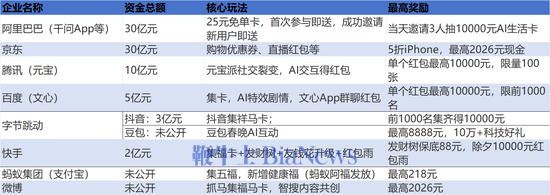
Core Viewpoint - The upcoming Spring Festival will see a fierce competition among major internet companies in the "red envelope war," with total investments exceeding 8 billion yuan, and potential cumulative spending reaching 10 billion yuan when including undisclosed amounts from various platforms [1][4]. Group 1: Investment and Participation - Major players in the red envelope competition include Alibaba, Tencent, Baidu, JD.com, ByteDance, and Kuaishou, with total disclosed amounts exceeding 8 billion yuan [4]. - Alibaba is leading with a 3 billion yuan investment through its Qianwen app, focusing on integrating user consumption behaviors with its ecosystem [6]. - Tencent has allocated 1 billion yuan for its Yuanbao app, aiming to enhance user interaction and experience [6]. - Baidu has committed 500 million yuan for its Wenxin assistant, targeting user engagement within its app [6]. - JD.com and Kuaishou have also announced significant investments, with JD.com planning to distribute 3 billion yuan in red envelopes [3][6]. Group 2: User Engagement and Retention - Experts warn that relying solely on red envelopes may lead to low user retention rates, with 7-day retention below 20% and 30-day retention potentially dropping below 5% [8][9]. - The effectiveness of red envelopes in retaining users is questioned, as they primarily address initial user acquisition rather than long-term engagement [9][10]. - Companies are encouraged to focus on product design and technological capabilities to meet user needs, rather than solely on promotional tactics like red envelopes [10]. Group 3: Competitive Landscape and Strategy - The competition is intensified by the emergence of generative AI technologies, with companies vying for user attention through innovative applications [5]. - ByteDance's Doubao is expected to benefit significantly from its collaboration with the Spring Festival Gala, leveraging its large user base for engagement [7]. - The strategies employed by different companies reflect their long-term visions, with Alibaba focusing on integrating user experiences and Tencent emphasizing social interaction [6][7].

春节红包超80亿,留存率或不足5%!究竟能换来多少“真用户”?
Xin Lang Cai Jing· 2026-02-14 01:37
Core Viewpoint - The upcoming Spring Festival will see a significant "red envelope war" among major internet companies, with total investments exceeding 8 billion yuan, and potential total funding reaching 10 billion yuan when including undisclosed amounts from various platforms [2][16]. Group 1: Investment Amounts and Strategies - Alibaba is investing 3 billion yuan through its Qianwen app, offering a 25 yuan free order card and incentives for new user referrals [3][14]. - JD.com is also contributing 3 billion yuan, providing shopping coupons and cash prizes, including a 50% discount on iPhones [3][14]. - Tencent is allocating 1 billion yuan for its Yuanbao app, focusing on social interaction and AI-driven features [3][14]. - Baidu is investing 500 million yuan in its Wenxin app, promoting card collection and AI-enhanced interactions [3][14]. - ByteDance's Douyin is contributing 300 million yuan, while the exact amount for its Doubao platform remains undisclosed [3][14]. - Kuaishou is investing 200 million yuan, utilizing various interactive features to engage users [3][14]. - Ant Group (Alipay) and Weibo have not disclosed their investment amounts but are participating in the red envelope activities [3][14]. Group 2: User Retention Concerns - Experts warn that relying solely on red envelopes may lead to low user retention rates, with 7-day retention below 20% and 30-day retention potentially dropping below 5% [8][21]. - The red envelope strategy addresses initial user engagement but fails to ensure long-term usage [8][21]. Group 3: Competitive Landscape and AI Integration - The competition is intensified by the emergence of generative AI technologies, with companies like Alibaba, Tencent, and Baidu leveraging their AI applications as key platforms for distributing red envelopes [6][16]. - The red envelope war reflects a shift in focus towards AI capabilities, with companies aiming to establish a competitive edge in the evolving digital landscape [6][16]. - ByteDance's Doubao is expected to benefit significantly from its collaboration with the Spring Festival Gala, potentially positioning it as a major winner in this year's competition [19].

春节回家,00后开始整顿相亲
吴晓波频道· 2026-02-14 00:39
Core Viewpoint - The article discusses the evolving marriage and dating perspectives of the post-95 and post-00 generations, highlighting their unique approaches to relationships and the implications for the consumer market [2][3]. Group 1: Marriage Trends Among Youth - A significant portion of the post-00 generation expresses a desire for early marriage, with 15.8% already in the preparation stage, contrasting with over half of the post-95 generation who have not yet experienced this [3]. - The first Valentine's Day after the nationwide marriage registration reform saw a surge in young people visiting civil affairs offices, with some regions reporting full booking for marriage registrations [3]. - The traditional marriage norms are being challenged by new dating practices, including group dating and the use of technology in matchmaking [3][20]. Group 2: Dating Strategies of the Post-00 Generation - The post-00 generation employs various strategies in dating, such as reversing the pressure of marriage onto their elders, with social media tutorials on how to respond to marriage pressure gaining millions of views [7]. - New criteria for choosing partners have emerged, focusing on personality traits, lifestyle compatibility, and even credit scores, reflecting a shift in values [8][9]. - Efficiency in dating is prioritized, with 66.8% of respondents open to chatting with multiple potential partners simultaneously [9]. Group 3: Changing Consumer Market Dynamics - The rise of "cyber matchmakers" and AI tools is transforming the matchmaking landscape, with traditional roles evolving to include more male matchmakers and tech-driven solutions [21]. - New dating venues are emerging, such as escape rooms and music festivals, which provide immersive experiences that facilitate connections based on shared interests [25]. - Wedding consumption is also evolving, with a strong preference for personalized and unique ceremonies, as 25% of young people express a desire for innovative wedding themes [26][27]. Group 4: Evolving Relationship Values - The demand for intimate relationships is increasing, with 76% of young people seeking companionship and 67% wanting to start their own families, indicating a shift from traditional motivations for marriage [36]. - The post-00 generation values mutual respect and emotional equality in relationships, with over 80% desiring active participation from both partners [38]. - The concept of "门当户对" (matching social status) is being redefined, focusing on compatibility in values and lifestyle rather than just material wealth [39][42]. Group 5: The Rise of Female Empowerment - The article notes a significant shift towards female empowerment in relationships, with women taking more initiative in dating and decision-making [44]. - A majority of young people believe in the necessity of premarital health checks, reflecting a proactive approach to relationships [46]. - The evolving dynamics indicate a trend towards more freedom and authenticity in love, as the post-00 generation navigates emotional and rational aspects of relationships [47].

守得住热土,才能端出有根的年味
Xin Lang Cai Jing· 2026-02-13 17:23
Core Viewpoint - The article emphasizes how Kuaishou is transforming the expression of traditional Chinese New Year celebrations by integrating digital technology with local cultural experiences, making the festive atmosphere more immersive and accessible to a wider audience [1][3][9]. Group 1: Digital Integration in Cultural Celebrations - Kuaishou has launched a series of activities in Northeast China during the Spring Festival, aiming to connect online and offline experiences, allowing users to engage with the festive atmosphere directly [1][3]. - The platform introduced a 12-hour live broadcast titled "Immersive Northeast New Year," linking multiple locations such as Shenyang and Changchun, enabling millions to experience the vibrant local culture [3][5]. - The live broadcast focused on the natural progression of the New Year celebrations rather than scripted highlights, fostering a sense of trust and immersion among viewers [5][9]. Group 2: Community Engagement and Cultural Transmission - Kuaishou's approach has broken down geographical barriers, allowing users from across the country to participate in Northeast traditions, thus creating a shared cultural experience [5][7]. - The platform has facilitated various performances and events, such as the "Liu Laogen Grand Stage" live broadcast, featuring familiar local artists to enhance community engagement [7][9]. - Kuaishou's initiatives are not just about immediate viewership but aim to sustain cultural memory and traditions across generations, creating a lasting impact on the celebration of the New Year [9][10]. Group 3: Innovation in Traditional Practices - The integration of traditional elements with modern technology has allowed Kuaishou to present a new form of cultural expression, ensuring that the essence of the New Year remains vibrant and relevant [10]. - The platform's activities, such as the "online + offline" model for the Shenyang Lantern Festival, demonstrate a successful blend of digital interaction and local customs, enhancing the festive experience for participants [7][9]. - Kuaishou's commitment to preserving cultural roots while innovating new practices reflects the enduring human desire for connection and celebration during the New Year [10].