瑞幸咖啡

Search documents
第一财经、应帆科技首发《中国消费品牌智能创新白皮书》
第一财经· 2026-01-21 12:59
1 月 21 日,第一财经、应帆科技正式发布 "2025 中国消费品牌智能创新大调查 " 研究成果,重 磅首发 《 2025 中国消费品牌智能创新白皮书》 ,并同步揭晓 " Growth50·2025 中国消费年度 智能创新领导品牌 " 及各项代表案例,全景式展现中国创新消费新潮。上海广播电视台(上海文广 集团)副台长、副总裁,第一财经党委书记、董事长,应帆科技董事长李蓉表示, " 当前,千行百 业都已进入 ' 智能驱动 ' 阶段,本次大调查为消费品牌的智能创新提供切实的参照系与行动指南, 是第一财经消费生态圈建设的关键举措。 " 2025 中国消费品牌 智能创新大调查 Growth50-2025 中国消费 年度智能创新领导品牌 注:按首字母排序 安克创新 A 安琪 霸王茶姬 B 珀菜雅 波司登 回望过去几年,消费市场数度变迁。应帆科技旗下第一财经商业数据中心( CBNData )作为消费 领域的长期观察者,已连续四年发起 " 中国消费品牌增长力大调查 " ,从新消费元年的 " 看长 " 到震荡时期的 " 向真 " ,从不确定环境下的 " 应变 " 到审视初衷的 " 塑心 " ,持续探寻中国消费 的发展脉络。 ...


世界中餐业联合会&黑峪投资:中国咖啡产业报告2025
Xin Lang Cai Jing· 2026-01-21 10:26
Core Insights - The global coffee industry is experiencing significant changes, with key events shaping its future, including extreme weather impacts, mergers, and technological advancements in coffee production and processing [3][4][13]. Group 1: Industry Trends - The global coffee production is projected to reach approximately 178.8 million bags (60kg each) in the 2025/26 season, with a notable increase in Robusta production by 10.9% to 8.33 million tons, while Arabica production is expected to decline by 4.7% to 9.55 million tons [4]. - The coffee market is becoming increasingly competitive, with major players like Nestlé, JDE Peet's, and Starbucks dominating the roasting segment, accounting for about 40% of the market share [15][17]. - The introduction of the EU Deforestation Regulation (EUDR) is pushing companies towards sustainable practices, impacting supply chain costs [3]. Group 2: Market Dynamics - The price of coffee futures has reached a 47-year high, exceeding 430 cents per pound, driven by extreme weather conditions and shipping disruptions [3][13]. - The Chinese coffee market is evolving, with a projected consumption of over 400,000 tons by 2025, reflecting a compound annual growth rate (CAGR) of 10% [39][40]. - The coffee roasting capacity in China is expected to surpass 350,000 tons by 2024, with major brands like Luckin Coffee and Starbucks expanding their production capabilities [41][44]. Group 3: Technological Innovations - Advances in coffee processing technology, such as the development of non-caffeinated coffee through molecular restructuring, are emerging as significant trends [3]. - The integration of AI in coffee production is enhancing yield predictions and flavor profiling, marking a shift towards more data-driven approaches in the industry [3][4]. Group 4: Regional Developments - Indonesia's Fore Coffee has successfully listed on the IDX, highlighting the growth of local coffee brands in emerging markets [3]. - China's coffee cultivation is transitioning from expansion to quality improvement, with a diversification of coffee varieties, particularly in Yunnan, where over 80% of coffee is Arabica [23][24][26].


被连锁咖啡馆“贴脸”的独立咖啡店,还怎么存活下来?
东京烘焙职业人· 2026-01-21 08:33
Core Insights - The article discusses the rapid expansion of chain coffee brands like Luckin and Kudi, which has shifted consumer habits towards affordable coffee options, creating challenges for independent coffee shops [1][5]. Group 1: Challenges Faced by Independent Coffee Shops - The expansion of chain coffee brands has led to a significant increase in competition, with Luckin Coffee achieving a record net increase of 3,008 stores in Q3 2025, bringing its total to 29,214 stores globally, equating to over 33 new stores opening daily in China [1][5]. - Despite the registration of 32,000 coffee-related businesses in China by Q3 2025, the closure rate for independent coffee shops has risen to 40%, indicating a challenging environment for survival [1][5]. - Independent coffee shops often face immediate competition from chain brands upon opening, leading to a loss of potential customers who prefer the convenience and familiarity of chain offerings [5]. Group 2: Factors Contributing to Competition - Geographic location plays a crucial role, as chain brands utilize comprehensive site selection strategies based on foot traffic, accessibility, and competition density, making it difficult for independent shops to find viable locations [5]. - The target customer base for both independent and chain coffee shops overlaps significantly, with students and office workers being the primary consumers. Chain brands effectively cater to this demographic through standardized products and efficient online ordering systems [9][15]. - Chain brands benefit from lower product costs due to established supply chains, allowing them to offer lower prices, such as the common 9.9 yuan coffee, which alters consumer price expectations and makes independent shops' higher prices less appealing [9][15]. Group 3: Strategies for Independent Coffee Shops - To survive, independent coffee shops should focus on enhancing coffee quality, ensuring that they offer superior products that meet the discerning tastes of consumers who seek quality over quantity [17]. - Improving cost-performance ratio is essential, as independent shops need to redefine their value proposition to attract customers who may perceive them as overpriced. Strategies could include offering better quality at competitive prices, as demonstrated by the Manner brand [18]. - Differentiation through personalized service and unique offerings can set independent coffee shops apart from chains. This includes providing diverse food options and creating inviting atmospheres that enhance customer experience [20][21]. Conclusion - The expansion of chain coffee brands does not eliminate the potential for independent coffee shops to thrive. Instead, the increasing standardization of chain offerings creates opportunities for independent shops to leverage their unique qualities and innovate to attract customers [24].
以“营商”之笔答“赢商”之问,城阳构筑高质量发展“强磁场”
Qi Lu Wan Bao· 2026-01-21 06:28
Core Viewpoint - Qingdao's Chengyang District is transforming its business environment through systematic reforms, focusing on stability, precise services, and a comprehensive competitive ecosystem, leading to significant growth in market entities and innovation-driven enterprises [1][2]. Group 1: Business Environment Optimization - Chengyang District has implemented a four-year iterative policy design to create a stable and predictable business environment, culminating in the 4.0 version of the action plan that includes 40 specific tasks across five areas [2]. - The district's approach emphasizes digital governance, reducing bureaucratic hurdles for businesses, with over 22,000 registered users on the "Chengshi Tong" platform and 550,000 completed transactions [3]. Group 2: Legal and Regulatory Framework - Chengyang has established a "three-inspection linkage" supervision mechanism to ensure transparency and fairness in law enforcement, significantly reducing administrative burdens on businesses [4]. - The district has expanded its "light penalty" list to cover 304 items, resulting in nearly 8 million yuan in fines waived for businesses [4]. Group 3: Market Entity Growth - In 2025, Chengyang added 37,600 new market entities, including 94 newly registered foreign-invested enterprises, accounting for 20.83% of Qingdao's total foreign enterprises, indicating strong investor confidence [5]. Group 4: Service Innovation - Chengyang has introduced the "Youqi Loan" financing product and organized eight financing matchmaking events, resulting in over 34 billion yuan in new credit for 90 quality industrial enterprises [7]. - The district has established a "one-stop" service mechanism for businesses, achieving a 99.8% completion rate for nearly 1,000 enterprise requests [7]. Group 5: Project Acceleration - Chengyang has successfully expedited major projects, such as the Huawei Harmony Super User Center, which was established in just 18 days, and the Penghui Energy battery production base, which has become a benchmark for the local energy industry [8]. Group 6: Grassroots Implementation - Local street offices have actively supported projects by providing tailored services, such as organizing job fairs and facilitating housing for employees, enhancing the overall business environment [9][10]. - The district's transportation department has improved public transit connections to support employee commuting, demonstrating a commitment to addressing operational challenges faced by businesses [11]. Group 7: Future Outlook - The ongoing efforts in optimizing the business environment are expected to yield long-term benefits beyond immediate economic growth, fostering a resilient and vibrant entrepreneurial ecosystem in Chengyang [12].
从“边缘”到“主流” A股上市公司董责险投保大增
Jin Rong Shi Bao· 2026-01-21 01:44
董责险在A股市场正进入加速普及期。 近日,上海市建纬律师事务所、险律科技(北京)有限公司及明亚保险经纪股份有限公司联合发布 《中国上市公司董责险市场报告(2026)》(以下简称《报告》)显示,2025年共有643家A股上市公 司公告购买董责险计划,较上年同比增长19%。其中,256家为首次披露,显示出强劲的新增需求。 制造业与民企成增长主力 董责险是为上市公司董事、监事及高级管理人员在履职过程中因不当行为,如疏忽、错误陈述等被 追究个人赔偿责任时,提供法律抗辩费用及民事赔偿保障的险种。 董责险费率降至"洼地" 近年来,随着新证券法与新公司法的实施,以及康美药业、瑞幸咖啡等标志性事件,引发了市场对 高管责任的空前关注。叠加监管环境趋严,董责险的价值被重新发现,市场需求被激活。 《报告》显示,在2025年新增投保董责险的A股上市公司中,制造业公司数量依然遥遥领先,"计 算机、通信和其他电子设备制造业"最多,随后是"专用设备制造业"和"软件和信息技术服务业"。 从企业性质看,民营企业需求崛起,但国有企业渗透率领先。在2025年新增投保公司中,民营企业 占比近六成。在新公司法强化董监高个人责任的背景下,民营上市公司及 ...
2025中国咖啡产业报告
世界中餐业联合会&黑峪投资· 2026-01-21 01:20
Investment Rating - The report indicates a positive outlook for the coffee industry, particularly in China, with a projected compound annual growth rate (CAGR) of approximately 20% for the next five years in terminal consumption [6][25]. Core Insights - The global coffee production for the 2025/26 season is expected to reach 178.8 million bags (60kg per bag), with a notable increase in Robusta production by 10.9% to 83.33 million bags, while Arabica production is projected to decline by 4.7% to 95.51 million bags due to adverse weather conditions in Brazil [6][10]. - The coffee market is experiencing significant changes, including the introduction of new technologies in production and brewing, the rise of functional coffee products, and the increasing importance of local brands in China [3][17]. - The Chinese coffee market is evolving from a focus on instant coffee to a more diverse range of products, with an emphasis on quality and specialty coffee, as evidenced by the growth of local brands and the increasing variety of coffee beans being cultivated [25][40]. Summary by Sections Coffee Industry Value Chain - The coffee value chain is highly concentrated, with major players controlling significant portions of production, trade, and retail. The top four traders dominate the upstream segment, while brands like Nestlé and JDE control a large share of the downstream market [6][20]. - The global coffee market is estimated to exceed $100 billion, with the terminal market in China projected to surpass 150 billion yuan [8][10]. Coffee Production and Quality - Coffee quality is influenced by various factors, including the type of beans, processing methods, and roasting techniques. The report highlights the importance of maintaining high standards in each stage of the coffee production process [8][21]. - The report notes that Arabica beans account for nearly 60% of global coffee production, with a focus on quality and flavor driving market trends [10][11]. Chinese Coffee Market - China's coffee planting area is stabilizing, with a shift towards quality improvement and diversification of coffee varieties. By 2025, the production value is expected to rise significantly due to enhanced processing techniques and a growing emphasis on specialty coffee [25][29]. - The consumption of coffee in China is projected to exceed 400,000 tons by 2025, reflecting a growing trend towards premium and specialty coffee products [40][41]. Competitive Landscape - The competitive landscape in the coffee industry is characterized by a mix of global giants and emerging local brands. Companies like Luckin Coffee are expanding rapidly, while traditional players are adapting to new market dynamics [18][46]. - The report identifies a trend towards vertical integration among leading brands, with companies investing in their own roasting facilities to ensure quality control and cost efficiency [46][47].

咖啡系列四:云南咖啡产业特点总结
Hua Tai Qi Huo· 2026-01-21 00:41
1. Report Overview - The coffee series special report consists of four parts, with the fourth one summarizing the main characteristics of the current Yunnan coffee industry from four aspects: planting cost, grading classification, pricing mechanism, and industrial chain development [3] 2. Planting Cost: Diverse Accounting - As of November 2025, the average yield per mu of commercial coffee fresh fruit in Yunnan is about 700 - 800 kg, and about every 6 - 7 kg of fresh fruit can produce 1 kg of green beans, so the yield of green coffee beans is about 120 kg per mu. The cost of fresh coffee fruit is about 5 yuan/kg, and the cost of green coffee beans is between 25 - 40 yuan/kg. Cost components include rent, labor, fertilizers, picking, and initial processing [6] - Different business entities, production areas, varieties, and planting patterns have a significant impact on costs. Small and medium - sized coffee farmers mainly grow commercial beans, while boutique coffee is mainly planted in estates. The cost of boutique estates is 2 - 3 times that of small and medium - sized farmers [7] - High - altitude production areas have higher costs due to the need to optimize the planting environment and management standards for high - quality varieties. Yunnan coffee is often planted in a multi - layer composite structure with economic crops like macadamia, which can share costs and increase efficiency [7][8] 3. Bean Grading: Unique Standards - Coffee grading is based on various standards, with the ICO and SCA standards having an increasing influence. The market is divided into commodity beans and boutique beans, with different grading methods [9] - Physical attributes include bean size (classified by screen size), shape (round and uniform preferred), color (light blue or light green for Yunnan beans), density (higher density is better), moisture content (controlled at 9% - 12%), and processing methods (washed beans are cleaner) [15] - Defect assessment includes counting major and minor defects, with the boutique level requiring no major defects and no more than 5 total defects per 300g (SCA standard). Defects affect flavor purity [16] - Altitude is directly related to bean hardness and acidity, and regional soil properties also affect the bean grade. Cup - tasting is a unique and important part of coffee grading, with clear evaluation criteria for different dimensions [17][21] 4. Pricing Mechanism: Rich Dimensions - The global coffee pricing mechanism is a complex system composed of the futures market, the spot market, and special trading mechanisms. The futures market price dominates the global coffee spot market pricing [23] - The ICE Arabica coffee futures contract and the ICE Europe Robusta coffee futures contract are the most influential in the world. The spot market pricing generally uses the "futures price + premium/discount" model, and high - quality boutique coffee uses a flavor - based pricing mechanism [23][24][25] - Historically, Yunnan coffee prices were mainly determined by international coffee traders and large foreign - funded enterprises. Currently, domestic enterprises have become the main players in Yunnan coffee trade, and the dependence on the international futures market is decreasing [26][27] - The entire coffee industry chain looks forward to the construction of a domestic coffee futures market, which can help farmers, traders, and enterprises manage price risks and enhance China's international pricing power [29] 5. Industrial Chain: Uneven Development - The Yunnan coffee industry chain consists of upstream planting, mid - stream processing, and downstream distribution, showing an uneven development pattern. However, this situation has been continuously improved with policy support [30] - In terms of value distribution, the downstream distribution环节accounts for 93% of the value - added, while the upstream planting accounts for only 1% and the mid - stream processing accounts for 6%. The upstream is highly affected by price fluctuations, and the mid - stream has limited value - added due to low - end processing [31][32] - In terms of industrial chain concentration, the upstream and mid - stream have low concentration, with small - scale and scattered operations. The downstream has a relatively high concentration, and the market is shifting from extensive expansion to refined operation, but brand building and traceability systems still need improvement [34][35][36]
马年将至消费板块修复在即,摩根大通研报:中国消费股已具备足够吸引力
Zhi Tong Cai Jing· 2026-01-20 14:28
Core Insights - The Chinese consumer sector is showing signs of recovery in early 2026 after a five-year underperformance period from 2021 to 2025, driven by a combination of policy support and structural differentiation in demand [1] - The report highlights that the risk-reward ratio for Chinese consumer stocks is now attractive due to valuation advantages and profit resilience, with a focus on sector differentiation and company-specific opportunities [1] Industry Fundamentals: Mild Recovery Under Pressure - The current landscape of the Chinese consumer industry is characterized by "weak demand recovery and profit repair," with retail sales growth slowing to 1.3% year-on-year in November 2025 [2] - Forecasts suggest retail sales growth will remain at 2.6% and 2.5% for 2026 and 2027, respectively, amid a GDP growth slowdown to 4.5% and 4.1% [2] - Profit expectations for 2025 have been downgraded, with projected sales and net profit growth of only 3.7% and 8.8%, respectively, indicating potential further downward revisions if no additional stimulus is implemented [2] Core Trends Iteration: Restructuring Competitive Landscape - Price deflation has become a significant characteristic of the industry, with notable declines in key products, such as the price of Feitian Moutai dropping over 60% from its peak [3] - The trend of industry consolidation is accelerating, with leading companies leveraging cost control and digital technologies to capture market share from smaller brands [3] Changes in Consumer Behavior: Affordable Self-Indulgence and Experience-Driven Consumption - In the context of consumption downgrade, "affordable self-indulgence" has emerged as a core logic for younger consumers, who are price-sensitive yet willing to pay for emotional value and experiences [4] - Successful strategies in this segment involve differentiation, as seen with companies like Pop Mart, which utilizes a multi-IP matrix to mitigate risks associated with single IP lifecycle [4] Overseas Expansion and Demographic Restructuring Growth Logic - To counter domestic growth challenges, leading companies in sectors like home appliances and sportswear are accelerating their overseas expansion, benefiting from stronger demand and more rational competition [6] - The ongoing demographic shift, including a declining birth rate and an aging population, presents both challenges and opportunities for various sectors, driving demand growth in areas like personal care and elder services [6] Global Perspective: Valuation Advantages of Chinese Consumer Stocks - After five years of adjustment, the valuation bubble in the Chinese consumer sector has significantly compressed, with a projected P/E ratio of 17 times for 2026, lower than several other markets [7] - Notable performers since early 2026 include brands like Gu Ming and Li Ning, reflecting market recognition of quality leading companies [7] Transition from High Growth to Steady Defensive Full-Spectrum Layout - The Chinese consumer industry is transitioning from a "same rise and fall" cycle to an era where "structure is king," supported by policy measures and evolving consumption trends [8] Recommended Investment Targets - JPMorgan highlights six key investment targets across different sectors, including Laopu Gold, Luckin Coffee, and Pop Mart, focusing on companies that benefit from policy support and have strong competitive advantages [9] - Investment strategies should concentrate on sectors benefiting from policy stimulus, affordable self-indulgence trends, and those with overseas expansion capabilities to navigate domestic growth challenges [9]
爷爷不泡茶新品翻车,林里LINLEE估值10个亿
3 6 Ke· 2026-01-20 03:55
Core Insights - The tea and coffee brands are actively expanding their store presence, adjusting strategies, innovating scenarios, and exploring overseas markets [1][2][3] Store Expansion and Adjustments - Luckin Coffee opened 190 new stores, while Kudi opened 75 in China. Kenyue Coffee launched its 100th store in Beijing, and Cuonai Xiaojuan Village opened 9 new stores in cities like Nanjing and Hangzhou after a contraction period [1] - Lele Tea clarified that it is not exiting the Zhengzhou market but is adjusting its stores and preparing for new types of outlets [1] - Tea Yanyue's parent company is hiring in Beijing, Shenzhen, and Shanghai, indicating potential new store openings [1] Overseas Expansion - Kudi opened 8 new stores in Canada and Germany, while Ice Pure Tea signed global agreements for over 4,000 stores, with more than 1,000 overseas [2] - Tea Baidao signed a strategic cooperation agreement with Singapore's well-known supermarket brand, aiming to accelerate its market entry in Singapore [2] - Jasmine Milk plans to open 80-100 stores in North America by 2026 and expand into Indonesia with 40-50 stores [2] Performance Goals and Franchise Models - Linli plans to achieve an annual GMV of 800 million yuan by 2025, with a target of 3,000 stores by 2026 and 5,000 stores by 2027, aiming for a GMV of 6 billion yuan [3] - Gu Ming announced a new franchise policy for 2026, with a total franchise fee of approximately 250,000 yuan, allowing for installment payments [3] Product Innovations and Marketing - New product launches include Bawang Tea's matcha-based drinks, CoCo's black sugar pearl latte, and Starbucks' truffle chocolate-flavored lattes [4] - Collaborative marketing activities are ongoing, such as Gu Ming's collaboration with Xian Ni and Luckin Coffee's partnership with the animated series Mo Dao Zu Shi [4] Quality Control and Industry Practices - A post from a Shuyi Shao Xian Cao employee highlighted a fine for not following product standards, reflecting the industry's focus on quality control and food safety management [5] - Reports of Starbucks removing charging sockets were clarified as remnants from store upgrades [5] Financial Developments - Linli completed a multi-million A round financing, with a valuation of nearly 1 billion yuan, aimed at brand and supply chain upgrades [6] - Hu Shang A Yi projected a profit of approximately 495 million to 525 million yuan for the previous year, a year-on-year increase of 50% to 60% [6] - Coca-Cola abandoned plans to sell Costa Coffee due to unsatisfactory bids, with a target price of 2 billion pounds [6] - Keurig Dr Pepper initiated a full acquisition of JDE Peet's, offering 31.85 euros per share, totaling 18 billion dollars [6]
商场B1B2层,“最强开店王”大洗牌!
3 6 Ke· 2026-01-20 02:17
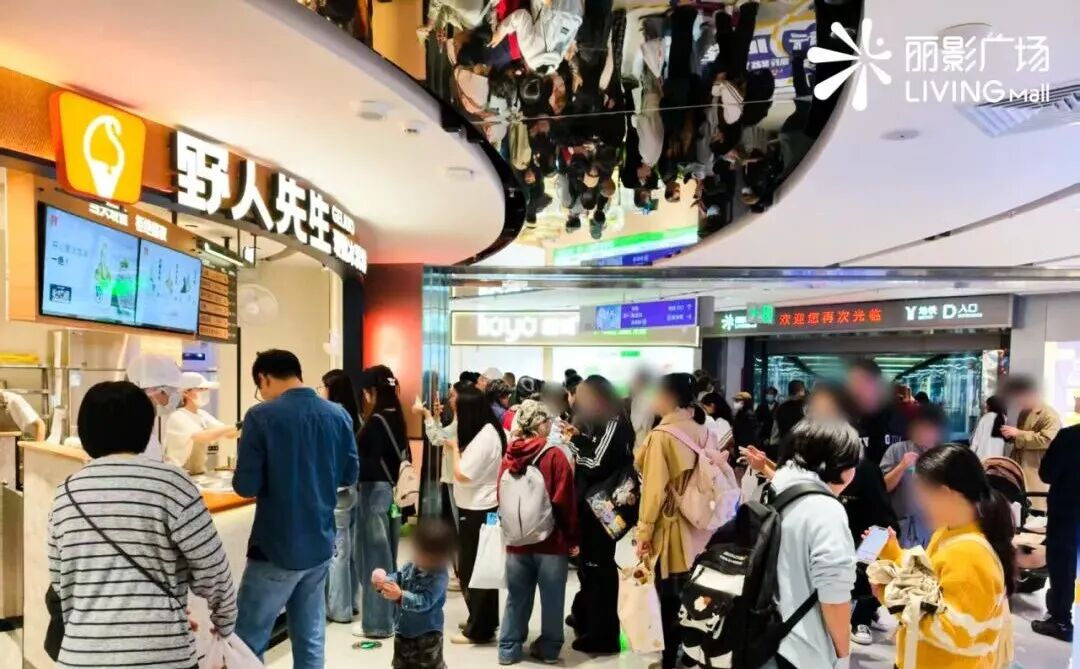
Core Insights - The B1B2 levels of shopping malls have transformed into vibrant spaces that attract young consumers, reflecting a shift in the Chinese consumer market towards experiences that provide emotional value rather than mere ownership [1][2] - The B1B2 levels are characterized by a mix of instant dining and emotional retail, with dining accounting for approximately 45% and retail around 35% of the space [2][3] Group 1: B1B2 Level Dynamics - The B1B2 levels are experiencing a value reassessment, with a stable distribution of five major sectors: retail, dining, children's activities, cultural and entertainment, and lifestyle services [2] - Instant dining, particularly snack and beverage options, is a key driver of foot traffic, appealing to young consumers with low prices and high convenience [3][4] - The popularity of baked goods is on the rise, projected to exceed 7.15% by 2025, with new brands emerging to meet social and self-indulgent needs [4][5] Group 2: Emotional Retail and Consumer Trends - Emotional retail focuses on sales experiences and social currency, providing a sense of joy without spending money, thus injecting freshness and engagement into the B1B2 levels [5][7] - Young consumers prioritize emotional returns on investment, seeking experiences that enhance their feelings rather than just acquiring products [7][20] - The presence of lifestyle services, such as pet shops and lottery stations, contributes to maintaining foot traffic and a relaxed atmosphere in the B1B2 levels [14] Group 3: Market Adjustments and Brand Opportunities - Certain categories, such as automotive showrooms and luxury goods, are shrinking in the B1B2 levels due to their low-frequency nature, while traditional categories like beauty and women's apparel are also declining [8][12] - The B1B2 levels are seeing a significant turnover, with over 22% of total store adjustments occurring in this area, indicating a dynamic market environment [15][16] - Brands that align with the instant dining and emotional retail trends, such as Wildman and Tamkoko, are rapidly expanding, indicating a shift towards brands that offer immediate satisfaction and emotional engagement [19][20]