Momenta

Search documents
儿童能避开的纸箱,难倒了天价开发的AI司机
Di Yi Cai Jing· 2025-10-20 03:22
Core Insights - The safety of advanced driver-assistance systems (ADAS) has become a significant concern in the automotive industry following several accidents, highlighting the need for clearer communication regarding the capabilities and limitations of these technologies [2][3] Group 1: Misunderstandings in Consumer Perception - There exists a cognitive gap between consumer expectations and the actual capabilities of ADAS, leading to misconceptions about what these systems can handle, particularly in complex scenarios [3][4] - A recent incident involving a vehicle colliding with a stationary construction vehicle while using adaptive cruise control has raised questions about the system's ability to recognize static obstacles [3][5] - Consumers often believe that ADAS should easily manage common obstacles, such as large objects on the road, which reflects a widespread misunderstanding of the technology's limitations [3][6] Group 2: Technical Challenges - The detection of common obstacles, such as a 50 cm cardboard box, poses significant challenges for current ADAS technology, which relies heavily on high-performance sensors like LiDAR [4][6] - The complexity of recognizing static objects is compounded by the fact that many of these objects are part of the road environment and do not require avoidance, leading to potential safety issues if the system reacts inappropriately [6][7] - The industry is working on improving ADAS through multi-sensor fusion and extensive data collection to address these challenges and enhance the system's understanding of various scenarios [7][8] Group 3: Industry Response and Training - Companies are actively engaging in training programs for sales personnel to better communicate the capabilities and limitations of ADAS to consumers, ensuring that users have a realistic understanding of the technology [8] - The industry recognizes the need for a responsible approach to developing and deploying ADAS, emphasizing the importance of quality and safety in engineering practices [7][8]
智电化重塑全球汽车格局 曹旭东:“中国AI”走向世界
Zhong Guo Jing Ji Wang· 2025-10-20 03:07
Core Insights - The rapid development of artificial intelligence (AI) technology in China is not only confined to the domestic market but is also expanding globally [1] - Collaboration between Chinese automotive companies and foreign enterprises is evolving, with a trend towards convergence in operational models and decision-making processes [3] Industry Trends - The automotive industry is witnessing a shift in collaboration dynamics, where technology companies like Momenta are gaining more influence and strategic partnerships with car manufacturers [4] - The importance of intelligent driving assistance is increasing, with expectations that it will become a standard feature in vehicles due to rapid advancements in technology and cost reductions [3] Company Positioning - Momenta has established itself as a leading player in the intelligent driving sector, benefiting from early market entry and rapid scale expansion, having reached a milestone of over ten million vehicles equipped with its technology [3] - The company's success is attributed to a strong technical foundation, with a founding team that possesses deep learning expertise, positioning it well to leverage advancements in AI [3]

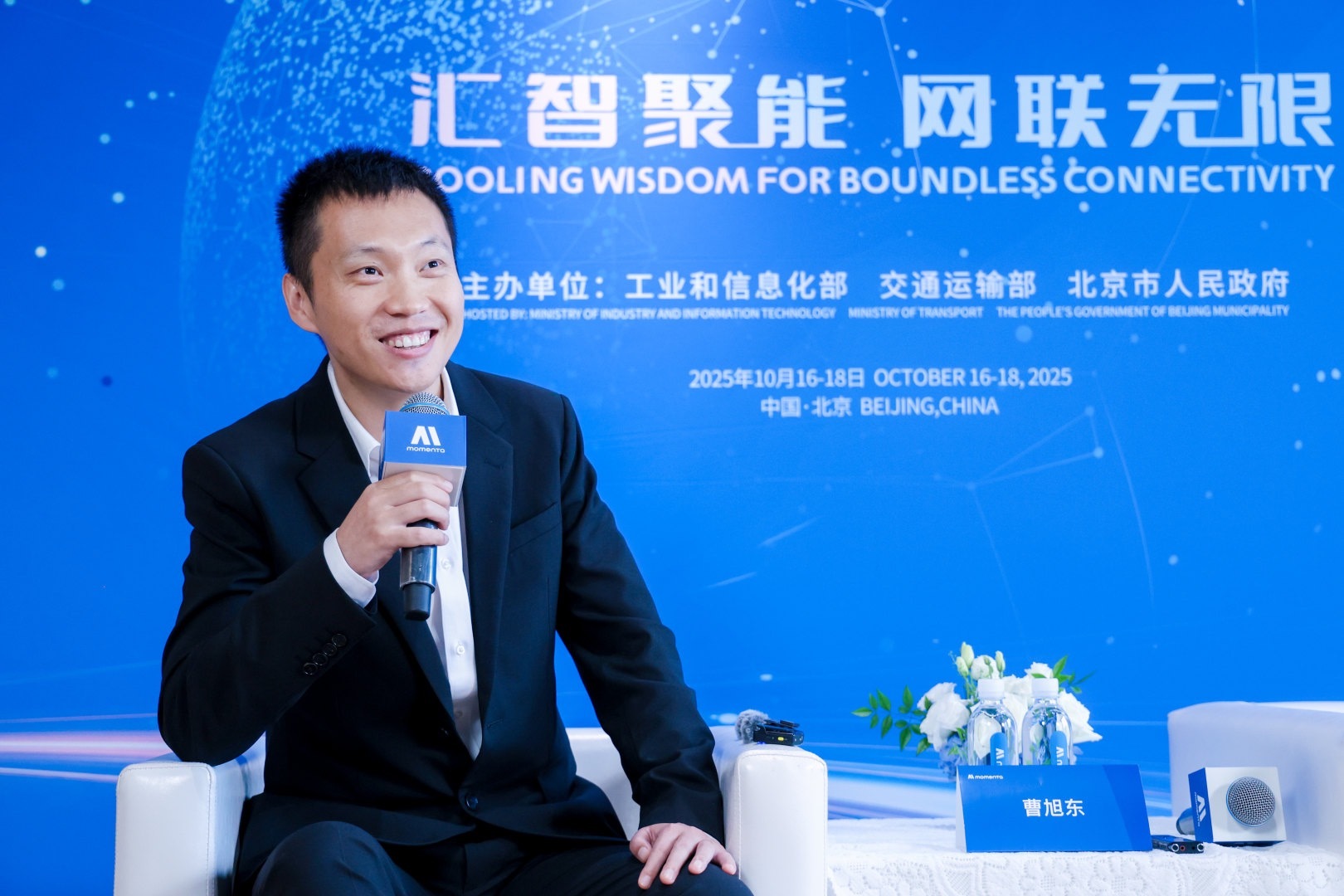
Momenta CEO曹旭东:中国AI正借智驾出海 服务全球玩家
Zhong Guo Qi Che Bao Wang· 2025-10-20 01:04
Core Insights - The global value of Chinese AI in the automotive sector is being highlighted, with a focus on deep collaborations with multinational car manufacturers and the potential for Chinese driving safety standards to lead globally [2][3] Group 1: Chinese AI's Global Impact - Chinese AI has become a key solution for global car manufacturers in their smart transformation, with the international expansion of smart driving being a significant path for Chinese AI companies [3] - Momenta has shown remarkable performance, increasing the number of mass-produced models from 1 in 2022 to 8 in 2023, and projected to reach 26 in 2024, with over 160 models in collaboration with leading global car manufacturers [3][4] Group 2: Industry Standards and Safety - The development of stringent driving safety standards in China is crucial for the global competitiveness of Chinese smart driving technologies, addressing various accident scenarios to enhance industry safety [4][6] - Momenta has established multiple safety layers in its development process, ensuring rigorous testing and validation before deployment in customer projects [6] Group 3: Market Dynamics and Future Outlook - The smart driving industry is expected to see a clear competitive landscape by next year, particularly in urban assistance driving, but the overall autonomous driving market remains open for new entrants [7] - The industry is experiencing a Matthew effect, where larger companies with better data and models will dominate, attracting more partnerships and reducing costs [7]

BBA“转身”求变 中国“智”造借势赋能
Zhong Guo Qi Che Bao Wang· 2025-10-20 00:48
Group 1 - The core focus of competition in the global luxury car sector is shifting from "mechanical performance" to "intelligent experience," particularly in the Chinese market [2] - Mercedes-Benz is accelerating its efforts in automotive intelligence by collaborating with Momenta to develop a combined driving assistance system for the upcoming pure electric CLA model [2][3] - Mercedes-Benz (Shanghai) Digital Technology Co., Ltd. acquired 136 million shares of Qianli Technology at a price of 9.87 yuan per share, totaling 1.339 billion yuan [2] Group 2 - The strategic adjustments of luxury car manufacturers like Mercedes-Benz, BMW, and Audi (BBA) are driven by the need to adapt to the rapidly changing market demands in China [3] - Mercedes-Benz plans to launch at least four new models featuring the jointly developed system between 2025 and 2027, utilizing local data for training [3][4] - BMW is collaborating with Momenta to develop a new generation of driving assistance systems for the Chinese market, with the first model expected in 2026 [4] Group 3 - The integration of luxury car manufacturers with China's intelligent automotive supply chain signifies a new phase of global output for Chinese companies [5] - China's automotive supply chain is evolving from traditional components to high-value intelligent solutions, driven by a skilled engineering workforce and cost advantages [6][7] - The collaboration with BBA enhances the global recognition and influence of Chinese automotive suppliers, marking a significant shift in the competitive landscape [8][9] Group 4 - The partnerships with BBA are expected to elevate the capabilities of Chinese automotive suppliers, leading to improvements in compliance, quality control, and intellectual property management [9][10] - The first round of industry consolidation is characterized by Chinese suppliers moving from secondary to primary supplier roles, enhancing their bargaining power [10] - The second round of consolidation will see resources concentrating among leading firms, creating a more competitive and efficient industry ecosystem [10]

中国智能网联汽车加速驶来,英媒:这与欧洲汽车行业的迟缓步伐形成鲜明对比
Huan Qiu Shi Bao· 2025-10-19 23:09
Core Insights - The 2025 World Intelligent Connected Vehicle Conference in Beijing highlighted China's achievements in the automotive industry and its plans for the next five years, emphasizing the country's decisive lead in the global smart vehicle sector [1][4]. Industry Developments - China's automotive industry has established a complete industrial system covering smart cockpits, autonomous driving, and connected cloud control, with over 60% of new passenger cars sold featuring advanced driver assistance systems [1][2]. - The rapid development of smart driving technology in China is attributed to the integration of artificial intelligence across domestic and joint venture automakers, positioning Chinese tech companies as key players in the automotive sector [2][3]. Market Trends - The export of Chinese automobiles has significantly increased, with exports rising from approximately 1 million units in 2019 to over 5.8 million units by 2024, and electric vehicle exports growing from 250,000 to around 1.28 million in the same period [2][3]. - The Chinese market is witnessing a rapid adoption of L2-level intelligent driving systems, with predictions that by 2030, China will hold half of the global market share for L2+ level smart driving vehicles [4][5]. Regulatory Environment - The Chinese government is focusing on developing standards for advanced driving assistance and autonomous driving, aiming to optimize production access management and regulate industry competition [7]. - A significant increase in road testing for autonomous driving has been observed, with over 30,000 kilometers approved for testing, creating the world's largest real-world testing environment [5][6]. International Collaboration - European automotive companies are increasingly collaborating with Chinese smart driving technology firms, with partnerships being formed for the development and testing of autonomous driving software [7][8]. - Chinese smart driving companies are expanding their presence in the Middle East and Europe, indicating a competitive landscape with U.S. firms in these regions [8].
(经济观察)“AI+汽车”带来产业新格局
Zhong Guo Xin Wen Wang· 2025-10-19 13:28
Core Viewpoint - The global automotive industry is undergoing a profound transformation driven by artificial intelligence technology, with the "AI + automotive" trend accelerating and reshaping the industry landscape [1][2]. Group 1: Industry Transformation - The automotive value chain is shifting from hardware-dominated to software-defined, with software and content services becoming significant value increments [1]. - By 2030, the expected value distribution of automotive products will be 40% hardware, 40% software, and 20% content services [1]. - The automotive industry is rapidly entering an era of deep AI exploration, evolving from "AI + automotive" to "mobile intelligent entities" [1][2]. Group 2: Technological Advancements - AI technology is upgrading the architecture of intelligent connected vehicles from "single vehicle intelligence" to "collaborative intelligence" [2]. - The integration of vehicle, road, and cloud systems is becoming a new phase in the development of intelligent vehicles, enhancing the efficiency and reliability of data for autonomous driving AI model development [2]. - By 2030, L2 assisted driving is expected to become standard, with L3 and above autonomous driving adoption rates exceeding 10% [2]. Group 3: Safety and Security Challenges - The development of intelligent connected vehicles faces severe challenges related to network security, data security, and functional safety, with AI technology making cyberattacks more intelligent and accessible [3]. - Automotive companies must balance safety and development while adhering to stringent safety standards [4]. Group 4: Policy and Industry Support - The Chinese government is continuously improving the support system through policies and standards to facilitate industry development [4]. - The intelligent wave is reshaping the global automotive competitive landscape, with AI becoming a core variable for enterprise survival and development [4].
超六成新车具备辅助驾驶功能 工信部:将加快标准制定,优化行业治理
Zheng Quan Shi Bao Wang· 2025-10-18 07:56
Core Insights - The smart connected vehicle industry in China is experiencing significant growth, driven by the increasing penetration of vehicles with driver assistance features and the establishment of regulatory frameworks and standards [1][2] Regulatory Developments - The Ministry of Industry and Information Technology (MIIT) is accelerating the formulation of standards related to combined driving assistance and autonomous driving, indicating a shift towards practical safety regulation in the industry [1][2] - MIIT is preparing the "14th Five-Year Plan" for the development of smart connected new energy vehicles, which will outline development goals and key tasks, optimizing management in the production sector [1] Industry Statistics - Over 60% of new passenger cars sold in China are equipped with combined driving assistance features, with more than 35,000 kilometers of test demonstration roads opened nationwide and over 11,000 intelligent roadside units deployed [2] Safety Challenges - The rapid development of the industry has introduced safety challenges, such as varying reliability of combined driving assistance systems across different manufacturers, particularly in complex traffic scenarios [2] - There is a concern regarding the misuse of terms like "high-level intelligent driving" and "zero takeover," which may lead users to over-rely on these systems, potentially resulting in dangerous situations [2] Industry Perspectives - Industry experts emphasize the need for concrete data to demonstrate that machine driving can be safer than human driving, advocating for a collaborative approach across sectors to advance artificial intelligence technology in a safe and orderly manner [3] - The introduction of stringent safety standards is seen as a way to enhance the safety of intelligent driving without stifling innovation, providing clearer paths for industry development [3]
执行力是当下自动驾驶的第一生命力
自动驾驶之心· 2025-10-17 16:04
Core Viewpoint - The article discusses the evolving landscape of the autonomous driving industry in China, highlighting the shift in competitive dynamics and the increasing investment in autonomous driving technologies as a core focus of AI development [1][2]. Industry Trends - The autonomous driving sector has undergone significant changes over the past two years, with new players entering the market and existing companies focusing on improving execution capabilities [1]. - The industry experienced a flourishing period before 2022, where companies with standout technologies could thrive, but has since transitioned into a more competitive environment that emphasizes addressing weaknesses [1]. - Companies that remain active in the market are progressively enhancing their hardware, software, AI capabilities, and engineering implementation to survive and excel [1]. Future Outlook - By 2025, the industry is expected to enter a "calm period," where unresolved technical challenges in areas like L3, L4, and Robotaxi will continue to present opportunities for professionals in the field [2]. - The article emphasizes the importance of comprehensive skill sets for individuals in the autonomous driving sector, suggesting that those with a short-term profit mindset may not endure in the long run [2]. Community and Learning Resources - The "Autonomous Driving Heart Knowledge Planet" community has been established to provide a comprehensive platform for learning and sharing knowledge in the autonomous driving field, featuring over 4,000 members and aiming for a growth to nearly 10,000 in the next two years [4][17]. - The community offers a variety of resources, including video content, learning pathways, Q&A sessions, and job exchange opportunities, catering to both beginners and advanced learners [4][6][18]. - Members can access detailed technical routes and practical solutions for various autonomous driving challenges, significantly reducing the time needed for research and learning [6][18]. Technical Focus Areas - The community has compiled over 40 technical routes related to autonomous driving, covering areas such as end-to-end learning, multi-modal models, and various simulation platforms [18][39]. - There is a strong emphasis on practical applications, with resources available for data processing, 4D labeling, and engineering practices in autonomous driving [12][18]. Job Opportunities - The community facilitates job opportunities by connecting members with openings in leading autonomous driving companies, providing a platform for resume submissions and internal referrals [13][22].

智能网联汽车安全引热议,不能“因噎废食”减慢智能驾驶技术发展
Xin Jing Bao· 2025-10-17 14:41
Group 1 - The importance of safety in intelligent connected vehicles is receiving unprecedented attention, with a focus on ensuring safety while advancing AI technology in a scientific and orderly manner [1][2] - The automotive industry is urged to balance safety and development, addressing potential issues such as auxiliary driving safety, battery safety, data security, and privacy concerns [2] - The need for clear communication regarding the functional boundaries and correct usage of intelligent connected vehicles is emphasized to enhance public awareness and reduce safety risks caused by misunderstandings [1][2] Group 2 - The industry has experienced significant reflection following recent events, which is expected to promote progress in the intelligent driving sector [2] - There is a recognition that while machine driving has advantages over human driving, it also has inherent limitations, such as the inability to handle "long-tail scenarios" and risks associated with the black box effect [2] - Continuous innovation is essential for the development of safe autonomous vehicles, and a balance must be struck between safety and innovation to avoid hindering technological advancement [3]
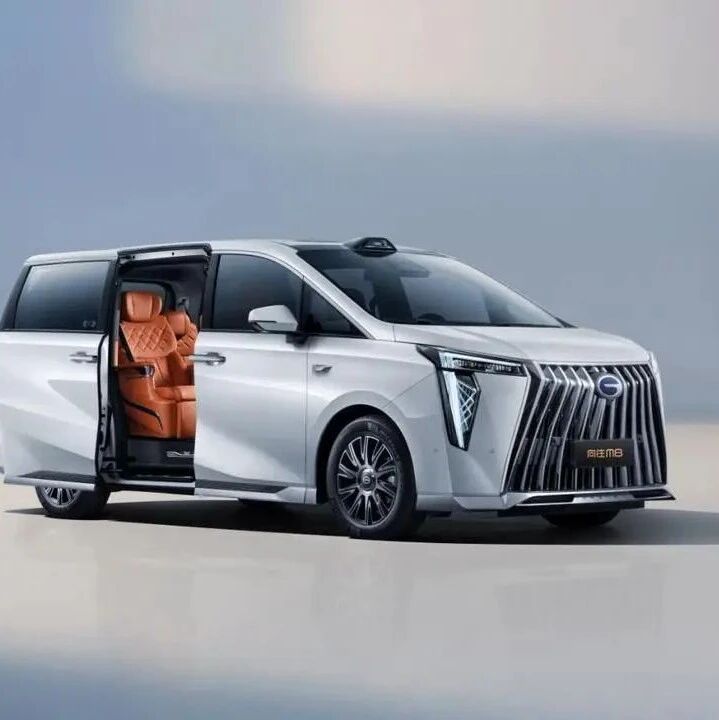
传祺向往M8宗师版上市,广汽童伟:可行驶480亿公里电池0自燃丨智驾前线
雷峰网· 2025-10-17 13:48
Core Viewpoint - GAC Trumpchi has officially launched the new MPV model, the Xiangwang M8 Master, which aims to capture a larger market share in the competitive MPV segment with a strong focus on family and business use, offering high-quality features at a competitive price point [3][33]. Product Launch and Features - The Xiangwang M8 Master was launched on October 16, with two versions priced at 289,900 CNY and 269,900 CNY [3]. - The vehicle dimensions are 5251mm in length, 1893mm in width, and 1823mm in height, with a wheelbase of 3070mm [6]. - It features a 2+2+3 seating layout, a Momenta driving assistance system, and a battery capacity of 25.5kWh, providing a pure electric range of 136km [6][8]. Performance and Efficiency - The M8 Master is equipped with a 2.0 hybrid engine, delivering a maximum torque of 330N·m and a power output of 300kW [8]. - It boasts a fuel consumption of 6.15L per 100km and a comprehensive range of 1057km, with an extreme range exceeding 1400km [10]. - Fast charging capability allows the battery to charge from 30% to 80% in just 14 minutes [11]. User-Centric Design - The vehicle's side sliding door design has been improved for easier access, with a width of 750mm and a height of 1300mm [15]. - Adjustments to the entry step height and width have been made based on user feedback, enhancing comfort for all passengers [17]. - The front seats now include a massage function, catering to both family and business users [17]. Safety Enhancements - The M8 Master features a high-strength steel body with an 81.7% high-strength steel ratio, enhancing crash safety [27]. - It includes a unique rear window airbag to protect third-row passengers during rear-end collisions [29]. - The vehicle's battery has achieved a safety record of 48 billion kilometers without self-ignition [31]. Market Positioning - The M8 Master is priced starting at 269,900 CNY, with promotional pricing potentially lowering it to 249,900 CNY, making it competitive against mid-to-high-end SUVs [33]. - This pricing strategy aims to attract a broader customer base in the growing MPV market, which is becoming increasingly competitive with entries from major players like Huawei and BYD [33].