农夫山泉

Search documents
医美大变局:跨界资本涌入上游,合规与技术成竞争核心|2025中国经济年报
Hua Xia Shi Bao· 2025-12-26 09:59
Core Insights - The Chinese medical aesthetics industry in 2025 will be defined by "compliance foundation" and "value reassessment" [2] - The shift from a "flow-driven" model to a "technology-driven" model is evident, with an emphasis on the importance of regulatory compliance and technological advancements [2][3] Regulatory Normalization - Regulatory normalization is becoming the core theme of the medical aesthetics industry, with policies reshaping development logic [3] - The release of the "Guidelines for the Pricing of Cosmetic Surgery Medical Services" by the National Medical Insurance Administration standardizes 101 pricing items, addressing issues like "same item different price" [3] - Over 18,000 illegal institutions were shut down, and 327 physicians had their licenses revoked, indicating a shift from sporadic regulation to ongoing purification [3][4] Cross-Industry Capital Involvement - The entry of cross-industry capital is reshaping the compliance landscape and highlighting the long-term value of upstream technology [5] - A strategic investment of 3.403 billion yuan by Zhong Shanshan's Yangshengtang in Jinbo Biological marks a significant milestone in the industry, with Zhong becoming the second-largest shareholder [5][6] - This investment reflects a merging of "technology" and "channel," aiming to leverage Jinbo's unique technology in collagen production with Yangshengtang's extensive distribution network [6][7] Intensifying Competition - The medical aesthetics industry is experiencing intensified competition over core product control, leading to conflicts between brands and distributors [9] - A significant arbitration case between Aimeike and Jiangsu Wuzhong over exclusive agency rights for a key product highlights the ongoing struggle for market control [9][10] - The outcome of such disputes will significantly impact market dynamics and the distribution of profits within the industry [11] Future Landscape - The industry is expected to undergo consolidation and innovation in business models, with leading chains capturing 30%-40% of the market share [13] - The integration of "medical aesthetics + health management" is anticipated to become mainstream, with a focus on preventive care among younger consumers [13] - Investors are advised to focus on upstream core technologies and compliant institutions with strong medical management capabilities, as the industry transitions to a more sustainable and professional era [13]


先跟讲道理的人讲道理
3 6 Ke· 2025-12-26 02:45
Core Viewpoint - Companies are increasingly misjudging their communication strategies by focusing on engaging with the emotional "C" group rather than the rational "B" group, leading to potential reputational risks and crises [2][5][9] Group 1: Miscommunication and Crisis Management - Many companies, including Xiaomi and Wahaha, have made the mistake of trying to reason with the emotional "C" group instead of the rational "B" group during crises [2][5] - The shift in communication strategy has led to a significant increase in resources allocated to "C" channels, such as short videos, while reducing engagement with "B" [4][5] - The failure to maintain a relationship with the "B" group can result in long-term reputational damage, as seen in the cases of Li Auto and Xiaomi [11][12] Group 2: Understanding B and C Groups - The "B" group consists of knowledgeable individuals who can influence the "C" group, which is characterized by emotional and impulsive reactions [4][6] - The current trend shows that the "C" group is more vocal and engaged, often leading to a chaotic communication environment where the "B" group struggles to assert rational discourse [9][10] - Companies must recognize that while "C" can create immediate noise, it is the "B" group that ultimately shapes long-term perceptions and consensus [9][10] Group 3: Strategies for Maintaining B Relationships - Companies should regularly engage with media, academics, and other stakeholders to gather feedback on their products and services, ensuring they do not lose touch with the "B" group [12][14] - Transparency and open communication are crucial in crisis situations, as the "B" group values honesty and accountability over defensive tactics [15][19] - Successful crisis management involves addressing issues directly and clearly, rather than resorting to denial or obfuscation [19][20]

首席联合电话会-消费专场
2025-12-26 02:12
Summary of Conference Call Records Industry and Company Focus Home Appliances Industry - The tightening of national subsidy policies is focusing on core categories such as black and white appliances, which supports companies like Midea, Haier, TCL Electronics, and Hisense Visual. However, competition remains fierce for brands like Hisense Home Appliances and Gree Electric, with better investment opportunities expected after Q1 [1][4] Pet Industry - The pet industry continues to experience high single-digit growth, with pet food growth around 10%. Online channels, particularly Douyin and Pinduoduo, are seeing significant growth, while offline channels face pressure. The industry is expected to add approximately 4 million new pet owners in 2025, driving demand [5][6] - Head brands are growing significantly faster than the industry average, while smaller brands are struggling, often focusing on offline channels to maintain profitability. The trend is increasingly favoring market concentration towards head brands [6] Education Industry - China Oriental Education is benefiting from post-pandemic expansion and a national focus on employment, with double-digit growth in enrollment numbers. The company specializes in vocational education with a high employment rate, which provides a competitive advantage. New training programs are rapidly growing, and the company is expanding into emerging fields [8][10] Pharmaceutical Industry - The pharmaceutical industry is focusing on the small nucleic acid supply chain, with Novartis's Inqisiran entering medical insurance but facing capacity shortages. Companies that meet FDA audit standards and enter multinational supply chains, such as Lianhua Technology and Chen Da Pharmaceutical, are recommended for attention [11] Food and Beverage Industry - The food and beverage industry is seeing trends towards spring excitement, health directions, new products, and cyclical growth. Health products and oatmeal sectors are performing well, with companies like Dongpeng Beverage expected to grow over 20% next year [12][13] Light Industry - The light industry is adopting a dual strategy focusing on both domestic and international sales. The two-wheeler market is performing well, and solid-state batteries may drive growth in the electric vehicle sector. The industry is expected to have a positive outlook in the near future [14] Key Points and Arguments Home Appliances - The 2026 home appliance replacement policy will focus more on traditional large appliances, reducing the variety of small appliances eligible for subsidies. The overall subsidy amount may decrease, but support for core categories is expected to remain stable or even increase [2] Pet Industry - The pet industry is facing a bottleneck in product innovation, with most developments being minor improvements. There is a consensus on the need for functional and specialized products, requiring more investment in consumer education and brand building [5][6][7] Education Industry - The company expects to achieve a revenue of 1 billion yuan in 2026, with a projected compound profit growth rate of 15%-20% over the next three years. The current valuation is low, with a high dividend rate, making it a recommended investment target [9][10] Pharmaceutical Industry - The small nucleic acid supply chain is critical, with China being the largest production market. The industry faces challenges in meeting quality standards for FDA compliance, making it essential to focus on companies that can meet these standards [11] Food and Beverage Industry - Companies with strong operational momentum are expected to perform well, and the white liquor sector is seen as having good investment value [12][13] Light Industry - The light industry is expected to see sales growth due to inventory levels being low and potential technological effects in the upcoming quarters [14][15] Globalization and Export Markets - The export market is influenced by the appreciation of the RMB and pessimistic expectations regarding the US real estate market. However, long-term focus should be on new product development and self-owned brands [17][18] Pulp Industry - The pulp sector is expected to have significant elasticity in the first half of next year due to external factors affecting wood chip supply and no new capacity expansion, leading to potential price increases [19][20]
乳饮“老江湖”的三场仗
Bei Jing Shang Bao· 2025-12-25 16:02
Group 1: Industry Overview - The Chinese food and beverage industry is undergoing significant transformation, with traditional brands facing challenges such as channel restructuring, product upgrades, and public relations issues, while emerging brands are rapidly rising through differentiated positioning and digital marketing [1] - The year 2025 is seen as a pivotal moment for established brands like Wahaha, Huiyuan, and Sanyuan, reflecting the industry's need for new strategies amidst changing market dynamics [1] Group 2: Wahaha's Challenges - Wahaha is currently embroiled in an asset dispute involving the "Zong Family Siblings" and Zong Fuli, with the company's trademark still locked in a shareholder deadlock [2] - Zong Fuli resigned from her leadership roles at Wahaha but retains a 29.4% stake, indicating a complex transition as she attempts to modernize the company while facing historical governance issues [3] - Wahaha's revenue slightly decreased from 51.2 billion yuan in 2022 to 50 billion yuan in 2023, but is projected to rebound to 70 billion yuan in 2024, showcasing a potential recovery strategy [3] Group 3: Wahaha's Strategic Moves - Wahaha has initiated a "surgical" channel reform, consolidating its distribution network to enhance control over core markets, which marks a significant shift in its long-standing channel management structure [4] - The company is focusing on professional and market-oriented adjustments, aiming to replace inertia with mechanisms that align the team closer to market demands [4] - However, internal conflicts persist, as evidenced by the registration of the "Wah Xiaozong" trademark, which has not been utilized effectively, and competition from the "Zong Sheng" brand [4][5] Group 4: Huiyuan's Capital Struggles - Huiyuan is facing a capital struggle, with its e-commerce presence severely impacted due to a control dispute that has escalated into judicial confrontations [6][8] - The company has accused its investment partner of failing to fulfill financial commitments, leading to operational difficulties and product shortages on major e-commerce platforms [8] - Huiyuan's management is actively pursuing legal action to enforce contractual obligations and restore operational stability [8] Group 5: Sanyuan's Strategic Focus - Sanyuan has shifted its strategy from scale expansion to focusing on high-margin, high-loyalty products, particularly in the low-temperature fresh milk segment [10] - The company reported sales of 2.28 billion yuan in Beijing for the first three quarters, despite a 14.6% decline compared to the previous year, indicating resilience in a challenging market [11] - Sanyuan is also expanding its product offerings to cover all life stages, aiming to create a comprehensive nutritional ecosystem [11] Group 6: Industry Trends and Future Outlook - The transformation in the beverage industry reflects a broader shift from extensive growth to refined, digital operations, highlighting the need for traditional companies to address governance, brand aging, and channel rigidity [12] - The challenges faced by established brands like Wahaha and Huiyuan signal the beginning of an industry reshuffle, emphasizing the importance of governance restructuring and adapting to consumer trends [12]

华源晨会精粹20251225-20251225
Hua Yuan Zheng Quan· 2025-12-25 14:38
Group 1: Food and Beverage Industry - The report indicates a gradual recovery in the food and beverage sector, with soft drinks and snacks leading the recovery, followed by the catering supply chain, condiments, dairy products, beer, and finally, liquor [2][9][10] - The analysis draws parallels with Japan's 1990s consumption differentiation, highlighting that successful industries often address demand pain points and have low penetration rates [10][11] - Investment strategies focus on sectors with stabilizing ROA and potential valuation recovery, emphasizing price as the primary selection logic, while volume is secondary [11][12] Group 2: Construction and Building Materials - The construction sector is expected to experience a "spring rally" in 2026, supported by historical investment patterns and major national projects [13][14] - The report highlights three core investment themes: major national projects, high-dividend low-valuation state-owned enterprises, and private construction firms leveraging cash flow for new growth areas [14][15] - Infrastructure investment data shows a decline in both narrow and broad infrastructure investment, indicating a need for policy support to stabilize the sector [15][16] Group 3: Real Estate Industry - The real estate sector continues to face pressure, with significant declines in new housing sales and investment, despite government efforts to promote high-quality development [18][20] - The report notes that the Ministry of Housing and Urban-Rural Development emphasizes maintaining a balance in supply and demand, which is crucial for economic stability [20][22] - Specific data indicates a 31.4% year-on-year decline in real estate development investment and a 26.1% drop in sales revenue, highlighting ongoing challenges in the market [20][21] Group 4: Electronics and Robotics - The report on Changying Precision emphasizes the introduction of employee stock ownership and stock option plans to enhance long-term development confidence and attract core talent [23][24] - The company is positioned as a leader in solder paste printing equipment, with a focus on high-end product demand driven by AI trends [33][34] - New product lines, including dispensing and packaging equipment, are expected to contribute to growth, with significant revenue increases anticipated [34][36] Group 5: Media Industry - The report on Giant Legend highlights the rapid growth of its IPs, particularly the "Zhou Classmate" and "Liu Genghong," which have gained substantial popularity on social media platforms [28][29] - The company is expanding its strategic investments to enhance collaboration with international stars and develop consumer products linked to its IPs [29][30] - Future growth is expected through a diversified approach that integrates emotional value into various products and experiences, positioning the company as a "disseminator of happiness" [30][31] Group 6: Mechanical and Building Materials - The report on Kaige Precision Machine outlines the company's leadership in solder paste printing equipment and its expansion into new product categories driven by AI [33][34] - The company is expected to see significant growth in its new product lines, including flexible automation equipment, which are crucial for enhancing manufacturing efficiency [34][36] - Profit forecasts indicate strong growth potential, with expected net profits increasing significantly over the next few years [36]


中伦助力江天科技在北京证券交易所上市
Sou Hu Cai Jing· 2025-12-25 12:03
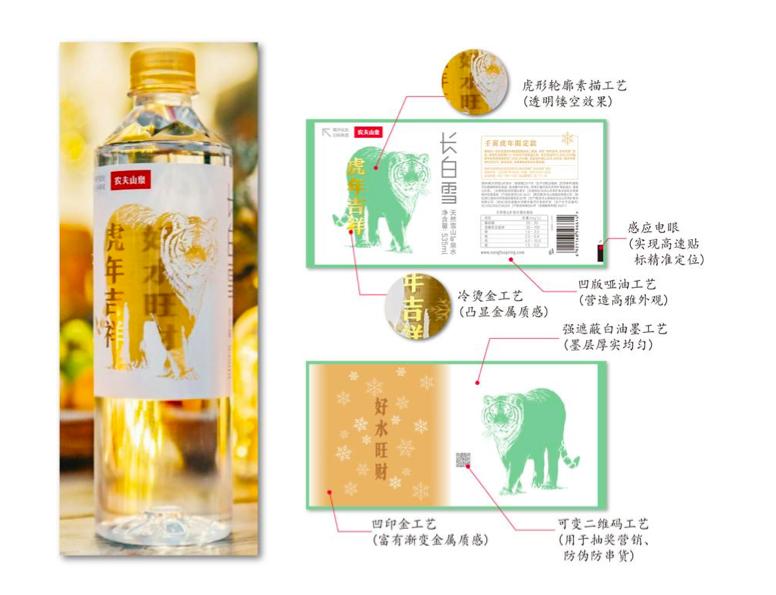
Group 1 - The core viewpoint of the article highlights Jiangtian Technology's successful public offering and listing on the Beijing Stock Exchange, supported by comprehensive legal services from Zhonglun Law Firm [2] - Jiangtian Technology, founded in 1992, specializes in providing integrated and high-value label solutions for global consumer brands, evolving labels into comprehensive visual systems that include anti-counterfeiting, traceability, interactivity, and artistic aesthetics [3] - The company is recognized as the first national-level printing demonstration enterprise in China focused on label printing and has won the World Label Award for two consecutive years, showcasing its industry leadership and innovation capabilities [3] Group 2 - Jiangtian Technology has established long-term partnerships with renowned global brands such as Unilever, Procter & Gamble, and Shell, as well as domestic brands like Nongfu Spring and Heytea, indicating its strong market presence [3] - The company aims to continue its commitment to technological upgrades and innovation to enhance brand value in the label printing industry [3]
华源证券:食品饮料板块复苏分化 关注ROA企稳与结构性景气赛道
智通财经网· 2025-12-25 03:57
Core Viewpoint - The report from Huayuan Securities indicates a recovery sequence in the food and beverage industry, with soft drinks and snacks leading the recovery, followed by the catering supply chain, condiments, dairy products, beer, and finally, liquor [1][2]. Group 1: Recovery Sequence Analysis - The recovery rhythm of different consumption sectors shows both differences and commonalities, driven by industry supply-demand dynamics and supply chain structures [2]. - The commonality lies in the prevailing competition in the existing market, where companies focus on increasing sales to digest capacity and enhance operational efficiency [2]. - ROA (Return on Assets) is identified as a leading indicator for the operational recovery of consumer enterprises, with a detailed analysis of the stages of enterprise and channel adjustments [2]. Group 2: Historical Context and Insights - An analysis of Japan's consumption differentiation in the 1990s reveals that industries that can capture structural opportunities typically meet two conditions: addressing demand pain points and having low penetration rates [3]. - The rapid development of cost-effective options and health-oriented niche categories in Japan during that period illustrates the potential for growth in low-penetration sectors [3]. Group 3: Investment Strategy - From a pricing perspective, rising CPI may lead to valuation recovery in traditional industries with higher penetration rates, such as liquor, beer, and dairy products, which are expected to attract incremental capital [4]. - Recommendations include focusing on leading companies in these sectors, such as Kweichow Moutai, Luzhou Laojiao, and Yili Group [4]. - From a volume perspective, companies with high supply chain efficiency in cost-effective consumption are likely to see volume growth, with specific recommendations for companies in the catering supply chain and soft drinks [4].
开盘大涨200%,TA靠给农夫山泉、喜茶们“贴标”敲钟,又一个水饮大战的受益者
3 6 Ke· 2025-12-25 02:17
Core Viewpoint - The consumer goods capital market in 2025 is not only bustling with brand owners but also increasingly featuring service providers, referred to as "shovel sellers," who support major consumer brands. Jiangtian Technology, a label printing company, has successfully listed on the Beijing Stock Exchange, reflecting this trend [1]. Company Overview - Jiangtian Technology, established in 1992, transitioned from a small local factory to a significant player in the label printing industry under the leadership of the second generation, who brought international supply chain management experience [2]. - The company has been recognized as one of the top 50 brands in China's label printing industry for four consecutive years from 2022 to 2025, ranking among the top five in both daily chemical and food and beverage label categories [2]. Financial Performance - Jiangtian Technology's revenue grew from 384 million yuan in 2022 to 538 million yuan in 2024, with a net profit increase from 74.45 million yuan to 102 million yuan, reflecting compound annual growth rates of 20.95% and 25.46% respectively [4]. - For the first three quarters of 2025, the company reported a revenue increase of 10.85% year-on-year to 468 million yuan and a net profit increase of 11.45% to 89.11 million yuan [4]. Market Position and Client Dependency - The company heavily relies on its main business segments, with film labels contributing over 79% of revenue in 2024, indicating a high concentration in its revenue sources [6]. - Jiangtian Technology's sales to its largest client, Nongfu Spring, accounted for 42.02% of total revenue in the first half of 2025, highlighting a significant dependency on a few major clients [8][9]. Growth Projections - The company anticipates full-year revenue for 2025 to reach between 604 million and 624 million yuan, representing a year-on-year growth of 12.24% to 15.95% [5]. - The expected net profit, excluding one-time gains, is projected to be between 103 million and 112 million yuan, indicating a growth of 6.58% to 15.89% [5]. Industry Trends - The rise of "shovel sellers" in the consumer goods sector is attributed to the recovery of the consumption industry, particularly in the beverage sector, leading to increased demand for packaging and related services [11][13]. - The trend of companies like Jiangtian Technology going public reflects a broader movement in the industry, where suppliers are capitalizing on the growth of downstream brands [11][12]. Challenges Ahead - Despite strong performance, Jiangtian Technology faces risks related to raw material price fluctuations and a heavy reliance on major clients, which could impact profitability if market conditions change [10][14]. - The company has invested significantly in R&D, with a total of 76.68 million yuan over the past three years, indicating a commitment to innovation and competitiveness in the market [10].

从宝洁架构调整,看品牌人未来职业发展方向
3 6 Ke· 2025-12-25 01:54
Core Insights - The article discusses the evolution of brand management, highlighting the initial establishment of the brand manager role at Procter & Gamble (P&G) and its significance in systematic brand development [1][3][4] - It contrasts the original intent of brand management with the current trend where many companies are downsizing or eliminating brand departments, leading to a perception of brand roles as expendable [5][6][7] - The article emphasizes the need for a new approach to brand management that integrates comprehensive skills and responsibilities, as demonstrated by P&G's recent restructuring into a "Brand Growth Department" [15][16][21] Group 1: Historical Context of Brand Management - In 1931, Neil McElroy proposed the brand manager system at P&G to address inefficiencies in brand advertising and sales, leading to a structured approach to brand management [1][3] - The brand manager's role was defined as akin to a small CEO, responsible for all aspects of brand development and marketing [3][4] - P&G's systematic approach to brand management has been a key factor in its success, establishing it as a leader in the branding industry [3][4] Group 2: Current Trends and Challenges - Recent layoffs in various companies, including JD.com and Lenovo, have targeted brand and marketing departments, indicating a shift in how brands are perceived within organizations [5][6] - Many brand departments have become mere "decorative" entities, lacking real influence on business operations and often being the first to face cuts during financial downturns [6][7] - The article argues that the focus on short-term profitability has led to a neglect of the deeper, strategic aspects of brand management [9][10] Group 3: Future Directions in Brand Management - P&G's creation of the "Brand Growth Department" signifies a shift towards integrating brand management with business growth strategies, emphasizing the need for leaders who can navigate both marketing and operational challenges [15][16][21] - The new role requires skills in consumer insight, product innovation, and integrated marketing strategies, moving away from traditional siloed functions [18][20] - The article suggests that the future of brand management lies in developing leaders who can oversee the entire brand lifecycle and drive growth through a holistic understanding of the market [22][23]


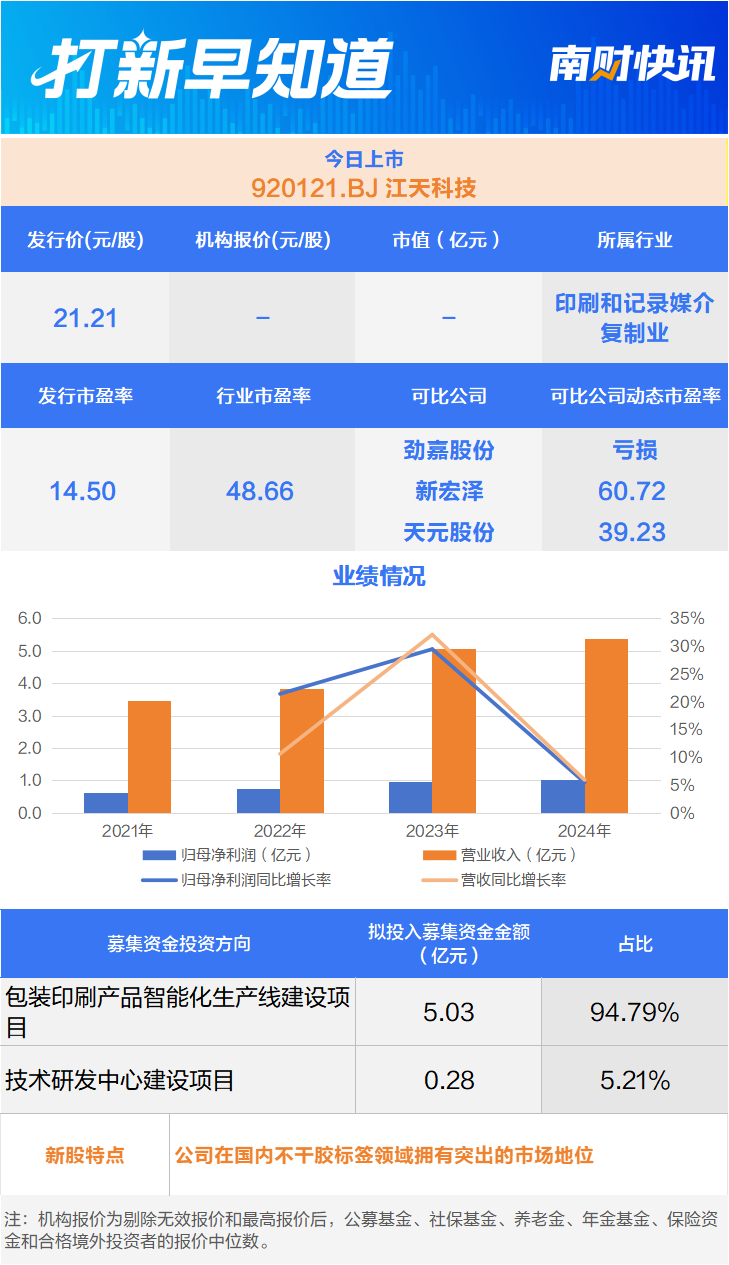
联合利华“小伙伴” 标签印刷龙头企业今日上市丨打新早知道
2 1 Shi Ji Jing Ji Bao Dao· 2025-12-24 23:10
Core Viewpoint - Jiangtian Technology (920121.BJ) has successfully listed on the Beijing Stock Exchange, focusing on the research, production, and sales of label printing products, providing integrated solutions for customers in various consumer sectors [1][2]. Company Overview - Jiangtian Technology specializes in the development, production, and sales of label printing products, offering customized solutions for printing materials, color and ink selection, and process design [1]. - The company's main products include film and paper-based self-adhesive labels, widely used in beverages, daily chemicals, food supplements, and petrochemical products [1]. Financial Information - The initial offering price was set at 21.21 yuan per share, with an issuance price-to-earnings ratio of 48.66, compared to the industry average of 14.50 [2]. - The company has a strong market position, ranking 6th in the "Top 50 Brand Influence in China's Label Printing Industry" by the authoritative magazine "Label Technology" [5]. Market Position - Jiangtian Technology has established itself as a leading player in the consumer brand label sector, holding the 2nd market share in daily chemical labels in China and the 1st in Jiangsu province for 2021 and 2022 [5]. - The company ranks in the top 4 for beverage labels in China and 1st in Jiangsu province for 2022 [5]. Technological Capabilities - The company emphasizes innovation in label printing technology, having developed core technologies such as combination printing, color management, and waste-reduction layout processes [5]. - Jiangtian Technology holds 124 patents, including 14 invention patents and 8 software copyrights, showcasing its strong technological foundation [5]. Customer Base - The company has built a robust customer base, supplying labels to well-known brands such as Unilever, Procter & Gamble, Shell, and Nongfu Spring, thanks to its high-quality products and efficient service [6]. - Jiangtian Technology competes with leading companies like CCL and Zhengmei Group, indicating its capability to operate in a competitive market [6]. Industry Dynamics - The label printing industry is characterized by low concentration and intense competition, with significant growth potential in the consumer market [6]. - Major competitors are increasing their investments in the Chinese market, which may pose challenges for domestic companies [6].