
未提及具体公司

Search documents
桃罐头产业将加速实现从“规模扩张”到“价值增长”
Xiao Fei Ri Bao Wang· 2025-07-07 02:42
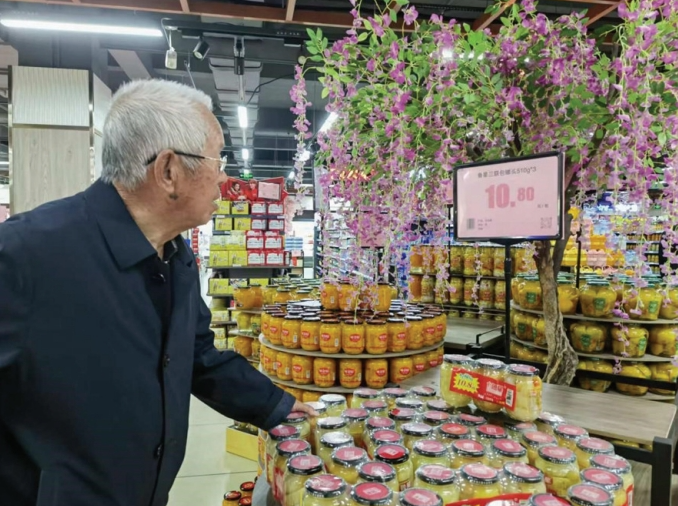
Core Viewpoint - The peach canning industry in China is facing dual challenges of "internal and external pressure" and "structural adjustment," but with a complete industrial chain, a large consumer market, and continuous technological upgrades, it can transition from "scale expansion" to "value growth" by focusing on quality and innovation [1][4]. Group 1: Industry Overview - The main raw materials for peach canning in China are yellow peaches and white peaches, with yellow peaches accounting for over 80% of the raw materials [2]. - The major production areas, such as Ding Shan and Ping Yi, have experienced slight reductions in yield due to weather and infrastructure factors, but the overall supply-demand balance remains controllable with a planting area of nearly 500,000 acres and an output of over 800,000 tons [2]. - In 2024, China's canned fruit and vegetable exports reached 2.85 million tons, remaining stable year-on-year, while peach canning exports increased by 13.58% to 173,300 tons, although the export value decreased to $210 million, indicating intense price competition in the international market [2]. Group 2: Market Challenges - The international market presents both risks and opportunities, with major producing countries experiencing "production adjustments and structural competition" [4]. - China's canned peach production is expected to decrease by 4.24% in 2024, totaling approximately 723,000 tons, while traditional retail channels show weak growth, contrasting with significant growth in discount stores and lower-tier markets [4]. - The industry faces challenges from non-professional distributors engaging in low-price dumping of inferior products, leading to a chaotic pricing system and decreased consumer trust, although a market correction is anticipated following recent industry consolidation [4]. Group 3: Strategic Recommendations - To address the dual challenges, the peach canning industry should focus on stabilizing the supply chain, enhancing quality control, rationally managing raw material procurement, and improving raw material consistency and yield [5]. - The industry must revitalize the domestic market by reshaping channel ecosystems and activating diverse consumption scenarios while actively responding to trade barriers and enhancing bargaining power in international markets [5]. - Emphasis should be placed on accelerating digital transformation and sustainable development, promoting digital processing equipment, and innovating packaging materials [5].

优化企业营商环境 必须净化网络生态
Zhong Guo Qing Nian Bao· 2025-07-04 01:10
Group 1 - The core viewpoint of the articles emphasizes the importance of regulating malicious online activities that harm businesses, particularly focusing on the "black mouth" phenomenon which includes defamation, misinformation, and identity impersonation [1][2][3] - The National Internet Information Office has initiated a special action to address these issues, indicating a shift from individual case handling to systematic governance [1][2] - The articles highlight that the online environment significantly impacts the business landscape, with malicious online actions potentially leading to severe reputational damage and operational disruptions for companies [1][2] Group 2 - The regulation of "black mouths" is framed as a crucial part of optimizing the business environment, recognizing that the online discourse ecosystem is integral to overall business health [2][3] - The newly implemented Private Economy Promotion Law emphasizes the protection of private enterprises from online defamation and requires internet service providers to manage content responsibly [3] - Establishing clear rules and accountability in the online space is essential for fostering a stable business environment, particularly for private enterprises, to build confidence in long-term development [3]
国补力度这么大,电视却更难卖了
猿大侠· 2025-07-02 03:25
Core Viewpoint - The article discusses the impact of national subsidies on the television market, highlighting that despite significant subsidies, overall sales have not increased as expected and have instead shown a downward trend [2][5]. Subsidy Impact - This year, the national subsidy for televisions is unprecedented, with a 20% subsidy for Level 1 energy efficiency TVs and 15% for Level 2, with a maximum subsidy of 2000 yuan per appliance [1]. - Some regions offer additional consumer vouchers, allowing for total savings of up to 35% [1]. Market Performance - Despite a 5.6% increase in retail revenue for the television market from January to April 2025, retail volume has seen a slight decline of 0.7% [3]. - In April 2025, the brand shipment volume in China's television market decreased by 4.3% year-on-year and 8.0% month-on-month [4]. Consumer Behavior - Total consumer spending on televisions has increased, but the actual number of units sold has decreased, indicating weak market demand [5]. - The decline in retail volume reflects overall market fatigue, with previous subsidy policies potentially pulling forward demand from 2025 [5]. User Experience Issues - Since 2016, the domestic television usage rate has dropped by over 30%, with existing users expressing dissatisfaction with viewing experiences [6]. - Limited video resources on smart TVs, disruptive startup ads, and complex user interfaces contribute to a negative user experience [7]. Market Trends - Despite the overall decline in the smart TV sector, large-sized products and innovative display technologies are driving growth [9]. - Retail revenue for ultra-large televisions (85 inches and above) has significantly increased, with their market share rising to 34.8% by May [11]. Product Innovations - The retail revenue share of 85-inch TVs surged from 17.4% to 25.1%, while 100-inch TVs saw an increase from 1.7% to 5.3%, marking over a 200% growth [12][13]. - Mini LED technology has surpassed OLED in high-end television sales, with a 520.4% year-on-year increase in sales during the subsidy period [15][14]. Future Outlook - The trend indicates that consumers are willing to pay for immersive viewing experiences, signaling a shift towards larger and higher-quality televisions [16]. - Television brands must enhance product quality and user experience to retain customers, or they risk being eliminated in industry consolidation [17].
有色铜Q3观点更新:基于样本矿企产量指引的平衡表调整
2025-06-30 01:02
Summary of Copper Market Conference Call Industry Overview - The conference call focuses on the copper market, particularly in relation to the impact of the U.S. 232 tariff policy and its implications for global supply and demand dynamics [1][2][33]. Key Points and Arguments 1. **Supply Tightness**: Prior to the implementation of the 232 tariff, the U.S. has shifted approximately 400,000 tons of copper from non-U.S. regions, with an expected additional 200,000 tons in the coming months, leading to tight supply in non-U.S. markets [1][2]. 2. **Price Projections**: Post-implementation, copper prices may experience a slight pullback, but the decline is expected to be limited, providing a potential buying opportunity. The first target for LME copper price is projected at $11,000 per ton, while domestic prices are expected to range between 81,000-82,000 CNY per ton [1][4]. 3. **Annual Production Growth**: The annual growth rate for copper production has been adjusted to 0.6%, with an estimated increase of 130,000 tons, based on data from 17 major copper mining companies that account for 55% of global supply [1][5]. 4. **Consumption Growth**: Consumption growth has also been adjusted to 0.6% due to the impact of tariffs and high interest rates, maintaining a tight balance in the copper market [1][5]. 5. **Market Dynamics**: Copper is noted to have the strongest fundamentals within the non-ferrous metals sector, with limited supply from mines and tight spot supply due to the 232 tariff [1][6][7]. 6. **Investor Behavior**: Commodity investors are increasingly favoring copper, viewing it as a hedge or allocation asset, with long-term funds showing significant interest in the copper market [1][7]. 7. **Price Resilience**: The current market environment indicates that copper prices are more likely to rise than fall, supported by strong fundamentals. Since April 2, copper prices have rebounded significantly, outperforming other commodities [1][8]. 8. **Future Supply Dynamics**: The copper supply is expected to diversify, with significant contributions from regions like Africa and North America, while the U.S. may face oversupply conditions post-232 tariff implementation [3][16][33]. 9. **Impact of Tariffs**: The 232 tariff is anticipated to create a "copper island" in the U.S., leading to a surplus domestically while non-U.S. markets experience extreme tightness [3][33]. 10. **Long-term Outlook**: The expectation for 2026 is optimistic, with potential liquidity boosts from interest rate cuts, which could lead to a demand turnaround and price increases beyond early 2024 highs [3][35]. Additional Important Insights - **Copper Quality Decline**: The decline in copper ore grades has significantly impacted production increments, particularly in South America, leading to a continuous decrease in output since 2022 [12]. - **Role of Small and Medium Enterprises**: Small and medium-sized mining companies are playing an increasingly vital role in global copper production, contributing more significantly to growth compared to larger firms [13][14]. - **Inflation and Price Dynamics**: The divergence between copper prices and inflation expectations is attributed to supply constraints not being fully accounted for in demand and cost expectations [15]. - **U.S. Demand Share**: U.S. copper demand constitutes about 6% to 7% of global demand, indicating a relatively small but significant market influence [40]. This summary encapsulates the critical insights and projections regarding the copper market as discussed in the conference call, highlighting the interplay between supply, demand, pricing, and macroeconomic factors.
需求处于低位 短期内钢材价格或将弱势震荡运行
Zhong Guo Chan Ye Jing Ji Xin Xi Wang· 2025-06-30 00:59
Core Insights - Domestic steel prices have decreased during the week of June 16-20, with both long and flat steel price indices showing declines, where the drop in long steel prices was less than that of flat steel prices [1] Price Index Summary - The China Steel Price Index (CSPI) for the week was 90.09 points, down 0.40 points week-on-week, a decrease of 0.44%. Compared to the end of last month, it fell by 0.71 points (0.78% decrease), and from the end of last year, it decreased by 7.38 points (7.57% decrease). Year-on-year, it dropped by 14.14 points (13.57% decrease) [1] - The long steel price index was 92 points, with a week-on-week decrease of 0.39 points (0.42% decrease), a drop of 0.30 points (0.33% decrease) from the end of last month, and a decline of 8.22 points (8.20% decrease) from the end of last year. Year-on-year, it fell by 14.92 points (13.95% decrease) [1] - The flat steel price index was 88.25 points, down 0.45 points week-on-week (0.51% decrease), down 0.94 points (1.05% decrease) from the end of last month, and down 7.30 points (7.64% decrease) from the end of last year. Year-on-year, it decreased by 14.06 points (13.74% decrease) [1] Regional Price Index Summary - All six major regions in China saw a week-on-week decline in steel price indices, with the Northwest region experiencing the largest drop and the Southwest region the smallest. For instance, the North China steel price index was 88.99 points, down 0.44 points (0.49% decrease) week-on-week [2] - The Northeast region's steel price index was 88.77 points, down 0.40 points (0.45% decrease) week-on-week. The East China index was 90.59 points, down 0.43 points (0.47% decrease) week-on-week [2] - The Central South region's index was 91.90 points, down 0.43 points (0.46% decrease) week-on-week, while the Southwest region's index was 90.88 points, down 0.30 points (0.33% decrease) week-on-week. The Northwest region's index was 90.67 points, down 0.59 points (0.65% decrease) week-on-week [2] Price Changes by Product - All eight major steel product prices decreased compared to the end of last month, with the largest drop in cold-rolled sheets and the smallest in rebar. For example, the price of 6mm high wire was 3267 CNY/ton, down 8 CNY/ton (0.24% decrease) [3] - The price of 16mm rebar was 3076 CNY/ton, down 6 CNY/ton (0.19% decrease). The price of 20mm medium-thick plates was 3417 CNY/ton, down 25 CNY/ton (0.73% decrease) [3] - The price of 1mm cold-rolled sheets was 3745 CNY/ton, down 71 CNY/ton (1.86% decrease), while the price of 1mm galvanized sheets was 4146 CNY/ton, down 29 CNY/ton (0.69% decrease) [3] Cost Analysis - In May, the average import price of iron ore was 96.24 USD/ton, down 1.86 USD/ton (1.90% decrease) month-on-month. Compared to the end of last year, it decreased by 1.49 USD/ton (1.52% decrease) [4] - The domestic iron concentrate price was 857 CNY/ton, down 31 CNY/ton (3.49% decrease) from the end of last month. The price of coking coal was 1196 CNY/ton, down 82 CNY/ton (6.42% decrease) [4] - The price of coke was 1216 CNY/ton, down 90 CNY/ton (6.89% decrease), while scrap steel was priced at 2338 CNY/ton, down 14 CNY/ton (0.60% decrease) [4] International Market Overview - In May, the CRU international steel price index was 195.1 points, down 4.5 points (2.3% decrease) month-on-month. Compared to the end of last year, it increased by 14.5 points (8.0% increase) [5] - The CRU long steel price index was 195.6 points, down 1.9 points (1.0% decrease) month-on-month, while the CRU flat steel price index was 194.9 points, down 5.8 points (2.9% decrease) month-on-month [5] - The demand side remains weak due to seasonal effects, indicating that steel prices may continue to experience weak fluctuations in the short term [5]
广西深入实施“人工智能+制造”行动
Sou Hu Cai Jing· 2025-06-29 02:35
Group 1 - The industrial production and investment in Guangxi have maintained rapid growth in 2023, with the industrial economy showing stable improvement and acceleration [1] - From January to May, the industrial added value of large-scale enterprises in Guangxi increased by 8.1% year-on-year, while the total industrial output value rose by 7.6% [1] - Industrial tax revenue grew by 5.9%, which is 5.5 percentage points higher than the overall tax revenue growth rate in the region, indicating the industrial sector's significant contribution to the local economy [1] Group 2 - The "new three items" in Guangxi, including lithium-ion batteries for vehicles, new energy vehicles, and ultra-white glass for solar industry, have shown substantial growth, with battery production increasing by 69% and new energy vehicles by 47% from January to May [2] - The implementation of the "Artificial Intelligence + Manufacturing" initiative has led to rapid growth in AI products and applications, with service robot production up by 31.5% and intelligent connected vehicles by 29.6% [2] - The industrial economic operation index for Guangxi in May was reported at 101.4, indicating a positive market expectation and stable production operations among industrial enterprises [2]
“投资青海”推介会签约18个项目 总金额近2.5亿元
Sou Hu Cai Jing· 2025-06-25 12:36
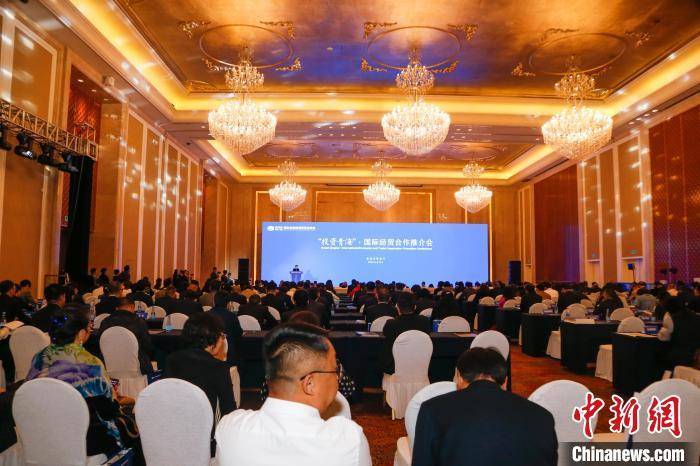
Core Viewpoint - The "Invest in Qinghai" international economic and trade cooperation promotion conference aims to showcase Qinghai's economic vitality, innovation potential, and investment opportunities to global investors, highlighting its new advantages and broad cooperation prospects [3][5]. Group 1: Economic and Resource Highlights - Qinghai is known as the "Water Tower of China" and the source of the Yangtze, Yellow, and Lancang rivers, possessing rich salt lake resources and clean energy resources, with lithium and potassium mineral reserves ranking among the top in the country [3]. - The province has significant potential for the development of clean energy, including solar and wind power [3]. Group 2: Investment Promotion and Project Signing - The promotion conference is part of the 26th China-Qinghai Green Development Investment and Trade Fair, aiming to facilitate practical investment connections and project cooperation [3][5]. - A total of 18 key projects were signed during the event, with a total contract amount of nearly 250 million yuan, covering various sectors such as agricultural products, communication technology, international brands, import-export trade, and financial services [5]. Group 3: Investment Trends and Future Outlook - In the first quarter of this year, Qinghai signed 111 investment projects with a total contract amount exceeding 100 billion yuan, indicating increasing engagement from Fortune 500 and China 500 companies in sectors like new energy, manufacturing, and services [7]. - Qinghai aims to create a new pattern of comprehensive openness, focusing on optimal service for businesses and enhancing the investment environment through six major actions [7].
别让“勾兑陈年酱香酒”祸害行业生态
Xin Jing Bao· 2025-06-23 06:22
Group 1 - Some businesses are using food-grade alcohol to dilute and misrepresent their products as pure grain liquor, misleading consumers with terms like "aged" and "old wine" [1][2] - In Renhuai City, some distilleries are purchasing alcohol from outside sources, blending it locally, and marketing it as "aged sauce-flavored liquor," with some distributors openly admitting that their products contain 50% diluted alcohol [1][2] - The profit margins for these counterfeit products are significant, with one product costing only a few dozen yuan per box but retailing for 899 yuan, representing a markup of over 40 times [1] Group 2 - Regulatory bodies need to enforce strict oversight, as national standards prohibit the addition of food-grade alcohol in sauce-flavored liquor [2] - Despite existing regulations, deceptive practices are rampant, with many distilleries openly discussing their fraudulent methods, indicating a widespread issue within the industry [2] - The white liquor industry is facing a crisis, with production declining for eight consecutive years and 58.1% of distributors reporting increased inventory and cash flow pressures [3] Group 3 - The industry is undergoing a transformation due to changing market conditions and cultural shifts, making it essential to address fraudulent practices to avoid further damage to the industry's reputation [3] - There is a call for serious consequences for manufacturers of counterfeit liquor to prevent a trust crisis in an already pressured industry [3]
高质量发展看海关|智慧监管系统助力宜宾打造中国“动力电池之都”
Yang Shi Wang· 2025-06-23 03:45
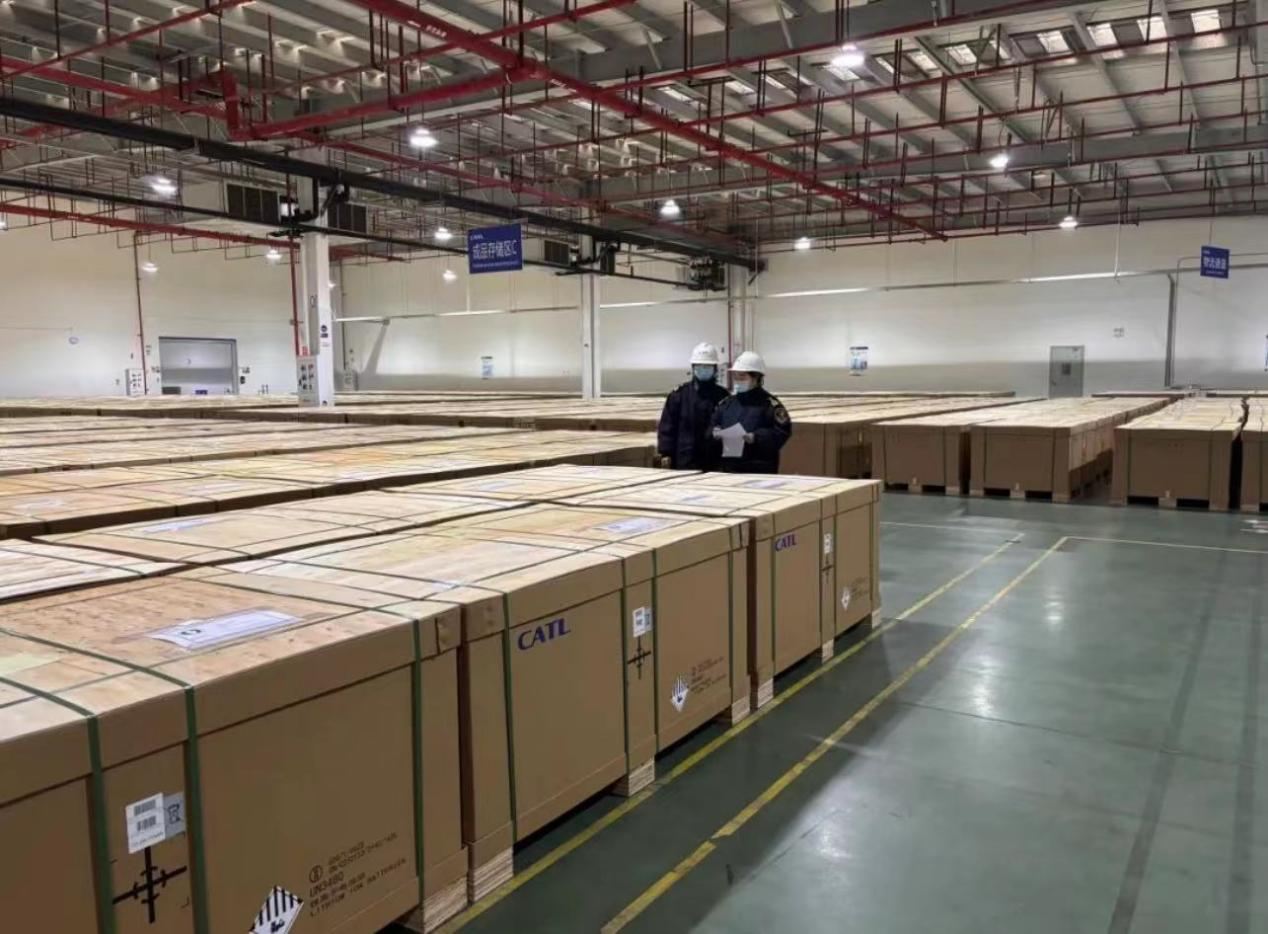
Group 1 - The core viewpoint is that Yibin, Sichuan, has become a significant hub for lithium-ion battery production, contributing to 1 out of every 7 batteries produced in China, and is recognized globally as a "power battery capital" [1] - The export of lithium batteries has seen explosive growth due to the rapid development of the green energy industry, with Yibin's lithium battery exports reaching 446,800 boxes in 2024, and a year-on-year growth of 93.98% from January to May 2025 [3] - Chengdu Customs is implementing a smart supervision pilot program for lithium battery packaging starting in February 2024, aimed at improving efficiency and reducing the time for customs clearance from 48 hours to 30 minutes [3] Group 2 - The smart supervision system utilizes big data, algorithms, and intelligent equipment to create a comprehensive monitoring system that enhances customs service levels for high-tech enterprises [3] - The implementation of this system is expected to save over 16,000 hours in customs clearance time and reduce the need for over 700 personnel for inspections in 2024 [3] - The successful launch of the first China-Europe freight train from Yibin on September 28, 2024, indicates the potential for expanding railway transport modes for lithium batteries, with ongoing innovations in regulatory models by Chengdu Customs [3]
“拼经济、保安全,办全运、提品质”系列发布——广州市直播电商产业政策文件专题新闻发布会举行
Guang Zhou Ri Bao· 2025-06-20 02:04
Core Viewpoint - Guangzhou has released the first local standard for live e-commerce, aiming to promote high-quality development in the industry and assist traditional commerce in digital transformation by 2027 [2][3]. Group 1: Policy and Objectives - The "Several Opinions" document aims to digitally transform 100 traditional professional markets and achieve online retail sales exceeding 310 billion yuan by 2027 [2][5]. - The live e-commerce industry in Guangzhou is expected to have over 100,000 influencers by 2027, with a focus on enhancing the digital economy and live commerce [2][6]. Group 2: Industry Development Strategies - The document outlines four major projects, including the establishment of a comprehensive service platform for live e-commerce, enhancing the supply chain, and attracting investment in the sector [4]. - The strategy includes integrating live commerce with various sectors such as wholesale markets, supermarkets, rural e-commerce, and night economy to facilitate industry transformation [5]. Group 3: Talent and Environment - Support for educational institutions to offer live e-commerce courses and a talent green card system to attract skilled professionals is emphasized [6]. - The optimization of the business environment includes simplifying registration processes and promoting brand standardization in live sales [7]. Group 4: Financial Incentives and Achievements - Since 2020, Guangzhou has implemented policies to support live e-commerce, including a maximum reward of 10 million yuan for qualifying enterprises [8]. - The city has seen significant growth in the live e-commerce sector, with 688,000 active online stores and 7.31 million live sessions expected in 2024, leading the nation in these metrics [8]. Group 5: Regional Initiatives - Various districts in Guangzhou are innovating their live e-commerce development models, with specific goals for establishing demonstration parks and increasing the proportion of traditional manufacturing sales through live streaming [9][10].