通用汽车

Search documents
电子行业快评报告:英伟达GTC2025大会召开,关注泛AI前沿科技
Wanlian Securities· 2025-03-20 07:39
Investment Rating - The industry investment rating is "Outperform the Market," indicating an expected relative increase of over 10% in the industry index compared to the broader market within the next six months [11]. Core Insights - NVIDIA continues to lead the high-end AI chip development with the introduction of the Blackwell Ultra GPU, which features significant upgrades in HBM technology, achieving a FP4 precision computing power of 15 PetaFLOPS, a 2.5 times improvement over the previous Hopper architecture [2]. - The AI sector is entering a "big inference" era, with substantial demand for computing power. NVIDIA's CEO announced that major cloud service providers are expected to purchase 3.6 million Blackwell architecture chips by 2025, with data center spending projected to reach $1 trillion by 2028 [3]. - NVIDIA is enhancing its AI ecosystem by launching products tailored for various applications, including the Blackwell Ultra NVL72 cabinet for AI inference, which shows a 1.5 times performance improvement over its predecessor [3][4]. Summary by Sections Industry Events - The NVIDIA GTC 2025 conference was held from March 17 to 21, 2025, in San Jose, California, where CEO Jensen Huang discussed advancements in AI technology, chip product planning, and multi-domain collaborations [1]. AI Chip Development - The Blackwell Ultra GPU features advanced HBM3e memory with 288GB of VRAM, and NVIDIA has outlined a roadmap for three future GPU architectures: Rubin, Rubin Ultra, and Feynman [2]. AI Applications - NVIDIA's new products, including the Dynamo AI factory operating system, optimize the performance of AI models, achieving a 40 times performance increase over the Hopper architecture in inference tasks [3][4]. Investment Recommendations - The report suggests focusing on investment opportunities within the AI computing and application sectors, particularly in companies leading in HBM and CPO technologies, as well as domestic firms benefiting from China's new national system advantages [9].

上汽集团:公司首次覆盖报告:国企改革促发展,智选合作启新章-20250320
Xinda Securities· 2025-03-20 07:30
Investment Rating - The investment rating for the company is "Buy" [2] Core Insights - The report highlights that SAIC Motor Corporation has been a leading player in the automotive industry, with a strong focus on electric and intelligent transformation amid a challenging market environment [5][6][7] - The company has faced significant pressure in its joint venture segments, with declining sales and profitability, while its independent brands are experiencing mixed results [6][33] - The report emphasizes the importance of policy support and management changes in driving the company's transformation efforts [7][48] Summary by Sections Company Overview - SAIC Motor Corporation, established in 1955, has evolved into a major automotive enterprise with a diverse product matrix, including joint ventures with global brands and its own brands like Roewe and Baojun [5][13] - The company achieved sales of 5.303 million vehicles in 2022, maintaining its position as the top seller in China for 17 consecutive years [5][13] Industry Analysis - The Chinese automotive market is undergoing a significant transformation, with a rapid increase in the penetration of new energy vehicles (NEVs) and a decline in market share for traditional joint venture brands [6][25][26] - In 2024, the market share of mainstream joint venture brands is projected to drop to 27.5%, down from 51.4% in 2019, reflecting the challenges faced by these companies in adapting to the new market dynamics [6][26] Financial Performance - The company's revenue for 2023 was approximately 744.7 billion yuan, with a forecasted decline in net profit for 2024, expected to be between 1.5 billion to 1.9 billion yuan, marking a significant drop from previous years [20][21] - The report indicates a rising cost structure, with the operating expense ratio increasing from 9.5% in 2021 to 10.8% in the first three quarters of 2024, impacting overall profitability [21] Transformation and Future Outlook - The company is actively pursuing a transformation strategy supported by government policies, with a focus on enhancing its electric and intelligent vehicle offerings [7][48] - A partnership with Huawei aims to leverage technological advancements in smart driving capabilities, which is expected to enhance the company's competitive position in the market [7][48]

黄仁勋称,今年GTC是“AI超级碗”,但人人都能赢
汽车商业评论· 2025-03-19 15:46
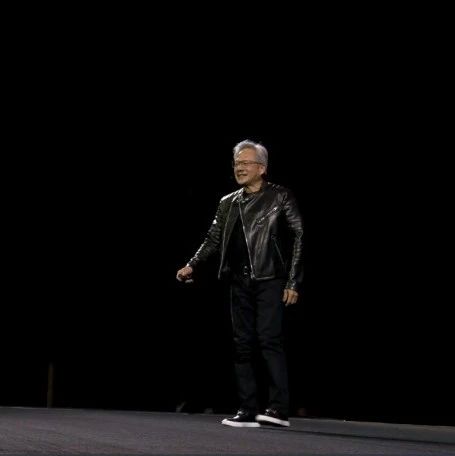
撰 文 / 钱亚光 设 计 / 赵昊然 此次GTC大会上,黄仁勋继续表达对算力需求增长前景的看好。虽然大型语言模型能提供基础知 识,但推理模型能给出更复杂、更具分析性的回答。黄仁勋表示,借助该公司新推出的开源软件 Nvidia Dynamo和Blackwell芯片,将使DeepSeek R1的运行速度提高30倍。 他在主题演讲中,强调了英伟达系统所支持的人工智能应用的广度。他详细阐述了英伟达在自动驾 驶汽车、更优无线网络和先进机器人技术开发方面的贡献,并公布了公司未来两年的产品路线图。 他说,来自四大云服务提供商对GPU的需求正在飙升,并补充说,他预计英伟达的数据中心基础设 施收入到2028年将达到1万亿美元。 3月19日晚间,身着标志性的黑色皮装的英伟达首席执行官黄仁勋(Jensen Huang)在英伟达GTC大 会上占据了中心位置。 此次活动吸引了超过25000人来到美国加州圣何塞SAP中心,黄仁勋在主题演讲开始时向观众抛出 印有"AI 超级碗大赛"字样的T恤,并宣布今年的GTC(全球人工智能大会)为"AI 超级碗"大赛。 "去年我们在这里办GTC,被描述为'AI的摇滚音乐节'(AI Woodstock ...
黄仁勋,刷屏!
证券时报· 2025-03-19 04:30
Core Viewpoint - The keynote speech by NVIDIA CEO Jensen Huang at GTC 2025 focused on the advancements in AI technology, the introduction of new hardware, and the future of robotics, highlighting the transition to the Agentic AI era and the significant computational demands that accompany it [1][3][5]. Group 1: AI Technology Evolution - Huang discussed the evolution of AI through three generations: Perception AI, Generative AI, and now Agentic AI, with the next phase being Physical AI, which pertains to robotics [3]. - The concept of AI scaling laws was introduced, emphasizing the increasing computational requirements for training and deploying AI models [5]. Group 2: Hardware Announcements - NVIDIA unveiled the Blackwell Ultra platform, designed specifically for AI inference, which boasts double the bandwidth and 1.5 times the memory speed of its predecessor [8]. - The upcoming AI chips, Vera Rubin and Rubin Ultra, were announced, with Rubin expected to deliver 3.3 times the performance of the current model and Rubin Ultra projected to achieve 14 times the performance [9]. - Huang highlighted the advancements in silicon photonics, which are expected to serve as the foundation for next-generation AI infrastructure [10]. Group 3: Robotics and Future Prospects - Huang stated that the robotics market could become the largest industry, introducing the GR00T N1, the first open-source humanoid robot model [11]. - Collaboration with Google and Disney on the Newton physics engine aims to enhance robotic learning and development [13]. - General Motors has partnered with NVIDIA to develop future autonomous vehicle fleets, leveraging simulation environments for design improvements [13].

通用汽车(GM.US)深化与英伟达(NVDA.US)合作 打造下一代汽车和工厂
Zhi Tong Cai Jing· 2025-03-19 02:26
一项关键举措是继续使用英伟达的"Omniverse with Cosmos"来优化工厂规划和机器人用例。 通用汽车(GM.US)深化与英伟达(NVDA.US)合作 打 造下一代汽车和工厂 通用汽车(GM.US)预计,与英伟达(NVDA.US)的长期合作将带来更多好处。该汽车制造商表示,将 利用人工智能、模拟和加速计算技术,合作开发下一代汽车、工厂和机器人。 具体而言,两家公司将合作利用英伟达加速计算平台构建定制AI系统。通用汽车还将在基于 Blackwell架构的英伟达Drive AGX平台上打造下一代汽车。Drive AGX还将用于未来高级驾驶辅助系统 和车内增强安全驾驶体验的车载硬件。 通用汽车首席执行官玛丽.博拉强调:"人工智能不仅优化了制造流程、加速了虚拟测试,还帮助我 们打造更智能的汽车,同时让我们的员工专注于工艺。通过将技术与人类智慧相结合,我们在汽车制造 及其他领域开启了新的创新水平。" 英伟达和通用汽车自四年前开始合作以来,合作的财务条款尚未披露。 ...

长江研究:GTC黄仁勋演讲要点
2025-03-19 01:24
Summary of Key Points from the Conference Call Industry and Company Involved - The conference call primarily discusses NVIDIA and its advancements in AI technology, semiconductor solutions, and partnerships within the telecommunications and automotive industries. Core Insights and Arguments - **Graphics Card Advancements**: The new Geforce 5090 graphics card is 30% smaller and has 30% less power consumption compared to the 4090 model [1] - **Supercomputer Chip Procurement**: In 2024, the top four global supercomputer operators are set to purchase 1.3 million Hopper architecture chips, followed by 3.6 million Blackwell chips in 2025 [2] - **Data Center Investment Growth**: Data center construction spending is projected to reach $1 trillion by 2028 [3] - **6G Development Collaboration**: NVIDIA is collaborating with telecom companies like T-Mobile and Cisco to develop AI-native 6G wireless technology, enhancing AI-driven network stacks [4] - **Automotive AI Solutions**: General Motors is partnering with NVIDIA to implement AI technologies in autonomous vehicles, focusing on manufacturing, enterprise, and in-car AI systems [5] - **Grace Blackwell Production**: The Grace Blackwell solutions have entered full production, featuring products like GB200 and B200, manufactured using TSMC's 4nm process [6] - **High Integration in Supercomputers**: The Blackwell supercomputers are noted for their high integration, with components comparable to 20 vehicles [7] - **Dynamo Software Launch**: NVIDIA introduced Dynamo, described as the "operating system for AI factories," which can enhance efficiency and reduce costs significantly [8] - **Performance Enhancements**: Blackwell architecture offers a 25x performance improvement over Hopper, with inference performance being 40x better [9][8] - **Next-Generation Chips**: The Blackwell Ultra chip, set to launch in the second half of the year, will provide 1.5 times the AI performance of earlier Blackwell chips [10] - **Future Chip Developments**: The Vera Rubin architecture, expected in 2026, will significantly enhance AI computing capabilities, achieving over 50 petaflops [11] - **Upcoming Ethernet Chips**: New Ethernet chips, Spectrum-X and Quantum-X, are scheduled for release in late 2025 and 2026, respectively [12] - **Feynman Architecture Announcement**: The next generation of AI chip architecture, named Feynman, is planned for 2028 [15] - **AI Computing Solutions**: NVIDIA is launching personal AI computers, DGX Spark and DGX Station, supported by Grace Blackwell [16] - **Open-Source Robotics Model**: NVIDIA introduced the Isaac GROOT N1, the world's first open-source humanoid robot functional model, developed in collaboration with Google and Disney [25] Other Important but Overlooked Content - **AI Infrastructure for Enterprises**: NVIDIA is focusing on building AI data platforms for enterprise computing, collaborating with major storage leaders [19] - **Robotics as a Future Industry**: The potential of robotics is highlighted as a multi-trillion dollar industry, emphasizing the importance of training, simulation, and deployment [22] - **Digital Twin Technology**: The integration of physical AI with digital twin technology is being explored, indicating a shift towards more advanced simulations and interactions [23] - **Omniverse and Cosmos Integration**: NVIDIA is working on the Omniverse with Cosmos, which serves as a digital twin operating system [27] This summary encapsulates the key developments and insights shared during the conference call, highlighting NVIDIA's strategic initiatives and technological advancements in the AI and semiconductor sectors.
gtc第二天 发布新品
小熊跑的快· 2025-03-19 01:00
Core Viewpoint - The article discusses the advancements in AI technology and infrastructure by NVIDIA, highlighting the launch of new architectures and partnerships aimed at enhancing AI capabilities and performance in various sectors [1][2][3][4][5][6]. Group 1: AI Architecture Developments - NVIDIA is transitioning from Generative AI to Agentic AI, with future developments leading to Physical AI, indicating a significant evolution in AI capabilities [1]. - The Blackwell architecture has been fully launched, showcasing the Grace Blackwell NVLink 72 chip, which integrates 72 Blackwell GPUs and achieves 1.4 EFLOPS performance [2]. - The Blackwell Ultra NVL72 platform is set to double the bandwidth and increase memory speed by 1.5 times compared to its predecessor, paving the way for advanced AI inference [3]. Group 2: Market Demand and Procurement - The top four U.S. cloud service providers have purchased 1.3 million Hopper chips in 2024 and are expected to acquire 3.6 million Blackwell chips in 2025, indicating a strong demand for AI computing infrastructure [2]. - By 2028, capital expenditures for intelligent computing centers are projected to exceed $1 trillion, reflecting the growing investment in AI technologies [2]. Group 3: Future Product Launches - The Vera Rubin platform is anticipated to start shipping in the second half of 2026, featuring NVLink 144 technology and achieving performance levels 3.3 times greater than the GB300 NVL72 [4]. - The next-generation Rubin Ultra NVL576 is expected to launch in the second half of 2027, with performance projected to be 14 times that of the GB300 NVL72 [4]. Group 4: Strategic Partnerships and Collaborations - NVIDIA is expanding its collaboration with General Motors to develop autonomous vehicles and enhance AI model training [5]. - Partnerships with Cisco and T-Mobile aim to explore AI-native networks for next-generation 6G wireless technology [5]. - The introduction of the GR00T N1 robot model and collaboration with Google DeepMind and Disney for a physics engine indicates NVIDIA's commitment to advancing robotics [5]. Group 5: Cost Efficiency and Market Impact - The efficiency of computing power is improving at a rate of three times every eight months, leading to significant cost reductions, which benefits global cloud providers and applications [6].
下一代GPU发布,硅光隆重登场,英伟达还能火多久?
半导体行业观察· 2025-03-19 00:54
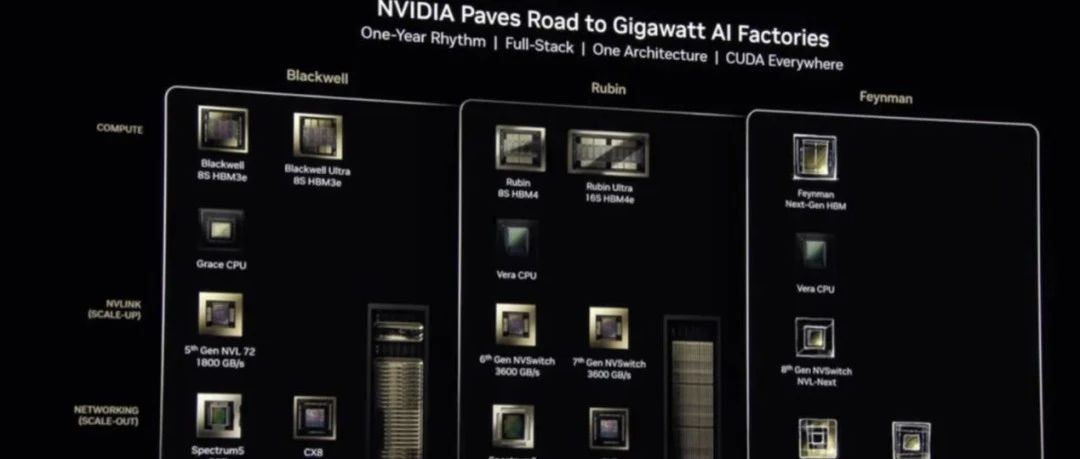
Core Insights - The GTC event highlighted NVIDIA's advancements in AI and GPU technology, particularly the introduction of the Blackwell architecture and its Ultra variant, which promises significant performance improvements over previous models [1][3][5] - NVIDIA's CEO, Jensen Huang, emphasized the rapid evolution of AI technology and the increasing demand for high-performance computing in data centers, projecting that capital expenditures in this sector could exceed $1 trillion by 2028 [1][42][43] Blackwell Architecture - NVIDIA has announced that the four major cloud providers have purchased 3.6 million Blackwell chips this year, indicating strong demand [1] - The Blackwell Ultra platform features up to 288 GB of HBM3e memory and offers 1.5 times the FP4 computing power compared to the previous H100 architecture, significantly enhancing AI inference speed [3][4][5] - The Blackwell Ultra GPU (GB300) is designed to meet the needs of extended inference time, providing 20 petaflops of AI performance with increased memory capacity [3][4] Future Developments - NVIDIA plans to launch the Vera Rubin architecture in 2026, which will include a custom CPU and GPU, promising substantial performance improvements in AI training and inference [7][8][11] - The Rubin Ultra, set for release in 2027, will feature a configuration capable of delivering 15 exaflops of FP4 inference performance, significantly surpassing the capabilities of the Blackwell Ultra [12][81] Networking Innovations - NVIDIA is advancing its networking capabilities with the introduction of co-packaged optics (CPO) technology, which aims to reduce power consumption and improve efficiency in data center networks [14][17][21] - The Quantum-X and Spectrum-X switches, expected to launch in 2025 and 2026 respectively, will utilize CPO to enhance bandwidth and reduce operational costs in AI clusters [89][90] Market Context - Major companies like OpenAI and Meta are investing heavily in NVIDIA's technology, with OpenAI reportedly spending $100 billion on infrastructure that could house up to 400,000 NVIDIA AI chips [30] - Despite the technological advancements, NVIDIA's stock has faced volatility, with a notable decline following the GTC event, raising questions about the sustainability of its market dominance [31][32]
发展战略性新兴产业:申万期货早间评论-20250319
申银万国期货研究· 2025-03-19 00:42
Group 1 - The article emphasizes the need to accelerate the transformation and upgrading of traditional industries while actively developing strategic emerging industries, particularly in digital economy and new energy sectors [1] - NVIDIA's CEO highlighted significant growth in chip purchases by major US cloud service providers, with expectations for data center capital expenditures to exceed $1 trillion by 2028 [1] - International precious metals futures saw a general increase, with COMEX gold futures rising by 1.18% to $3041.7 per ounce and COMEX silver futures increasing by 1% to $34.65 per ounce [1] Group 2 - Gold prices continue to reach new highs, driven by lower-than-expected retail sales growth in the US and ongoing inflation concerns [2][18] - The market is pricing in more interest rate cuts from the Federal Reserve, despite the central bank's indication that it will not lower rates in the near term [2][18] - Geopolitical tensions in regions like Ukraine and the Middle East contribute to rising recession expectations, further supporting gold's strong performance [2][18] Group 3 - The oil market is under pressure due to protectionist policies from the US, which have disrupted global markets and led to increased tariffs on oil imports from Canada and Mexico [3][10] - The overall sentiment in the oil market remains bearish, with expectations of increased supply if geopolitical conflicts resolve sooner than anticipated [3][10] Group 4 - The article reports a decline in the New York Fed's service sector business activity index, reaching its lowest level in over a year [4] - The Chinese market regulatory authority has released new guidelines to enhance fair competition, specifying prohibited behaviors [5] Group 5 - The article discusses the establishment of a green energy consumption promotion mechanism by five government departments, aiming to accelerate renewable energy project development [6]

震惊的不只是华尔街,还有美国企业界,“川普2.0”最大误解:关税不是手段,而是目的
华尔街见闻· 2025-03-18 10:51
Group 1 - The core viewpoint of the article is that Trump views tariffs not merely as negotiation tools but as a fundamental solution to America's economic issues, which raises concerns about his governance style and future economic direction [1][2][3] - Trump's communication with major U.S. automakers indicates that tariffs are a definitive goal rather than a bargaining chip, surprising many in the business community who expected a more traditional approach to trade negotiations [2][3] - The article highlights a significant shift in the business environment, as executives are now reassessing their optimistic assumptions about "Trump 2.0" and adapting to a new trade policy landscape [3] Group 2 - The stock market, previously seen as a barometer for Trump's policies, has shown a decline since the introduction of new tariff measures, indicating that market performance may no longer influence his stance [4][6] - Since the start of Trump's new administration, over $1 trillion worth of goods have been subjected to tariff measures, contrasting with the $300 billion in tariffs during his first term [7] - Trump's current administration is characterized by a more unified team that shares his economic views, leading to a more consistent execution of policies compared to his first term [8][10]