
Momenta

Search documents
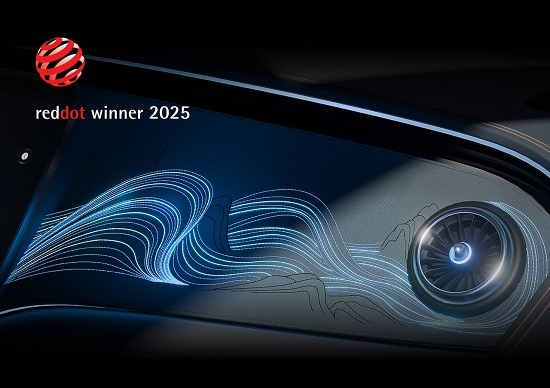
中德产学研合作再结硕果:梅赛德斯-奔驰和清华大学合作项目斩获2025德国红点奖
Zhong Guo Jing Ji Wang· 2025-10-17 10:09
Core Viewpoint - Mercedes-Benz's collaboration with Tsinghua University on the interactive embroidery car interior project "LumiStitch" has won the 2025 Red Dot Concept Design Award, showcasing a blend of Chinese aesthetics and advanced smart materials in automotive design [1][3]. Group 1: Project Overview - The "LumiStitch" project is inspired by Chinese landscape aesthetics, combining smart materials with traditional embroidery techniques to create an innovative smart cockpit experience [1][3]. - The project features Mercedes-Benz's smart cockpit utilizing advanced materials that respond to gestures and environmental light changes, presenting traditional embroidery in a new light through an intelligent lighting system [2][3]. Group 2: Collaboration Significance - The partnership between Mercedes-Benz and Tsinghua University has been ongoing for over a decade, establishing a benchmark for Sino-German industry-academia cooperation, with research covering electric mobility, intelligent connectivity, and digitalization [3][6][7]. - The collaboration has led to significant advancements in battery technology, vehicle-to-grid (V2G) research, and the application of visual language models (VLM) in smart cockpits, among other areas [6][7]. Group 3: Future Directions - Mercedes-Benz aims to deepen its collaboration with Tsinghua University, focusing on innovative and aesthetically pleasing smart experiences for customers, while also expanding its partnerships with leading tech companies in China [3][7]. - The company is committed to nurturing talent in the automotive industry through practical teaching bases and supporting youth participation in global climate actions for sustainable development [7].

宝马齐普策年内第四次访华:坚决反对欧盟对中国电动车加征反补贴关税
Zhong Guo Jing Ying Bao· 2025-10-17 09:19
Core Viewpoint - BMW Group's Chairman, Zipser, emphasizes the company's strong opposition to the EU Commission's anti-subsidy tariffs on Chinese electric vehicles and has filed a lawsuit against the EU court, highlighting the need for fair market competition and international cooperation [2][3]. Group 1: Company Strategy and Market Position - BMW Group is committed to long-term investment in China, focusing on high-quality products, leading technology, and uncompromising safety standards to gain consumer trust [2][3]. - The company has established the largest R&D network outside Germany in China and has invested over 116 billion RMB in its Shenyang production base since 2010 [3][4]. - BMW's collaboration with Chinese tech firms like Alibaba and Huawei in AI and autonomous driving significantly enhances its product digitalization and intelligent driving assistance systems [3]. Group 2: Environmental Commitment - BMW aims to reduce carbon emissions by at least 40 million tons by 2030 compared to 2019 levels and achieve carbon neutrality across its entire value chain by the end of 2050 [4]. - The upcoming new generation BMW iX3, set to be produced in Shenyang in 2026, represents the highest level of localization for BMW in China and will contribute to green and intelligent mobility [4]. Group 3: Industry Perspective - Zipser argues that competition based solely on low prices is destructive and detrimental to the long-term health of the industry, advocating for quality, safety, and innovation as the foundation of constructive competition [4]. - The company supports the Chinese government's initiatives to establish clear rules for fair and orderly competition, which would protect consumer rights and enhance supplier confidence [4].

宝马集团董事长齐普策:宝马集团坚决反对欧盟委员会对中国电动汽车加征反补贴关税
Zhong Guo Qi Che Bao Wang· 2025-10-17 08:54
Group 1 - The chairman of BMW Group, Zipser, emphasizes the need for more platforms to promote international communication and dialogue amid the evolving global landscape [5] - BMW Group remains optimistic about China's development potential and innovation capabilities, committing to long-term investment and high-quality products in the Chinese market [5][6] - Zipser advocates for open markets and clear rules over trade barriers, opposing the EU's anti-subsidy tariffs on Chinese electric vehicles and has filed a lawsuit against the EU [5] Group 2 - BMW's development in China has transitioned to a "2.0 era," focusing on technological innovation and high-quality development in collaboration with Chinese partners [6] - The company has established the largest R&D network outside Germany in China, with cumulative investments exceeding 116 billion RMB in the Shenyang production base since 2010 [6] - BMW is committed to achieving its "dual carbon goals," aiming to reduce CO2 emissions by at least 40 million tons by 2030 compared to 2019 levels and achieve carbon neutrality across the entire value chain by 2050 [7] Group 3 - Zipser highlights the importance of comprehensive evaluation metrics for the entire value chain in the automotive industry, rather than focusing solely on tailpipe emissions [7] - The competitive environment in China should reward quality, safety, and innovation, rather than solely competing on price, to ensure long-term healthy industry development [7] - BMW supports the Chinese government's initiatives to establish clear rules for fair and orderly competition, which would protect consumer rights and enhance supplier confidence [7]

宝马集团董事长齐普策:开放的市场比贸易壁垒更能带来共同繁荣,只比拼低价不利于行业长期健康发展
Xin Lang Ke Ji· 2025-10-17 04:05
Core Viewpoint - BMW Group's Chairman, Oliver Zipse, emphasizes the importance of international cooperation and dialogue in the evolving global landscape, highlighting the company's commitment to long-term investment and innovation in China [3][4]. Group 1: International Cooperation and Market Dynamics - Zipse calls for enhanced international collaboration to promote green and low-carbon development while maintaining fair market competition [3]. - BMW Group opposes the European Commission's anti-subsidy tariffs on Chinese electric vehicles and has filed a lawsuit with the EU court, advocating for free trade and open markets [3][4]. Group 2: Technological Innovation and Local Partnerships - BMW Group is entering a "2.0 era" in its cooperation with China, focusing on technological innovation to drive high-quality development in the automotive industry [4]. - The company has established significant partnerships with Chinese firms like Alibaba, Huawei, and Momenta in AI and autonomous driving, enhancing product digital interaction and intelligent driving assistance systems [4]. Group 3: Commitment to Green Development - Zipse highlights that green development is a common goal for both Europe and China, advocating for comprehensive evaluation metrics that cover the entire value chain in the automotive sector [5]. - BMW aims to reduce carbon emissions by at least 40 million tons by 2030 compared to 2019 levels and achieve carbon neutrality across its value chain by the end of 2050 [5]. Group 4: Competitive Environment in China - The company views constructive competition based on quality, safety, and innovation as beneficial, while price-based competition is seen as detrimental to the long-term health of the industry [5][6]. - BMW appreciates the Chinese government's efforts to establish clear rules for fair and orderly competition, which helps protect consumer rights and enhances supply chain resilience [6].

Momenta曹旭东:智能驾驶上半场格局将定,下半场将迎来超级玩家
Zhong Guo Jing Ji Wang· 2025-10-17 03:45
Core Insights - The CEO of Momenta predicts that the market landscape for urban assisted driving will be established by next year, with only two to three companies dominating in China and three to four globally [1] - The transition from assisted driving to fully autonomous driving will occur in the second half of the market evolution, with existing players continuing to compete while new super players may emerge [1] Industry Outlook - The first half of the intelligent driving market is characterized by a focus on urban assisted driving, which is expected to solidify in 2024 [1] - The second half will see a shift towards fully autonomous driving, indicating a potential for significant market evolution and the entry of new competitors [1]
2025世界智能网联汽车大会 || 宝马集团董事高乐:宝马携手中国合作伙伴以责任守护创新,以合作开创未来
Zhong Guo Qi Che Bao Wang· 2025-10-17 02:27
Core Insights - BMW emphasizes the importance of independent innovation and open collaboration in navigating the significant transformation of the global automotive industry [2][3] - The company views China as not only its largest single market but also a key driver of technological innovation and automotive industry transformation [2] - BMW is accelerating the development of a smart ecosystem in China, collaborating with technology partners like Huawei and Alibaba to enhance core technologies in smart cockpits and autonomous driving [3] Group 1 - BMW's strategy focuses on integrating local innovation with its core technological advantages to meet Chinese consumer expectations for smart mobility [2] - The new generation of vehicles showcases BMW's advancements in electric, digital, and sustainable development, featuring technologies like the sixth-generation eDrive and panoramic iDrive [2] - The company advocates for responsible use of artificial intelligence, ensuring that all smart technologies undergo rigorous safety testing before implementation [3] Group 2 - BMW aims to drive the automotive industry towards a smarter and more sustainable future by leveraging its R&D capabilities and local partnerships in China [3] - The emphasis on safety as a non-negotiable baseline reflects BMW's commitment to responsible innovation in the automotive sector [3]

千里智驾的软硬一体
自动驾驶之心· 2025-10-17 00:03
Core Insights - The article discusses the collaboration between Qianli Zhijia and Aixin Yuanzhi in the autonomous driving chip sector, highlighting the importance of integrating hardware and software for advanced driving algorithms [7][9] - It emphasizes the shift from L2+ to L3 and Robotaxi as the main battleground for autonomous driving companies, with L3 and Robotaxi expected to unlock significant commercial value [8] - The need for higher computing power in the next generation of autonomous driving chips is noted, with expectations of reaching several thousand TOPS, which will increase costs and necessitate cost-reduction strategies [8] Group 1 - Qianli Zhijia is merging its algorithm capabilities with Aixin Yuanzhi's chip technology to enhance its autonomous driving solutions [7] - The collaboration is seen as crucial for Qianli Zhijia to achieve its ambitious technical goals, which include L2+, L3, and Robotaxi [7] - The article mentions that major players in the industry, including Tesla and domestic new forces, are preparing for a significant hardware and software iteration [7][8] Group 2 - L2+ is described as a preliminary stage, while L3 and Robotaxi represent the future of autonomous driving, with the potential for companies to achieve valuations in the billions [8] - The article suggests that the next generation of chips will require tighter collaboration between algorithms and chip manufacturers, moving away from reliance on generic chips [8][9] - Aixin Yuanzhi has established a foothold in the mid-to-low tier autonomous driving market and stands to gain significantly from this partnership with Qianli Zhijia [9]
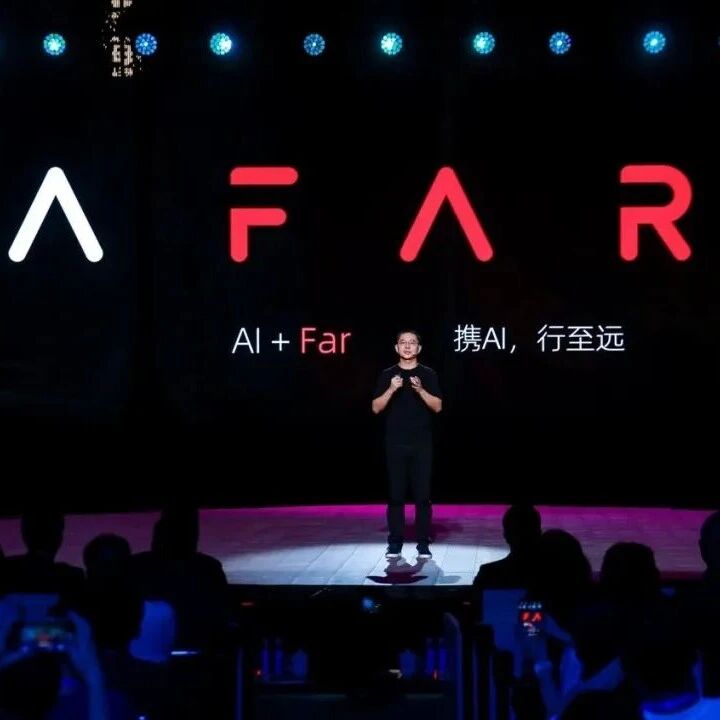
世界智能网联汽车大会开幕,中欧“汽车人”热议智驾规则全球协同
2 1 Shi Ji Jing Ji Bao Dao· 2025-10-16 12:54
Core Viewpoint - The global development of intelligent connected vehicles is driven by globalization and safety, with a focus on regulatory coordination and technological integration [1][2][4] Group 1: Industry Trends - Intelligent connected vehicles are transitioning from laboratory concepts to commercial applications, with significant discussions on technology evolution, regulatory alignment, and safety challenges at the World Intelligent Connected Vehicle Conference [1] - The European Union is actively working on regulatory frameworks for the automotive industry, including plans for a "European Connected and Automated Driving Alliance" by 2025 and a large-scale cross-border testing platform for autonomous vehicles [2][3] Group 2: Regulatory and Standardization Efforts - The EU's "General Artificial Intelligence Code of Conduct" will impact the development costs of L2+ autonomous driving systems, potentially increasing costs by 15%-20% due to required transparency and safety assessments [3] - Chinese companies, such as Changan Automobile, are advocating for global standardization to reduce redundant development costs and improve cross-border mobility experiences [4] Group 3: Technological Integration - The integration of AI, low-orbit satellite communication, and vehicle-road-cloud collaboration is leading to a new era of "collective intelligence" in intelligent connected vehicles [5][6] - China Mobile has established the world's largest 5G network and is accelerating the deployment of 5G+V2X technology, which supports high-precision positioning and enhances vehicle capabilities [6] Group 4: Safety and Commercialization Challenges - The industry is facing challenges in balancing safety and commercialization, with discussions highlighting the need for strong standards and safety protocols following recent autonomous driving incidents [7][8] - Industry leaders emphasize the importance of achieving a balance between innovation and safety to build consumer trust and ensure the successful adoption of intelligent connected vehicles [8]
宝马集团董事长齐普策今年第 4 次访华,呼吁加强国际合作
Sou Hu Cai Jing· 2025-10-16 11:47
Group 1 - The core message emphasizes the importance of international cooperation and green low-carbon development, with BMW Group expressing confidence in China's growth potential and innovation capabilities [1][3] - BMW Group has established the largest R&D network outside Germany in China, collaborating with local companies like Alibaba, Huawei, and Momenta to enhance product digital interaction and intelligent driving assistance systems [3] - The company has invested over 116 billion RMB in its Shenyang production base since 2010, demonstrating a strong commitment to local operations [3] Group 2 - BMW Group aims to achieve its "dual carbon goals" by reducing carbon emissions by at least 40 million tons by 2030 compared to 2019 levels and achieving carbon neutrality across its entire value chain by the end of 2050 [3] - The upcoming launch of the new generation BMW iX3 in Shenyang in 2026 is expected to enhance the company's presence in the green intelligent mobility sector [3] - The chairman, Zipser, advocates for a competitive environment that rewards quality, safety, and innovation, while expressing concerns about destructive price competition that could harm the industry's long-term health [3]

宝马集团董事高乐:宝马与宁德时代、Momenta、阿里巴巴、华为等均展开合作
Mei Ri Jing Ji Xin Wen· 2025-10-16 08:58
Core Insights - The global turbulent environment has become the new normal, and no country or company can tackle challenges alone, making innovation and collaboration more crucial than ever [1] Group 1: Innovation Strategy - The company adopts a dual-driven innovation model that includes both internal innovation and external collaboration [1] - Internal innovations include changes to traditional driving modes, the use of a new sixth-generation electric drive system architecture, and the launch of a panoramic iDrive system [1] Group 2: External Collaborations - The company has established partnerships with several key players, including CATL, Momenta, Alibaba, and Huawei [1]
