
火山引擎

Search documents
豆包深度思考大模型与荣威M7 DMH的故事刚刚开始
Zhong Guo Qi Che Bao Wang· 2025-09-17 12:45
Core Insights - The launch of the SAIC Roewe M7 DMH featuring the Doubao Deep Thinking Model marks a significant advancement in human-vehicle interaction, transitioning from command-based to natural interaction [1][3][4] - The integration of AI technology is driving a transformation in the automotive industry, with intelligent cockpits becoming a core competitive area [3][6] Group 1: Product Features - The Roewe M7 DMH utilizes the Doubao Deep Thinking Model, enabling the vehicle to understand vague commands and user intentions, thus enhancing the interaction experience [3][4] - The vehicle's advanced memory capabilities allow it to remember user preferences and historical interactions, making it a more personalized companion [4][5] - The M7 DMH can execute complex vehicle control tasks with a single command, significantly improving user convenience and experience [5][6] Group 2: Industry Collaboration - SAIC Roewe has partnered with Volcano Engine to leverage AI models in the automotive sector, aiming to create a more intelligent and user-friendly driving experience [6] - The collaboration focuses on integrating advanced AI capabilities with the vehicle's underlying systems, enhancing the overall functionality and user interaction [6] - The shift in user expectations from merely functional vehicles to those that understand their needs reflects a broader trend in the automotive industry [6]



重磅来了!刷屏!
Zhong Guo Ji Jin Bao· 2025-09-16 15:08
Group 1 - The core viewpoint of the article emphasizes the transformative opportunities and challenges in the manufacturing industry driven by digitalization and intelligent manufacturing [1] - The discussion at the forum highlighted the need for manufacturing companies to adopt a systematic and ecological strategic restructuring rather than relying solely on single-point technological breakthroughs [2] - The automotive industry is experiencing a significant shift towards intelligent manufacturing, with data-driven algorithms and software systems fundamentally changing traditional manufacturing models [2][3] Group 2 - Recommendations for the manufacturing sector include focusing on core technologies to mitigate external risks, deepening globalization efforts, and fostering an ecosystem of collaboration rather than isolated competition [4] - The automotive industry is entering a phase where intelligent manufacturing capabilities are critical, and investors should focus on companies that lead in standards and possess core technologies [5] - Strategic partnerships and collaborations are essential for success, as demonstrated by companies like Toyota, which emphasizes the importance of nurturing the entire industry ecosystem [5] Group 3 - The investment focus for manufacturing companies should shift towards enhancing their "investability" in the capital market, emphasizing sustainable growth and technological innovation [5] - Key investment strategies include concentrating on leading companies in core sectors, paying attention to non-financial indicators such as technology investment and global vision, and integrating investment approaches across different sectors [5]


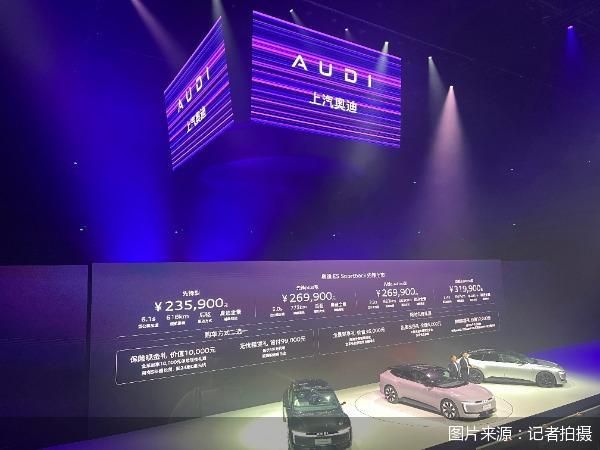
起售价23.59万元,奥迪E5 Sportback上市
Bei Jing Shang Bao· 2025-09-16 14:26
Group 1 - Audi has officially launched its first strategic model, the Audi E5 Sportback, with a price range of 235,900 to 319,900 yuan, offering four configurations: Pioneer, Pioneer Plus, Pioneer Quattro, and Flagship Quattro [1] - The Audi E5 Sportback features the new AUDI OS operating system and integrates the Qualcomm Snapdragon 8295 digital cockpit chip, creating an ultra-interactive smart cockpit [3] - The vehicle includes the Audi Assistant, powered by a customized language model "Doubao," which enhances semantic understanding, multi-turn dialogue, and vehicle control interaction capabilities [3] Group 2 - Audi has partnered with Momenta to develop a comprehensive driving assistance solution, covering urban, highway, and parking scenarios [3] - The company plans to accelerate channel development, aiming to establish over 240 fully functional user centers across more than 100 cities in China by the end of this year [3]
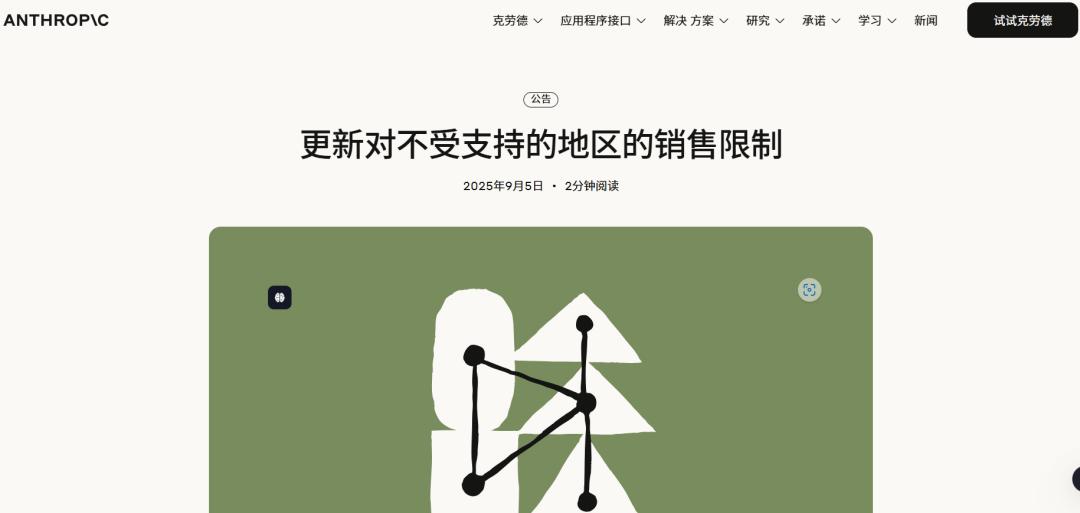
Claude背弃中国,何尝不是给国内大模型又一次蓬勃发展的机会?
3 6 Ke· 2025-09-16 12:25
Core Viewpoint - Anthropic's announcement to prohibit "Chinese-controlled companies" from using its AI services, including Claude, marks a significant escalation in the U.S.-China tech rivalry, reflecting concerns over national security and competitive advantage in AI development [1][4][5]. Group 1: Impact of the Ban - The ban is based on equity structure rather than geographical location, affecting companies registered in China, Singapore, or Silicon Valley if they have over 50% Chinese ownership [1][4]. - Anthropic's decision is expected to impact its global revenue by hundreds of millions of dollars, indicating a willingness to incur economic losses to restrict Chinese AI development [4][5]. - The ban extends beyond China to other nations deemed hostile by the U.S., such as Russia, Iran, and North Korea, highlighting a broader strategy of technological containment [5]. Group 2: Response from Chinese AI Industry - In response to the ban, Chinese AI companies quickly initiated a "migration plan" to provide alternatives, with companies like Zhiyun offering seamless transitions to their GLM models [6][10]. - Major players like Kimi and DeepSeek also launched new models, while Volcano Engine introduced solutions to facilitate migration from Claude Code [10][13]. - The rapid response from the Chinese AI sector demonstrates its growing maturity and confidence in technology, showcasing a robust ecosystem capable of adapting to external pressures [10][14]. Group 3: Future Pathways for Chinese AI - The Chinese AI industry is expected to focus on self-innovation and ecosystem development, as highlighted by government initiatives aiming for widespread AI application by 2030 [17][21]. - Companies are encouraged to enhance their software ecosystems and developer support to build trust in domestic products, as reliance on foreign technology remains a concern [17][21]. - The market for AI models in China is projected to exceed 29 billion yuan in 2024, with significant growth anticipated in the coming years, indicating a strong trajectory for domestic AI development [20][21].
恒图科技×火山引擎:为全球用户打造智能创作新体验
Cai Fu Zai Xian· 2025-09-16 09:43
Core Insights - The article highlights the efficiency and convenience brought by AI large models in content creation, particularly focusing on Chengdu Hengtong Technology Co., which has seen significant improvements in user engagement and conversion rates through AI-driven solutions [1][2]. Group 1: Company Performance - Chengdu Hengtong Technology has achieved a 12% increase in average video generation per user and a 23% growth in user conversion rates, with user satisfaction rising by 40% [1]. - The company’s core products, Fotor and Clipfly, have dominated the Mac App Store photography application rankings in over 100 countries, with 95% of users coming from overseas markets [2]. Group 2: Technological Advancements - Hengtong has integrated the Seedance 1.0 model from BytePlus, significantly enhancing its AI video generation and editing capabilities, allowing for over 100 different image and video functions [2]. - The Seedance 1.0 pro model enables creators to generate storyboard videos from text scripts in minutes, a process that traditionally took days [3]. Group 3: Cost Efficiency and Compliance - The introduction of the ByteDance-Seed-1.6 model has optimized prompt word generation, allowing non-professional users to create high-quality videos easily [4]. - Hengtong has achieved a 99.9% compliance interception rate in video generation, reducing overall generation costs by over 20% and improving quality by 30% [4]. Group 4: Infrastructure and Global Expansion - Hengtong benefits from high-performance GPU instances provided by Volcano Engine, ensuring sufficient computational power even during peak business periods [6]. - Future collaborations between Hengtong and Volcano Engine will focus on integrating video generation with virtual characters and real-time interactions, expanding AI applications in content production [6].
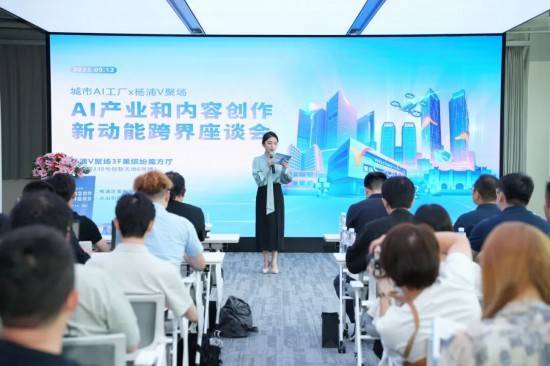
当V聚场遇见AI,一场跨界座谈开启杨浦数字生活新篇章
Sou Hu Cai Jing· 2025-09-14 12:26
茶余饭后,点开短视频"1分钟"即可学到科学知识;生活有难题,"凡事问AI"已成为市民的日常习 惯……随着技术日新月异,AI与互联网内容创作掀起知识大众化浪潮,全社会正在共同见证一场前所 未有的人工智能产业革命。 9月12日下午,杨浦区V聚场内,一场由杨浦区委网信办主办、火山引擎与抖音联合支持的"杨浦V聚场× 城市AI工厂——AI产业和内容创作新动能"跨界座谈会举行。政府代表、平台企业负责人、内容创作者 和AI技术专家齐聚一堂,一起探讨人工智能如何赋能内容创作,为杨浦"城市AI工厂"建设注入新动能。 "我在杨浦遇见AI",点亮一场"双向奔赴" AI技术正在悄然融入市民生活。科技,在杨浦有了一股"烟火气"。 活动现场,"我在杨浦遇见AI"V聚场·抖音短视频挑战赛正式启动。活动从即日起持续至9月26日,面向 广大市民、企业征集短视频作品,号召大家用镜头捕捉杨浦的真实AI应用场景,展现人工智能如何让 城市更智慧、生活更便捷。例如:智能停车、AI导购、智慧公交、AI在线服务、智能医疗、数字化办 公等。带话题#我在杨浦遇见AI和#V聚场,发布抖音视频,即可参赛。 "AI技术已经走向街头巷尾,我们希望让市民们用发现美的眼睛 ...
AI加速落地金融机构业务领域,成本高等难题何解?招行周天虹:聚焦“三多”高价值场景
Xin Lang Cai Jing· 2025-09-12 04:05
Core Insights - The integration of artificial intelligence (AI) in financial services is a key focus for institutions, with challenges in cost, security, and trust still present [1][2] - Major institutions like China Merchants Bank, JD Finance, and Huatai Securities are accelerating the application of AI in their business operations as AI technology matures [1][2] Group 1: AI Application in Banking - China Merchants Bank's Chief Information Officer highlighted that the current cost of large model applications remains high, but the application scope in banking is extensive [1] - The bank's strategy focuses on high-value scenarios that require significant human and time investment while aiming to reduce costs [1] - AI has been deeply integrated into core business segments such as retail and wholesale, enhancing services like "Xiao Zhao" intelligent service and "CRM Xiao Zhu" for client managers [1] Group 2: AI in Non-Banking Financial Services - A large brokerage's technology R&D center has implemented AI large model technology for intelligent research reports, improving both speed and quality of report production [2] - Institutions like JD Finance and Dongfang Caifu are maturing in their AI applications for internal management and customer marketing services, with expectations for further development in business assistance and customer acquisition [2] - Challenges in compliance, security, and trust in financial scenarios were noted, with recommendations for building multi-layered defense systems to protect data privacy and counteract potential attacks [2]

研判2025!中国安全访问服务边缘(SASE)行业发展背景、市场现状、竞争格局及未来趋势分析:SASE受到越来越多客户青睐,行业规模高速增长[图]
Chan Ye Xin Xi Wang· 2025-09-12 01:10
Group 1 - The core viewpoint of the article highlights the rapid growth of the SASE (Secure Access Service Edge) market in China, driven by the increasing complexity of cross-cloud access and management due to digital transformation and remote work trends [1][7][10] - The SASE market in China is projected to reach approximately 1.14 billion yuan in 2024, with a year-on-year growth of 37.8%, and is expected to expand to 1.4 billion yuan by 2025 [1][10][11] - SASE solutions are primarily deployed on-premises, accounting for over 65% of the market, but a shift towards SaaS deployment is anticipated by 2029 [12][13] Group 2 - The competitive landscape of the SASE market includes three main groups: network/cloud service providers (e.g., Alibaba Cloud, Tencent Cloud Security), security vendors (e.g., Sangfor, Qi An Xin), and SASE startups [2][12][13] - The top five companies in the SASE market hold a combined market share of 50.6%, with Sangfor, Volcano Engine, and Huawei leading the first tier, each with over 10% market share [1][13] - The SASE user base spans various industries, including manufacturing, government, telecommunications, and finance, with primary demands focused on network attack protection, resource elasticity, and compliance assurance [10][12] Group 3 - The SASE architecture is designed to meet modern network and security needs, featuring identity-driven access, cloud-native capabilities, and global distribution for low-latency services [3][4][5] - SASE's application scenarios include connecting headquarters and branch offices to data centers or private clouds, and managing diverse user identities accessing internal applications [5][6] - The future of SASE is expected to emphasize unified, diversified, and AI-driven development paths, enhancing service capabilities and operational efficiency [14][19]





云大厂半年复盘:GPU业绩暴增、国内云攻守各异、外资云持续调整
雷峰网· 2025-09-11 11:00
Core Viewpoint - The cloud computing market in China has experienced significant growth due to the AI wave, but competition remains fierce among cloud vendors, leading to strategic differentiation in their approaches to growth and profitability [1][5][18]. Group 1: Performance and Growth - Fire Engine's GPU sales performance has more than doubled year-on-year, making it the fastest-growing product line among cloud vendors [2][13]. - Alibaba Cloud reported a revenue growth rate of 18% in Q1 and 26% in Q2, with total revenue reaching 635 billion yuan in the first half of the year [3][12]. - Tencent's financial technology and enterprise services segment saw a 10% year-on-year increase, reaching 555.4 billion yuan in Q2 [3][13]. Group 2: Competitive Landscape - Domestic cloud vendors are experiencing a split in strategy, with Alibaba Cloud and Fire Engine aggressively pursuing growth, while Tencent Cloud and Huawei Cloud focus on profitability and cost-cutting measures [17][19]. - AWS and Microsoft Cloud are also facing challenges in the Greater China region, with AWS struggling to retain customers against domestic competitors and Microsoft Cloud experiencing a duality of strong AI-driven growth alongside significant internal restructuring [22][36]. Group 3: Strategic Differentiation - Alibaba Cloud is seeking new growth avenues beyond traditional market competition, leveraging AI and global expansion [18][19]. - Fire Engine has set ambitious revenue targets, aiming for a doubling of its revenue, which has increased pressure on competitors like Tencent Cloud [18][19]. - Tencent Cloud and Huawei Cloud are prioritizing profit margins, leading to product line reductions and potential customer loss due to unmet demands [20][19]. Group 4: Market Dynamics - The cloud computing market in China is entering a critical phase of player reshuffling and strategic realignment, with domestic vendors increasingly competing with foreign cloud giants for market share [48][49]. - The competition is expected to intensify in the second half of the year, particularly as domestic vendors seek to capture large orders from major clients [48][49].




Seedream 4.0 来了,AI 图片创业的新机会也来了
Founder Park· 2025-09-11 04:08
Core Viewpoint - The article discusses the emergence of AI image generation models, particularly focusing on the capabilities and advancements of the Seedream 4.0 model developed by Huoshan Engine, which is positioned as a competitive alternative to existing models like Nano Banana and GPT-4o Image [2][4][69]. Group 1: AI Image Generation Models - The AI image generation field has seen significant breakthroughs this year, with models like GPT-4o generating popular images in the Ghibli style [3]. - The Nano Banana model gained attention for its ability to generate high-fidelity images and solve issues related to subject consistency, being compared to ChatGPT in the image generation space [4]. - Huoshan Engine's Seedream 4.0 model offers enhanced capabilities, including multi-image fusion, reference image generation, and image editing, with a focus on improving subject consistency [5][6]. Group 2: Features of Seedream 4.0 - Seedream 4.0 is the first model to support 4K multi-modal image generation, significantly broadening its usability [6]. - The model allows users to input multiple images and generate a high number of outputs simultaneously, showcasing its advanced multi-image fusion capabilities [10][14]. - It supports both single and multi-image inputs, enabling complex creative tasks and maintaining consistency across generated images [50][62]. Group 3: Editing and Customization Capabilities - Seedream 4.0 features strong editing capabilities, allowing users to make precise modifications to images by simply describing the desired changes in natural language [23][24]. - The model can understand and execute detailed instructions, such as replacing elements in an image or adjusting specific details like clothing folds and lighting [26][34]. - It maintains high subject consistency across different creative forms, effectively avoiding common issues like appearance distortion and semantic misalignment during multi-round edits [28][50]. Group 4: Performance and Speed - The model achieves fast image generation speeds, producing images in seconds, which enhances the creative workflow's responsiveness [36]. - With 4K output resolution, Seedream 4.0 delivers high-quality images suitable for commercial publishing, improving detail, color depth, and semantic consistency [39][41]. Group 5: Implications for AI Entrepreneurship - The introduction of context-aware dialogue capabilities in Seedream 4.0 allows for iterative image editing, making it easier for developers to create complex image products without extensive workflow management [69][76]. - This shift in API design enables a more fluid interaction with image generation tools, potentially transforming the landscape of AI image product development [69][70]. - The model's capabilities suggest new entrepreneurial opportunities in the AI image generation space, particularly for products that require iterative design and modification [67][72].
