
先正达

Search documents
进博会农食产品展区上演“从全球农场到中国餐桌”
Zheng Quan Ri Bao· 2025-11-07 16:13
Core Insights - The eighth China International Import Expo (CIIE) showcased a diverse range of agricultural products, emphasizing the theme "From Global Farms to Chinese Tables" with over 2000 exhibitors, marking the largest scale in history [1][2] - Two significant trends emerged: a shift from "global product debuts" to "localized deep innovation," and the transformation of the agricultural value chain through digitalization and precision nutrition [1][6] Group 1: Product Launches and Innovations - The meat section at CIIE featured strong participation from major meat-producing countries like Brazil, Argentina, and Australia, highlighting the competitive landscape [2] - Companies like Ausnutria Dairy Corporation showcased innovative products such as probiotics for nasal sensitivity and sleep, catering to health-conscious consumers [2] - The cheese industry saw the debut of China's first domestically produced mozzarella cheese by Miaokelando, indicating advancements in local dairy production [2][3] - Arla, the world's largest organic dairy producer, introduced several globally launched products, aligning with the health and taste demands of the Chinese market [3] Group 2: Localization and Market Adaptation - The trend of localization is evident as foreign companies adapt their products to meet Chinese consumer preferences, with examples like Lindt's panda chocolate tailored for the Chinese market [6][7] - The integration of advanced agricultural technologies, such as AI for crop monitoring, reflects the global agricultural innovation driven by Chinese market demands [6] - Companies like Danone are focusing on local production and innovation to align with the health and nutrition needs of Chinese consumers [6] Group 3: Collaborative Efforts and Market Impact - The collaboration between Dingdong Maicai and New Zealand Silver Fern Farms resulted in a significant procurement order exceeding 100 million yuan for New Zealand beef, showcasing the import market's growth potential [9][10] - The CIIE serves as a platform for companies to establish partnerships and enhance their market presence in China, with a focus on integrating online and offline services [8][10] - The event highlights the connection between global food offerings and Chinese consumer preferences, fostering a sustainable and health-oriented future [10]
行业聚焦:全球农用化学品行业Top 5生产商市场份额及排名调查
QYResearch· 2025-11-06 02:18
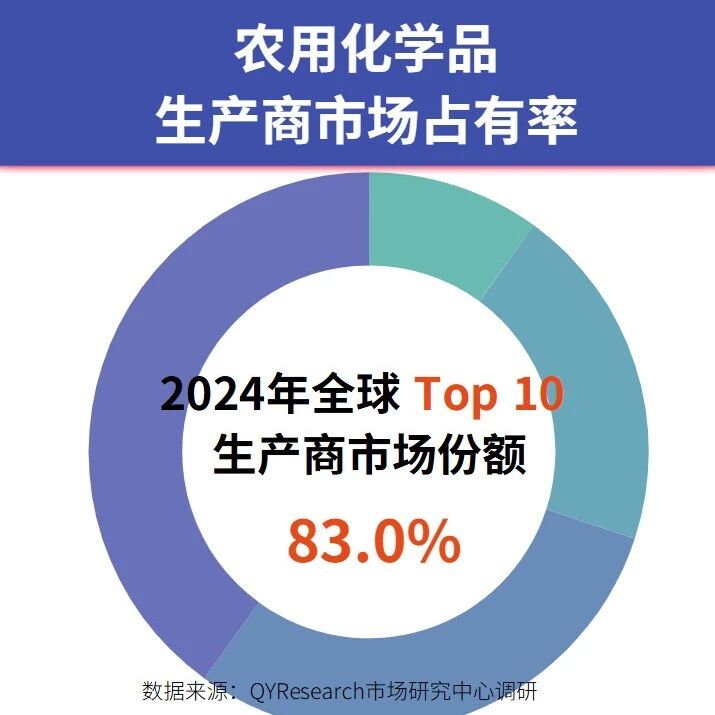
Overview of Agricultural Chemicals Market - Agricultural chemicals are substances used to enhance agricultural productivity by controlling pests, weeds, and improving soil fertility. This includes pesticides, herbicides, fungicides, and fertilizers. In 2024, global pesticide consumption is expected to exceed 2 million tons, playing a crucial role in food security and sustainable agricultural development amid population growth and climate change pressures. Major multinational companies like Syngenta, Bayer Crop Science, BASF, Corteva Agriscience, and others dominate the industry, investing heavily in sustainable formulation innovations [3][4]. Supply Chain Dynamics - The upstream supply chain for agricultural chemicals involves petrochemical and specialty chemical manufacturers providing raw materials such as intermediates, solvents, surfactants, and catalysts. Agricultural product manufacturers process these into technical-grade active ingredients for marketable products. The downstream user base is diverse, including large agricultural firms like Cargill and ADM, which focus on cost-effectiveness and crop-specific performance, while small farmers prioritize flexible packaging and affordability [4]. Market Trends and Growth Drivers - The global agricultural market is undergoing a transformation driven by sustainability, digitalization, and regulatory scrutiny. Increasing pesticide resistance is accelerating the demand for new mechanisms, biobased crop protection products, and Integrated Pest Management (IPM) strategies. Governments in Europe and North America are tightening regulations on chemical residues and environmental impacts, leading to higher R&D costs and a shift towards safer, low-toxicity formulations. The Asia-Pacific and Latin America regions remain the fastest-growing markets due to their large agricultural bases and the adoption of modern agricultural technologies [5][16]. Market Size and Projections - According to QYResearch, the global agricultural chemicals market is projected to reach USD 78.18 billion by 2031, with a compound annual growth rate (CAGR) of 4.2% over the coming years [5]. Leading Manufacturers and Market Share - The top ten agricultural chemical manufacturers, including Syngenta, Bayer Crop Science, BASF, and others, are expected to hold approximately 83.0% of the market share in 2024 [10]. Product Segmentation - Herbicides currently dominate the market, accounting for about 45.7% of the total share. In terms of application, grains represent the largest demand source, making up approximately 43.2% of the market [12][14]. Challenges and Opportunities - The agricultural chemicals market faces challenges from stricter regulations in Europe, which have led to a decline in pesticide usage despite ongoing agronomic demand. Additionally, rising input costs and weather impacts may limit farmers' ability to pay for high-priced products. However, the increasing focus on food safety is driving the growth of biopesticides, which are becoming more widely used in various agricultural sectors [18][19]. Regulatory Environment - In the EU, all active ingredients must undergo renewal under Regulation 1107/2009, with some facing bans or restrictions. The ongoing loss of active ingredients due to regulatory pressures and the high costs associated with developing new active ingredients pose significant challenges for the industry [19]. Conclusion - The agricultural chemicals industry is poised for growth driven by innovation, compliance, and sustainable practices, despite facing regulatory challenges and market dynamics that may impact traditional chemical usage [5][18].

农药龙头共绘“双碳”赛道新蓝图
Zhong Guo Hua Gong Bao· 2025-10-22 02:10
福华化学作物科技产业群总经理李元燊分享了福华化学创建绿色低碳工厂的做法。该公司把磷矿—盐矿 —氯碱—草甘膦整条链做成了"碳足迹可算、废水可喝、蒸汽发电、废盐变现"的闭环工厂,并用19项标 准+数字化平台把经验复制给行业,为行业树立了从"绿色工厂"到"绿色供应链"输出的新标杆。 上海灵敏包装材料创始人贺吉认为,在ESG时代,农化包装已经从"成本中心"演变为"价值中心",从产 品的"沉默外壳"变成了品牌的"绿色宣言"。 与会专家还围绕"落地绿色转型"展开探讨,并强调了标准先行、数字赋能、全链协同对农化绿色转型的 重要性。对此,中国农药工业协会表示将持续构建农药行业"双碳"标准体系,开展零碳(近零碳)工厂标 准体系及等级认定,打造农药行业"双碳"披露平台。 另外,会上还重磅发布《农药原药产品碳足迹核算通则》《温室气体产品碳足迹量化方法与要求精异丙 甲草胺原药》两项团体标准,填补了国内农药碳足迹核算的空白,为原药出口、绿色采购提供了"中国 标尺"。 中化新网讯 10月14日,由中国农药工业协会主办的农药行业低碳发展研讨会在上海世博展览馆落幕。 先正达、拜耳、福华化学、浩天律所等国内外农药龙头企业与权威机构齐聚,共绘农 ...
2025年中国杀菌剂行业政策、市场规模、进出口、竞争格局及未来趋势研判:政策与市场双轮驱动,杀菌剂行业向绿色高效方向发展[图]
Chan Ye Xin Xi Wang· 2025-10-16 01:13
Industry Overview - The fungicide industry is crucial for controlling plant diseases and ensuring crop health and yield, with increasing demand driven by public health awareness and environmental policies [1][8] - The Chinese fungicide market is projected to grow from 23.67 billion yuan in 2019 to 40.5 billion yuan in 2024, with a compound annual growth rate (CAGR) of 11.34% [1][8] - The demand for environmentally friendly and biological fungicides is expected to rise significantly [1][8] Market Dynamics - The global fungicide market is anticipated to reach $19.704 billion in 2024, growing at a rate of 3.15% [7][8] - By 2028, the global fungicide market size is expected to increase to $22.942 billion, driven by agricultural productivity, public health protection, and food safety needs [7][8] Policy Environment - Recent policies in China are pushing the fungicide industry towards greener and more efficient practices, including restrictions on high-toxicity and high-residue pesticides [3][4] - The National Development and Reform Commission's 2024 guidelines aim to limit the production of harmful pesticide raw materials [3][4] Industry Structure - The fungicide industry is characterized by a tiered competitive landscape, with major international players like Bayer, BASF, and Syngenta leading the first tier, while Chinese companies like Xin'an Chemical and Limin Holdings form the second tier [9][10] - Smaller regional companies make up the third tier, focusing on niche markets [9][10] Key Companies - Limin Holdings is a leading player in the domestic pesticide industry, with a reported revenue of 1.24 billion yuan from agricultural fungicides in the first half of 2025, marking a 12.32% increase [10] - Jiangsu Changqing Agrochemical Co., Ltd. focuses on high-efficiency, low-toxicity pesticides, reporting a revenue of 174 million yuan from fungicides in the first half of 2025, a decrease of 3.33% [11] Development Trends - The industry is moving towards high efficiency, emphasizing the optimization of action mechanisms and application efficiency [12] - A green transformation is underway, focusing on environmentally compatible products and reducing emissions during production [13]


“美国最大雇主”:未来三年“不加人”
Hu Xiu· 2025-09-28 09:34
Core Viewpoint - Walmart, the largest private employer in the U.S., is facing challenges from AI-driven labor transformation, with executives indicating that AI will eliminate certain jobs and reshape the workforce, marking a significant shift in corporate attitudes towards AI's impact on employment [1][2]. Group 1: AI's Impact on Workforce - CEO Doug McMillon stated that "AI will change every job," suggesting a comprehensive transformation across all roles [2]. - Walmart plans to maintain its global workforce of approximately 2.1 million employees over the next three years, although the composition of jobs will undergo significant changes [2][4]. - The company is actively assessing which job types will decrease, increase, or remain stable, to identify areas needing additional training and preparation [4]. Group 2: Job Creation and Transformation - Walmart has already automated many warehouse operations with the help of AI, leading to some job reductions [6]. - New positions, such as "agent builders," have been created to develop AI tools for assisting employees [7]. - The company anticipates increasing personnel in delivery and high-contact customer service roles, as well as adding maintenance technicians and truck drivers [8]. Group 3: Industry-Wide AI Adoption - Other companies, including Ford and JPMorgan, are also predicting AI-related layoffs and advising employers to prepare for workforce changes [3][11]. - Executives across various sectors are pushing for full adoption of AI technologies, with some creating internal "heat maps" to identify roles or tasks that may be automated [11][12]. - Despite concerns about job losses, many executives believe the U.S. labor market remains healthy and do not expect large-scale unemployment due to AI [15].

“美国最大雇主”未来三年“不加人”!沃尔玛CEO“坦言”:AI将改变所有岗位
Hua Er Jie Jian Wen· 2025-09-28 01:44
Core Insights - Walmart is facing challenges from AI-driven workforce transformation, with executives acknowledging that AI will eliminate certain jobs and reshape the employee structure [1] - CEO Doug McMillon provided a direct assessment of AI's impact on employment, stating that AI will change every job [1] - Walmart plans to maintain its global workforce of approximately 2.1 million employees over the next three years, but the composition of jobs will significantly change [1][2] Group 1: Company Strategy - Walmart executives are actively assessing the impact of AI on the workforce in high-level planning meetings, tracking job types that may decrease, increase, or remain stable [2] - The company aims to create opportunities for all employees to transition successfully into the new era [2] - Walmart has developed chatbots for customers, suppliers, and employees, and is utilizing AI to track supply chain and product trends [2] Group 2: Job Creation and Automation - AI has already led to automation in many warehouses, resulting in some job reductions, while new positions like "agent builders" have been created to develop AI tools [2] - The company expects to increase staffing in delivery and high-contact customer service roles, as well as in-store maintenance technicians and truck drivers [2] - The pace of change across the industry is expected to be gradual, with customer service tasks becoming more reliant on AI [2] Group 3: Industry Trends - Other companies are also embracing AI, with executives creating internal "heat maps" to identify roles or tasks that may be automated [4] - Concerns about AI-related layoffs have been rising, with some companies indicating they will eliminate employees who cannot be retrained for the AI era [4] - The CEO of Ford stated that AI could replace half of the white-collar jobs in the U.S., while OpenAI's chief economist noted that AI's impact on the job market is just beginning [5]
扬农化工20250916
2025-09-17 00:50
Summary of the Conference Call on Agricultural Chemical Industry Industry Overview - The agricultural chemical industry exhibits a cyclical pattern lasting approximately five to six years, driven by capital expenditure and demand fluctuations. Currently, the industry is at the end of a downturn cycle that began in Q3 2022 and is expected to conclude by Q2 2025, lasting nearly three years [2][7][11]. Key Points and Arguments - **Signs of Recovery**: The industry is showing signs of reversal, with prices hitting a ten-year low and some raw material price indices already reversing. In Q2 2025, China's pesticide formulation exports significantly improved after ten consecutive quarters of decline, particularly in herbicides, indicating a potential rise in industry prosperity [2][8]. - **Inventory Dynamics**: Inventory replenishment and destocking significantly impact pesticide demand. During the replenishment phase, procurement demand can reach 130% of normal levels, while during destocking, it may drop to 70%. This indicates that replenishment is a signal of industry prosperity rather than a core driving factor [9]. - **Supply-Side Reform**: The number of pesticide production enterprises in China has decreased to approximately 1,600, with 50% not entering chemical parks, indicating effective supply-side reforms. From 2021 to 2023, the new raw material production capacity added was limited, resulting in minimal impact on market supply [10][12]. Market Outlook - **Future Prospects**: The market outlook for the next few years is optimistic, with various reversal signals emerging, including price recovery, improved export data, and rising U.S. inventories. Continued domestic policy support for supply-side reforms is expected to further optimize the industry structure, leading to a new upward cycle in the agricultural chemical industry [11][12]. Company-Specific Insights - **Yangnong Chemical**: Recognized as a leading platform company in pesticide innovation, Yangnong has the capability to independently screen and modify chemical active compounds. The company has several innovative products with annual sales nearing 100 million yuan. In 2024, Yangnong is expected to account for three out of six domestically created products with annual sales exceeding 100 million yuan [3][19]. - **Runfeng Co.**: As the largest export-oriented formulation company in China, Runfeng's business model relies heavily on overseas registration certificates, which are expected to enhance its competitive edge. The company is experiencing rapid growth in Europe, the U.S., and Africa, with projections for net profits of 1.3 billion yuan in 2025 and 1.7 billion yuan in 2027 [20][21]. Additional Important Content - **Global Agricultural Giants' Outlook**: Major overseas agricultural companies like Corteva and Bayer are optimistic about their performance in the first half of 2025, raising their annual guidance. BASF noted significant recovery in herbicides, with strong performance in North America, South America, and Europe, indicating a comprehensive upward trend in the agricultural chemical industry [15][16]. - **Glycine Price Trends**: Glycine, as the largest raw material, saw its operating rate drop from 90% to 50% during the downturn but has since recovered to around 80%. Prices have been rising since April 2025, with inventory levels decreasing rapidly, suggesting a positive trend for the future [14]. This summary encapsulates the key insights and developments within the agricultural chemical industry and specific companies, highlighting the cyclical nature of the market and the emerging signs of recovery.

生物农化制品:绿色农业的新引擎
Wind万得· 2025-09-11 22:51
Core Viewpoint - The article discusses the rapid development and increasing importance of biopesticides and biostimulants in modern agriculture, driven by policy support and market demand for sustainable agricultural practices [3][4][7]. Group 1: Biopesticides and Biostimulants - The biopesticides and biostimulants industry is a crucial part of modern agricultural inputs, focusing on environmentally friendly products that enhance crop yield and quality through biological means [4][6]. - The transition from traditional chemical inputs to biological inputs is evident, with increasing application rates of biopesticides and biostimulants in pest control and soil remediation [4][6]. - The industry is evolving technologically, moving from natural strain selection to advanced techniques like genetic engineering and synthetic biology, significantly improving product performance [4][6]. Group 2: Policy Influence - International policies, such as the EU's organic agriculture subsidy, have positively impacted the biopesticides market, encouraging the adoption of organic farming practices [7][8]. - The EU's "Farm to Fork" strategy aims to reduce chemical pesticide use by 50% and fertilizer use by 20% by 2030, creating a larger market for biopesticides [8]. - In the U.S., the EPA's regulatory adjustments for biopesticides have simplified the registration process, enhancing market access for new products [8][9]. Group 3: Global Development Status - The global biopesticides market is rapidly expanding, with developed countries leading in research and product development [10]. - Brazil is highlighted as a leader in biopesticide application, with over 30 million hectares treated with biopesticides in 2023, reflecting a significant increase in usage [10]. - In China, the market for biopesticides and biostimulants is also growing, with a focus on addressing soil degradation and enhancing agricultural productivity [11][12]. Group 4: Capital Dynamics - The biopesticides sector has attracted significant attention in the capital markets, with several companies pursuing IPOs and mergers to enhance their market position [13][14]. - Notable companies like Fengbei Biotechnology and Guangxi Tianyuan are actively seeking funding to expand their biopesticide and fertilizer projects [13][14]. - The overall investment landscape in the biopesticides sector remains robust, driven by policy support and market demand [13][14].

行业研究框架培训 - 农药框架培训
2025-09-11 14:33
Industry Research Summary - Pesticide Industry Industry Overview - The global pesticide market is approximately $70 billion, highly concentrated with multinational companies such as Syngenta, FMC, Bayer, Corteva, and BASF dominating the market, providing integrated services of seeds, fertilizers, and pesticides [1][2] - The domestic pesticide market in China is fragmented, influenced by historical factors and the participation of both domestic and foreign enterprises. About 70% of raw material exports are for international markets, while 30% are for domestic sales [1][4] Market Dynamics - In 2021, a significant increase in demand occurred due to inventory replenishment, but prices began to decline from Q4 2022, leading to a bottoming out phase in 2024 and 2025 [1][5] - Key products expected to perform well in 2025 include Bacillus subtilis, Mancozeb, Abamectin, Methomyl, and Acetochlor, driven by factors such as disease outbreaks and supply shortages [1][6] Supply and Demand Analysis - Glyphosate has a global supply of approximately 1.2 million tons, with China supplying 800,000 tons and Monsanto accounting for 370,000-380,000 tons. The global demand is around 900,000 tons, with a capacity utilization rate of about 75% [1][9] - The price of glyphosate has increased from 23,000 yuan to 27,000 yuan per ton due to reduced supply and declining inventory, leading to improved profitability for companies [1][9] Product-Specific Insights - Glyphosate's future outlook is optimistic due to stable supply-demand dynamics and no new capacity additions allowed by policy [1][8] - In contrast, Glufosinate has faced oversupply issues since being listed in a restricted directory in 2024, with demand growth lagging behind supply growth, resulting in poor price and margin performance [1][10][11] Company-Specific Strategies - Yangnong Chemical's investment logic is based on capacity expansion and price elasticity opportunities, while Limin Co. focuses on reversing its main business challenges and developing innovative products [1][13] - Guangxin's core competitiveness lies in its comprehensive layout along the phosgene industrial chain, enabling it to achieve the lowest cost operations [1][15] - Runfeng Company emphasizes global formulation channel development, achieving periodic growth through continuous registration and channel establishment [1][16] Key Considerations for Industry Analysis - Important factors to monitor include cyclical trends, supply-demand relationships, the development of innovative products, and the characteristics of the formulation industry, which is asset-light and high-turnover [1][17] - Tracking inventory can be done through multinational company financial reports, communication with listed companies, and industry exhibitions [1][12]
生物农化制品:绿色农业的新引擎
Lai Mi Yan Jiu Yuan· 2025-09-11 06:58
Investment Rating - The report indicates a positive investment outlook for the biopesticide industry, highlighting its rapid growth and increasing market acceptance driven by policy support and technological advancements [4][8][12]. Core Insights - The biopesticide industry is becoming a crucial component of modern agricultural inputs, focusing on sustainable practices to enhance crop yield and quality through biotechnological products [4][6]. - Global trends show a shift from traditional chemical inputs to biobased alternatives, with increasing application rates of biopesticides and biofertilizers in pest control and soil remediation [4][6][11]. - Policy initiatives in both Europe and the United States are significantly boosting the biopesticide market, with the EU's "Farm to Fork" strategy aiming to reduce chemical pesticide use by 50% by 2030 [6][8]. Summary by Sections Industry Overview - The biopesticide sector encompasses biotechnologically based pesticides, fertilizers, biostimulants, and soil conditioners, focusing on environmentally friendly solutions [4]. - The industry is transitioning towards modern biotechnologies, including genetic engineering and synthetic biology, enhancing product performance and adaptability [4][9]. Policy Impact - EU organic agriculture subsidies and stringent pesticide regulations are fostering the growth of biopesticides, with organic farming area in Europe exceeding 18.5 million hectares by 2024 [5][6]. - In China, the Ministry of Agriculture has introduced rapid review channels for pesticide registration, aiming to increase the proportion of biopesticides to 30% by 2025 [8][11]. Market Dynamics - The global biopesticide market is experiencing rapid development, with significant advancements in research and product development in countries like the USA and Brazil [9][10]. - In Brazil, the area treated with biopesticides has surged, with usage rates for biopesticides and biofertilizers rising from 34% to 73% in two years [10]. Capital Market Activity - The biopesticide sector is attracting considerable attention in the capital markets, with multiple companies pursuing IPOs and mergers to enhance their market positions [12][13]. - Notable IPO activities include Fengbei Biological and Guangxi Tianyuan, indicating strong investor interest in biopesticide innovations [12].