
金山

Search documents
趋势研判!2025年中国政务云行业政策、整体架构、市场规模、竞争格局及发展趋势分析:市场规模进一步扩大,底层基础设施国产化也将成为发展重点方向[图]
Chan Ye Xin Xi Wang· 2025-09-05 01:32
Core Insights - The government cloud market in China is expected to mature by 2024, with the overall market size projected to grow from 236.1 billion yuan in 2018 to 939.4 billion yuan [1][2][3] - The dedicated government cloud segment leads the market with a size of 663.3 billion yuan, accounting for 70.61% of the total market, and is expected to grow at an annual rate of 19.0% [1][3] - By 2025, the market size is anticipated to reach 1072.2 billion yuan, with dedicated government cloud projected at approximately 755.3 billion yuan [1][3] Government Cloud Industry Definition and Classification - Government cloud refers to a comprehensive service platform led by the government, utilizing cloud computing technology to prevent redundant construction and promote collaborative development among government departments [1] - It includes various systems such as emergency command systems, health emergency systems, and quality inspection systems, categorized into comprehensive government clouds and industry-specific government clouds [1] Current Development Status of Government Cloud Industry - The government cloud has become a crucial sub-sector of the electronic government industry, recognized as an important engine for government transformation [2][3] - The market investment scale has expanded significantly since the "13th Five-Year Plan," with a forecasted growth trajectory [2][3] Government Cloud Industry Development Environment - Related Policies - The Chinese government has issued several policies to support the development of the government cloud industry, including guidelines for online government service platforms and cloud computing standardization [4] Government Cloud Industry Competitive Landscape - The market is characterized by increasing recognition and adoption of cloud computing services across various sectors, with major players like Huawei, Inspur, and China Telecom holding significant market shares [6][7] - In the dedicated government cloud market, Huawei leads with a 25.5% market share, followed by Inspur and H3C/Unisplendour [6][7] Government Cloud Industry Development Trends - The demand for government cloud services is expected to grow as digital transformation accelerates, with a focus on security and reliability [8] - The integration of AI and cloud-native technologies is anticipated to create new development opportunities, with an emphasis on domestic infrastructure [8]


GPT5对于算力模型应用的意义
2025-08-12 15:05
Summary of Key Points from Conference Call Records Industry and Company Involved - The discussion primarily revolves around the AI computing power sector, particularly focusing on the implications of GPT-5 and its impact on various companies and the overall market dynamics in the AI industry [1][2][3][4][5][6][7][9][10][11][12][13][14][30][31]. Core Insights and Arguments 1. **Significance of GPT-5**: GPT-5 has validated the ongoing investment in computing power and the correctness of the development path, enhancing market confidence in future versions (6.0, 7.0, 8.0) and potentially increasing valuations from 10x to higher levels [1][2][3][9]. 2. **Domestic vs. International Computing Power**: There exists a gap of approximately 1 to 1.5 generations between domestic and U.S. computing power, necessitating a tenfold increase in investment to bridge this gap. The growth potential in domestic training and inference sides is substantial, driven by increasing demand in sectors like programming and healthcare [1][5][6]. 3. **Investment Opportunities**: Companies like 富联 (Fujitsu) are highlighted for their advantages in AI server development, including improved rack ratios, deep involvement in component and system-level capabilities, and strong vertical integration. The company is expected to show robust performance from Q3 to Q1 of the following year, making it a key recommendation [1][10][11]. 4. **Valuation Trends**: The AI computing chain is entering a phase of valuation uplift, with PE ratios expected to rise based on long-term investor perceptions. Short-term EPS adjustments are limited by capacity constraints, emphasizing the importance of sustainable growth over the next three to five years [1][12]. 5. **Commercialization of AI**: Significant progress in AI commercialization has been observed overseas, particularly in North America, where increased capital expenditure by tech giants is driving the development of computing power and large models, enhancing ROI. In contrast, domestic C-end applications have yet to break through, although B-end paid applications show potential [1][13][14][30]. 6. **Market Performance**: The current market is performing well, particularly in sectors like optical modules and chips, with companies such as 联杰科技 (Lianjie Technology) and 光库科技 (Guangku Technology) showing strong results. The overall tech sector is viewed as low-risk, with expectations for continued bullish trends [1][8]. 7. **Future of the Gaming Industry**: The gaming industry, especially the party game market, is expected to perform well in 2025, driven by innovative gameplay and social engagement. The policy environment is becoming more favorable, with a normalization of game approvals anticipated to boost the sector [24][28]. Other Important but Potentially Overlooked Content 1. **Long-term Growth in AI**: The long-term outlook for the AI industry remains positive, with expectations of a 40% compound growth rate in computing power investments by major tech companies by 2028 [16][17]. 2. **Investment Recommendations**: Specific companies are recommended for investment, including 金蝶 (Kingdee), 金山 (Kingsoft), and 汉德 (Hand), which are expected to see significant growth in the coming years [3][31]. 3. **Emerging Markets**: Southeast Asia is highlighted as a region with growing AI computing demand, benefiting from geopolitical stability and low tariff impacts, suggesting potential for valuation increases in related companies [32]. 4. **IDC Sector Insights**: The IDC sector is gaining attention, with companies like 烽火通信 (FiberHome), 长飞 (Changfei), and others expected to benefit from upcoming earnings disclosures and market trends [22]. This summary encapsulates the key points discussed in the conference call, providing insights into the AI computing power sector, investment opportunities, and market dynamics.
2025 WAIC 最全观察:从 L4 级智能体到会搬快递的机器人,AI 真的落地了
Zhi Tong Cai Jing· 2025-07-29 15:16
一、会议基本概况 2025 年世界人工智能大会(WAIC)规模盛大,参与者众多,聚焦人工智能领域最新技术进展与商业应 用。其中,机器人展区表现尤为突出,参展厂商数量、展出面积及观众人数均创历史新高 —— 机器人 展厅面积较去年提升约 40%,双足人形机器人本体厂商参展超 40 家,加上工业机器人厂商合计约 60 家,较去年翻倍;灵巧手厂商达 9 家,旋转关节模组厂商数量显著增加,一体化成为行业趋势。 二、展区特色与技术亮点 1. 分区技术差异显著 H1 展区:以百度、阿里等大厂为主,展台面积扩大,应用展示丰富多样,端侧模型落地进展迅速,如 汽车端侧模型实现智能交互优化、PC 端线性化端侧模型提升文档处理效率,标志着 AI 从 0 到 1 的场 景突破。 H4 展区:聚焦新兴技术与前沿应用,集中展示 AI 在 MDSE(基于模型的系统工程)设计等小众领域 的创新,缩短复杂工业系统设计周期,为产业变革埋下伏笔。 机器人展区:头部厂商(智源、宇树、傅立叶、乐聚等)资源集中,展台面积大,已进入商业化量产阶 段。灵巧手、旋转关节模组等核心部件厂商数量激增,技术成熟度显著提升。 三、机器人产业:从技术突破到商业化落地 1 ...

李书福资本帝国再扩张:曹操出行上市,十家上市公司总市值近7000亿
Sou Hu Cai Jing· 2025-07-02 08:41
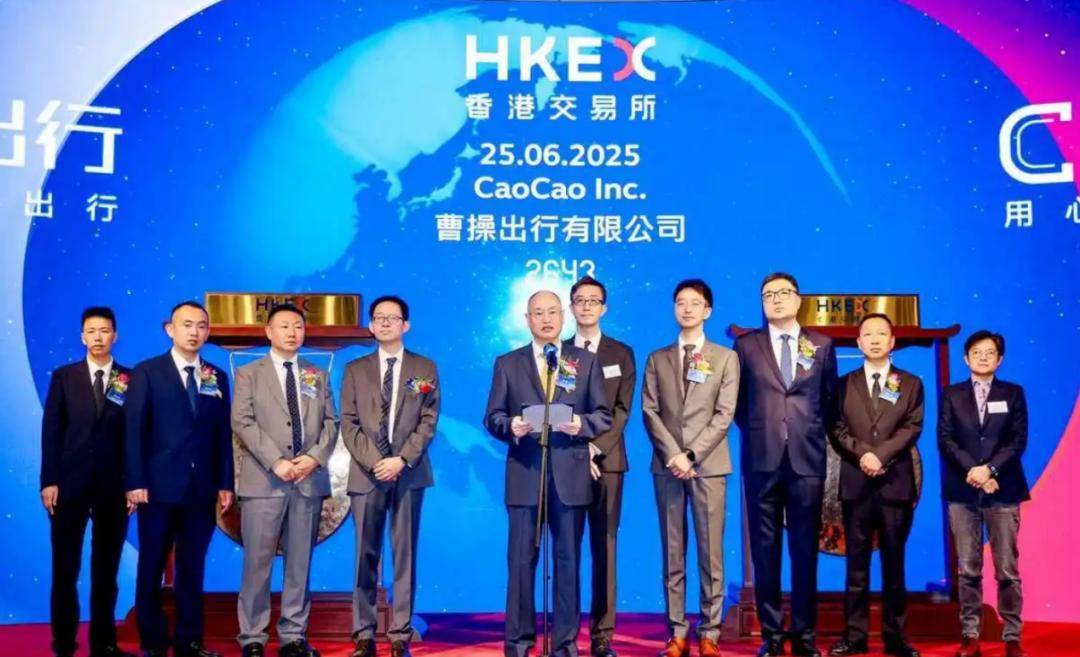
Core Viewpoint - Caocao Travel's listing on the Hong Kong Stock Exchange marks it as the largest ride-hailing platform in Hong Kong, but it faced significant stock price decline on its debut, indicating market skepticism about its financial health and future profitability [1][4]. Group 1: Company Overview - Caocao Travel, founded in 2015 and incubated by Geely Group, became the fourth listed ride-hailing company in China after Didi, Ruqi, and Dida [1]. - The company reported a revenue growth from 7.153 billion yuan in 2021 to 14.7 billion yuan in 2024, but it has accumulated losses totaling 8.241 billion yuan [1][4]. - As of June 30, 2023, Caocao's stock price was down 14.3% from its IPO price, with a market capitalization of 19.56 billion HKD [1]. Group 2: Financial Performance - The company has a high liquidity risk, with current liabilities reaching 9.682 billion yuan and cash reserves of only 159 million yuan [1]. - Despite narrowing losses, the net loss per order is projected to decrease to 1.34 yuan by 2024, indicating a long path to profitability [1][4]. Group 3: Competitive Landscape - Caocao Travel faces intense competition, with Didi still holding a 75% market share despite its delisting, and tech giants like Huawei and Tencent entering the ride-hailing space [4]. - The company's business model heavily relies on Geely's ecosystem, which may limit its ability to diversify its vehicle offerings and meet varied consumer demands [4]. Group 4: Leadership and Strategy - Li Shufu's control over Caocao Travel is significant, holding 83.9% of the shares through indirect ownership, reinforcing his influence in the automotive and mobility sectors [2]. - The listing of Caocao Travel is part of Geely's strategy to create a comprehensive ecosystem encompassing vehicle manufacturing, mobility services, and technology [9]. Group 5: Market Position and Future Outlook - The listing enhances Geely's capital portfolio, which now includes ten publicly traded companies with a total market value of approximately 699 billion yuan [2][6]. - The ongoing competition between traditional manufacturing and internet-driven business models, exemplified by Li Shufu and Lei Jun, highlights differing philosophies in the automotive industry [9].
第三届软件创新发展大会将在武汉举行 中部六省省会探索区域协同新模式
Zheng Quan Shi Bao Wang· 2025-06-05 15:07
Group 1 - The third Software Innovation Development Conference is scheduled to be held on June 13 in Wuhan, focusing on national software industry deployment and new trends in the 14th Five-Year Plan [1] - The conference will feature one main forum, six sub-forums, and one software interactive market, aiming to showcase industrial software innovation and establish a new hub for industry-academia-research transformation [1] - By 2030, Wuhan aims to achieve a software industry scale exceeding 800 billion yuan, positioning itself among the top cities in the country [1] Group 2 - Wuhan will focus on developing an open-source innovation system, particularly in open-source operating systems and chip technologies, targeting sectors like healthcare, education, and automotive [2] - The city plans to advance industrial software and foundational software, promoting breakthroughs in robotics, automotive, IoT operating systems, and high-performance databases [2] - Wuhan aims to cultivate three key industrial sectors, leveraging its cybersecurity talent and research institutions to establish itself as a core hub for national cybersecurity and geospatial information industries [2] Group 3 - The East Lake High-tech Zone in Wuhan has over 400,000 software R&D personnel, forming a "1+N" development system with a major research center and multiple smaller centers [3] - These large R&D centers are crucial for the region's software development, driving industrial aggregation through talent concentration [3] - The East Lake High-tech Zone aims to increase software business revenue to 300 billion yuan, contributing to Wuhan's goal of becoming a renowned software city [3]

e键加速,智启伊始丨eCopilot及系列AI应用新品发布会暨年度客户生态互动盛会
Ge Long Hui· 2025-05-27 10:15
Group 1 - The article highlights the significant impact of AI, particularly the DeepSeek model, on global economic and technological trends, as well as its influence on the geopolitical landscape between China and the US [1] - Eden Software, a well-known technology service company from Shenzhen, has been a long-term partner of major US companies like Microsoft, IBM, and Oracle, and is navigating the complexities of US-China geopolitical tensions and the domestic innovation wave [1][12] - The company is transitioning from a cloud service provider to a new AI application vendor, emphasizing its strategic shift in response to the growing AI trend and the evolving IT service landscape in China [1] Group 2 - The upcoming event on May 28 at the Grand Hilton in Shenzhen will showcase Eden Software's new AI applications and foster discussions on the current state and future of the Chinese technology and service industry [1] - The event will feature a series of presentations and discussions, including insights from industry leaders on digital transformation and AI solutions in education and new retail ecosystems [6] - Eden Software, established in 2002, is a national high-tech enterprise that integrates AI solutions and cloud services, with a global network of branches in cities like Shenzhen, Hong Kong, and Singapore [11]

像素绽放 PixelBloom(AiPPT.com)创始人&CEO赵充 :AI原生催生了新的市场需求,创业公司要做“全球品类王”
Sou Hu Cai Jing· 2025-05-17 03:41
Core Viewpoint - The rapid development of AI technology is transforming traditional office software into platform-based services, with a focus on creating AI-native products that enhance user experience and efficiency [2][5]. Group 1: Market Overview - The global office market is projected to reach 500 billion RMB in 2024 and is expected to grow to 700 billion RMB by 2030, driven by AI advancements [5]. - Major players like Microsoft generated approximately 50 billion USD (around 350 billion RMB) in productivity revenue last year, leaving around 150 billion RMB market space for startups [5][6]. Group 2: Company Strategy - The company aims to become a global leader in a specific category of office software by focusing on creating the best product in that niche, rather than competing with larger players through broad product offerings [3][6]. - The development of AI-native products is categorized into three stages: traditional software (1.0), SaaS cloud collaboration (2.0), and AI-native (3.0) [7][9]. Group 3: User Growth and Ecosystem - The company has established a four-layer cooperative ecosystem that includes partnerships with major model platforms, hardware manufacturers, vertical industries, and enterprise users to achieve rapid growth [3][12]. - The user base has grown significantly, with AiPPT.com achieving a combined web traffic of 17 million by March 2025, up from 50,000 at launch in August 2023 [12]. Group 4: Product Features and Innovation - The AI-native product allows users to generate presentations without traditional button operations, utilizing natural language processing for tasks such as one-click PPT generation and document import [9][10]. - The company has defined four new core processes for PPT creation that eliminate the need for manual editing and tool usage, marking a significant shift in user interaction [9][10]. Group 5: Business Model - The business model includes three main paths: To C (consumer subscriptions), To Partner To C/B (collaborations with partners), and To B (direct enterprise solutions) [13][14]. - The To Partner To C/B model leverages partnerships with major tech firms and hardware manufacturers to integrate AiPPT.com into their products, enhancing visibility and user access [15][18].

雷军,撞上「最艰难」时刻
创业邦· 2025-05-16 10:09
Core Viewpoint - The article discusses the recent challenges faced by Xiaomi and its founder Lei Jun, particularly in light of a serious accident involving the Xiaomi SU7 vehicle, which has raised significant public scrutiny and impacted the company's reputation in the automotive sector [4][9][10]. Summary by Sections Industry Context - The automotive industry is experiencing rapid growth, with established supply chains and consumer habits becoming more mature, which Xiaomi aims to leverage as it enters the market [3][9]. - The recent accident involving the Xiaomi SU7 has drawn attention from regulatory bodies and has the potential to slow down the advancement of intelligent driving technologies in China [9][10]. Company Performance - Prior to the accident, Xiaomi's automotive sales were strong, with the company achieving a delivery volume of 200,000 vehicles within a year of entering the market [13]. - Despite the challenges, Xiaomi's core smartphone business remains robust, and the company is projected to achieve record performance in 2024 [9][10]. Lei Jun's Leadership Challenges - Lei Jun has faced numerous setbacks throughout his career, including failed ventures and significant challenges at Xiaomi, which have shaped his approach to leadership and business strategy [6][8][12]. - The recent accident has been described by Lei Jun as the most difficult period since founding Xiaomi, highlighting the emotional and reputational toll of the incident [9][10]. Response to Crisis - In response to the accident, Lei Jun has emphasized the need for higher standards and accountability, recognizing that Xiaomi must now operate with the responsibilities of a major industry player [10][18]. - The company is focusing on improving its governance and operational performance to address public concerns and restore its reputation [17][18]. Future Directions - Moving forward, Xiaomi is expected to enhance its research and development efforts, particularly in safety and manufacturing precision, to align with the automotive industry's stringent requirements [18][19]. - There is a need for Xiaomi to transition from a founder-centric model to a more decentralized organizational structure to mitigate systemic risks and foster sustainable growth in the automotive sector [19][20].

计算机25Q1一季度经营展望及推荐
2025-04-15 14:30
Summary of Conference Call Records Industry or Company Involved - The discussion primarily revolves around the AI technology sector and its impact on various companies within the industry, including specific mentions of companies like浪潮 (Inspur), 红杉物联 (Redwood IoT), and others. Core Points and Arguments 1. **Performance of Companies**: The companies that performed well in the current period are largely those that continued trends from the previous year, with some new entrants showing promise but not significantly altering the overall landscape [1] 2. **AI Technology Breakthroughs**: The advancements in AI technology are expected to take time to translate into revenue as the transition from technical breakthroughs to mature products and customer adoption requires a cycle [1][2] 3. **Budgeting for AI**: The process of budgeting for AI initiatives is more streamlined compared to traditional budgeting, which may lead to increased orders and revenue in the upcoming quarters [2] 4. **Quarterly Revenue Trends**: The revenue for the first quarter is estimated to maintain a healthy trend, with a projected 15% increase in the budgeting sector [3] 5. **Economic Impact on Revenue**: The economic conditions in January and February were stable, but March showed more volatility, impacting overall revenue expectations [4] 6. **Growth Targets**: Companies like昆山 (Kunshan) aim for significant revenue growth, targeting 3 to 5 billion in revenue over five years, with a cumulative goal of 100 billion [5] 7. **AI Server Margins**: The gross margins for AI servers are under pressure, with first-quarter revenues around 500 billion, showing a year-on-year increase of approximately 1.3 times [6] 8. **Revenue Growth Projections**: Companies are projecting revenue growth of around 20-25%, with some experiencing lower single-digit growth [7] 9. **Profitability Trends**: Companies like红杉物联 (Redwood IoT) are expected to turn profitable in the first quarter, contrasting with previous losses [8] 10. **Sector Performance**: The overall performance of the computer sector is improving, but the extent of improvement is not as significant as anticipated [11] Other Important but Possibly Overlooked Content 1. **Market Sentiment**: There is a cautious optimism regarding the AI sector, with expectations that the market will take time to fully realize the benefits of new technologies [12] 2. **Policy Impact**: Concerns regarding the H20 policy and its implications for companies like浪潮 (Inspur) were noted, indicating that clarity on such policies is awaited [12] 3. **Engagement with Analysts**: The call encouraged ongoing engagement and questions from analysts, highlighting the importance of communication in understanding market dynamics [3][12]
化工日报-2025-04-07
Guo Tou Qi Huo· 2025-04-07 14:06
Report Industry Investment Ratings - Urea: ☆☆☆ [1] - Methanol: ☆☆☆ [1] - Styrene: ★☆☆ [1] - Polypropylene: ★☆★ [1] - Plastic: ★☆★ [1] - PVC: ☆☆☆ [1] - Caustic Soda: ★☆☆ [1] - PTA: ★☆★ [1] - Ethylene Glycol: ★☆★ [1] - Short Fiber: ★☆★ [1] - Glass: ☆☆☆ [1] - Unified Domain: ★☆★ [1] - Bottle Chip: ★☆★ [1] Core Views - The direct impact of Trump's tariff increase on methanol is limited but may be indirectly transmitted through the olefin end. Methanol prices dropped significantly after the holiday due to the decline in crude oil prices. The supply-demand side is expected to turn loose [2]. - The urea futures market dropped significantly due to macro - sentiment. The supply pressure at a high level continues, and the short - term market is expected to fluctuate and correct [3]. - The polyolefin market dropped significantly due to the sharp decline in oil prices and macro - risks. The supply of polyethylene increased, and its fundamentals are weak. The supply - side pressure of polypropylene is limited, and its fundamentals are in a weak balance [4]. - The styrene futures market dropped significantly. The supply - demand side has a weak leading role, and the price is under pressure from the cost side [6]. - The polyester market is affected by the US tariff. The cost and demand are both weak. The supply - demand pattern of ethylene glycol in the domestic market is expected to improve, and the short - fiber market has double negative factors of cost and demand [7]. - The PVC and caustic soda markets are affected by macro - sentiment. The impact of tariffs is limited. The supply pressure of PVC is relieved, but the inventory pressure is large. The supply of caustic soda remains high, and the inventory pressure is also large [8]. - The glass and soda ash markets are affected by macro - sentiment. The impact of US tariffs is limited. The glass market has a weak driving force for cold repair and ignition, and the soda ash market has supply pressure and slow demand growth [9]. Summary by Product Methanol - The direct impact of Trump's tariff increase is limited but may be indirectly transmitted through the olefin end. After - holiday prices dropped due to crude oil. Overseas idle capacity utilization increased, short - term port arrivals are low, but the support for the market is limited. The domestic production increased, and the supply - demand side is expected to turn loose [2]. Urea - The futures market dropped due to macro - sentiment. Current purchases are mainly for industrial and agricultural needs, and the production enterprise inventory has dropped to the same level as previous years. The supply pressure at a high level continues, and the short - term market is expected to fluctuate and correct [3]. Polyolefin - The market dropped due to oil price decline and macro - risks. The supply of polyethylene increased, and its demand is weak. The supply - side pressure of polypropylene is limited, and its demand has rigid support [4]. Styrene - The futures market dropped. The supply - demand side has a weak leading role, and the price is under pressure from the cost side due to the decline in international oil prices [6]. Polyester - Affected by the US tariff, the cost and demand are both weak. The supply - demand pattern of ethylene glycol in the domestic market is expected to improve, and the short - fiber market has double negative factors of cost and demand [7]. Chlor - Alkali - The PVC and caustic soda markets are affected by macro - sentiment. The impact of tariffs is limited. The supply pressure of PVC is relieved, but the inventory pressure is large. The supply of caustic soda remains high, and the inventory pressure is also large [8]. Glass and Soda Ash - The markets are affected by macro - sentiment. The impact of US tariffs is limited. The glass market has a weak driving force for cold repair and ignition, and the soda ash market has supply pressure and slow demand growth [9].