优必选

Search documents
Optimus 或于 2027 年底前开售,关注机器人产业进展
Changjiang Securities· 2026-01-30 05:02
Investment Rating - The industry investment rating is "Positive" and maintained [7] Core Insights - Tesla's humanoid robot Optimus is expected to be available for public sale by the end of 2027, marking a significant step towards commercialization in the humanoid robotics sector [2][4] - The report suggests focusing on the entire robotics supply chain, particularly on 1) suppliers of the robot "brain," 2) software-related companies for robot operating systems, and 3) suppliers of components for Tesla's Optimus [2][11] Summary by Sections Event Description - On January 22, during the World Economic Forum, Tesla CEO Elon Musk announced that the humanoid robot Optimus will be available for public sale by the end of 2027 [4] Market Performance - Tesla's Optimus V3 is anticipated to be released in Q1 of this year, with plans for mass production to begin by the end of 2026, aiming for an annual production capacity of 1 million units, eventually scaling up to 10 million units [11] - The domestic humanoid robot industry in China is also expected to see significant growth, with over 140 companies and more than 330 humanoid robot products expected by 2025 [11] Commercialization Progress - The humanoid robot industry is at a critical turning point for commercialization, with Tesla's Optimus already performing basic tasks in factories and expected to complete complex assembly and quality inspection tasks by the end of 2026 [11] - The production line for Optimus has begun operations, with the mass-produced version potentially priced as low as $20,000, which could enhance its application in more complex scenarios [11]

具身智能产业爆发!2025年90亿订单背后,谁在领跑?谁在布局?
机器人大讲堂· 2026-01-30 04:23
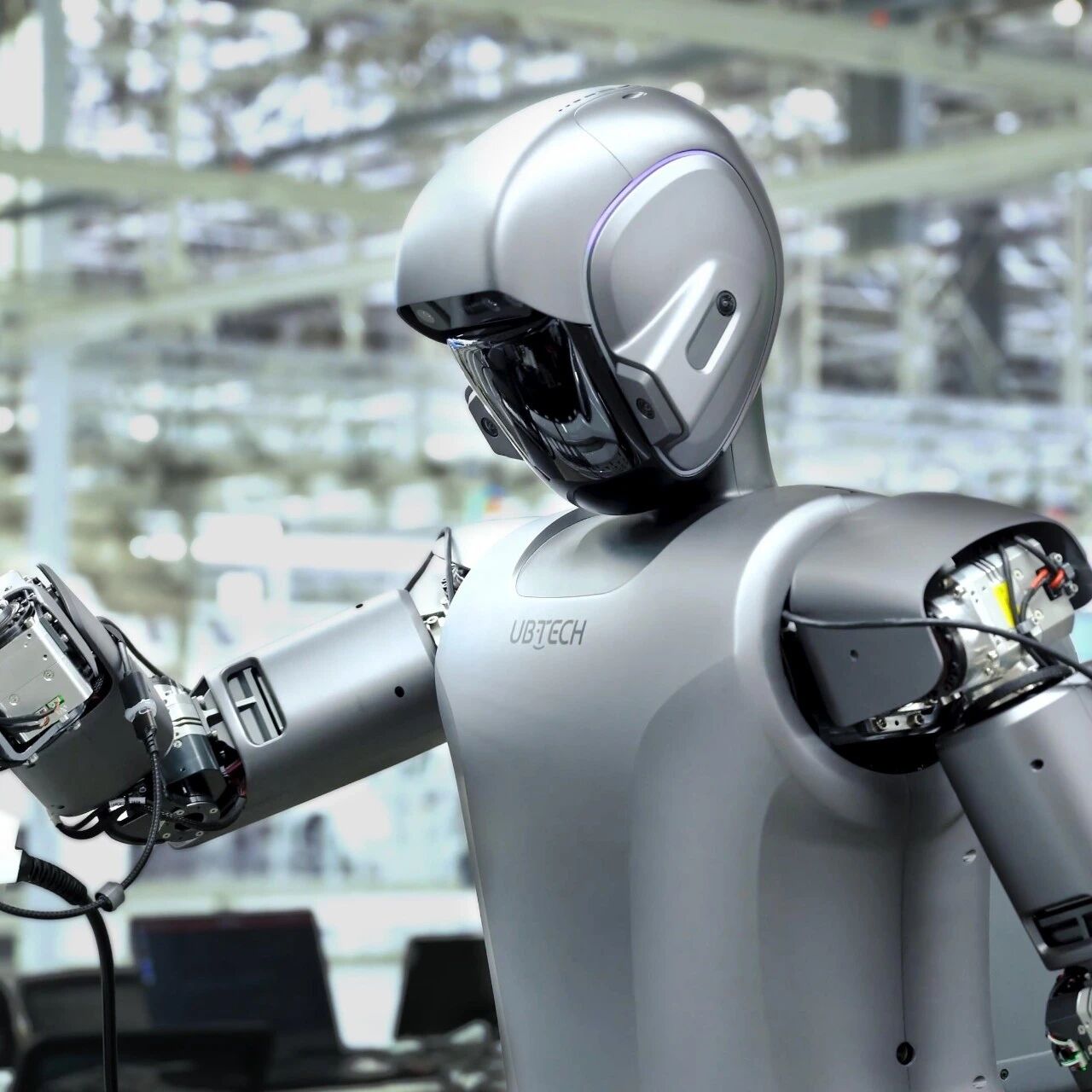
2025 年, 具身智能与人形 机器人行业订单密集落地,多家企业频频传出签约捷报 , 据 机器人大讲堂不完 全统计发现, 仅前十家企业订单总金额就突破 90 亿元, 优必选暂居第一,宇树科技、越疆机器人紧随其 后。 一场由订单牵引的产业化浪潮已全面展开。 具身智能 机器人正成为工业制造、物流配送、商业服务等领域的新生产力工具,仅 2025 年公开披露的订单 中,涉及人形机器人的占比超过 70% ,涵盖汽车、电子、物流、金融等多个高价值场景。从技术路线看,双 足、轮式、四足等各类机器人形态百花齐放,但人形机器人因其拟人化操作能力和场景适应性,成为商业化进 展最快的赛道之一。 01 头部企业瓜分市场蛋糕 2025 年, 具身智能 机器人行业订单总额已超 90 亿元,前十名企业构成行业竞争的第一梯队。优必选凭借 近 14 亿元订单登顶,宇树科技以近 12 亿元紧随其后,越疆机器人、云深处科技 、 智元 等企业也进入 " 10 亿俱乐部 " 。 银河通用、星动纪元等新兴力量同样表现不俗,订单规模在 6 亿元至 10 亿元之间。这些企业多数在 2023- 2024 年陆续推出首款产品,却在 2025 年实现订单快速放量 ...

下一阶段,Optimus V3亮相!
Robot猎场备忘录· 2026-01-30 04:07
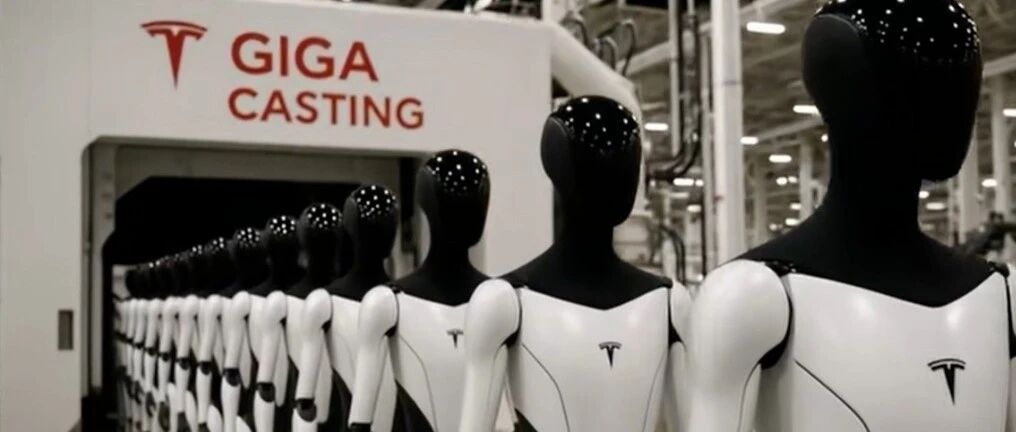
Core Insights - The article emphasizes the upcoming release of Optimus V3, which is expected to exceed performance expectations and has a production plan set for the end of 2026 [1][2] - Tesla's production capacity for Optimus is projected to reach 1 million units annually, with initial production starting at the Fremont factory [1] - The T-chain companies are currently experiencing a downward trend, but this is within expected parameters as they await further developments related to Optimus [3][4] Production and Capacity Planning - Optimus V3 is set to begin production in Q1, with a target of 2 units per week in January, increasing to 10 units in February, and reaching 2,000 units by June [2] - Future production in Texas aims for a capacity of 10 million units annually, indicating significant scaling potential for Tesla's robotics division [2] Market Trends and Company Performance - The T-chain companies have shown mixed performance, with some experiencing notable gains due to successful communications in North America [4][5] - Key companies within the T-chain, such as WX, FS, and KS, have reported positive developments and have seen stock price increases as a result [4] - New technologies and core suppliers are also gaining traction, with several companies entering the RFQ stage, indicating a healthy pipeline for future projects [5] Future Outlook - The article suggests that as the release of Optimus V3 approaches, the focus on core T-chain companies will intensify, leading to a more concentrated investment landscape [5][6] - The overall sentiment is that the market is preparing for a significant shift as Optimus V3 is unveiled, with expectations for renewed interest and investment in the robotics sector [6]
AI这趟车,不上怕掉队,上了怕翻车
吴晓波频道· 2026-01-30 00:30
Core Viewpoint - China has been the most aggressive testing ground for industrial intelligence over the past decade and is set to build the world's most advanced artificial intelligence factory clusters in the next decade [2][43]. Group 1: AI in the Workplace - Employees have mixed feelings about AI, hoping it will reduce their workload while fearing job displacement, with 75% of decision-makers more concerned about missing AI opportunities than wasting money [3][4]. - Many manufacturing enterprises are hesitant to adopt AI due to uncertainty about implementation and fear of ineffective investments [4][6]. Group 2: Challenges in AI Adoption - The primary challenges faced by manufacturing companies in adopting AI include: - **Data Utilization**: Many factories invest heavily in data collection but end up with "dead" data that is outdated or inconsistent, making it difficult to train AI effectively [6][7]. - **Overwhelming Technology Choices**: The vast array of AI applications in manufacturing creates confusion, leading companies to either follow trends blindly or remain inactive [8]. - **High Cost of Trial and Error**: The unique nature of industrial applications means that the costs associated with failed AI implementations can be prohibitively high [9][10]. Group 3: Successful AI Implementation Strategies - Successful companies often start by addressing a specific, pressing issue rather than attempting to create a comprehensive smart factory from the outset [12][14]. - AI serves as a "super assistant" to human workers, solving problems that were previously difficult or costly to address [15]. Group 4: Case Studies - In the Hai Tian factory, AI has transformed traditional processes, such as selecting soybeans, by using advanced scanning technology to improve efficiency and accuracy [17][18]. - The Haier factory employs a VR welding training system that enhances safety and reduces training time by 30% [20]. - At the Zeekr factory, AI systems optimize collaboration between robots and workers, resulting in a 30% increase in assembly efficiency and a 25% reduction in defect rates [23]. Group 5: AI+Manufacturing Practical Training Camp - The "AI+Manufacturing" practical training camp aims to help enterprises understand and implement AI effectively by providing real-world case studies and expert guidance [28][30]. - Participants will engage in deep discussions with factory leaders and AI engineers to understand the rationale behind their AI implementations and the challenges faced [32]. - The camp emphasizes output, with each participant leaving with a personalized action plan tailored to their company's specific needs and constraints [34][35].

冲上万亿!南山一路攀登永似少年 解码如何从“土地有限”迈向“发展无限”
Shen Zhen Shang Bao· 2026-01-29 17:37
Core Insights - Nanshan District is set to become the first district in China to surpass a GDP of 1 trillion yuan by 2025, contributing over 25% of Shenzhen's economic output with less than 10% of its land area [5][6] - The district's economic growth is characterized by a balanced approach involving investment, consumption, and exports, which collectively form a "stability triangle" against economic fluctuations [5][6] Economic Performance - Nanshan's GDP growth during the 14th Five-Year Plan period is projected to exceed 5.8% annually, with the district achieving 12 economic indicators ranked first in Shenzhen [5][6] - The total investment in projects signed in Nanshan for 2025 is expected to exceed 150 billion yuan, accounting for nearly 20% of Shenzhen's global investment conference total [6] Industrial Structure - Strategic emerging industries now account for 60% of Nanshan's GDP, showcasing a robust industrial structure [7][9] - The district hosts over 200 robotics companies, forming a collaborative ecosystem that enhances innovation and productivity [7][9] Innovation Ecosystem - Nanshan's innovation is driven by a unique ecosystem where large enterprises, SMEs, and innovative startups coexist, fostering a strong internal growth dynamic [8][10] - The district's R&D intensity has reached 7.87%, nearly three times the national average, with a high local conversion rate of R&D results exceeding 60% [9][10] Future Growth Areas - Nanshan is focusing on three future growth areas: low-altitude economy, embodied intelligence, and synthetic biology, aiming to cultivate new economic engines for the next decade [14] - The establishment of the Guangdong Provincial Laboratory for embodied intelligence and the development of low-altitude economic zones are part of Nanshan's strategic initiatives [14] Land Utilization and Development - Nanshan is leveraging limited land resources through innovative projects like the "industrial building up" model, which integrates manufacturing and R&D vertically [12] - The district's GDP per square kilometer is projected to reach 54 billion yuan by 2025, significantly higher than global benchmarks such as Silicon Valley and Singapore [12]
这座城市为何成为具身机器人的“全球高地”?
机器人大讲堂· 2026-01-29 09:06
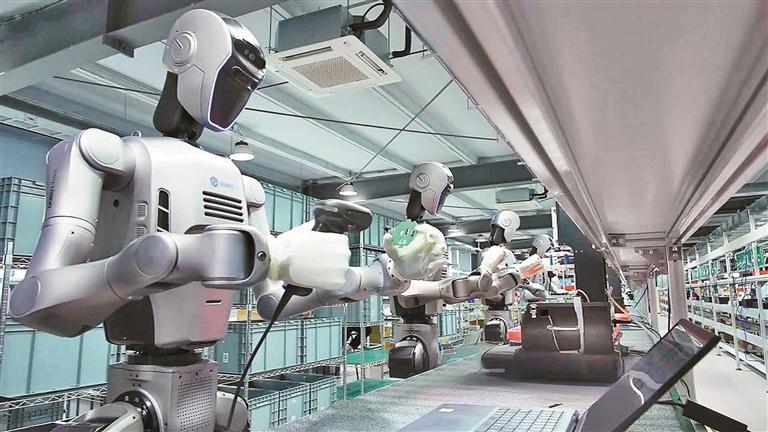
Core Insights - Shenzhen stands out in the humanoid robot sector due to its three core pillars: full-chain resource collaboration, technology transfer with scene closure, and precise ecological empowerment [2][3] - The upcoming FAIR plus 2026 conference will showcase local humanoid robot companies, demonstrating their technological achievements and commercial capabilities, further solidifying Shenzhen's industry leadership [2] Group 1: Three Core Pillars Supporting Development - The first pillar is "full-chain resource collaboration," which enables seamless integration from research and development to application, with nearly 100 robot companies and top research institutions located within a 10-kilometer radius [5] - The second pillar is "technology transfer with scene closure," supported by government policies that promote robot applications, including funding for projects that meet specific scene demands [6] - The third pillar is "precise ecological empowerment," where various stakeholders, including universities and industry associations, collaborate to create a robust network that supports the growth of enterprises [7] Group 2: Validation Through Enterprise Growth - Key enterprises participating in FAIR plus 2026, such as UBTECH and ZhiJi Power, exemplify the ecosystem's resilience through their technological breakthroughs and commercial success [8] - UBTECH, known as "China's first humanoid robot stock," has secured nearly 1.4 billion yuan in orders for its Walker S2 robot, showcasing its industrial capabilities [8] - ZhiJi Power has developed a complete technology stack that allows robots to operate autonomously, with products sold in over 50 countries [8] Group 3: FAIR plus 2026 Conference as an Opportunity - The FAIR plus 2026 conference serves as a platform for showcasing the strengths of Shenzhen's humanoid robot industry, allowing for direct engagement with various industry players [30] - The event facilitates the transformation of individual company advantages into collective industry influence, providing global stakeholders with insights into industry development [30] - FAIR plus 2026 is positioned as a critical opportunity for businesses to explore technological innovations, connect with quality supply chains, and uncover commercial collaboration prospects [30]
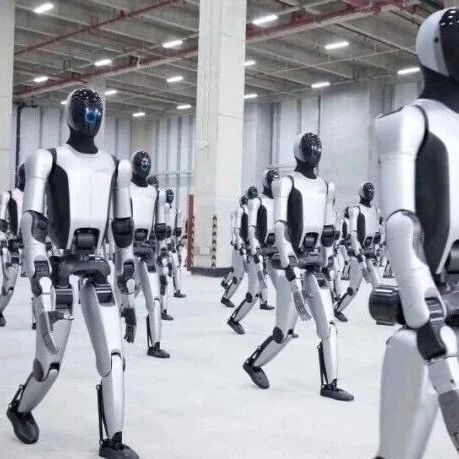
春晚机器人凉了?2026年,机器人要少跳舞,多干活
3 6 Ke· 2026-01-29 08:53
Core Insights - The Chinese robotics industry is experiencing a shift from showcasing technical capabilities to focusing on practical applications and commercial viability, as investors and customers demand tangible results rather than mere demonstrations [1][2][3] Group 1: Industry Trends - The 2026 outlook report emphasizes that the industry no longer wants to see robots performing tricks but rather engaging in useful tasks, indicating a paradigm shift towards commercial deployment [2][3] - The report highlights a significant disparity between soaring valuations and actual sales, with humanoid robot shipments only increasing by 17% despite a 300% rise in valuations, signaling a potential bubble [2][3] - As the number of robots deployed increases, companies are becoming less tolerant of flashy capabilities and more focused on reliability, predictability, and total cost of ownership [3][4] Group 2: Investment Dynamics - Investment logic is shifting, with a concentration of capital towards a few companies deemed to have commercial validation capabilities, as evidenced by the fact that 88% of funding in 2024-2025 went to large deals [4][5] - The report predicts that only 3-4 companies will emerge as clear winners in the humanoid robot sector, while others may face acquisition or closure due to an inability to balance high technical uncertainty with limited commercial validation [4][5] Group 3: Evaluation Metrics - The evaluation criteria for robots are evolving, with a focus on investment payback periods, task-switching capabilities, and operational data rather than just technical prowess [5][6] - Companies are now required to demonstrate clear task lists, performance metrics, and verifiable operational times before procurement, moving away from vague future potential descriptions [9][10] Group 4: Market Dynamics - The report notes a significant trend towards leasing and Robot-as-a-Service (RaaS) models, with 50% of companies preferring leasing to mitigate upfront costs and risks associated with technology [11][15] - The shift in decision-making power from technical teams to financial and operational departments reflects a growing demand for comprehensive total cost of ownership analyses [11][12] Group 5: Future Predictions - The report forecasts a major reshuffling in the investment landscape, with a predicted doubling of IPOs in the robotics sector in 2026, indicating a rush to lock in valuations before a potential downturn [12][24] - The report identifies a critical opportunity for Chinese companies in the global supply chain, as they possess a complete robotics industry chain despite facing policy barriers in overseas markets [14][15] Group 6: Safety and Standards - The establishment of safety standards is anticipated to be a crucial factor in the industry, with the potential to significantly impact market dynamics and competitive advantages [17][18] - Companies that participate in the development of these standards are likely to gain a first-mover advantage, while those that wait may find their technologies non-compliant [18][24]

2026年,机器人要少跳舞,多干活
Xin Lang Cai Jing· 2026-01-29 08:36
文|融中财经 2025年春晚,宇树机器人的一支秧歌舞点燃了资本狂热。2026年春晚,各家又在争夺这个难得的表演名 额。这一年,为了吸引眼球,你方唱罢我登场的戏码层出不穷,观众似乎早已审美疲劳,无非是从跑 步,到跳舞到武打,"大号玩具"的论调此起彼伏。 回顾这一年,在成绩与彷徨中,各家独角兽公司不断摸索与试错。人形机器人在公开场合完成了几乎所 有"可视化"的动作:跑步、跳舞、翻滚、对打……这些动作一次次刷新视频平台的播放量,却也同步降 低了它们在产业语境中的含金量。 真正的拐点在于:当所有公司都能表演,表演就不再是竞争力。 资本市场已经率先感受到这种变化。估值快速抬升的同时,订单、交付和规模化数据却明显滞后,技术 进展与商业兑现之间出现了越来越难以忽视的剪刀差。 这也是为什么,"泡沫"开始频繁出现在行业讨论中——并非因为技术停滞,而是因为衡量成功的标准, 已经悄然发生变化。 当炫技失效 在这场标准重塑的过程中,中国市场并非孤立。一份来自全球机器人产业一线的年度调研报告,提供了 一个有价值的参照坐标。 1月26日,在中国刚刚官宣上春晚的机器人名单时,The Robot Report发布的《2026年机器人行业展望 ...

机器人产业ETF(159551)盘中涨超1.2%,产业前景获机构关注
Mei Ri Jing Ji Xin Wen· 2026-01-29 06:49
Core Insights - The humanoid robot industry is experiencing strong growth, with accelerated product iterations and significant advancements in technology [1] - Companies like Yushu are projected to ship over 5,500 humanoid robots by 2025, with mass production exceeding 6,500 units [1] - Tesla's CEO Elon Musk indicated the potential public sale of the Optimus robot by the end of next year [1] Policy Developments - The Ministry of Industry and Information Technology is set to release guidelines for the construction of a comprehensive standardization system for humanoid robots and embodied intelligence [1] - Shenzhen is encouraging insurance institutions to innovate insurance products in cutting-edge technology areas, including humanoid robots [1] Technological Advancements - OpenAI has established a humanoid robot laboratory, indicating ongoing technological updates in the sector [1] - Youyou Technology has launched its first automated production line for robot joints in Zhangjiang, Shanghai, which will help meet demand and reduce costs [1] - UBTECH has partnered with Airbus to explore applications of humanoid robots in the aerospace manufacturing sector [1] Investment Opportunities - The Robot Industry ETF (159551) tracks the Robot Index (H30590), which focuses on companies in industrial automation and service robots, reflecting the overall performance of publicly listed securities in the robot sector [1]
停产 Model S/X,特斯拉不再是一家汽车公司?
Sou Hu Cai Jing· 2026-01-29 06:08
然而,商业世界没有永恒的丰碑,只有流动的效率和需求。Model S和X的停产,早已是进行时。销量上,它们早已被更大众的Model Y和Model 3淹没,占 比微小。成本上,它们产自相对老旧、成本更高的弗里蒙特工厂,而非上海超级工厂这样的效率标杆。在特斯拉整体毛利率承压、面临空前价格战的今天, 保留两款叫好但未必叫座的小众高端车型,在经济账上已不划算。 图片系AI生成 当一家公司的创始人亲手按下旗舰产品的"停产键",这通常不是庆功的信号,而是背水一战的号角。 北京时间2026年1月29日,马斯克在特斯拉的财报电话会上宣布,Model S和Model X将在下一季度正式停产,体面退役。与此同时,特斯拉交出了上市以来 第一份年度营收下滑的财报:2025年总营收948亿美元,跌了3%;净利润37.9亿美元,近乎腰斩,暴跌46%;全球汽车交付量连续第二年下滑,少了8.6%。 冰冷的数字背后,马斯克却在描绘一个近乎科幻的未来:加州弗里蒙特工厂的轿车生产线将让位于Optimus人形机器人的批量制造;没有方向盘和踏板的 Cybercab出租车即将驶上街头;公司今年要豪掷超过200亿美元(约合人民币1389亿元),全力押注自 ...