Waymo

Search documents
光环褪去,理性回归,自动驾驶驶入“务实”新阶段
3 6 Ke· 2026-01-14 10:43
Core Insights - The global autonomous driving industry is transitioning from technical feasibility to building a profitable, safe, and widely accepted ecosystem, as evidenced by recent developments in L3-level conditional autonomous vehicles in China, Tesla's plans for production of vehicles without steering wheels or pedals, and Waymo's expansion of its autonomous taxi service network [1] Group 1: Commercialization Timeline - The expectation for the commercialization timeline of autonomous driving has been significantly pushed back, with most applications now projected to be delayed by 1-2 years compared to previous forecasts [2] - Global large-scale commercialization is now expected to be delayed from 2029 to 2030, with L4-level pilot programs for private passenger cars pushed from 2030 to 2032 [2] Group 2: Regional Disparities - The development of autonomous driving is showing regional differences, with China and the U.S. leading due to faster development cycles, active capital and startup ecosystems, and favorable regulatory environments [3] - Experts predict that widespread commercialization of autonomous taxis globally will take an additional 3 to 7 years, with China and the U.S. expected to significantly lead in most application scenarios [3] Group 3: Market Focus Shift - The focus of the private passenger car market is shifting from L3 systems to L2+ (enhanced advanced driver-assistance systems), with 49% of experts believing L2+ will be the core of the market by 2035 [4] - This shift is attributed to slower-than-expected cost reductions for L3 systems and high development and validation costs [4] Group 4: Cost Expectations - Cost expectations for achieving L4 and above autonomous driving have been significantly raised, particularly in the area of autonomous trucks, with cost estimates increasing by 50%-60% [5] - The cost of software development for lower-level autonomous driving is estimated to be 4 to 7 times lower than for higher-level systems, with the investment for fully autonomous driving potentially exceeding $3 billion [5] Group 5: Industry Challenges - High costs have emerged as the primary challenge in the development process of advanced driver-assistance systems (ADAS), surpassing technical issues and liability concerns [6] - The need for a clear industry responsibility framework is becoming increasingly urgent, as product liability and regulatory uncertainties rank as medium-level pain points [6] Group 6: Technological Pathways - There is a consensus among experts that China is likely to develop an independent technology stack for ADAS, driven by local consumer interest and a complete domestic supply chain [8] - A mixed architecture approach, combining "end-to-end" AI models with traditional algorithms, is seen as the pragmatic choice for future development, with 78% of experts favoring this model [9] Group 7: Strategic Recommendations - Industry participants are advised to maintain agility in response to rapid changes in technology, regulations, and costs [10] - Focusing on core competencies and fostering open collaboration is essential during the industry consolidation phase [11] - Emphasizing customer value and addressing real user pain points is crucial for future success [12] - Collaboration with regulatory bodies to establish clear safety standards and responsibility frameworks is necessary for scaling [13]
关于2026年科技行业的12个关键问答:AI、自动驾驶、机器人、世界模型、美股......
Tai Mei Ti A P P· 2026-01-14 08:08
Group 1 - The core discussion revolves around the technological landscape of AI and autonomous driving, focusing on the anticipated developments in 2026 and the implications for investment opportunities [1][2][3] - The transition from theoretical discussions about AI, such as Scaling Law, to practical applications is highlighted, with industry leaders emphasizing the need for localized and practical AI solutions [2][5] - The concept of "DeepSeek Moment" signifies a shift away from the dominance of major tech companies in AI model development, suggesting that innovation may increasingly occur outside these established firms [3][4] Group 2 - The debate on whether Meta should focus on model development or application capabilities reflects broader strategic challenges faced by tech giants in the evolving AI landscape [6][7][8] - The performance of Google's Gemini and its integration with TPU showcases the importance of efficient computing solutions in the AI sector, indicating a potential shift in market dynamics [29][30] - The discussion on the operational costs of autonomous driving technologies, particularly comparing Tesla and Waymo, underscores the significance of long-term operational efficiency and maintenance in evaluating investment potential [24][25][26] Group 3 - The potential for AI applications to emerge as "killer apps" in 2026 is debated, with emphasis on the need for applications that integrate seamlessly into workflows rather than merely enhancing existing functionalities [10][11] - The financial landscape for AI investments is characterized by a belief in the ongoing growth of AI capabilities, with concerns about potential market corrections if expectations are not met [32][34] - The macroeconomic risks, including geopolitical factors and monetary policy changes, are identified as critical elements that could impact the tech sector's performance in 2026 [34][35]


CES上的“物理AI”拐点:Robotaxi走向规模化,人形机器人供应链悄然形成
Hua Er Jie Jian Wen· 2026-01-14 04:09
Core Insights - The report from Deutsche Bank predicts that 2026 will mark a significant transition for AI in the physical world, particularly in the fields of autonomous vehicles and humanoid robots, moving from testing to scaling [1] Group 1: Humanoid Robots - The supply chain for humanoid robots is forming, with suppliers transitioning to provide integrated solutions and core components [1] - Schaeffler aims to be a key player in humanoid robotics by offering integrated planetary gear actuators, showcasing a compact unit with a torque range of 60–250 Nm [4] - Companies like NEURA and Hyundai Mobis are collaborating to leverage automotive supply chains for humanoid robot manufacturing [4] Group 2: Autonomous Vehicles - The deployment of Robotaxis is gaining momentum, with significant commercial activity expected in 2026, particularly with Tesla's planned launch [10] - Waymo has provided over 10 million paid rides and is expanding its services to international markets, indicating a shift from concept to operational data [15] - Mobileye plans to launch L4 Robotaxi services in Los Angeles this year, showcasing the industry's movement towards real-world applications [15] Group 3: Technology and Innovation - Nvidia remains the dominant player in onboard processors for humanoid robots, with companies like Boston Dynamics utilizing its technology for advanced capabilities [3] - The shift from scripted actions to visual-language-action (VLA) models allows robots to reason and adapt to new environments [3] - The competition in training methods is evolving, focusing on efficient closed-loop systems that integrate real-world data with simulations [7] Group 4: Cost Reduction and Scalability - The cost reduction formula for humanoid robots is driven by increased production volume and improved supplier negotiations [9] - Companies are targeting significant cost reductions, with projections indicating that manufacturing costs could drop from $200,000 to $50,000 as production scales [10] - Visteon is introducing modular solutions to help automakers integrate AI capabilities without overhauling existing architectures, enhancing cost competitiveness [13] Group 5: Market Dynamics - The CES 2026 event highlighted a shift in focus from feasibility to scalability and cost reduction in both autonomous vehicles and humanoid robots [14] - The industry's future will depend on tracking supply chain integration, production capacity, and unit cost curves rather than just innovative demonstrations [14]
从大模型、机器人到约会APP:2026年市场给AI定价的标准,全面转向回报率!
Hua Er Jie Jian Wen· 2026-01-13 13:06
Core Insights - The narrative logic on Wall Street is fundamentally shifting as the AI investment boom matures, with a focus on return on invested capital (ROIC) rather than just technological breakthroughs [1] - Companies that can demonstrate substantial returns from GenAI or GPU-driven technologies will attract capital, emphasizing revenue growth, user engagement, and expanded earnings per share (EPS) and free cash flow (FCF) [1] Group 1: Market Trends - Morgan Stanley's report highlights that the 2026 market theme will continue to favor companies proving substantial returns from AI technologies [1] - Key companies identified for potential growth include Amazon, META, and DoorDash, which are expected to leverage AI for efficiency and business expansion [1] - Sectors facing disruptive uncertainties, such as ride-hailing and online travel, are projected to receive lower valuation multiples [1] Group 2: Key Debates Reshaping the Industry - Debate 1: The focus will shift from parameter competition in large models to productization and monetization, with companies like Google, Meta, and Amazon being scrutinized for their ability to integrate AI into revenue-generating products [2][3] - Debate 2: The market will demand visible returns from GenAI investments, with a predicted leap in enterprise adoption rates, benefiting cloud giants like Amazon AWS, Google Cloud, and Microsoft Azure [4] - Debate 3: The trend of layoffs may continue as companies utilize GenAI to enhance internal efficiency, potentially leading to a significant reduction in operational expenditures [5][6] Group 3: Sector-Specific Insights - Debate 4: AI agents are expected to revolutionize e-commerce, with companies possessing specific vertical data, such as Amazon and Walmart, likely to benefit first [7] - Debate 5: The availability of autonomous vehicles (AV) is projected to increase significantly, with the market for ride-hailing services expected to expand rather than contract due to AV technology [8] - Debate 6: Amazon's investment in physical AI and robotics is anticipated to yield substantial cost savings, with a focus on logistics optimization [9] Group 4: Emerging Opportunities - Debate 7: The U.S. offline grocery market, valued at $1.4 trillion, presents a significant opportunity for AI agents to streamline shopping experiences [10] - Debate 8: The search market is evolving, with AI search engines expected to drive a compound annual growth rate of 14% from 2023 to 2026 [11] - Debate 9: The gaming industry is undergoing a transformation due to AI, which is expected to lower production costs and create opportunities for cloud computing giants [12] - Debate 10: The online dating industry may see a revival through AI-enhanced matching algorithms, potentially leading to valuation recoveries for companies like Match Group and Bumble [13]
为什么都在期待百度拆分上市?
3 6 Ke· 2026-01-13 12:26
Core Viewpoint - Baidu's subsidiary Kunlun Chip has submitted an A1 listing application to the Hong Kong Stock Exchange, signaling a potential shift in strategy towards valuing its core assets through spin-offs [1][2]. Group 1: Spin-off Significance - The spin-off of Kunlun Chip is not just a subsidiary listing but a signal of Baidu's intent to unlock value amid a challenging environment for Chinese internet giants regarding asset separation [2]. - The market has historically undervalued Baidu, perceiving it primarily as a traditional search advertising company, despite its significant investments in AI and technology [3][4]. - Kunlun Chip, as a leading AI chip manufacturer, has been undervalued within Baidu, which limits its growth potential and financing capabilities [5][6]. Group 2: Market Dynamics and Identity - The chip industry operates on a principle of neutrality, which has hindered Kunlun Chip's growth while it remained a part of Baidu [7]. - By becoming an independent entity, Kunlun Chip can attract a broader customer base and tap into a larger total addressable market (TAM) [7]. - The financial burden of funding chip development through Baidu's advertising revenue is no longer sustainable, making the spin-off a strategic move to optimize cash flow [8]. Group 3: Future Speculations on Autonomous Driving - The potential for Baidu to spin off its autonomous driving business, particularly the Apollo project, is being speculated as the next logical step following Kunlun Chip's separation [9][10]. - The autonomous driving sector is at a critical juncture, with the need for significant investment to scale operations, which could negatively impact Baidu's financial performance if retained within the company [10][11]. - A proposed spin-off could involve creating a new company focused solely on autonomous driving, allowing for better valuation and attracting strategic investors [11][12]. Group 4: Strategic Implications - The spin-off of Kunlun Chip may serve as a precursor to further separations within Baidu, allowing each business unit to thrive independently [14][15]. - The historical context of successful spin-offs in the tech industry suggests that separating high-growth potential businesses can lead to enhanced valuations and operational efficiencies [13][14]. - Baidu's actions indicate a shift from maintaining a large conglomerate to enabling individual units with unique growth trajectories to compete effectively in their respective markets [15].

2026年,AI将深度嵌入日常生活
Huan Qiu Wang Zi Xun· 2026-01-13 04:39
Group 1 - Generative AI is transforming human-machine interactions, moving from experimental technology to an integral part of daily life, with applications ranging from intelligent companions to autonomous vehicles [1] - The emergence of AI models like ChatGPT has shifted the paradigm of interaction, allowing users to engage in meaningful conversations with AI, which are now perceived as empathetic "digital souls" rather than mere search engine extensions [2] - Companies like CivAI and Sesame AI are advancing human-like voice simulations, enhancing the warmth of interactions but raising ethical concerns regarding dependency on virtual companionship [2] Group 2 - The rapid development of AI technology is paving the way for the next generation of personal computing devices, with companies investing in smart glasses that integrate AI features for enhanced user experience [3] - Apple is reportedly set to release its first foldable phone, which could revolutionize the market by combining portability with a large screen experience, potentially triggering a new wave of device upgrades [4] - AI is becoming deeply embedded in digital life, as seen in Google's AI-enhanced search engine and applications like Gmail, which aim to streamline user interactions and improve productivity [5][6] Group 3 - The deployment of autonomous taxis is marking a significant shift in transportation, with companies like Waymo operating over 2,500 self-driving cars in major cities, indicating a move towards point-to-point automated travel [7] - Despite challenges such as technical failures, public sentiment towards autonomous vehicles is gradually improving, with industry consensus suggesting that 2026 may be a pivotal year for widespread adoption of self-driving technology [7]

美国互联网:2026 年关键趋势-US Internet Narratives that matter in 2026
2026-01-13 02:11
Summary of Key Points from the US Internet Conference Call Industry Overview - The focus is on the US Internet sector, particularly the dynamics surrounding major players like Amazon, Meta, Google, and others as they navigate through evolving market conditions and technological advancements in AI and automation. Core Themes and Insights Theme 1: AI Transition from Model Performance to Product Usage and Revenue Generation - The narrative is shifting from evaluating AI model performance to assessing product usage and financial returns, emphasizing the importance of user engagement metrics and monetization strategies [6][23][39] - Companies are expected to focus on user KPIs, with a particular emphasis on daily active users (DAU) and monthly active users (MAU) as indicators of engagement [8][27] - OpenAI and Google are leading in user engagement, with OpenAI having approximately 900 million weekly active users (WAU) and Google around 650 million MAU [28][29] Theme 2: AI's Real-World Applications - The physical application of AI, particularly in autonomous vehicles (AVs) and robotics, is anticipated to drive efficiency gains in 2026 [7][53] - Companies like Waymo and Tesla are expected to expand their AV fleets significantly, with Waymo planning to double its fleet size and enter more markets [54][55] - Amazon is leveraging robotics to enhance operational efficiencies, with over 1 million robots now in use, significantly improving logistics and supply chain processes [57] Theme 3: Market Dynamics of Growing Pies and Shrinking Slices - The competitive landscape is characterized by expanding total addressable markets (TAM) but shrinking market shares for incumbents as new entrants and technologies disrupt traditional business models [10][17] - Major players like Amazon and Google are encroaching on new markets, such as grocery and AVs, which could lead to increased competition and market share erosion for smaller platforms [11][15] Theme 4: Big Tech's Expanding Influence - Big Tech companies are leveraging their data and distribution advantages to enter new markets, often at the expense of smaller competitors [11][12] - The ability to outspend competitors on capital expenditures (CapEx) and product development is a significant advantage for these large firms [11][12] Investment Implications - Top investment picks include Amazon (AMZN), Meta (META), DoorDash (DASH), and Zillow (ZG), with a positive outlook on Uber (UBER), Pinterest (PINS), and Cart (CART) [4][14][19] - Amazon is expected to improve its position in AI and eCommerce, with anticipated revenue growth in AWS and retail margins benefiting from efficiency initiatives [15][19] - Meta is viewed as having high upside potential, although it faces risks related to its AI model performance and revenue growth [15][19] - Zillow's evolving revenue model and potential for mid-teens revenue growth are highlighted, despite recent stock declines [19] Financial Metrics and Projections - Key financial metrics for major companies include: - Alphabet (GOOGL): Adjusted EPS projected to grow from $8.00 in 2024 to $11.84 in 2026, with a target price of $305.00 [3] - Meta (META): Adjusted EPS expected to rise from $23.92 in 2024 to $31.05 in 2026, with a target price of $870.00 [3] - Amazon (AMZN): Adjusted EPS forecasted to increase from $5.52 in 2024 to $8.31 in 2026, with a target price of $300.00 [3] Additional Insights - The anticipated peak in capital intensity for major players in 2026 could lead to improved return on invested capital (ROIC) in subsequent years [46] - The integration of AI into existing platforms and the development of new commercial applications will be crucial for driving user engagement and revenue growth [34][39] - The competitive landscape will continue to evolve, with smaller players potentially benefiting from partnerships and innovative applications of AI [41][42] This summary encapsulates the key themes, insights, and financial projections discussed in the conference call, providing a comprehensive overview of the current state and future outlook of the US Internet sector.



停摆两年后,韩国自动驾驶独苗重新开机
汽车商业评论· 2026-01-12 23:06
Core Viewpoint - Motional is restarting its Robotaxi business after a two-year hiatus, focusing on AI technology to enhance its autonomous driving services, with plans to launch commercial operations by the end of 2026 [3][5][10]. Group 1: Company Background - Motional was established in 2019 as a joint venture between Hyundai Motor Group and Aptiv, with an estimated valuation of $4 billion, targeting Level 4 autonomous driving technology for Robotaxi operations [7]. - The company has a history of collaboration with Lyft and Uber for autonomous ride-hailing services, but faced setbacks in meeting deployment timelines due to cost pressures and restructuring [5][7]. - Motional has completed over 100,000 autonomous rides in Las Vegas and has previously conducted autonomous deliveries in Los Angeles [7]. Group 2: Business Strategy and AI Focus - The company has adopted an "AI-first" strategy, integrating multiple small machine learning models into a unified framework to create an end-to-end autonomous driving system [10][12]. - This strategic shift aims to enhance the adaptability of the system to new environments while optimizing development and operational costs [12][13]. - Motional plans to remove safety drivers from its vehicles by the end of 2026, marking a significant step towards fully autonomous commercial operations [10][12]. Group 3: Market Position and Competition - The competitive landscape for Robotaxi services is rapidly evolving, with major players like Waymo already providing over 250,000 paid rides weekly in various cities [17][18]. - Motional's return to the market comes amid challenges, including the need to prove its technological advantages against established competitors [17][18]. - The company aims to leverage its parent company's long-term commitment to autonomous driving to support its business objectives [19].



Mobileye Global Inc. (NASDAQ:MBLY) Faces Downgrade Ahead of Financial Results Release
Financial Modeling Prep· 2026-01-12 19:00
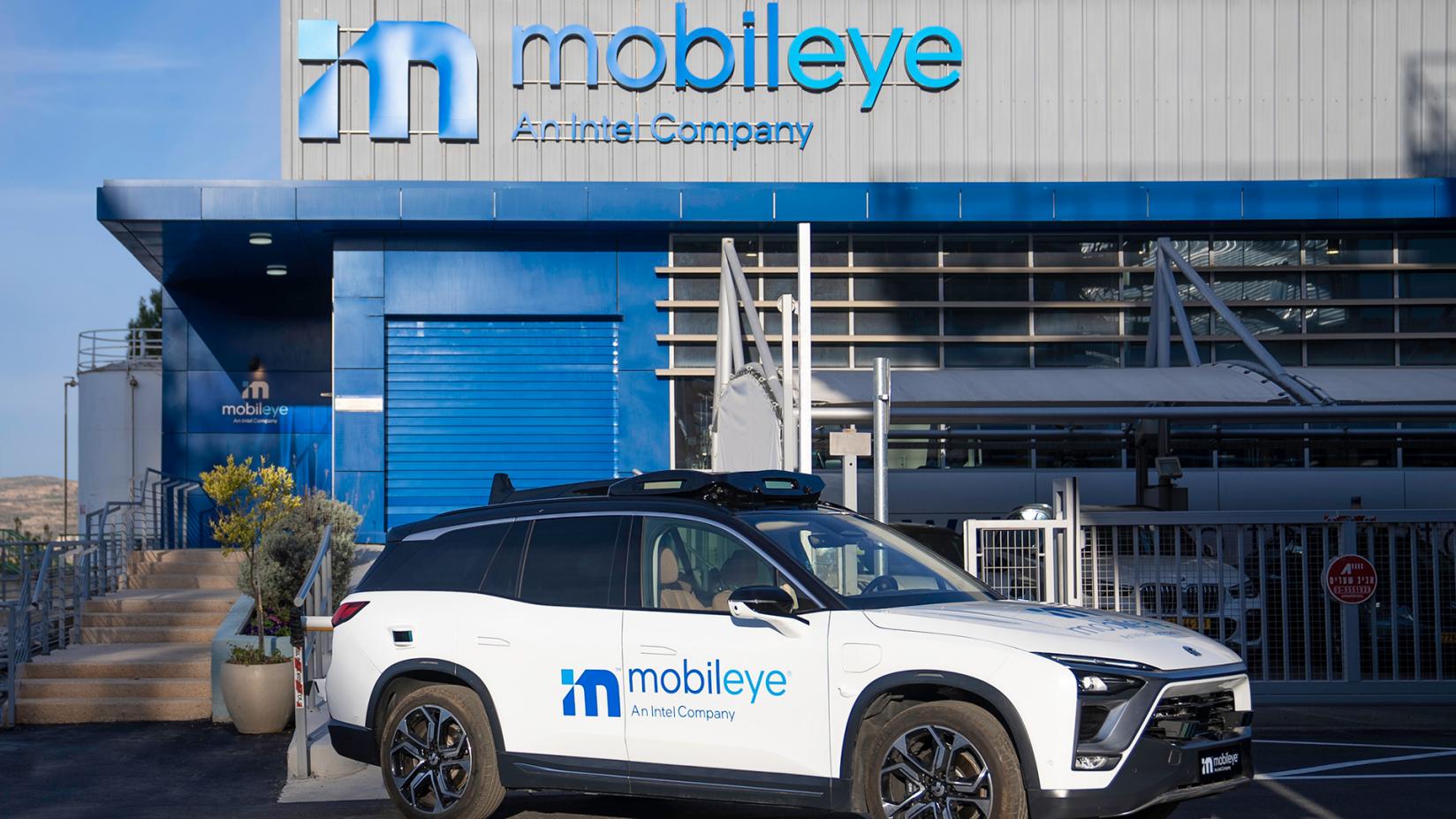
Core Viewpoint - Mobileye Global Inc. is a significant player in the autonomous driving technology sector, focusing on advanced driver-assistance systems and autonomous vehicle technologies, competing with companies like Tesla and Waymo [1] Group 1: Company Performance - Wolfe Research downgraded Mobileye to a "Peer Perform" rating on January 12, 2026, with the stock priced at $11.55 at that time [2] - Despite the downgrade, Mobileye's stock price increased by 2.76%, reaching $11.55, with fluctuations between $11.09 and $11.65 during the trading day [3] - Over the past year, Mobileye's stock has experienced a high of $20.18 and a low of $10.04, indicating significant volatility [3] Group 2: Market Metrics - Mobileye's market capitalization is approximately $9.4 billion, reflecting its substantial market presence [4] - The trading volume for Mobileye today is 10.6 million shares, indicating active investor interest [4][5]

Robotaxi行业深度:商业化进展、竞争格局、产业链及相关公司深度梳理
Sou Hu Cai Jing· 2026-01-11 14:54
Group 1 - Robotaxi is a shared mobility service based on L4/L5 autonomous driving technology, offering advantages such as safety and low cost, and is a key application for advanced intelligent driving [1][5] - The global Robotaxi market is rapidly commercializing, with significant developments in the Middle East, Europe, and major cities in Asia, supported by favorable policies and demographic trends [1][2] - In China, Robotaxi development is advanced due to cost control, infrastructure, data richness, and resource reuse, with a regulatory framework being established to support commercialization [1][2][20] Group 2 - The industry is currently in a pilot phase, characterized by a bipolar driving pattern between the US and China, with leading companies like Waymo and Tesla in the US, and companies like Baidu's Apollo and Pony.ai in China [2][39] - The business model typically involves a triangular cooperation model of "intelligent driving technology + hardware production + terminal operation," with ongoing negotiations over profit distribution and control [2][41] - The global market for Robotaxi is projected to reach $352.6 billion by 2035, with the Chinese market expected to exceed 158.3 billion yuan by 2030 [2][6] Group 3 - The industry is experiencing a shift in value from hardware to data operations, with the supply chain comprising core hardware, autonomous driving solution providers, and operational efficiency [2][6] - Companies are accelerating their global expansion, leveraging technological and cost advantages, particularly in markets like the Middle East [2][48] - The competitive landscape is evolving, with leading companies in China focusing on full autonomous operations in major cities, while the second tier is rapidly catching up [2][46] Group 4 - The regulatory framework in China is crucial for the development of Robotaxi, with multiple departments creating a closed-loop management system to ensure safety and compliance [20][21] - Cost reduction is a fundamental driver for Robotaxi, as eliminating human driver costs allows for a more competitive pricing model [22][23] - Technological advancements are driving down the costs of key components, such as sensors and chips, which is essential for scaling operations [30][40]