古茗

Search documents
社会服务行业双周报(第121期):海南封关首周离岛免税销售额高增,东方甄选开启宜昌三峡行-20251230
Guoxin Securities· 2025-12-30 11:48
Investment Rating - The report maintains an "Outperform" rating for the social services sector, indicating expected performance above the market index by over 10% [4][37]. Core Insights - The social services sector has shown resilience, with a reported increase of 6.28% during the review period, outperforming the broader market by 4.61 percentage points [13][14]. - Key companies such as China Duty Free Group and others have demonstrated significant stock price increases, with China Duty Free Group rising by 16.91% [14][17]. - The report highlights the positive impact of government policies aimed at expanding domestic demand, which are expected to support the valuation recovery of the sector [4][37]. Industry Dynamics - The first week of Hainan's duty-free shopping saw sales reach 1.1 billion CNY, a year-on-year increase of 54.9%, with an average spending of 6,667 CNY per person, up 16% [19]. - Major airports in Shanghai and Beijing have awarded duty-free store contracts to China Duty Free Group, enhancing its market position [18]. - The tourism market is heating up ahead of the New Year, with domestic flight bookings exceeding 1.06 million, a 45% increase year-on-year [23]. Company Performance - The report details stock performance for key companies, with notable increases in holdings for companies like Haidilao and China Oriental Education during the review period [3][36]. - Specific companies such as Atour, Ctrip Group, and Huazhu Group are recommended for investment due to their strong market positions and growth potential [4][37]. Future Outlook - The report suggests a focus on companies that are well-positioned to benefit from ongoing economic recovery and consumer spending, including China Duty Free Group, Huazhu Group, and others [4][37]. - The introduction of new products and services, such as Atour's modular hotel concept and the expansion of brands like Mixue Ice City into international markets, indicates a trend towards innovation and market adaptation [20][25].


港股新消费概念股盘中回调,老铺黄金、泡泡玛特跌超5%
Xin Lang Cai Jing· 2025-12-30 03:38
Group 1 - The core viewpoint of the article highlights a market correction in Hong Kong's new consumption concept stocks on December 30, with significant declines observed in various companies [1] Group 2 - Lao Pu Gold and Pop Mart both experienced declines exceeding 5% [1] - Bluco saw a drop of over 4% [1] - Other companies such as Mao Ge Ping, Wei Long, Juzi Biological, Mixue Group, Gu Ming, and Cha Bai Dao all fell by more than 2% [1]

港股IPO登顶全球
2 1 Shi Ji Jing Ji Bao Dao· 2025-12-30 00:31
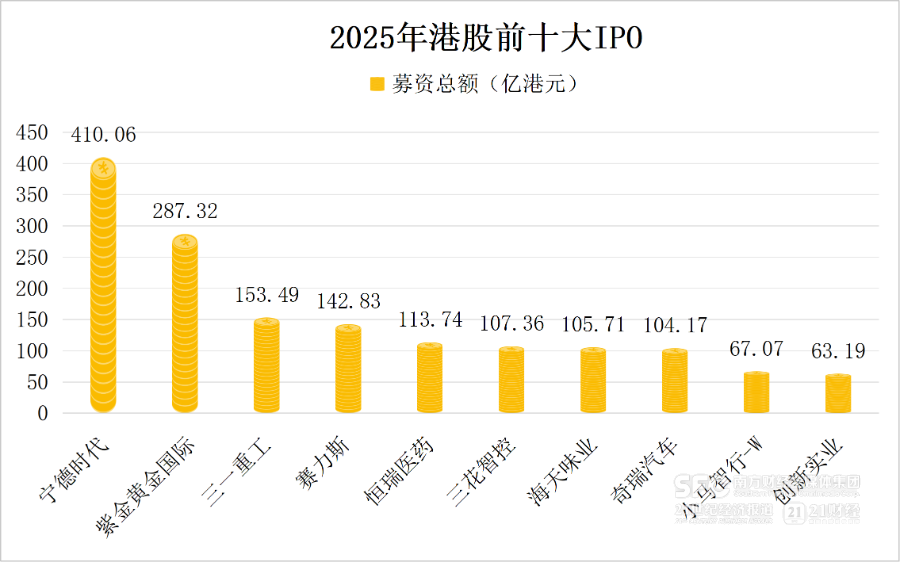
Core Viewpoint - In 2025, the Hong Kong Stock Exchange (HKEX) is expected to lead the global IPO market with a projected fundraising total exceeding HKD 280 billion, marking a significant return to prominence after several years [1][2]. Group 1: IPO Market Dynamics - The HKEX is anticipated to host 117 new listings in 2025, averaging a new listing every two trading days [1]. - Major IPO projects are significantly contributing to the overall fundraising scale, with the top ten IPOs expected to account for a substantial portion of the total [3][4]. - Six of the top ten IPOs are "A+H" listed companies, collectively raising HKD 1,033.20 million, which represents 36.12% of the total IPO fundraising for the year [4]. Group 2: A-Share Influence - The "A-share" influence is increasing, with 19 A-share companies successfully listing in Hong Kong, raising a total of HKD 1,399.93 million, nearly half of the total new fundraising [6]. - The "A+H" listing model is becoming a preferred choice for many companies, driven by various strategic needs such as international expansion and risk diversification [6][8]. Group 3: Policy Support - Continuous policy support is fueling the IPO trend, including measures from the China Securities Regulatory Commission to encourage leading companies to list in Hong Kong [7][8]. - Recent optimizations to HKEX listing rules have made it easier for companies to meet public shareholding requirements, further lowering the barriers for listing [8]. Group 4: New Economic Forces - The IPO market is witnessing a strong emergence of "new economy" companies, particularly in sectors like AI and robotics, with six companies set to list simultaneously [10]. - The hard technology sector is a key driver, with significant representation in the IPO pipeline, including 20 companies in pharmaceuticals and 19 in software services [11]. Group 5: Consumer Brands - The "new consumption" sector is also thriving, with 19 companies from various consumer industries listing in 2025, many of which had previously attempted to list in the A-share market [13][14]. - High demand for these consumer brands is evident, with many experiencing subscription rates exceeding 100 times, indicating strong investor interest [13][14]. Group 6: Market Performance and Future Outlook - The IPO market is showing a notable improvement in profitability, with a record low IPO failure rate of 28.83% and significant first-day price increases for many new listings [16]. - Despite some recent volatility, forecasts for 2026 remain optimistic, with expectations of around 160 new listings and fundraising of at least HKD 300 billion [18]. - Long-term prospects suggest that the HKEX could solidify its role as a global pricing hub for Chinese assets, contingent on maintaining high-quality listings and robust capital flows [19].






2025,中产都抛弃了哪些消费品牌?
阿尔法工场研究院· 2025-12-30 00:02
Core Viewpoint - The article discusses the stark contrast in China's consumer market in 2025, highlighting a significant divide between thriving companies and those that have collapsed, marking a shift from a "growth at all costs" mentality to a focus on efficiency and sustainability in business models [5][6][11]. Group 1: Market Dynamics - In 2025, the consumer market experienced a "violent clearing," with many once-prominent unicorns collapsing, signaling the end of an era characterized by unsustainable growth strategies [6][8]. - The year 2025 is described as a "tombstone" for new consumption, as the last illusions surrounding high prices and influencer-driven brands were shattered, exemplified by the downfall of brands like Zhong Xuegao [8][9]. - The collapse of established giants like Christine and Xu Li Shan reflects a failure to adapt to changing consumer preferences and market conditions, leading to their eventual exit from the market [9][10]. Group 2: Survivors and New Trends - Despite the failures, a new wave of companies thrived in 2025, particularly in the new tea beverage sector, with brands like Mixue Ice City and Tea Baidao successfully going public [15][16]. - The success of these companies is attributed to their focus on supply chain efficiency and cost control, moving away from traditional notions of craftsmanship to a more industrialized approach [16][17]. - The "lipstick effect" emerged as consumers shifted spending from large purchases to small, affordable pleasures, benefiting brands like Bubble Mart and new tea beverage companies [18]. Group 3: Investment Landscape - The investment landscape in 2025 saw a dramatic reduction in financing activities, with only 74 rounds of funding compared to 133 in the previous year, indicating a shift away from reckless spending [23][24]. - The restaurant sector remained a focal point for investment, accounting for 45 out of the 74 financing rounds, as capital sought safety in high-frequency, essential consumer needs [24][26]. - Brands that demonstrated strong supply chain control and technological integration, such as those in the coffee sector, began to attract significant investment, reflecting a new focus on efficiency and innovation [27][28]. Group 4: Future Outlook - The article suggests that the consumer market in 2026 will prioritize global distribution over domestic expansion, as companies seek to leverage their efficiencies in international markets [31][32]. - The survival of brands in the coming years will depend on their ability to adapt to changing consumer behaviors and market conditions, emphasizing the importance of supply chain management and genuine consumer engagement [33][34].


透过五大变化,预判新茶饮的 2026 年
Sou Hu Cai Jing· 2025-12-29 20:10
Core Insights - In 2025, the Chinese new tea beverage industry is at a critical turning point from "scale expansion" to "value cultivation" [3] - New consumer demands and development models are emerging, reshaping the future direction of the tea beverage industry [3] Group 1: Market Dynamics - The "0 Yuan Milk Tea" promotion, driven by massive subsidies, sparked a temporary surge in the tea beverage market, significantly impacting brand operations [3] - According to Zhejiang Securities, the average single-store sales revenue for Mixue Group reached 278,000 yuan in the first half of the year, a year-on-year increase of 13.2% [3] - Tea Baidao reported that promotional activities boosted store sales, with a second-quarter average daily GMV reaching its highest level in nearly a year, up approximately 15% from the first quarter [3] Group 2: Brand Expansion and Challenges - Gu Ming's store count increased from about 9,914 at the beginning of 2025 to over 12,000 by the end of August, maintaining an average of 7 new store openings per day [3] - However, the sustainability of the delivery war is questioned due to low profit margins and potential losses [3][5] - Naixue's financial report indicated that delivery service fees paid to third-party platforms reached 200 million yuan, rising from 6.7% to 9.2% of total revenue year-on-year [4] Group 3: International Expansion - Overseas markets are becoming a crucial source of growth for tea brands, with Ba Wang Cha Ji becoming the first new tea company to list on NASDAQ in April 2025 [7] - Ba Wang Cha Ji opened its first U.S. store in May, selling over 5,000 cups on the first day, and entered the Philippines market in August, selling over 23,000 cups in three days [7] - Other brands like Mixue Ice City and Tianlala are also expanding internationally, with Mixue covering 12 countries and over 4,700 overseas stores [7] Group 4: Health Trends - The "Skinny Milk Tea" trend is emerging as a new growth engine in the industry, with kale becoming a core ingredient [8] - The price of kale surged from 0.8 yuan per jin in 2024 to 3.5 yuan per jin in March 2025, reflecting a price increase of over 300% due to rising demand [9] Group 5: Market Segmentation - The pearl milk tea segment is gaining traction, with brands like Bao Jin Zhu focusing on low-cost, single-product strategies, rapidly expanding to over 1,800 stores in four years [10][12] - These brands are achieving significant sales, with single-store daily revenues between 1,500 and 1,800 yuan, and a projected 80% growth in store count for 2025 [12] Group 6: Industry Transition - The new tea beverage industry is shifting from quantity to quality, with brands like Heytea and Naixue closing underperforming stores and slowing down expansion [13][14] - As of October 2025, Heytea's store count decreased by 680 to 3,930, while Naixue closed 160 stores, reducing its total to 1,638 [13] - The focus is now on enhancing single-store value, tightening franchise management, and upgrading product structures [14]
古茗下单半小时后问进度遭店员辱骂
Xin Lang Cai Jing· 2025-12-29 10:27
Group 1 - A customer reported a negative experience at a milk tea store in Hangzhou, where his order was delayed despite being informed that there were 8 cups ahead in the queue [1] - After waiting for nearly half an hour, the customer found that his order had not been prepared and faced verbal abuse from the staff when inquiring about the status [1] - The store later reviewed the surveillance footage, acknowledged the staff's mistake, and initially offered a refund along with a milk tea voucher, which the customer rejected [1] Group 2 - Following further negotiations, the store ultimately compensated the customer with 1,300 yuan [1]
一杯饮品里的下沉市场变革:古茗的“价值共生”实践
Cai Jing Wang· 2025-12-29 10:12
Core Insights - The article highlights the success of Guming Tea, which has transformed the tea industry by creating a value-sharing ecosystem that benefits consumers, franchisees, and the supply chain [1][6]. Group 1: Market Presence and Expansion - As of mid-2025, Guming has reached a total of 11,179 stores, marking a year-on-year growth of 17.5%, with 81% of these stores located in tier-2 and lower cities, indicating a deep penetration into rural markets [2][3]. - The expansion strategy is not merely focused on numbers but is supported by a robust system that emphasizes product quality and consumer satisfaction [3]. Group 2: Product Development and Innovation - In the first half of 2025, Guming launched 52 new products, backed by a strong R&D framework focused on food science, showcasing its ability to adapt to consumer trends [3]. - The company has made significant strides in the coffee segment, with over 8,000 stores equipped with coffee machines and the introduction of 16 new coffee beverages, reflecting its evolving product matrix [3]. Group 3: Franchise Model and Collaboration - Guming operates primarily through a franchise model, viewing franchisees as strategic partners rather than mere licensees, which fosters a collaborative environment [3]. - The establishment of a franchisee committee is a unique approach in the industry, allowing for input in major business decisions, thereby building trust and cooperation [3]. Group 4: Supply Chain and Logistics - Guming has developed a comprehensive cold chain logistics network, consisting of 22 warehouses, over 230,000 square meters of space, 61,000 cubic meters of cold storage capacity, and 362 owned vehicles, ensuring product freshness and stability [4][5]. - The company employs digital and refined management techniques to optimize logistics, ensuring efficiency and cost-effectiveness while maintaining product quality [5]. Group 5: Value Creation and Industry Impact - The recognition as the "Annual Industry Influential Brand" signifies Guming's ability to create a solid value-sharing ecosystem, which is essential for sustainable growth in a competitive market [6][7]. - Guming's approach emphasizes collaboration with consumers, franchisees, and the supply chain, aiming to enhance the overall consumer experience and activate domestic demand in rural areas [7].
2025年港股IPO融资2863亿港元登顶全球,硬科技与新消费双轮驱动
Sou Hu Cai Jing· 2025-12-29 10:01
Group 1 - The Hong Kong IPO market is projected to raise HKD 286.3 billion (approximately USD 36 billion) in 2025, surpassing Nasdaq and reclaiming the top position globally in fundraising [1] - A significant contribution to the IPO scale expansion comes from 19 A-share listed companies that successfully listed in Hong Kong, raising a total of HKD 139.993 billion, accounting for nearly half of the total new stock fundraising [2] - Major companies like CATL, Hengrui Medicine, and Haidilao have collectively raised HKD 1,033.2 billion, highlighting the trend of leading enterprises seeking internationalization and risk diversification through Hong Kong listings [2] Group 2 - The "hard technology" sector saw 88 companies listed in 2025, benefiting from the Hong Kong Stock Exchange's favorable regulations for biotech and specialized technology companies, creating a notable listing surge [3] - New consumption brands, including Mixue and Saturday's Fortune, have found success in the Hong Kong market, with 14 out of 19 consumer companies experiencing oversubscription rates exceeding 100 times [3] - The influx of international capital into Hong Kong stocks is driven by the appeal of "verifiable growth stories" and "scarcity," enriching the investment landscape with new business models and growth narratives [3] Group 3 - The IPO market in Hong Kong experienced a decline in the first-day loss rate to approximately 28.83%, the lowest in five years, with 18 new stocks doubling in price on their debut [4] - The net inflow of southbound funds reached HKD 1.41 trillion, setting a historical record, indicating a positive feedback loop between market sentiment and liquidity [4] - Forecasts for 2026 suggest around 160 new stocks will be listed, with fundraising expected to exceed HKD 300 billion, maintaining Hong Kong's status as a global fundraising leader [4]

港股IPO强势登顶,硬科技与新消费齐飞
Huan Qiu Wang· 2025-12-29 08:55
Core Viewpoint - In 2025, Hong Kong Stock Exchange (HKEX) is projected to lead the global fundraising rankings with an estimated IPO financing amount of HKD 286.3 billion (approximately USD 36 billion), surpassing NASDAQ [1] Group 1: IPO Market Dynamics - The significant expansion of the Hong Kong IPO market is driven by large "A+H" projects, with 19 A-share listed companies successfully listing in Hong Kong, raising a total of HKD 139.993 billion, accounting for nearly half of the total new stock fundraising [1] - Major companies such as CATL, Hengrui Medicine, and Sany Heavy Industry contributed significantly, with just six companies raising HKD 103.32 billion [1] - The trend of leading enterprises listing in Hong Kong is not only for financing but also to support their internationalization strategies and optimize shareholder structures [1] Group 2: Policy Support and Market Structure - Continuous policy support has fueled this trend, including the China Securities Regulatory Commission's backing for mainland industry leaders to list in Hong Kong and the HKEX's optimization of listing rules [2] - The introduction of fundamentally strong companies enhances the resilience of Hong Kong's stock index and promotes a long-term value investment culture, solidifying Hong Kong's status as an international financial center [2] Group 3: New Economy and Consumer Trends - The year 2025 also saw a boom in the "new economy," particularly in the "hard technology" sector, with 88 companies listed under the HKEX's Chapter 18A and 18C, creating a notable listing surge [4] - New consumer brands, including tea beverage companies and other consumer goods, found success in Hong Kong, with many previously unsuccessful in A-share markets now attracting significant investment [5] - Among the 19 consumer companies listed, 14 experienced oversubscription rates exceeding 100 times, with some like LeMo Technology and Mixue Group surpassing 2000 times [5] Group 4: Market Performance and Future Outlook - The concentration of quality assets led to a significant profit effect, with the IPO failure rate dropping to approximately 28.83%, the lowest in five years, and 18 new stocks doubling on their first day [5] - The net inflow of southbound funds reached a record HKD 1.41 trillion, indicating strong market sentiment and liquidity [5] - Despite some concerns regarding market absorption capacity and lock-up periods, institutions remain optimistic about 2026, predicting around 160 new listings and fundraising of no less than HKD 300 billion [6]

港股IPO“王者归来”:“A+H” 火爆 硬科技新消费齐飞
2 1 Shi Ji Jing Ji Bao Dao· 2025-12-29 04:45
Core Viewpoint - In 2025, the Hong Kong Stock Exchange (HKEX) is expected to lead the global IPO market with a projected fundraising total exceeding 280 billion HKD, marking a significant comeback after several years [2][4]. Group 1: IPO Market Dynamics - The HKEX is anticipated to host 117 new listings in 2025, averaging a new listing every two trading days [2]. - The total IPO fundraising amount for 2025 is projected to reach 286.3 billion HKD (approximately 36 billion USD), surpassing Nasdaq's expectations [4]. - A notable trend is the increase in "A-share inclusion," with 19 A-share companies successfully listing in Hong Kong, contributing nearly half of the total new fundraising amount [7]. Group 2: Major Contributors to IPO Growth - Six major IPOs, including leading companies like CATL and Heng Rui Medicine, are expected to raise a combined total of 1,033.2 billion HKD, accounting for 36.12% of the total IPO fundraising [6]. - The "A+H" listing model is becoming increasingly popular among companies, serving various strategic needs such as international expansion and risk hedging [9]. Group 3: Policy Support and Market Structure - Continuous policy support, including measures from the China Securities Regulatory Commission to encourage leading companies to list in Hong Kong, is fueling this IPO trend [10][11]. - Recent optimizations to HKEX listing rules have made it easier for companies to meet public shareholding requirements, further enhancing the attractiveness of the Hong Kong market [12]. Group 4: Emerging Sectors and New Economy - The IPO market is witnessing a strong emergence of "new economy" companies, particularly in sectors like AI and robotics, with six companies set to list simultaneously [13]. - The hard technology sector is a significant contributor, with 20 biotech companies and 19 software service companies leading the number of new listings [14]. Group 5: Investment Sentiment and Market Performance - The IPO market's performance is reflected in a low first-day IPO failure rate of approximately 28.83%, the lowest in five years, with many new stocks seeing significant price increases [19]. - The net inflow of southbound funds into Hong Kong stocks reached a record 1.41 trillion HKD, a 74.37% increase from the previous year [19]. Group 6: Future Outlook - Forecasts suggest that in 2026, around 160 new stocks will list in Hong Kong, with fundraising expected to exceed 300 billion HKD, maintaining the market's leading position globally [20]. - Long-term prospects indicate that the Hong Kong market could become a global pricing hub for core Chinese assets, enhancing its attractiveness to international capital [21].