
广汇能源

Search documents
煤炭开采行业11月数据全面解读:生产、进口继续回落,11月煤价上行
Guohai Securities· 2025-12-16 11:15
Investment Rating - The report maintains a "Recommended" rating for the coal mining industry [1] Core Insights - The coal mining industry is experiencing a mixed supply and demand scenario, with production and imports declining, while coal prices are on the rise due to seasonal demand and supply constraints [14][21] - The report highlights the resilience of major coal companies, emphasizing their strong cash flow and profitability, which positions them well for future growth despite market fluctuations [14] Supply Side Summary - Coal production in November 2025 was 430 million tons, a year-on-year decrease of 0.5%, but the decline was less severe than in October [20][21] - Coal imports fell by 19.87% year-on-year in November, with a total of 44.05 million tons imported, reflecting supply chain disruptions and high base effects from the previous year [9][28] - Overall coal supply in November showed a year-on-year decline of 2.3%, but the rate of decline narrowed compared to October [28] Demand Side Summary - The demand for coal is being negatively impacted by a 4.2% year-on-year decline in thermal power generation in November, contrasting with a 7.3% increase in October [10][29] - Chemical and metallurgical sectors are showing positive contributions to coal consumption, with chemical industry coal usage increasing by 8.22% year-on-year [12][41] Inventory Summary - Power plants are replenishing their coal inventories, with significant increases noted in November, while upstream coal inventories remain low [13][14] - The inventory levels for coking coal are also rising but are still considered low overall [13] Price Summary - The average price of thermal coal at northern ports rose to 822 RMB per ton in November, reflecting a month-on-month increase of 10% [13] - The report anticipates that coal prices may stabilize due to seasonal demand and supply adjustments, despite the ongoing fluctuations [14] Investment Recommendations - The report suggests focusing on robust coal companies such as China Shenhua, Shaanxi Coal and Chemical Industry, and others, which are expected to perform well in the current market environment [15][14] - It highlights the investment value of coal stocks due to their high dividends and cash flow characteristics, recommending a strategic approach to investing in the sector [14]






广汇能源:截至11月28日公司总股东人数为218103户
Zheng Quan Ri Bao Wang· 2025-12-15 13:43
证券日报网讯12月15日,广汇能源(600256)在互动平台回答投资者提问时表示,截至11月28日公司的 总股东人数为218103户。 ...
广汇能源:截至12月10日公司股东总户数为221450户
Zheng Quan Ri Bao Wang· 2025-12-15 13:15
证券日报网讯12月15日,广汇能源(600256)在互动平台回答投资者提问时表示,截至12月10日公司股 东总户数为221450户。 ...
广汇能源:公司始终高度重视存量资产的高效运营与价值最大化
Zheng Quan Ri Bao Wang· 2025-12-15 13:15
证券日报网讯12月15日,广汇能源(600256)在互动平台回答投资者提问时表示,公司始终高度重视存 量资产的高效运营与价值最大化,目前斋桑油田项目勘探增储及开发工作稳步推进,启东码头项目自运 营以来长期保持了良好的盈利,两项资产均属于公司核心资产。后续若有必要,公司将会考虑结合行业 发展趋势及战略发展的实际需求,审慎评估各类资产盘活及合作相关方案,如涉及重大决策,公司亦将 严格遵照法律法规及监管要求,及时履行信息披露义务,切实维护全体股东的合法权益,敬请持续关注 公司公告。 ...
广汇能源:斋桑油田和启东码头均属核心资产,将审慎评估各类资产盘活及合作相关方案
Sou Hu Cai Jing· 2025-12-15 11:01
声明:市场有风险,投资需谨慎。本文为AI基于第三方数据生成,仅供参考,不构成个人投资建议。 来源:市场资讯 有投资者在互动平台向广汇能源提问:"最近中国石油花了400亿收购了三个储气库,可见资源要在有上 下游和掌控力的合作伙伴手里才能发挥作用,建议公司尽快把斋桑油田和启东码头卖给三桶油或者寻求 合资吧,资产不充分利用会像冰棍一样化掉的。" 针对上述提问,广汇能源回应称:"尊敬的投资者,您好!感谢您对广汇能源的关注与支持。公司始终 高度重视存量资产的高效运营与价值最大化,目前斋桑油田项目勘探增储及开发工作稳步推进,启东码 头项目自运营以来长期保持了良好的盈利,两项资产均属于公司核心资产。后续若有必要,公司将会考 虑结合行业发展趋势及战略发展的实际需求,审慎评估各类资产盘活及合作相关方案,如涉及重大决 策,公司亦将严格遵照法律法规及监管要求,及时履行信息披露义务,切实维护全体股东的合法权益, 敬请持续关注公司公告。" ...
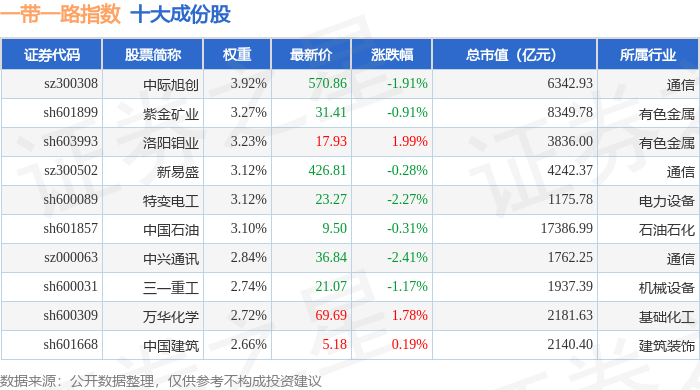
12月15日一带一路(399991)指数跌0.45%,成份股锐捷网络(301165)领跌
Sou Hu Cai Jing· 2025-12-15 11:01
证券之星消息,12月15日,一带一路(399991)指数报收于2865.35点,跌0.45%,成交1314.54亿元,换 手率0.74%。当日该指数成份股中,上涨的有35家,菲利华以8.52%的涨幅领涨,下跌的有54家,锐捷网 络以5.64%的跌幅领跌。 一带一路(399991)指数十大成份股详情如下: 资金流向方面,一带一路(399991)指数成份股当日主力资金净流出合计54.96亿元,游资资金净流入合 计18.61亿元,散户资金净流入合计36.35亿元。成份股资金流向详情见下表: | 代码 | 名称 | 主力净流入(元) | 主力净占比 游资净流入 (元) | | 游资净占比 散户净流入 (元) | | 散户净占比 | | --- | --- | --- | --- | --- | --- | --- | --- | | 600309 | 万华化学 | 3.96亿 | 16.00% | -1.02 乙 | -4.13% | -2.94 Z | -11.87% | | 300395 | 菲利华 | 3.39 Z | 7.97% | -1.05亿 | -2.46% | -2.34 Z | -5.51% | | ...

——2025年甲醇市场回顾与2026年展望:甲醇:千风过甲醇岸冰消未见春
Fang Zheng Zhong Qi Qi Huo· 2025-12-15 05:12
1. Report Industry Investment Rating No relevant content provided. 2. Core Viewpoints of the Report - In 2025, the methanol futures market was weak, breaking the wide - range oscillation pattern with a continuously declining center of gravity. The fundamental factors lacked driving forces, and the market was sluggish. The domestic methanol spot market had over - capacity, and with the launch of new production capacities, the supply - demand pressure increased. The supply remained stable, while the terminal demand was poor due to the macro - environment. The downstream industries showed differentiation, and the port inventory reached a historical high [1][125]. - In 2026, the methanol production capacity will still expand, but the expansion speed will slow down. The new projects are mostly integrated with downstream facilities, so the impact on domestic supply may be limited. The downstream demand is still dominated by coal - to - olefins, and traditional demand industries such as acetic acid may have certain increments. The market is expected to gradually reduce inventory, and the supply - demand relationship will remain weak. The futures price is expected to return to the previous wide - range oscillation range, showing a trend of lower at the beginning and higher at the end, with support at 1850 - 1950 and resistance at 2600 - 2700 [2][126]. 3. Summary According to Relevant Catalogs 3.1 Methanol Market Review 3.1.1 Historical Trend Review - From 2011 to 2013, methanol showed high - level oscillation, with a price range of about 2530 - 3150. After its listing, it was affected by new - speculation funds and then reversed due to the reduction of international supply [11]. - From 2013 to 2015, it experienced a sharp rise and fall. The high price led to downstream resistance, and factors such as over - capacity and weak demand caused the price to drop to a low level [12][13]. - From 2016 to 2018, it rebounded from the bottom. The improvement of supply - demand relationship, the rise of international oil prices, and the support of coal prices drove the price up [14]. - From 2018 to 2020, it entered a weak adjustment period. High prices, environmental policies, and weak demand led to a continuous decline in the price, reaching a historical low in 2020 [15][16]. - From 2020 to 2021, it showed a restorative increase. The improvement of the macro - environment and the demand, as well as the impact of policies and cost factors, promoted the price to rise to a new high [17]. - From 2021 to 2023, it fell rapidly. The decline of coal prices, the general decline of the commodity market, and the impact of the macro - environment led to a continuous decline in the price [18]. - Since the second half of 2023, it has been in a wide - range oscillation, with the center of gravity fluctuating between 1950 - 2730 [19]. 3.1.2 Methanol Trend in 2025 - In 2025, the methanol futures market showed a phased decline. It reached an annual high of 2725 at the beginning of the year, then fell to around 2200 in May. After a short - term rebound, it continued to decline, breaking through 2000 in October and reaching a five - year low. As of December 12, the annual decline was 23.53% [22]. 3.2 Price Fluctuation Analysis 3.2.1 Seasonal Characteristics - Methanol consumption has seasonal characteristics. The demand is low during the Spring Festival and from June to August, and high from September to October and in winter. However, in recent years, the distinction between peak and off - peak seasons has become less obvious [26]. 3.2.2 Trading Volume and Open Interest Changes - As of the end of November 2025, the trading volume of methanol futures was 165.8372 million lots, the trading value was 3.929235 trillion yuan, and the open interest was 1.0488 million lots. In recent years, the trading volume has shown a downward trend, and the open interest has shown a phased increase. In 2025, the trading activity decreased, and the open interest was relatively stable [30][31]. 3.3 Macroeconomic Environment 3.3.1 Stable National Economy - In 2025, the national economy maintained a stable and progressive development trend under the influence of positive macro - policies, despite facing complex international and domestic situations [36]. 3.3.2 The Fed's Third Interest Rate Cut in the Year - In 2024, the Fed cut interest rates for the first time since March 2020. In 2025, it cut interest rates three times, and there was a "roller - coaster" - like fluctuation in the December interest - rate cut expectation. It is expected to cut interest rates once in 2026 [37]. 3.3.3 LPR Remained Unchanged for Six Consecutive Months - Since May 20, 2025, the 1 - year and 5 - year - plus LPRs have remained unchanged for six consecutive months, which is in line with market expectations, mainly due to the stable and strong macro - economy [43]. 3.4 Methanol Supply Analysis 3.4.1 Stabilized and Rising Coal Prices - In 2025, coal prices first declined and then rose. The supply tightened due to safety inspections and other factors, and the demand increased due to high - temperature weather and other reasons. In 2026, coal supply may remain stable, and the price range may move up [46][47]. 3.4.2 Pressured International Oil Prices - International oil prices showed a wide - range oscillation with a downward - shifted price center, mainly due to the supply - demand imbalance and geopolitical factors. In 2026, the oversupply issue may intensify, and the price center may continue to move down [51][52]. 3.4.3 Alternating Rise and Fall of Spot Prices - In 2025, the domestic methanol spot market showed an alternating rise - and - fall pattern with a downward - shifted center of gravity. It was affected by macro - news and geopolitical factors. In 2026, the supply will remain stable, and the price may stop falling and operate at a low level [55]. 3.4.4 Increased Production with High - level Operation - In 2025, the methanol industry's operation rate increased, and the production was sufficient. The annual production is expected to exceed 90 million tons. In 2026, the operation rate will still focus on the spring maintenance period [64][65]. 3.4.5 Sustained Growth of Production Capacity - China's methanol production capacity is still growing, but the growth rate is slowing down. In 2025, some new production capacities were released, and in 2026, there are still plans for new capacity launches [66]. 3.4.6 High - level Imports - In 2025, methanol imports showed a pattern of low at the beginning and high at the end, with an expected annual import volume of about 14.41 million tons. In 2026, imports may continue this pattern, but the increment may be limited [75]. 3.5 Downstream Demand Analysis 3.5.1 Steady Increase in Market Consumption - Methanol consumption has been increasing year by year, but the growth rate has slowed down since 2020. In 2025, the consumption is expected to reach about 105 million tons. In 2026, the downstream consumption industries will still show differentiation, and attention should be paid to the increment in emerging fields [78][79]. 3.5.2 Performance of Downstream Demand Industries - Coal - to - olefins dominates the downstream demand, accounting for more than 50%. In 2025, the coal - to - olefins industry maintained a high operation rate, and the traditional demand industries showed a slight recovery. In 2026, the acetic acid industry will enter an expansion cycle, while the formaldehyde and dimethyl ether industries will face over - capacity problems [81][92]. 3.5.3 Slight Increase in Export Market - In 2025, China's methanol exports improved significantly, with an expected annual export volume of more than 260,000 tons. In 2026, the export may return to a low level due to the narrowing of the arbitrage space [103]. 3.5.4 Record - high Port Inventory - In 2025, the methanol port inventory first decreased and then increased, reaching a historical high of 1.674 million tons in November. In 2026, the high - inventory pressure will continue [107]. 3.6 Supply - Demand Balance Sheet - In 2025, the methanol market supply - demand relationship remained loose. In 2026, the supply will continue to expand, while the demand growth is limited, and the high - inventory state will persist [110]. 3.7 Technical Analysis - From a long - term perspective, the upward - converging triangle pattern of methanol futures was broken, and it is in a weak oscillation pattern. In 2026, it is likely to continue to fluctuate within a range, with support at 1850 - 1950 and resistance at 2600 - 2700 [114]. 3.8 Options Market Operation - In 2025, the methanol options market fluctuated sharply, with high implied volatility and a bearish sentiment. As of December 12, 2025, the daily trading volume was 241,116 lots, the open interest was 145,747 lots, the weighted implied volatility was 19%, and the open - interest PCR was 77.67%. In 2026, considering the weak oscillation of methanol, one can consider selling out - of - the - money put options with low strike prices [124]. 3.9 Market Outlook for 2026 - In 2026, the methanol production capacity will expand at a slower pace, and the downstream demand will still be dominated by coal - to - olefins. The market is expected to gradually reduce inventory, and the supply - demand relationship will remain weak. The futures price is expected to show a trend of lower at the beginning and higher at the end, with support at 1850 - 1950 and resistance at 2600 - 2700 [2][126]. 3.10 Industry - related Stocks - The report lists some methanol - related stocks and their annual price changes as of December 12, 2025, including Hualu Hengsheng, Yuanxing Energy, etc. [128]
煤价合理才是常态,稳煤价逻辑依旧 | 投研报告
Zhong Guo Neng Yuan Wang· 2025-12-15 02:02
Core Viewpoint - The coal market is experiencing a slight decline in prices, but the long-term outlook remains positive with expectations of recovery towards the target price range of 800-860 RMB/ton for thermal coal [2][3]. Group 1: Thermal Coal Market - As of December 12, the Qinhuangdao Q5500 thermal coal price is 753 RMB/ton, down 38 RMB/ton from the previous week, while the Guangzhou port price is 815 RMB/ton, achieving the previously indicated profit-sharing target of 750 RMB [1][2]. - Despite recent price declines, the overall upward trend is expected to continue due to tightening supply and increasing demand, particularly as the energy demand season approaches with colder weather [2][3]. - Supply constraints are driven by ongoing crackdowns on overproduction and safety inspections, while demand is rising due to early heating needs and increased industrial activity [2][3]. Group 2: Coking Coal Market - The price of coking coal at the Jing Tang port is 1630 RMB/ton, rebounding from a low of 1230 RMB/ton in early July, with coking coal futures rising from 719 RMB to 1017 RMB, a cumulative increase of 41.5% [1][2]. - The price of coking coal is closely correlated with thermal coal prices, maintaining a consistent ratio of 2.4 times [2][3]. Group 3: Investment Logic - The price recovery for thermal coal is expected to follow a four-step process, including the restoration of long-term contracts and achieving a profit-sharing equilibrium for coal and power companies, with a target price of around 750 RMB by 2025 [3]. - Coking coal prices are more influenced by market dynamics, with target prices based on the ratio to thermal coal prices, suggesting potential prices of 1608 RMB to 2064 RMB depending on thermal coal price movements [3]. Group 4: Investment Recommendations - The coal sector is positioned for a rebound due to historical low prices and improving supply-demand fundamentals, with both thermal and coking coal expected to show upward price elasticity [4]. - Companies are maintaining high dividend payouts, with several listed coal companies announcing interim dividend plans, indicating a dual logic of cyclical recovery and stable dividends [4]. - Key investment lines include cyclical logic with companies like Jinko Coal and Yanzhou Coal, dividend logic with China Shenhua and Shaanxi Coal, diversification with Shenhuo and Electric Power Investment, and growth logic with Xinji Energy and Guanghui Energy [4].
行业周报:煤价合理才是常态,稳煤价逻辑依旧-20251214
KAIYUAN SECURITIES· 2025-12-14 13:47
Investment Rating - The investment rating for the coal industry is "Positive" (maintained) [1] Core Viewpoints - The report emphasizes that coal prices are expected to stabilize, with a long-term upward trend anticipated for both thermal coal and coking coal prices. The recent decline in prices is viewed as a temporary adjustment, with expectations for recovery towards the target price range of 800-860 RMB per ton for thermal coal [3][4][13]. Summary by Sections Industry Overview - The report highlights that as of December 12, the price of Qinhuangdao Q5500 thermal coal was 753 RMB per ton, down 38 RMB from the previous week. The price at Guangzhou Port was 815 RMB per ton, indicating a completion of the previously suggested coal-electricity profit-sharing target of 750 RMB [3][4]. Price Trends - Thermal coal prices have shown a recent decline but are expected to recover due to tightening supply and increasing demand, particularly as the heating season begins and industrial production ramps up towards year-end [4][5]. - Coking coal prices have rebounded significantly, with the price at Jing Tang Port reaching 1630 RMB per ton, up from a low of 1230 RMB in July, marking a 41.5% increase in futures prices [3][4]. Investment Logic - The report outlines a four-step process for the expected price recovery of thermal coal, including the restoration of long-term contracts and achieving a profit-sharing equilibrium between coal and power companies, with a target price of around 750 RMB for 2025 [4][13]. - Coking coal prices are expected to be more influenced by supply and demand fundamentals, with target prices set based on the ratio of coking coal to thermal coal prices [4][13]. Investment Recommendations - The report suggests a dual logic for investing in coal stocks: cyclical elasticity and stable dividends. It identifies four main lines for stock selection: 1. Cyclical logic: Jin Kong Coal Industry, Yanzhou Coal Mining 2. Dividend logic: China Shenhua, Zhongmei Energy 3. Diversified aluminum elasticity: Shenhua Co., Electric Power Investment Energy 4. Growth logic: Xinji Energy, Guanghui Energy [5][14]. Key Indicators - The coal index fell by 3.64% this week, underperforming the CSI 300 index by 3.56 percentage points. The average PE ratio for the coal sector is 14.76, and the PB ratio is 1.3 [10][17].
煤炭开采行业跟踪周报:港口库存持续累计,煤价维持下行走势-20251214
Soochow Securities· 2025-12-14 08:14
Investment Rating - The industry investment rating is maintained as "Add" [1] Core Viewpoints - The current port coal price inventory is at a high level, with downstream heating demand having been released early. Coupled with the pressure from renewable energy sources such as hydropower and wind power on thermal power generation, coal prices are expected to maintain a volatile trend [1] - The report emphasizes the importance of monitoring the incremental insurance funds, with premium income showing positive growth concentrated towards leading insurance companies. The ongoing scarcity of fixed-income assets, along with high dividend assets, suggests a shift in equity allocation preferences towards resource stocks [2][38] Summary by Sections Industry Current Situation - During the week of December 8 to December 12, the spot price of thermal coal at ports decreased by 40 CNY/ton, closing at 745 CNY/ton. The average daily inflow to the four ports in the Bohai Rim was 1.8384 million tons, a decrease of 110,000 tons week-on-week, down 5.76%. The average daily outflow was 1.6327 million tons, also down by 100,000 tons, a decrease of 5.72%. The inventory at the four ports increased to 29.157 million tons, up 1.54 million tons, an increase of 5.59% [1][29][33] Price Trends - The price of thermal coal at production sites showed a mixed trend, with the price of 5500 kcal thermal coal in Datong down by 25 CNY/ton to 610 CNY/ton, while the price of 4000 kcal thermal coal in Inner Mongolia remained stable at 430 CNY/ton. The price of 6000 kcal thermal coal in Yanzhou decreased by 30 CNY/ton to 980 CNY/ton [16] - The thermal coal price index in the Bohai Rim region fell by 3 CNY/ton to 703 CNY/ton, while the Qinhuangdao port price index for 5500 kcal thermal coal dropped by 6 CNY/ton to 709 CNY/ton [18] Recommendations - The report recommends focusing on elastic stocks in the thermal coal sector, particularly those with low valuations, such as Haohua Energy and Guanghui Energy [2][38]