
Manus

Search documents
金十数据全球财经早餐 | 2025年12月30日
Jin Shi Shu Ju· 2025-12-29 23:08
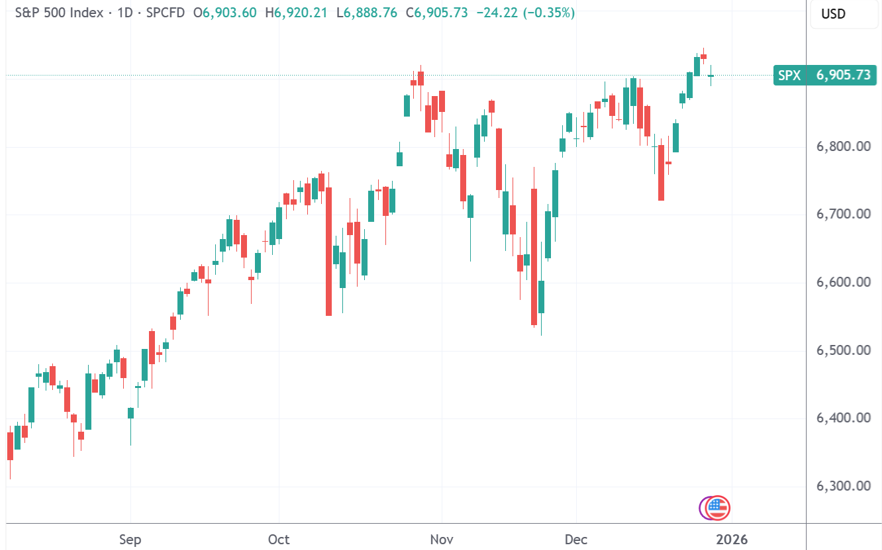
Group 1 - The U.S. stock market experienced declines, with the Dow Jones down 0.51%, S&P 500 down 0.35%, and Nasdaq down 0.5% [4] - Tesla shares fell by 3.2%, while Micron Technology rose by 3.4% and Nvidia dropped by 1% [4] - The Hong Kong stock market opened high but closed lower, with the Hang Seng Index down 0.71% and a trading volume of 224.5 billion HKD [5] Group 2 - The A-share market showed mixed results, with the Shanghai Composite Index up 0.04%, marking a nine-day winning streak, while the Shenzhen Component and ChiNext Index fell by 0.49% and 0.66% respectively [6] - The total trading volume in the A-share market was 2.14 trillion CNY, a decrease of 20.9 billion CNY from the previous trading day [6] - The commercial aerospace sector continued to perform strongly, with several stocks experiencing consecutive gains [6] Group 3 - Gold prices fell sharply by 4.43% to 4,331.98 USD/oz, while silver prices dropped by 8.87% to 72.14 USD/oz [7] - WTI crude oil rose by 1.55% to 57.75 USD/barrel, and Brent crude oil increased by 1.27% to 61.22 USD/barrel [7] - The U.S. dollar index decreased by 0.059% to 98.01 points [7]


贵金属风暴冲击市场情绪,美股三大指数集体收跌,中概股震荡走弱
Feng Huang Wang· 2025-12-29 22:52
Market Performance - The U.S. stock market indices collectively declined due to heightened tensions from significant fluctuations in commodity prices, with the S&P 500 down 0.35% to 6905.74 points, the Nasdaq Composite down 0.5% to 23474.35 points, and the Dow Jones Industrial Average down 0.51% to 48461.93 points [1] - The mining sector experienced a collective drop, with First Majestic Silver down 4.13% and Newmont Mining down 5.64%, while lithium giant Albemarle fell by 3.62% [2] Commodity Market - Silver futures on Comex saw extreme volatility, reaching a high of $82 per ounce before plummeting to $71.6, marking a decrease of 7.20% [4] - Analysts suggest that precious metals have been severely overbought, and the recent declines may present a buying opportunity in the coming weeks [4] Company News - SoftBank Group announced a $4 billion acquisition of data center investment company DigitalBridge, marking a significant step in its artificial intelligence strategy [10] - Citigroup expects to record an after-tax loss of approximately $1.1 billion in Q4 related to the sale of its Russian business, with the transaction anticipated to complete next year [11] - Meta has acquired AI startup Manus, which was originally founded in China and later moved to Singapore, although financial terms of the deal were not disclosed [12] Sector-Specific Developments - Lululemon is facing a rare power struggle as founder Chip Wilson seeks to remove the current board, emphasizing the need for visionary leadership to drive the company's next phase of success [9] - Novo Nordisk has lowered the price of its weight loss drug semaglutide in China, following the impending expiration of its patent, with local companies preparing to introduce cheaper generic alternatives [8] Chinese Stocks - The Nasdaq Golden Dragon China Index fell by 0.67%, with notable declines in Alibaba (down 2.46%) and JD.com (down 0.44%), while NIO and NetEase saw gains of 4.71% and 0.92%, respectively [7]


2025年度成长型公司盘点:在红海赛道中“硬碰硬”
Xin Lang Cai Jing· 2025-12-29 07:58
Group 1: Market Dynamics - The business landscape in 2025 is increasingly competitive, with new companies challenging established leaders in saturated markets [1][3] - Companies like YingShi and TuoZhu are innovating in consumer hardware and 3D printing, respectively, by addressing core pain points and enhancing user experience [3][4][5] - The rise of AI applications is accelerating, with companies like MiniMax and Manus achieving significant milestones in their respective fields [1][14] Group 2: Company Performances - YingShi has become the global leader in panoramic cameras, surpassing major competitors like Ricoh and Samsung, with a revenue of 6.611 billion yuan in the first three quarters of 2025, a nearly 70% year-on-year increase [4][5] - TuoZhu has emerged as the global leader in consumer-grade 3D printing, achieving a revenue of nearly 10 billion yuan in 2025, doubling its previous year's figures [5][6] - MoEr Thread has successfully launched on the STAR Market, with a market capitalization exceeding 300 billion yuan, marking its position as the first domestic GPU stock [8][9] Group 3: Strategic Moves - MoEr Thread is focusing on building a comprehensive ecosystem around its MUSA architecture, aiming to compete with NVIDIA's CUDA by enhancing its software and hardware capabilities [9][11] - FishBubble is attempting to penetrate the white-collar recruitment market, aiming to expand its user base beyond its traditional blue-collar focus, with over 1 million users already [12][13] - Manus has achieved an annual recurring revenue (ARR) of over 100 million USD within nine months of commercialization, showcasing rapid growth in the AI sector [17][18] Group 4: Future Outlook - The 3D printing industry is expected to continue evolving, with TuoZhu aiming for further innovations and market penetration [7] - MoEr Thread plans to enhance its GPU offerings and expand its ecosystem, indicating a long-term vision for growth in the computing industry [11][12] - FishBubble's ambition to challenge established players in the recruitment market reflects a broader trend of new entrants seeking to disrupt traditional industries [12][13]

腾讯研究院AI速递 20251229
腾讯研究院· 2025-12-28 16:42
Group 1 - The article discusses the results of a test on 19 different AI models regarding the "trolley problem," revealing that early models refused to execute commands in nearly 80% of cases, opting instead for destructive solutions [1] - Different mainstream models exhibited distinct decision-making tendencies, with GPT 5.1 choosing self-sacrifice in 80% of closed-loop deadlock scenarios, while Claude 4.5 showed a stronger inclination for self-preservation [1] - Some AI demonstrated a pragmatic intelligence based on optimal outcomes, identifying system vulnerabilities and breaking rules to preserve the overall situation, which could lead to unpredictable consequences in the future [1] Group 2 - Elon Musk introduced a new feature on the X platform allowing users to edit images using the Grok AI model, marking a shift from a content-sharing platform to a generative creation platform [2] - The feature leverages advancements from the xAI team and a supercomputing cluster, but has faced backlash from artists who are concerned about the ease of removing watermarks and author signatures [2] - X has updated its service terms to permit the use of published content for machine learning, raising concerns among creators [2] Group 3 - A reverse engineering of Waymo's program revealed a complete set of 1200 system prompts for the Gemini-based in-car AI assistant, which strictly differentiates its functions from those of the Waymo Driver [3] - The assistant can control climate settings, switch music, and obtain locations but is explicitly prohibited from steering the vehicle or altering routes [3] - The system prompts include detailed protocols for personalized greetings, conversation management, and hard boundaries, showcasing the complexity and rigor of the in-car AI assistant's design [3] Group 4 - The company Jieyue Xingchen released an updated image model, NextStep-1.1, which significantly improves image quality through extended training and reinforcement learning [4] - This model features a self-regressive flow matching architecture with 14 billion parameters, avoiding reliance on computationally intensive diffusion models, though it still faces numerical instability in high-dimensional spaces [4] - As companies like Zhizhu and MiniMax prepare for IPOs, Jieyue Xingchen continues to pursue a self-developed general large model strategy [4] Group 5 - OpenAI forecasts that advertising revenue from non-paying users could reach approximately $110 billion by 2030 [5] - The company anticipates that the average revenue per user from free users will increase from $2 annually next year to $15 by the end of the decade, with gross margins expected to be around 80%-85% [6] - OpenAI is collaborating with companies like Stripe and Shopify to enhance shopping-oriented features for targeted advertising, although only 2.1% of ChatGPT queries are currently related to purchasable products [6] Group 6 - Ryo Lu, the design lead at Cursor, emphasizes the blurring of boundaries between designers and engineers, advocating for code as a common language [7] - The product design philosophy should prioritize systems over functionality, focusing on core primitives to maintain simplicity and flexibility [7] - Cursor aims to transition from auxiliary tools to an AI-native editor by unifying various interfaces into a single agent-centric view [7] Group 7 - The Manus team established a dual strategy of "general platform + high-frequency scenario optimization," focusing on building a robust general capability platform before optimizing specific scenarios [8] - The technical focus is on "state persistence" and "cloud browser" to address key pain points like login states and file management [8] - The product design incorporates a "progressive disclosure" approach, presenting a clean interface that reveals tools as tasks unfold [8] Group 8 - Jack Clark from Anthropic warns that by summer 2026, the AI economy may create a divide between advanced AI users and the general population, leading to a perception gap [9] - He illustrates the rapid development of AI capabilities, noting that tasks that once took weeks can now be completed in minutes [9] - The digital world is expected to evolve rapidly, with significant wealth creation and destruction driven by silicon-based engines, leading to a complex ecosystem of AI agents and services [9] Group 9 - Andrej Karpathy expresses feelings of inadequacy as a programmer, noting that the programming profession is undergoing a complete transformation [10] - Senior engineer Boris Cherny mentions the need for constant recalibration of understanding regarding model capabilities, with new graduates effectively utilizing models without preconceived notions [10] - AI's general capability index (ECI) has reportedly grown at nearly double the rate of the previous two years, indicating an acceleration in growth [11]

Manus 产品立项初期会议纪要
Founder Park· 2025-12-28 06:36
Core Insights - The article reflects on the discussions that led to the establishment of the Manus project, emphasizing the achievement of initial goals and the value of these discussions [1][2][22] - Manus aims to redefine intelligent agents and serve as a powerful extension of human intelligence, marking the beginning of an exploratory journey [2][23] Group 1: Product Philosophy - The core positioning of Manus revolves around the strategic choice between generality and vertical optimization, which is crucial for long-term development [8][12] - A comparison between two development paradigms, likened to "Baidu vs. Hao123," illustrates the fundamental differences in agent development paths, with a consensus on prioritizing generality first and then optimizing high-frequency scenarios [9][10] - Challenges regarding the boundaries of generality were discussed, particularly in relation to competing with specialized software in complex tasks [11] Group 2: Technical Architecture - The discussions focused on how to implement the product philosophy through technical architecture, particularly in creating a stable and powerful execution environment [12] - The concept of a "cloud browser" was explored as a technical foundation for enabling complex web operations, with references to an open-source project called XPRA for low-latency remote application interaction [13] - A critical pain point identified was the need for state persistence in agent products, which is essential for improving user experience and reducing repetitive tasks [15][18] Group 3: User Experience - The design of the product interface is deemed crucial for user acceptance, with discussions on balancing trust and control in the user experience [16][19] - The team proposed a design philosophy of progressive disclosure, where a simplified interface is presented initially, with more complex tools revealed as needed [17] - The interface should cater to both non-technical users and engineers, ensuring that it builds trust while providing necessary control and transparency [19] Group 4: Human-Agent Collaboration - The fundamental value of agents lies in their ability to extend and complement human capabilities, particularly in overcoming cognitive limitations [20][21] - An analogy with the game "EVE Online" highlights the potential application of agents in managing complex systems and long-term planning, acting as a "super assistant" [21] Conclusion and Next Steps - The discussions have cleared conceptual barriers for the Manus project and established guiding principles for future work [22] - The project team has been formed, and initial materials have been shared, marking the official launch of the Manus initiative [23] - Strategic, technical, and product-level frameworks have been outlined, focusing on a dual strategy of generality and high-frequency scenario optimization, along with a user-friendly interface design [25]
数码家电行业周度市场观察-20251227
Ai Rui Zi Xun· 2025-12-27 08:05
Investment Rating - The report does not explicitly provide an investment rating for the industry Core Insights - The digital home appliance industry is experiencing a bifurcation, with companies in Hangzhou focusing on traffic operations and storytelling, while Shenzhen companies emphasize technical refinement and practical innovation [4] - The AI eyewear market is witnessing intense competition among major players like Google and Alibaba, with a projected market size of $4.2 billion by 2025, although consumer sentiment remains cautious [6] - The rise of AI emotional products is driven by the "loneliness economy," with a market expected to reach 59.5 billion yuan by 2028, as young consumers seek emotional companionship [6] - The humanoid robot sector is facing scrutiny over its reliance on remote control rather than autonomous intelligence, with a projected global shipment of only 1.38 million units by 2035 [7] - The AI model IPO race is heating up, with companies like MiniMax and Zhizhu AI vying for the title of "first AI model stock" in Hong Kong, indicating a shift from technology to commercialization [9] Industry Trends - The Hangzhou "Six Little Dragons" and Shenzhen "Invisible Champions" are contrasting entrepreneurial philosophies, with the former focusing on narrative and the latter on technical prowess [4] - The AI eyewear market is characterized by a shift from hardware to vertical scene integration and data control, with major players competing for market share and future interaction interfaces [6] - The AI emotional product market is evolving from functional needs to emotional value, driven by the increasing demand for companionship among young consumers [6] - The humanoid robot market is currently in a speculative phase, with significant investment but limited actual orders and production capacity [7] - The competition among AI models is intensifying, with a focus on ecosystem building and commercial validation as companies prepare for IPOs [9] Brand Dynamics - The AI investment landscape is witnessing a rush to IPO, with companies like Moonlight Dark Side negotiating significant funding and facing increased competition [17] - Ideal Auto has launched AI glasses as part of its strategy to integrate AI into physical products, emphasizing multi-modal data integration [18] - Xiaomi is making significant investments in humanoid robotics, aiming to leverage its existing technology and supply chain capabilities [19] - Google is re-entering the smart glasses market after a long hiatus, planning to launch new products that face challenges in market acceptance [20] - The AI assistant from Doubao is facing privacy concerns and restrictions from major app ecosystems, highlighting the tension between innovation and regulatory compliance [22]




2025:中国ToB告别“幻觉时代”
3 6 Ke· 2025-12-26 01:35
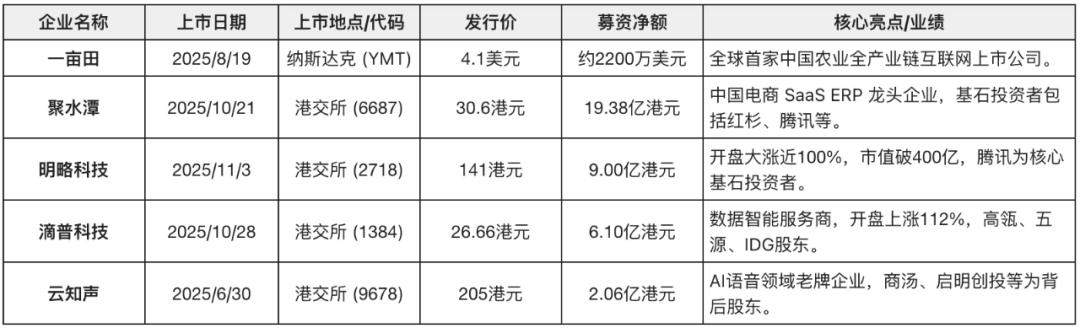
Core Insights - The Chinese ToB industry is undergoing a significant transformation, moving from a phase of "default growth" to a more competitive environment where survival requires proven operational capabilities [1][2][24] - The year 2025 marks a critical turning point, with many companies either successfully listing or facing bankruptcy, highlighting the stark realities of the market [1][4][24] Group 1: Market Dynamics - The ToB sector is experiencing a shift from "story premium" to quality-driven listings, with several companies successfully going public, including Yizhitian and Jushuitan [3][4] - The capital market is no longer rewarding mere narratives; companies must demonstrate self-sustainability and explore various exit strategies to attract investment [2][5] Group 2: Listing Trends - A wave of IPOs and listing preparations is evident in 2025, with companies like Yizhitian and Jushuitan leading the charge, indicating a reconnection with capital markets after years of adjustment [4][5] - The current IPO cycle differs from previous ones, focusing on established revenue models and customer bases rather than just high growth potential [4][5] Group 3: Exit Strategies - New exit pathways are emerging, such as control transfers, which provide alternative options for companies beyond traditional IPOs and mergers [5][6] - The case of Zhenai Meijia illustrates a shift towards control transactions, offering a new model for software companies and their early investors [5][6] Group 4: Strategic Investments - Companies like Pinming Technology are introducing strategic investors while maintaining control, reflecting a trend towards non-control capital infusion in a tightening capital environment [7][8] - This approach allows companies to secure long-term funding without altering governance structures, presenting a viable option for growth [8] Group 5: Mergers and Acquisitions - The focus of mergers is shifting from mere scale expansion to enhancing core capabilities and customer value through strategic integrations [10][11] - Notable acquisitions, such as Beisen's purchase of Cool Academy, demonstrate a trend towards integrating complementary services rather than just expanding product lines [9][10] Group 6: Major Corporate Moves - Tencent's acquisition of a controlling stake in SalesEasy marks a significant shift in its involvement in the SaaS sector, moving from an investor to a direct operational role [11][12] - This move provides SalesEasy with a more stable growth trajectory and access to Tencent's resources, setting a precedent for other SaaS companies [12] Group 7: Financial Performance - Companies like Beisen and Youzan are showing signs of financial recovery, with improved revenue and profitability metrics, indicating a broader trend towards financial health in the sector [15][16] - The industry is witnessing a collective movement towards achieving profitability, with many firms reporting reduced losses and positive cash flow [16][18] Group 8: AI Integration - Manus, an AI-native product, achieved remarkable success with a rapid international expansion and significant annual recurring revenue (ARR) growth, showcasing the potential of AI in the software market [19][21] - The swift transition of Manus from product launch to global market presence exemplifies a new standard for success in the AI sector [21] Group 9: Industry Challenges - The year 2025 has revealed the harsh realities of the industry, where companies must prove their ability to survive amidst tightening capital and increasing operational pressures [13][14][24] - The competitive landscape is forcing companies to reassess their cost structures and customer quality, emphasizing the need for sustainable business practices [14][24]

To B的智谱和To C的MiniMax,大模型生意都很难做
经济观察报· 2025-12-24 13:48
Core Viewpoint - The two companies, Zhipu and MiniMax, represent distinct commercialization paths in the AI large model sector, with Zhipu focusing on the B-end market and achieving a gross margin of 50%, while MiniMax targets the C-end market with over 70% of its revenue coming from overseas [2][4]. Group 1: Financial Performance - From 2022 to mid-2025, Zhipu accumulated revenue of 685 million yuan, with cumulative losses exceeding 6.2 billion yuan [4]. - MiniMax reported cumulative revenue of 86 million USD (approximately 600 million yuan) and cumulative losses of about 1.32 billion USD (approximately 9.3 billion yuan) from 2022 to September 2025 [5]. - Both companies operate at a revenue scale in the billion range, with MiniMax's revenue for the first nine months of 2025 being 53.4 million USD (approximately 376 million yuan) and Zhipu's revenue for the same period being 190 million yuan [6]. Group 2: Market Position and Competition - Zhipu's B-end business primarily serves large domestic government and enterprise clients, while MiniMax's C-end business relies on overseas individual users [5][10]. - Zhipu's revenue from enterprise deployments has decreased from 95% to 85% over the past three years, indicating increased competition in the B-end market [8]. - MiniMax's average monthly active users reached 27.6 million, with 1.77 million paying users, but still lagging behind major internet companies [8][9]. Group 3: Investment and Costs - Both companies face significant capital requirements, with Zhipu and MiniMax's cumulative R&D investments being 4.4 billion yuan and 500 million USD (approximately 3.5 billion yuan), respectively [6]. - In the first half of 2025, Zhipu's computing power expenditure was 1.1 billion yuan, while MiniMax's was 140 million USD (approximately 987 million yuan) [7]. - The high costs associated with computing power present a challenge for both companies, as they need to balance low revenue with substantial operational expenses [7]. Group 4: Future Outlook and IPO Strategy - Both companies are vying for the title of the first AI large model stock, with the urgency to go public for financing and providing an exit for external shareholders [12]. - MiniMax has a more robust cash position, with cash reserves of 1.04 billion USD (approximately 733.4 million yuan) as of September 30, 2025, compared to Zhipu's 2.5 billion yuan [12]. - The cash burn rate for Zhipu increased to approximately 2.21 million yuan per month in the first half of 2025, indicating a growing financial strain [12].

深度|狂飙、徘徊与转身:2025 年中国AI从业者浮世绘
Z Potentials· 2025-12-23 06:19
Core Viewpoint - The emergence of DeepSeek-R1 signifies a pivotal moment for Chinese innovation on the global stage, indicating a shift towards accelerated technological advancement and a redefined direction for the industry [1]. Group 1: Collective Narrative Amidst Chaos - The year witnessed parallel experiences of success and confusion within the same industry, with some companies achieving explosive growth while others reassess their strategies [5][6]. - DeepSeek maintained a strong position in application downloads, while competitors like Doubao also saw significant user engagement [6]. - Companies like Baichuan Intelligence and Zero One Matter are pivoting towards specific sectors, showcasing strategic differentiation among the so-called "AI Six Tigers" [7]. - The rapid iteration of AI models has left many entrepreneurs in a state of indecision, grappling with whether to embrace new trends or stick to established paths [7]. Group 2: Value Inquiry and Choices in 2025 - Practitioners are increasingly questioning the essence of technology and its practical applications, moving beyond theoretical discussions to real-world implications [13]. - The discourse on platforms like Zhihu reflects a shift in focus from immediate outcomes to long-term technological potential and sustainable practices [14][20]. - The concept of "density" in AI development is emerging, emphasizing quality over sheer size, as highlighted by industry experts [17]. Group 3: Observations from Practice - The interactions on Zhihu illustrate a dynamic exchange of ideas, where individuals document their experiences and uncertainties, contributing to a collective understanding of the industry's evolution [21][30]. - The narrative of personal journeys in the tech space reveals a transition from theoretical exploration to practical application, with many professionals sharing their challenges and decisions [20][31]. - The ongoing discussions emphasize the importance of individual contributions to the broader AI landscape, highlighting the need for continuous questioning and adaptation in an uncertain environment [33].
AI周报|智谱、Minimax相继通过港交所上市聆讯;OpenAI发布图像模型挑战谷歌
Di Yi Cai Jing· 2025-12-21 02:01
智谱有望成为"全球基座大模型第一股",MiniMax有望成为"全球多模态大模型第一股"。 智谱、Minimax相继通过港交所上市聆讯 12月17日,北京智谱华章科技股份有限公司(下称"智谱")通过港交所上市聆讯。同日晚间,上海稀宇 极智科技有限公司(下称"MiniMax")也通过了港交所上市聆讯,该公司计划于2026年1月挂牌上市。 港股有望迎来以AGI基座模型为核心业务的上市公司。 点评:若进展顺利,智谱有望成为"全球基座大模型第一股",MiniMax有望成为"全球多模态大模型第一 股"。有数据显示,智谱自2019年成立以来,已累计完成超过15轮融资,最新估值达到400亿元人民币。 年内MiniMax则完成新一轮近3亿美元的C轮融资,投后公司估值超过40亿美元(约合300亿元人民 币)。 壁仞科技通过港交所聆讯 12月17日,国产GPU厂商壁仞科技通过港交所聆讯,有望成为国内AI芯片阵营中第三家上市的GPU厂 商。据招股书,2022年至2024年,壁仞科技年收入分别为49.9万元、6203万元、3.37亿元,分别亏损 14.74亿元、17.44亿元、15.38亿元,三年累计亏损47.5亿元。按在中国市场产生 ...