中芯国际

Search documents
美国1750亿美元关税退税,对A股的影响(附50股)
Sou Hu Cai Jing· 2026-02-21 11:41
Group 1 - The core point of the article is that the recent US Supreme Court ruling on the $175 billion tariff refund has significant implications for both China and the A-share market, despite the refund being an internal US matter [2][6][28] - The $175 billion in tariffs was primarily collected from imports, including a 10% tariff on Chinese goods, and is now being refunded to US importers [8][10] - The refund will indirectly benefit Chinese companies as US importers, who have been financially strained by tariffs, will use the refunded money to pay off debts to Chinese suppliers and resume orders [12][14][28] Group 2 - The immediate impact on the A-share market is expected to be positive, with a potential "opening red" for A-shares as market sentiment improves following the ruling [40][46] - The ruling is seen as a signal that the previous high tariffs on Chinese goods may not be a permanent state, which could lead to a more favorable environment for Chinese exports [20][48] - Structural opportunities in the A-share market are identified, focusing on five main lines: export-oriented sectors, domestic substitution, strategic resources, domestic consumption, and new energy [51][62][88] Group 3 - Export-oriented sectors, particularly those with high exposure to the US market, are expected to benefit directly from the tariff refunds, with companies like Midea Group and Haier expected to see improved performance [52][72][73] - Domestic substitution and self-sufficiency in sectors like semiconductors and military equipment are highlighted as long-term strategic focuses, with companies like SMIC and AVIC Shenyang Aircraft being key players [53][78][86] - Strategic resources such as rare earths and gold are also expected to see price support due to ongoing global supply chain disruptions, benefiting companies like Northern Rare Earth and Shandong Gold [56][87]




中美关税大战:最大成果不是中国胜了,而是美国再无手段控制中国
Sou Hu Cai Jing· 2026-02-21 06:59
特朗普第二次入主白宫后,立即将关税作为自己的主要政策工具。2025年2月1日,他签署了行政命令,对所有中国进口商品加征10%的关税,名义上的理由 是针对芬太尼问题。4日,关税正式生效,随后取消了小额免税通道。到3月初,税率更是提高到了20%。4月2日,特朗普推出所谓的解放日措施,给中国商 品额外加征34%的关税,叠加后,有些商品的关税一度攀升到125%以上。面对美国的强硬姿态,中国并没有采取同等规模的反制,而是在4月4日宣布对美 国的部分农产品和能源品加征关税,同时实施出口许可证管理,针对包括钐、钆、铽、镝等稀土元素,直接卡住了美国国防和高端制造所依赖的关键资源。 相比美国的硬碰硬,中国则采取了更为精准的反制手段,同时加快了产业升级的步伐。稀土管制一出,美国洛克希德·马丁等军工企业立刻遭遇了磁铁和合 金的短缺,F-35战机的相关部件生产也受到了影响。与此同时,中国的科技企业却取得了不小的进步,2025年全年,中芯国际的营收创下了超过93亿美元的 纪录,7纳米制程的良品率稳步提升,深紫外多重曝光技术的突破使得量产达到了新高度。长江存储的新一代闪存产品持续升级,华为的5G基站核心模块逐 步转向国内供应链,即便外部 ...
动态优化叠加产业前瞻!汇添富恒生科技C(013128)标的指数每季度"换血"背后的增长逻辑
Xin Lang Cai Jing· 2026-02-21 02:36
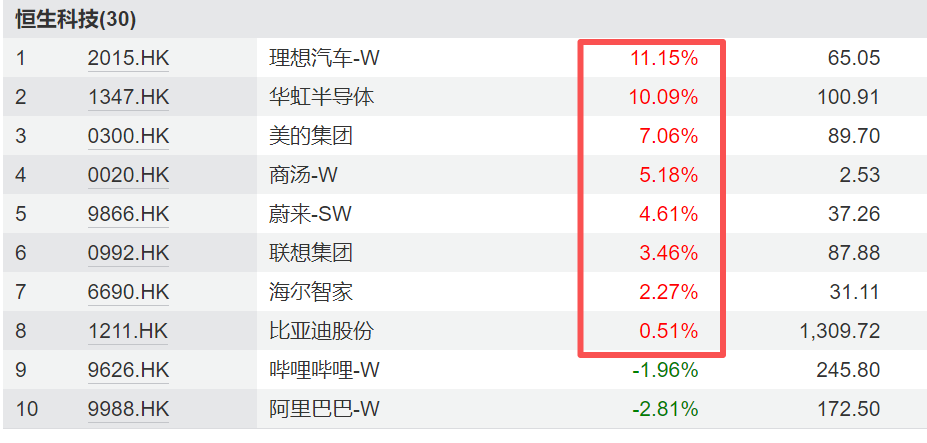
Group 1 - The core mechanism of the Hang Seng Tech Index is its quarterly rebalancing system, which allows for dynamic optimization of component structure, enabling the index to continuously track industry trends and provide a forward-looking technology allocation tool for investors [1] - The "fast inclusion" rule allows new stocks to be added to the index within 10 trading days if their market capitalization ranks in the top 10 among existing constituents, ensuring the index captures the benefits of large tech IPOs promptly [2] - The index has evolved from being dominated by internet services to a more balanced representation of both soft and hard technologies, with significant changes in component weightings reflecting shifts in the Chinese tech industry [3] Group 2 - The index has seen a gradual decrease in the weight of platform economy stocks while increasing the representation of hard tech companies like semiconductor firms, with hard tech now accounting for 20% of the index [3] - Recent adjustments have included electric vehicle companies, raising the automotive sector's weight to 15%, and AI-related stocks, further increasing the weight of semiconductors and AI hardware to 25% [3] - The index employs a "survival of the fittest" mechanism, removing underperforming stocks and maintaining high profitability and growth quality among its constituents, with removed stocks underperforming the index by an average of 15 percentage points in the following year [4] Group 3 - The index limits the weight of any single constituent to 8% and the top five constituents to a combined 40%, which helps mitigate risks associated with volatility in leading stocks [4] - The Hang Seng Tech Index is characterized by a balanced allocation between soft and hard technologies, with internet platform companies comprising over 50% of the index, while hard tech includes electric vehicle and semiconductor firms [5] - The index's structure captures the resilience of the consumer internet while also positioning itself for growth in the industrial internet space [5]
全市众多工业企业春节假期连续生产
Xin Lang Cai Jing· 2026-02-20 20:41
位于东丽区未来科技城南区的环晟新能源(天津)有限公司3条产线在春节期间连续生产。公司相关负 责人介绍,作为TCL中环旗下高效太阳能叠瓦组件的研发与制造企业,春节期间组织部分产线连续生 产,主要是为了确保紧急交付订单按时履约,特别是针对海外地区的订单,需保障国际客户的供应链稳 定性,维护企业海外市场信誉;同时,部分国内长期合作客户的紧急订单也需优先响应,避免因假期延 误影响后续合作。"我们3条产线春节期间不停工,保留了一半产能,既能减少设备停机重启带来的损 耗,也能保障节后员工返岗后快速衔接生产节奏,避免因工序脱节导致的效率下降,确保全年生产计划 稳步推进。"他表示,"受4月1日光伏行业海关退税政策预期影响,今年一季度企业订单量明显提升,生 产节奏稳步加快,产品合格率保持在行业较高水平,客户满意度持续稳定。" 位于空港经济区的天津海河乳品有限公司巴氏奶产线春节期间一直正常生产。大年初四,供应全国市场 的花色奶产线也全部复工,除了部分行政人员还在休假,生产部门员工全部上岗,日产500吨牛奶的生 产线全速运转,常温奶、酸奶、冰淇淋等100余种乳制品源源不断被打包运往全国各地。公司党委书 记、董事长邹旸告诉记者,产线 ...
中国十大最具发展潜力城市
泽平宏观· 2026-02-20 16:05
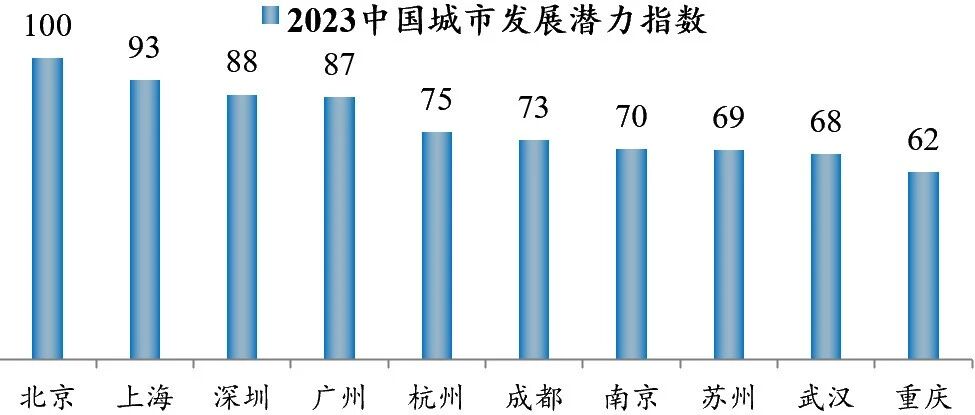
Core Viewpoint - The article discusses the competitive landscape of Chinese cities, highlighting the rapid urbanization and the emergence of new economic centers, while ranking the development potential of 337 cities in China, with Beijing, Shanghai, Shenzhen, and others leading the list [2]. Group 1: Beijing - Beijing is positioned as the political, cultural, international exchange, and technological innovation center of China, with a GDP exceeding 4.1 trillion yuan in 2022, making it the second-largest city after Shanghai [9][10]. - The service sector accounts for 84% of Beijing's economy, with finance, headquarters economy, and technological innovation as key pillars [10]. - Future plans include transforming Beijing into a world-class harmonious city while optimizing population distribution to enhance urban vitality [11][13]. Group 2: Shanghai - Shanghai has established itself as an international economic center, with a GDP of approximately 4.5 trillion yuan in 2022, and aims to rival New York in global economic influence [16][24]. - The city’s industrial structure is supported by the automotive, electronics, and financial sectors, with finance contributing 19.3% to the GDP [17][19]. - Shanghai plans to continue its open policies and develop into a globally competitive city, enhancing the Yangtze River Delta region [24]. Group 3: Shenzhen - Shenzhen's GDP surpassed 3.2 trillion yuan in 2022, marking it as the third-largest city in China, with a significant annual population increase of around 600,000 [25][26]. - The city is recognized as a leading innovation hub, with strategic emerging industries accounting for over 41% of its GDP [26]. - Future initiatives focus on enhancing collaboration within the Guangdong-Hong Kong-Macau Greater Bay Area to solidify its status as a global innovation city [29]. Group 4: Guangzhou - Guangzhou's GDP reached approximately 2.9 trillion yuan in 2022, ranking fifth nationally, with a strong manufacturing base in automotive and electronics [30][31]. - The city faces challenges in innovation capacity and financial sector development, with financial services contributing only 9.2% to the GDP [33]. - Future goals include enhancing its role as a national center city and participating in global economic cooperation [34]. Group 5: Hangzhou - Hangzhou's economy has shown robust growth, with a GDP of around 1.9 trillion yuan in 2022, driven by a vibrant private and digital economy [36][37]. - The city is recognized for its strong digital economy, with core digital industries contributing 27.1% to the GDP [37]. - Plans for the future include improving transportation infrastructure and fostering a more open and innovative business environment [41][42]. Group 6: Chengdu - Chengdu's GDP exceeded 2 trillion yuan in 2022, accounting for 36.7% of Sichuan province's economy, and it is recognized as a key economic hub in Western China [43][44]. - The electronics sector is a major contributor, with a significant portion of the industrial output [44]. - Future strategies involve enhancing its role as a national center city and collaborating with Chongqing to develop the Western economic highland [49]. Group 7: Nanjing - Nanjing's GDP approached 1.7 trillion yuan in 2022, with a per capita GDP of 179,000 yuan, ranking fifth among major cities [50][51]. - The city is focusing on developing its automotive, steel, electronics, and petrochemical industries while nurturing emerging sectors [51]. - Future aspirations include becoming an "innovation city" and enhancing its influence in the Yangtze River Delta region [54]. Group 8: Suzhou - Suzhou's GDP reached nearly 2.4 trillion yuan in 2022, making it the top city among prefecture-level cities in China [56]. - The city is recognized as a global industrial powerhouse, with significant contributions from electronics and manufacturing sectors [56]. - Future plans emphasize its role in the Yangtze River Delta urban cluster and advancing towards a high-tech manufacturing base [59].
中美博弈结束了吗?现实更残酷:美国没输,只是连牌桌都下不去了
Sou Hu Cai Jing· 2026-02-20 14:59
可几年过去,美国自己先懵了——老办法不管用了。 中国经济没停,反而在好几个关键地方跑得更快了。 中美这场大戏,从贸易战那会儿就正式开锣了。 没人能想到,美国一上来就祭出关税大棒,还把技术封锁玩得越来越狠,以为这么一压,中国就得趴下。 美国这边倒好,制造业空心化的问题越捂越臭,供应链全靠外面输血,结果一打起来,自己先断了气。 现在美国制造业占GDP也就10%左右,听着还行?可这10%里头,四成集中在军工、半导体和制药这三个领域,其他地方基本是空的。 说白了,美国在全球价值链里,早就不是那个能自己造东西的主了,而是个靠别人供货的中间商。 中国呢?连续15年稳坐全球制造业头把交椅,到2024年,制造业增加值已经占到全世界的31.6%。 出口也不再是以前那种"十亿件衬衫换一架飞机"的老路子了,现在卖的是高端机电、数码设备,技术含量高,利润也厚。 美国想用关税把工厂逼回本土,可现实狠狠打了脸——人工贵、地价高、工人还招不到,建厂成本翻着跟头往上蹿。 你让企业回去?回去等于烧钱。 芯片,成了中美掰手腕最硬的那根骨头。 从2018年开始,美国对华技术封锁层层加码,光刻机不卖,EDA软件卡脖子,连先进制程的设备都锁得死死的。 ...
港股马年开市:AI、机器人概念股,集体大涨
Sou Hu Cai Jing· 2026-02-20 13:36
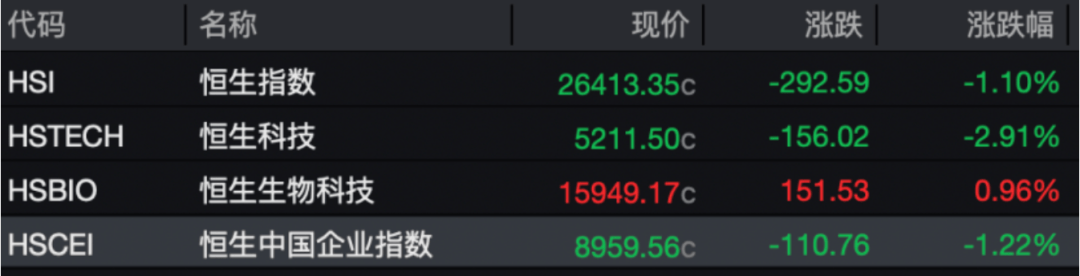
Core Viewpoint - The Hong Kong stock market experienced a decline on the first trading day of the Year of the Horse, with major indices falling, while domestic AI models and robotics stocks surged significantly [1][2]. Market Performance - As of February 20, the Hang Seng Index closed at 26,413.35 points, down 1.1%; the Hang Seng Tech Index closed at 5,211.5 points, down 2.91%; and the Hang Seng China Enterprises Index closed at 8,959.56 points, down 1.22% [2][3]. - The AI model sector saw strong performance, with Zhizhu and MiniMax both surpassing a market capitalization of 300 billion HKD. Zhizhu surged by 42.72% to 725 HKD per share, marking a cumulative increase of 206% in February [3][5]. Robotics Sector - The robotics sector also experienced a collective rise, with companies like Yujian up 21.4% to 48.44 HKD per share, and Suton Ju Chuang rising 9.24% to 37.58 HKD per share [5]. Oil Sector - Oil-related stocks also saw gains, with Yanchang Petroleum International up 3.75%, China Petroleum International up 3.70%, and CNOOC Services up 3.20% [6]. Sector Outlook - Huatai Securities suggests focusing on three key areas in the Hong Kong market: semiconductor hardware represented by storage, improving specialty consumption, and electrical equipment [6]. - Galaxy Securities recommends attention to precious metals and energy sectors due to geopolitical uncertainties, as well as the technology sector as a long-term investment focus, particularly in the context of accelerating AI applications [6].

马年首个交易日,港股全线下跌
Shen Zhen Shang Bao· 2026-02-20 13:21
Market Performance - The Hong Kong stock market experienced a decline on the first trading day of the Year of the Rabbit, with the Hang Seng Index falling by 1.1% to 26,413.35 points, and the Hang Seng Tech Index dropping by 2.91% to 5,211.5 points [1] - The Hang Seng China Enterprises Index decreased by 1.22% to 8,959.56 points, while the Hang Seng Red Chip Index saw a slight increase of 0.09% to 4,384.28 points [1] - The total market turnover was HKD 165.373 billion [1] Sector Performance - The internet technology sector saw significant declines, with Baidu dropping over 6% and Alibaba falling nearly 5% [1] - Semiconductor stocks also weakened, with Hua Hong Semiconductor down nearly 6% and SMIC declining over 3% [1] - Conversely, the domestic AI large model sector experienced gains, with Zhiyun rising nearly 43% and MiniMax increasing over 14%, both surpassing a market capitalization of HKD 300 billion [1] Notable Stock Movements - Among the Hang Seng Index constituents, JD Health fell by 6.27%, Baidu Group-SW decreased by 6.25%, and Alibaba-W dropped by 4.91% [1] - In contrast, China Petroleum gained 3.7%, Henderson Land rose by 3%, and CSPC Pharmaceutical Group increased by 2.63% [1] - CSPC Pharmaceutical Group's GLP-1/GIP receptor dual agonist long-acting injection received FDA approval for clinical trials targeting weight management in obese or overweight patients with related comorbidities [1] Industry Indices - The Consumer Discretionary Index fell by 3.00%, the Information Technology Index decreased by 2.30%, and the Consumer Staples Index dropped by 1.64% [2] - On the other hand, the Energy Index rose by 1.62%, the Healthcare Index increased by 0.77%, and the Industrial Index saw a gain of 0.31% [2]
马年首个交易日,机器人概念股爆发,智谱暴涨43%,科网股大跌
Mei Ri Jing Ji Xin Wen· 2026-02-20 13:05
Market Overview - The Hong Kong stock market experienced a collective decline on the first trading day of the Lunar New Year, with the Hang Seng Index falling by 1.1% to close at 26,413.35 points, the Hang Seng Tech Index dropping by 2.91%, and the National Enterprises Index decreasing by 1.22% [1] Technology Sector - Most tech stocks saw declines, with Baidu Group down over 6%, Kingdee International and Bilibili down over 5%, Alibaba down 4.91%, NetEase down 4.27%, Xiaomi and SMIC down over 3%, Meituan down 1.58%, and Tencent Holdings down 2.06% [1] Robotics Sector - The robotics sector experienced a surge, driven by the Lunar New Year Spring Festival, with companies like Yujian rising over 21%, Shoucheng Holdings increasing nearly 12%, and Sutech Juchuang up over 9% [1] Oil Sector - Oil-related stocks saw gains, with China Merchants Energy rising by 6.34%, China Petroleum up by 3.7%, and CNOOC increasing by 2.23%. This uptick is attributed to rising international oil prices and concerns over escalating tensions between the U.S. and Iran, particularly in the Middle East oil-producing regions [1] Notable Stock Performance - Zhipu's stock price surged, closing with a gain of 42.72% at 725 HKD, bringing its total market capitalization to 323.2 billion HKD. The stock has seen a cumulative increase of 220.51% since February [1]
中美关税大战: 最大成果不是中国胜了, 而是美国再无手段控制中国
Sou Hu Cai Jing· 2026-02-20 11:56
中美的这场关税大战,是一场没有硝烟的硬仗,双方较量的不只是关税数字,而是国家综合实力。 最终的结果也很清楚,美国失败了,但在尘埃渐落之后,比胜负更重要的问题开始浮现。 2018年是中美关税战的起点,美国先拿钢铁、铝制品开刀,对这类中国商品加征25%的关税。 没过多久,加税范围一步步扩大,从家电、家具、纺织品,到电子产品、机械零件,前后覆盖了数千亿 美元的中国输美商品。 美国,那个曾指挥全球秩序的超级强国,在一次次"出招失败"中,动用了全部手段,却收效甚微。 而中国却稳稳化解了风险,逐步夺回主动。 美国当时打的算盘,普通人都能看明白。 一是盯着中美贸易逆差,觉得中国卖给美国的东西太多,美国卖过来的太少,想靠加税把逆差强行压下 去。 二是眼红中国的产业升级,眼看着中国制造业从低端加工往高端制造走,新能源、光伏、高端装备越做 越强,怕中国动摇美国的产业主导地位,想把中国摁在全球产业链的底端。 三是想借关税施压,让中国在技术转让、贸易规则上妥协,说白了就是要掌控中国的发展方向,不让中 国继续变强。 美国之所以敢这么做,是因为以前这招屡试不爽。 当年对付日本,美国用贸易施压逼日本签下广场协议,日本经济随后陷入长期停滞; ...