宝马

Search documents
钛能化学:累计回购约6806万股
Mei Ri Jing Ji Xin Wen· 2026-01-06 08:08
每经AI快讯,钛能化学1月6日晚间发布公告称,截至2025年12月31日,公司通过回购专用证券账户以 集中竞价交易方式累计回购公司股份约6806万股,占公司目前总股本的1.788%,最高成交价为5.09元/ 股,最低成交价4.12元/股,成交总金额为人民币约3亿元。 每经头条(nbdtoutiao)——原指导价34.99万的宝马裸车价22.5万元,多家车企还补贴购置税!2026开 年车市火爆,销售从早到晚忙到没空吃饭 (记者 王晓波) ...

光威复材:公司及子公司取得多项专利证书
Mei Ri Jing Ji Xin Wen· 2026-01-06 07:59
每经AI快讯,光威复材1月6日晚间发布公告称,威海光威复合材料股份有限公司及公司全资子公司威 海拓展纤维有限公司、内蒙古光威碳纤有限公司、威海光威精密机械有限公司、威海光威能源新材料有 限公司、威海光威复合材料科技有限公司、北京蓝科盈晟航空科技有限公司、控股子公司威海光晟航天 航空科技有限公司于2025年度收到由中华人民共和国国家知识产权局颁发的发明专利、实用新型专利、 外观设计专利证书。专利名称分别为"复合材料耳片及其制造方法""一种用于单兵操作的大承载便携式 复合材料支撑装置"等。 每经头条(nbdtoutiao)——原指导价34.99万的宝马裸车价22.5万元,多家车企还补贴购置税!2026开 年车市火爆,销售从早到晚忙到没空吃饭 (记者 王晓波) ...

京东方A:接受天风证券等投资者调研
Mei Ri Jing Ji Xin Wen· 2026-01-06 01:16
每经头条(nbdtoutiao)——原指导价34.99万的宝马裸车价22.5万元,多家车企还补贴购置税!2026开 年车市火爆,销售从早到晚忙到没空吃饭 (记者 张喜威) 每经AI快讯,京东方A发布公告称,2026年1月5日,京东方A接受天风证券等投资者调研,合肥京东方 光能总经理寇建龙等参与接待,并回答了投资者提出的问题。 ...


今日国际国内财经新闻精华摘要|2026年1月6日
Xin Lang Cai Jing· 2026-01-06 00:25
International News - Significant fluctuations in international financial markets were observed, with precious metals and energy sectors showing active performance influenced by geopolitical and macroeconomic policies. Gold futures in New York surpassed $4,470 per ounce, with an intraday increase of 0.43%, previously touching $4,460 per ounce, where the intraday increase exceeded 3%. Spot gold also rose, breaking $4,450 per ounce, with an intraday increase of 2.71% [1][11] - The silver market exhibited even stronger performance, with New York silver futures surging 9% to $77.41 per ounce, while spot silver broke $77 per ounce, with an intraday increase of 5.8%. Domestic silver futures also rose by 4%, reaching 18,898 yuan [1][11] - The Azerbaijan State Oil Fund announced profits exceeding $10 billion from gold investments, reflecting an increasing demand for precious metal asset allocation [2] - In the energy market, crude oil futures rose over $1 per barrel due to the situation in Venezuela [3] - The U.S. Department of Energy announced a $2.7 billion investment to enhance uranium enrichment capabilities to ensure domestic energy security. All three major U.S. stock indices closed higher, with the Dow Jones rising 1.23% to reach a historical high, the Nasdaq increasing by 0.69%, and the S&P 500 up by 0.64%. Oil and gas stocks led the gains, with Halliburton, Schlumberger, and Chevron rising by 8.8%, 8.2%, and 6.9%, respectively [4][14] - Goldman Sachs shares rose nearly 5%, marking the largest increase since May of the previous year [5] - Large tech stocks showed mixed performance, with Tesla rising over 3% and Amazon increasing over 2%, while Apple and Micron fell over 1% [6][16] - The Nasdaq Golden Dragon China Index closed up 0.53%, with companies like Canaan Inc., Wanwu Xingsheng, and Kandi Technologies seeing gains exceeding 8% [7][17] Domestic News - The domestic bulk commodity market followed international trends with significant fluctuations, particularly in silver and nickel. Silver futures rose by 4% to 18,898 yuan, while nickel futures increased by 1% to 135,610 yuan [9][19] - In the Hong Kong stock market, the total number of property sale contracts reached 80,702 in 2025, an increase of 18.7% year-on-year, marking a four-year high, with a total value of 614.277 billion HKD, up 15% year-on-year. Residential property sales accounted for 62,832 contracts, valued at 519.83 billion HKD [9][20] - In the A-share market, 17 listed companies disclosed share reduction plans on January 5, including Hongmian Co., Changgao Electric, and Xianfeng Precision, with no increase cases reported on that day [9][20] - The Nasdaq Golden Dragon China Index initially fell over 1%, with Xpeng Motors and Baidu dropping 4.5% and 3.89%, respectively, but rebounded to close up 0.53% [9][20] - In international capital flows, TSMC shares surged 3.4% to $330 per share, with a total market capitalization of $1.7 trillion, reflecting market confidence in the long-term prospects of the semiconductor industry [10][20]


城市NOA第三方智驾供应商Momenta市占率超60% 中国智驾全球竞争力跃升
Jing Ji Guan Cha Bao· 2026-01-05 23:57
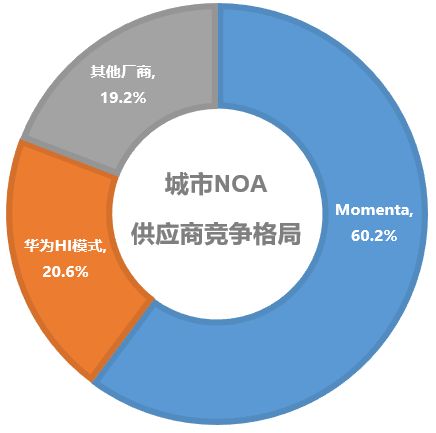
Core Insights - The popularization of intelligent driving in China is entering a critical phase in 2025, transitioning from "production accumulation" to a "scale explosion" cycle [1] - The penetration rate of urban NOA (Navigation on Autopilot) hardware in domestic passenger cars has reached 2.392 million units in the first ten months of 2025, marking a year-on-year increase of 62.8% [1] - Third-party intelligent driving suppliers like Momenta and Huawei are gaining market leadership and global recognition, enhancing the competitiveness of China's intelligent driving supply chain [1] Market Share Analysis - From January to October 2025, Momenta and Huawei's HI model together captured over 80% of the urban NOA third-party intelligent driving supplier market, with Momenta holding a market share of 60.2% and Huawei at 20.6% [3] - Leading suppliers have achieved rapid technological iteration and efficient replication across models and brands due to early production layouts and scalable engineering capabilities [3] Trends in Adoption - The acceleration of urban NOA penetration in 2025 is driven by three factors: technological maturity, increased supply, and awakened demand [5] - Domestic brands like BYD, Geely, and Chery are key drivers of this penetration, implementing a "main model standard configuration" strategy to bring advanced driving features to lower-priced vehicles [5] - Global brands such as Toyota, Nissan, and Mercedes-Benz are collaborating with top Chinese intelligent driving suppliers to enhance their smart transformation, indicating the global recognition of China's intelligent driving solutions [5] Competitive Focus - The competition in urban NOA has shifted from "whether features are available" to "experience is king," with a focus on providing a safe and reassuring high-level driving experience [5] - Momenta is leveraging "reinforcement learning + end-to-end architecture" combined with production data to enhance the driving experience, with its R6 model being the first to achieve mass production based on reinforcement learning [5][6] Strategic Positioning - 2025 is a pivotal year for urban NOA in China, marking the transition from "usable" to "user-friendly" and from niche markets to widespread adoption [6] - Leading suppliers like Momenta and Huawei are not only enhancing domestic market experiences but also actively participating in the global restructuring of the intelligent driving supply chain, providing a "Chinese solution" for the global automotive industry's smart transformation [6]

涪陵榨菜:公司常务副总经理代富荣离任
Mei Ri Jing Ji Xin Wen· 2026-01-05 23:55
Group 1 - Fuling Zhacai announced the resignation of its Executive Vice President, Dai Furong, effective from January 5, 2026, due to personal reasons [1] - Following his resignation, Dai Furong will no longer hold any position within the company [1] Group 2 - The automotive market is experiencing a surge at the beginning of 2026, with BMW's original guide price of 349,900 yuan now at 225,000 yuan, and multiple car manufacturers offering subsidies for purchase taxes [1] - Sales activity in the automotive sector is reported to be extremely busy, with sales personnel working continuously without breaks [1]

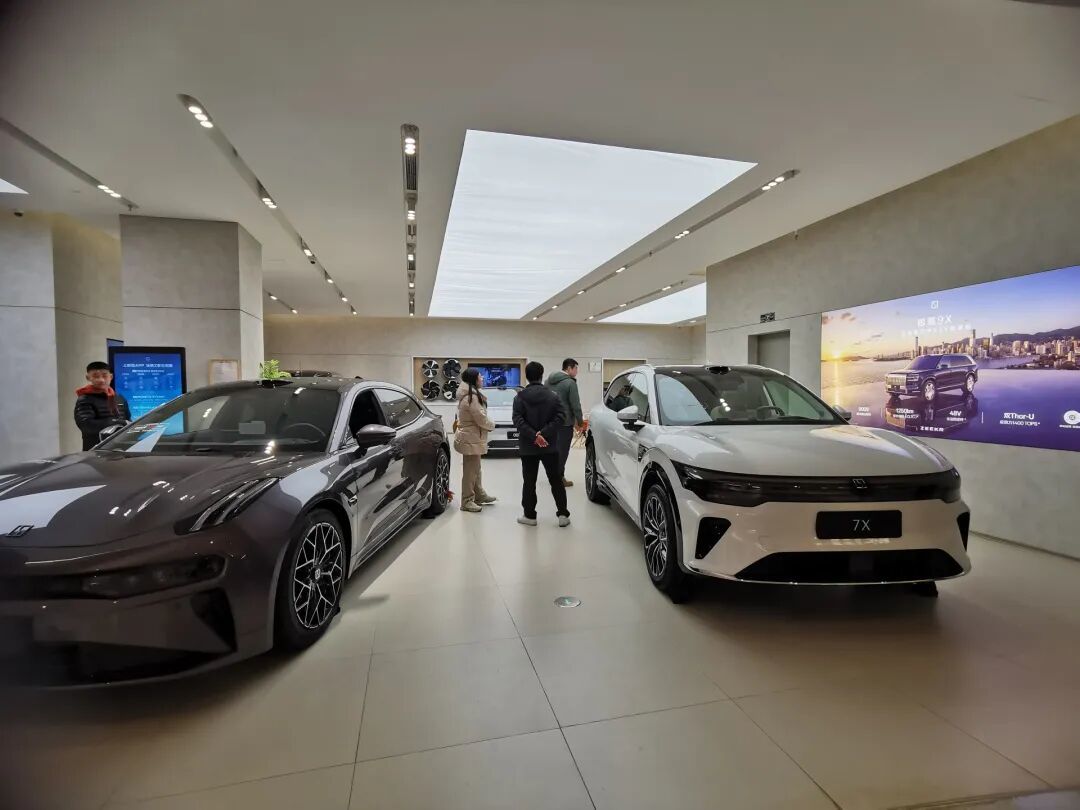
多家车企补贴购置税!开年车市火爆,销售从早到晚忙到没空吃饭
Mei Ri Jing Ji Xin Wen· 2026-01-05 23:19
Core Viewpoint - The new "National Subsidy" policy for automobiles was released before the New Year holiday in 2026, prompting various car manufacturers to launch promotional policies, including vehicle purchase tax subsidies and "0% interest" financing options. The changes in the subsidy structure are expected to mitigate market shocks and stimulate car sales in 2026 [1][11]. Group 1: New Policy and Market Response - The new "National Subsidy" policy includes a reduction in the purchase tax for new energy vehicles from full exemption to 5% starting January 1, 2026 [11][12]. - Multiple car brands have introduced promotional policies in response to the new subsidy, with over ten brands offering limited-time promotions affecting more than 70 models [3][4]. - Sales personnel reported a significant increase in customer traffic, with some stores experiencing over a thousand visitors in a single day due to the holiday and new policy [3]. Group 2: Subsidy Details and Consumer Impact - The new subsidy structure shifts from fixed subsidies to percentage-based subsidies, maintaining the upper limits but reducing the effective subsidy for lower-priced models [11][13]. - Consumers can benefit from additional subsidies if they purchase vehicles during the promotional period, with some brands offering up to 12,000 yuan in tax subsidies [6][9]. - The total savings for consumers purchasing a new energy vehicle can reach nearly 52,000 yuan when combining the purchase tax reduction and the "old-for-new" subsidy [14]. Group 3: Regional Implementation and Market Growth - The new subsidy policy has already been implemented in several regions, including Jiangxi and Hebei, with local authorities actively promoting the "old-for-new" program [15][17]. - The "old-for-new" policy has been a significant driver of growth in the automotive market, with over 1.15 million vehicles exchanged under this program in 2025, contributing to over 1.6 trillion yuan in new car sales [18]. - Industry experts predict that the automotive market will experience positive growth in the first quarter of 2026, driven by the new policies [20].
高通发布机器人芯片架构 押注“物理AI”|直击CES
Xin Lang Ke Ji· 2026-01-05 19:58
Group 1 - Qualcomm has launched a new robotics technology architecture and the Dragonwing IQ10 series processors at CES 2026, marking its entry into the industrial and humanoid robotics market [3] - The Dragonwing IQ10 processor is designed for autonomous mobile robots (AMR) and full-sized humanoid robots, integrating edge computing, edge AI, hybrid critical systems, and machine learning operations for high-efficiency "robot brain" capabilities [3] - Qualcomm aims to compete with Nvidia in the next-generation robotics market, leveraging its 40 years of experience in mobile chip technology to establish advantages in power efficiency and scalability [3] Group 2 - Qualcomm is building a comprehensive robotics ecosystem and has partnered with several robotics manufacturers, including Figure AI, Booster, VinMotion, and Kuka Robotics [3] - The architecture supports end-to-end AI models such as visual-language-action models (VLA) and visual-language models (VLM), enabling advanced perception, motion planning, and human-robot interaction [3] - Qualcomm's Snapdragon Cockpit Elite platform has become the de facto standard for high-end electric vehicles, with a revenue pipeline exceeding $45 billion from its automotive business [4]



汽车行业年度策略报告:汽车行业2026年十大趋势及投资策略-20260105
Guoyuan Securities· 2026-01-05 13:43
Core Insights - The report highlights that the Chinese automotive industry is entering the mid-to-late stage of the electric and intelligent transformation, characterized by the coexistence of traditional fuel vehicles, electric intelligent vehicles, and future industries represented by autonomous driving. This necessitates a layered and structured investment approach based on the different stages of these industry curves [2][3]. Trend Summaries Trend 1: Scrap Gap Provides Long-term Space, Trade-in Policies Expected to Normalize - The Chinese automotive market has stabilized at an annual sales level of 31 million units, with a substantial vehicle ownership base of 350 million units, laying the groundwork for future updates. The annual scrappage volume is still significantly lower than new car sales, leading to an expanding replacement gap. The "trade-in" policy is expected to evolve from a temporary stimulus to a normalized tool, enhancing the precision of policies to support domestic demand and industrial production [2][13][27]. Trend 2: New Forces Drive China's Automotive Exports to a New Structural Upgrade Stage - China's automotive exports have entered a high-growth phase, achieving several-fold growth over four years. The export structure has undergone profound changes, with a significant increase in the penetration of new energy vehicles. New force car manufacturers are enhancing China's brand premium and technological image in the global market through high-value product exports [2][30][34]. Trend 3: "Mass Market Pure Electric + High-end Range Extender" Trend Continues to Deepen - With the penetration rate of new energy vehicles surpassing 50%, market demand is showing structural differentiation. In the mass market under 200,000 yuan, the 800V high-voltage platform significantly improves charging efficiency, driving pure electric growth to outpace plug-in hybrids and range extenders. In the high-end market above 300,000 yuan, the "large battery long-range range extender" remains the mainstream solution for full-size SUVs/MPVs [2][3]. Trend 4: The "Late Mass Market" Phase Will Continue to Strengthen the Matthew Effect - The industry is transitioning from the "early mass market" to the "late mass market" phase, where consumers prioritize brand endorsement, after-sales support, and residual value certainty. This pragmatic user base favors mature brands and ecosystem capabilities, leading to a concentration of market resources towards leading technology firms [2][3]. Trend 5: Focus on State-owned Enterprises for Opportunities Around "Certainty + Cost-effectiveness" - Regulatory bodies are intensifying the separate assessment and market value management of state-owned enterprises' new energy businesses, driving resources towards electric intelligence. Major automotive groups are restructuring to shorten development cycles, accelerating the integration of intelligent configurations into mainstream price segments [2][3]. Trend 6: Growth of New Energy Heavy and Light Trucks Enters Acceleration Phase - The electrification of commercial vehicles has crossed a critical point, entering a self-driven growth phase. The total cost of ownership (TCO) for heavy trucks has dropped to a recovery period of 1.5-2 years, accelerating the replacement of fuel vehicles. The light truck sector is also maturing, with urban delivery electrification fully established [3][6]. Trend 7: High-perception Intelligent Cockpit Configurations Will Reshape Purchase Decisions - Intelligent cockpits have become a default configuration in new energy vehicles, with the importance of intelligent features in purchase decisions rising to the forefront. Consumers are focusing on visual and perceptible components, making HUDs, large LCD screens, and intelligent seating core differentiation battlegrounds [3][6]. Trend 8: Intelligent Driving Accelerates Along "End-to-End" and "Equal Rights" Paths - The intelligent driving architecture is transitioning to an "end-to-end" model, enhancing efficiency across the perception and decision-making chain. The continued acceleration of L3 policies provides opportunities for leading manufacturers to compete and iterate rapidly in high-level intelligent driving [3][6]. Trend 9: Three Major Autonomous Driving Commercialization Scenarios Approaching Explosive Growth - Robotaxi, mining autonomous driving, and unmanned logistics vehicles are moving from pilot projects to mass production. The cost advantages of unmanned logistics vehicles are becoming increasingly evident, with sales curves showing signs of exponential growth [3][6]. Trend 10: Embodied Intelligence Enters Pre-production Phase, Releasing a Second Growth Curve for the Automotive Manufacturing Industry - Humanoid robots are transitioning from hardware-driven to intelligent dual-core driven, with the automotive supply chain naturally adapting to this field. The synergy between embodied intelligence and the automotive industry is expected to create dual dividends in performance and valuation [3][6].



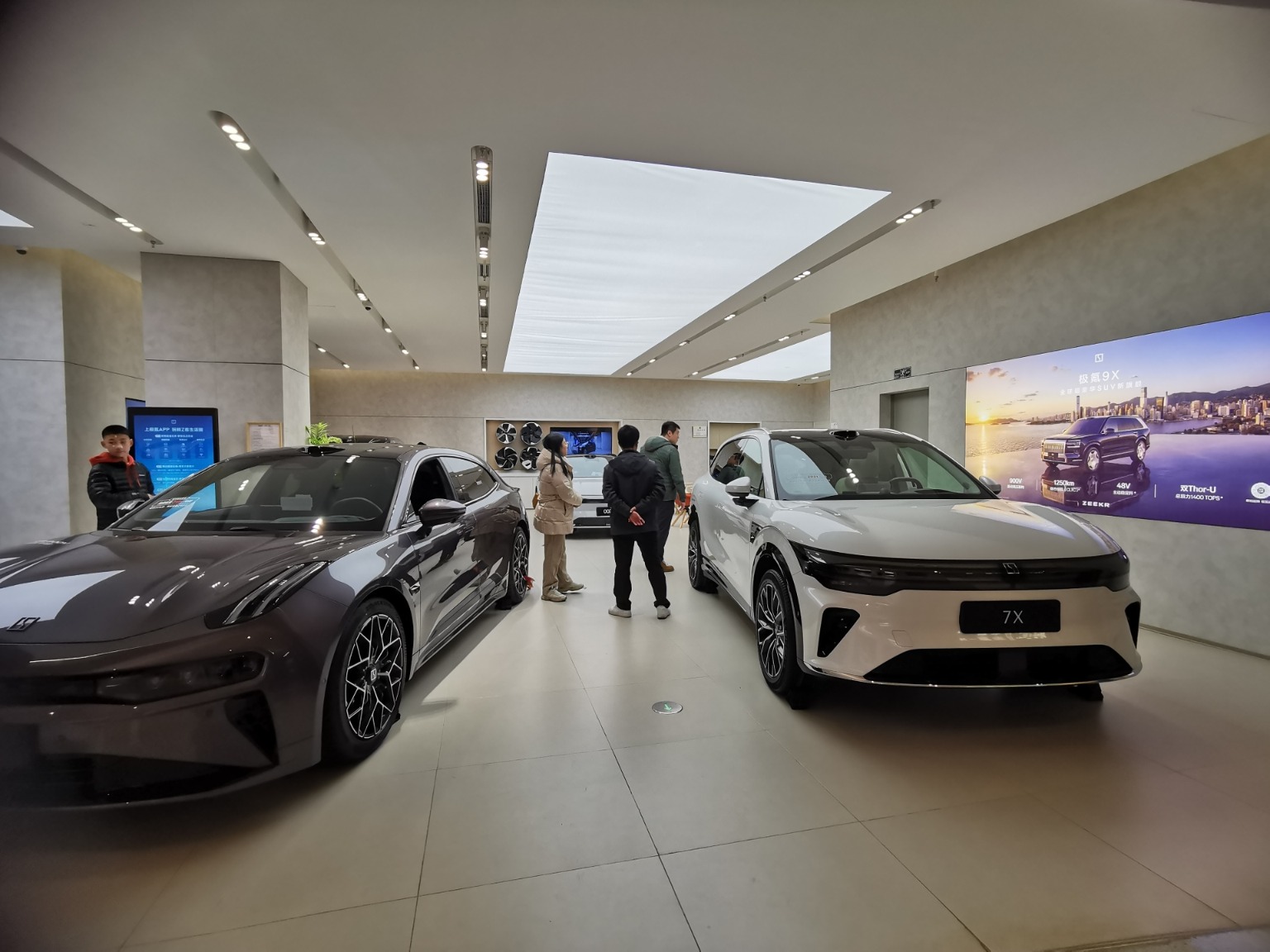
一线调查丨有门店单日客流量破千!“新‘国补’+车企限时促销”点燃元旦车市 销售忙到没空吃饭
Mei Ri Jing Ji Xin Wen· 2026-01-05 13:31
Core Viewpoint - The introduction of the new "National Subsidy" policy for 2026 is expected to stimulate automobile consumption, particularly in the electric vehicle (EV) sector, as it offers various incentives and promotional activities from car manufacturers [16][20]. Group 1: Consumer Behavior and Demand - Many consumers, like Tan Rui, are waiting for the new "National Subsidy" to finalize their vehicle purchases, indicating a strong demand for new cars during the holiday season [1][2]. - Sales personnel report a significant increase in foot traffic at dealerships, with daily customer visits exceeding a thousand due to the holiday and the new subsidy announcements [2]. Group 2: Promotional Strategies by Car Manufacturers - Various car manufacturers have launched promotional strategies, including limited-time subsidies on vehicle purchase taxes, zero-interest financing, and cash discounts, in response to the new subsidy policy [2][3]. - Over ten automotive brands have introduced January promotional policies affecting more than 70 vehicle models [2]. Group 3: Tax Subsidy Details - Starting January 1, 2026, buyers of new energy vehicles will be required to pay a 5% vehicle purchase tax, but many brands are offering tax subsidies to offset this cost [3][6]. - For example, brands like Zhiji and Zeekr are providing tax subsidies ranging from 7,000 to 12,000 yuan for specific models during the promotional period [6][10]. Group 4: Price Adjustments and Market Strategy - BMW has announced price adjustments for several models, with significant reductions aimed at aligning with market demand rather than initiating a price war [11][14]. - The adjustments include substantial price cuts, such as a 301,000 yuan reduction for the i7 M70L, reflecting a strategic response to consumer preferences [11][14]. Group 5: Impact of New Subsidy Policies - The new "National Subsidy" policy includes changes to the vehicle purchase tax and the structure of subsidies, which are expected to mitigate the impact of tax adjustments on the market [16][17]. - The subsidy for scrapping old vehicles is capped at 20,000 yuan, while the replacement subsidy is limited to 13,000 yuan, with the overall subsidy structure shifting from fixed amounts to a percentage of the vehicle price [17][20]. Group 6: Regional Implementation of Subsidy Policies - Several regions, including Jiangxi and Hebei, have begun implementing the new subsidy policies, allowing consumers to apply for up to 20,000 yuan in subsidies for vehicle purchases [19]. - The central government has allocated 62.5 billion yuan for the first batch of subsidies, indicating strong support for the "old for new" vehicle replacement initiative [19][20]. Group 7: Market Outlook - The "old for new" vehicle replacement policy has been a significant driver of growth in the automotive market, with over 11.5 million vehicles replaced in 2025, generating substantial sales revenue [20]. - Industry experts predict that the new policies will lead to a positive growth trend in the automotive market in the first quarter of 2026 [20].