
淘宝

Search documents
当豆包成为售货员,商家“一脸懵”消费者分两派,AI电商会成为新热点吗?
Sou Hu Cai Jing· 2025-10-16 10:30
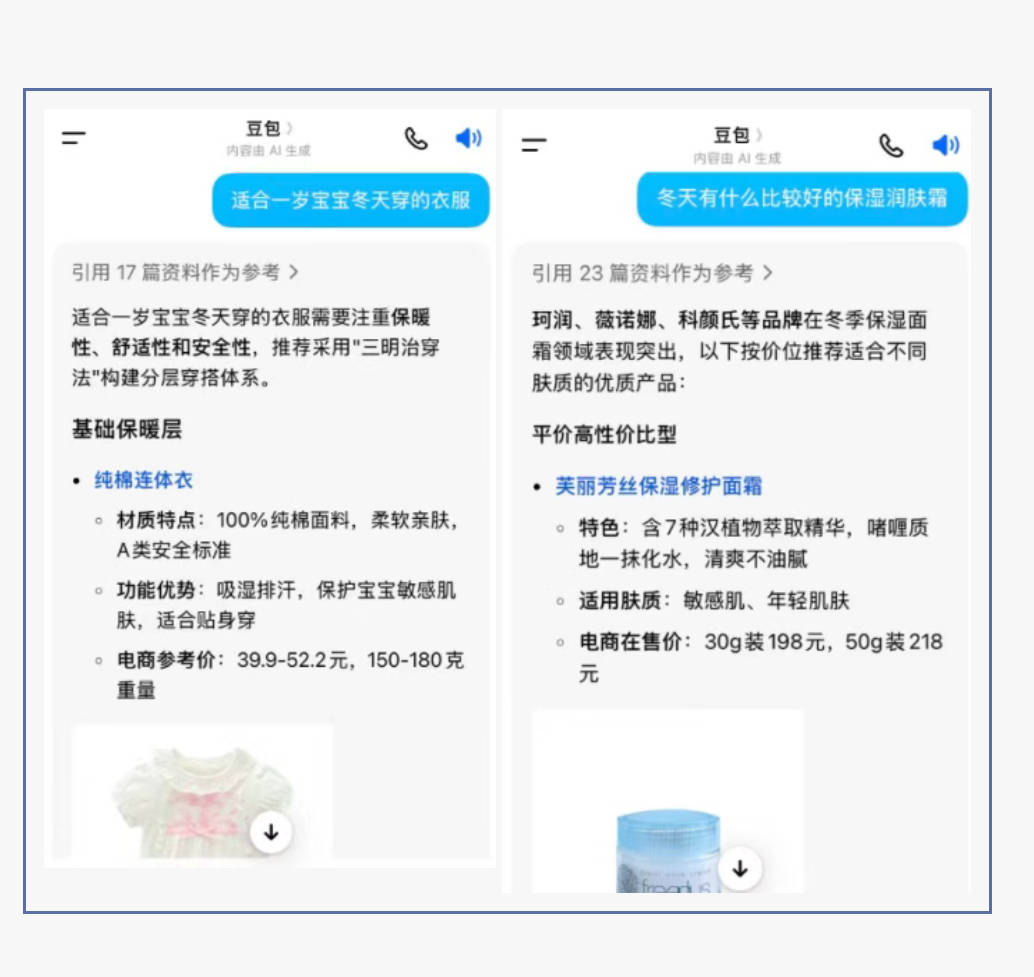
Core Viewpoint - The collaboration between OpenAI and Walmart to launch conversational shopping features on the ChatGPT platform highlights a significant trend in AI and e-commerce, while China's AI e-commerce initiatives, such as Doubao, are still in a cautious testing phase [1][11][17] Group 1: Doubao's AI E-commerce Initiative - Doubao has introduced a feature allowing users to browse and purchase products through natural language conversations, similar to the ChatGPT and Walmart collaboration [1] - Merchants on Douyin have expressed uncertainty regarding Doubao's product recommendation mechanism, viewing it primarily as an advertising tool [2][4] - Some merchants have not noticed significant changes in traffic or sales linked to Doubao's new feature, indicating a need for further observation [6] Group 2: Consumer Reactions - Consumer responses are divided into two main groups: those who firmly reject AI recommendations due to distrust and habitual shopping methods, and those who are hesitant but open to considering AI recommendations if they offer good value [9][10] - A small sample of consumers showed a lack of trust in AI recommendations, with concerns about accountability if prices change after recommendations [10] Group 3: Market Context and Challenges - The Chinese e-commerce landscape is characterized by highly integrated platforms like Taobao and Douyin, which already provide seamless shopping experiences, making the introduction of standalone conversational shopping features less appealing [13][14] - Experts suggest that the cautious approach of Chinese platforms towards conversational shopping stems from concerns about model reliability and the potential negative impact on user trust and conversion rates [15][16] - The current low acceptance of AI e-commerce among consumers and merchants indicates that further refinement and adaptation to user habits are necessary for successful implementation [17]


小米,杀入短剧赛道!
Zhong Guo Ji Jin Bao· 2025-10-16 02:53
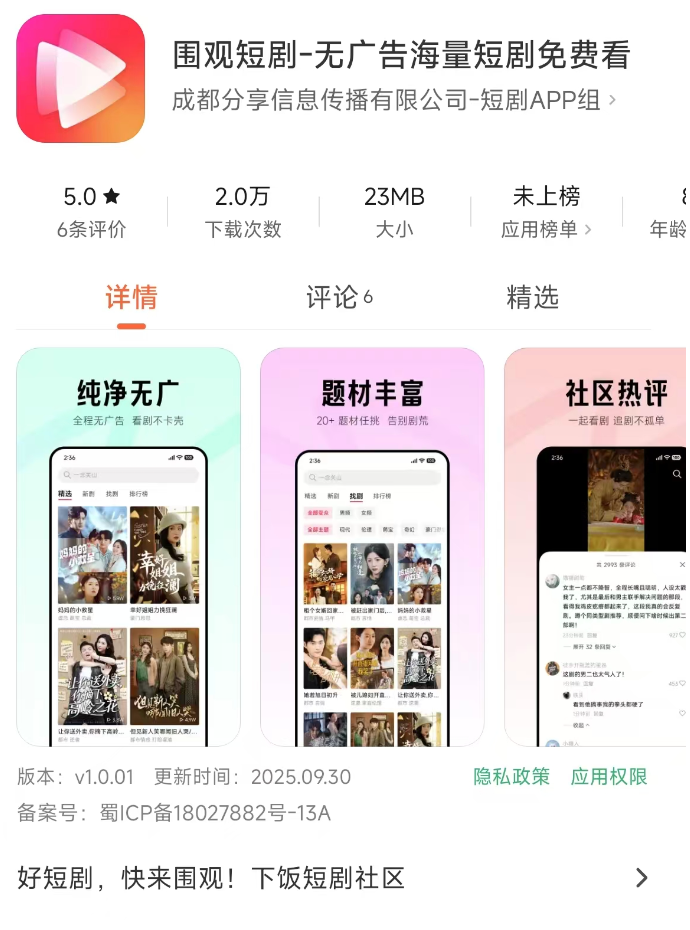
Core Viewpoint - Xiaomi has officially launched its independent short drama app "Weiguan Short Drama" on its application store, marking its entry into the competitive short drama market, which is characterized by a trend towards free content and a shift from traditional advertising and paid models [1][2][8]. Company Summary - The "Weiguan Short Drama" app is fully owned by Xiaomi Technology Co., Ltd., and has already achieved 20,000 downloads, currently available only for Xiaomi phone users [2][6]. - The app features over 20 genres, including urban, romance, and family ethics, and emphasizes a user-friendly experience with its "ad-free, free viewing" model [8]. - Xiaomi's strategy indicates a transition from content marketing to building its own content ecosystem, aiming to enhance user retention and explore full-chain capabilities from content production to distribution [8]. Industry Summary - The short drama sector is experiencing intense competition, with major internet companies like Pinduoduo, Taobao, JD, and Tencent actively investing in short drama initiatives [9]. - The short drama market in China is projected to grow significantly, with the market size expected to reach 505 billion yuan in 2024, surpassing movie box office revenues for the first time, and further increasing to 634.3 billion yuan by 2025 and 856.5 billion yuan by 2027 [10]. - The competitive landscape is evolving, with a focus on companies that can effectively convert short drama traffic into core business value and those capable of producing hit content and quality IP [9].

机构:海外市场电商渗透率仍有空间
Zheng Quan Shi Bao· 2025-10-16 01:03
Group 1 - The China E-commerce Logistics Index for September reached a new high of 112.7 points, increasing by 0.4 points from the previous month, indicating a continued upward trend in e-commerce logistics [1] - The total business volume index for e-commerce logistics in September was 132.5 points, up by 1.1 points from the previous month, reflecting robust growth in logistics activities [1] - Citic Securities suggests that since Q3 2025, the growth rate and competitive landscape of domestic e-commerce have stabilized, with platforms continuing their competitive strategies from H2 2024 [1] Group 2 - Guosen Securities highlights that there is still room for growth in e-commerce penetration in overseas markets, with strong demand for quality Chinese products among consumers [2] - The anticipated improvement in the external trade environment is leading top cross-border brands to enhance product strength and diversify regions, which increases their resilience to risks [2] - Cross-border platform companies benefit from the rising demand for outbound services and the growing buyer traffic in non-U.S. regions, presenting opportunities for potential customer growth [2]
“双11”大战提前打响!巨头加码即时零售
Zheng Quan Shi Bao Wang· 2025-10-15 04:59
Core Insights - The 2025 "Double 11" shopping festival has been launched earlier by JD.com, starting on October 9, five days earlier than last year, with Douyin also initiating its "Double 11 Good Goods Festival" on the same day [1][2] - This year's event sees platforms leveraging AI technology to enhance operational efficiency and user experience, while also simplifying promotional rules [1][3] - Instant retail is expected to be a significant highlight of this year's "Double 11," with major platforms increasing their focus on this area to drive market growth [1][4] Group 1: Event Launch and Performance - JD.com reported a 47.6% year-on-year increase in active users on its app from October 9 to 10, with categories like home appliances, mobile phones, and computers seeing over 70% growth in order volume by October 14 [2] - Taobao's "Double 11" will start on October 15 and run until November 11, featuring various promotional strategies such as pre-sales and discounts [2] Group 2: Simplification of Rules and Competition - Live commerce platforms have also begun preparations for "Double 11," focusing on simplifying rules to attract more consumers [3] - Industry experts note that the early launch of promotions helps platforms secure more merchant resources and manage traffic peaks more effectively [3] Group 3: Instant Retail Focus - Instant retail is becoming a key focus for platforms, with JD.com acquiring a local instant delivery subsidiary for $270 million to enhance its last-mile delivery capabilities [4][5] - The instant retail market is projected to exceed 2 trillion yuan by 2030, indicating significant growth potential [5] Group 4: AI Technology Integration - Major platforms are utilizing AI to improve merchant efficiency and user experience, with JD.com offering free access to AI tools for merchants during "Double 11" [7][8] - AI is expected to transform the e-commerce landscape by enhancing various operational aspects, including content generation and supply chain management [8]

拼完价格拼时间,史上“最长双十一”来了
Jing Ji Guan Cha Wang· 2025-10-15 04:41
Core Insights - The annual "Double Eleven" shopping festival has evolved into a prolonged consumption event, with major platforms starting promotions earlier than in previous years, indicating a shift in consumer habits and intensified competition in the e-commerce sector [2][3][4]. Group 1: Promotion Strategies - Douyin e-commerce launched its "Mid-Autumn & Double Eleven" event on September 16, marking the longest "Double Eleven" period ever at 57 days [2]. - Major platforms like JD, Douyin, Tmall, and Xiaohongshu have also initiated their promotions in early October, with JD starting its event on October 9, aiming to alleviate logistics pressure and extend promotional periods [3][4]. - This year's promotions focus on simplified discount strategies, such as "official discounts" and "direct price reductions," moving away from complex multi-store discounts to enhance consumer experience [2][5]. Group 2: Consumer Behavior and Market Trends - The shift to longer promotional periods allows platforms to better manage logistics and consumer engagement, as the traditional single-day sales model has led to issues like server crashes and delivery delays [6]. - Consumers are increasingly favoring direct discounts and transparent pricing, leading to a decline in the popularity of complicated discount schemes [5][6]. - The rise of live-streaming and social media marketing is influencing consumer purchasing behavior, with platforms utilizing these channels to showcase products and drive sales [6]. Group 3: Instant Retail Development - Instant retail is becoming a significant focus for e-commerce platforms, with JD announcing a $270 million acquisition to enhance its last-mile delivery capabilities [7][8]. - The instant retail market in China is projected to exceed 500 billion RMB in 2023, with a growth rate of approximately 30%, and is expected to continue expanding rapidly in the coming years [8][9]. - Platforms are integrating instant retail into their promotional strategies, with JD and Alibaba incorporating it into their "Double Eleven" events to capture local consumer demand [9][10].



各大电商平台“双十一”活动即将全面启动 不做“奥数题” 主打“直接减”
Shen Zhen Shang Bao· 2025-10-14 23:04
Group 1 - The annual "Double Eleven" shopping festival is approaching, with platforms like JD.com, Douyin, and Bilibili already launching their 2025 promotional activities [1] - JD.com reported a 47.6% year-on-year increase in active users from October 9 to 10, leading the industry, with significant sales growth in categories like home appliances and electronics, exceeding 70% [1][4] - Simplification of promotional strategies is a key trend this year, with JD.com offering direct discounts as low as 10% and Douyin providing a minimum 15% discount on core products [2][3] Group 2 - The promotional period for "Double Eleven" has been extended, with JD.com starting its activities immediately after the National Day holiday, and Douyin combining its Mid-Autumn Festival promotions with "Double Eleven" for a total of 57 days [3] - JD.com has seen a tenfold increase in transaction volume for exclusive products, with significant growth in AI-related categories such as smart robots and AI hardware [4][5] - The integration of AI tools in the shopping experience has improved efficiency, with JD.com offering various AI services to enhance customer interaction and reduce wait times [5]
2025年“双11”大战提前打响 电商以即时零售破局流量瓶颈
Zheng Quan Shi Bao· 2025-10-14 17:31
Group 1: Core Insights - The 2025 "Double 11" shopping festival has been launched earlier by JD.com, starting on October 9, five days ahead of last year [1] - Major platforms are leveraging AI technology to enhance operational efficiency and user experience during this year's shopping festival [1][7] - Instant retail is expected to be a significant highlight of this year's "Double 11," with leading platforms increasing their focus on this segment to drive market growth [1][4] Group 2: Performance Metrics - JD.com reported a 47.6% year-on-year increase in active users on its app from October 9 to 10, with certain categories like home appliances and electronics seeing over 70% growth in order volume [2] - Taobao's "Double 11" will start on October 15 and run until November 11, featuring various promotional strategies such as pre-sales and discounts [2] Group 3: Market Trends - The competition in the e-commerce market is intensifying, prompting platforms to start promotions earlier to capture consumer attention and secure more orders [3] - Simplifying promotional rules has become a focus for platforms to enhance efficiency and reduce the burden on merchants and consumers [3][8] Group 4: Instant Retail Developments - Instant retail is anticipated to play a crucial role in the "Double 11" event, with JD.com acquiring a local delivery subsidiary to strengthen its last-mile delivery capabilities [4][6] - The instant retail market is projected to exceed 2 trillion yuan by 2030, indicating significant growth potential [5] Group 5: AI Integration - AI technology is being integrated across various e-commerce platforms to improve merchant efficiency and customer experience, with tools being made available for free to merchants during the "Double 11" period [7][8] - The shift towards AI-driven operations is seen as a way to enhance decision-making and reduce costs for merchants, while also improving overall service delivery [8]
京东七鲜跨平台入驻美团淘宝 即时零售告别零和博弈
Sou Hu Cai Jing· 2025-10-14 13:14
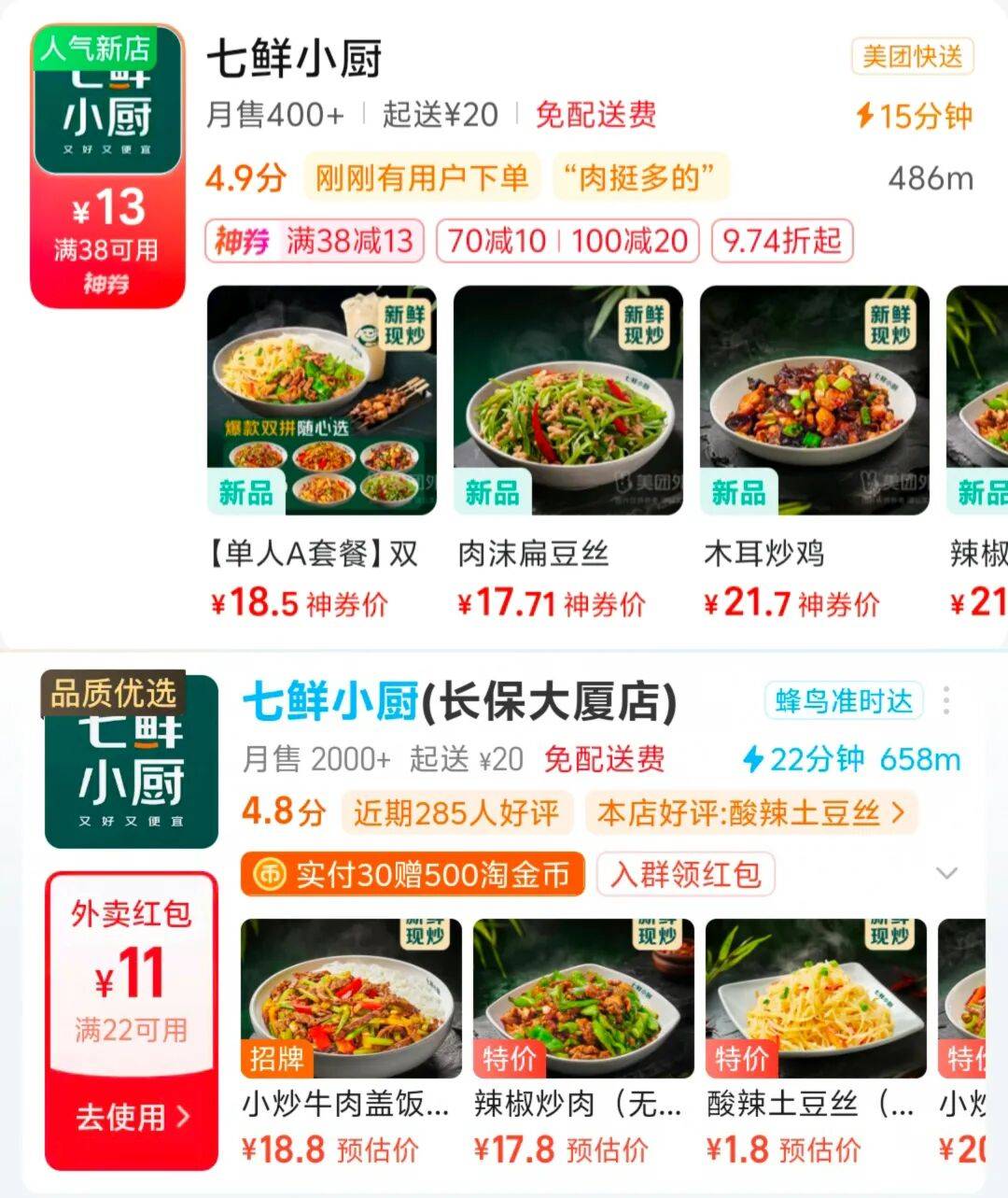
Core Insights - JD's fresh food brand Qixian Xiaochu has officially launched on Meituan and Taobao Shanguo platforms, marking a shift in the instant retail sector from "subsidy wars" to "collaborative win-win" strategies [1][3] Group 1: Company Developments - Qixian Xiaochu has shown strong performance since its launch, with Taobao Shanguo achieving over 2,000 monthly sales and Meituan reaching 400 monthly sales, earning the "popular new store" label [1] - The brand has accumulated a total of 90,000 orders since its opening on July 20, indicating a successful entry into the market [1] Group 2: Strategic Collaboration - The collaboration between JD and Meituan is driven by mutual strategic needs, with JD seeking to enhance order scale and brand exposure through Meituan's delivery network and Taobao's traffic pool [3] - Meituan aims to strengthen its product offerings by integrating JD's supply chain to better compete against platforms like Taobao Shanguo and Douyin Group Buying [3] Group 3: Industry Context - The shift towards collaboration occurs against a backdrop of rational competition in the industry, following a price war that negatively impacted restaurant revenue growth [3] - Data supports the effectiveness of the collaborative strategy, with Meituan's peak daily orders reaching 150 million and Taobao Shanguo's active buyers hitting 300 million [4] - The trend is moving from "zero-sum games" to "resource complementarity," as evidenced by the increasing presence of JD's businesses on Meituan [4]
亚洲的超级富豪们都在“买买买”哪些资产?
Jing Ji Guan Cha Bao· 2025-10-14 03:25
Core Insights - Asian ultra-high-net-worth investors possess substantial financial strength, with investment thresholds ranging from $20 million to $1 billion, and they prefer global asset allocation and long-term certainty in investments [2] Investment Philosophy - Ultra-high-net-worth investors focus on long-term asset appreciation over 20 to 30 years, rather than short-term market fluctuations [4][5] - The investment strategy emphasizes long-term certainty opportunities, such as gold and AI, rather than short-term market volatility [6] Asset Allocation - Investors diversify to mitigate risks, balancing traditional assets like gold and hedge funds with geographical diversification across regions like Japan, Singapore, Australia, and Europe [6] - Preferred alternative investments include hedge funds, private equity, real estate funds, and infrastructure funds [2] Hedge Fund Preferences - Investors favor hedge funds with strong management capabilities and risk control, such as the "Millennium" hedge fund, which employs a multi-strategy approach [7][8] - The appeal of these funds lies in their professional management and relatively low correlation with market fluctuations, offering expected annual returns of 10% to 15% [8] Stock Investment Recommendations - Investment recommendations focus on AI-related sectors, particularly companies in the supply chain like Nvidia, TSMC, ASML, and Samsung, which are seen as having strong growth potential [10] - Despite concerns about high valuations, companies like Nvidia are viewed as fundamentally sound due to their strong earnings growth and demand for their products [11] Real Estate Investment Trusts (REITs) - Ultra-high-net-worth investors show a preference for Singapore REITs, which are well-established and cover various sectors, offering annual yields of 4% to 8% [14] Gold as a Safe-Haven Asset - Gold is recommended as a strong investment due to central banks increasing their holdings, its role in inflation hedging, and its appeal during geopolitical uncertainties [15] Currency Outlook - The outlook for the US dollar is negative, with expectations of further declines due to a potential interest rate cut cycle, while other currencies like the euro, yen, and Swiss franc are monitored for investment leverage considerations [16]

白酒巨头竞相“上车”即时零售,千亿风口下的效率革命与渠道博弈
Qi Lu Wan Bao· 2025-10-13 02:46
Group 1 - Instant retail is significantly transforming the consumption landscape of liquor, particularly in the white liquor segment, with a competitive landscape formed by various models including comprehensive e-commerce platforms and niche platforms [1] - Major e-commerce giants dominate the market, with Meituan's flash purchase achieving a phenomenal performance during the "618" shopping festival, where the transaction volume of white liquor surged over 90 times within 20 hours, and daily order peaks exceeded 150 million [1] - JD's liquor platform has achieved "29-minute delivery" across its logistics network, while new player Taobao Flash Purchase has seen rapid growth, with white liquor sales increasing by 172% since its launch in May [1] Group 2 - 2025 is projected to be a pivotal year for white liquor companies as they transition from passive cooperation to actively engaging in instant retail, with industry leader Kweichow Moutai initiating deep collaborations with Taobao Flash Purchase and launching over 1,000 official stores offering "30-minute delivery" [2] - Other brands like Guotai Liquor and Nuodai Shede have also announced strategic partnerships with instant retail platforms, while Meituan Flash Purchase has launched the industry's first "full-chain authenticity system" in collaboration with major brands to address online trust issues [2] - Companies like Luzhou Laojiao are also launching their own instant retail services or deepening partnerships with platforms [2] Group 3 - The rapid channel revolution poses multiple risks, primarily the collapse of the pricing system, as e-commerce platforms use premium liquor as loss leaders, leading to significant price cuts that pressure traditional distribution channels [3] - Mid-range brands face even greater pressure, and traditional distributors are concerned about becoming mere "delivery tools" for platforms, with high platform fees and complex traffic rules squeezing their profits [3] - Trust and experience remain shortcomings in online channels, as the social, tasting, and collectible attributes of high-end liquor cannot be fully satisfied online, and counterfeit risks are a major concern for consumers [3] - Industry analysis suggests that while instant retail is a necessary response to changing consumer behavior, the ultimate goal should not be a zero-sum game between platforms and traditional channels, but rather finding a balance that protects pricing integrity and distributor interests [3]