
AWS

Search documents
电子行业点评报告:AIScale-Up趋势下,交换芯片迎千亿空间
Soochow Securities· 2025-08-18 15:09
Investment Rating - The report maintains an "Overweight" rating for the electronic industry [1] Core Insights - The AI Scale-Up trend is expected to create a market space worth hundreds of billions for switch chips by 2025 [1] - Key companies recommended for investment include Shengke Communication and Haiguang Information, with a suggestion to pay attention to Lankai Technology [2] Industry Trends - The report highlights a shift in the industry from "computing power" to "operational power" in the inference era, emphasizing the need for lower latency and higher bandwidth through Scale-Up networks [5] - The AI server market is projected to grow significantly, with a compound annual growth rate of approximately 27.2% from 2022 to 2029, leading to a doubling of the switch chip market size from 2025 to 2027 [5][11] - The estimated market size for switch chips is projected to reach approximately 49.139 billion yuan in 2025 and expand to about 102.223 billion yuan by 2027 [5][11] Company Summaries - Shengke Communication is advancing high-spec Ethernet switch chips with a maximum port rate of 800G and a switching capacity of 12.8T/25.6T, with small-scale deliveries expected in 2024 [5] - Haiguang Information is engaged in advanced packaging and high-bandwidth, low-latency Chiplet interconnect research, covering PCIe and CXL support [5] - Lankai Technology has released PCIe 6.x/CXL 3.x Retimer and has already sent samples to customers, with previous versions already in mass production [5] Valuation of Key Companies - Shengke Communication has a total market value of 38.548 billion yuan, with a closing price of 94.02 yuan and an EPS forecast of -0.07 for 2025 [6] - Haiguang Information has a total market value of 354.717 billion yuan, with a closing price of 152.61 yuan and an EPS forecast of 1.23 for 2025 [6]


这些芯片,爆火
半导体芯闻· 2025-08-18 10:48
Core Insights - Data centers are becoming the core engine driving global economic and social development, marking a new era in the semiconductor industry driven by AI, cloud computing, and large-scale infrastructure [1] - The demand for semiconductors in data centers is evolving from simple processors and memory to a complex ecosystem encompassing computing, storage, interconnect, and power supply [1] AI Surge: Arms Race in Data Centers - The explosion of artificial intelligence, particularly generative AI, is the most powerful catalyst for this transformation, with AI-related capital expenditures surpassing non-AI spending, accounting for nearly 75% of data center investments [3] - By 2025, AI-related investments are expected to exceed $450 billion, with AI servers rapidly increasing from a few percent of total computing servers in 2020 to over 10% by 2024 [3] - The global semiconductor market for data centers is projected to reach $493 billion by 2030, with data center semiconductors expected to account for over 50% of the total semiconductor market [3] GPU and ASIC Race - GPUs will continue to dominate due to the complexity and processing demands of AI workloads, with NVIDIA transforming from a traditional chip designer to a full-stack AI and data center solution provider [5] - Major cloud service providers are developing their own AI acceleration chips to compete with NVIDIA, intensifying competition in the AI chip sector [5] HBM Market Growth - The HBM market is experiencing explosive growth, expected to reach $3.816 billion by 2025, with a CAGR of 68.2% from 2025 to 2033 [6] - Key trends in the HBM market include increased bandwidth and capacity, energy efficiency, integration with AI accelerators, and the rise of standardized interfaces [6] Disruptive Technologies - Silicon photonics and co-packaged optics (CPO) are redefining data center performance and efficiency, with industry giants actively investing in this area [8] - The introduction of TFLN modulators is enhancing optical communication capabilities within data centers [9] Next-Generation Data Center Design - The shift to direct current (DC) power supply is becoming essential due to the rising power density demands of AI workloads, with modern AI racks requiring up to 600 kW [11] - Wide bandgap (WBG) semiconductor materials like GaN and SiC are crucial for high-frequency, high-voltage power conversion systems [12] - Liquid cooling technology is projected to grow at a CAGR of 14%, expected to exceed $61 billion by 2029, addressing the cooling challenges posed by high-density AI workloads [12] Advanced Thermal Management - Advanced cooling solutions, including direct chip liquid cooling and immersion cooling, are becoming necessary as traditional air cooling methods are insufficient for high-density AI workloads [13][14] - The industry is at a "thermal tipping point," necessitating fundamental adjustments in data center design to accommodate liquid cooling requirements [15] Future Outlook - The future of data centers will be characterized by increased heterogeneity, specialization, and energy efficiency, with a focus on advanced packaging technologies and comprehensive sensor systems [15]


野村:亚洲人工智能半导体与服务器报告,对人工智能持乐观态度
野村· 2025-08-18 01:00
Investment Rating - The report maintains a positive investment rating on the Asia AI semi and server supply chain, with all top picks rated as Buy [3][7][25]. Core Viewpoints - The report emphasizes a positive outlook on AI semiconductors and servers, despite a worsened risk-reward scenario compared to April 2025. The demand, supply, and catalysts are expected to favor AI growth into 2026 [3][7][30]. - Hyperscalers are increasingly optimistic about AI, with rising capital expenditure (capex) plans projected to grow by 55% year-on-year in 2025-26 [7][10][30]. - TSMC's CoWoS capacity expansion appears more disciplined than in the past, which may impact customer behaviors and the GPU/ASIC supply chain dynamics [6][30][39]. Summary by Sections AI Semi Forecast - The AI semi revenue forecast for 2026 has been raised to 55% year-on-year growth, up from approximately 30% previously, with an introduction of a 20% growth forecast for 2027 [8][39]. - nVidia is expected to maintain a 60% CoWoS capacity booking at TSMC in 2026, which may hinder ASIC growth [8][41]. Server Forecast - The forecast for nVidia's GB rack shipments has been raised from 20.1k units to 22.2k units for 2025, with an introduction of a 46k unit estimate for 2026 [9][30]. - Global server revenue growth is projected at 53% and 28% year-on-year for 2025 and 2026, respectively, with AI server revenue growth rates at 76% and 40% [9][10]. Cloud Capex Uplift - The consensus for the top five US CSPs' capex growth has been revised up from 20% to 55% year-on-year, aligning with the expected growth in nVidia's datacenter sales [10][13]. - Policies such as the One Big Beautiful Bill Act (OBBBA) and the United States–Mexico–Canada Agreement (USMCA) are expected to incentivize CSPs to invest more in capex [10][13][30]. Stocks for Action - Key stocks recommended for action include TSMC, Hon Hai, Quanta, Wiwynn, and others, all rated as Buy, with significant upside potential noted [25][20][29]. - The report highlights that AI ODMs are attractive in valuations, with specific recommendations for Wiwynn, Wistron, and Quanta based on their expected performance in the upcoming quarters [20][29]. Structural Growth Trends - The report identifies structural growth trends in PCB/CCL, power, cable, and thermal solutions, with significant upgrades expected in components and architecture from 2H26 to 2027 [21][23][27].




这些芯片,爆火
半导体行业观察· 2025-08-17 03:40
Core Insights - Data centers are becoming the core engine driving global economic and social development, marking a new era for the semiconductor industry, driven by AI, cloud computing, and large-scale infrastructure [2] - The demand for chips in data centers is evolving from simple processors and memory to a complex ecosystem encompassing computing, storage, interconnect, and power supply [2] AI Surge: The Arms Race in Data Centers - The explosion of artificial intelligence, particularly generative AI, is the strongest catalyst for this transformation, with AI-related capital expenditures surpassing non-AI spending, accounting for nearly 75% of data center investments [4] - By 2025, AI-related investments are expected to exceed $450 billion, with AI servers rapidly increasing from a few percent of total computing servers in 2020 to over 10% by 2024 [4] - Major tech giants are engaged in a fierce "computing power arms race," with companies like Microsoft, Google, and Meta investing hundreds of billions annually [4] - The data center semiconductor market is projected to expand significantly, reaching $493 billion by 2030, with data center semiconductors expected to account for over 50% of the total semiconductor market [4] Chip Dynamics: GPU and ASIC Race - GPUs will continue to dominate due to the increasing complexity and processing demands of AI workloads, with NVIDIA transforming from a traditional chip designer to a full-stack AI and data center solution provider [7] - Major cloud service providers are developing their own AI acceleration chips to compete with NVIDIA, intensifying competition in the AI chip sector [7] - High Bandwidth Memory (HBM) is becoming essential for AI and high-performance computing servers, with the HBM market expected to reach $3.816 billion by 2025, growing at a CAGR of 68.2% from 2025 to 2033 [8] Disruptive Technologies: Redefining Data Center Performance - Silicon photonics and Co-Packaged Optics (CPO) are key technologies addressing high-speed, low-power interconnect challenges in data centers [10] - The adoption of advanced packaging technologies, such as 3D stacking and chiplets, allows semiconductor manufacturers to create more powerful and flexible heterogeneous computing platforms [12] - The shift to direct current (DC) power supply is becoming essential due to the rising power density demands of modern AI workloads, with power requirements for AI racks expected to reach 50 kW by 2027 [13] Cooling Solutions: Liquid Cooling Technology - Liquid cooling technology is becoming a necessity for modern data centers, with the market projected to grow at a CAGR of 14%, exceeding $61 billion by 2029 [14] - Various types of liquid cooling methods, including Direct Chip Liquid Cooling (DTC) and immersion cooling, are being adopted to manage the heat generated by high-performance AI chips [15] - Advanced thermal management strategies, including software-driven dynamic thermal management and AI model optimization, are crucial for maximizing future data center efficiency [16] Future Outlook - The future of data centers will be characterized by increasing heterogeneity, specialization, and energy efficiency, with chip design evolving beyond traditional CPU/GPU categories [17] - Advanced packaging technologies and efficient power supply systems will play a critical role in shaping the next generation of green and intelligent data centers [17]

Quantum Stocks Q2 2025: Are D-Wave, IonQ & Rigetti Funding the Future?
ZACKS· 2025-08-15 18:01
Industry Overview - The quantum computing industry is characterized by strong sales but significant losses, with profitability still a distant goal for companies like D-Wave Quantum, IonQ, and Rigetti Computing [1] - Cash reserves are crucial for funding future advancements in quantum technology, with companies focusing on scaling operations and pursuing strategic acquisitions [11] D-Wave Quantum - D-Wave Quantum reported a 42% year-over-year revenue increase, driven by sales of its Advantage2 quantum processing units and new contracts with major clients like GE Vernova and Nikon [2][4] - The company ended the quarter with a record cash position of $819.3 million, a 1,900% increase year-over-year, allowing for aggressive R&D and market expansion [4] - D-Wave is collaborating with NASA on advanced technology and aims to develop a 100,000-qubit system, reinforcing its leadership in annealing quantum computing [3][4] IonQ - IonQ exceeded revenue guidance by 15%, supported by significant partnerships, including a $22 million deal for a commercial quantum hub and advancements in drug development [5][6] - Despite a net loss of $177.5 million, IonQ's cash position improved to $1.6 billion following a $1 billion equity investment, providing a strong foundation for future growth [6] - The company is focused on integrating new technologies and scaling its operations to achieve 800 logical qubits by 2027 and 80,000 by 2030 [6] Rigetti Computing - Rigetti's revenues showed sequential growth but declined year-over-year due to the expiration of the U.S. National Quantum Initiative, leading to a narrower gross margin of 31% [7][10] - The company raised $350 million in equity, increasing its cash reserves to $571.6 million, which will support R&D and commercial operations [10] - Rigetti aims to leverage its superconducting qubit technology to achieve a 100-plus qubit system with high gate fidelity by the end of 2025, a critical step towards profitability [10]





Experis Named Leader in Everest Group's 2025 U.S. IT Contingent Talent and Strategic Solutions PEAK Matrix® Assessment
Prnewswire· 2025-08-14 13:31
Core Insights - Experis has been recognized as a Leader in Everest Group's U.S. IT Contingent Talent and Strategic Solutions PEAK Matrix® Assessment for the fourth consecutive year, highlighting its strong market position and service offerings [1][5]. Company Overview - Experis is a global leader in technology workforce solutions, part of the ManpowerGroup family, focusing on attracting, assessing, and placing specialized technology talent [6][9]. - The company provides extensive training and development programs through Experis Academy and operates Specialized Centers of Excellence (COEs) to enhance domain expertise [6][8]. Service Offerings - Experis delivers talent across various domains, including application, infrastructure, data, and automation services, serving key industries such as banking, financial services, insurance, manufacturing, wholesale and retail trade, and healthcare [3][4]. - The company emphasizes managed services and specialized practice areas, including tech transformation strategy, enterprise applications, cloud and infrastructure, digital workspace, and cybersecurity [3][4]. Strategic Focus - Experis has a significant focus on leveraging AI, analytics, and automation to improve client and candidate experiences, utilizing proprietary platforms like the Experis PowerSuite™ technology stack [4][7]. - The company has made strategic investments to strengthen its offerings and maintain resilience in a challenging staffing market [4][5]. Recognition and Assessment - The PEAK Matrix® Assessment evaluates contingent staffing providers based on market success, delivery capability, vision and strategy, innovation, investments, and delivery footprint, with Experis being one of only seven companies recognized as a Leader out of 30 assessed [5].



Pegasystems (PEGA) FY Conference Transcript
2025-08-13 19:02
Summary of Pegasystems (PEGA) FY Conference - August 13, 2025 Company Overview - **Company**: Pegasystems (PEGA) - **Industry**: Software, specifically focusing on AI-powered workflow and decisioning platforms for large enterprises Core Points and Arguments 1. **Business Model and Clientele**: Pegasystems primarily serves large enterprises across various sectors, including financial services, health insurance, and government agencies. The company emphasizes the importance of structured workflows and decision-making processes in its offerings [4][8][10]. 2. **AI Integration**: The company has been incorporating AI into its platform since 2010, focusing on statistical AI and more recently generative AI. This integration aims to enhance workflow design and execution, allowing for real-time decision-making [11][12][13]. 3. **Market Positioning**: Pegasystems believes that while some SaaS companies may face challenges due to generative AI, its focus on structured processes and explainable decision-making will protect it from such risks. The company sees generative AI as a tool to enhance its existing capabilities rather than a threat [15][16][20]. 4. **Blueprint Technology**: The introduction of the Blueprint technology has led to over 100,000 blueprints created by customers, indicating strong interest and engagement. This technology is expected to accelerate delivery cycles and improve outcomes for clients [27][28]. 5. **Legacy Application Replacement**: The push from companies like SAP for cloud migration is driving clients to replace legacy systems. Pegasystems positions itself as a solution for businesses needing to modernize their applications [31][32][33]. 6. **Financial Performance and Goals**: The company has transitioned from a perpetual licensing model to a subscription model, with over 50% of its Annual Contract Value (ACV) now from cloud services. The goal is to achieve $700 million in revenue and free cash flow by 2028, with current free cash flow margins approaching 30% [40][43][46]. 7. **Partnerships**: Pegasystems has formed strategic partnerships with AWS and Google to enhance its market reach and capabilities in legacy transformation and modernization [51][52][53]. 8. **Public Sector Opportunities**: The company identifies significant opportunities in the public sector, where many agencies still rely on outdated technology. There is a growing demand for modernization to improve constituent services [58][61][63]. Additional Important Insights 1. **Market Trends**: The top three trends identified in the industry are AI, cloud, and transformation, with a noted connection between AI advancements and the need for digital transformation [37][38]. 2. **Sales Transformation**: Pegasystems has undergone a sales transformation to improve efficiency and effectiveness, contributing to its current financial health [42][43]. 3. **Future Outlook**: The company is optimistic about its unique position in the market, driven by its differentiated technology and the potential for significant growth in various sectors, particularly in government and public services [66][67]. This summary encapsulates the key discussions and insights from the Pegasystems FY Conference, highlighting the company's strategic direction, market positioning, and future growth opportunities.

沪指突破“924”行情高点 题材延续活跃
Sou Hu Cai Jing· 2025-08-13 06:58
Market Overview - The market experienced a strong upward trend, with the Shanghai and Shenzhen stock exchanges recording a total transaction volume of 1.88 trillion, an increase of 54.5 billion compared to the previous trading day [1] - The market showed a mixed performance with over 3100 stocks declining, while sectors such as semiconductors, ports, and CPO saw significant gains, whereas sectors like PEEK materials, rare earth permanent magnets, and military industries faced declines [1][4] Policy Developments - The Ministry of Finance and other departments issued a policy for personal consumption loan interest subsidies, covering loans under 50,000 and key areas such as home appliances, automotive, and education, with a subsidy rate of 1% and a cap of 50% of the loan interest rate [1] - A separate policy for service industry loan interest subsidies was also announced, allowing for a maximum loan amount of 1 million with a similar subsidy rate and duration [1] Industry Insights - According to CITIC Securities, the medical device industry is at a turning point, with a focus on companies that are expected to see high growth in Q2 or Q3, and those with strong international capabilities and long-term growth potential [2] - The liquid cooling server market is projected to grow significantly, with estimates suggesting a market size of approximately 35.4 billion, 71.6 billion, and 108.2 billion from 2025 to 2027, respectively, and a compound annual growth rate of about 48% in China's liquid cooling server market from 2025 to 2029 [3] - Domestic liquid cooling companies are expected to excel in technology, product quality, and service, indicating strong potential for international expansion [3]
AI 产品定价指南:按量定价的卡点到底是什么?
Founder Park· 2025-08-11 15:10
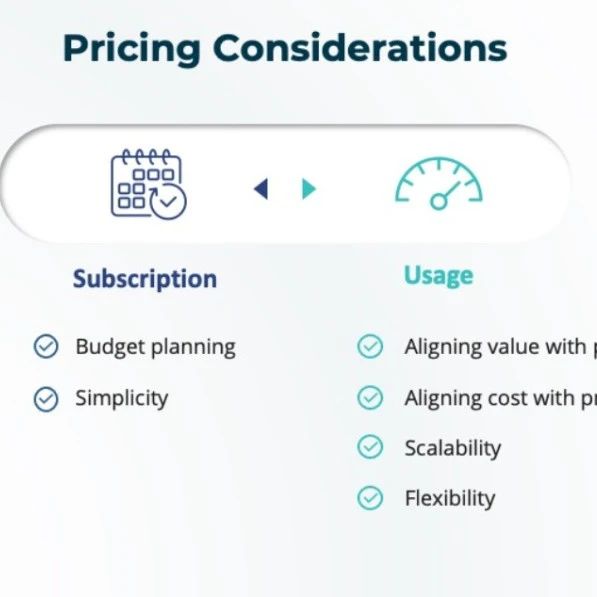
Core Viewpoint - AI is fundamentally changing the pricing logic of software, shifting from traditional seat-based pricing to usage-based or outcome-based pricing models [2][11][20]. Group 1: AI Pricing Transformation - The traditional seat pricing model is becoming less viable as AI increases efficiency, leading to fewer users and a need for new pricing strategies [11][12]. - Implementing usage-based pricing faces challenges such as the need for real-time billing systems, dynamic pricing models, and maintaining large volumes of accurate data [3][15]. - Pricing models for AI products can be analyzed based on attribution capability and autonomy, with stronger attribution and autonomy leading to greater pricing power [32][36]. Group 2: CEO Considerations for Pricing Transition - CEOs must focus on sales compensation structures and the division of sales responsibilities when transitioning to usage-based pricing [3][22]. - A hybrid business model, combining seat pricing and usage-based pricing, is expected to dominate in the coming years, especially for application-level products [3][13]. - The sales team's role must evolve to ensure that actual usage aligns with revenue recognition, avoiding the pitfalls of recording false revenue [22][23]. Group 3: Challenges in Implementing Usage-Based Pricing - Real-time monitoring is essential to manage the risk of unlimited spending in usage-based pricing models, as seen in cases like Segment [15][16]. - The dynamic nature of pricing models complicates the creation of a universal billing engine, as contracts often vary significantly [15][16]. - Maintaining a reliable data chain is crucial for accurate historical data storage, which is necessary for future pricing adjustments [15][16]. Group 4: Strategic Importance of Usage-Based Pricing - Usage-based pricing directly ties revenue to the value created for customers, allowing for a more flexible and responsive business model [17][20]. - Sales commissions in usage-based models must be adjusted to align with actual product usage, preventing cash flow mismatches [18][22]. - The integration of value creation across departments is essential for the success of usage-based pricing, requiring a shift in company culture and operations [19][21]. Group 5: Future of Pricing Models - The trend is moving towards a mixed pricing strategy, with a significant portion of companies expected to adopt outcome-based pricing in the next few years [37][49]. - Companies must enhance their products' autonomy and attribution capabilities to unlock greater commercial value [37]. - The evolution of pricing models reflects a broader shift in the industry, where agility and adaptability are key to maintaining competitive advantage [43][49].
GPT-5再提升推理效率,液冷板块高景气度维持
SINOLINK SECURITIES· 2025-08-10 07:49
Investment Rating - The report suggests a positive outlook on the AI-driven sectors, particularly in servers and IDC, as well as overseas AI developments in servers and optical modules [4]. Core Insights - The release of OpenAI's GPT-5 has significantly reduced reasoning costs, which is expected to facilitate the widespread adoption of AI technologies. GPT-5 shows a 50-80% reduction in token output compared to its predecessor, enhancing performance [1][6]. - Amphenol's acquisition of Commscope's connectivity and cable solutions business for $10.5 billion reinforces the trend of "optical fiber replacing copper," indicating a favorable outlook for MPO optical connector suppliers like Taicheng [1][8]. - The strong performance of Weidi Technology in Q2 2025, with an EPS of $0.95 and revenue of $2.64 billion, reflects the growing demand for liquid cooling solutions driven by the large-scale shipment of GB200 and GB300 servers [1][14]. - China Mobile's H1 2025 results show a revenue of CNY 543.77 billion, a slight decrease of 0.5% year-on-year, but a net profit increase of 5.0% to CNY 84.24 billion, highlighting the company's strong dividend value and strategic investment in AI computing power [1][52]. Summary by Sections Communication Sector - The North American AI model updates continue to drive strong demand for computing power, with OpenAI's GPT-5 and Google DeepMind's Genie 3 significantly impacting the industry [1][6]. - The telecom business revenue for the first half of 2025 reached CNY 905.5 billion, showing a year-on-year growth of 1% [3][16]. Sub-sectors - **Servers**: The server index decreased by 0.13% this week, but the ongoing updates in AI models are expected to boost demand for server manufacturers like Industrial Fulian [2][11]. - **Optical Modules**: The optical module index increased by 0.37% this week, with Amphenol's acquisition of Commscope reinforcing the trend of optical fiber technology [2][8]. - **Liquid Cooling**: Weidi Technology's Q2 2025 performance exceeded expectations, driven by the demand for liquid cooling solutions as server shipments increase [2][14]. Key Data Updates - The capital expenditures of major cloud companies like Microsoft, Google, Meta, and Amazon in Q2 2025 were substantial, indicating a strong investment trend in AI and cloud infrastructure [3][16].
