
中国生物制药

Search documents
久违爆发!港股通创新药ETF(520880)急速飙升4%!国家药监局:2025年我国创新药对外授权超1300亿美元
Xin Lang Cai Jing· 2026-01-05 02:33
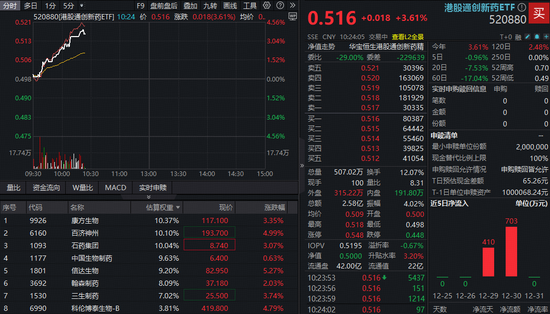
Core Viewpoint - The Hong Kong Stock Connect innovative drug sector experienced a significant rally, with leading stocks such as BeiGene and Innovent Biologics rising nearly 5% and over 5% respectively, indicating strong market interest in innovative pharmaceuticals [1][7]. Group 1: Market Performance - The Hong Kong Stock Connect innovative drug ETF (520880) opened with a continuous rise, peaking at over 4% increase, with a trading volume of 258 million yuan, surpassing the previous trading day's total [1][8]. - Major stocks in the innovative drug sector, including BeiGene, Innovent Biologics, and CSPC Pharmaceutical Group, saw increases of nearly 5% and over 3% respectively, reflecting a positive market sentiment [1][7]. Group 2: Regulatory and Market Developments - The National Medical Products Administration reported that 76 innovative drugs were approved for market in China in 2025, significantly exceeding the 48 approved in 2024, marking a historical high [1][10]. - The total value of authorized transactions for innovative drugs in China exceeded $130 billion in 2025, with over 150 transactions, also setting a new record [1][10]. Group 3: Investment Insights - Analysts from Zhongyou Securities suggest that the maturity of clinical data will be a key driver for the innovative drug market in 2026, with business development (BD) expected to enhance the competitiveness of domestic new drugs [3][10]. - The current period is viewed as an optimal configuration window for the Hong Kong Stock Connect innovative drug sector, following a three-month adjustment that began in September 2025 [3][10]. - The Hong Kong Stock Connect innovative drug ETF (520880) and its associated funds track the Hang Seng Hong Kong Stock Connect Innovative Drug Select Index, which boasts significant advantages such as comprehensive coverage of innovative drug companies and a high concentration of leading firms [3][10]. Group 4: ETF Composition - The top ten holdings in the Hong Kong Stock Connect innovative drug ETF account for over 72% of the total weight, highlighting the dominance of leading companies in the sector [4][11]. - Key constituents include BeiGene (11.51% weight), Innovent Biologics (10.19%), and China Biologic Products (9.47%), among others, indicating a strong representation of major players in the innovative drug market [4][11]. Group 5: Alternative Investment Options - For investors seeking exposure to innovative drugs while mitigating volatility, the unique A-share drug ETF (562050) is recommended, which focuses on the top 50 A-share pharmaceutical companies, balancing innovative drugs with traditional Chinese medicine [4][12].

2025年度医药业绩前瞻
2026-01-04 15:35
Summary of Pharmaceutical Industry Conference Call Industry Overview - The pharmaceutical industry is projected to rank 18th among 31 primary industries in 2024, with an increase of 11.94%. However, the overall performance has been average, with a recent decline of 2% ranking it 28th among the same industries [2][4]. - The innovative drug sector is showing signs of recovery after four years of a bear market, while other sectors are gradually overcoming negative impacts from cost control measures [3][4]. Key Insights Innovative Drugs - Despite a low market sentiment, the innovative drug sector is experiencing continuous improvements, with significant industry benefits such as the $100 million upfront payment for Zai Lab's CD3DL3 tri-antibody product licensed to AbbVie [3][5]. - Recommended companies for investment in the innovative drug space include Innovent Biologics, China National Pharmaceutical Group, and Lepu Biopharma, all of which have low-risk clinical data or licensing agreements [6]. Medical Devices - The medical device sector is nearing the end of inventory destocking, with expectations for improved quarterly performance in 2026. Significant growth in bidding volumes is anticipated [3][6]. - Key companies to watch include Aohua, Carrier, Mindray, and United Imaging, particularly in high-value consumables like electrophysiology and neurosurgery [6][7]. Traditional Chinese Medicine (TCM) - The TCM sector is expected to recover gradually from Q2 2025 to Q1 2026, with hospital-based TCM likely to lead the recovery [9][10]. - The impact of the "15th Five-Year Plan" and the addition of essential drug lists are seen as potential benefits for the sector [9][11]. CRO and API Sectors - The CRO sector is performing well, with companies like WuXi AppTec and Pharmaron expected to see continued growth in orders and revenue [12]. - The API sector is closely tied to manufacturing trends, with companies like Tianyu Co., Starlight, and Tonghe expected to reach performance inflection points by 2026 [12][13]. Performance Expectations for 2025 - The pharmaceutical industry is expected to show a mixed performance in 2025, with notable growth in specific companies: - New Biotech's innovative product revenue is projected to grow over 50% - Yuan Dong's net profit growth is expected to be between 15%-20% - Tonghua Dongbao's revenue growth is anticipated at 40%-50% [15]. Conclusion - The pharmaceutical industry is navigating a complex landscape with varying performance across sectors. The innovative drug and medical device sectors present significant investment opportunities, while TCM is on the cusp of recovery. The CRO and API sectors are also positioned for growth, making them attractive for investors looking for potential returns in the coming years.
1357亿美元!2025中国创新药BD出海创纪录
Xin Lang Cai Jing· 2026-01-04 11:30
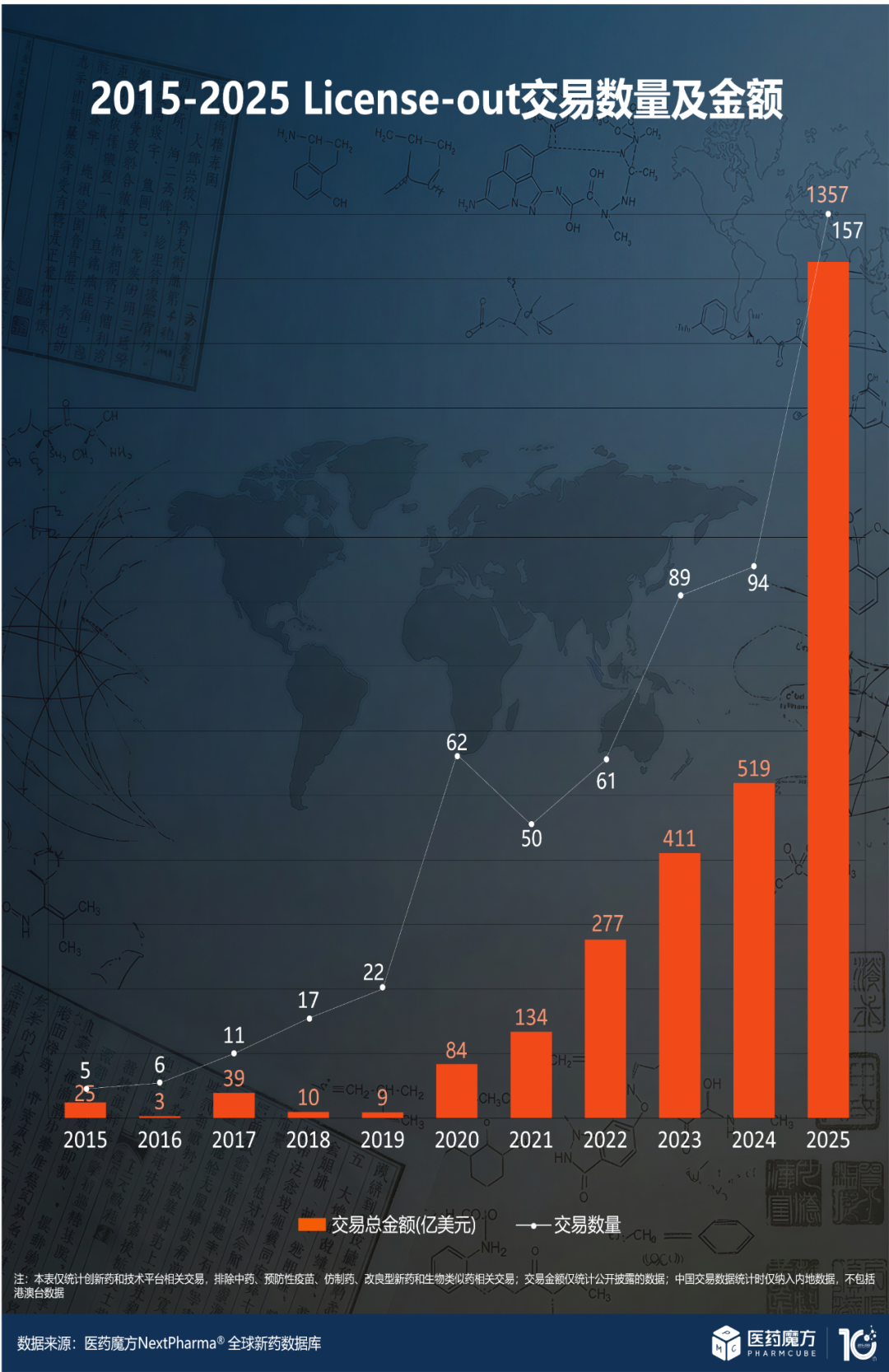
Core Insights - In 2025, China's innovative drug BD transactions reached a record high, with a total transaction amount of $135.655 billion, including $7 billion in upfront payments and 157 deals, marking a significant milestone for the industry [1][14][17] Group 1: Transaction Highlights - December alone saw 15 overseas licensing deals with a potential total value exceeding $16 billion, concluding the year on a high note [1][14] - The trend of milestone payments is emerging, with several companies triggering these payments, indicating the strength of Chinese innovative drugs [4][19] - Notable milestone payments include $11 million from AstraZeneca for a joint therapy approval and $30 million from Instil for a clinical trial initiation [21][22] Group 2: Evolving Collaboration Models - The BD transaction landscape is diversifying, moving from "Newco" models to "Co-Co" (co-development and co-commercialization) partnerships, reflecting a shift in strategy among Chinese pharmaceutical companies [9][25] - A landmark deal between Innovent Biologics and Takeda, valued at $11.4 billion, exemplifies the "Co-Co" model, allowing shared development costs and profits [26][27] - The "Newco" model remains prevalent, with 9 such transactions recorded in 2025, showcasing the continued appeal of equity-linked collaborations [28] Group 3: Industry Implications - The increase in milestone payments not only alleviates cash flow pressures for companies but also signifies progress in global development efforts [5][19] - The successful execution of these transactions is expected to enhance global trust in Chinese innovative drugs, paving the way for more overseas collaborations [24] - The evolution of collaboration models indicates a growing confidence and negotiation power of Chinese pharmaceutical companies in the global market [10][27]
港股创新药龙头,获高管连续增持
Zheng Quan Shi Bao Wang· 2026-01-04 07:06
Group 1 - The core viewpoint of the news is that China Biologic Products Holdings (01177.HK) has seen significant insider buying from its executive director, demonstrating confidence in the company's long-term growth potential [1] - Executive Vice President Xie Xin purchased 1 million shares at an average price of HKD 6.4068 per share, totaling approximately HKD 6.4068 million, increasing his total holdings to 361 million shares, representing 1.92% of the company [1] - This marks Xie Xin's third purchase since July 2025, with previous acquisitions in July and August 2025 at average prices of HKD 6.47 and HKD 7.36 per share, respectively, indicating a total investment of over HKD 20 million in the past six months [1] Group 2 - The company announced that its innovative drug pipeline has achieved significant milestones since December last year, including the approval of the breast cancer drug Kemosil Capsules, the first global CDK2/4/6 inhibitor [2] - The oral GLP-1 receptor agonist TQF3250 for weight loss has received clinical application approvals from both the National Medical Products Administration (NMPA) in China and the U.S. Food and Drug Administration (FDA) [2] - The TYK2/JAK1 inhibitor TQH3906 has shown positive progress in Phase II clinical trials for plaque psoriasis, and the ROCK2 inhibitor TDI01 has enrolled its first patient in a Phase III clinical trial for idiopathic pulmonary fibrosis, marking it as the first globally to enter this stage [2]

华创医药投资观点&研究专题周周谈·第157期:2025年度医药业绩前瞻-20260104
Huachuang Securities· 2026-01-04 05:22
Investment Rating - The report maintains a "Recommended" rating for several companies in the healthcare sector, including Weili Medical, Zhend Medical, Aohua Endoscopy, and others [33]. Core Insights - The report highlights a shift in the innovative drug sector from quantity to quality, emphasizing the importance of differentiated products and internationalization for future profitability [11]. - The medical device sector is experiencing a recovery in bidding volumes, particularly in imaging equipment, and is expected to benefit from government subsidies for home medical devices [11][19]. - The life sciences service sector is showing signs of recovery, with increasing demand driven by both domestic and international markets [23]. - The pharmacy sector is poised for growth due to the acceleration of prescription outflow and an improving competitive landscape [24]. Summary by Sections Market Review - The report notes a 2.02% decline in the CITIC Medical Index, underperforming the CSI 300 Index by 1.44 percentage points, ranking 27th among 30 sectors [7]. Innovative Drugs - The innovative drug sector is expected to see a significant increase in the number of products launched, with projections of over 30 products by 2027, and a revenue share from innovative products expected to exceed 50% by 2025 [15]. Medical Devices - The report identifies a recovery in bidding for imaging devices and highlights the potential for domestic companies to increase market share through product upgrades and international expansion [19][20]. Life Sciences Services - The life sciences service sector is anticipated to benefit from a recovery in overseas demand and an increase in domestic industrial demand, with a focus on mergers and acquisitions to strengthen market positions [23]. Pharmacies - The pharmacy sector is expected to benefit from the acceleration of prescription outflow and an improved competitive landscape, with recommendations to focus on leading pharmacy chains [24]. Traditional Chinese Medicine - The report emphasizes the importance of basic medicines and state-owned enterprise reforms, suggesting a focus on companies like Kunming Pharmaceutical and Kangyuan Pharmaceutical [27]. Medical Services - The report recommends focusing on companies with national expansion capabilities in the medical services sector, particularly those in traditional Chinese medicine and ophthalmology [26]. Blood Products - The blood products sector is expected to see growth due to relaxed approval processes for plasma stations and an increase in product offerings [12].
是否安全?怎么接种?哪些人群可以接种……“加强针”热点问题 请看权威解答
Si Chuan Ri Bao· 2026-01-04 03:58
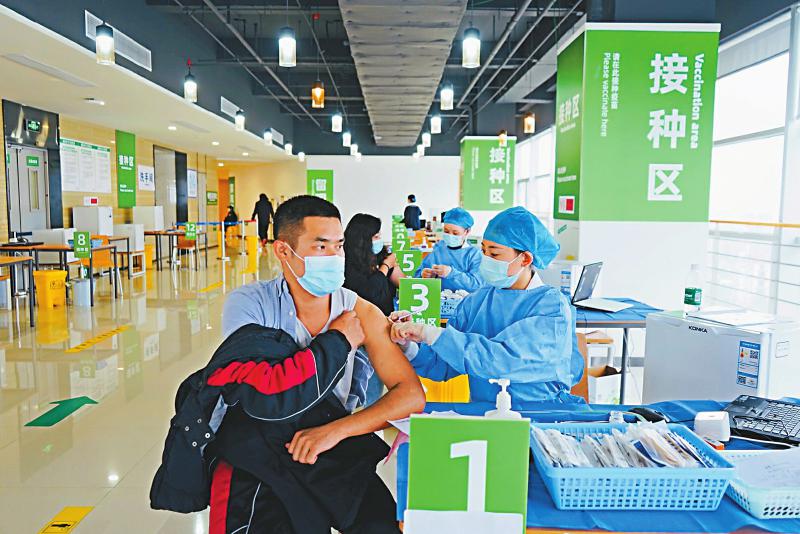
Core Viewpoint - Chengdu has officially launched the COVID-19 vaccine booster shot program as part of a unified national and Sichuan provincial deployment [3] Group 1: Importance of Booster Shots - The neutralizing antibody levels decrease over time after vaccination, leading to reduced protection; administering a booster can significantly enhance immunity, with studies showing a more than tenfold increase in antibody levels after a third dose six months post the second dose [4] Group 2: Safety of Booster Shots - The types and incidence of adverse reactions following the booster shot are not significantly different from those observed during the initial vaccination series, confirming that the booster is safe and effective [5] Group 3: Eligibility for Booster Shots - Individuals aged 18 and above who have completed the full vaccination with inactivated COVID-19 vaccines or received one dose of adenovirus vector vaccines at least six months prior are eligible for the booster. Priority is given to high-risk groups, including healthcare workers, customs officials, and those in essential services [6][7] Group 4: Administration of Booster Shots - Individuals who received two doses of the same inactivated vaccine should receive the same vaccine for the booster. If different inactivated vaccines were used, the same vaccine as the second dose is preferred for the booster, with alternatives available if necessary [8] Group 5: Co-administration with Other Vaccines - It is currently not recommended to administer the COVID-19 vaccine simultaneously with other vaccines, with a minimum interval of 14 days suggested between COVID-19 and other vaccinations, except in specific cases such as rabies or tetanus vaccines [10]
中国生物制药高管连续增持,创新药接连报捷
Zheng Quan Shi Bao Wang· 2026-01-04 03:57
Group 1 - The core point of the news is that China Biologic Products (01177.HK) has seen significant insider buying from its executive director, demonstrating confidence in the company's long-term development [1] - Executive Vice President Xie Xin purchased 1 million shares at an average price of HKD 6.4068 per share, totaling approximately HKD 6.4068 million, increasing his holdings to 361 million shares, representing 1.92% of the company [1] - This marks Xie Xin's third purchase since July 2025, with previous purchases made at average prices of HKD 6.47 and HKD 7.36, indicating a total investment of over HKD 20 million in the past six months [1] Group 2 - The mid-year report for 2025 indicates that China Biologic Products' innovative transformation is showing significant results, with expectations that revenue from innovative products will exceed 50% of total revenue [2] - The company has achieved several milestones since December last year, including the approval of the breast cancer innovative drug Kemosil capsules, which is the world's first CDK2/4/6 inhibitor [2] - Other notable advancements include the clinical application approvals for the oral GLP-1 receptor agonist TQF3250 for weight loss by both the NMPA and FDA, and positive progress in the phase II clinical trial of the TYK2/JAK1 inhibitor TQH3906 for plaque psoriasis [2]
华创医药周观点:2025年度医药业绩前瞻 2026/01/04
华创医药组公众平台· 2026-01-04 03:38
Market Overview - The CITIC Pharmaceutical Index decreased by 2.02%, underperforming the CSI 300 Index by 1.44 percentage points, ranking 27th among 30 primary industries [8] - The top ten stocks with the highest gains this week include Duorui Pharmaceutical, Maillande, and Xiangyu Medical, while the top ten stocks with the largest declines include *ST Changyao and Shuyupingmin [8][37] Overall View and Investment Themes - The domestic innovative drug industry is transitioning from quantity logic to quality logic, emphasizing differentiated and internationalized pipelines, with a focus on products that can generate profits [11] - In the medical device sector, there is a notable recovery in bidding volumes for imaging equipment, and the home medical device market is benefiting from subsidy policies [11] - The CXO and life sciences services sector is expected to see a rebound in overseas investment and a bottoming out of domestic investment, indicating a potential upturn in the innovation chain [11] - The specialty raw materials pharmaceutical industry is anticipated to experience a new growth cycle, with a focus on the impact of patent expirations on new product volumes [11] Specific Industry Insights Innovative Drugs - The company has significantly increased its pipeline, with the number of innovative products rising from 3 to 18 since 2022, and plans to launch an average of 5 innovative products annually over the next three years [15][16] - The revenue share from innovative products is expected to exceed 50% by 2025, driven by a robust pipeline and strategic partnerships [15][16] Medical Devices - The orthopedic market is projected to grow due to aging demographics and increased surgery penetration, with domestic companies benefiting from the acceleration of local replacements [17] - The IVD market, particularly in chemiluminescence, is expected to grow rapidly, with domestic brands increasing their market share through competitive pricing and improved product offerings [18] Life Sciences Services - The life sciences services sector is recovering, with demand expected to rise in both domestic and overseas markets, driven by increased investment in biopharmaceuticals [24] - The industry is characterized by low penetration rates and a trend towards domestic substitution, with significant opportunities for growth through mergers and acquisitions [24] Traditional Chinese Medicine and Medical Services - The traditional Chinese medicine sector is expected to benefit from policy changes and an aging population, with a focus on unique therapeutic areas and high-dividend stocks [26][31] - The medical services sector is anticipated to improve due to anti-corruption measures and the expansion of commercial insurance, enhancing the competitiveness of private healthcare providers [26] Investment Recommendations - The company recommends focusing on the pharmacy sector due to the acceleration of prescription outflow and the optimization of competitive dynamics, suggesting that the pharmacy sector is poised for recovery [25] - In the medical device sector, attention is drawn to companies that are well-positioned to benefit from domestic substitution and technological advancements [19]
叮当健康"敏捷上架"创新抗癌药赛坦欣 "生命方舟计划"加速药品可及性
Ge Long Hui· 2026-01-04 02:56
Core Insights - China Biopharmaceutical's innovative drug, Moxifloxacin capsules (brand name: Saitanxin), has been officially launched in Dingdang Health's pharmacies just two weeks after receiving market approval, providing a significant new treatment option for patients with relevant indications [1] Group 1 - Dingdang Health achieved a remarkable speed in bringing new products to market, completing the entire process from product introduction to official sales in just 7 days [1] - The efficiency of Dingdang Health's new product launch is attributed to its "Agile Solutions for Drug Accessibility," which integrates internal business, quality control, operations, and technology platforms to create a "green channel" for new product launches [1] - Dingdang Health's specialized pharmacies are equipped with dedicated pharmacist teams that offer medication guidance and comprehensive health management services throughout the patient's health journey, ensuring patients not only "get the medication" but also "manage their health well" [1] Group 2 - Starting from April 2025, Dingdang Health will launch the "Life Ark Plan" to address the urgent needs of patients for various new specialty drugs, focusing on major disease areas such as oncology, rare diseases, endocrinology, and autoimmune diseases [1] - The company aims to build a professional drug solution framework by deepening collaborations with pharmaceutical companies and leveraging its online digital capabilities along with professional teams of doctors and pharmacists to ensure that cutting-edge drugs and treatment plans efficiently and accurately reach patients nationwide [1]
定期报告:节后春季行情进行中聚焦成长
Huajin Securities· 2026-01-04 02:01
1. Report Industry Investment Rating No relevant content provided. 2. Core Viewpoints of the Report - This year after the New Year's Day, the A - share spring market is underway and may be volatile and bullish, affected by factors such as policy implementation, liquidity, and the performance of the Hong Kong stock market [1][4][7]. - After the holiday, technology growth and some cyclical industries may be relatively dominant, with continuous upward industrial trends and policy support [1][26]. - After the holiday, it is recommended to continue to allocate industries such as technology, some cyclical and consumer sectors on dips [1][38][46]. 3. Summary by Relevant Catalogs 3.1 Post - holiday Spring Market is Underway 3.1.1 Factors Affecting Post - holiday A - share Movement - Since 2010, in 11 out of 16 years, the Shanghai Composite Index showed the same upward or downward trend in the 10 trading days before and after the holiday. The post - holiday short - term market performance is affected by policies, external events, liquidity, and the performance of the Hong Kong stock market [1][4]. - Positive policies and external events may lead to a short - term rise in the post - holiday A - shares, while tight policies or negative external events may result in weak performance. Liquidity also plays a key role, and the performance of the Hong Kong stock market during the holiday has a certain impact on the post - holiday A - shares [4]. 3.1.2 This Year's A - share Spring Market is Underway and May be Volatile and Bullish - Positive policies may continue to be implemented after the holiday, and external risks may be limited. The "two new" policies are accelerating implementation, local two - sessions may be held intensively, and consumption - stimulating policies may be introduced. Externally, the Fed may cut interest rates in January, Sino - US relations may remain stable, and geopolitical conflicts may ease [7][8]. - Post - holiday short - term liquidity may be further relaxed. Overseas, the Fed is likely to cut interest rates, and the RMB exchange rate may be strong. Domestically, the central bank may cut interest rates and reserve requirements. Also, stock market funds may accelerate inflow [9]. - The Hong Kong stock market performed strongly during the New Year's Day holiday, which may boost the post - holiday A - shares. The correlation coefficient between the Hong Kong stock market's rise and fall during the New Year's Day holiday and the Shanghai Composite Index's rise and fall in the 10 trading days after the holiday is about 0.5 [18][19]. - The post - holiday economy and corporate profits are still in weak recovery. The economy is in a weak recovery state, and corporate profits may continue to recover, although the industrial enterprise profits in November continued to decline [21]. 3.2 Industry Allocation: Focus on Growth after the Holiday 3.2.1 Technology Growth and Some Cyclical Industries May be Relatively Dominant after New Year's Day - Historically, policy and industrial trends drive pre - holiday strong industries to maintain their strength after the holiday. Pre - holiday leading industries may switch due to high sentiment or market adjustments. Industries with continuous strength around the New Year's Day usually have a relatively low historical quantile of trading volume [26]. - This year, the industrial trends of technology growth and some cyclical industries may continue to rise after the holiday. The pre - holiday leading cyclical industries have neutral - low sentiment, while the technology growth industries have high sentiment [26]. 3.2.2 Currently, the PEG of Electric Power, Media, and Automobile is Low - Among the primary growth industries, the predicted PEG of electric power equipment, media, and automobile is relatively low, at 0.64, 0.86, and 1.13 respectively. The historical quantiles of trading volume of medicine, computer, media, and automobile are low [40]. - Among the secondary growth industries, the sentiment of traditional Chinese medicine, biological products, automobile services, and chemical pharmaceuticals is low. The predicted PEG of nautical equipment, games, commercial vehicles, and wind power equipment is relatively low [44]. 3.2.3 After the Holiday, it is Recommended to Continue to Allocate Industries such as Technology, Some Cyclical and Consumer Sectors on Dips - It is recommended to allocate industries with upward policy and industrial trends, such as machinery (robotics), military (commercial aerospace), electric power (nuclear fusion, energy storage), media (AI applications, games), computer (AI applications, satellite Internet), electronics (semiconductors, AI hardware), communication (AI hardware), and medicine (innovative drugs) on dips [46]. - In the short term, it is recommended to allocate sectors that may make up for lost ground and have potentially improved fundamentals, such as securities and consumer sectors (food, retail, social services) on dips [56].