中国财险

Search documents
每日投资策略-20251219
Zhao Yin Guo Ji· 2025-12-19 03:55
Core Insights - The report highlights that the macroeconomic environment in 2026 will be influenced by U.S. midterm election pressures, defense demands in Europe and Japan, and China's focus on stable growth, leading to continued policy easing in the first half of the year [2] - The AI boom is expected to enhance efficiency and stock valuations but may also exacerbate job losses and economic K-shaped divergence [2] - The report suggests that the second half of 2026 may see a rebound in inflation due to global liquidity easing, a weaker dollar, and China's anti-involution efforts, potentially causing volatility in high-valuation assets [2] Industry Outlook Chinese Internet Software - 2026 is seen as a critical year for competing for user attention in the AI era, with a focus on lowering usage barriers, enhancing decision-making efficiency, and creating real value [2] - Companies with stable cash flows supporting AI investments and strong operational capabilities are expected to have higher long-term investment value [5] Semiconductor - The report maintains four core investment themes for 2026: AI-driven structural growth, China's semiconductor self-sufficiency trend, high-yield defensive allocations, and industry consolidation [7] - The global semiconductor market is projected to grow by 26% to $975 billion in 2026, with AI-related segments leading the growth [7] Technology - The global tech industry is expected to experience demand differentiation and accelerated AI innovation, with a focus on AI computing infrastructure and end-user AI products [8] - Key companies to watch include Apple, which is anticipated to have a year of innovation with new AI products [8] Consumer Sectors Essential Consumption - The report identifies three main investment themes: deepening consumption stratification, focusing on essential survival needs, and leveraging overseas expansion to hedge against domestic uncertainties [10][20] - Companies in the food and beverage sector, such as Nongfu Spring and China Resources Beverages, are recommended due to their stable demand and attractive valuations [21] Discretionary Consumption - The outlook for the discretionary consumption sector is cautious, with expected retail sales growth of about 3.5% in 2026, slightly down from 4% in 2025 [11] - The report suggests a focus on survival-type consumption and low-cost emotional comfort products, with recommendations for companies like Luckin Coffee and Bosideng [11][21] Automotive - The Chinese automotive industry is expected to show resilience despite pressures from subsidy reductions and tax incentives, with retail sales of passenger vehicles projected to remain stable [12] - Key trends include intensified competition and the introduction of new models, particularly in the new energy vehicle segment [12] Pharmaceuticals - The innovative drug sector has seen significant growth driven by overseas licensing deals, but future catalysts are expected to shift from upfront payments to milestone achievements [13] - The CXO industry is anticipated to continue its recovery in 2026, supported by a rebound in domestic R&D demand [13] Real Estate - The report forecasts a continued contraction in the real estate market, with total residential sales expected to decline by 8% in 2026 [16][17] - Investment themes include focusing on stock market service providers and companies with strong operational capabilities in commercial assets [18][19]





做好科技金融大文章 人保财险为知识产权转化注入保险动能
Jin Rong Jie Zi Xun· 2025-12-19 03:14
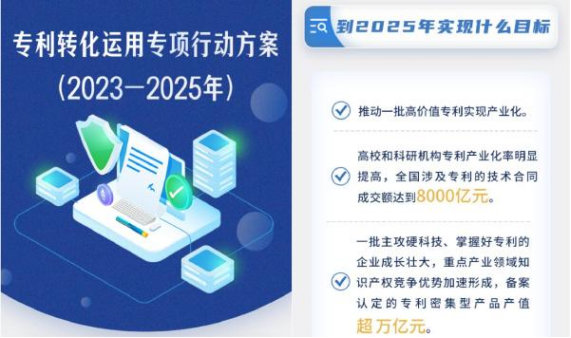
Core Viewpoint - The introduction of specialized insurance products by PICC Property and Casualty aims to support the commercialization of patents and mitigate risks associated with intellectual property, thereby fostering innovation and economic growth in line with national strategies [1][3][5]. Group 1: Insurance Products and Services - PICC Property and Casualty has launched the "Patent Implementation Failure Cost Loss Insurance" to address concerns about the commercialization of new materials and patents, allowing companies to proceed with confidence in mass production [1][3]. - The company has developed a comprehensive risk protection system covering the entire chain of intellectual property creation, utilization, and protection, with a focus on patent commercialization [1][3]. - New insurance products have been introduced in various cities, including "Patent Implementation Failure Cost Loss Insurance" and "Patent-Intensive Product Liability Insurance," tailored to the specific needs of enterprises based on extensive research [3][4]. Group 2: Support for Overseas Expansion - PICC Property and Casualty has created a "Going Global" insurance matrix, including the first national policies for overseas intellectual property rights protection, which cover legal fees, income loss, and liability risks [4]. - The company has launched insurance products aimed at addressing the challenges faced by Chinese enterprises in overseas intellectual property applications, enhancing their willingness to expand internationally [3][4]. Group 3: Innovation and Development - The company is actively building a new framework for intellectual property insurance development, with a focus on product innovation and collaboration with various stakeholders [5][7]. - As of November 2025, PICC Property and Casualty has provided over 190 billion yuan in risk protection for more than 60,000 intellectual property cases, demonstrating the effectiveness of its insurance offerings [7]. - The company aims to further enhance its intellectual property insurance products and services to support the creation, protection, and utilization of intellectual property, contributing to national technological self-reliance [7].

盛大科技(SDA.US)2025年第三季度业绩亮眼 成功扭亏为盈 新能源汽车业务与AI创新双轮驱动发展
Zhi Tong Cai Jing· 2025-12-18 14:44
Core Insights - The company, Shengda Technology Group, reported a significant turnaround in its financial performance for Q3 2025, achieving profitability for the first time with a net income of $1.41 million, compared to a net loss of $1.43 million in Q3 2024 [1][2] - Revenue for Q3 2025 reached $115.8 million, marking a 6% increase from $109.6 million in the same period last year, with year-to-date revenue growing by 8% to $338.1 million [1][2] Financial Performance - The adjusted EBITDA for Q3 2025 surged by 128% to $4.92 million from $2.15 million in Q3 2024, indicating strong resilience and scalability in the company's profit model [2] - The automotive digital insurance segment saw a 13% revenue increase to $51.41 million, while automotive services revenue remained stable at $52.16 million, providing solid support for overall performance [2] Business Expansion and Partnerships - The company has deepened collaborations in the new energy vehicle sector, notably with Tesla, enhancing service delivery in lower-tier cities without the need for additional delivery centers [2][3] - Significant improvements were noted in partnerships with NIO, where delivery times were reduced by 50%, and with XPeng, focusing on insurance renewal scenarios to enhance customer lifecycle value [3] Technological Advancements - Shengda Technology increased R&D spending by 18% to $1.67 million in Q3 2025, emphasizing the integration of AI technologies into its business operations [4] - The company successfully integrated a large language model from ByteDance's Douyin into its core database, enhancing various operational aspects such as dynamic policy pricing and claims risk assessment [4] Synergistic Effects and Service Expansion - The company won a non-accident roadside assistance service project with China Life Insurance and is expanding technical integration with major insurers like PICC and Ping An [5] - Shengda Technology has diversified its high-end service offerings, becoming the official VIP transportation service provider for the Strawberry Music Festival, with an estimated annual collaboration value of $3 million [5]

浪涌潮退
Zhao Yin Guo Ji· 2025-12-18 11:06
Macro Economic Outlook - In 2026, the U.S. midterm elections, Japan and Europe’s defense spending demands, and China's growth stabilization will lead to continued policy easing in the first half of the year. However, the actual space for macro policy is limited due to high inflation, rising government debt, and previous policy overreach [7] - The AI boom is expected to enhance efficiency and market valuations but may also exacerbate job losses and economic K-shaped divergence. Global liquidity easing and a weaker dollar may lead to rising inflation in the second half of the year, potentially causing volatility in high-valuation assets [7] Chinese Internet Software Sector - 2026 is seen as a critical year for capturing user mindshare in the AI era, focusing on lowering usage barriers and enhancing decision-making efficiency. Companies with stable cash flows supporting AI investments and strong operational capabilities are expected to have higher long-term investment value [8] - Recommended stocks include Tencent, Alibaba, and Kuaishou for AI-driven growth, and NetEase and Trip.com for stable earnings growth [8] Overseas Internet Software Sector - The competition in the large model industry is expected to intensify, with AI application monetization continuing to grow. Companies like Microsoft, Google, Amazon, and Palantir are recommended for their potential in AI revenue generation [9] Chinese Semiconductor Sector - The sector is expected to focus on AI-driven structural growth, self-sufficiency trends, high-yield defensive allocations, and industry consolidation. The global semiconductor market is projected to grow by 26% to $975 billion in 2026, with AI-related segments leading the growth [10] Chinese Technology Sector - The global tech industry will experience demand differentiation and accelerated AI innovation. The expansion of computing power and the introduction of AI products are expected to drive growth, with a focus on AI infrastructure and end-user AI products [11] Chinese Essential Consumer Sector - The core constraint on consumer spending in 2026 is expected to be asset shrinkage and slow income recovery. Investment themes include the deepening of consumer stratification and a focus on essential survival needs [12] Chinese Discretionary Consumer Sector - The overall retail sales growth is projected to slow to about 3.5% in 2026. Investment strategies should focus on survival-type consumption, compensatory consumption, and defensive stocks [13] Chinese Automotive Sector - Despite pressures from subsidy reductions, the automotive industry is expected to show resilience, with retail sales of passenger vehicles projected to remain stable. Key trends include intensified competition and the growth of plug-in hybrid vehicles [14] Chinese Pharmaceutical Sector - The innovative drug sector has seen significant growth driven by overseas licensing deals. Future catalysts are expected to shift from upfront payments to milestone payments as clinical progress is made [15] Chinese Equipment Manufacturing Sector - The mining machinery sector is anticipated to be a major growth area, driven by high capital expenditures from global mining companies. Companies like Zoomlion and Sany Heavy Industry are expected to benefit [16] Natural Uranium Sector - The global supply of natural uranium is expected to remain tight, supporting a rising price trend. Demand may exceed expectations due to the recovery of U.S. nuclear power plants [17] Chinese Insurance Sector - The life insurance sector is undergoing a transformation towards dividend insurance, with expectations of improved profitability and valuation recovery. Companies like Ping An and China Life are recommended for their strong growth potential [18] Chinese Real Estate and Property Management Sector - The real estate market is expected to face continued sales declines, with a focus on stock market-related opportunities and resilient property management companies. Recommendations include China Resources and Beike [19]



人保财险内蒙古分公司:从“保基本”到“保全链”的创新实践
Zhong Guo Jin Rong Xin Xi Wang· 2025-12-17 11:56
Core Viewpoint - The company is innovating agricultural insurance products and services in Inner Mongolia to address traditional insurance challenges and support rural revitalization through a combination of insurance and futures strategies [1][2][3][4] Group 1: Agricultural Insurance Innovations - The company has upgraded its insurance coverage from "basic protection" to "full chain protection" to address diverse risks in grassland animal husbandry and specialty planting [2] - Since 2015, the company has launched the first livestock weather index insurance in Xilin Gol League, enabling automatic compensation triggered by meteorological data, achieving rapid claims within 48 hours during droughts [2] - The company has expanded agricultural insurance coverage by introducing various innovative products, including target price insurance for potatoes and comprehensive cost insurance for staple crops [2] Group 2: "Insurance + Futures" Model - The company has developed an "insurance + futures" model to stabilize farmers' income and hedge against market price fluctuations, providing a combination of income insurance, futures price add-on insurance, and technological services [3] - In the pilot phase, this model has resulted in compensation amounts nearly double that of traditional insurance, covering both yield and price risks [3] - By 2024, the projects under this model have covered 2.87 million acres of crops and 970,000 livestock, providing risk protection exceeding 2.7 billion yuan for approximately 46,300 households [3] Group 3: Technological Empowerment - The company has established an integrated "sky-ground" intelligent service network using satellite remote sensing, drones, and artificial intelligence to enhance underwriting and claims efficiency [4] - Satellite technology monitors fire and pest risks for millions of acres of forest, while drones expedite large-scale crop loss assessments post-disaster [4] - Digital platforms facilitate easy land identification and online insurance for farmers, while AI technology helps prevent fraudulent claims by creating unique biological IDs for livestock [4]
首批浮动费率基金观察:安信价值共赢A成立来跌3.05%规模反增2.8%,基金经理袁玮谈价值投资“三重挑战”
Xin Lang Cai Jing· 2025-12-17 08:31
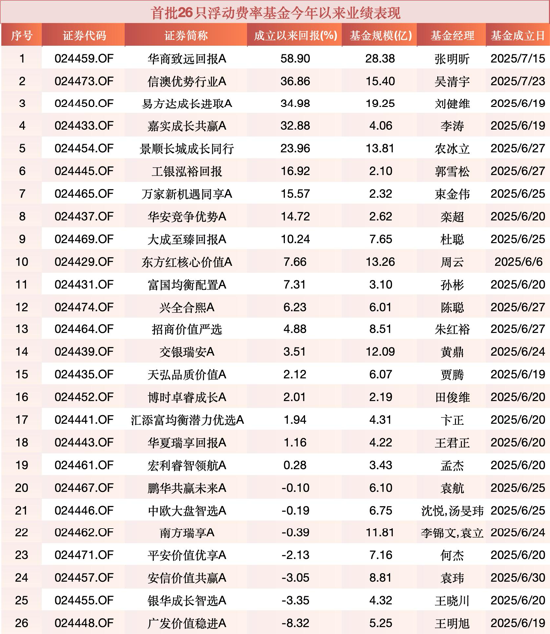
Core Insights - The fund industry is nearing the end of 2025, with public fund assets approaching 36 trillion yuan, and actively managed equity funds regaining prominence [1][8] - The first batch of 26 floating-rate funds has shown significant performance differentiation despite being operational for less than a year [1][8] Fund Performance Summary - The top-performing floating-rate funds include: - Huashang Zhiyuan Return A with a return of 58.90% and a fund size of 28.38 billion yuan [2] - Xin'ao Advantage Industry A with a return of 36.86% and a fund size of 15.40 billion yuan [2] - Yifangda Growth Progress A with a return of 34.98% and a fund size of 19.25 billion yuan [2] - Conversely, the worst performers include: - Guangfa Value Steady A with a return of -8.32% and a fund size of 5.25 billion yuan [2] - Anxin Value Win A with a return of -3.05% and a fund size of 8.81 billion yuan [2][11] Fund Size and Net Asset Changes - As of September 30, 2025, Anxin Value Win A had a net asset size of 8.80 billion yuan, reflecting a 2.83% increase from its initial size of 8.56 billion yuan, with stable shareholding and no significant net redemptions [4][11] Portfolio Composition - Anxin Value Win A's portfolio is diversified across sectors including consumer technology, real estate, finance, and logistics, with notable holdings such as: - Stone Technology at 8.50% with a three-month decline of 30.16% [5][12] - Zhongtong Express at 2.68% with a three-month increase of 10.15% [5][12] Market Analysis by Fund Manager - The fund manager, Yuan Wei, analyzed the market, noting a significant divergence in global capital markets driven by loose monetary and fiscal policies, with A-shares exhibiting both index enthusiasm and structural differentiation [6][13] - He identified three challenges for traditional value investing: 1. The drift of valuation anchors in technology stocks, with average P/E ratios exceeding historical averages [14][15] 2. The active trend trading capital structure, leading to prolonged price deviations from value [14][15] 3. The optimistic outlook for the AI industry, complicating traditional valuation-growth matching models [15] Strategic Outlook - Yuan Wei emphasized that the current "silent period" presents both challenges and opportunities for Anxin Value Win A, with the potential for tactical optimization of the portfolio being crucial for overcoming difficulties [15]
一场事故赔偿超63万元
Jin Rong Shi Bao· 2025-12-17 04:41
Core Insights - The increasing popularity of electric bicycles as a mainstream commuting tool in urban areas brings significant safety and economic risks due to the lack of insurance coverage [1][2] - A recent court case in Beijing highlighted the severe financial consequences of not having insurance, with the responsible party facing over 630,000 yuan in compensation for a fatal accident [2] Insurance Coverage Issues - The court ruling emphasized the importance of insurance in mitigating financial risks associated with traffic accidents, particularly for non-motorized vehicles, which often lack mandatory insurance [2][3] - The average annual death toll from traffic accidents has decreased by 1.1% from 2019 to 2023, while deaths from non-motorized vehicle accidents have increased by 4.9%, indicating a growing need for specialized insurance [3] Insurance Recommendations - Experts recommend that electric bicycle owners consider purchasing insurance, with annual premiums as low as 100 yuan providing coverage of tens of thousands of yuan [4][5] - The mandatory insurance for electric motorcycles and light motorcycles is set to be enforced by 2025, while electric bicycles are encouraged to have voluntary commercial insurance [4] New Insurance Models - Innovative insurance models are being explored to address low insurance uptake among electric bicycle users, such as the "Nanning Riding Insurance" launched in Nanning, which offers affordable coverage options [6][7] - This new insurance initiative aims to enhance traffic safety and financial protection for users, particularly targeting high-frequency riders like delivery personnel [7]
170亿“险资航母”入鲁,山东上演寿险“三国杀”
Jin Rong Jie· 2025-12-17 02:58
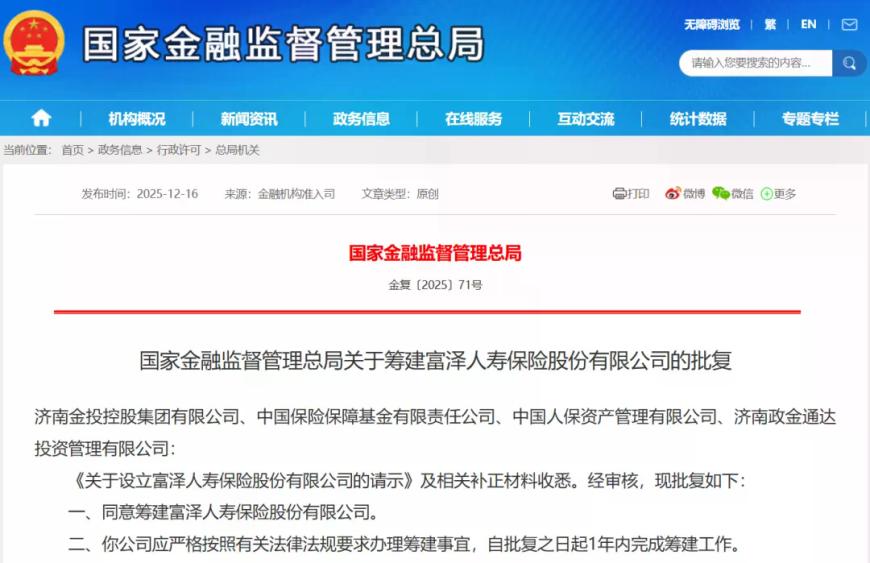
Core Viewpoint - The establishment of Fuzhou Life Insurance, with a registered capital of 17 billion yuan, marks a significant development in China's insurance industry, particularly in risk disposal mechanisms, as it takes over the troubled business of Jun Kang Life Insurance [1][3][4]. Group 1: Company Formation and Structure - Fuzhou Life Insurance was approved for establishment by the National Financial Supervision and Administration on December 16, 2025, and is based in Jinan [1]. - The company is structured with a shareholder composition of 53.24% from local state-owned assets, 35.29% from the China Insurance Security Fund, and 11.47% from People’s Insurance Asset Management [6]. - This structure aims to balance risk disposal with local financial stability, leveraging the strengths of state-owned enterprises and professional insurance management [6]. Group 2: Risk Disposal Mechanism - The creation of Fuzhou Life Insurance is a key practice in the risk disposal mechanism of the Chinese insurance industry, following the model of new entities taking over existing risks [3][7]. - The company is required to fulfill all existing insurance contract obligations from Jun Kang Life Insurance, ensuring consumer rights are protected during the transition [7]. Group 3: Market Position and Competition - With a registered capital of 17 billion yuan, Fuzhou Life Insurance ranks among the top ten in the life insurance industry, significantly surpassing local competitors like Dehua Angu Life Insurance and Hetai Life Insurance [15][16]. - The entry of Fuzhou Life Insurance shifts the competitive landscape in Shandong from a binary competition to a triadic structure, enhancing local market dynamics [15][17]. Group 4: Business Strategy and Channels - Fuzhou Life Insurance focuses on a dual-channel strategy of "bank insurance + group insurance," leveraging local resources and government projects to enhance its market presence [19]. - The company has already received approval for multiple provincial branches and service centers, establishing a nationwide service network [8]. Group 5: Management and Expertise - The management team of Fuzhou Life Insurance emphasizes both market-oriented and professional expertise, with leadership experienced in regional financial ecosystems and insurance management [9][13]. - This approach aims to enhance operational efficiency and decision-making capabilities compared to previous risk disposal entities [13]. Group 6: Future Challenges and Opportunities - Fuzhou Life Insurance faces the immediate challenge of smoothly transitioning the existing business of Jun Kang Life Insurance, which includes nearly 200,000 clients [23]. - Long-term success will depend on building a differentiated competitive advantage in a market characterized by intense competition and asset allocation pressures [23].
保险行业2026年年度投资策略:分红险重塑产品竞争力,新银保重构渠道新格局
Xin Lang Cai Jing· 2025-12-16 14:04
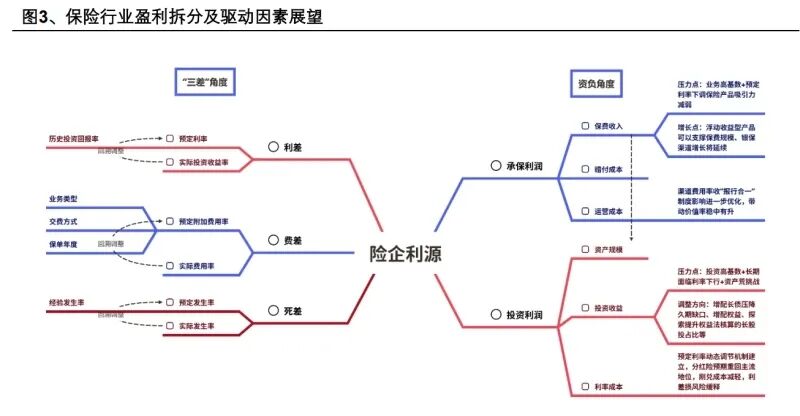
Overall Review - The insurance sector has experienced an overall increase, with A-shares and H-shares showing differentiated performance [1][7] - The fundamental performance indicates high value growth, with investment driving continued net profit growth [1][7] Financial Performance - For Q1-Q3 2025, the net profit growth year-on-year shows significant increases: China Life +60.5%, New China Life +58.9%, China Pacific Insurance +50.5%, PICC +28.9%, Taikang +19.3%, and Ping An +11.5% [2][9] - In Q3 2025 alone, the net profit growth year-on-year is led by China Life +91.5%, China Pacific Insurance +91.4%, and New China Life +88.2% [2][9] - The net asset changes from the beginning of the year show China Life +22.8%, PICC +16.9%, and China Pacific Insurance +12.3%, while Taikang saw a decline of -2.5% [2][9] Investment Logic - Insurance company profits are derived from underwriting profits and investment profits, with underwriting profits influenced by premium income and operational costs [3][10] - The investment profit is primarily affected by investment yield and liability cost rate, with the former being more variable due to market conditions [3][10] - The improvement in underwriting profits is driven by better product structures, channel efficiency, and cost control [3][10] Historical Stock Selection Logic - The stock selection logic for insurance companies has evolved through four phases over the past decade, with a focus on value growth from 2015-2019, short-term catalysts from 2020-2023, and a systemic revaluation of value in 2024 [5][13][14] - Since 2025, the systemic revaluation of value has continued, with H-shares of New China Life, PICC, and China Life leading the market [5][14] Future Outlook - The macroeconomic and capital market environment is expected to transition from a downward economic cycle with improving capital market conditions to a favorable economic cycle with a recovering capital market [6][15] - The focus will remain on net profit as a key indicator, with the importance of liability indicators represented by NBV expected to increase [6][15]



港股收评:三大指数齐挫,恒指跌近400点!黄金股大跌
Ge Long Hui· 2025-12-16 08:56
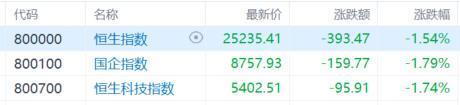
Market Overview - The geopolitical tensions have led to a decline in the Asia-Pacific stock markets, with Hong Kong's three major indices falling significantly. The Hang Seng Index dropped nearly 400 points to 25,235, marking a recent low, while the Hang Seng Tech Index fell by 1.74% to 5,402.51 [1][2] Sector Performance - Large technology stocks continued to decline, negatively impacting market sentiment. Notable declines included SenseTime down over 6%, Tencent Music down over 3%, and Alibaba, NetEase, Bilibili, and JD.com each down over 2% [4][5] - Financial stocks, including banks, insurance, and brokerage firms, also performed poorly, contributing to the overall market pressure [2] - Gold and precious metal stocks experienced significant drops, with companies like Jihai Resources down over 7% and others like Long Resources and Zijin Mining down over 6% [6] - Semiconductor stocks faced widespread declines, with Tianyu Semiconductor down over 4% and ZTE, Chipone, and others down over 3% [7][8] - Cryptocurrency-related stocks weakened, with Blue Ocean Interactive down over 8% and Huaxing Capital down over 4% [9] Individual Stock Movements - Guoxia Technology, in its debut, surged nearly 118% to close at 43.8 HKD, achieving a market capitalization of 22.42 billion HKD. The stock was heavily oversubscribed, with a public offering receiving 1,890.73 times subscription [13][14] - Insurance stocks also saw declines, with China Life down over 4% and China Pacific Insurance down over 2% [10][11] - Conversely, airline stocks rose against the trend, with China Eastern Airlines, Air China, and China Southern Airlines each gaining over 1% [12] Capital Flow and Market Sentiment - Southbound funds recorded a net buy of 81.92 million HKD, with the Hong Kong Stock Connect (Shanghai) showing a net sell of 1.106 billion HKD, while the Hong Kong Stock Connect (Shenzhen) had a net buy of 1.188 billion HKD [17] - Recent reports indicate that the weakness in Hong Kong stocks is attributed to the return of southbound funds to A-shares due to new public fund regulations, concerns over IPO financing, and upcoming unlocks [19] - Looking ahead, there is potential for a year-end rally in Hong Kong stocks as the pressure from southbound fund returns and IPO supply eases, alongside profit recovery and overseas liquidity release [20]