
西部超导

Search documents
商务部表态!稀土出口破冰!北方稀土涨超1%,有色ETF华宝(159876)早盘拉升翻红!
Xin Lang Cai Jing· 2025-12-19 02:28
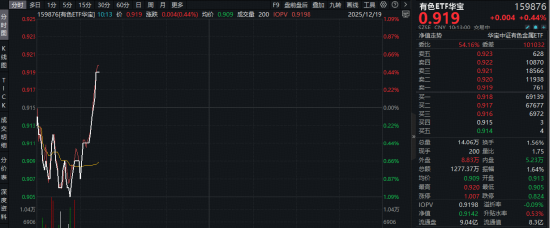
今日(12月19日)早盘,有色金属板块从水面下强势拉升翻红,同标的指数规模最大的有色ETF华宝 (159876)场内价格现涨0.44%,当前站在所有均线上方。 成份股方面,西部超导涨超3%,立中集团、楚江新材涨逾2%,天山铝业、盛和资源、中国稀土等个股 跟涨。权重股方面,中国铝业、北方稀土涨超1%,紫金矿业、洛阳钼业飘红。 消息面上,商务部新闻发言人表态,目前已收到并批准了部分中国出口商提交的通用许可申请。对于民 用、合规的稀土出口申请,将得到中国政府的及时批准,全球供应链的紧张情绪有望得到缓解。 业内人士指出,商务部关于稀土出口管制的表态,对稀土板块形成四重核心利好: 1、审批效率提升:从"逐笔审批"到"通用许可",出口流程大幅简化,订单执行效率提升; 2、行业集中度提升:通用许可优先向合规龙头倾斜,头部效应强化,加速淘汰不合规中小企业; 3、价格中枢上移:管制政策强化供给刚性,同时通用许可保障合规需求释放,供需格局优化推动价格 稳步上涨; 4、战略价值重估:军民两用属性凸显,出口管制提升资源话语权,全球产业链地位巩固。 展望有色金属板块后市,中信建投证券认为,在四季度全球宏观经济波动加剧与地缘局势冲突升级 ...


美国政府签行政令支持NASA登月计划及太空核能,通用航空ETF基金(561660)备受关注
Sou Hu Cai Jing· 2025-12-19 02:15
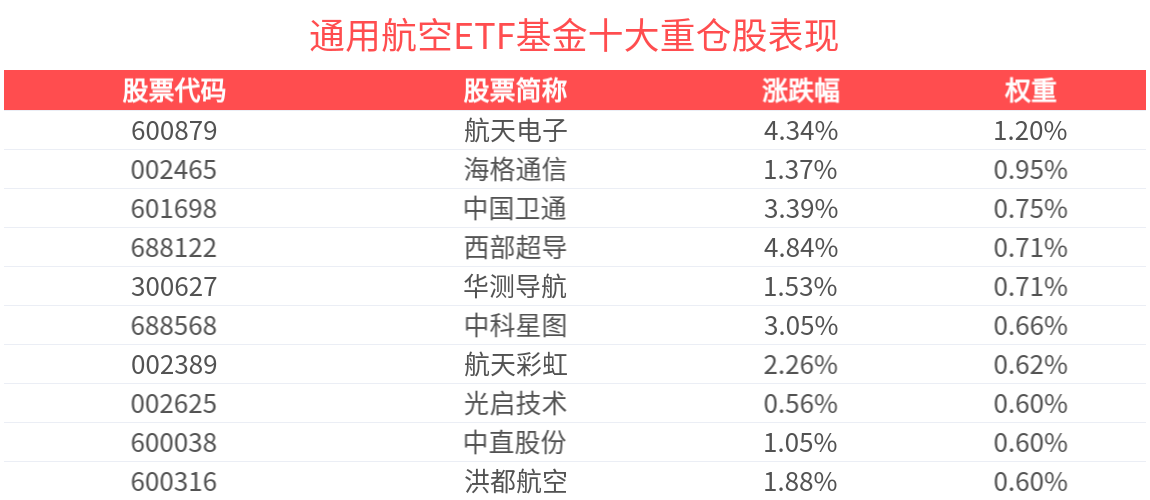
Group 1 - The core viewpoint of the news is that the U.S. is prioritizing its space policy to lead in exploration, security, and commercial sectors, with a goal to return to the Moon by 2028 and establish a permanent lunar outpost by 2030 [1] - The executive order signed by Trump emphasizes the need for upgrading launch infrastructure and developing commercial pathways to replace the International Space Station by 2030, which is expected to stimulate innovation and investment in the private sector [1] - The recent establishment of commercial aerospace companies and the introduction of a three-year plan for commercial aerospace development highlight the importance placed on this sector [1] Group 2 - The Zhongzheng General Aviation Theme Index (931855) has shown a strong increase of 2.28%, with notable gains in constituent stocks such as Four Creation Electronics (10.02% increase) and Guanglian Aviation (6.11% increase) [1] - The General Aviation ETF Fund (561660) has risen by 1.91%, reflecting positive market sentiment towards the general aviation sector [1] - The Zhongzheng General Aviation Theme Index includes 50 listed companies involved in aviation materials, components, and operations, which collectively represent the overall performance of the general aviation sector [2]
A股可控核聚变股走强,哈焊华通涨超10%,中国核建涨超6%
Ge Long Hui· 2025-12-19 02:02
Core Viewpoint - The A-share market is experiencing a strong performance in the controllable nuclear fusion sector, with several companies showing significant stock price increases [1] Group 1: Company Performance - Hongwei Technology saw a stock increase of over 17% [1] - Changfu Co., Ltd. increased by over 15% [1] - Haheng Huatuo rose by over 10% [1] - Prince New Materials, Sichuang Electronics, Baili Electric, and Guotai Group all hit the 10% daily limit [1] - Xue Ren Group, Hailu Heavy Industry, and Guoji Heavy Equipment increased by over 9% [1] - China Nuclear Construction rose by over 6% [1] - Other companies such as Atlantic, Rongfa Nuclear Power, Aikesai Bo, Guoguang Electric, Western Superconducting, and Antai Technology increased by over 5% [1]


健信超导(688805) - 健信超导首次公开发行股票并在科创板上市招股说明书
2025-12-18 12:02
科创板风险提示 本次发行股票拟在科创板上市,科创板公司具有研发投入大、经营风 险高、业绩不稳定、退市风险高等特点,投资者面临较大的市场风险。投 资者应充分了解科创板的投资风险及本公司所披露的风险因素,审慎作出 投资决定。 宁波健信超导科技股份有限公司 Ningbo Jansen Superconducting Technologies Co., Ltd. (浙江省慈溪高新技术产业开发区高科大道427号) 首次公开发行股票并在科创板上市 招 股 说 明 书 保荐人(主承销商) 广东省广州市黄埔区中新广州知识城腾飞一街 2 号 618 室 宁波健信超导科技股份有限公司 招股说明书 重要声明 中国证监会、交易所对本次发行所作的任何决定或意见,均不表明其对发 行人注册申请文件及所披露信息的真实性、准确性、完整性作出保证,也不表 明其对发行人的盈利能力、投资价值或者对投资者的收益作出实质性判断或保 证。任何与之相反的声明均属虚假不实陈述。 根据《证券法》规定,股票依法发行后,发行人经营与收益的变化,由发 行人自行负责;投资者自主判断发行人的投资价值,自主作出投资决策,自行 承担股票依法发行后因发行人经营与收益变化或者股 ...
健信超导(688805) - 健信超导首次公开发行股票并在科创板上市发行结果公告
2025-12-18 11:17
发行结果公告 保荐人(主承销商):广发证券股份有限公司 宁波健信超导科技股份有限公司(以下简称"发行人"或"健信超导")首次 公开发行人民币普通股(A 股)并在科创板上市(以下简称"本次发行")的申 请已经上海证券交易所(以下简称"上交所")上市审核委员会审议通过,并已 经中国证券监督管理委员会同意注册(证监许可〔2025〕2477 号)。 宁波健信超导科技股份有限公司 首次公开发行股票并在科创板上市 发行人与保荐人(主承销商)根据初步询价结果,综合评估公司合理投资价 值、同行业上市公司估值水平、所属行业二级市场估值水平等方面,充分考虑网 下投资者有效申购倍数、市场情况、募集资金需求及承销风险等因素,协商确定 本次发行价格为 18.58 元/股,发行数量为 4,192.00 万股,全部为新股发行,无老 股转让。 本次发行初始战略配售发行数量为 838.40 万股,占发行总数量的 20.00%。 参与战略配售的投资者承诺的认购资金已于规定时间内汇至保荐人(主承销商) 指定的银行账户,依据本次发行价格确定的最终战略配售数量为 838.40 万股, 占发行总量的 20.00%。最终战略配售数量与初始战略配售数量一致 ...
卫星/商业航天闭环构建,国防ETF(512670)盘中涨超2%
Xin Lang Cai Jing· 2025-12-18 03:06
近期卫星/商业航天板块持续发酵,主要系行业面临三大拐点: 截至2025年12月18日 10:44,中证国防指数(399973)强势上涨2%,成分股西部材料(002149)10cm涨停, 北摩高科(002985),国博电子(688375),航天电子(600879),宝钛股份(600456)等个股跟涨。国防 ETF(512670)上涨2%。 国防ETF紧密跟踪中证国防指数,中证国防指数选取隶属于十大军工集团公司旗下的上市公司证券,以 及为国家武装力量提供武器装备,或与军方有实际装备承制销售金额或签订合同的相关上市公司证券作 为指数样本,以反映国防产业上市公司证券的整体表现。 政策面拐点:国家高度重视。2025年,国家航天局正式成立商业航天司,并发布三年行动计划。商业航 天与低空经济是"新质生产力"中仅有的两个设立专门管理部门的领域。 业绩面拐点:发射量密集提升。2025年国内商业航天发射量较2024年显著增长。重点星座进展:(1)中 国星网(GW星座):截至2025年12月7日,已发射113颗低轨组网星。(2)上海G60(源城星座):已发 射108颗低轨组网星。根据国际电联规则及星座申报规模(GW-A59、GW- ...
深海科技驱动深海新纪元,铸就强国新支点
2025-12-17 15:50
Summary of Key Points from Conference Call Records Industry Overview - The conference call discusses the development of deep-sea technology in China, highlighting its strategic importance for national security and economic benefits. The industry is part of the "14th Five-Year Plan" and faces challenges such as insufficient funding and technological gaps compared to the U.S. [1][3][4] Core Insights and Arguments - **Strategic Importance**: Deep-sea technology is crucial for military security, as evidenced by recent incidents involving underwater drones. China needs to enhance its capabilities in this area to safeguard national interests [3][4]. - **Economic Potential**: Development in deep-sea resources like oil, gas, and rare earth minerals can yield significant economic returns. The industry also supports related sectors such as exploration, communication, and equipment manufacturing [1][3][5]. - **Funding Challenges**: There is a pressing need for increased investment in deep-sea projects that promise economic returns, such as oil and gas extraction. Policy support is also necessary to prioritize these initiatives [4][10]. - **Technological Gaps**: China lags behind the U.S. in establishing a global underwater monitoring network and detailed deep-sea navigation maps, which are essential for national security [3][4]. Regional Developments - **Shanghai Initiatives**: Shanghai is focusing on deep-sea oil and gas development and offshore wind energy, utilizing floating wind turbine technology and exploring hydrogen production to address energy storage and transportation issues [7][10]. - **Hainan Projects**: Hainan is advancing the exploration and development of deep-sea oil and gas, as well as combustible ice, while also working on hydrogen and methanol production technologies to enhance energy efficiency [9][10]. Technological Advancements - **Equipment Manufacturing**: China has made significant progress in deep-sea equipment manufacturing, with manned submersibles like "Jiaolong" and "Fendouzhe" achieving international standards. The rapid development of unmanned submersibles has also reduced operational costs [1][24]. - **New Technologies**: Advanced technologies are being applied in deep-sea oil and gas exploration, including autonomous mining vehicles and flexible pipeline systems for resource extraction [25][26]. Economic Impact - **Market Size**: The marine economy in China is projected to reach 10 trillion RMB by 2024, with fishing and coastal agriculture being the largest contributors, accounting for 36% and 18% respectively [2][13]. - **Investment Opportunities**: The development of deep-sea technology is expected to enhance national security and economic resilience, making it a critical area for investment [34][40]. Risks and Challenges - **Technical Risks**: There are concerns about equipment corrosion and high depreciation costs, although no major issues have been reported so far. Geopolitical risks also pose challenges, particularly in resource-rich areas [39]. - **Funding Limitations**: While national policies support deep-sea economic development, actual funding remains limited, necessitating local governments to identify profitable projects to attract investment [38]. Future Directions - **Hydrogen Energy**: The hydrogen energy sector is highlighted as a promising area for future growth, which could drive the development of related companies and technologies [40]. - **Comprehensive Development**: The future of deep-sea technology encompasses military applications, ecological protection, scientific research, and commercial exploitation of marine resources [5][6][28]. This summary encapsulates the key points discussed in the conference call, providing insights into the current state and future prospects of deep-sea technology and its implications for China's economy and security.
“制造强国”实干系列周报(12、14期)-20251217
Shenwan Hongyuan Securities· 2025-12-17 01:46
Group 1: Aluminum vs. Copper in Air Conditioning - The shift from copper to aluminum in air conditioning systems is driven by the copper-aluminum price gap, energy efficiency standards upgrades, and refrigerant replacements, with microchannel technology becoming increasingly prevalent[3] - The competitive landscape for microchannel heat exchangers is dominated by three players: Sanhua, Mahler/Delphi, and Danfoss[3] - Sanhua's revenue growth has slowed, indicating a need for innovation and adaptation in the market[14] Group 2: Nuclear Fusion Developments - The nuclear fusion sector is expected to accelerate due to continuous technological breakthroughs and policy support, with significant project milestones achieved in 2025[19] - The global nuclear fusion market is projected to reach approximately $479.5 billion by 2029, with a total of 196 fusion devices expected by 2035[40][42] - Key investment opportunities in nuclear fusion include core supporting entities and high-value segments within the supply chain, such as superconducting magnets and power systems[46] Group 3: Commercial Aerospace - The commercial aerospace sector is witnessing stable or potentially increasing core players due to cost reduction trends, with a focus on satellite manufacturing and launch services[3] - The domestic satellite constellation projects, such as G60 and GW, are set to significantly increase satellite launches, with G60 planning to deploy 1,296 satellites by the end of 2027 and 15,000 by 2030[60] - The market for satellite services and ground equipment is expected to dominate, accounting for over 90% of the commercial aerospace value chain[52]
国防军工行业 2026 年度投资策略:转型,增长的信心
Changjiang Securities· 2025-12-16 11:13
Core Insights - The report identifies the main investment themes for the defense and aerospace industry in 2025 as internal equipment, military trade, and military-civilian integration, with a focus on the second growth curve as a key selection criterion for stocks [2][5][36] - For 2026, military-civilian integration and military trade are expected to remain the primary investment lines, supported by stable growth in defense spending and policy guidance [2][5] Industry Overview - The report outlines a deep review of the defense industry, highlighting that the internal equipment market, military trade, and military-civilian integration emerged as the three main investment directions in 2025 [5][21] - The investment framework has evolved from focusing solely on internal equipment to incorporating military trade and military-civilian integration, reflecting a more comprehensive understanding of the market dynamics [5][21] Policy Analysis and Internal Equipment Outlook - The report emphasizes that the integration of mechanization, information technology, and intelligence will drive future growth in internal equipment, with specific focus areas including information support forces, cyber warfare units, military aerospace, and rocket forces [6][41][46] - Recent U.S. defense policy changes, which reduced the number of key technology areas from 14 to 6, align closely with China's focus on new quality and new domain developments [6][41] Investment Strategy for 2026 - The report recommends a bottom-up approach to stock selection, emphasizing the importance of identifying stocks that excel in the second growth curve, particularly in military trade and military-civilian integration [7][36] - Specific companies are highlighted as key investment targets, including 中航沈飞 (AVIC), 广东宏大 (Guangdong Hongda), and 西部超导 (West Superconductor), which are positioned to benefit from trends in military trade and civilian applications [22][33][36] Key Investment Areas - The report identifies several promising sectors within the defense industry, including special chips, quartz electronic fabrics, aerospace electronics, high-performance power supplies, and military aviation engines, each with unique growth drivers [22][33][36] - The military trade sector is expected to see a shift towards high-end equipment exports, with 中航沈飞 (AVIC) and 广东宏大 (Guangdong Hongda) as core players [22][36] Conclusion - The report concludes that the second growth curve represents a critical opportunity for investors, with military trade and military-civilian integration likely to be the main growth drivers in the coming years [36][41]



超导概念下跌3.32%,主力资金净流出23股
Zheng Quan Shi Bao Wang· 2025-12-16 09:59
Group 1 - The superconducting concept sector experienced a decline of 3.32%, ranking among the top declines in concept sectors, with companies like Jingda Co., China Uranium, and others hitting the daily limit down [1][2] - Among the superconducting concept stocks, the largest net outflow of main funds was from China Uranium, with a net outflow of 899.5 million yuan, followed by Jingda Co. and Yongding Co. with net outflows of 420.5 million yuan and 412.5 million yuan respectively [3][4] - The only stocks in the superconducting concept that saw an increase were Bofei Electric and Wandong Medical, with increases of 10.02% and 0.19% respectively [1][3] Group 2 - The main funds in the superconducting concept sector saw a net outflow of 3.053 billion yuan today, with 23 stocks experiencing net outflows, and 8 stocks seeing outflows exceeding 100 million yuan [3] - The trading volume for China Uranium was notably high, with a turnover rate of 43.27% and a price drop of 10% [3][4] - Bofei Electric led the net inflow of main funds in the superconducting concept with an inflow of 58.35 million yuan, while other notable inflows included Jiugang Hongxing and Yubang New Materials [3][4]


