
东风股份

Search documents
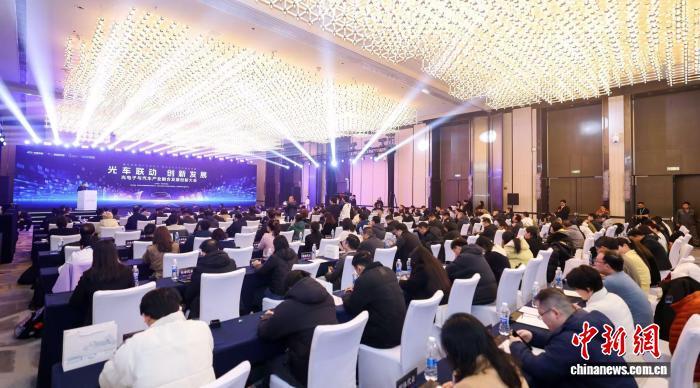
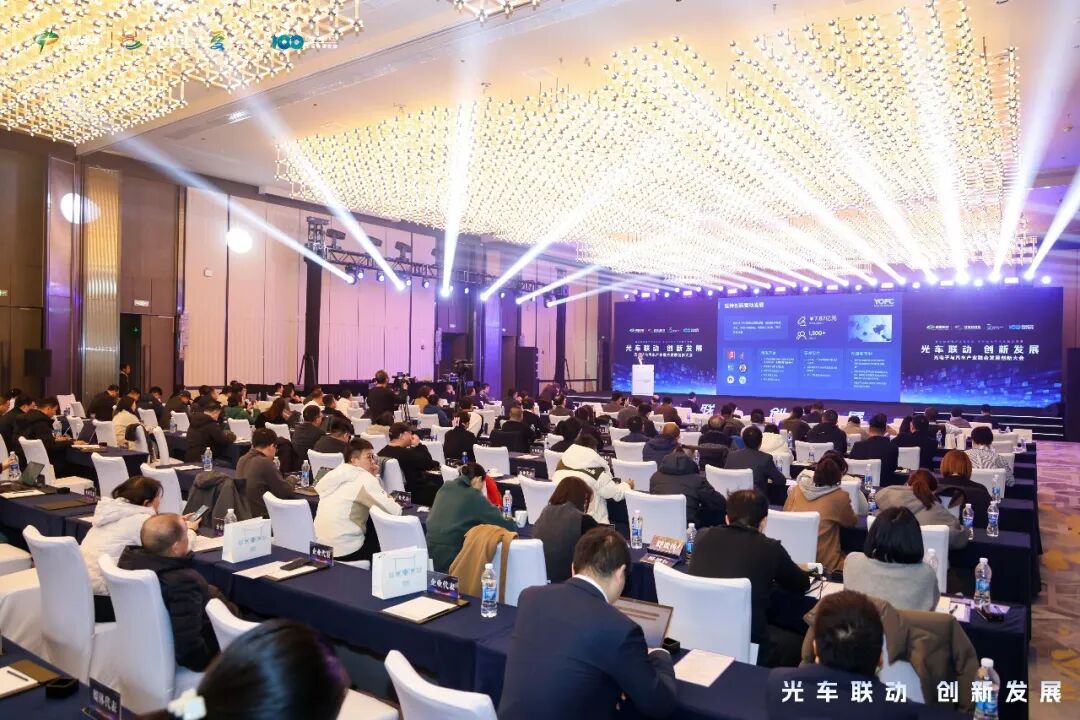
武汉“光谷”“车谷”携手 共探“光车融合”路径
Zhong Guo Xin Wen Wang· 2026-01-19 04:25
Core Viewpoint - The integration of optoelectronics and the automotive industry is a significant trend, presenting new opportunities for enterprises and urban development in Wuhan, which is positioned as a new technological and industrial hub for this integration [3][4]. Group 1: Industry Overview - The optoelectronics and automotive industries are two major engines of Wuhan's economic development, with the East Lake High-tech Zone housing the world's largest optical fiber and cable manufacturing base and optical module R&D production base [1]. - The Wuhan Economic Development Zone is home to 9 vehicle manufacturers, 14 vehicle factories, and over 1,200 parts suppliers, earning the title "China's Car Valley" [1]. Group 2: Key Trends and Innovations - The automotive industry's development is increasingly characterized by the integration of communications, optoelectronics, and AI, creating a synergistic effect that enhances growth opportunities [3]. - The focus on building an innovative ecosystem that spans the entire supply chain—from materials and chips to systems and vehicles—is essential for the convergence of the automotive and optoelectronics sectors [3][4]. Group 3: Collaborative Efforts - Companies like China Information Communication Technology Group are collaborating with automotive manufacturers to develop domestically produced, high-performance automotive-grade MCU chips and conduct research on vehicle optical communication [3][4]. - The signing of the "Optoelectronics and Automotive Integration Initiative" by various stakeholders aims to outline development paths, tackle key technologies, and promote collaborative industrial ecosystems [6].

中国汽车设计与全球汽车的对话
Zhong Guo Qi Che Bao Wang· 2026-01-19 03:39
Core Insights - The automotive industry is undergoing a significant transformation, with rapid product and technology iterations and increasingly diverse user demands. The design philosophy and values of automobiles are evolving, emphasizing the importance of brand culture and values in automotive design [1] Group 1: Globalization of Chinese Automotive Design - Chinese automotive design is entering a global era, with increasing visibility and recognition on the world stage. The transition from "Made in China" to "Chinese aesthetics" signifies a growing resonance of Chinese automotive design globally [1] - The discussion at the 18th "China Automotive News" Consumer Model Ceremony highlighted the global development of Chinese automotive design, with industry leaders sharing insights on this evolution [2][4] - The integration of electric and intelligent technologies into automotive products is expanding the definition and functionality of vehicles, presenting both challenges and opportunities for design [6][7] Group 2: Design Challenges and Innovations - The automotive design landscape faces challenges such as homogenization, where differentiation through design becomes crucial as technology reaches a level of parity. This necessitates a focus on design innovation to create unique product value [8] - The integration of AI tools in design processes is reshaping the role of designers, enhancing their capabilities while also raising questions about the future of design jobs [9] - The long-term vision for automotive design must balance current market demands with sustainable brand development, moving beyond superficial design elements to create meaningful user experiences [14][18] Group 3: Cultural Transmission through Design - Chinese automotive design plays a critical role in conveying cultural values and narratives to the global market, facilitating a deeper understanding of Chinese culture and innovation [11][10] - The evolution of design education and the emergence of talented Chinese designers are contributing to the global competitiveness of Chinese automotive products [12][13] - The design process must focus on user needs and experiences, ensuring that products resonate with consumers while also reflecting the brand's identity and values [20] Group 4: Future Directions in Automotive Design - The future of automotive design will require a shift towards creating value for users, with designers potentially evolving into lifestyle designers who address broader consumer needs [19] - Continuous adaptation to market demands and technological advancements will be essential for maintaining competitiveness in the global automotive landscape [16][17] - The establishment of a global design framework is necessary for Chinese automotive companies to effectively respond to international market challenges and consumer expectations [12][13]





BBA中国市场销量齐降一年少卖26万辆 电动化转型滞后露“短板”无爆款
Chang Jiang Shang Bao· 2026-01-19 02:53
Core Insights - The three major German luxury car brands, BBA (Benz, BMW, Audi), are experiencing a collective downturn in the global luxury car market, with significant declines in sales, particularly in China [1][2][3] Group 1: Sales Performance - BMW Group's global sales for 2025 are projected at 2.4637 million units, a slight increase of 0.5% year-on-year [1] - Mercedes-Benz Group's global sales are expected to be 2.16 million units, a decrease of 10% year-on-year, with a notable 19% drop in the Chinese market [3] - Audi's global sales are forecasted at 1.6236 million units, down 2.9% year-on-year, with a 5% decline in the Chinese market [7] Group 2: Market Dynamics - The combined sales decline for BBA in the Chinese market is nearly 260,000 units compared to 2024, attributed to a significant shift in the market towards electric vehicles (EVs) [2][12] - The penetration rate of new energy vehicles in China has surpassed 50%, leading to a market reshuffle where domestic brands are increasingly capturing the traditional price range of 300,000 to 500,000 yuan [2][12] Group 3: Brand-Specific Insights - Mercedes-Benz's electric vehicle sales in 2025 are projected at 197,300 units, a 4% decline year-on-year, indicating challenges in adapting to the electric and intelligent transformation of the luxury car market in China [3][4] - Audi's Q6L e-tron, a key electric model, has seen limited sales of 3,201 units, highlighting the brand's struggle in the EV segment despite being a significant player in the luxury market [9][10] - BMW plans to introduce approximately 20 new models in China by 2026, aiming to enhance its competitive edge in the rapidly evolving market [11]
武汉打造“光车融合”全国示范标杆
Chang Jiang Ri Bao· 2026-01-19 00:43
Core Insights - The "Light and Vehicle" dialogue in Wuhan emphasizes the integration of optoelectronics and the automotive industry, marking a significant step in promoting intelligent and connected vehicles in the region [1][2] Group 1: Industry Integration - The automotive industry is characterized by fusion development, integrating technologies like communication, optoelectronics, and artificial intelligence to enhance competitiveness [2] - Wuhan is home to the "Optics Valley" and "Automobile Valley," creating a unique environment for the convergence of these two industries, with a focus on building a trillion-yuan industry cluster centered around "light, chip, screen, terminal, and network" [2] - The initiative aims to establish unified industry standards and create a collaborative ecosystem to drive innovation and development [1][6] Group 2: Technological Advancements - Wuhan has made breakthroughs in core technologies, such as the development of a domestically produced automotive-grade high-performance MCU chip, expected to be mass-produced by 2026 [4] - The transition from copper to fiber optics in automotive applications is anticipated, with fiber optics offering advantages in bandwidth, weight, and electromagnetic interference resistance [5] - Companies like Haiwei Technology are advancing in the smart cockpit sector, integrating high-quality display technologies into vehicles, enhancing user experience [5] Group 3: Challenges and Solutions - The integration path faces challenges, including a lack of successful cross-industry experiences, difficulties in technology alignment, and the absence of standardized testing and certification systems [3] - To address these issues, the establishment of collaborative innovation platforms and supply chain integration is essential for fostering a sustainable industrial ecosystem [6] Group 4: Economic Impact and Future Outlook - The economic benefits from the "fiber optics in vehicles" initiative are projected to reach the billion-yuan level, significantly impacting the upstream and downstream industries [6] - The potential for technology spillover into other sectors, such as robotics and low-altitude economy, is highlighted, showcasing the automotive industry's capacity for cost reduction and scalability [6] - The internationalization of the industry is crucial, with Chinese smart components already leading in various fields, positioning them for global competitiveness through the "light and vehicle" integration [6][7]
重要倡议,武汉发起!
Chang Jiang Ri Bao· 2026-01-19 00:43
Core Viewpoint - The "Light and Vehicle" dialogue in Wuhan emphasizes the integration of optoelectronics and the automotive industry, marking a significant step in promoting the deep fusion of these two key sectors in the context of intelligent and connected vehicles [1][3]. Group 1: Industry Integration - The initiative aims to create a development blueprint, focus on key innovations, build an open ecosystem, unify industry standards, and establish demonstration benchmarks, highlighting Wuhan's strategy to leverage its strengths in both optoelectronics and automotive sectors [3][5]. - The automotive industry is seen as a hallmark of integrated development, with the fusion of communication, optoelectronics, and artificial intelligence being crucial for China's automotive sector to surpass its competitors [5][9]. - Wuhan has established a trillion-yuan industry cluster centered around "light, chip, screen, terminal, and network," positioning itself as a global leader in optical fiber and cable manufacturing [5][7]. Group 2: Technological Advancements - Wuhan's industry is making strides in core technologies, with the establishment of Wuhan Binary Semiconductor Co., which is on the verge of mass production of a domestically developed automotive-grade MCU chip, expected to be on vehicles by 2026 [10][11]. - The transition from copper to fiber optics in automotive applications is anticipated, with fiber optics offering advantages in bandwidth, weight, and electromagnetic interference resistance, making it ideal for next-generation vehicle networks [10][11]. - Companies like Longfei and Dongfeng are collaborating on smart automotive optical communication solutions, demonstrating the reliability of these technologies through extensive road tests [11]. Group 3: Ecosystem Development - The initiative for "light-vehicle fusion" is just the beginning; a sustainable industrial ecosystem must be built to deepen this integration, addressing technical links, vehicle standards, and certification issues [12][14]. - Standardization is identified as a cornerstone for high-quality industry development, with participants committing to collaboratively advance standard-setting efforts [12]. - The potential economic benefits from the integration of fiber optics into vehicles are projected to reach billions, significantly enhancing the synergy across the supply chain [12][14]. Group 4: Future Outlook - The automotive sector's components can be adapted for use in robotics and other fields, indicating a broader application of technologies developed through "light-vehicle fusion" [14]. - The internationalization of these innovations is crucial, as Chinese smart components are already leading in various fields, and the integration could yield globally competitive optical devices [14]. - The presence of a complete upstream and downstream industrial chain in Wuhan is attracting interest from companies looking to establish a foothold in this promising market [14].
新能源牵引车全年销超17万辆增216%!解放/徐工/三一破2万 TA们暴涨 | 头条
第一商用车网· 2026-01-18 13:06
Core Viewpoint - The domestic sales of new energy heavy trucks in December 2025 exceeded 45,300 units, marking a year-on-year increase of 198%, setting a new monthly sales record [1][4]. Group 1: Market Performance - In December 2025, the sales of new energy heavy trucks reached 45,300 units, a month-on-month increase of 62% and a year-on-year increase of 198% [4]. - New energy traction trucks accounted for 76.62% of the new energy heavy truck market in December 2025, a slight decrease from the previous month [6]. - The overall sales of heavy trucks in December 2025 were 84,000 units, with traction trucks contributing 51,600 units, reflecting a year-on-year growth of 21% [10]. Group 2: Sales Trends - The new energy traction truck market has shown consistent growth, with sales exceeding 10,000 units for ten consecutive months starting from March 2025 [8]. - December 2025 saw a record monthly sales of 34,700 units for new energy traction trucks, continuing the trend of explosive growth [8][16]. - The average year-on-year growth rate for new energy traction trucks in 2025 reached 239%, with total sales for the year amounting to 176,500 units, an increase of over 120,000 units compared to 2024 [26]. Group 3: Market Share and Competitors - In 2025, the top three companies in the new energy traction truck market were FAW Jiefang, XCMG, and SANY, with cumulative sales of 28,000, 27,400, and 22,900 units respectively [20][23]. - The market share of FAW Jiefang increased by 2.0 percentage points compared to 2024, reaching 15.8% [24]. - A total of 31 companies participated in the new energy traction truck market in 2025, indicating a sustained competitive landscape [19]. Group 4: Regional Distribution - New energy traction trucks were registered in all 31 provincial-level administrative regions in China, with significant concentrations in Shanghai, Guangdong, and Shanxi, which together accounted for over 40% of the market share [13].




“难以解释”!业绩暴增,股价微涨
Zhong Guo Ji Jin Bao· 2026-01-18 11:31
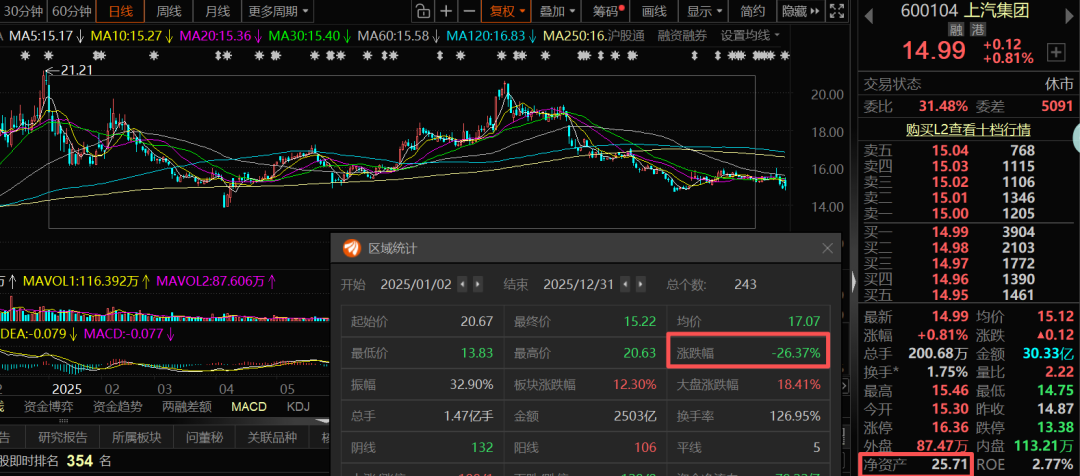
Core Viewpoint - SAIC Motor Corporation has announced a significant increase in expected net profit for 2025, projecting a year-on-year growth of 438% to 558%, yet its stock price remains under pressure, reflecting a mismatch between market valuation and performance [2][3]. Group 1: Company Performance and Market Reaction - On January 15, SAIC Motor released an impressive earnings forecast, leading to a brief stock price increase of over 3% on January 16, but it closed with only a 0.81% gain, still trading below its net asset value [1][2]. - As of January 16, SAIC Motor's market capitalization stood at 172.3 billion yuan, significantly lower than BYD's 874 billion yuan, highlighting a substantial valuation gap among leading automotive companies [3][8]. - The company is currently in a "broken net" state, with its stock price at 14.99 yuan per share, below the latest audited net asset value of 25.71 yuan per share [7][8]. Group 2: Investor Concerns and Market Management - Investors have raised questions regarding SAIC Motor's market value management, expressing skepticism about the effectiveness of its strategies [4][11]. - The company has not announced any share repurchase plans since the release of its 2025 valuation enhancement plan, which is a key measure for market value management [12][13]. - Despite having executed three rounds of share repurchase plans totaling 4.747 billion yuan, the results have been deemed unsatisfactory [14][13]. Group 3: Industry Context and Challenges - The automotive industry is facing intense competition and rapid transformation towards new energy and smart technologies, complicating investment prospects [19][20]. - Many listed automotive companies are struggling with market valuations below 200 billion yuan, with only a few like BYD and Great Wall Motors exceeding this threshold [18]. - The market is characterized by a high number of listed automotive companies, which diminishes individual company visibility compared to global players like Tesla [20]. Group 4: Strategic Focus and Future Outlook - Industry experts emphasize the importance of improving operational quality as a core aspect of market value management, rather than relying solely on share buybacks or short-term market trends [22][29]. - Companies are encouraged to focus on developing standout products to enhance their market valuation directly, as seen with NIO's recent successful model launches [24][29]. - The consensus among industry leaders is that the automotive sector is entering a critical phase, with a clearer picture of market dynamics expected in the next five years [21].

福田超44万霸榜 江淮/东风近18万 远程/跃进领涨!2025轻卡十强出炉!
第一商用车网· 2026-01-17 13:36
Group 1 - In December 2025, China's commercial vehicle sales increased by 15% year-on-year, with the truck market growing by 17%, slightly higher than the overall commercial vehicle market growth [1][5] - The light truck market (including light trucks, small trucks, and pickups) sold 199,900 units in December, representing an 11% month-on-month increase and a 14% year-on-year increase, marking the 11th consecutive month of year-on-year growth [3][5] - The overall truck market's year-on-year growth rate narrowed by 9 percentage points compared to the previous month, with the heavy truck and micro truck markets growing by 22% and 25% respectively, while the light truck market's growth of 14% lagged behind [5][9] Group 2 - The light truck market's cumulative sales for 2025 reached 2.0236 million units, a 7% year-on-year increase, which is slightly above the normal range of 1.6 to 2 million units observed over the past decade [9][18] - In December 2025, seven companies sold over 10,000 light trucks, with Foton leading at 42,100 units, followed by Dongfeng and Jiangling with 18,700 and 18,600 units respectively [12][13] - The market share of light trucks in the overall truck market was 54.36% in 2025, a decrease of 2.14 percentage points from the previous year, after having surpassed 50% in 2022 [9][24] Group 3 - Among the top ten light truck manufacturers in December, six experienced year-on-year sales growth, with Jiangling, Jianghuai, Changan, and Yuancheng showing significant increases [16][17] - The overall light truck market in 2025 saw a cumulative sales increase of 7%, with companies like Yuancheng and BYD leading the growth at 60% and 231% respectively [20][21] - The rankings of several companies changed in December compared to November, with Dongfeng rising to second place and Jiangling to third, while Foton maintained its top position [17][24] Group 4 - The light truck market's performance in December 2025 was notable, achieving the highest sales level in the past decade, although it did not surpass the sales figures of December 2017, 2019, and 2020 [7][26] - The overall market dynamics indicate a competitive landscape, with significant shifts in market share among leading manufacturers, reflecting ongoing changes in consumer demand and industry trends [24][26] - The light truck market's ability to maintain growth amidst a challenging environment suggests potential for continued investment opportunities in the sector [26]

2025商用车销量榜:福田超64万辆登顶,重汽/东风超40万拼前二,谁领涨?| 头条
第一商用车网· 2026-01-17 13:36
Core Viewpoint - The commercial vehicle market in China has shown consistent growth since June 2025, with total sales expected to exceed 4 million units for the year, reaching approximately 4.2965 million units, marking a year-on-year increase of 11% [1][17][25]. Sales Performance - In December 2025, the commercial vehicle market sold 425,000 units, reflecting an 8% month-on-month increase and a 15% year-on-year increase, although the growth rate compared to the previous month decreased by 9 percentage points [3][10]. - The December 2025 sales figure is the highest for that month in the past five years, surpassing December 2024 by approximately 56,400 units and exceeding the lowest figure from December 2022 by over 130,000 units [5]. Market Share and Rankings - The top ten companies in December 2025 accounted for 72.5% of the market share, with the top five companies holding over 46.7% [14]. - Foton led the monthly sales with 57,700 units, maintaining its position as the annual sales champion for 2025 [9][19]. - The rankings of companies in the top ten saw changes, with Dongfeng and Changan moving up in the rankings, while some companies experienced declines [15]. Yearly Performance of Leading Companies - Foton's total sales for 2025 exceeded 600,000 units, while other leading companies like Heavy Truck and Dongfeng also surpassed 400,000 units, with sales figures of 428,200 and 403,100 units respectively [19]. - The overall market share for the top ten companies reached 75.3%, with Foton and Heavy Truck having market shares of 15.0% and 10.0% respectively [22]. Industry Trends - The commercial vehicle market has shown a competitive landscape with significant shifts in rankings and market shares among leading companies, indicating a dynamic and evolving industry [23]. - The year 2025 concluded with a strong performance, setting the stage for potential developments in 2026 [25][26].

2025年1-11月中国基本型乘用车(轿车)产量为1175.4万辆 累计增长10%
Chan Ye Xin Xi Wang· 2026-01-17 03:53
Core Viewpoint - The Chinese passenger car market is experiencing growth, with production figures showing a year-on-year increase in both November 2025 and the cumulative production from January to November 2025 [1] Group 1: Industry Overview - In November 2025, the production of basic passenger cars in China reached 1.33 million units, representing a 4% year-on-year growth [1] - From January to November 2025, the cumulative production of basic passenger cars in China totaled 11.754 million units, reflecting a cumulative growth of 10% [1] Group 2: Companies Involved - Key listed companies in the Chinese automotive sector include BYD, SAIC Motor, Great Wall Motors, Changan Automobile, GAC Group, FAW Jiefang, Dongfeng Motor, and BAIC Blue Valley [1] Group 3: Research and Insights - Zhiyan Consulting has released a report titled "2026-2032 China Automotive Industry Market In-Depth Assessment and Investment Opportunity Forecast Report," indicating ongoing research and analysis in the automotive sector [1]
