爱婴室

Search documents
婴童概念股开盘大涨 贝因美等多股涨停
news flash· 2025-07-29 01:32
智通财经7月29日电,贝因美、爱婴室、诺邦股份涨停,骑士乳业、西部牧业、太湖雪、孩子王涨超 10%,阳光乳业、延江股份、可靠股份、戴维医疗等涨超5%。消息面上,国家育儿补贴制度实施方案7 月28日公布。育儿补贴制度从2025年1月1日起,对符合法律法规规定生育的3周岁以下婴幼儿发放补 贴,育儿补贴按年发放,现阶段国家基础标准为每孩每年3600元,发放补贴至婴幼儿年满3周岁。 婴童概念股开盘大涨 贝因美等多股涨停 ...


A股三胎概念多股高开,孩子王开涨11%,贝因美、爱婴室竞价涨停,延江股份、均瑶健康等跟涨。
news flash· 2025-07-29 01:29
Group 1 - A-share market sees a surge in stocks related to the three-child policy, with Kid King rising by 11% [1] - Companies such as Beingmate and Aiyingshi hit the daily limit up, indicating strong investor interest [1] - Other stocks like Yanjing Co. and Junyao Health also experienced significant gains, reflecting a broader trend in the market [1]


育儿补贴落地,有望拉动母婴食品等刚需品类消费
Xuan Gu Bao· 2025-07-28 23:16
Group 1 - The implementation of the childcare subsidy system is a significant initiative aimed at providing cash subsidies to families with children under three years old, starting from January 1, 2025, with a basic annual subsidy of 3,600 yuan per child [1] - The subsidy is expected to directly reduce the cost of childbirth and stabilize birth rate expectations, while also activating demand for essential maternal and infant products such as milk powder and diapers [1][2] - The rollout of the subsidy is projected to increase social retail sales by approximately 0.2 percentage points, with a focus on essential categories like maternal and infant food [2] Group 2 - Systematic support for childcare policies, including employment, education, and healthcare, is anticipated alongside the cash subsidies [3] - Companies such as Kid King, Aiyingshi, and Doushen Education are expected to benefit from the expansion of the market, with strategies including franchise development and online sales initiatives [3]

国家育儿补贴政策发布,利好母婴产业链
HUAXI Securities· 2025-07-28 14:46
Investment Rating - The industry investment rating is "Recommended" [2][12] Core Insights - The newly released national childcare subsidy policy is expected to benefit over 20 million families, with an annual subsidy of 3,600 yuan per child until the child reaches 3 years old [3][4] - The collaboration between national and local subsidies is anticipated to effectively reduce the cost of childbirth, with local policies likely to follow the national framework [4] - The positive pro-natalist policies are expected to boost birth rates, particularly benefiting lower-tier markets where approximately 70% of newborns are located [5] Summary by Sections Event Overview - On July 28, the Central Committee of the Communist Party of China and the State Council released the "Implementation Plan for the Childcare Subsidy System," aiming to lower family childbirth and rearing costs while ensuring equitable access to subsidies for eligible infants [2][3] Analysis and Judgment - The national childcare subsidy policy is set to commence on January 1, 2025, providing annual subsidies to families with children under 3 years old, which is expected to significantly enhance birth rates, especially in lower-tier markets [3][5] Investment Recommendations - The report suggests that local childcare subsidy policies will likely continue to emerge under national guidance, directly reducing family rearing costs and enhancing birth intentions, particularly benefiting the maternal and infant consumer goods sector [6]
孕婴世界靠“亲友团”逆势扩张 拟IPO募资近2亿元合理性存疑
Mei Ri Jing Ji Xin Wen· 2025-07-28 14:24
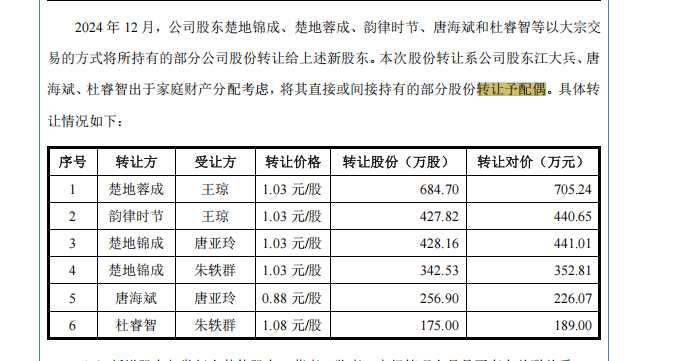
江大兵配偶王琼也在公司发展过程中扮演着关键角色。创业早期,夫妻二人曾共同创办成都市创托妇婴 商贸有限公司(孕婴世界业务前身)并持股至2014年。 在出生率持续走低的背景下,母婴连锁企业成都孕婴世界股份有限公司(以下简称孕婴世界)却逆势扩 张,凭借加盟模式和下沉市场策略实现业绩增长,并宣称"位居国内母婴连锁行业前三"。近日,孕婴世 界向北交所递交的上市申请已获受理。 《每日经济新闻》记者注意到,孕婴世界家族经营色彩浓厚。公司实际控制人、高管及员工的多名亲友 扮演了多重角色,包括股东、供应商和客户,甚至在公司前五大供应商和前五大客户名单中都有他们的 身影。 这种"亲友合力"的商业模式虽助推了公司发展,但也为其IPO(首次公开募股)之路埋下隐忧。7月21 日,公司收到了监管部门的问询函,公司的股权清晰稳定情况、加盟模式、收入真实性等问题均被问 及。 庞大的"亲友商业网络" 孕婴世界主营业务为母婴商品销售,以及为上游品牌供应商、下游加盟商提供服务。孕婴世界招股说明 书(申报稿)(以下简称招股书)显示,江大兵、王伟鉴合计实际控制公司表决权比例为83.4929%, 为公司实际控制人。 现年54岁的江大兵是孕婴世界核心人物 ...
重磅利好,国家真要发钱了!
摩尔投研精选· 2025-07-28 09:53
Market Overview - The A-share market continued to fluctuate with all three major indices slightly rising, showing significant divergence in individual stock performance. The total trading volume was 1.74 trillion yuan, a decrease of 45 billion yuan compared to the previous day, indicating cautious capital chasing higher prices [1] - Over 2,700 stocks rose, with 55 stocks hitting the daily limit, while the number of stocks on consecutive limit-ups decreased to 5, suggesting a shift in market sentiment from speculative trading to trend-driven stocks. The ChiNext index, driven by the explosive growth in sectors like optical modules and PCB, emerged as the strongest index of the day [2] Capital Flow - The net outflow of main funds from the two markets was 30.984 billion yuan, but there was a clear reallocation trend. Technology sectors such as semiconductors and AI computing chips saw continued accumulation, while traditional cyclical sectors like cement, infrastructure, and high-dividend sectors such as banks, electricity, and oil experienced significant withdrawals [3] Policy Impact - The implementation of a national childcare subsidy system was announced, effective from January 1, 2025, providing annual subsidies of 3,600 yuan per child for infants under three years old. This policy is expected to positively impact stocks related to the three-child policy, such as Aiyingshi, Haiziwang, and Beiyinmei [4][5][8] AI Market Trends - The AI boom is resurging in the market, with significant gains in computing power sectors and a strong performance in PCB concepts. Shenghong Technology's stock rose over 17%, surpassing a market capitalization of 150 billion yuan. Additionally, the stock of Shangwei New Materials hit a daily limit, becoming the first tenfold stock in A-shares since 2025 [9] - The World Artificial Intelligence Conference (WAIC 2025) held in Shanghai showcased over 3,000 cutting-edge exhibits and more than 800 tech companies, marking a record for the event. Huawei's offline exhibition of the Ascend 384 super node was highlighted as a significant breakthrough in domestic computing power [10] - There is a consensus in the market regarding the sustained growth of the AI industry chain, particularly following the emergence of DeepSeek, which offers innovative models and open-source business models, driving demand for computing power [11] Domestic Chip Development - The acceleration of domestic substitution capabilities is evident as local AI chip manufacturers like Cambricon and Huawei Ascend continue to iterate their technologies. Companies such as Alibaba's Pingtouge, Tencent's Zixiao, and Baidu's Kunlun are also speeding up ASIC chip development, potentially reducing reliance on NVIDIA and compressing its market share in China [16] Investment Opportunities - Three major investment opportunities are suggested: 1. IDC and related support: Companies like Aofei Data, Capital Online, and Data Port 2. H20 industry chain: Companies such as Inspur Information and Oulu Tong 3. Computing power leasing: Companies like Qihua Data and Yitian Intelligent 4. AI agents: Companies including Wanxing Technology, Meitu, and Kuaishou [18]


红宝书20250727
2025-07-28 01:43
Summary of Key Points from Conference Call Records Industry Overview - **Industry**: Photolithography Equipment - **Key Drivers**: Continuous advancement in domestic photolithography technology in China, with the introduction of new laser-induced discharge plasma (LDP) core technology for EUV lithography machines expected to enter trial production in Q3 2025 [2][2][2]. Core Insights and Arguments - **Domestic Production**: The majority of current domestic production is focused on 700nm i-line lithography machines, with recent shipments of 500nm i-line machines to major fabs for mass production validation [2][2][2]. - **Market Size**: The global photolithography equipment market is projected to reach $29.57 billion in 2024, with a year-on-year growth of 9.0%. Mordor Intelligence forecasts the market will grow to $37.81 billion by 2029, with a compound annual growth rate (CAGR) of 5.0% from 2024 to 2034 [2][2][2]. - **Core Components**: The photolithography machine's core components include the light source system, optical system, and wafer stage system, which are critical for the exposure process [3][3][3]. Key Companies Mentioned - **Core Companies**: - **波长光电 (Wavelength Optics)**: Supplies optical components for advanced lithography equipment, with a single unit value of 6-8 million yuan [4][4][4]. - **福晶科技 (Fujing Technology)**: Provides high-precision optical lenses and systems for high-end equipment [4][4][4]. - **上海微电子 (Shanghai Microelectronics)**: Holds over 40% of the global market share for packaging lithography machines and over 90% in the domestic market [4][4][4]. - **茂莱光学 (Maolai Optics)**, **腾景科技 (Tengjing Technology)**, **永新光学 (Yongxin Optics)**, and others are involved in the optical components supply chain [4][4][4]. Additional Important Information - **Emerging Technologies**: The introduction of AI technologies and their integration into various sectors, including the announcement of GPT-5 and advancements in AI servers by Huawei, which could impact the semiconductor and AI industries significantly [7][7][7]. - **Market Trends**: The increasing demand for AI applications and the development of AI agents across various industries, with companies like 京东 (JD.com) launching new AI products [7][7][7]. - **Government Initiatives**: The Chinese government is pushing for free preschool education, which could influence the education sector and related companies [12][12][12]. Conclusion The conference call highlighted significant advancements in the photolithography equipment industry, driven by domestic production capabilities and technological innovations. The projected growth in the market and the involvement of key companies indicate a robust future for the industry. Additionally, the integration of AI technologies and government initiatives in education may present new opportunities and challenges across various sectors.
行业周报:小商品城启动数贸AI大模型内测,走向全域赋能-20250727
KAIYUAN SECURITIES· 2025-07-27 14:48
Investment Rating - The industry investment rating is "Positive" (maintained) [1] Core Viewpoints - The retail industry is experiencing a recovery, with significant growth in specific segments such as beauty and jewelry, driven by consumer sentiment and innovative business models [8][30] - The launch of the AI model by Yiwu Small Commodity City is expected to enhance operational efficiency and empower merchants, indicating a shift towards technology-driven business practices [25][26] Summary by Sections Retail Market Review - The retail industry index rose by 3.28% during the week of July 21-25, outperforming the Shanghai Composite Index by 1.61 percentage points [7][14] - The brand cosmetics sector saw the highest weekly increase of 5.94%, while the jewelry sector led the year-to-date performance with a 28.93% increase [17][20] Industry Dynamics - Yiwu Small Commodity City partnered with Alibaba to initiate the AI model testing, which is expected to transform traditional trade practices and enhance global trade linkages [25][26] - Over 30,000 merchants in Yiwu are utilizing AI tools, with deep users experiencing over 30% growth in orders, showcasing the impact of AI on operational efficiency and brand enhancement [26] Investment Recommendations - Focus on high-quality companies in sectors benefiting from emotional consumption themes, including: - Gold and jewelry brands with differentiated product offerings, such as Laopuhuang and Chaohongji [8][30] - Retail enterprises adapting to trends, like Yonghui Supermarket and Aiyingshi [8][30] - Domestic beauty brands with strong growth potential, including Maogeping and Pola [8][30] - Medical beauty product manufacturers with unique pipelines, such as Aimeike and Kedi-B [8][30] Company-Specific Insights - Laopuhuang reported a revenue increase of 167.5% and a net profit increase of 253.9% in FY2024, indicating strong brand expansion [32] - Chaohongji achieved a revenue growth of 25.4% in Q1 2025, driven by its focus on fashionable jewelry targeting younger consumers [40] - Maogeping's revenue grew by 34.6% in FY2024, reflecting its position as a leading domestic high-end beauty brand [32] - Pola's revenue increased by 21.0% in FY2024, supported by a robust product lineup [32]

爱婴室的隐忧与转身之困 存量博弈下的战略迷思
Xin Lang Zheng Quan· 2025-07-25 09:22
Core Insights - The mother-baby retail sector, once considered a "golden track" in consumer goods, is now facing significant challenges as market conditions shift, revealing underlying issues even in leading companies like Aiyingshi [1][2] Financial Performance - Aiyingshi has maintained a slight increase in revenue and profit, but the quality of operations and strategic decisions raise concerns, particularly regarding cash flow and profitability [1] - The company's net profit growth is heavily reliant on non-operating income, such as government subsidies and interest income, indicating a fragile profit structure that could be jeopardized by changes in policy or market conditions [2] Market Dynamics - The mother-baby industry has transitioned from a growth phase to a more competitive environment, with declining birth rates and shrinking demand impacting sales, particularly in key markets like East and Central China [2] - Aiyingshi has responded to these challenges by closing stores to reduce costs, but this strategy risks diminishing brand presence and customer reach, highlighting difficulties in tapping into existing market potential [2] Strategic Challenges - The company's online business remains underdeveloped, failing to effectively mitigate risks associated with offline operations, and its attempts at channel integration have not yielded competitive advantages [3] - Strategic acquisitions, such as the purchase of Beibeixiong, have not performed as expected, leading to operational challenges and further store closures, reflecting issues in strategic judgment and post-acquisition management [3] Future Outlook - To navigate current challenges, Aiyingshi must find a balance between cost-cutting and revenue generation, focusing on enhancing core business operations and cash flow resilience while exploring new transformation paths [3]
家族生意经:孕婴世界靠“亲友团”逆势扩张,近2亿元募资合理性存疑
Mei Ri Jing Ji Xin Wen· 2025-07-24 10:28
Core Viewpoint - Chengdu Pregnant and Infant World Co., Ltd. is expanding against the trend of declining birth rates, claiming to be among the top three in the domestic maternal and infant chain industry, and has submitted its IPO application to the Beijing Stock Exchange [1] Group 1: Business Model and Control - The company operates a family-oriented business model where many relatives of the actual controllers, executives, and employees play multiple roles, including shareholders, suppliers, and customers [1][2] - The actual controllers, Jiang Dabin and Wang Weijian, hold a combined voting power of 83.49% [2] - Wang Qiong, Jiang Dabin's spouse, has played a key role in the company's development and holds shares, but the prospectus does not clarify why she is not listed as an actual controller [4][5] Group 2: Financial Performance - The company reported revenues of 603 million yuan, 698 million yuan, and 1 billion yuan for the years 2022, 2023, and 2024, respectively, with net profits of approximately 83.64 million yuan, 94.72 million yuan, and 120.22 million yuan [12][13] - The total assets increased from approximately 552.72 million yuan in 2022 to about 746.53 million yuan in 2024, with a debt ratio of 15.21% [13] Group 3: Market Strategy - Pregnant and Infant World has increased its store count from over 1,300 in early 2022 to 2,200 by the end of 2024, a nearly 70% increase, while the overall number of maternal and infant stores in China has decreased by about 40% [6] - The company primarily relies on a franchise model, focusing on second- and third-tier cities and town markets, which allows for rapid expansion but has led to declining gross margins [6][10] Group 4: Risks and Challenges - The gross margin has decreased from 24.11% in 2022 to 20.8% in 2024, significantly lower than the industry average, attributed to increased competition and a declining birth rate [6][12] - Franchisees are allowed to source some products independently, raising quality control risks, as evidenced by consumer complaints regarding pricing discrepancies [7][10] Group 5: IPO and Fundraising - The company plans to raise 191 million yuan through its IPO, with 143 million yuan allocated for sales service network construction and 48.44 million yuan for a digital center [16] - Despite having 467 million yuan in cash and investments, the rationale for raising additional funds has raised market skepticism, especially given the low historical R&D spending [11][16]