美的集团

Search documents
AI空调卷疯了:格力、美的、海尔集体押注,核心价值是「省钱省电」?
3 6 Ke· 2026-02-05 04:13
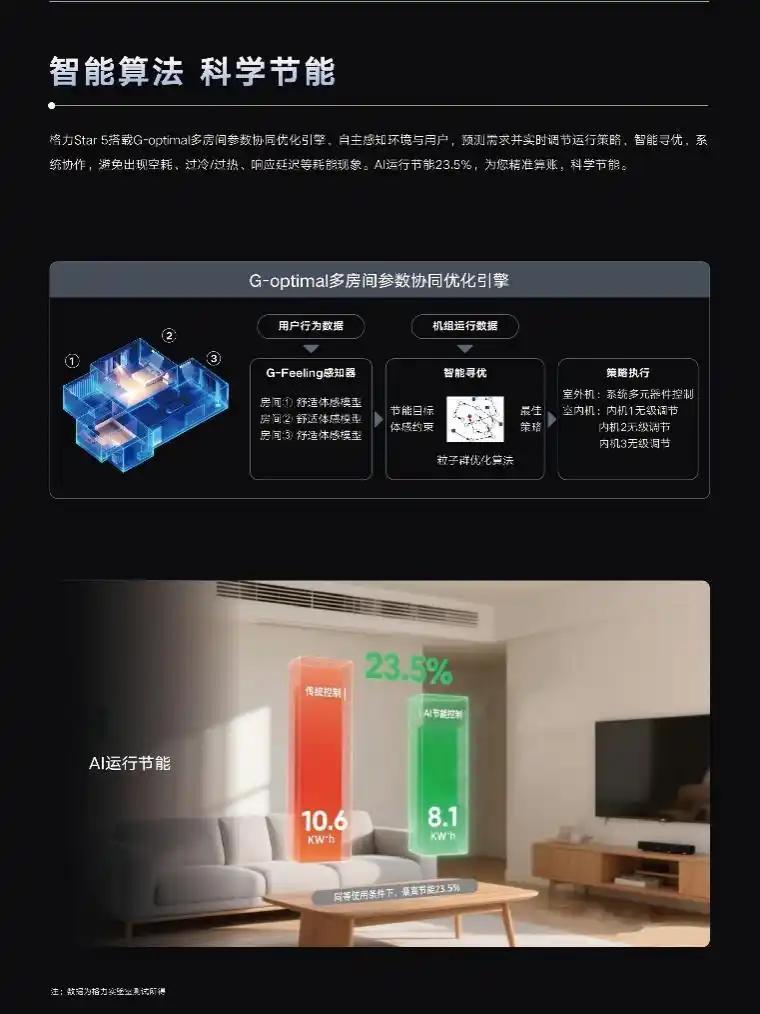
Core Viewpoint - The air conditioning industry is rapidly evolving with the integration of AI technology, moving from traditional cooling and heating systems to more intelligent solutions that focus on user comfort and energy efficiency [1][3][12]. Group 1: AI Integration in Air Conditioning - AI air conditioners, such as Gree's Star 5 AI, aim to enhance user experience by maintaining optimal comfort levels rather than just achieving set temperatures [3][4]. - Traditional air conditioning systems often waste energy and respond slowly to changes in user needs, while AI systems optimize energy use and adjust dynamically based on real-time conditions [4][6]. - Gree's Star 5 AI claims to achieve energy savings of up to 23.5% under ideal conditions, although actual performance may vary based on individual household factors [6][12]. Group 2: Competitive Landscape - Major appliance manufacturers, including Gree, Midea, and Haier, are heavily investing in AI technology, indicating a shift in the market towards algorithm-driven air conditioning solutions [12][15]. - The introduction of AI in air conditioning is expected to create a competitive divide, favoring companies with established data and technology capabilities, while smaller firms may struggle to keep up [16]. - As the market for household air conditioning approaches saturation, consumers are likely to prioritize smart features over cost when upgrading their systems [16].




沪深300ESGETF南方(560180)跌0.59%,半日成交额126.90万元
Xin Lang Cai Jing· 2026-02-05 03:37
来源:新浪基金∞工作室 声明:市场有风险,投资需谨慎。本文基于第三方数据库自动发布,不代表新浪财经观点,任何在本文 出现的信息均只作为参考,不构成个人投资建议。如有出入请以实际公告为准。如有疑问,请联系 biz@staff.sina.com.cn。 沪深300ESGETF南方(560180)业绩比较基准为沪深300ESG基准指数收益率,管理人为南方基金管理 股份有限公司,基金经理为李佳亮,成立(2023-04-13)以来回报为19.34%,近一个月回报为1.57%。 2月5日,截止午间收盘,沪深300ESGETF南方(560180)跌0.59%,报1.184元,成交额126.90万元。沪 深300ESGETF南方(560180)重仓股方面,贵州茅台截止午盘涨1.41%,中际旭创涨0.89%,宁德时代 跌1.93%,招商银行涨1.03%,中国平安跌1.16%,美的集团涨1.27%,紫金矿业跌5.29%,长江电力涨 0.49%,兴业银行涨0.89%,比亚迪涨0.98%。 ...






如何看当前时点地产链投资机会
2026-02-05 02:21
Summary of Conference Call Records Industry: Real Estate Key Points - The real estate industry has undergone a deep cleansing of its fundamentals, with positive policy signals expected to gradually restore holdings, leading to valuation elasticity. In January, the second-hand housing market in core cities showed signs of recovery, with increased transaction volumes and decreased listing volumes, optimizing supply-demand relationships and narrowing price declines [1][2][3] - Multiple authoritative media outlets have released positive signals regarding the financial asset attributes of real estate and the cancellation of restrictive measures. Many real estate companies are no longer required to report the "three red lines" indicators monthly, indicating a period of intensive policy implementation, which enhances the investment value of the real estate sector [3] - The investment strategy for the building materials industry chain should focus on balance and early layout of related opportunities. Global expansion of balance sheets and marginally increasing liquidity in the A-share market support potential excess return opportunities in the building materials sector [1][4] - The A-share market's IPO financing is expected to be at historical average levels, but the second half of the year may see quarterly financing amounts exceeding expectations, which could signal a warning for the technology sector as relative returns may decrease [5] - The current economy is at the end of a Kondratiev wave depression, with non-ferrous metals and commodities being favorable investment options. The adjustment in the real estate market is nearing its end, with potential investment opportunities expected to emerge [6] Additional Insights - The real estate sector is currently in a core configuration window with high win rates and odds. As of Q4 2025, the sector's holdings accounted for approximately 0.43% of stock investment value, indicating a significant underweight that has persisted for 24 quarters [2] - The recovery of the Hong Kong real estate sector serves as a reference for the mainland market, with historical data suggesting that the adjustment in actual housing prices in China has been sufficient, leading to an increase in the sector's win rate [2] - The building materials sector's investment strategy emphasizes early positioning in response to market changes, with a focus on companies with low valuations and strong resource reserves, such as China Trade and Greentown China [4] - The cement industry is highlighted for its potential, with profitability closely tied to capacity utilization rates. Companies like Conch Cement are expected to see significant profit increases if prices rise [10] - The home appliance sector is anticipated to recover as real estate data stabilizes, which will directly boost demand for white goods and kitchen appliances [13] Industry: Building Materials Key Points - The investment strategy for the building materials industry should focus on both expansion and balance, with an emphasis on early positioning in real estate-related opportunities [4] - Companies with low valuations and strong resource reserves, such as China Trade and Greentown China, are recommended for investment [4] - The cement industry is expected to enter a new recovery cycle, with significant profit potential linked to price increases [10] Industry: Home Appliances Key Points - The home appliance sector is nearing the end of its darkest period, with potential investment opportunities arising as real estate data stabilizes and consumer demand is expected to recover [13] - The sector's current low valuations present opportunities for growth, particularly in white goods and kitchen appliances, which are closely tied to real estate performance [13] Additional Insights - Companies like Midea, Haier, and Gree are highlighted for their strong dividend yields, making them attractive investment options [13] - Newer companies in the market, such as Roborock and Ecovacs, are also noted for their competitive positioning and potential for valuation recovery [13]
中泰国际每日晨讯-20260205
ZHONGTAI INTERNATIONAL SECURITIES· 2026-02-05 02:13
2026 年 2 月 5 日 星期四 昨日港股窄幅波动。恒生指数及国企指数分别收报 26,847 点及 9,048 点,前者上升 0.1%,后者下跌 0.1%。港股成交合共 2,854 亿港元,较前日的 3,352 亿港元,下跌 14.9%,或反映投资者观望情绪增加。分类指数方面,能源、地产建筑、原 材料业指数分别上升 3.0%、2.1%、1.4%;资讯科技、非必需性消费则分别下跌 3.4%、0.4%。蓝筹个股方面,信义玻璃 (868 HK)及中国神华(1088 HK)领涨,分别上升 5.9%及 5.7%;携程集团(9961 HK)及腾讯控股(700 HK)领跌,分别下跌 6.1%及 4.0%。 主要内房港股明显上升,例如华润置地(1109 HK)、中国海外发展(688 HK)、越秀地产(123 HK)、万科企业(2202 HK)上涨 3.9%-6.2%。近期部分投资机构预期政府在短中期未来将公布更积极推动房地产政策。至目前为止,房地产销售数字仍需 突围,存销比率也较高。我们盼望推动政策的力度可较大。 ➢ 每日大市点评 昨晚美股表现分化,科技股受到抛售,例如 AMD(AMD US)下跌 17.3%,光伏股则上 ...
人形机器人技术再获突破 产业发展按下“加速键”
Zheng Quan Ri Bao· 2026-02-04 16:13
Group 1 - The Zhejiang University Hangzhou International Innovation Center, in collaboration with Jingzhi Technology and Kaierda Group, launched the humanoid robot "Bolt" with a peak speed of 10 meters per second, marking a breakthrough in high-speed motion and control in humanoid robotics in China [1] - The release of "Bolt" is expected to accelerate the transition from technology research and development to commercialization in the humanoid robotics industry, with significant potential applications in sports technology and intelligent training [1] - The humanoid robotics industry in China is entering a critical phase of commercialization, with continuous breakthroughs in core technologies and expanding application scenarios, projected to enter a new stage of large-scale development by 2026 [1][2] Group 2 - Since 2025, the humanoid robotics industry in China has made significant advancements in motion control, core components, and foundational algorithms, with companies like Zhiyuan Innovation and Yushu Technology leading the way [2] - The year 2025 is identified as a pivotal year for the humanoid robotics industry in China, transitioning from initial development to broader application and integration of technologies [2] - The continuous technological breakthroughs are driving steady expansion in the humanoid robotics industry, with an increasing number of application scenarios further supporting industry growth [2] Group 3 - IDC's report indicates that global humanoid robot shipments are expected to reach approximately 18,000 units by 2025, representing a year-on-year growth of about 508%, with Chinese manufacturers dominating the market [3] - The humanoid robotics sector has seen significant capital investment, with the Beijing Humanoid Robot Innovation Center completing a market financing round exceeding 700 million yuan, and over 70% of financing events in the robotics sector occurring in humanoid robotics and embodied intelligence [3] - Policy support for the humanoid robotics industry is strengthening, with initiatives included in government reports and plans, establishing a clear development path and support system for the industry [3] Group 4 - The high-tech robot industry research institute predicts that by 2026, the domestic humanoid robotics industry will enter a phase of large-scale production, with expected shipments reaching 62,500 units [4] - The humanoid robotics industry chain is experiencing significant development opportunities, with companies accelerating core technology breakthroughs and product innovations to support large-scale industry implementation [4] Group 5 - Companies like Guangzhou Haozhi Electromechanical and Jilun Intelligent are actively developing core components for humanoid robots, with orders already being placed for products such as harmonic reducers and planetary reducers [5] - Midea Group has introduced the "MIROU," a six-armed wheeled humanoid robot, showcasing innovation in the industry [5] - Industry experts emphasize the need for humanoid robotics companies to focus on technological innovation, particularly in core hardware and software, to overcome technical bottlenecks and drive product iterations [5]


美的全系旗舰产品首次登陆葡萄牙
Bei Jing Shang Bao· 2026-02-04 13:47
北京商报讯(记者 陶凤 王天逸)2月4日,美的集团宣布,近期在葡萄牙里斯本首次举办品牌及全系旗 舰家电新品发布会。这并非一次寻常的新品发布,而是美的全球化战略在欧洲市场的一次纵深突破,标 志着美的品牌在南欧区域发展迈入关键阶段。 ...
美的集团(00300) - 截至2026年1月31日止月份之股份发行人的证券变动月报表
2026-02-04 12:45
FF301 | 1. 股份分類 | 普通股 | 股份類別 | H | | 於香港聯交所上市 (註1) | | 是 | | | --- | --- | --- | --- | --- | --- | --- | --- | --- | | 證券代號 (如上市) | 00300 | 說明 | H股 | | | | | | | | | 法定/註冊股份數目 | | | 面值 | | 法定/註冊股本 | | | 上月底結存 | | | 650,848,500 | RMB | | 1 RMB | | 650,848,500 | | 增加 / 減少 (-) | | | | | | RMB | | | | 本月底結存 | | | 650,848,500 | RMB | | 1 RMB | | 650,848,500 | 呈交日期: 2026年2月4日 I. 法定/註冊股本變動 本月底法定/註冊股本總額: RMB 7,599,891,663 | 2. 股份分類 | 普通股 | 股份類別 | A | | 於香港聯交所上市 (註1) | | 否 | | | --- | --- | --- | --- | --- | --- | - ...
4.5万亿,年轻人正在为“开心”买单
Zhong Jin Zai Xian· 2026-02-04 10:30
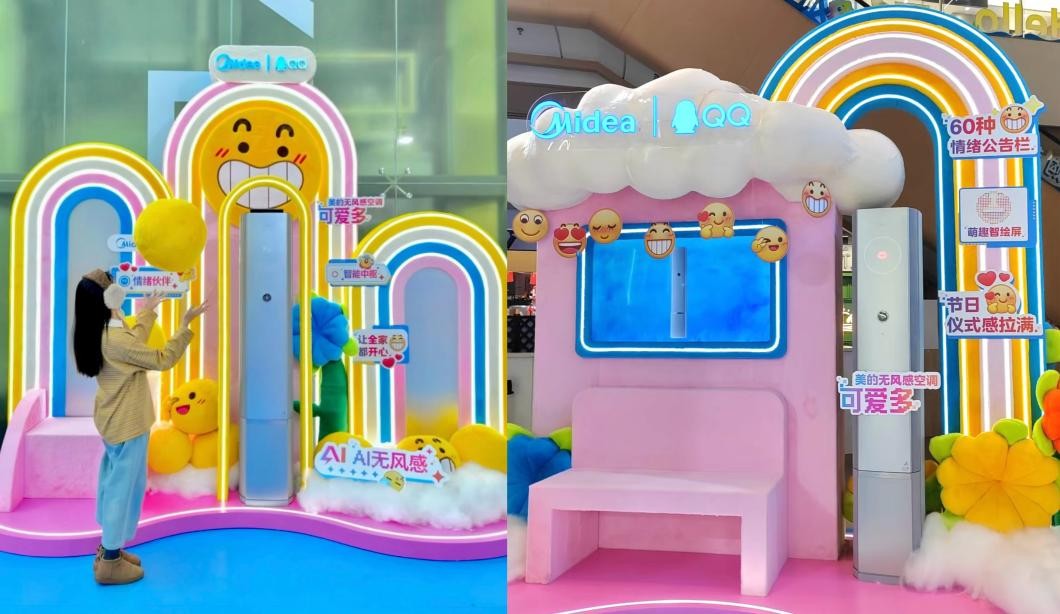
Core Insights - The rise of "emotional economy" reflects a shift in consumer behavior, where young consumers prioritize emotional satisfaction over traditional value-for-money considerations [1][4] - The emotional economy market in China is projected to grow from 16.3 trillion yuan in 2022 to 23.1 trillion yuan in 2024, and is expected to reach 27.2 trillion yuan by 2025, surpassing 45 trillion yuan by 2029 [1] - Nearly 60% of young consumers are willing to pay for "emotional value," indicating a significant change in purchasing motivations [1] Group 1: Emotional Consumption Trends - Emotional consumption is characterized by a focus on products that enhance personal experiences and feelings, moving from "cost-performance ratio" to "emotional value ratio" [1] - Young consumers are increasingly asking questions about the aesthetic and emotional impact of products, such as whether a coffee machine can enhance kitchen decor or if a sound system can create a better atmosphere [1][4] Group 2: Product Examples and Market Offerings - Retailers like Suning are offering a variety of appliances that cater to emotional value, including collaborations with popular IPs and products designed for emotional engagement, such as "emotion air conditioners" and AI televisions [4] - The in-store experience at Suning includes immersive setups that showcase products in emotionally resonant contexts, such as cozy coffee corners and gaming stations, enhancing the emotional appeal of the shopping experience [4]
传统空调需求承压,格力、美的切入AI数据中心制冷领域
第一财经· 2026-02-04 09:46
Core Viewpoint - The central air conditioning industry is undergoing an adjustment period due to declining traditional engineering demand, prompting companies like Gree Electric and Midea Group to invest more resources in AI data center cooling and high-performance infrastructure to seek structural growth opportunities [5][6]. Group 1: Market Dynamics - Air conditioning still accounts for about 70% of Gree Electric's revenue, with central air conditioning being a core segment. However, the industry faces pressure from a downturn in real estate, weak traditional engineering demand, and intensified price competition [7]. - In 2025, the sales scale of China's central air conditioning industry is projected to be 138.68 billion yuan, with a 7.4% year-on-year decline in the domestic market, while the export market is expected to grow by 12.7%. The growth in exports is significantly driven by ongoing investments in overseas data centers and computing infrastructure [7]. Group 2: Technological Trends - As AI computing power increases, the power density of server cabinets is rising rapidly, revealing limitations in traditional air cooling solutions in terms of efficiency and heat dissipation. Liquid cooling is gradually becoming an important technology route for high-performance data centers [8]. - Liquid cooling is not merely an equipment upgrade but involves comprehensive changes in system architecture, core components, and operational modes. It is seen as a supplementary solution in high-performance scenarios, often coexisting with air cooling solutions, requiring higher system integration and project experience [8]. Group 3: Competitive Landscape - The data center cooling market is primarily dominated by two types of companies: specialized manufacturers with extensive experience in data center temperature control, such as Vertiv, Ingersoll Rand, and others, and foreign brands like Johnson Controls and Carrier, alongside domestic central air conditioning manufacturers like Gree and Midea [10]. - Domestic central air conditioning companies face significant challenges in the data center market, including the maturity of technology in high-performance scenarios, the ability to deliver complex projects, and the long verification cycles required by leading clients [10]. Group 4: Future Outlook - Overall, AI data center cooling presents a rare structural growth opportunity for the central air conditioning industry, but its scale, pace, and profit model differ significantly from traditional engineering markets. In the short term, data center business serves more as a buffer against the decline of traditional business rather than a decisive replacement [11]. - The ability of companies like Gree and Midea to establish stable engineering capabilities and long-term customer relationships in high-barrier technology paths like liquid cooling will be crucial in determining their position in the computing infrastructure cycle [11].

传统空调需求承压,格力、美的切入AI数据中心制冷领域
Di Yi Cai Jing· 2026-02-04 08:50
Core Insights - The data center cooling business is a significant growth point for the central air conditioning industry during its consolidation phase, but competition is intensifying, presenting both opportunities and challenges [1] Industry Overview - The central air conditioning industry is currently in an adjustment period due to weakening traditional engineering demand. Companies like Gree Electric Appliances (000651.SZ) and Midea Group (000333.SZ) are reallocating resources towards AI data center cooling and high-computing infrastructure to seek structural growth [3] - The data center temperature control market has high requirements for system design capabilities, project experience, and long-term operation and maintenance, posing challenges for traditional HVAC companies [3] Market Dynamics - Air conditioning still accounts for approximately 70% of Gree's revenue, with central air conditioning being a core segment. However, the industry faces pressure from a downturn in real estate, weak traditional engineering demand, and intensified price competition [4] - The Chinese central air conditioning market is projected to reach a sales scale of 138.68 billion yuan by 2025, with a year-on-year decline of 7.4% in the domestic market, while the export market is expected to grow by 12.7% [4] - Data centers are viewed as one of the few remaining sources of certain demand in the central air conditioning industry, although their contribution to Gree and Midea's central air conditioning revenue remains limited [4] Technological Trends - As AI computing power increases, the power density of server cabinets is rising rapidly, revealing limitations in traditional air-cooled solutions regarding efficiency and heat dissipation. Liquid cooling is becoming an important technology route for high-computing data centers [4] - Liquid cooling is not merely an equipment upgrade but involves comprehensive changes in system architecture, core components, and operational modes, requiring higher system integration and project experience [4] Competitive Landscape - The data center cooling market is primarily dominated by two types of companies: specialized temperature control manufacturers and foreign brands. Specialized firms have accumulated substantial project experience and customer loyalty, while central air conditioning manufacturers like Gree and Midea have advantages in manufacturing and global service networks but face competition in specialized cooling solutions [6] - Domestic central air conditioning companies see opportunities in the data center market due to incremental space and localization trends, but they also face challenges such as technology maturity and complex project delivery capabilities [6] Strategic Outlook - Overall, AI data center cooling presents a rare structural growth opportunity for the central air conditioning industry, but its scale, pace, and profit model differ significantly from traditional engineering markets. In the short term, data center business acts more as a buffer against the decline of traditional business rather than a decisive replacement [7] - The ability of Gree and Midea to establish stable engineering capabilities and long-term customer relationships in high-barrier technologies like liquid cooling will be crucial for their positioning in the computing infrastructure cycle [7]