
蒙牛乳业

Search documents
食品饮料行业周报:2025承压收官,2026反转可期-20260104
KAIYUAN SECURITIES· 2026-01-04 10:44
Investment Rating - The industry investment rating is "Positive" (maintained) [1] Core Viewpoints - The food and beverage index experienced a decline of 2.3% from December 29 to January 2, ranking 27th among primary sub-industries, underperforming the CSI 300 by approximately 1.7 percentage points. The sub-industries of soft drinks (+0.5%), other foods (+0.0%), and other alcoholic beverages (-0.2%) performed relatively better [3][11] - The report expresses a cautious optimism for 2026, despite the poor performance of the food and beverage sector in 2025, which was impacted by factors such as the alcohol ban, declining prices of Moutai, and a weak consumption environment. The recent market adjustments by leading liquor companies indicate that the industry is nearing a bottom [4][11] - The report suggests focusing on three stock selection strategies for consumer goods in 2026: identifying cyclical recovery opportunities, seeking growth stocks driven by channel innovation and product upgrades, and looking for companies in turnaround situations due to internal business cycles [4][12] Summary by Sections Weekly Viewpoints - The food and beverage sector is in a phase of adjustment, with a focus on the liquor market's recovery and the strategic layout of consumer goods [11] Market Performance - The food and beverage index underperformed the market, with a 9.7% decline in 2025, ranking last among all sectors. The report highlights the need for strategic adjustments in response to market conditions [11][13] Upstream Data - Some upstream raw material prices are declining, with the price of whole milk powder down 18.7% year-on-year as of December 16, 2025, and fresh milk prices down 2.6% year-on-year as of December 26, 2025 [17][19] Liquor Industry Data - The report notes that leading liquor companies are implementing market-oriented reforms to adapt to changing demand, with Moutai's recent sales strategy indicating a shift towards a more sustainable business model [4][41] Recommended Portfolio - The recommended stocks include Moutai, Shanxi Fenjiu, Ximai Food, Weilong, and Ganyuan Food, with each company showing potential for growth or stability in the upcoming year [5][12]

君乐宝百亿豪赌,陷发展与上市困局
Xin Lang Cai Jing· 2026-01-04 09:15
Core Viewpoint - The aggressive expansion and acquisition strategy of Junlebao has led to high debt levels and raised questions about its ability to go public amid tightening regulations in the dairy industry. The company has missed its target to complete an IPO by 2025, despite being a major player with over 20 billion yuan in annual revenue [2][38]. Group 1: Financial Performance and Challenges - Junlebao's revenue heavily relies on its low-margin infant formula business, which contributed 150 billion yuan, or 74% of total revenue, in 2021 [3][39]. - The company's net profit margins for the infant formula segment were significantly lower than competitors, with 2.2% and 2.9% in 2017 and 2018, respectively, compared to 8.82% and 8.11% for Yili and 19.68% and 21.55% for Feihe [3][39]. - Junlebao's total assets were approximately 210.89 billion yuan, with a net asset of about 47.17 billion yuan and a debt ratio of 78% as of December 31, 2022, which is significantly higher than the industry average of 45.06% [71]. Group 2: Expansion Strategy - Since 2021, Junlebao has invested around 50 billion yuan in acquisitions to expand its regional presence, product categories, and supply chain [6][42]. - The company has made nearly 10 investments by the end of 2023, focusing on diversifying its product offerings and enhancing its market reach [6][42]. - Junlebao aims to establish a new growth matrix centered around low-temperature fresh milk and yogurt, supplemented by cheese and ready-to-drink products [47]. Group 3: Market Competition - The low-temperature fresh milk market has become a key battleground in the dairy industry, with major players like Mengniu and Yili aggressively expanding their presence [61]. - Junlebao's "Yue Xian Huo" brand has achieved a market share of 29.6% in the low-temperature yogurt segment, but it faces competition from Mengniu's "Daily Fresh" and Yili's "Jindian" brands [40][61]. - The competitive landscape includes both national giants and regional players, with local brands leveraging their established trust and supply chains [61][62]. Group 4: IPO Prospects - Junlebao's ambition to achieve a sales target of 50 billion yuan and become a leading global infant formula brand by 2025 appears increasingly unattainable [64][66]. - The company has initiated its A-share IPO plan, but the timeline for submission and approval may hinder its ability to meet the 2025 target [64][65]. - The low valuation and thin profit margins present significant challenges for Junlebao's IPO prospects, as evidenced by its stagnant valuation despite increasing revenues [69][70].


元旦期间,东营市主要居民生活消费品市场价格基本保持平稳
Zhong Guo Fa Zhan Wang· 2026-01-04 08:43
Core Viewpoint - The price monitoring work in Dongying City during the New Year period has been organized to ensure the stability of essential consumer goods and services prices, with measures such as enhanced price inspections and timely information releases being implemented [1] Group 1: Price Monitoring and Stability - The Dongying Development and Reform Commission has arranged price monitoring to maintain stability during the holiday season, focusing on essential consumer goods [1] - The average price of 55 monitored goods on January 3 showed a mixed trend, with 5 items decreasing, 43 remaining stable, and 7 increasing compared to December 31, while year-on-year comparisons indicated 24 items decreased, 3 remained stable, and 28 increased [1] Group 2: Grain and Oil Prices - Grain and oil prices remained stable compared to the previous period, with 12 monitored items showing no change, and year-on-year data indicating 8 items decreased and 4 increased [2] - Specific prices include rice at 3.120 yuan per 500 grams (down 3.78% year-on-year), millet at 4.830 yuan (down 3.78% year-on-year), and soybean oil at 159.900 yuan per barrel (down 2.04% year-on-year) [2] Group 3: Meat, Poultry, and Egg Prices - Meat prices showed slight increases, with an average price of 21.645 yuan for 6 monitored types, reflecting a 1.30% increase from the previous period and a 4.82% increase year-on-year [3] - Specific prices include pork leg at 13.140 yuan (up 2.58% from the previous period, down 4.85% year-on-year) and fresh beef at 30.560 yuan (stable compared to the previous period, up 26.65% year-on-year) [3] - Egg prices remained stable at an average of 3.360 yuan, with no changes in both month-on-month and year-on-year comparisons [4] Group 4: Vegetable and Fruit Prices - Vegetable prices showed slight increases, with an average price of 4.075 yuan for 15 monitored types, reflecting a 0.11% increase from the previous period and a 0.07% increase year-on-year [5] - Specific vegetable prices include cabbage at 1.320 yuan (down 10.81% from the previous period) and cucumber at 4.650 yuan (up 30.99% from the previous period) [5] - Fruit prices experienced slight fluctuations, with an average price of 5.528 yuan for 4 monitored types, showing a 1.52% increase from the previous period and a 9.02% increase year-on-year [5] Group 5: Prices of Other Food Products - Prices of other food products remained generally stable, with 10 monitored items showing 9 stable and 1 increase compared to the previous period, while year-on-year data indicated 3 items decreased, 2 remained stable, and 5 increased [6] - Specific prices include soy sauce at 18.230 yuan per bottle (up 14.65% year-on-year) and vinegar at 8.870 yuan per bottle (up 37.09% year-on-year) [6]
中国人最爱喝的饮料,大多数都不及格
虎嗅APP· 2026-01-03 13:35
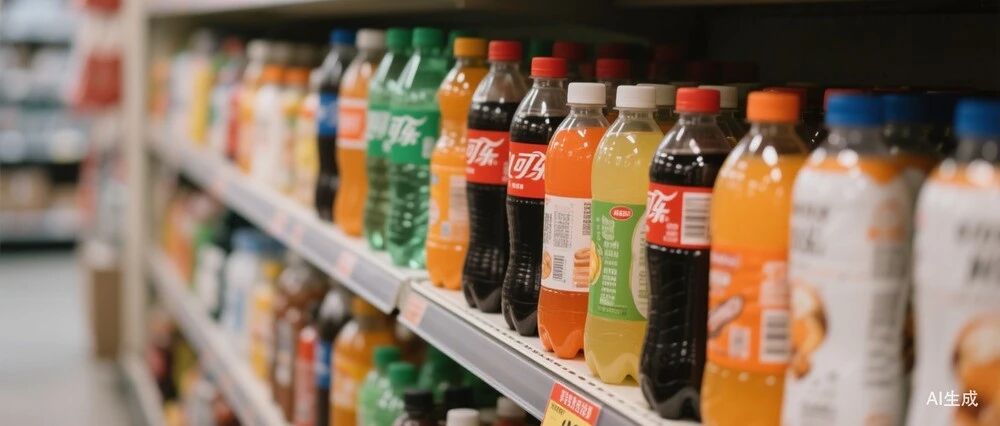
Core Viewpoint - Shanghai is implementing a beverage "nutritional choice" grading system, marking a national first aimed at reducing sugar consumption, particularly from sugary drinks [4][5][6]. Group 1: Grading System Overview - The grading system categorizes beverages into four levels: A, B, C, and D, with A being the healthiest and D the least healthy [9]. - Manufacturers are required to label C and D grade beverages, effectively informing consumers about their health risks [9][10]. - The grading is based on three criteria: sugar content, saturated fat content, and the presence of non-sugar sweeteners [10]. Group 2: Comparison with Singapore - Singapore has already implemented a similar grading system since late 2022, which has now expanded to include freshly prepared drinks [5][6]. - The Singaporean system is considered one of the strictest globally, with penalties for non-compliance, including advertising bans for D grade beverages [14]. Group 3: Health Implications - The average sugar intake in Singapore is significantly above the World Health Organization's recommended limit, with many people consuming around 60 grams daily, primarily from sugary drinks [37]. - In contrast, China's average daily sugar intake is lower, at about 21 grams, suggesting that the grading system could be beneficial if adapted [38][42]. Group 4: Beverage Analysis - Common beverages like carbonated drinks and fruit juices often fall into C or D grades due to high sugar content, while unsweetened teas and sodas are more likely to achieve A grades [24][30]. - The grading system may not favor certain products like full-fat milk, which could receive lower grades due to saturated fat content, despite their nutritional benefits [26][29]. Group 5: Consumer Behavior and Alternatives - The rise of non-sugar sweeteners in beverages is a response to sugar reduction efforts, but their health implications are still debated [49][52]. - The World Health Organization has raised concerns about the potential health risks associated with excessive consumption of non-sugar sweeteners, suggesting that moderation is key [54][55].
出海、上市,中国第一批大模型熬出头了
3 6 Ke· 2026-01-03 02:21
Core Insights - The first batch of large model companies in China, including Zhiyu AI and MiniMax, are set to go public, marking a significant milestone in the AI startup landscape by the end of 2025 [1][5] - These companies are taking different paths in their business models, with Zhiyu AI focusing on technology infrastructure and MiniMax targeting consumer applications [1][2] Company Strategies - Zhiyu AI, founded in 2019, has a strong academic background and focuses on a full-stack self-developed approach, primarily generating revenue through Model as a Service (MaaS), which contributed 84.8% of its revenue in the first half of 2025 [6][10] - MiniMax, established in early 2022, adopts a "technology as product" strategy, with a significant portion of its revenue coming from AI-native products, which accounted for 71.4% of total revenue in 2024 [11][12] Financial Performance - Zhiyu AI's valuation reached 24.4 billion yuan, making it a leader among domestic large model companies, with a market share of 6.6% in the general large model development sector [6][10] - MiniMax reported revenues of $3.46 million in 2023, $30.52 million in 2024, and $53.44 million in the first three quarters of 2025, with overseas revenue becoming a significant contributor [11][12] Market Trends - The global large model market is expected to grow from $10.7 billion in 2024 to $20.65 billion by 2029, with a compound annual growth rate (CAGR) of 80.7% [16] - The Chinese large language model market is projected to reach 53 billion yuan in 2024, with enterprise clients contributing 47 billion yuan [15] Competitive Landscape - Zhiyu AI's focus on B-end clients aligns with the market's payment structure, while MiniMax's C-end strategy allows it to avoid direct competition with giants like OpenAI and Google [15][18] - Both companies are exploring potential expansions into each other's domains, with Zhiyu AI looking to enhance consumer electronics and MiniMax expressing intentions to develop B-end services [21] Challenges and Risks - Zhiyu AI faces risks related to client concentration, with its largest client contributing 19% of revenue and the top five clients accounting for 45.5% [10] - MiniMax is dealing with copyright lawsuits from major film studios, which could pose financial risks despite the company's belief in the lack of merit in these claims [14]

智通港股通占比异动统计|1月2日





Xin Lang Cai Jing· 2026-01-02 01:01
Core Insights - The article discusses the changes in the Hong Kong Stock Connect holdings, highlighting the companies with the largest increases and decreases in shareholding percentages. Group 1: Increased Holdings - Andeli Juice (02218) saw the largest increase in shareholding percentage, rising by 2.35% to a total of 23.75% [1] - Mengniu Dairy (02319) experienced a slight increase of 0.07%, bringing its total to 17.52% [1] - The Yingfu Fund (02800) had a minimal increase of 0.02%, resulting in a holding of 1.78% [1] - Other notable increases include Lion Group (02562) with a 3.79% rise to 49.05% and Zhejiang Shibao (01057) with a 3.55% increase to 58.76% over the last five trading days [2] Group 2: Decreased Holdings - Country Garden (02007) had the largest decrease in shareholding percentage, dropping by 0.51% to 15.33% [1] - Geely Automobile (00175) saw a decrease of 0.16%, resulting in a holding of 11.37% [1] - Huaxia Hengsheng Technology (03088) experienced a minor decrease of 0.02%, bringing its total to 20.19% [1] - In the last five trading days, notable decreases included Jiahe Biology-B (06998) with a 1.74% drop to 0.61% and Chalco International (02068) with a 1.50% decrease to 19.44% [2] Group 3: 20-Day Holding Changes - Over the past 20 days, Lion Group (02562) had the most significant increase, rising by 23.92% to 49.05% [2] - Jihong Co., Ltd. (02603) increased by 22.62% to 54.86% [2] - Red Star Macalline (01528) saw an increase of 8.47%, reaching 52.20% [2] - Conversely, the largest decrease was seen in the Wan Guo Gold Group (02979), which dropped by 11.34% to 0.00% [3]
经历2025年“结构性回暖”婴幼儿奶粉市场新一年增长点在哪
Sou Hu Cai Jing· 2026-01-01 23:12
Core Viewpoint - The Chinese milk powder market is experiencing a counter-cyclical recovery in 2025 despite ongoing pressure from declining newborn numbers, driven by strategic shifts in companies, policy support, and a focus on high-end products [4][9]. Group 1: Market Performance - The domestic milk powder market shows significant performance differentiation and overall recovery, with companies like Yili, Beingmate, and Ausnutria reporting revenue and profit growth in their infant formula segments [5]. - Yili's milk powder and dairy products revenue grew by 14.26% year-on-year, achieving a market share of 18.1%, making it the leading brand in China [5]. - Ausnutria reported a revenue of 3.887 billion yuan, a 5.6% increase year-on-year, with a net profit growth of 24.1% [5]. Group 2: Strategic Shifts - The recovery is attributed to strategic adjustments, product structure optimization, and deep channel cultivation rather than market expansion [7]. - Companies are focusing on high-end and differentiated products, with parents willing to pay a premium for clinically validated high-quality products [7]. - The acceptance of high-end milk powder in lower-tier cities is increasing, with sales growth in these areas surpassing that of first and second-tier cities [7]. Group 3: Policy Impact - Recent national policies, including a child-rearing subsidy of 3,600 yuan per eligible child and free preschool education, are expected to inject approximately 32.4 billion yuan into the milk powder market [8]. - These policies are designed to reduce family childcare costs and have led to a noticeable increase in stock prices for milk powder companies [8]. Group 4: Future Outlook - Experts suggest that while the industry shows signs of recovery, the low birth rate remains a concern, and companies must build diverse growth strategies for the long term [9]. - Short-term strategies should focus on policy adaptation and channel deepening, while product innovation should extend into specialized nutrition and all-age dietary needs [9]. - The industry is expected to see increased concentration, with leading companies gaining more advantages amid stricter regulations and rising costs [9].


智通港股通占比异动统计|1月1日


智通财经网· 2026-01-01 00:40
Core Insights - The report highlights the changes in the Hong Kong Stock Connect holdings, indicating significant increases and decreases in ownership percentages for various companies as of December 31, 2025 [1] Group 1: Increased Holdings - Andeli Juice (02218) saw the largest increase in ownership percentage, rising by 2.35% to a total holding of 23.75% [2] - Mengniu Dairy (02319) experienced a slight increase of 0.07%, bringing its holding to 17.52% [2] - The Yingfu Fund (02800) had a minimal increase of 0.02%, resulting in a holding of 1.78% [2] - Other notable increases include Lion Group (02562) with a 3.79% rise to 49.05% and Zhejiang Shibao (01057) with a 3.55% increase to 58.76% [3] Group 2: Decreased Holdings - Country Garden (02007) faced the largest decrease, with a drop of 0.51% to a holding of 15.33% [2] - Geely Automobile (00175) saw a reduction of 0.16%, resulting in a holding of 11.37% [2] - Huaxia Hengsheng Technology (03088) experienced a minor decrease of 0.02%, leading to a holding of 20.19% [2] - Other significant decreases include Jiahe Biotechnology-B (06998) with a 1.74% drop to 0.61% and Chalco International (02068) with a 1.50% decrease to 19.44% [3] Group 3: Five-Day Changes - Over the last five trading days, Lion Group (02562) had the highest increase in ownership percentage, up by 3.79% [3] - Zhejiang Shibao (01057) and Sanhua Intelligent Control (02050) also saw significant increases of 3.55% and 3.46%, respectively [3] - Conversely, Jiahe Biotechnology-B (06998) had the largest decrease of 1.74% over the same period [3] Group 4: Twenty-Day Changes - In the last twenty days, Lion Group (02562) experienced a substantial increase of 23.92% in ownership [4] - Jihong Co., Ltd. (02603) followed with a 22.62% increase, reaching a holding of 54.86% [4] - Red Star Macalline (01528) also saw an increase of 8.47%, bringing its holding to 52.20% [4]
食品饮料行业2026年度投资策略
2025-12-31 16:02
食品饮料行业 2026 年度投资策略 20251230 摘要 食品饮料行业预计在 2026 年迎来筑底回升,白酒价格体系重塑,大众 品进入渠道为王时代,餐饮链条有望在低基数下修复,具备产品创新和 供应链优化能力的企业将实现结构性增长。 白酒板块预计 2026 年二季度达新竞争点,目前处于供需深刻变化期, 价格体系重塑,建议重视底部配置价值。2025 年或进入报表下滑阶段, 加速去库过程。 大众品板块进入渠道为王时代,效率革命明显,商超调改加速,新兴渠 道崛起,成本红利延续,提升盈利能力。传统行业逐步筑底回暖,新兴 行业引领成长。 调味品行业 2026 年寻找阿尔法拐点,部分公司已进入库存去化尾声, 成本继续回落,盈利能力提升。建议关注天禾味业、海天味业及日辰股 份等公司。 乳制品行业预计 2026 年迎来供需拐点,奶价筑底周期延续,深加工打 开。奶价持平或上涨缓解竞争,原奶重回紧平衡,下游价格竞争减弱, 盈利持续改善。关注伊利、蒙牛、新乳业及妙可蓝多等投资机会。 Q&A 2025 年食品饮料行业的整体表现如何? 2025 年,食品饮料行业整体处于调整筑底阶段。需求端维持相对疲软,供给 端出清仍在进行中,导致整 ...
262%净资产担保压顶,皇氏乳业“缺钱”写在2025年终总结首页
Guan Cha Zhe Wang· 2025-12-31 10:00
Core Viewpoint - The financial situation of Huangshi Group is critical, with a significant reliance on external guarantees and a high debt-to-equity ratio, indicating severe liquidity issues and operational challenges ahead [1][3][6]. Financial Condition - Huangshi Group disclosed an additional external guarantee of approximately 105 million yuan, bringing the total external guarantee balance to 2.45 billion yuan, which is 262.19% of the latest audited net assets [1][3]. - The company reported short-term loans of 1 billion yuan and current liabilities of 235 million yuan, while cash on hand was only 229 million yuan, resulting in a cash-to-short-term-debt ratio of about 0.19 [3]. - The company faced a net loss of 49.24 million yuan in the first three quarters of 2025, a 236% decline year-on-year, with a cumulative non-recurring loss exceeding 2.1 billion yuan over seven years [3][4]. Legal and Regulatory Issues - Huangshi Group has faced legal challenges, with new litigation and arbitration cases totaling 99.55 million yuan, accounting for 10.65% of the latest audited net assets [3][6]. - The company was fined 4 million yuan by the Guangxi Securities Regulatory Bureau for failing to disclose a significant agreement, highlighting issues with transparency and governance [6]. Business Performance - The company's revenue for the first three quarters of 2025 was 1.314 billion yuan, a decrease of 12.97% year-on-year, with a gross profit margin decline to 27.16% [4][12]. - The direct sales channel contributed 118.59 million yuan in revenue, with a gross margin of 33.49%, indicating a shift in focus towards higher-margin products [12][13]. Market Position and Strategy - Huangshi Group is recognized as a leading player in the water buffalo milk sector, with a focus on high-value products and expansion into new markets [7][8]. - The company aims to penetrate the East China market and has established partnerships with various retail channels, including e-commerce and convenience stores [8][15]. - Despite its ambitions, the company faces systemic pressures from competition and operational challenges, particularly in sourcing and distribution [16][20]. Challenges and Future Outlook - The company is experiencing significant challenges due to low milk production rates and high operational costs, which hinder its competitiveness against larger dairy firms [19][20]. - Huangshi Group's debt levels have escalated, with a debt-to-equity ratio of 78.4% as of Q3 2025, raising concerns about its financial sustainability [24][25]. - The company must reassess its strategic direction, balancing between being a dairy producer and a capital operation platform [25].

