摩根士丹利

Search documents
AI算力狂潮之下存储芯片需求激增! 韩国出口在关税与假期夹击中逆势反弹
智通财经网· 2025-11-01 06:44
Core Insights - The strong rebound in South Korea's exports in October is closely linked to the booming demand for storage chips, which has significantly outperformed the negative impacts of U.S. tariffs and holiday-related disruptions [1][2] - Adjusted for working days, South Korea's exports increased by 14% year-on-year in October, while imports fell by 1.5%, resulting in a trade surplus of approximately $6.1 billion [1] - The semiconductor sector, particularly storage chips, is driving a substantial increase in exports, with a year-on-year growth of 25.4% in semiconductor exports due to strong demand from AI infrastructure and traditional cloud computing servers [2][4] Export Performance - October's overall exports, without adjusting for working days, showed a year-on-year increase of 3.6%, reflecting the impact of the holiday season and calendar effects [1] - The export rebound occurred despite a significant reduction in working days due to the Chuseok holiday, indicating robust underlying demand [1] Trade Agreements - The recent trade agreement between South Korea and the U.S. set the tariff cap on South Korean goods at 15%, which is a significant reduction from the previous 25% on automotive imports, enhancing competitiveness for South Korean manufacturers [2][3] - This agreement was reached shortly before the release of the strong export data, potentially alleviating some economic pressures ahead of the Bank of Korea's monetary policy decision [3] Semiconductor Industry Dynamics - The storage chip sector is crucial for South Korea's economy, with major players like SK Hynix and Samsung leading the market [4] - The demand for storage chips is expected to continue growing due to the increasing need for AI computing infrastructure, which is driving a "super cycle" in the storage industry [5][6] - Analysts predict that the supply of storage chips will remain tight, with price increases expected to persist through 2026 and possibly into 2027, reminiscent of the previous super cycle in 2017-2018 [6][7]
三大指数收涨 纳指连续第7个月录得涨幅
Zhi Tong Cai Jing· 2025-11-01 00:42
Market Performance - The S&P 500 index has recorded a six-month consecutive increase, rising 2.27% this month, marking the longest monthly winning streak since August 2021 [1] - The Dow Jones index also saw a six-month consecutive increase, with a monthly rise of 2.51% [1] - The Nasdaq index achieved a seven-month consecutive increase, with a total rise of 4.7%, the longest streak since January 2018 [1] Stock Movements - Amazon (AMZN.US) increased by 9.58%, while Tesla (TSLA.US) rose by 3.74% [1] - Nvidia (NVDA.US) experienced a slight decline of 0.2%, and Meta Platforms (META.US) fell by 2.72% [1] - NIO (NIO.US) rose by 3.46%, while Alibaba (BABA.US) dropped over 2% [1] European Market - The DAX30 index in Germany fell by 158.07 points, a decrease of 0.65% [2] - The FTSE 100 index in the UK decreased by 39.56 points, down 0.41% [2] - The CAC40 index in France dropped by 36.22 points, a decline of 0.44% [2] Oil Market - WTI crude oil futures for December delivery increased by 0.7%, settling at $60.98 per barrel [3] - Brent crude oil futures for January rose by 0.6%, reaching $64.77 per barrel [3] - OPEC+ is expected to agree on a slight increase in oil production targets for December, amid concerns of potential oversupply [3] Cryptocurrency Market - Bitcoin rose over 1%, priced at $10.9, while Ethereum surpassed $3900, increasing by 2.54% [4] Gold Market - Spot gold fell by 0.55%, priced at $4002.62 [5] - Morgan Stanley forecasts gold prices could rise to $4500 per ounce by mid-2026, driven by strong physical demand and uncertain economic outlook [5] Federal Reserve Insights - Federal Reserve Governor Waller indicated that data suggests a rate cut in December is warranted, despite concerns about the labor market [6] - Several Federal Reserve officials expressed caution regarding excessive rate cuts, emphasizing the need to maintain a restrictive policy stance to control inflation [7] Energy Trade Negotiations - The U.S. and Canada aim to return to trade negotiations, focusing on oil, natural gas, and critical minerals [8] Corporate Developments - Elon Musk announced that Tesla may unveil a flying car by the end of this year, claiming it will surpass all James Bond vehicles [8] - Coinbase (COIN.US) is in talks to acquire stablecoin infrastructure company BVNK for approximately $2 billion [8] Analyst Ratings - HSBC raised the target price for Apple (AAPL.US) from $220 to $250 [9] - UBS increased the target price for Amazon (AMZN.US) from $279 to $310, maintaining a buy rating [9]
工银理财:参与剑桥科技港股IPO基石投资
Cai Jing Wang· 2025-10-31 08:41
Core Viewpoint - Cambridge Technology, a leading company in the AI computing network and optical communication sector, successfully listed on the Hong Kong Stock Exchange on October 28, 2025, with an opening increase of 36.47% [1] Group 1: IPO Details - The IPO received significant interest, with the Hong Kong public offering portion being oversubscribed by 340 times, resulting in frozen funds amounting to 158.6 billion HKD [1] - ICBC Wealth Management participated as a cornerstone investor, contributing a stake of 10 million USD, alongside other global institutions such as Morgan Stanley, Baillie Gifford, and Sequoia [1] Group 2: Market Position - Cambridge Technology is positioned as the first stock in the Hong Kong market focused on AI computing and optical modules, marking a significant milestone in the sector [1] - The company is also noted for being the first in its field to achieve an "A+H" listing, indicating its dual listing on both the A-share and H-share markets [1]

Meta市值一夜蒸发1.5万亿
新华网财经· 2025-10-31 03:38
Core Viewpoint - Meta's stock experienced a significant sell-off due to the company's third adjustment of capital expenditure expectations for the year, raising concerns among analysts about uncontrolled spending on artificial intelligence [1][3]. Group 1: Stock Performance and Market Reaction - Meta's stock closed down 11.33%, marking the largest single-day drop in three years, with a market value loss of $214.7 billion (approximately 1.53 trillion RMB) [1]. - This loss ranks as the tenth largest single-day market value loss in U.S. corporate history and is the second largest in Meta's history, following a $232 billion loss on February 3, 2022 [1]. Group 2: Capital Expenditure Adjustments - Meta raised its capital expenditure forecast for 2025 to a range of $70 billion to $72 billion, up from a previous range of $66 billion to $72 billion [3]. - The CEO, Mark Zuckerberg, indicated that this spending is aimed at keeping pace with AI demand, suggesting that excess infrastructure could be utilized in the future [3]. Group 3: Revenue and Investment Concerns - Despite achieving over $60 billion in annualized revenue from AI advertising tools, investor concerns about potential over-expenditure remain [4]. - Analysts have drawn parallels between Meta's current spending plans and previous high-cost investments in the metaverse, which were not well-received by Wall Street [5][11]. Group 4: Analyst Reactions and Target Price Adjustments - Following the earnings report, multiple investment banks downgraded their target prices for Meta's stock, with Bank of America lowering its target from $900 to $810 while maintaining a "buy" rating [8][10]. - KeyBanc Capital Markets also reduced its target price from $905 to $875, keeping an "overweight" rating [9]. - Oppenheimer downgraded Meta's rating from "outperform" to "market perform," citing increasing uncertainty regarding the company's aggressive AI investments [10][11]. Group 5: Competitive Landscape and Future Outlook - Analysts expressed skepticism about the financial returns from Meta's AI investments, particularly in comparison to competitors like OpenAI, Google, and Tesla [12]. - Benchmark analysts noted that Meta's stock may only fluctuate within a range until a reasonable return on its capital expenditures is established [11].


QFII选股“各有所好” 第三季度超120只A股获增持
Zheng Quan Shi Bao· 2025-10-30 22:11
Core Insights - The China Securities Regulatory Commission (CSRC) has officially released the "Optimization Work Plan for the Qualified Foreign Institutional Investor (QFII) System," which simplifies the investment preparation process for QFII and implements a green channel for sovereign funds, international organizations, and pension charitable funds [1][7] - Since the introduction of the QFII system in 2002, it has become a significant channel for foreign capital to enter the A-share market, with distinct investment styles and preferences compared to domestic funds [1][7] Investment Trends - As of October 30, 2023, QFII has continued to increase its holdings in A-shares, with at least 121 stocks receiving additional investments in the third quarter [2][3] - The sectors with the highest QFII investments are not in semiconductors but rather in electrical equipment, machinery, chemicals, and hardware [2][3] - Major QFII players like Morgan Stanley, Abu Dhabi Investment Authority, and JPMorgan have shown a preference for a diversified portfolio, with Morgan Stanley holding 244 stocks and UBS increasing its holdings in 29 stocks [2][3] Individual Stock Movements - Notable stocks that received increased QFII investments include Nanjing Bank, China XD Electric, and Oriental Yuhong, with significant increases in shareholdings from various QFII institutions [2][3] - The Abu Dhabi Investment Authority has made strategic adjustments, increasing its holdings in stocks like Baofeng Energy and Hengli Hydraulic while reducing its stake in others like Zijin Mining [4][5] Sovereign Fund Strategies - Middle Eastern sovereign funds, such as the Abu Dhabi Investment Authority and Kuwait Investment Authority, tend to have a more concentrated investment approach compared to their Western counterparts [4][5] - The Abu Dhabi Investment Authority's A-share holdings have decreased in value from approximately 9 billion yuan last year to about half of that by October 29, 2023, indicating profit-taking or tactical trading [4][5] Future Outlook - The QFII system is expected to expand further, with over 900 qualified foreign investors already participating, including various types of funds and institutions [7] - The CSRC aims to enhance the attractiveness of the QFII system for long-term foreign capital over the next two years, promoting a balanced development of onshore and offshore channels [7]




AI狂浪席卷之下 长期低调的半导体设备终于藏不住了! 这家EUV链条的“核心之眼”单日暴涨超20%
智通财经网· 2025-10-30 08:01
Group 1: AI Chip Industry Overview - The global AI chip industry is experiencing a bullish market atmosphere, driven by significant investments from major tech companies like Microsoft, Google, and Meta in AI computing infrastructure [1][7] - NVIDIA has reached a market capitalization of $5 trillion, becoming the first company to achieve this milestone [1] - Semiconductor equipment suppliers have seen substantial stock price increases, reflecting the growing demand for AI chip manufacturing capabilities [1][4] Group 2: Lasertec's Market Performance - Lasertec's stock surged by 21%, reaching a market value of $17.5 billion, marking its largest increase in over a year [2] - Analysts expect Lasertec's revenue to grow by 27%, positioning it as a key beneficiary in the AI chip wave [2][3] - The company specializes in EUV mask actinic inspection, which is critical for the AI chip supply chain [2][3] Group 3: Semiconductor Equipment Demand - The demand for semiconductor equipment is rising due to the expansion of AI computing needs and significant investments in AI infrastructure [7][8] - Companies like ASML, Applied Materials, and KLA are expected to benefit from the increasing complexity and performance requirements of advanced CPU/GPU packaging [9] - The AI infrastructure investment wave is projected to reach $2 trillion to $3 trillion, indicating a robust growth trajectory for the semiconductor equipment sector [7][8]


卡位“十五五”AI与养老战略规划,拆解平安好医生(1833.HK)三季报背后的估值锚点
Ge Long Hui· 2025-10-30 06:53
Core Viewpoint - Ping An Good Doctor (1833.HK) reported impressive financial results for Q3 2025, with revenue and net profit both showing double-digit year-on-year growth, yet the stock price fell by 4.33% on the day of the announcement, indicating a potential market disconnect or deeper industry concerns [1][3][11]. Financial Performance - For the first three quarters of 2025, the company achieved a revenue of 3.725 billion yuan, representing a year-on-year increase of 13.6% and a quarter-on-quarter increase of 48.9% [3]. - The net profit for the same period was 184 million yuan, reflecting a year-on-year growth of 72.6% and a quarter-on-quarter growth of 37.3% [3]. - Adjusted net profit, excluding share-based payments and foreign exchange losses, was 216 million yuan, up 45.7% year-on-year and 31.2% quarter-on-quarter [3]. Business Growth Drivers - The growth was primarily driven by the F-end (comprehensive financial client) and B-end (enterprise) businesses, with revenue from these segments increasing by 21.5% year-on-year [3]. - The number of enterprise clients served exceeded 4,500, with B-end paying users growing by 30.6% year-on-year, indicating a successful strategy in targeting high-value user groups [3]. Strategic Developments - The collaboration between Ping An Good Doctor and Ping An Group has evolved from simple customer referrals to a deep integration of capabilities, creating a comprehensive solution that embeds healthcare services into insurance products [5]. - The company has established a proactive health management service system covering the entire user lifecycle, with family doctor membership rights reaching over 40 million users [7]. AI and Technology Integration - The launch of the "7+N+1" AI medical product matrix in June 2025 has significantly enhanced operational efficiency and service quality, with the accuracy of complex disease treatment plans reaching nearly 90% [6]. - AI applications have reduced the average service cost for family doctors by approximately 52% year-on-year, showcasing the transformative impact of technology on service delivery [6]. Policy Alignment - The company's business strategy aligns well with national policies focusing on "artificial intelligence+" and integrated elderly care, as outlined in the recently approved 15th Five-Year Plan [9][10]. - The emphasis on developing integrated elderly care services positions the company favorably within the expanding "silver economy" market [10]. Market Sentiment and Investment Potential - Despite the stock price decline following the earnings report, there was a significant net inflow of capital, indicating that institutional investors view the dip as a buying opportunity [15]. - Analysts from Morgan Stanley and Citigroup maintain positive long-term growth outlooks for the company, citing low penetration rates in financial and enterprise users as a sign of substantial future growth potential [19]. Conclusion - Ping An Good Doctor is evolving from a healthcare service provider to a crucial player in national health management, supported by AI technology and strategic policy alignment, which enhances its long-term growth prospects [21].
2票反对!美联储内部分歧加大!鲍威尔:“是时候停止量化紧缩了!”
证券时报· 2025-10-30 00:08
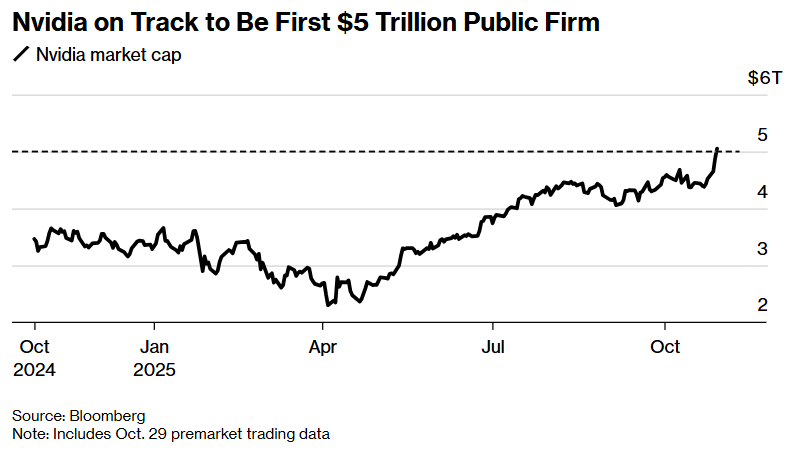
当地时间10月29日,美股三大指数收盘涨跌不一。 英伟达市值突破5万亿美元。国际贸易局势出现暂时缓和迹象。美联储降息25个基点,并宣布将从12月起结束资产负债表缩减。鲍威尔称12月并不必然降 息。 在鲍威尔讲话期间,美股三大指数全线跳水,盘中一度集体翻绿,随后纳指转涨,道指、标普500指数尾盘跌幅有所收窄,截至收盘,道指跌74.37点,跌幅 为0.16%,报47632.00点;纳指涨130.98点,涨幅为0.55%,报23958.47点;标普500指数跌0.30点,报6890.59点。 英伟达股价收高3.05%,市值突破5万亿美元,成为全球第一家达到这一估值的公司。 美联储再降息25基点 2票反对 将停止缩表 鲍威尔还称,12月并不必然会再次降息。 美东时间周三下午,美联储结束为期两天的货币政策会议,宣布降息25个基点,将联邦基金利率目标区间下调至3.75%到4%之间,该利率决议符合市场普 遍预期。 两位委员投下反对票,显示内部分歧加剧。其中,堪萨斯联储主席施密德反对降息,支持维持利率不变;美国总统特朗普钦点的美联储理事米兰对本次利率 决议持反对意见,认为应降息50个基点。 另外,美联储FOMC声明宣布将于1 ...

外资重点加仓A股高端制造业
2 1 Shi Ji Jing Ji Bao Dao· 2025-10-29 11:49
Core Insights - QFII continues to favor A-share core assets, particularly in high-end manufacturing and defensive sectors, reflecting a strategic shift towards tactical accumulation under domestic autonomy logic [1][7][11] - As of the end of Q3, nearly 40 QFII institutions held approximately 119.4 billion yuan in A-shares, indicating a significant foreign interest in the Chinese market [1][10] QFII Investment Trends - QFII has increased holdings in over 500 A-share companies, with notable investments in banking, electrical equipment, building materials, chemicals, software services, machinery, and hardware [2][3] - Major QFII purchases include 124 million shares of Nanjing Bank by BNP Paribas and 72.85 million shares of China West Electric by JPMorgan Securities, highlighting a focus on financial stability and growth potential [2][3] Key Stocks and Sectors - Significant QFII increases were observed in stocks such as Oriental Yuhong, Baofeng Energy, and Huasheng Tiancheng, with multiple QFII institutions accumulating shares [4][5] - The most heavily accumulated stocks include Nanjing Bank, China West Electric, and Shengyi Technology, with QFII holdings in these companies reaching substantial market values [11][12] Sector Analysis - The banking sector saw a total increase of 124 million shares, while electrical equipment and computer sectors also received notable QFII investments, driven by stable dividends and growth prospects [7][11] - QFII's diversified approach includes investments across various industries, such as machinery, food and beverage, and biopharmaceuticals, while maintaining a focus on leading companies and core assets [11][12] Future Outlook - Analysts suggest that QFII's continued interest in Chinese assets reflects confidence in the market's upward trajectory, despite potential short-term fluctuations [13][14] - High-profile institutions like Goldman Sachs and UBS maintain a positive outlook on Chinese equities, advocating for a diversified investment strategy that includes growth stocks and high cash yield portfolios [13][14]
“AI信仰”再掀巨浪! Blackwell与Rubin将托起5万亿美元AI帝国 黄仁勋坚信AI纪元已至
智通财经网· 2025-10-29 10:15
Core Insights - Nvidia's CEO Jensen Huang unveiled significant advancements in AI technology at the GTC conference, including a native AI 6G network platform, a Robotaxi fleet based on Nvidia's autonomous driving platform, and the next-generation AI GPU architecture, Rubin, which shows substantial performance improvements over Blackwell [1][3][4] - Following these announcements, Nvidia's stock surged over 6%, closing at $201, with a market capitalization reaching $4.9 trillion, just shy of the $5 trillion milestone [1] - Huang projected that Nvidia's data center business revenue would exceed $500 billion over the next five quarters, driven by the Blackwell and Rubin architectures, significantly surpassing Wall Street's expectations [3][6] Nvidia's AI Strategy - Nvidia is transitioning from a chip design company to a comprehensive AI technology platform, which includes a full-stack infrastructure and an operational ecosystem for AI [3][4] - The company aims to be the strongest foundation for AI, with a focus on high-performance, low-energy AI GPU architectures, and plans to release the Rubin Ultra architecture by late 2027 [5][9] Market Reactions and Predictions - Goldman Sachs reported that Nvidia's projected $500 billion revenue is significantly higher than market consensus, indicating a renewed investor enthusiasm for AI-related investments [3][12] - Major financial institutions, including HSBC, have raised their target price for Nvidia's stock to $320, suggesting a bullish outlook that could see Nvidia's market cap surpass $7 trillion [4][11] AI Infrastructure and Collaborations - Nvidia is investing heavily in AI infrastructure, including a $1 billion stake in Nokia to develop AI-native 6G networks and partnerships with companies like Uber and Eli Lilly to enhance AI applications in various sectors [10][11] - The company is also focusing on the development of advanced AI computing systems, with the Rubin architecture expected to deliver significant performance improvements over previous models [9][10] Long-term AI Market Outlook - The demand for AI computing power is expected to continue growing, driven by substantial investments from both the government and tech giants in AI infrastructure [12][14] - Analysts predict that the current AI investment wave could reach $2 trillion to $3 trillion, indicating a robust long-term growth trajectory for companies like Nvidia and its peers in the AI computing space [14][15]