
雀巢

Search documents
液奶增长见顶,乳企“蛋白战争”才刚开场
Di Yi Cai Jing· 2025-11-25 08:16
Core Insights - The liquid milk market is experiencing a slow recovery, prompting dairy companies to seek new structural growth opportunities [1] - A silent competition around "protein" has emerged among major dairy players, driven by the rapid growth of the liquid protein market [1][4] Group 1: Company Developments - Mengniu's sports nutrition brand, Misen, has completed nearly 100 million yuan in Series A financing, led by Xianle Health, with participation from Hillhouse Capital and Mengniu Ventures [2] - Misen, launched in 2023, focuses on energy gels, electrolyte concentrates, and liquid protein, aiming to expand into the general sports nutrition market [2] - Yili's chairman indicated a shift from a growth-focused strategy to a quality-driven approach, prioritizing probiotics and protein supplements, with expectations for the adult nutrition market to exceed 300 billion yuan by 2030 [2] Group 2: Market Trends - The domestic liquid milk market has been declining for two consecutive years, impacting the performance of major dairy companies [4] - The liquid protein market is projected to grow significantly, with a compound annual growth rate (CAGR) of 9.6% from 2024 to 2027, and liquid products expected to account for 37.7% of the market [4] - The demand for liquid protein is increasing, with a projected 478.4% year-on-year growth in 2024 on major e-commerce platforms, indicating that the market is still in its early growth stage [4] Group 3: Consumer Behavior and Opportunities - The aging population and the trend towards functional differentiation are driving diverse demands in the protein supplement market, presenting opportunities for dairy companies [5] - The number of people participating in sports is expected to reach 38.5% of the population by 2025, translating to approximately 560 million individuals, which will further boost the sports nutrition supplement market [6] - Despite the crowded protein powder market, dairy companies face challenges in gaining consumer and channel recognition as they expand into this segment, necessitating enhanced R&D and differentiation strategies [6]

“植物肉”能当真肉吃吗?行业路向何方?四款产品测评
Bei Ke Cai Jing· 2025-11-25 07:23
Core Insights - The plant-based meat sector is experiencing renewed interest, highlighted by the stock price fluctuations of Beyond Meat, which saw a significant rise followed by a decline [1][24] - Despite initial hype, the plant-based meat industry has faced challenges such as taste, high prices, and market saturation, leading to a reevaluation of its potential [2][24] - Experts remain optimistic about the future of the domestic plant-based market, driven by increasing health and environmental awareness [2][26] Industry Overview - Plant-based meat was once considered a new trend in the food industry, with significant investment and market entry from various players between 2019 and 2022 [22][24] - The number of plant-based meat companies surged during this period, with 35 financing events recorded, primarily between 2019 and 2022 [22][24] - Major brands, including both local and international players, have entered the market, offering a variety of plant-based products in restaurants and retail [23][24] Product Evaluation - Recent evaluations of plant-based meat products revealed significant differences in taste and texture compared to traditional meat, with many products failing to meet consumer expectations [3][11] - Price comparisons show that some plant-based products are more expensive than their meat counterparts, raising concerns about consumer acceptance [4][15] - Nutritional assessments indicate that while some plant-based options offer lower energy and fat content, they may also contain higher sodium levels, which poses health risks [13][14] Market Challenges - The plant-based meat industry is undergoing a "shakeout," with many companies facing declining revenues and market exits due to high costs and product quality issues [24][25] - The industry's initial strategy of directly comparing plant-based products to meat has led to consumer disappointment, as many products do not deliver the expected taste and texture [24][25] - The need for a shift in marketing strategy is emphasized, focusing on the unique benefits of plant-based products rather than direct competition with meat [25][26] Future Directions - Industry experts suggest that the future of plant-based meat lies in emphasizing its unique nutritional and environmental benefits rather than positioning it as a meat substitute [25][26] - There is a call for improved product development, focusing on taste and cost-effectiveness to enhance consumer acceptance and encourage repeat purchases [26][27] - Collaboration with the restaurant sector is seen as crucial for increasing consumer exposure and acceptance of plant-based products [27]


植物奶风潮退去的背后:“牛奶替代品”策略失灵
Bei Ke Cai Jing· 2025-11-25 07:23
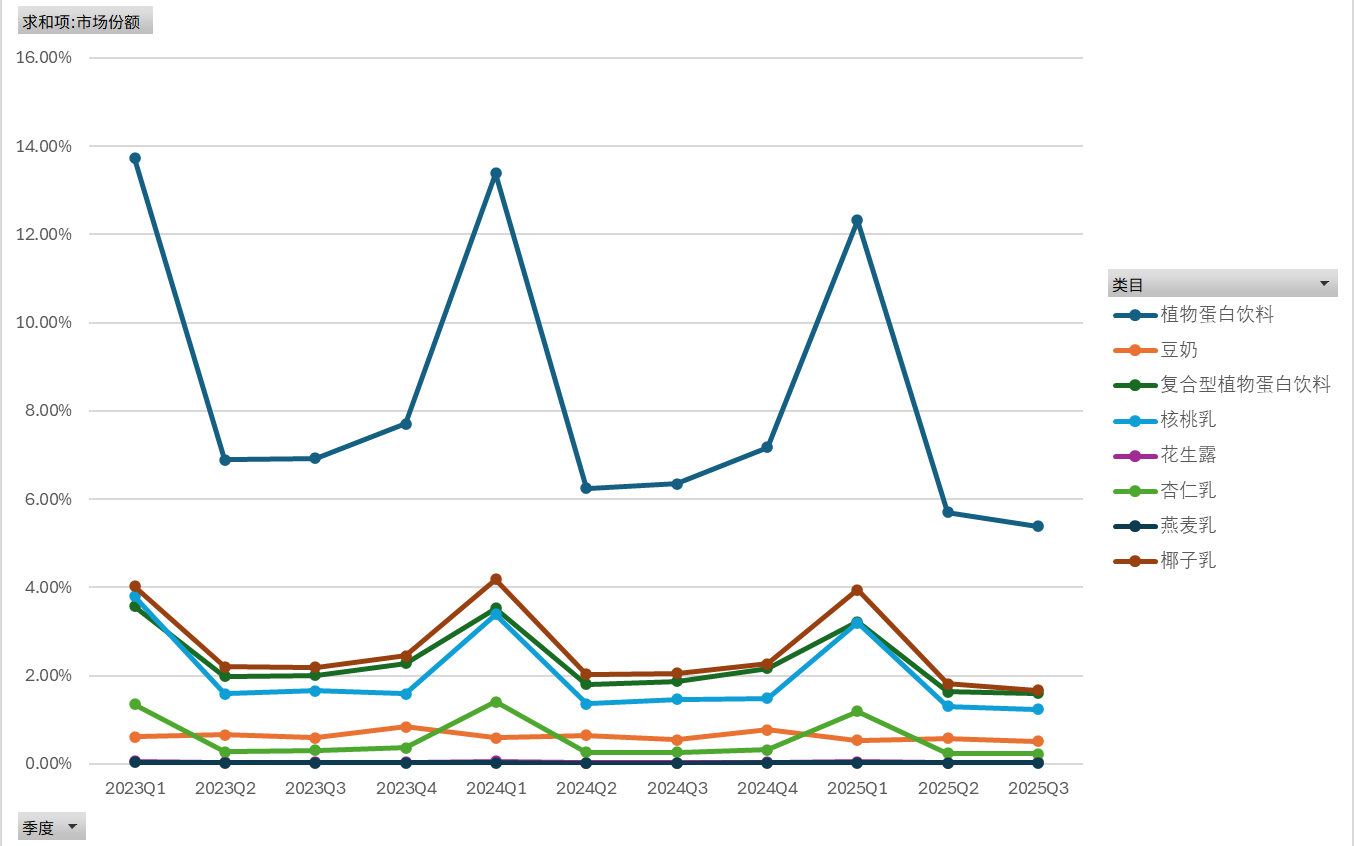
Core Insights - Oatly, the world's largest oat drink company, achieved profitable growth in Q3 2025, reigniting interest in the long-dormant plant milk market [1] - The plant milk market has seen a significant decline in investment and consumer interest since 2022, with a notable drop in market share and retail presence [4][6] Market Trends - The plant milk market experienced explosive growth from 2020 to 2021, with a market growth rate of 800% and a 900% increase in buyers [3] - However, investment activities in the plant milk sector have sharply decreased, with only 4 financing cases in 2022 and just 1 in 2023 [4] - The market share of plant milk in the packaged beverage sector fell from 13.72% in Q1 2023 to 5.38% in Q3 2025 [4] Consumer Behavior - Consumers are increasingly concerned about health and are shifting their preferences towards products that offer emotional value and functional benefits [2][13] - Over half of consumers perceive the price of oat milk as too high, with 58.9% indicating that the cost is a barrier to purchase [10] - The current consumption scenarios for plant milk largely overlap with those of traditional dairy, lacking distinct consumer demand [11] Company Performance - Oatly reported a revenue of $115 million in the Greater China market in 2024, a 7.8% decline year-on-year, but saw a 28.8% increase to $37.4 million in Q3 2025 [7] - Despite revenue growth, Oatly has struggled with profitability, only achieving its first profitable quarter in Q3 2024 [7] - Other domestic plant milk companies, such as Yangyuan and Chengde Lululemon, have also reported declines in plant milk sales, indicating a broader trend in the industry [8] Industry Challenges - The decline in the plant milk market is attributed to multiple factors, including taste acceptance, pricing, competition, and supply chain issues [9][12] - The competitive landscape has intensified, with traditional dairy brands entering the plant milk space, further squeezing profit margins [9][12] - The industry is undergoing a rationalization process, moving towards healthier and more sustainable growth rather than speculative expansion [12][14]
幸运咖门店数破万家:咖啡价格战会加剧吗?丨消费参考
2 1 Shi Ji Jing Ji Bao Dao· 2025-11-25 03:03
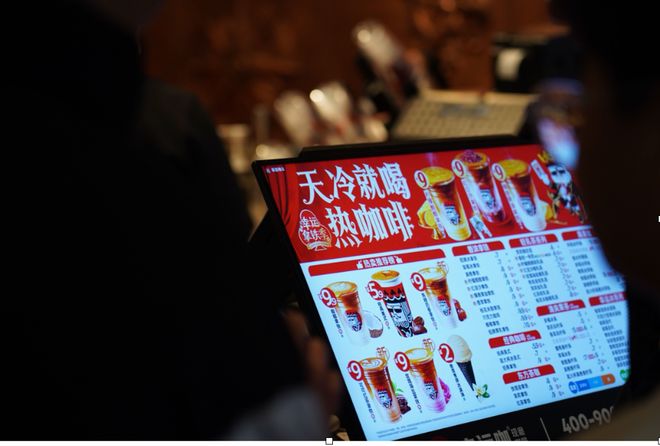
Group 1 - Luckin Coffee has surpassed 10,000 stores globally as of November 24, 2025, with pricing primarily between 6-8 yuan, making it cheaper than its competitor, Kudi, which has a flat price of 9.9 yuan [1][2] - As of the end of Q3, Luckin Coffee operates 29,214 stores, while Kudi has 18,000 stores. Luckin Coffee has expanded to over 300 cities, including more than 1,000 stores in first-tier cities [2] - The rapid growth of Luckin Coffee is attributed to the competitive landscape driven by delivery service wars, with a 164% year-on-year increase in new store openings in Q2 [2] Group 2 - The reduction of delivery subsidies is impacting the coffee market, with Luckin Coffee's same-store sales growth facing short-term pressure as noted by its executives [3][4] - The coffee price war may stabilize as delivery subsidies decrease, with expectations that prices will settle in a certain range, potentially around 6-8 yuan for Luckin Coffee [6][9] - Luckin Coffee's growth trajectory positions it as a strategic competitor to established players like Luckin and Kudi, especially as it reaches a significant scale [8][9]
雀巢中国销售“领头人”正式敲定,将整合咖啡、奶品和糖果电商销售团队,奶品业务也要迎来新负责人
3 6 Ke· 2025-11-25 02:18
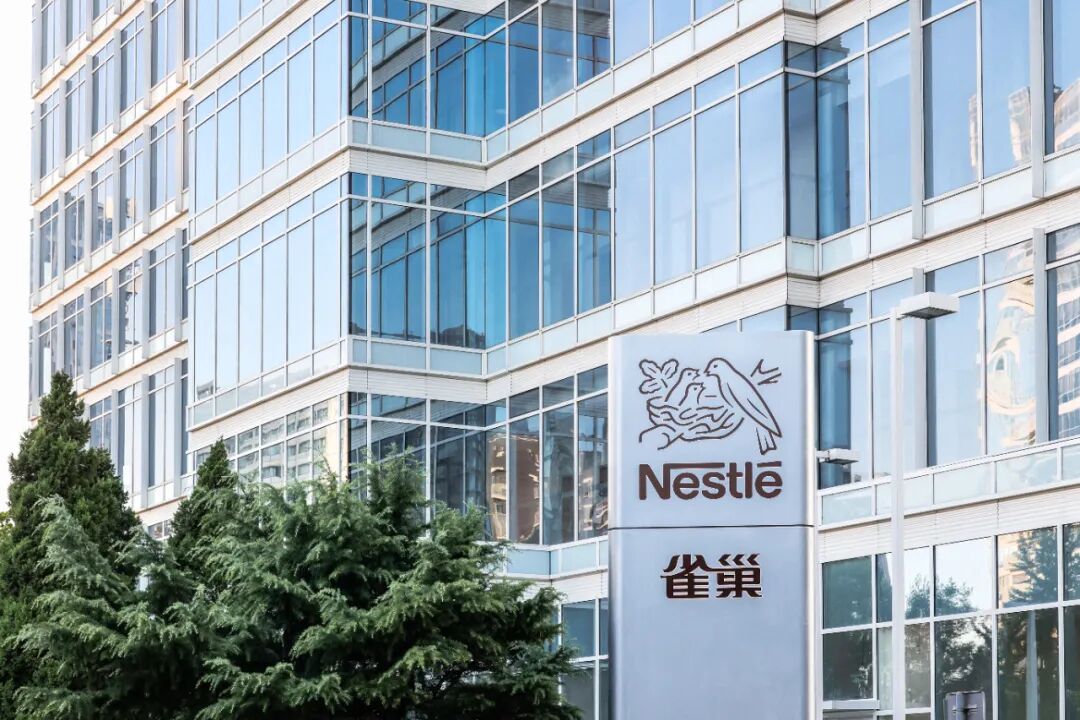
Core Insights - Nestlé China is undergoing significant leadership changes, with Wang Lei appointed as the head of omnichannel food retail and e-commerce effective December 1, 2025, while continuing her role as dairy business head until further notice [1][3][5] - The e-commerce sales teams for coffee, dairy, and confectionery will be integrated into a single team under Wang Lei's leadership starting January 1, 2026, aiming for a more unified sales approach [1][8][11] - The company is shifting its business model from channel-driven growth to demand-driven growth, emphasizing the need to stimulate consumer demand and manage channel complexity effectively [5][13] Leadership Changes - Wang Lei has a strong background in e-commerce, having joined Nestlé in 2011 and previously serving as e-commerce manager and head of e-commerce [3][10] - The current business director and head of coffee e-commerce, Yang He, will take over as the e-commerce head, reporting directly to Wang Lei starting January 1, 2026 [8][10] Business Strategy - The restructuring aims to enhance operational efficiency and align with the company's next-generation sales development model, focusing on a one-stop customer service and category/channel synergy [8][13] - The dairy segment generated sales of approximately 10.17 billion Swiss francs (around 83 billion RMB) in 2024, accounting for 20.5% of total sales, highlighting the importance of this segment in Nestlé's overall strategy [7][14] Market Context - The Chinese consumer market is experiencing a shift towards online retail, with online retail sales growing by 7.4% year-on-year in 2024, indicating a need for Nestlé to adapt its sales strategies accordingly [13][14] - The integration of e-commerce teams is part of a broader strategy to create a more centralized and efficient e-commerce operation, allowing Nestlé to better compete in the rapidly evolving market [13][14]

熊猫乳品一再变更募投项目:产能利用率低主业陷低增长 股东轮番减持
Xin Lang Cai Jing· 2025-11-24 10:36
Core Viewpoint - Panda Dairy has repeatedly adjusted its fundraising projects, reflecting a decline in traditional business growth and low capacity utilization [1][3][4] Group 1: Fundraising Project Adjustments - On November 17, Panda Dairy announced a change in its fundraising project, increasing the capacity of the "Ding'an 10,000 tons food raw material project" and reallocating 20 million yuan from the "Cangnan 30,000 tons concentrated dairy product project" to this new project [1] - Since its IPO in October 2020, Panda Dairy has made multiple adjustments to its fundraising projects, including reducing the investment in the Cangnan project and introducing new projects due to lower-than-expected fundraising amounts [2][3] - The Cangnan project, originally scheduled to be operational by June 2022, has faced delays, with the completion date now pushed to June 2026, indicating ongoing challenges in project execution [3] Group 2: Capacity Utilization and Sales Performance - As of 2024, Panda Dairy's total designed production capacity across its three bases is 63,000 tons, but actual production is only 41,300 tons, resulting in a capacity utilization rate of 66%, down 13 percentage points from 2023 [3] - The sales growth of concentrated dairy products has been sluggish, with only a 3.6% increase in the first half of the year, while other product lines like coconut products saw a significant increase of 113.73%, albeit from a smaller base [3][6] - The concentrated dairy product segment, which contributed 77% of revenue in 2024, has faced declining growth rates, with a 10.06% drop in 2024 and only a 3.8% increase in the first half of the current year [5][6] Group 3: Management and Shareholder Actions - The management has set modest growth targets in its 2025 stock incentive plan, aiming for a revenue growth rate of at least 7% in 2026 and 14% in 2027, without setting a net profit growth target, which may indicate a lack of optimism about short-term growth [1][7] - Shareholder sentiment appears to be declining, with significant reductions in holdings by major shareholders since late 2024, suggesting a lack of confidence in the company's future performance [8]
雀巢扩建工厂;赛百味增资至3.8亿;Gucci CEO加入Brioni董事会
Sou Hu Cai Jing· 2025-11-24 03:32
Investment Dynamics - Nestlé is investing approximately £28 million (around 260 million RMB) to upgrade its Dalston factory in Cumbria, UK, aimed at expanding its ready-to-drink coffee production line, which will include a new mixing workshop and two packaging lines, reducing manual handling by 80% and achieving a capacity of 60,000 packs per hour [3] - Danone Canada announced a historic investment in its Boucherville factory in Quebec, which includes energy recovery equipment to enhance sustainable operations, marking Danone's largest investment in Canada to rapidly increase yogurt production capacity to meet growing health demands [6] - Subway's management company in Shanghai increased its registered capital from approximately 320 million RMB to about 380 million RMB, a 21% increase, to support rapid store expansion and narrow the gap with competitors like McDonald's and KFC [9] - "Meet Little Noodles" is targeting to raise $100 million (approximately 780 million HKD) through a pre-IPO roadshow, which will support its expansion to a thousand stores and strengthen its brand in the Chinese dining sector [10] Acquisition Dynamics - Uni-President Enterprises has signed a share purchase agreement to acquire Carrefour Taiwan for a total of approximately $970 million (around 6.9 billion RMB), which is about $32 million (approximately 230 million RMB) less than the 2023 transaction price [15] - Guangxi Travel Health Industry Group is acquiring a 20% stake in Southern Black Sesame Group, which will help the latter repay short-term debts and aim for profitability by 2025 [18] - Anheuser-Busch InBev is in talks to acquire BeatBox, valuing the company at approximately $700 million (around 5 billion RMB), which will enhance its presence in the ready-to-drink segment and leverage existing distribution channels [20] - JBS's subsidiary Mantiqueira USA is set to acquire Hickman's Egg Ranch, one of the top 20 egg producers in the U.S., as part of its strategy to diversify its protein business [22] Personnel Dynamics - Roland Mouret has stepped down as creative director of his eponymous brand, with Han Chong taking over as the sole creative director, which may impact the brand's short-term performance due to the loss of a key creative force [24] - Francesca Bellettini, CEO of Gucci, has joined the board of Brioni, which may enhance the brand's supply chain resources and potentially replicate Gucci's high-margin model to boost profitability [27]


BDJ: A Value-Oriented Fund With 8.4% Yield And Nearly 7% Discount
Seeking Alpha· 2025-11-23 14:00
Group 1 - The primary goal of the "High Income DIY Portfolios" service is to provide high income with low risk and capital preservation for DIY investors, particularly targeting income investors such as retirees [1][2] - The service offers seven portfolios, including three buy-and-hold portfolios, three rotational portfolios, and a conservative NPP strategy portfolio, designed to generate stable, long-term passive income with sustainable yields [1][2] - The "Financially Free Investor" employs a unique 3-basket investment approach aimed at achieving 30% lower drawdowns, 6% current income, and market-beating growth over the long term, focusing on dividend-growing stocks [2]

咖啡豆出海观察:出口量激增358%,正在撬开欧美市场
3 6 Ke· 2025-11-21 08:31
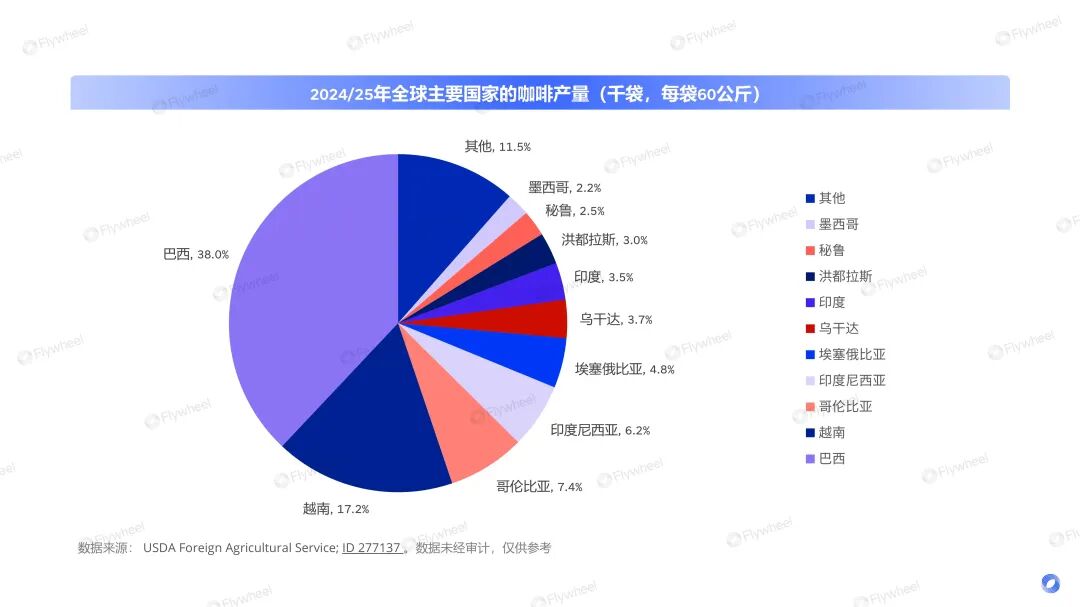
Core Insights - Starbucks maintains control over its coffee bean roasting factory in Kunshan, Jiangsu, despite relinquishing 60% of its stake in the Chinese market to Boyu Capital, emphasizing the importance of bean quality and sourcing [1] - China's coffee production is increasing, with projections indicating it will rank 13th globally by 2025, although it currently meets only 20% of domestic demand, necessitating significant imports [1][3] - The domestic coffee market is experiencing rapid growth, with total sales expected to rise from 3 million bags in 2018/19 to over 5.65 million bags by 2024/25, while over 80% of coffee consumption is still reliant on imports [3] Coffee Production and Quality - Arabica beans are favored for their flavor and aroma, becoming the choice for premium coffee brands, while cross-industry brands opt for blended beans to balance quality and cost [5] - The cost of coffee beans is a critical factor in pricing strategies, with a significant difference between high-end and low-cost options [5][7] - Consumer preferences prioritize taste, with 43% ranking flavor experience as the top factor in brand selection, while 30% cite inconsistent quality as a pain point [7] Yunnan Coffee Development - Yunnan coffee has evolved from a low-value industry to a recognized player in the market, with significant improvements in cultivation and processing techniques over the past century [8][10] - The introduction of disease-resistant coffee varieties and technical support from international companies like Nestlé has led to increased production and quality [10][12] - The percentage of high-quality coffee beans from Yunnan has risen from 8% in 2021 to 31.6% [12] Brand and Market Expansion - Yunnan coffee brands, such as Aini, are transitioning from raw material suppliers to market players with their own brands, enhancing their market presence and international reach [14][15] - The number of coffee-related enterprises in Yunnan has grown to over 420, with several achieving significant sales milestones, indicating a robust competitive landscape [17] - Yunnan coffee exports are projected to reach 32,500 tons in 2024, marking a 358% increase, driven by a focus on branding and storytelling [17][18] Challenges and Future Outlook - Despite advancements, Yunnan coffee still faces challenges, including reliance on a limited variety of beans and the need for improved management practices [21] - Many brands focus on raw material quality rather than building a resonant brand identity, which affects consumer loyalty [21] - The overall brand image of Yunnan coffee remains weak, necessitating enhanced media presence and cultural storytelling to match its growing industry strength [21][22]

X @Bloomberg
Bloomberg· 2025-11-18 20:10
Legal & Brand Impact - A French civil court rejected a legal complaint against Nestlé SA [1] - The complaint could have threatened the future of Nestlé's iconic Perrier water brand [1] - Perrier is a billion-dollar brand for Nestlé [1]