
雷鸟创新

Search documents
聚焦SiC光波导降本!6家衬底企业指出破局路径
行家说三代半· 2025-05-20 09:15
Core Viewpoint - The article highlights the rapid development and challenges in the silicon carbide (SiC) substrate industry, particularly in relation to the cost and application of SiC optical waveguide lenses in AR glasses, driven by innovations in materials and technology [1][2][3]. Group 1: Industry Trends - Meta's announcement regarding the use of SiC optical waveguide lenses in AR glasses has sparked significant interest and activity among various manufacturers in the AR hardware sector [1]. - Companies such as XREAL, 雷鸟创新, and 慕德微纳 are accelerating their investments in SiC optical waveguide technology, indicating a vibrant market environment [1]. - The industry is characterized by high technical enthusiasm and market vitality, with multiple SiC substrate companies actively participating in research and development [1]. Group 2: Cost Challenges - The high cost of SiC optical waveguide lenses, which can reach up to 2000 RMB per piece, is a major barrier to the widespread adoption of AR glasses [3][5]. - The production cost of Meta's AR glasses is significantly influenced by the SiC lenses, which account for a substantial portion of the overall cost [3][5]. - The article identifies four key challenges in reducing the cost of SiC substrates, including performance requirements, crystal growth, substrate processing, and production costs [7][12]. Group 3: Performance and Processing Differences - SiC substrates for optical applications have distinct performance requirements compared to traditional substrates, focusing on optical properties such as low light absorption and high transmittance [8][9]. - The processing techniques for optical-grade SiC substrates differ from those for conductive and semi-insulating substrates, necessitating higher precision and control [11][12]. - The article emphasizes the need for improved processing techniques to enhance yield and reduce costs in the production of optical-grade SiC substrates [11][12]. Group 4: Future Outlook and Innovations - Companies are optimistic about the potential for cost reduction through process optimization, scale effects, and technological advancements in SiC substrate production [15][16]. - The article suggests that if the AR glasses industry follows a growth trajectory similar to that of smartphones, the prices of optical-grade SiC substrates could significantly decrease by 2030 [16]. - The development of larger SiC substrates (8-inch and 12-inch) is expected to enhance production efficiency and lower costs, although challenges remain in achieving the necessary purity and defect control [19][20][21]. Group 5: Market Potential - The market for SiC-based optical waveguide lenses is projected to grow significantly, with estimates suggesting a demand for 60-180 million pieces by 2030 [21][24]. - The continuous efforts of leading SiC substrate companies to innovate and collaborate within the industry are seen as crucial for overcoming current cost barriers and driving market growth [21][24]. - The article concludes that advancements in SiC technology and cost reductions will likely lead to a new era of consumer-grade AR products, expanding the market for smart wearable devices [24].


市场调研机构洛图科技:一季度中国AR设备销量同比增长116%
Sou Hu Cai Jing· 2025-05-20 07:45
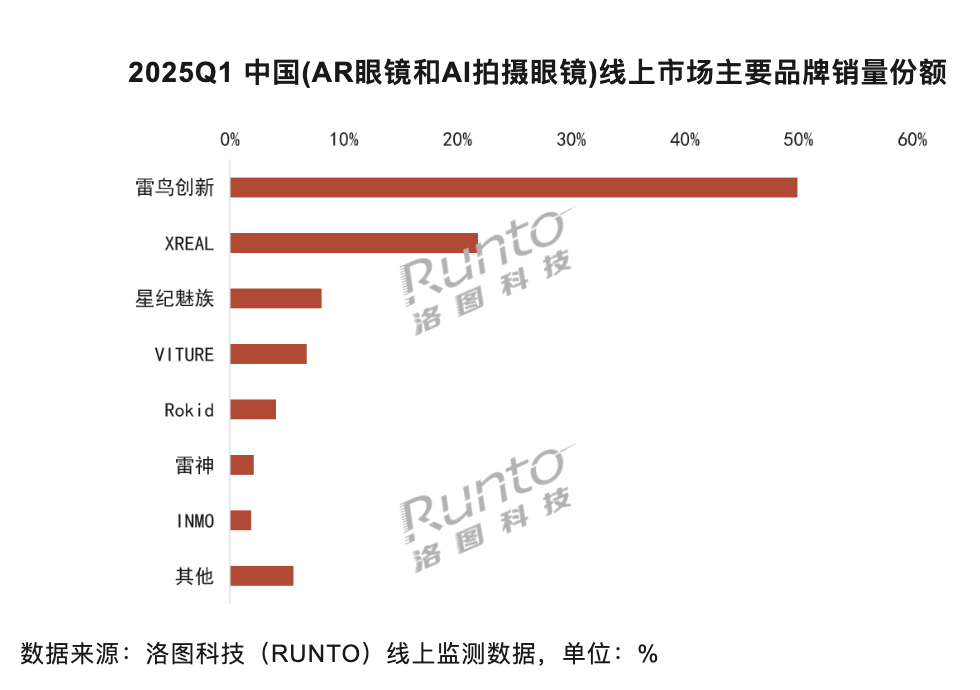
Group 1 - The core viewpoint of the articles highlights the significant growth in the Chinese XR device market, with a projected 26.7% increase in unit sales and a 25.5% increase in sales revenue for Q1 2025 [1] - The total sales volume of consumer-grade XR devices in China is expected to reach 147,000 units, with AR devices alone accounting for 91,000 units, reflecting a remarkable year-on-year growth of 116% [1] - Leading brands in the AR glasses and AI shooting glasses market include Thunderbird Innovation, XREAL, Starry Sky Meizu, VITURE, and Rokid, with Thunderbird Innovation holding a dominant market share of 50% [1] Group 2 - The wearable smart device market is showing positive trends, with a 3% increase in manufacturing prices for these devices reported in April [4] - The market potential for AR and smart glasses is increasingly recognized, driven by the accelerated integration of AI and AR technologies, indicating a new growth cycle [4] - Major tech companies like Meta, Samsung, Apple, and Google are intensifying their R&D efforts in key technologies for glasses, with Google reportedly collaborating with domestic AR glasses manufacturers for new product launches [4] - Thunderbird Innovation is set to launch the ThunderX3 Pro, a full-color MicroLED AR glasses model, on May 27, featuring advanced display technologies and a strategic partnership with Alibaba Cloud for AI and AR glasses [4]
CINNO Research:一季度国内消费级AI/AR眼镜市场销量达9.6万台 同比增长45%
Zhi Tong Cai Jing· 2025-05-20 00:30
Core Insights - The domestic consumer-grade AI/AR glasses market saw sales reach 96,000 units in Q1 2025, marking a 45% year-on-year growth, with screen-based AR glasses accounting for 80% of the market share and non-screen AI glasses making up 20% [1][2] Market Drivers - The growth is driven by three core factors: 1. The benchmark effect from overseas products like Ray-Ban Stories, which activated domestic demand through a "hardware + ecosystem" model [2] 2. Technological iterations leading to a shift in consumer preferences towards lightweight AI glasses with real-time translation and voice interaction capabilities [2] 3. National policy subsidies injecting vitality into the market, particularly for non-screen AI glasses priced under 1,000 yuan [2] Market Structure - The market is characterized by significant structural differentiation, with the Birdbath + Micro OLED solution holding 85% of the AR glasses market share, while non-screen AI glasses are emerging as market leaders due to their cost-effectiveness [3] Competitive Landscape - Leading brand Thunderbird Innovation holds a dominant 45% market share, showcasing its strength in "hardware + algorithm + ecosystem" vertical integration [4][5] - XREAL ranks second with an 18% market share, leveraging its self-developed X1 spatial computing chip for enhanced user experiences [7] - Starry Meizu, with a 14% market share, capitalizes on its smartphone heritage to offer competitive AR glasses [8] - VITURE targets the high-end gaming segment, despite a smaller market share, by delivering superior visual experiences [9] - Rokid is shifting focus towards AI + AR glasses, aiming to establish a strong presence in both consumer and industrial markets [10] Industry Trends - The AI/AR glasses market is witnessing a surge in cross-industry participation, with major consumer electronics brands like Xiaomi and Huawei entering the space, emphasizing ecosystem integration over immediate sales [10] - Internet giants such as Baidu and Alibaba are also accelerating their entry into the market with self-developed AI glasses, contributing to a diversified competitive landscape [10] Market Outlook - The AI/AR glasses market is on the brink of a breakthrough, transitioning from niche products to essential tools for productivity, reshaping human-computer interaction and becoming a key entry point in the metaverse era [11]
Q1’25 国内消费级AI/AR市场销量同比涨45%,结构性变革加速
CINNO Research· 2025-05-19 16:51
Core Viewpoint - The domestic consumer-grade AI/AR glasses market is experiencing significant growth, with sales reaching 96,000 units in Q1 2025, a year-on-year increase of 45%, indicating a shift from novelty to necessity in smart living hardware [2] Market Overview - The market for consumer-grade AI/AR glasses is characterized by a structural differentiation, with screen-based AR glasses accounting for 80% of the market share and non-screen AI glasses making up 20% [2] - The growth is driven by three main factors: the benchmark effect from overseas products, technological iterations leading to replacement demand, and government subsidies supporting market vitality [2] Key Drivers of Growth - Benchmark Effect: The success of Ray-Ban Stories smart glasses has activated domestic demand for AI glasses through its "hardware + ecosystem" model [2] - Technological Iteration: The Birdbath + Micro OLED solution holds 85% of the AR glasses market, but lack of innovation is pushing consumers towards lightweight AI glasses with real-time translation and voice interaction features [2] - Government Support: Subsidies are energizing the market, particularly for non-screen AI glasses priced under 1,000 yuan and screen-based AR glasses priced between 1,000 to 4,000 yuan [2] Competitive Landscape - Leading brand Ray-Ban Innovation holds a dominant 45% market share, showcasing strong vertical integration of hardware, algorithms, and ecosystem [4][6] - XREAL follows with an 18% market share, leveraging its self-developed X1 spatial computing chip for enhanced user experiences [8] - Starry Meizu ranks third with a 14% market share, utilizing its smartphone brand influence to penetrate the AR glasses market [9] Product Innovations - Ray-Ban Innovation's flagship products, including the V3 AI shooting glasses, have rapidly gained market share, achieving 80% in the AI glasses segment [7] - XREAL's XREAL One glasses provide immersive AR experiences, while Starry Meizu's products benefit from cross-device synergy with its Flyme AIOS operating system [8][9] Future Outlook - The AI/AR glasses market is on the brink of a breakthrough, transitioning from niche products to essential tools for productivity, reshaping human-computer interaction [15] - The next three years are expected to see a significant evolution in the market, with AI/AR glasses becoming a key component of smart living [15]

做AI眼镜,为什么一定要有定制化大模型 | 对话雷鸟创始人李宏伟
量子位· 2025-05-16 05:36
克雷西 发自 凹非寺 量子位 | 公众号 QbitAI AI眼镜,究竟为什么这么热? 自2023年10月Meta旗下的Ray-Ban Meta智能眼镜发布,标志着智能眼镜终端不再只是极客的玩具,而是 可能成为继智能手机之后,人类与 数字世界交互的下一个核心入口 。 截止目前,国内已有十余家厂商正式发布了AI眼镜产品,还有更多的产品正等待亮相, "百镜大战"的序幕已经拉开 。 这场大战之中,参赛选手属性各不相同,既有互联网厂商,也有做显示出身……不同类型的选手都是以一种怎样的姿态加入的这场战斗? 为了解开这些疑问,量子位与不同属性的AI眼镜从业者进行了对话交谈。 今天的文章是这一系列交流中的第三期,我们对话了 雷鸟创新创始人兼CEO李宏伟先生 。 以下为量子位与李宏伟对话实录,部分内容有删改。 AI眼镜,必须有定制化基座模型 量子位:V3在发布的时候剧透了很多未来要上新的AI功能,V3前不久刚刚完成了一次更新,这次更新有什么亮点?从发布到现在,在技术的 迭代上有没有遇到什么难点? 李宏伟 :最近的一次更新是一个非常重要的更新,我们上线了两个最重要的新功能。 一个是 AI录音 ,它包括了录音、转写、总结、翻译,一 ...

AI消费火热!粤企加速布局AI智能体,解锁人机交互新模式
Nan Fang Du Shi Bao· 2025-05-15 09:09
Core Insights - The article highlights the rapid development and integration of AI technologies in various sectors within Guangdong, particularly focusing on consumer electronics like AI smartphones, AI glasses, and AI toys [1][2][4][11]. AI Smartphones - The launch of AI smartphones marks the beginning of an "autonomous driving" era in mobile technology, with significant consumer interest reflected in a survey where over 70% expressed a willingness to purchase AI smartphones [4][5]. - Guangdong produced 683 million smartphones in 2024, accounting for 40% of the national output, with a target to manufacture over 100 large-scale AI-enabled devices by 2027, including 100 million AI smartphones [4][5]. AI Glasses - The AI glasses market is experiencing a surge, with nearly 90% of surveyed consumers showing interest in purchasing AI glasses, making it the highest among all categories [7][11]. - Companies like Huawei and OPPO are actively participating in the "hundred glasses battle," showcasing their AI glasses at international events like CES 2025, indicating a growing competitive landscape [7][8]. AI Toys - There is a rising consumer interest in AI toys, with 88.35% of respondents indicating a high willingness to purchase, particularly for products that offer emotional interaction [11][12]. - Companies in Guangdong are innovating in the AI toy sector, integrating advanced AI functionalities into traditional toys, leading to significant order increases, such as one company reporting over 2 million orders for AI-enabled plush toys [11][12]. Industry Trends - The integration of AI technologies across various consumer electronics is reshaping human-computer interaction, with predictions that AI glasses could eventually perform functions similar to smartphones [6][10]. - The AI toy market is projected to reach a scale of 30 to 40 billion RMB by 2028, indicating substantial growth potential in the emotional companionship segment [12].

2024年消费级AR眼镜市场动态与行业趋势洞察
艾瑞咨询· 2025-05-14 12:41
Core Insights - The report highlights the rapid evolution of consumer-grade AR glasses, driven by advancements in optical display and AI integration, leading to a competitive landscape among various manufacturers [1][2][4]. Industry Status - Continuous R&D investment in the AR sector by domestic and international companies is fostering technological innovation and product development. Major players include internet giants, smartphone manufacturers, and AR startups, with a significant shift towards AI integration in AR glasses [2][19]. - The domestic AR glasses market is characterized by a strong presence of local brands such as Starry Sky Meizu, Thunderbird Innovation, XREAL, Rokid, and INMO, collectively referred to as the "Five Little Dragons" of AR glasses, which are rapidly gaining market share against foreign competitors [2][19][21]. Market Overview - In 2024, AR glasses sales reached 286,000 units, with Q4 witnessing record-high sales due to new product launches. Leading brands dominate the market, each carving out niches based on specific advantages [2][23][26]. - The market is expected to maintain momentum into 2025, with ongoing product innovations enhancing portability, functionality, and technology [23][29]. Company Analysis - The report provides an in-depth analysis of leading brands such as Starry Sky Meizu, Thunderbird Innovation, and XREAL, focusing on their product launches, technological advancements, and ecosystem collaborations [3][34][46]. - Starry Sky Meizu is noted for its significant investment in optical waveguide technology and AI integration, positioning itself as a leader in the AR glasses market [42][44]. Technological Trends - Optical waveguide technology is identified as a key driver for the future of consumer-grade AR glasses, offering advantages in lightweight design, high transparency, and display quality [8][50]. - The integration of AI into AR glasses is enhancing user experience and expanding application scenarios, making these devices more appealing to consumers [51][52]. Competitive Landscape - The competitive dynamics of the AR glasses market are influenced by short-term hardware specifications and popular products, while long-term success will depend on cross-device collaboration, developer ecosystems, and data asset depth [55].

2025 年全球 AR 眼镜市场情况分析 2030 年预计达到 800 万台
Sou Hu Cai Jing· 2025-05-12 13:14
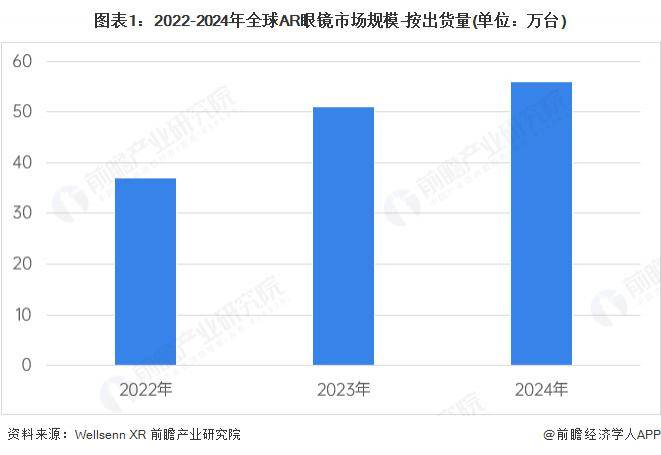
Core Insights - The global augmented reality (AR) glasses market is expected to grow significantly by 2025, driven by the entry of various tech giants and startups [1] - In 2023, global AR shipments reached approximately 510,000 units, marking a year-on-year increase of 35.1% [1] - The market is experiencing a shift with the rise of non-display AI smart glasses in 2024, leading to a decline in traditional B-end AR glasses demand [1] Global Market Size - The global AR glasses market is projected to see a shipment of over 560,000 units in 2024, despite a relatively subdued demand [1] - The market is characterized by a significant contribution from the B-end market, which has maintained steady growth [1] Regional Market Share - In 2023, Asia and North America led the global AR glasses market, with Asia's share increasing due to explosive growth in consumer AR products in China [2] - China alone accounted for 240,000 units shipped in 2023, reflecting a year-on-year growth of 133.9% [2] Brand Market Share - The AR market is dominated by three main groups: international tech giants (e.g., Microsoft, Meta, Apple), domestic smartphone manufacturers (e.g., Huawei, OPPO, Xiaomi), and emerging AR companies (e.g., Xreal, Rokid) [6] - In 2023, Xreal held a 45% market share in global AR glasses, followed by Rokid at 14% and 雷鸟创新 at 13% [6] Pricing Trends - From 2021 to 2024, AR glasses transitioned from "technology novelty" to "mass consumer products," with consumer acceptance highest for products priced between $300 and $500 [9] - The average price of consumer-grade AR glasses is expected to drop from $2,000 in 2021 to around $400 by 2025 [9] Market Forecast - The penetration rate of waveguide technology is projected to reach 95% by 2024, with costs decreasing by 70% since 2021, facilitating the development of lightweight consumer products [10] - Despite short-term market slowdowns, long-term technological advancements and price reductions are anticipated to drive the AR glasses market into a growth phase, with shipments expected to reach 1.8 million units by 2027, reflecting a compound annual growth rate (CAGR) of 37.7% [11]



好工作和好男人一样,不在市面上流通
36氪· 2025-05-03 10:25
Core Viewpoint - The article discusses the changing job market dynamics, highlighting the contrasting experiences of individuals in declining industries versus those in emerging sectors, emphasizing the importance of adapting to new opportunities and industries for career growth [3][24][30]. Group 1: Job Market Dynamics - The job market is experiencing a divide, with some sectors like e-commerce and enterprise services facing decline, leading to fewer job opportunities and increased competition [24][27]. - Individuals like Mi Lan and Wendy illustrate the struggles in finding stable employment in saturated industries, while others are exploring opportunities in high-growth areas such as AI [24][27]. - The AI industry is witnessing a talent war, with high salaries being offered for positions, indicating a shift towards emerging technologies [27][30]. Group 2: Emerging Opportunities - The article identifies several high-potential sectors, including low-altitude economy, biotechnology, and artificial intelligence, which are expected to replace traditional industries and attract talent [30][42]. - The concept of "red dividend companies" is introduced, representing firms that are at the forefront of innovation and growth, supported by favorable policies and capital [42][43]. - The article emphasizes the need for job seekers to remain flexible and optimistic, adapting to the evolving job landscape by exploring opportunities in high-growth startups and emerging industries [34][43]. Group 3: Job Search Tools - The introduction of the "Job Elevator AI" tool aims to assist job seekers in navigating the job market by connecting them with suitable opportunities across various sectors [35][46]. - The tool includes a comprehensive database of over 10,000 companies, including unicorns and startups, to help users find roles that align with their skills and interests [40][45]. - Future iterations of the tool will enhance its capabilities, including personalized job recommendations and AI-driven resume evaluations, to better support job seekers [68][73].

最近,他们都说“我们就要宣布一个投资”
投中网· 2025-04-30 04:11
以下文章来源于东四十条资本 ,作者喜乐 东四十条资本 . 聚焦股权投资行业人物、事件、数据、研究、政策解读,提供专业视角和深度洞见 | 创投圈有趣的灵魂 将投中网设为"星标⭐",第一时间收获最新推送 AR眼镜的投资窗口要来了? 作者丨 喜乐 来源丨 东四十条资本 如今投AI已经不是件新鲜事了,甚至可以说AI方向的投资热潮在一定程度上重拾了投资人对创投事业的信心,这个说法并不那 么好听却无比真实,就如一位宇树科技老股东Alex(化名)这两天和我说的,"不管是我们还是同行们,今年的投资节奏比前 两年都要快不少,一部分因素也得益于现在还是有一些热点(即AI投资热等)让大家去追的。" 有东西可投,继而形成风口,尤其是不止一位投资大咖明言"2025年是AI 应用的元年",亦说明这个赛道存有大量投资机会, 足以吸引投资人们的注意力。 自己所投的细分领域能在不久后迎来风口,应该是值得投资人骄傲的事——AR眼镜的投资,似乎已经证实了以上说法。 "不管是大模型,还是具身智能具备的一些能力,它要给人赋能,最好的硬件就是AR眼镜。"这是另一位宇树科技老股东 Bonnie(化名)的话。 "我们近期就要宣布一个项目的投资" 和Bonn ...