
中国太平

Search documents
保险业:理赔捐赠同步 服务保障并行
Jin Rong Shi Bao· 2025-12-01 01:32
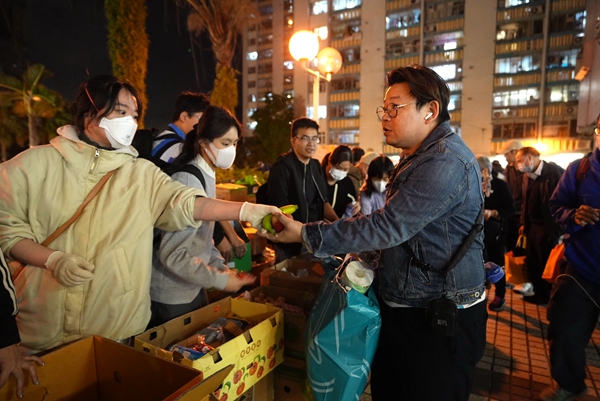
Core Viewpoint - The insurance industry in Hong Kong has rapidly mobilized to support rescue and recovery efforts following a severe fire incident in Tai Po, demonstrating its role as an economic stabilizer and social safety net through emergency response measures and significant financial contributions [1][4]. Group 1: Emergency Response Actions - Multiple insurance companies, including China Life, China Pacific, and Taikang Insurance, activated emergency response plans immediately after the fire, establishing management teams and simplifying claims processes to ensure rapid support for affected clients [2][3]. - China Life's overseas branch initiated emergency claims services, proactively contacting policyholders to ensure timely assistance [2]. - China Taiping Insurance quickly identified affected clients and established a claims hotline, demonstrating a commitment to rapid response and support [3]. Group 2: Financial Contributions - Insurance institutions have collectively donated over 60 million HKD to aid in rescue efforts, with AIA Hong Kong contributing 20 million HKD for emergency assistance and community recovery [4][6]. - China Ping An announced a donation of 10 million HKD for emergency relief and recovery efforts, emphasizing its commitment to supporting affected communities [4][5]. - Taikang Insurance pledged 10 million RMB for urgent relief and community rebuilding, showcasing the industry's solidarity with the affected population [6]. Group 3: Reinsurance Support - Reinsurance companies, such as China Re, played a crucial role in stabilizing market confidence by providing essential support for local insurers in managing disaster-related claims [7][8]. - China Re activated its emergency response mechanism to assist direct insurers in assessing losses and expediting claims processes, reinforcing the insurance system's resilience [7]. - Qianhai Reinsurance established a dedicated task force to support claims services and ensure timely compensation for affected areas, enhancing the overall response capability of the insurance sector [8].





金十数据全球财经早餐 | 2025年12月1日
Jin Shi Shu Ju· 2025-11-30 22:58
Group 1: Economic Indicators - The manufacturing PMI in China has risen to 49.2, indicating an improvement in economic conditions [11] - State-owned enterprises in China reported total revenue of 6835.29 billion yuan, a year-on-year increase of 0.9%, while total profits decreased by 3% to 342.14 billion yuan [12] Group 2: Market Performance - The S&P 500 index rose by 0.54%, marking a seven-month consecutive increase, while the Nasdaq index experienced its first decline in seven months [3] - The Hang Seng Index closed down by 0.34%, with significant movements in technology and gold stocks [4] - The A-share market saw the Shanghai Composite Index increase by 0.34%, with a total market turnover of 1.59 trillion yuan [5] Group 3: Commodity Prices - WTI crude oil fell by 1.06% to $58.56 per barrel, while Brent crude oil decreased by 0.99% to $62.89 per barrel [3][6] - Spot gold prices increased by 1.49% to $4218.77 per ounce, and spot silver surged by 5.61% to $56.37 per ounce [6] Group 4: Corporate Actions - Guizhou Moutai announced a share repurchase plan, intending to buy back shares worth between 1.5 billion and 3 billion yuan [12] - The National Space Administration of China has established a Commercial Space Administration to promote high-quality development in the commercial space sector [12]

陕西省“险资入陕”交流观摩活动举办
Shan Xi Ri Bao· 2025-11-30 22:36
11月27日至28日,由省委金融办、省发展改革委、省民政厅、省金融监管局联合主办,陕西丝路金 融研究院协办的2025年陕西省"险资入陕"交流观摩活动在西安举办。 11月28日,险资机构投资团队分赴西安市丝路科学城、集成电路创新中心、陕西空天动力创新中 心、曲江文旅产业园区、龙腾半导体项目基地、西安财金投资管理公司等重点园区与企业实地考察,深 入了解项目融资需求,推动产投合作加快落地。 保险资金作为天然的"耐心资本",具有规模大、期限长、来源稳等显著优势,在服务国家战略、支 持实体经济和保障国计民生中发挥着重要作用。省委金融办相关负责人表示,将联合省发展改革委、省 民政厅、陕西金融监管局等部门,持续加大工作力度,进一步畅通资本与项目合作渠道,推动保险资金 与陕西优质项目深度对接,为谱写陕西新篇、争做西部示范注入强劲金融动能。(记者:孙丹) 在2025年陕西省"险资入陕"交流大会上,政府有关部门负责人、险资机构代表以及省内高端制造、 能源化工、文化旅游等重点领域的产业园区、重点企业和上市后备企业负责人共计300余人参会。人保 资本保险资产管理公司、中保投资公司、太平洋资产管理公司等头部险资机构专家围绕保险资金支持 ...

香港大埔火灾直保再保联手理赔
Bei Jing Shang Bao· 2025-11-30 15:43
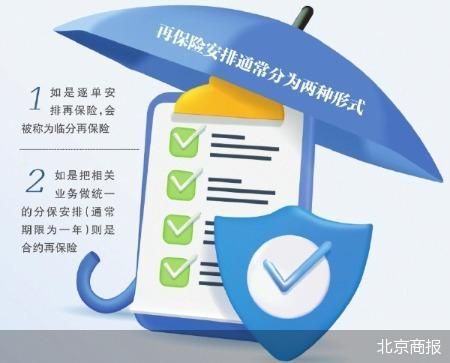
Core Insights - The Hong Kong fire incident at Hong Fu Court has raised significant concerns regarding the insurance industry's risk management and claims handling capabilities, particularly in light of the HKD 2 billion property insurance coverage involved [1][4] - Multiple insurance products, including property insurance, public liability insurance, and personal accident insurance, are in place for the affected building, with a total premium of HKD 337,700 for two years [3][4] - The insurance regulatory body has established a dedicated task force to ensure that insurance companies allocate sufficient resources for claims processing and customer service [4] Insurance Coverage and Claims - The core insurer for the affected property is China Taiping Insurance (Hong Kong), which has provided various insurance products including property all-risk insurance and third-party liability insurance [3][4] - The building's property insurance has a coverage limit of HKD 2 billion, which raises questions about the insurance companies' ability to handle potential large payouts [1][3] - The insurance industry is expected to follow principles of "pay what is due, pay quickly, and reasonable pre-payment" to facilitate claims for affected residents [4] Reinsurance Arrangements - At least three reinsurance companies are involved in providing reinsurance coverage for the affected property, including China Re and Qianhai Re [5][6] - Reinsurance serves as a critical mechanism for risk distribution, allowing primary insurers to transfer part of their risk to other insurers [5][8] - The reinsurance structure typically includes both proportional and excess-of-loss reinsurance arrangements, which help manage large claims effectively [6][7] Risk Management and Financial Stability - The insurance industry relies on reinsurance to enhance its underwriting capacity and financial stability, particularly for high-value insurance policies [8][12] - A hypothetical reinsurance structure for the HKD 2 billion coverage suggests that the primary insurer could retain a self-retention amount of HKD 100 million, with subsequent layers of reinsurance covering additional losses [11][12] - In extreme scenarios, the primary insurer may only need to cover 5% of total losses, with the remaining 95% absorbed by the reinsurance framework [13]
非银行金融行业研究:估值与业绩严重错配,非银板块具备配置性价比
SINOLINK SECURITIES· 2025-11-30 14:23
Investment Rating - The report suggests a positive outlook for the brokerage sector, indicating a potential recovery in performance for undervalued leading brokerages as mergers progress and international business expands [3]. Core Insights - The brokerage sector is experiencing a significant divergence between performance and valuation, with high earnings growth but stock prices under pressure, leading to a price-to-book (PB) ratio of 1.35x, which is at the 33rd percentile over the past decade [3]. - The report highlights three main investment themes: 1. Focus on listed brokerages with better-than-expected Q3 results and a current PB of only 1.35x, recommending firms like Guotai Junan and Haitong Securities [3]. 2. Investment in Sichuan Shuangma, which is positioned well in the technology sector and is expected to benefit from gene therapy investments [3]. 3. Attention to multi-financial firms with strong growth, particularly Hong Kong Exchanges, which will benefit from deepening connectivity and increased trading activity from A-share companies listing in Hong Kong [3]. Summary by Sections Securities Sector - The brokerage sector's performance has lagged behind the market, with a year-to-date increase of 0% and a 15 percentage point underperformance compared to the broader market [3]. - The report emphasizes the potential for performance recovery among leading brokerages due to ongoing mergers and international business expansion [3]. Insurance Sector - The introduction of innovative drugs into group health insurance in Shanghai is expected to accelerate by the end of December 2025, with over 80 high-value innovative drugs anticipated to be included [4]. - The new group insurance product will have a lower threshold for coverage compared to existing medical insurance, with an individual deductible of 35,000 yuan, effectively mitigating catastrophic financial risks for individuals [4]. - Initial sales projections for the new group insurance are estimated to be between 500 million to 1 billion yuan annually, with the potential for significant payouts for innovative drugs [4]. Investment Recommendations - The report anticipates a double-digit growth in new insurance premiums due to the upcoming "opening red" season and the favorable long-term outlook for the insurance sector [5]. - It recommends focusing on leading insurance companies with strong business quality and low liability costs, as well as property insurance companies benefiting from regulatory changes [5].
金融行业周报(2025、11、30):保险开门红展望积极,坚持银行板块配置策略-20251130
Western Securities· 2025-11-30 12:49
Core Conclusions - The financial industry experienced a weekly increase of +0.68% in the non-bank financial index, underperforming the CSI 300 index by 0.96 percentage points [1] - The banking sector saw a decline of -0.59%, lagging behind the CSI 300 index by 2.23 percentage points, with state-owned banks, joint-stock banks, city commercial banks, and rural commercial banks showing varied performance [1][9] Insurance Sector Insights - The insurance sector's index rose by +0.20%, underperforming the CSI 300 index by 1.44 percentage points, driven by strong demand for dividend insurance products that align with residents' needs for stable returns and value appreciation [2][12] - Major insurance companies are focusing on dividend insurance as a strategic core, with product offerings expanding significantly ahead of the 2026 "opening red" period [2][12] - The growth of new single premiums is expected to be strong in 2026, supported by improved net present value margins (NBVM) and a favorable regulatory environment for dividend insurance [2][17] Brokerage Sector Insights - The brokerage sector index increased by +0.74%, underperforming the CSI 300 index by 0.90 percentage points, with recent developments in refinancing for two brokerages indicating a cautious approach to capital raising [2][18] - The current environment presents a mismatch between profitability and valuation in the brokerage sector, suggesting potential for valuation recovery [2][19] - Recommendations include strong mid-to-large brokerages with low valuations and those involved in mergers or restructuring [2][19] Banking Sector Insights - The banking sector's index decreased by -0.59%, underperforming the CSI 300 index by 2.23 percentage points, with a focus on high dividend strategies remaining viable [3][20] - The average dividend yield for banks is approximately 4.1%, which is attractive compared to other sectors, particularly in the context of a stable earnings outlook [3][21] - Recommendations include state-owned banks and resilient city commercial banks, with specific attention to banks with strong fundamentals and low volatility [3][22]


共话“十五五”金融业发展趋势!惠州金融高管论坛举行
Nan Fang Du Shi Bao· 2025-11-30 12:37
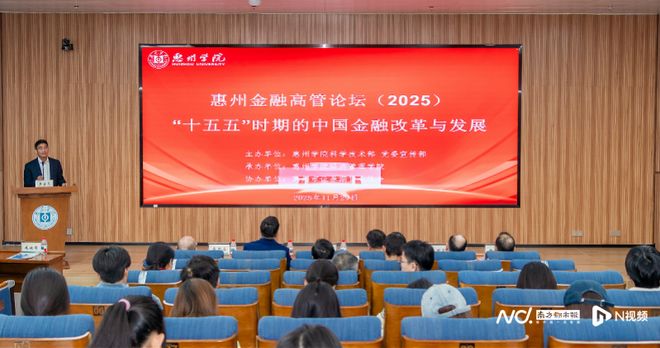
Core Insights - The forum held in Huizhou focused on the financial reform and development during the "14th Five-Year Plan" period, emphasizing the importance of talent cultivation in the financial sector [5]. Group 1: Event Overview - The Huizhou Financial Executive Forum (2025) took place at Huizhou University, gathering over 20 executives from the financial sector to discuss the future of financial reform and development in China [1]. - The event featured a report on the operation of the Huizhou Financial Education Demonstration Base and a lecture on macroeconomic outlook and asset allocation analysis for 2026 [3]. Group 2: Educational Collaboration - Huizhou University has established a comprehensive cooperation model with local financial institutions, including monthly lectures by bank executives and various educational initiatives [3]. - The Huizhou Securities and Futures Industry Association has been actively collaborating with the university to enhance the integration of industry and academia, focusing on cultivating high-quality financial talent [5].
香港宏福苑火灾直保再保联手理赔,巨额赔付或倒逼风控升级
Bei Jing Shang Bao· 2025-11-30 12:26
Core Viewpoint - The recent fire incident at Hong Kong's Tai Po Hong Fuk Court has raised significant concerns regarding the insurance industry's capacity to handle large claims, particularly with a total insured amount of HKD 2 billion for property insurance and additional coverage types [1][3][5]. Insurance Coverage and Claims - The core insurer for the affected community is China Taiping Insurance (Hong Kong), which has provided multiple insurance products including property insurance, public liability insurance, and home insurance for residents [3][4]. - The total premium for the four types of insurance coverage is HKD 337,700 for two years, with the property insurance alone having a coverage limit of HKD 2 billion [3]. Regulatory Response - The Hong Kong Insurance Authority has established a dedicated task force to ensure that insurance companies allocate sufficient resources for handling inquiries and claims related to the fire incident [4]. - The National Financial Regulatory Administration has issued guidelines emphasizing the principles of "paying what is due, paying quickly, and reasonable prepayment" to streamline claims processing for affected residents [4]. Reinsurance Arrangements - At least three reinsurance companies are involved in providing reinsurance coverage for the affected policies, including China Re and Qianhai Re [5][6]. - The reinsurance mechanism allows primary insurers to transfer part of their risk to other insurers, thereby enhancing financial stability and capacity to handle large claims [5][8]. Risk Management and Future Implications - The incident is expected to lead to an increase in reinsurance premiums and tighter underwriting conditions for residential fire insurance in Hong Kong, particularly for older buildings [15][16]. - Insurers may implement stricter risk management practices, such as enhanced fire safety inspections and pre-insurance assessments, to mitigate future risks associated with older residential properties [16].

国家金融监管总局指导银行业保险业做好香港火灾金融保障服务
Jing Ji Ri Bao· 2025-11-29 23:09
Core Points - The National Financial Regulatory Administration issued a notice on November 29 to guide the banking and insurance sectors in providing financial support for the recovery efforts following the fire disaster in Tai Po, Hong Kong [1][2] - The notice emphasizes the importance of efficient claims processing and financial support to assist affected residents in restoring their lives and businesses [1] Group 1: Insurance Sector - Insurance institutions are required to conduct thorough business inspections and proactively provide services, ensuring the scientific allocation of resources for damage assessment and compensation [1] - The principle of "compensate as much as possible, compensate quickly, and provide reasonable pre-compensation" should be followed, with simplified procedures and optimized processes to enhance the speed of claims [1] - Taiping Insurance Group is tasked with coordinating efforts among its subsidiaries to improve insurance service delivery [1] Group 2: Banking Sector - Chinese-funded banks in Hong Kong are encouraged to enhance financial services to help affected customers overcome difficulties, including offering deferred repayment options based on individual circumstances [1] - Banks are expected to support post-disaster recovery and reconstruction by meeting the credit needs of enterprises involved in fire prevention, production, transportation, and public welfare [1] - Emergency measures should be initiated by banks and insurance companies, including opening green channels and simplifying business procedures to quickly address the financial needs of disaster-affected residents [2]
国家金融监管总局:银行业保险业做好香港大埔火灾金融保障服务
Zhong Guo Xin Wen Wang· 2025-11-29 12:47
Core Viewpoint - The notification from the National Financial Regulatory Administration emphasizes the importance of providing financial support and services to residents affected by the fire in Tai Po, Hong Kong, through various measures by banks and insurance companies [1]. Group 1: Emergency Measures - Chinese-funded banks and insurance companies in Hong Kong are required to quickly initiate emergency measures, including opening green channels and simplifying business procedures to meet the financial needs of affected residents [4]. - The notification stresses the need for a heightened sense of political responsibility and urgency in responding to the disaster, with a focus on serving the people and ensuring safety [1]. Group 2: Insurance Services - Insurance institutions are instructed to conduct thorough business inspections and provide proactive services, ensuring timely claims processing based on the principles of "paying claims as much as possible, paying quickly, and reasonable pre-compensation" [2]. - The notification highlights the importance of optimizing claims procedures to reflect the urgency and compassion needed in the aftermath of the disaster [2]. Group 3: Financial Support for Reconstruction - Chinese-funded banks are encouraged to enhance financial services to assist affected customers, including offering deferred repayment options based on individual circumstances [3]. - Banks are expected to support post-disaster recovery and reconstruction efforts by meeting credit demands for fire prevention, production transportation, and livelihood security [3]. Group 4: Coordination and Collaboration - There is a call for close cooperation between Chinese-funded banks and insurance institutions to effectively respond to the disaster and support recovery efforts [5]. - Financial regulatory authorities in Guangdong and Shenzhen are tasked with guiding local banks and insurance institutions to leverage their proximity to allocate resources efficiently [5].