极氪

Search documents
极氪私有化收官,超七成股东放弃套现!为“一个吉利”战略投下信心票
Jin Rong Jie· 2025-12-10 08:41
Core Insights - The transition of the new energy vehicle industry from "quantity accumulation" to "quality leap" is reshaping the global competitive landscape, with Geely's strategy evolving from internal organization integration to a broader vision concerning industry confidence and future value [1] - Over 70% of Zeekr shareholders opted for equity compensation rather than cash, indicating strong market confidence in the long-term growth potential post-merger [2] - Geely's solid operational performance underpins shareholder confidence, with significant revenue and profit growth reported for the first three quarters of 2025 [3] Group 1: Merger and Shareholder Sentiment - Approximately 70.8% of eligible Zeekr shareholders chose stock compensation, receiving about 777 million shares of Geely, while 29.2% opted for cash, totaling approximately $701 million [2] - The choice of equity over cash reflects market expectations for synergies post-merger, with minimal short-term selling pressure on Geely's stock [2] - Geely initiated a share buyback plan of up to HKD 2.3 billion to stabilize market expectations and demonstrate management's confidence in the company's intrinsic value [2] Group 2: Financial Performance - Geely reported a revenue of CNY 239.5 billion for the first three quarters of 2025, a year-on-year increase of 26%, with a core net profit of CNY 10.62 billion, up 59% [3] - The company achieved a total cash position of CNY 60.1 billion and a net cash position of CNY 45.2 billion, indicating a robust financial status [3] - Geely's sales from January to November reached 2.788 million units, a 41.8% increase year-on-year, with November sales alone at 310,000 units, up 24.1% [3] Group 3: Strategic Integration and Future Goals - Geely's strategic integration began with the "Taizhou Declaration" in September 2024, focusing on five key measures: strategic focus, integration, synergy, stability, and talent [4] - The company aims to achieve over 5 million vehicle sales by 2027, positioning itself as a global leader in electrification, intelligence transformation, and high-quality development [5] - The merger with Zeekr is expected to enhance cost efficiency through deep collaboration in R&D, production capacity, and supply chain management, while leveraging a differentiated brand matrix [5]
新能源汽车购置税减半征收倒计时,17家主流车企推出“兜底”方案
Hua Xia Shi Bao· 2025-12-10 06:56
Core Viewpoint - The Chinese new energy vehicle (NEV) market is experiencing a significant shift as the long-standing purchase tax exemption policy is set to change, prompting automakers to introduce "tax guarantee" schemes to encourage consumers to purchase vehicles before the policy change takes effect [3][5][6]. Group 1: Policy Changes and Market Reactions - The purchase tax exemption for NEVs, in place since September 2014, will transition to a 50% reduction starting January 1, 2026, with a cap of 15,000 yuan per vehicle [5][9]. - Over 17 major automotive brands have launched "tax guarantee" programs, promising to cover the tax difference for consumers who place orders before the end of 2025 but receive their vehicles in 2026 due to manufacturer delays [3][6][7]. - The cost difference for consumers purchasing NEVs is significant; for example, a vehicle priced at 300,000 yuan will save approximately 26,500 yuan in taxes if purchased in 2025, compared to 13,300 yuan in 2026, resulting in a 13,200 yuan increase in cost [5][6]. Group 2: Industry Dynamics and Consumer Behavior - The introduction of "tax guarantee" programs is a strategic response to potential consumer hesitation due to the impending tax changes, with many customers now preferring to order vehicles this year to avoid higher costs [6][7]. - The average delivery time for popular models is around 10 weeks, which could lead to order cancellations without the tax guarantee, thus stabilizing orders for manufacturers [8][9]. - The market is witnessing a shift from reliance on policy incentives to a focus on internal market dynamics, with NEV sales surpassing 50% of total new car sales for the first time in October 2025 [9][10]. Group 3: Future Market Outlook - The reduction of policy support indicates a transition to competition based on technological innovation, cost control, and brand value rather than subsidies and price wars [12]. - The new regulations set to take effect in 2026 will raise the bar for qualifying NEVs, potentially affecting around 30% of current plug-in hybrid models that may not meet the new standards [10][11]. - Industry experts predict a slowdown in sales growth for 2026, with wholesale volumes expected to increase by only 3% compared to 11% in 2025, reflecting the challenges posed by the changing subsidy landscape [11][12].


中国品牌出海展现新气象(人民日报)
Ren Min Ri Bao· 2025-12-10 04:59
Group 1 - The core viewpoint of the article emphasizes that Chinese companies are evolving from merely exporting products and capital to enhancing their global presence through brand output, organizational capabilities, management mechanisms, and governance systems [2] - Chinese brands are gaining recognition in international markets due to their technological innovation, cultural depth, and design inspiration, leading to increased consumer acceptance and brand influence [2][4] - The rise of innovative Chinese brands is benefiting global consumers and investors, as they adapt to local market needs and preferences [4][7] Group 2 - Chinese companies are actively promoting independent innovation, supported by a complete industrial system and a fair, open market environment, which has been acknowledged by international experts [4][5] - Significant advancements in China's manufacturing sector have been attributed to government support and long-term planning, fostering a competitive landscape that drives innovation [5] - China is increasingly recognized as a global innovator, moving beyond being the "world's factory" to becoming a source of innovation, particularly in fields like artificial intelligence, electric vehicles, and quantum computing [6][5] Group 3 - Chinese brands are contributing to the improvement of global consumer quality of life by sharing technological advancements and providing access to the latest technologies at lower costs [7][8] - The collaboration between Chinese companies and local enterprises in various countries is enhancing technological, environmental, and service model upgrades [7] - China's commitment to high-level openness and fair competition in international markets is fostering mutual benefits and experience exchange among global businesses [8]
纳斯达克出台新规:10天股价不超0.1美元即退市,中企IPO资金要求或松动?
Sou Hu Cai Jing· 2025-12-10 03:46
Core Viewpoint - The SEC has approved Nasdaq's proposal to modify the minimum stock price delisting rules, marking a "zero tolerance" approach towards ultra-low-priced stocks [1] Group 1: Key Points of the New Rules - The new rules eliminate the compliance period for companies whose stock price remains below $0.1 for 10 consecutive trading days, triggering immediate delisting procedures and trading suspension [2] - The changes are based on research indicating that approximately 92% of companies with stock prices below $0.1 exhibit issues such as financial misrepresentation or inadequate disclosure of related party transactions [2] - The new listing requirements for Chinese companies include raising the minimum public float market value from $5 million to $15 million and requiring a minimum fundraising amount of $25 million, a 50% increase from 2020 [3] Group 2: Impact on Chinese Companies - The new rules significantly increase delisting risks, with about 15% of Chinese companies listed on Nasdaq having stock prices that fell below $0.1 in 2024 [6] - The financial compliance costs for Chinese companies have risen substantially, with small to medium-sized enterprises facing annual compliance costs of $800,000 to $1.5 million, while larger companies exceed $3 million [7] - The average fundraising amount for industrial companies among new Chinese listings in 2024 was approximately $18 million, indicating increased pressure on smaller firms to meet the new thresholds [5] Group 3: Future Trends and Professional Opinions - The new regulations aim to enhance market quality rather than exclude Chinese companies, focusing on selecting firms with sustainable operational capabilities [11] - Future trends may include a preference for "hard tech" companies, a normalization of multi-market listings, and a continuous rise in compliance costs [11] - Companies are encouraged to establish compliance frameworks and improve financial transparency to navigate the new regulatory landscape effectively [13]

新能源汽车购置税政策调整在即 车市消费热度持续上升
Shang Hai Zheng Quan Bao· 2025-12-09 18:40
明年起,购买新能源汽车从全额免征购置税调整为减半征收,从每辆最高免税额3万元,调整为每辆最 高减税额1.5万元。距离政策调整实施仅剩不足一个月的时间,新能源汽车市场正迎来年底消费冲刺 潮。 上海证券报记者近日采访发现,多地车企相继推出购置税兜底政策锁定用户,线下4S店客流与订单量 双双走高。受访专家认为,购置税征收政策切换前短期会形成"末班车效应",长期来看新能源汽车市场 将从政策驱动转向价值驱动,竞争将越来越聚焦于技术、成本与服务。 新能源汽车市场年底冲刺 北京朝阳区一家蔚来4S店内,前来咨询试驾的消费者络绎不绝。 "按照今年的政策,这款车在年底前购车并开票,只需要付6000元的购置税,明年政策调整后需多付1.5 万元。"面对消费者,销售人员以一款40.68万元(含税价)的车型为例算了一笔账。 这种实打实的成本差距,成为影响消费者购车的核心因素。正在店内看车的消费者告诉记者,购置税也 是一笔不小的开支,虽然明年可能还有其他的补贴政策,但还是考虑当下,如果有合适的车型,会选择 在12月就下定。也有消费者考虑到政策调整,早已在10月就选择购入最新款,预计12月底政策到期前就 能提车,享受购置税全额免征。 现行政 ...
高阶智驾下放10万元级车型 智驾平权迈入深水区
Bei Jing Shang Bao· 2025-12-09 15:37
当下中国市场对于智驾平权的需求与日俱增。高工智能汽车研究院数据显示,今年前三季度,20万元以 下价位车型,合计标配NOA交付量为172.42万辆,贡献整体市场交付量的近50%,增量贡献率达70%。 长期以来,高阶城区NOA等智能驾驶功能因高算力芯片成本、复杂算法研发投入,始终局限于20万元 以上高端车型。不过,技术迭代、规模效应与开放生态正持续破解这些难题,从征程2到征程6,五年时 间,地平线征程家族芯片累计出货量突破1000万套。根据余凯的规划,未来3—5年,地平线将与所有生 态伙伴携手,共同实现城区辅助驾驶方案HSD千万量产的目标。 今年10月,地平线HSD高阶城区辅助驾驶系统已通过星途ET5、深蓝L06两款车型完成量产首秀,其中 深蓝L06售价下探至13.29万元起,上市两周系统激活量即突破1.2万辆。由此开始,实现首发量产的 HSD系统,已将城区辅助驾驶体验带入15万元以内的主流市场。余凯介绍:"HSD Together算法服务模 式的根本目的,是让合作伙伴能够基于地平线已验证的成熟智能基座,将产品开发中的人力投入、算力 消耗与上市周期均大幅降低90%。" 在加速推动智驾普惠的过程中,地平线征程家族产 ...
11月全国乘用车市场零售约222.5万辆 乘联分会预测:明年车市增长承压
Mei Ri Jing Ji Xin Wen· 2025-12-09 14:14
Group 1: Passenger Car Market Performance - In November, the retail sales of passenger cars in China reached approximately 2.225 million units, representing a year-on-year decline of 8.1% and a month-on-month decrease of 1.1% [1] - Cumulative retail sales for the year amount to about 21.483 million units, showing a year-on-year growth of 6.1% [1] - The decline in November is unusual, as the market had previously experienced a 13% growth in the first half of the year, with a subsequent slowdown in the latter half [1] Group 2: New Energy Vehicle (NEV) Sales - In November, the sales of new energy passenger vehicles reached 1.321 million units, marking a year-on-year increase of 4.2% and a penetration rate of 59.3% in the overall passenger car market [2] - BYD led the monthly wholesale sales of new energy vehicles with over 470,000 units, followed by Geely with 187,000 units [2] - The penetration rate of new energy vehicles among domestic brands is 79.6%, while luxury brands and mainstream joint ventures have penetration rates of 38.8% and 8%, respectively [2] Group 3: Export Performance of NEVs - In November, the export volume of new energy vehicles reached 284,000 units, a significant year-on-year increase of 243.3%, accounting for 47.3% of the total export market [3] - The export of pure electric vehicles constituted 57% of the new energy vehicle exports, while plug-in hybrid models made up 42% [3] - The export of power batteries also saw growth, with domestic usage at 5.683 million kWh and export usage at 1.09 million kWh, reflecting year-on-year increases of 13% and 188%, respectively [3] Group 4: Market Outlook and Challenges - The retail share of new forces in the automotive market reached 22.1% in November, an increase of 5.9 percentage points year-on-year [4] - Predictions for December suggest a stable market performance, with potential for slight negative growth due to consumer urgency driven by upcoming tax policy changes [5] - Looking ahead, the market is expected to face pressure in 2026 due to the reduction of tax exemptions, which could significantly impact sales growth [5]


Geega工业智能体,如何助力领克交付提速15%?【AI落地洞察】
虎嗅APP· 2025-12-09 13:38
Core Viewpoint - The article discusses the transformation of traditional manufacturing through the implementation of industrial AI, specifically focusing on Geega's industrial AI platform developed by Geely Group, which aims to enhance efficiency and address challenges in the automotive industry [4][6]. Group 1: Industrial AI Implementation - Industrial AI is seen as a key solution to the structural challenges faced by traditional manufacturing, particularly in the context of real-time decision-making and dynamic optimization [6][10]. - Geega's industrial AI platform has been successfully implemented in Geely, Lynk & Co, and Zeekr factories, resulting in significant improvements such as a 15% reduction in order delivery cycles and a 13% decrease in quality loss costs [4][16]. Group 2: Platform Development Stages - The development of the Geega platform involves four key stages: 1. Standardization of industrial software to enable reuse and promotion [12]. 2. Construction of the GOS (Geely Operating System) to unify the computing environment and application portal [14]. 3. Launch of the AI application platform and business agents to facilitate human-machine collaboration [15]. 4. Establishment of a factory brain for continuous improvement through a PDCA mechanism [15][18]. Group 3: Practical Applications and Outcomes - In the Chengdu factory of Lynk & Co, the implementation of an integrated digital base led to a 13% reduction in quality loss costs, a 10% increase in logistics efficiency, and a 15% decrease in order delivery cycles [16]. - The Ningbo factory of Zeekr saw a 10% reduction in equipment failure rates and an 11% increase in equipment utilization through the establishment of a fully connected factory base [17]. Group 4: Intelligent Agent Architecture - The architecture of the Geega platform's intelligent agent system consists of three layers: perception, decision-making, and execution, enabling comprehensive monitoring and intelligent decision-making [18]. - The platform offers standardized industrial components and modules that can be easily integrated using a low-code approach, allowing users to customize applications without extensive technical knowledge [21]. Group 5: Methodology and Experience Summary - The article emphasizes three key points for constructing intelligent agents: 1. Starting from specific business problems to ensure AI is embedded in practical workflows [30]. 2. Defining data and system modifications based on identified issues to enhance decision-making capabilities [33]. 3. Fostering continuous evolution by accumulating knowledge and experience from each intelligent agent's deployment [34].

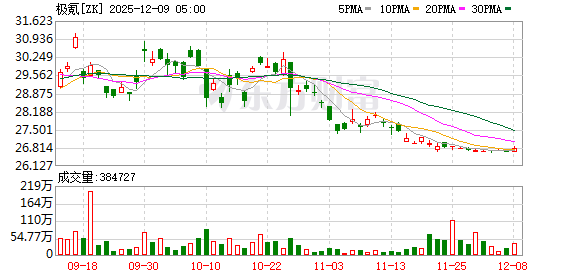
极氪私有化,定了!
Zhong Guo Ji Jin Bao· 2025-12-09 13:33
Core Viewpoint - Geely Automobile has made significant progress in the privatization transaction of Zeekr Intelligent Technology Holdings, marking an important step in the implementation of the "One Geely" strategy, with the merger expected to be completed by December 29 [1][5]. Group 1: Merger Details - Approximately 70.8% of eligible Zeekr shareholders chose stock compensation, while about 29.2% opted for cash compensation [2]. - Geely will issue approximately 777 million shares to shareholders choosing stock, granting them equal rights including dividends, voting rights, and capital returns [2]. - For those opting for cash, Geely will pay a total of approximately $701 million, with each Zeekr share convertible to $2.687 in cash or 1.23 shares of Geely stock [2]. Group 2: Strategic Implications - The merger aligns with Geely's "One Geely" strategy, which aims for comprehensive integration and optimization of its business segments, as outlined in the "Taizhou Declaration" [5]. - Following the privatization of Zeekr, Geely will cover mainstream, mid-to-high-end, and luxury segments, creating a diverse power system including fuel, pure electric, plug-in hybrid, and hydrogen electric vehicles [5]. - Geely aims to leverage Zeekr's position in the global luxury electric vehicle market, integrating its high-performance and intelligent features with Geely's established market presence [5]. Group 3: Financial Performance - For the first three quarters of 2025, Geely reported revenue of 239.5 billion yuan, a year-on-year increase of 26%, and a core net profit of 10.62 billion yuan, up 59% year-on-year [6]. - As of September 2025, Geely's total cash level reached 60.1 billion yuan, with a net cash level of 45.2 billion yuan [6].
极氪私有化,定了!
中国基金报· 2025-12-09 13:29
Core Viewpoint - Geely Automobile has made significant progress in the privatization of Zeekr, marking the final stage of its "One Geely" strategy, with the merger expected to be completed by December 29 [5][11]. Summary by Sections Privatization Details - Approximately 70.8% of eligible Zeekr shareholders chose stock compensation, while about 29.2% opted for cash compensation [7]. - Geely will issue approximately 777 million shares to shareholders choosing stock, granting them equal rights including dividends and voting [7]. - For those opting for cash, Geely will pay a total of approximately $701 million, with each Zeekr share convertible to $2.687 in cash or 1.23 shares of Geely [8]. Strategic Implications - The completion of the merger will allow Geely to cover mainstream, mid-to-high-end, and luxury segments, creating a diverse power system including fuel, pure electric, plug-in hybrid, and hydrogen electric vehicles [11][12]. - Zeekr is positioned as a global luxury tech brand, while Lynk & Co targets the global high-end new energy market, and Geely Galaxy and China Star focus on mainstream branding [12]. Financial Performance - In the first three quarters of 2025, Geely achieved revenue of 239.5 billion yuan, a year-on-year increase of 26%, and a core net profit of 10.62 billion yuan, up 59% [13]. - As of September 2025, Geely's total cash level reached 60.1 billion yuan, with a net cash level of 45.2 billion yuan [13].