
三花智控

Search documents
价值判断:跌停板的投资机会和风险提示(1月16日)|证券市场观察
Tai Mei Ti A P P· 2026-01-19 06:57
Market Overview - On January 16, the A-share market opened high but closed lower, with the Shanghai Composite Index down 0.26% at 4101.91 points, and both the Shenzhen Component and ChiNext Index down 0.18% and 0.20% respectively. The total trading volume exceeded 2 trillion yuan for the 14th consecutive trading day, reaching 3.03 trillion yuan [1]. Sector Performance - The market focus was on the semiconductor industry chain, particularly in storage chips and silicon carbide, as well as power grid equipment and humanoid robots. The low-altitude economy concept saw a recovery in the afternoon, while AI applications and sectors like media and pharmaceuticals experienced significant adjustments [1]. - A total of 2371 stocks rose while 2973 fell, with 47 stocks hitting the daily limit up and 50 hitting the limit down, indicating a low short-term sentiment and a less than 30% success rate for consecutive limit-up stocks [1]. Fund Flow - Main funds saw a net inflow of over 22.2 billion yuan into the electronics sector, with significant investments in semiconductors and machinery equipment, while there was a large outflow from the computer and media sectors, amounting to 18.56 billion yuan and 10.64 billion yuan respectively [1]. - Northbound funds recorded a net purchase of about 5 billion yuan, focusing on technology consumer stocks like Luxshare Precision and Sanhua Intelligent Control [1]. Market Sentiment - The market maintained high trading volume but with slowing incremental growth. The surge in wide-based ETFs indicated a risk-averse tendency, as funds sought a balance between policy catalysts and performance certainty in sectors like consumer electronics and innovative pharmaceuticals [1]. - The overall market saw a 40% limit-down rate, with the number of stocks hitting the limit down (50) exceeding those hitting the limit up (47), reflecting increased fund divergence and a decline in risk appetite [1]. First Limit Down Stocks - Haiwang Bio (000078) faced a limit down due to high valuation and fund withdrawal, closing at 3.74 yuan with a drop of 10.10%, and showing a significant deviation of 86.04% from its intrinsic value [2][3]. - Sanwei Communication (002115) also hit a limit down as high valuation pressures emerged, closing at 17.59 yuan with a drop of 9.98%, and a deviation of 67.83% from its intrinsic value [4][5]. - Hezhu Intelligent (603011) experienced a limit down due to overall sector adjustments, closing at 28.81 yuan with a drop of 9.99%, and a deviation of 60.08% from its intrinsic value [6][7]. Continuous Limit Down Stocks - Jinyu Group (601992) saw a continuous limit down, closing at 1.9 yuan with a drop of 9.95%, and is currently undervalued by 80.69% compared to its intrinsic value, indicating potential for valuation recovery [9][10]. - Hangxiao Steel Structure (600477) also faced a continuous limit down, closing at 3.61 yuan with a drop of 9.98%, and is undervalued by 51.59% compared to its intrinsic value, suggesting a potential investment opportunity [11][12]. - Zhejiang Wenlian (600986) experienced a continuous limit down, closing at 10.04 yuan with a drop of 9.96%, and is undervalued by 36.81% compared to its intrinsic value, indicating potential for valuation recovery as market sentiment stabilizes [13][14]. Investment Strategy - The market is showing a tendency to avoid significantly overvalued stocks, focusing instead on undervalued stocks with fundamental support. Investors are advised to avoid first limit down stocks like Haiwang Bio and Sanwei Communication, while considering opportunities in continuously limit down stocks like Jinyu Group and Hangxiao Steel Structure [15][16].






一则消息,双双两连板
中国基金报· 2026-01-19 05:09
【导读】上午 A 股三大指数涨跌不一,电网设备、旅游酒店、商业航天等板块走强, CPO 等重挫 中国基金报记者 张舟 大家好,新的一周又开始了,基金君和你继续关注市场行情! 1 月 19 日上午, A 股三大股指涨跌不一。截至午间收盘,沪指报 4107.18 点,涨 0.13% ,深证成指跌 0.01% ,创业板指跌 0.64% 。 个股涨多跌少,全市场共 3381 只个股上涨, 51 只个股涨停, 1923 只个股下跌。成交额 方面,沪深两市半日成交额为 1.79 万亿元,较上个交易日缩量 1985 亿元。 从板块看,电网设备、旅游酒店、商业航天、人形机器人、化工板块涨幅居前;保险、通信 设备、文化传媒等板块下挫。 | | | Wind热门概念指数 | | | | | Wind中国行业指数 | | | | --- | --- | --- | --- | --- | --- | --- | --- | --- | --- | | 特高压 | 中航系 | 海南自贸港 | 氟化工 | 化学原料 | 石油化工 | 餐饮旅游 | 发电设备 | 化纤行业 | 化肥农药 | | 5.51% | 3.36% | 3.35% ...

三花智控:AI 机器人与电力领域调研要点-核心暖通空调、新能源汽车业务稳固;产品结构优化带动利润率企稳或上升
2026-01-19 02:32
Summary of Sanhua Intelligent Controls Conference Call Company Overview - **Company**: Sanhua Intelligent Controls (002050.SZ) - **Industry**: HVAC (Heating, Ventilation, and Air Conditioning) and EV (Electric Vehicle) components Key Takeaways 1. **Market Position and Rating**: - Sanhua is rated as Buy/Neutral post recent outperformance in a market optimistic about humanoid revenue levels and timing. However, expectations for humanoid robots are considered too high too soon [1][10] - The main business is expected to see growth moderation in the upcoming two quarters, while the full-year 2026 setup appears stable [1][10] 2. **Revenue Growth Projections**: - **HVAC Components**: Revenue is guided to grow at approximately 10% year-over-year (yoy) in 2026, driven by a structural mix improvement towards commercial HVAC applications [2][4] - **EV Components**: Expected to grow at a compound annual growth rate (CAGR) of around 20% from 2025 to 2027, supported by a backlog of orders and increasing content value in next-generation EV platforms [4][5] 3. **Margin Stability**: - Gross Profit Margin (GPM) is expected to remain stable at 25-28%, with potential improvements due to a higher commercial HVAC mix and cost optimization strategies [4][6] - The company anticipates a firmwide net profit growth of 20% in 2026 [4][5] 4. **Humanoid Robot Actuators**: - Identified as a medium- to long-term growth driver, with limited near-term progress disclosed. The company has a dedicated R&D team of approximately 200 engineers [8][10] 5. **Market Dynamics**: - Climate-driven demand from regions like Southeast Asia, India, and parts of Europe is expected to provide long-term structural tailwinds for HVAC adoption [5][10] - Domestic demand is moderating due to pull-forward subsidy demand, with full-year HVAC growth guided at around 15% [5][10] 6. **Investment Thesis**: - Sanhua is positioned to deliver revenue growth above the residential HVAC industry, driven by gains in commercial HVAC market share and sensor products [10] - The company is expected to play a significant role in the supply chain for humanoid robots, with catalysts including technology advancements and increased EV penetration in Europe [10] 7. **Price Targets and Risks**: - 12-month target prices are set at Rmb40.9 for Sanhua A and HK$43.1 for Sanhua H, indicating a downside of 25% and an upside of 15% respectively [1][11] - Key risks include faster or slower-than-expected revenue contributions from humanoid robots and fluctuations in global EV and home appliance sales [11][12] Additional Insights - The company is focusing on systematic internal cost absorption mechanisms and continuous design-led material optimization to maintain margins [6][7] - The management emphasizes a selective customer strategy for humanoid robots, prioritizing deep engagement with top customers [8][10] This summary encapsulates the essential points discussed during the conference call, providing a comprehensive overview of Sanhua Intelligent Controls' current market position, growth prospects, and strategic focus areas.
双融日报-20260119
Huaxin Securities· 2026-01-19 01:27
Core Insights - The report indicates a "relatively hot" market sentiment with a score of 70, suggesting a positive outlook for the market in the near term [6][9]. - Key investment themes identified include robotics, banking, and retail, each with specific growth drivers and related stocks [6]. Group 1: Robotics Sector - The robotics theme is bolstered by the release of the "Hangzhou Intelligent Robot 'Strong Chain and Supplement Chain' Action Plan (2026-2027)", aimed at enhancing the competitiveness of the local robotics industry, particularly in embodied intelligence [6]. - Related stocks in this sector include Sanhua Intelligent Control (002050) and Wolong Electric Drive (600580) [6]. Group 2: Banking Sector - Banking stocks are highlighted for their high dividend characteristics, with the CSI Bank Index yielding 6.02%, significantly above the 10-year government bond yield [6]. - In a slowing economy with increased market volatility, banking stocks are positioned as important investment options for long-term funds such as insurance and social security [6]. - Key banking stocks mentioned are Agricultural Bank of China (601288) and Ningbo Bank (002142) [6]. Group 3: Retail Sector - The national business work conference held from January 10 to 11 set the tone for consumer stimulation and market development in 2026, emphasizing actions to boost consumption and innovate in the retail sector [6]. - The report notes initiatives like trade-in programs and the creation of the "Buy in China" brand, which are expected to inject long-term growth momentum into the industry [6]. - Relevant retail stocks include Yonghui Supermarket (601933) and Wangfujing (600859) [6].






直面AI泡沫论 基金经理多维度挖掘投资机会
Zheng Quan Shi Bao· 2026-01-18 18:08
随着四季报陆续披露,多只重仓人工智能板块而实现业绩领跑的基金也曝光了当季的操作轨迹。 从已披露的数据来看,基金经理对这一主线的后市既有共识也有分歧,一部分涨幅可观的算力个股依旧 获相关基金重仓持有,由算力需求所衍生的多只高景气概念股则受到了挖掘。 经过一年多的上涨,相关板块的短期估值已处高位。有基金经理认为,人工智能产业正处于泡沫初现并 逐步形成的阶段,而非泡沫末期。当下,投资机遇与风险并存,需持续跟踪技术迭代节奏、商业模式验 证和企业盈利能力变化。 共识中不乏分歧 主管前海开源沪港深乐享生活的两位基金经理则认为,2026年,随着ASIC机柜的放量以及英伟达采购 形式的潜在变化,大陆的液冷厂商有希望在全球AI基础设施市场持续扩张份额,这一市场有望为投资 者创造超额回报。 其次,是算力猛增带动的电力需求。德邦基金基金经理袁之渿认为,由于AI数据中心建设速度远快于 传统电网扩容速度,电网建设无法跟上算力扩张,供需错配催生了这场潜在的能源危机。他表示,未来 几年海外企业订单充沛,国内企业有望出海享受行业红利,而新技术的开发有望催生"终极解决方案", 行业兼具确定性和弹性,是值得中长期重点关注并投资布局的新兴赛道。 ...
城数Lab. | 港股IPO狂飙 哪些城市赢了?
Mei Ri Jing Ji Xin Wen· 2026-01-18 14:48
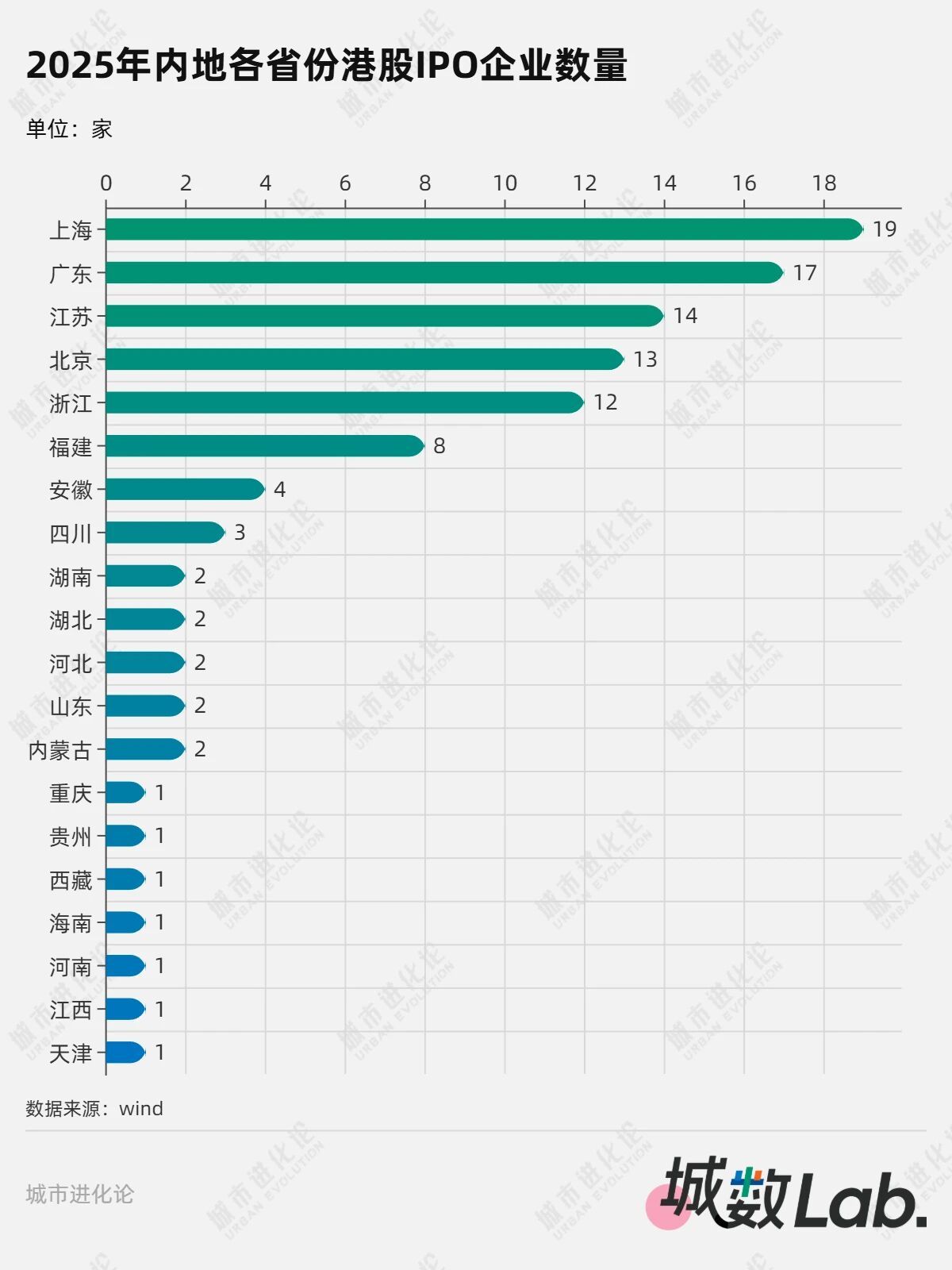
2025年,港股市场迎来久违的IPO盛宴——全年117家企业上市,累计募资2858亿港元,同比大幅增长超200%,一举重夺全球IPO募资额榜首。 在外界看来,这是政策助力、产业积累与资本嗅觉共同作用的结果。在全球经贸格局深刻调整的当下,港股IPO市场持续活跃,不仅进一步巩固了香港国际 金融中心"超级联系人"地位,也为中资企业"出海"按下加速键。港股IPO版图,也成为观察区域经济活力与产业竞争力的重要窗口。 根据wind数据,去年内地共有20个省份有企业赴港IPO。其中,上海以19家上市企业数量排名第一,广东17家紧随其后,江苏、北京、浙江则分别有14家、 13家、12家企业登陆港股。五省市合计达到75家,贡献超六成港股上市企业。 这五个省份均是国内经济发展靠前的省份,"马太效应"愈发明显。其他省份中,福建8家、安徽4家、四川3家,居2025年港股IPO"第二梯队"。 具体到城市层面,赴港IPO企业同样呈现明显集聚态势。上海、北京、深圳三座一线城市强势领跑,去年港股上市企业分别达到19家、13家、10家;香港以 7家排名第四,苏州和杭州各有6家,共同组成"第二梯队";此外,广州4家,厦门、南京各3家,排名也较为 ...
城数Lab. | 港股IPO狂飙,哪些城市赢了?
Mei Ri Jing Ji Xin Wen· 2026-01-18 12:44
Group 1 - In 2025, the Hong Kong stock market experienced a significant IPO boom with 117 companies listed, raising a total of 285.8 billion HKD, representing a year-on-year increase of over 200%, reclaiming the top position globally in IPO fundraising [1] - The active IPO market in Hong Kong is attributed to a combination of policy support, industrial accumulation, and capital awareness, further solidifying Hong Kong's status as an international financial center and accelerating the "going out" of Chinese enterprises [1] - A total of 20 provinces in mainland China had companies that went public in Hong Kong, with Shanghai leading at 19 listings, followed by Guangdong with 17, and other provinces contributing significantly to the overall IPO count [1] Group 2 - The "Matthew Effect" is increasingly evident, with the top five provinces being economically advanced, while other provinces like Fujian, Anhui, and Sichuan formed a "second tier" in terms of IPO activity [2] - Major cities such as Shanghai, Beijing, and Shenzhen dominated the IPO landscape, while cities like Ningde and Lianyungang achieved high fundraising amounts despite fewer listings, showcasing the impact of industry leaders [7] - The IPO landscape in Hong Kong in 2025 highlighted a focus on "new economy" and "hard technology," with the pharmaceutical and biotechnology sector leading with 20 listings, followed by software services and other industries [12] Group 3 - The concentration of pharmaceutical and biotechnology companies is particularly notable in the Yangtze River Delta region, with a significant portion of fundraising coming from this area, indicating a strong industrial foundation [14] - Currently, there are over 300 companies waiting to be listed on the Hong Kong Stock Exchange, and the market is expected to maintain its momentum into 2026, emphasizing the importance of leveraging local industrial advantages [14]
2026年港股IPO的四大新趋势
券商中国· 2026-01-18 12:28
Core Viewpoint - The Hong Kong IPO market is experiencing a surge in new listings, particularly in the semiconductor and biopharmaceutical sectors, with expectations for continued strong performance in 2026 [1][2]. Group 1: Trends in the IPO Market - In January 2026, 12 new stocks have been listed on the Hong Kong market, including several semiconductor companies and biopharmaceutical firms, indicating a trend of concentrated listings in these sectors [1]. - The 2025 Hong Kong market saw 117 new stocks listed, raising a total of 285.99 billion HKD, surpassing the expected fundraising amount of 23.31 billion HKD, with an average oversubscription of approximately 200 million HKD per stock [1]. - A significant portion of the fundraising in 2025 was dominated by A+H shares, with eight companies alone accounting for 49.82% of the total IPO fundraising [1]. Group 2: Specific Sector Insights - The surge in semiconductor and AI-related companies is attributed to their high capital expenditures and R&D costs, necessitating financing from the capital markets [2]. - The Hong Kong IPO rules, particularly the 18C and 18A regulations, are tailored to accommodate technology and biopharmaceutical companies, with at least 31 companies aiming to list under the 18A rules and 16 under the 18C rules [2]. Group 3: Market Dynamics - The trend of A+H shares is expected to continue but with a reduced proportion compared to 2025, as the concentration of fundraising is anticipated to decrease [2]. - Some H shares are expected to return to A shares as the A-share listing process normalizes and reforms are implemented [3]. - The influx of international capital into the Hong Kong IPO market is driven by a broader search for diversification beyond US dollar assets, with over half of the cornerstone investors in 2025 being international [3].

汽车行业周报:泛AI&机器人赛道进入景气验证期 关注业绩确定性
Xin Lang Cai Jing· 2026-01-18 10:35
Industry Overview - The EU and China reached a preliminary agreement on electric vehicle tariffs, establishing a minimum import price to replace high anti-subsidy tariffs set to take effect in 2024 [2] - ZhiYuan Robotics has spun off its dexterous hand business into a new company named "Critical Point," signaling a move towards specialization and commercialization [2] - A U.S. House committee held a hearing to discuss legislation aimed at simplifying the deployment process for autonomous vehicles, potentially increasing the annual limit on new autonomous vehicles from 2,500 to 90,000 [2] Company Updates - SAIC Motor Corporation announced a profit forecast for 2025, expecting a net profit attributable to shareholders of 9 to 11 billion yuan, representing a year-on-year increase of 438% to 558% [3] - JAC Motors released a profit forecast for 2025, projecting a net loss of approximately 1.68 billion yuan, which is a reduction in loss of about 100 million yuan compared to the previous year [3] - WeRide's global Robotaxi fleet surpassed 1,000 vehicles, reaching 1,023 units as of January 12, 2026 [3] Investment Insights - The automotive market is expected to enter an upward recovery phase, supported by the implementation of vehicle trade-in policies in 2026, which may boost domestic demand [4] - The AI sector is entering a verification phase, with clear marginal catalysts in robotics and AIDC, as Tesla's robot is set to enter mass production in 2026 [4] - Long-term focus on stable growth is recommended, with significant potential in overseas markets, as China's automotive export volume is projected to reach 6.34 million units in 2026, a year-on-year increase of about 13% [4] Related Stocks - Key stocks include Weichai Power, Yutong Bus, China National Heavy Duty Truck Group, BYD, SAIC Motor, Geely Automobile, Leap Motor, Xpeng Motors, Seres, Fuyao Glass, Songyuan Safety, Sanhua Intelligent Control, Zhejiang Rongtai, Top Group, Yinlun Holdings, Junsheng Electronics, Horizon Robotics, BYD Electronics, Hesai Technology, and SUTENG [5]

人形机器人行业周报:1X发布全新世界模型,人形机器人企业融资加速-20260118
Guohai Securities· 2026-01-18 09:34
Investment Rating - The report maintains a "Recommended" rating for the humanoid robot industry [1] Core Insights - The humanoid robot industry is expected to experience significant investment opportunities as it evolves from 0 to 1, driven by the electrification and intelligence trends. The industry is poised for a "ChatGPT moment" with rapid advancements in product iterations and business collaborations [12] - Recent financing activities indicate a surge in investment within the humanoid robot sector, with companies like Zivariable Robotics and FuturingRobot securing substantial funding to enhance their product offerings and market presence [2][3] - The introduction of advanced operating systems, such as the Agentic OS by Zhujidi Power, marks a shift towards more autonomous and capable robots, addressing the challenges of traditional robotic systems [7] Summary by Sections Industry Dynamics - Zivariable Robotics completed a 1 billion RMB A++ round of financing, backed by top-tier investment institutions, marking a significant milestone for the company founded in December 2023 [2] - FuturingRobot announced a 200 million RMB angel round of financing, focusing on household robots with high user satisfaction rates [3] - The launch of the 1X World Model by 1X aims to enhance robots' understanding and reasoning capabilities, indicating advancements in AI integration within robotics [4] Market Performance - The humanoid robot industry is expected to outperform the broader market, with significant growth potential as it develops new applications and scales production [12] - The report highlights the importance of companies with core component expertise and active involvement in humanoid robotics, suggesting a focus on specific firms for investment opportunities [12] Policy and Regulatory Environment - Recent measures from eight government departments to promote the elderly care service sector signal a growing market for caregiving robots, emphasizing the need for technological integration in elder care [8]