地平线

Search documents
一家企业融到C13轮了
投中网· 2025-10-30 07:22
Core Insights - The investment enthusiasm in the autonomous driving sector is reportedly returning, with significant financing activities observed recently [3][4][10] - Momenta has completed two rounds of financing this year, with the latest round (C13) valued at $6 billion, indicating a strong interest from large funds in leading autonomous driving companies [2][10] - In the past month alone, over 10 financing events in the domestic autonomous driving sector have occurred, totaling more than 10 billion yuan [6][10] Financing Activities - Didi's autonomous driving subsidiary completed a 2 billion yuan D round financing on October 11, with multiple prominent investors involved [7] - On October 14, Ninebot announced a $100 million B4 round financing led by Ant Group [8] - New Stone Technology secured over $600 million in D round financing on October 23, breaking the record for the largest single financing amount in China's autonomous driving sector [8][10] Market Trends - The number of financing events in the autonomous driving industry in 2023 is approximately 140, with a total amount of around 20 billion yuan, which is less than a quarter of the peak in 2021 [10] - The total financing amount in the sector has exceeded 40 billion yuan this year, indicating a clear "warming" signal in the market [10] Investment Sentiment - Investors are increasingly optimistic about the autonomous driving sector, with many large private equity firms actively investing in multiple projects this year [10][11] - The shift in investment focus is towards L4 level applications with clear use cases, such as RoboVan and Robotaxi, as well as L2 level advanced driving assistance systems [14] Competitive Landscape - Leading companies in the sector, such as New Stone Technology and Didi, are attracting significant investment due to their demonstrated progress in commercialization and operational capabilities [14][15] - The entry of major players like Huawei into the autonomous driving space is seen as a potential game-changer, with expectations that it could significantly impact the competitive landscape [16]


传统规划控制不太好找工作了。。。
自动驾驶之心· 2025-10-30 00:04
Core Viewpoint - The article emphasizes the evolving landscape of autonomous driving, highlighting the shift from traditional planning and control methods to end-to-end approaches, which are increasingly favored in the industry [2][29]. Summary by Sections Course Offerings - The company has designed a specialized course on end-to-end planning and control in autonomous driving, aimed at addressing real-world challenges and enhancing employability [6][12]. - The course will cover essential algorithms and frameworks used in the industry, focusing on practical applications and integration of traditional and modern methods [6][21]. Course Structure - The course consists of six chapters, each focusing on different aspects of planning and control, including foundational algorithms, decision-making frameworks, and handling uncertainty in environments [20][24][29]. - The course will also include interview preparation, resume enhancement, and mock interviews to support participants in securing job offers [31][10]. Target Audience - The course is designed for individuals with a background in vehicle engineering, automation, computer science, and related fields, particularly those seeking to transition into autonomous driving roles [37][39]. - Participants are expected to have a basic understanding of programming and relevant mathematical concepts to fully benefit from the course [43]. Instructor Expertise - The course will be led by an experienced instructor with a strong background in autonomous driving algorithms and practical implementation, ensuring that participants receive high-quality guidance [34][10]. Additional Benefits - Participants will have access to supplementary resources, including code and development environments, to enhance their learning experience [13][15]. - The course aims to provide a comprehensive understanding of the industry, equipping participants with the skills needed to tackle complex problems in autonomous driving [6][13].

今日新闻丨北京现代EO上市,售价11.98-14.98万元!小鹏汇天打造首家飞行汽车“6S”店!四维图新押注AI战略!
电动车公社· 2025-10-29 18:31
Group 1 - Horizon Robotics and ZF have reached a deep cooperation to launch an urban navigation assistance driving system in China, with plans for mass production in 2026 [1][6] - The urban assistance driving system is based on ZF's ProAI computing platform and Horizon's flagship solution, featuring a single chip computing power of 560 TOPS [4] - This collaboration represents a rare partnership between a global supplier and a local chip manufacturer, promoting the development of intelligent technology in China [6] Group 2 - Xiaopeng Huaitian announced the establishment of China's first low-altitude flying camp and plans to open the world's first flying car "6S" store in Guangzhou by mid-2026 [7][10] - The flying camp covers over 30,000 square meters and includes 10 core areas with 118 application scenarios, such as urban management and emergency rescue [8] Group 3 - Four-dimensional Map has upgraded its brand strategy to SEEWAY.AI, focusing on AI strategy [11] - The company is transitioning from a traditional map provider to an AI and automotive intelligence service provider, with a focus on high-precision maps and domestic chip replacement capabilities [13][17] - The company announced its investment in autonomous driving company "Jianzhi Robotics," showcasing the PhiGo series of assistance driving systems with computing power exceeding 1000 TOPS [15] Group 4 - The new Zeekr 7X was launched with a price range of 229,800 to 269,800 yuan, featuring a high-performance driving assistance system and a 900V high-voltage architecture [18][27] - The vehicle offers a range of 620 to 802 km and can accelerate from 0 to 100 km/h in 5.4 to 5.1 seconds [27][30] Group 5 - The new Avita 12 four-laser version was launched with a price range of 269,900 to 429,900 yuan, offering both range-extended and pure electric versions [31][32] - The vehicle features advanced driving assistance capabilities with four laser radars and Huawei's ADS 4.0 system [39] Group 6 - The smart EQ 5 EHD was launched with a price range of 189,900 to 239,900 yuan, featuring a hybrid system and a range of luxury configurations [40][46] - The vehicle offers a comprehensive driving experience with a maximum power of 120 kW and a combined range of 1450 to 1615 km [46] Group 7 - The new Denza N8L was launched with a price range of 299,800 to 329,800 yuan, featuring a design language similar to the Denza N9 and advanced technology [49][55] - The vehicle is equipped with a 2.0T engine and a three-motor system, achieving a 0-100 km/h acceleration time of 3.9 seconds [55] Group 8 - The Beijing Hyundai EO was launched with a price range of 119,800 to 149,800 yuan, featuring a compact SUV design and advanced technology [56][64] - The vehicle offers competitive pricing and product strength, aiming to become a dark horse in the electric vehicle market [64]


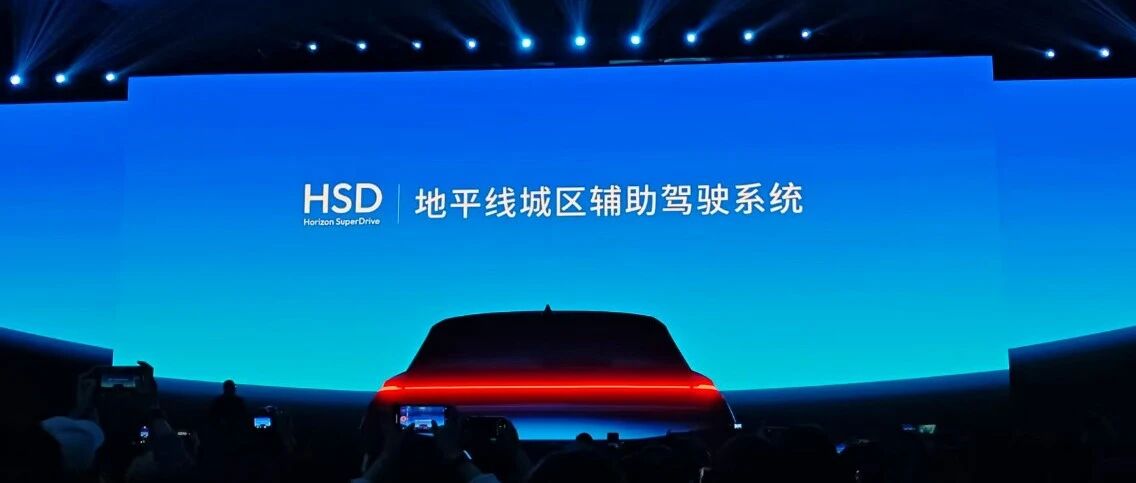
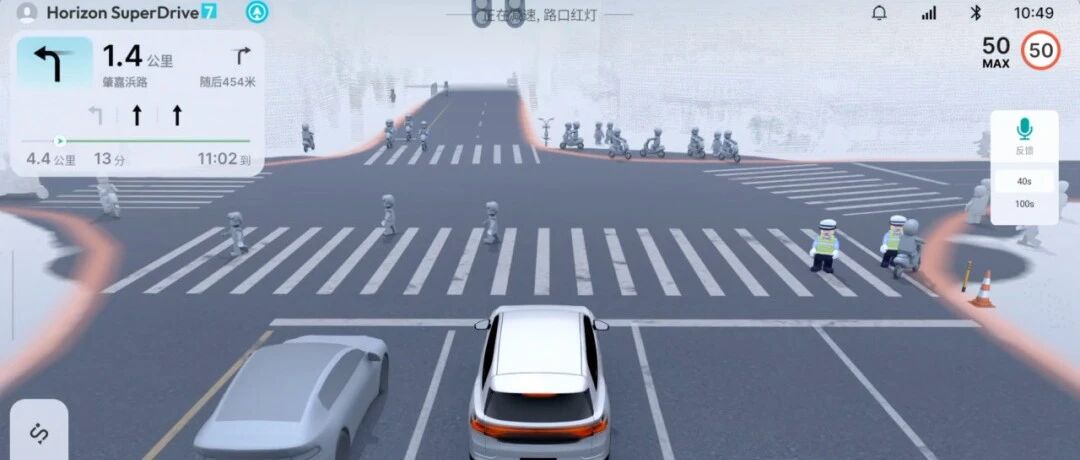
地平线HSD的确值得留意
自动驾驶之心· 2025-10-29 03:30
Core Insights - The article discusses the advancements in autonomous driving technology, particularly focusing on the performance of Horizon's HSD system compared to Li Auto's VLA system, highlighting the strengths and weaknesses of both [5][6]. Group 1: Technology Comparison - Horizon's HSD technology architecture utilizes visual information for trajectory output, with laser radar positioning as a safety redundancy, while the VLA system is criticized for its high computational and bandwidth requirements [5]. - During a test drive of the Horizon HSD engineering vehicle, the experience was reported to be significantly better than the current production version of Li Auto's VLA, particularly in terms of comfort and smoothness during traffic conditions [6]. - Feedback from the Horizon team indicated that the HSD system performs well in controlled environments but has limitations in extreme weather and complex scenarios, suggesting a need for further development [7]. Group 2: Community and Collaboration - The article mentions the establishment of nearly a hundred technical discussion groups related to various aspects of autonomous driving, with a community of around 4,000 members and over 300 companies and research institutions involved [8]. - The collaboration between Horizon and vehicle manufacturers is emphasized, with a focus on integrating user interface elements that respect manufacturer preferences, which can impact the overall driving experience [7]. Group 3: Future Outlook - The article suggests that while the HSD system shows promise, it is still in development and may not yet reach full autonomous driving capabilities, estimating it to be around 60% of the level of Li Auto's V13 system [7].

从交通工具到具身智能体,“AI+汽车”绘就行业新蓝图
Zhong Guo Qi Che Bao Wang· 2025-10-28 09:53
Core Insights - The forum focused on how AI is transforming automobiles from mere transportation tools to autonomous decision-making entities, outlining a technological blueprint for the automotive intelligence revolution [1][9] Group 1: AI Car Development Direction - The white paper titled "Preliminary Imagination and Exploration Practice of AI Car" was released, outlining the future of automotive intelligence from an industry perspective [2] - AI Car is identified as the core carrier of the next-generation intelligent space and an ecological node for smart mobility, characterized by autonomy, interactivity, and adaptability [4] - The white paper presents ten key judgments, including the transformation of autonomous driving system design logic, the emergence of world models for future predictions, and the importance of computational optimization and data loops for efficient self-iteration [4] Group 2: Technological Breakthroughs and Practices - Experts discussed the optimization of complex systems and the integration of AI with the automotive industry, emphasizing the need for breakthroughs in problem description, multi-objective conflicts, and computational complexity [5][7] - Companies like Geely, Dongfeng, and Huawei shared their engineering practices and advancements, highlighting initiatives such as Geely's "Beidou Tian Shu" plan and Huawei's dual-driven approach of market demand and technology development [8] - The forum established a collaborative platform for academia and industry, clarifying the technological direction and industrial logic of AI Car development while showcasing China's leading practices in automotive intelligence [9]

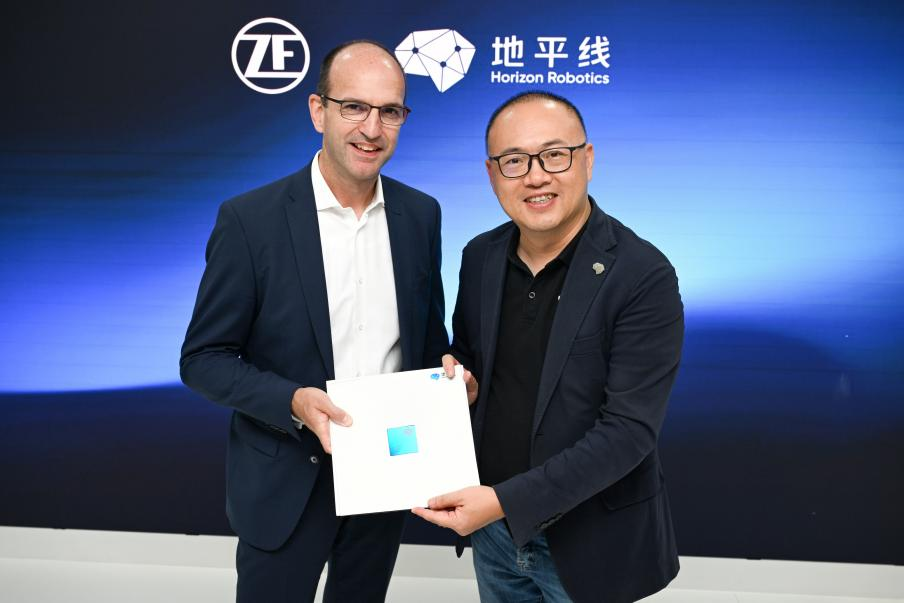
采埃孚携手地平线首发coPILOT辅助驾驶系统
Yang Shi Wang· 2025-10-28 07:09
Core Insights - ZF Group has partnered with Horizon Robotics to launch the coPILOT urban navigation (NOA) driver assistance system in the Chinese market, with plans for mass production and delivery by 2026 [1][3] Group 1: Product and Technology - The coPILOT system features a computing power of over 1000 TOPs, based on ZF's proprietary ProAI platform, integrating Horizon's latest Journey 6P technology [3] - The system supports advanced driving assistance features including highway driving assistance, urban driving assistance, automated parking, and seamless driving assistance from parking space to parking space [3] Group 2: Strategic Importance - ZF views China as a critical strategic market and a hub for automotive innovation, emphasizing the importance of local partnerships to align global technology with local applications [3] - Horizon's CEO highlighted the collaboration as a means to inject local technological innovation into the global supply chain, accelerating the adoption of advanced intelligent driving technologies in China and beyond [3] Group 3: Future Development - ZF aims to enhance local R&D capabilities to meet the complex traffic scenarios and user demands in China, with the coPILOT platform developed independently by ZF's Chinese team [3] - The company plans to develop more high-quality intelligent driving solutions tailored to local market needs, contributing to the innovation of China's smart mobility ecosystem [3]
深耕技术与场景 安全为基向未来 ——2025世界智能网联汽车大会侧记
Zhong Guo Qi Che Bao Wang· 2025-10-28 02:00
Core Insights - The 2025 World Intelligent Connected Vehicle Conference highlights China's transition from technology exploration to large-scale development in the intelligent connected vehicle industry, with significant advancements in key technologies such as autonomous driving and vehicle-road collaboration [2][3]. Group 1: Competitive Advantages - China possesses three main competitive advantages in the intelligent connected vehicle sector: rich application scenarios and service demands, collaborative innovation in the industrial chain and infrastructure, and a clear national strategy with a systematic policy framework [3]. - The complexity of China's road traffic scenarios provides a vast amount of scenario data, enhancing the development of intelligent connected vehicles [3]. Group 2: Policy and Planning - The Ministry of Industry and Information Technology (MIIT) plans to develop the "14th Five-Year" intelligent connected new energy vehicle industry development plan to promote high-quality industry growth [4]. - The MIIT aims to support technological innovation and deepen the integration of artificial intelligence with the automotive industry, focusing on breakthroughs in key technologies such as next-generation electronic and electrical architecture and high-performance chips [4]. Group 3: Industry Collaboration and Innovation - The "Vehicle-Road-Cloud Integration" application pilot has identified ten key functional scenarios for promotion, including traffic signal information services and collaborative emergency avoidance [4][5]. - The establishment of a national-level collaborative innovation platform is proposed to address challenges in key technology areas such as chips and operating systems, and to enhance resource sharing among industry players [7]. Group 4: Safety and Standards - The development of mandatory national standards for combined driving assistance systems is seen as a crucial step towards industry maturity and high-quality development [11][12]. - The focus on safety in autonomous driving systems is emphasized, with a call for prioritizing accident reduction as a key mission of the industry [10][11]. Group 5: Future Trends - The future of intelligent connected vehicles is expected to involve deeper integration of vehicles with their environment, transforming them into proactive decision-makers and emotional companions [8]. - The industry anticipates that a significant portion of vehicle journeys will be managed by Level 3 and Level 4 autonomous driving systems by 2030 [11].

地平线余凯:保持谦逊 在智能驾驶行业坚定创新
Shang Hai Zheng Quan Bao· 2025-10-27 20:50
Core Viewpoint - Horizon Robotics is experiencing significant growth and is positioned as a leading partner for global automotive companies in the smart driving sector, with a focus on high-quality development and innovation in the coming years [3][6][7]. Group 1: Company Overview - Founded by Yu Kai, Horizon Robotics is the first Chinese company specializing in deep neural network chips for smart vehicles and robots, aiming to integrate intelligent driving into daily life [4][5]. - The company has transitioned from a challenging startup phase to becoming a top supplier of Advanced Driver Assistance Systems (ADAS) and high-level autonomous driving (AD) solutions in China since 2021 [5][7]. Group 2: Strategic Focus and Partnerships - Horizon Robotics has decided to concentrate on the automotive sector, terminating its AIOT-related business and reducing its workforce by nearly half to enhance strategic focus [5]. - The company has established partnerships with over 40 automotive manufacturers, enabling more than 200 models to incorporate its smart driving solutions [7]. Group 3: Product Development and Market Position - The Horizon Journey 6 series and Horizon SuperDriveTM urban driving solutions are set to launch in 2024, with mass production expected to begin in 2025, involving ten initial automotive partners [5][7]. - By August 2025, the cumulative shipment of the Journey series is projected to exceed 10 million units, making Horizon Robotics the first company in China to achieve this milestone in smart driving technology [7]. Group 4: Industry Trends and Future Outlook - The automotive industry is entering a new cycle of electrification and intelligence, prompting deeper collaborations between Horizon Robotics and automotive partners [8]. - The company aims to achieve mass production of high-level autonomous driving technology in the next 3 to 5 years, indicating a commitment to innovation and long-term sustainability in the smart driving market [7][8].

智能驾驶专家交流——智能驾驶发展展望及产业链剖析
2025-10-27 15:22
Summary of Key Points from the Conference Call Industry Overview - The conference call focuses on the smart driving industry, particularly the performance and outlook of various automotive companies, including BYD, Li Auto, Geely, Great Wall, and Chery [1][4][6]. Core Insights and Arguments - **BYD's Sales Forecast**: BYD's annual shipment forecast for its "Tiangsheng Zhi Yan" model has been revised down from 3 million to 1.4 million units due to poor sales, especially for the C1 version [1][4]. - **Performance of Other Models**: Models from Li Auto (L6, L7) and AITO (M7, M9) have exceeded sales expectations, while the impact of smart driving on overall shipments from Geely, Great Wall, and Chery remains minimal and stable [1][4]. - **Price Trends for Smart Driving Features**: Urban OA functions are expected to drop to the 150,000 RMB price range, while high-speed NV functions may reach the 100,000 RMB level. Mid-to-high-end models are increasingly expected to standardize high-speed LV functions [1][5]. - **Cost Reduction Strategies**: Automakers are reducing costs through domestic chips (e.g., Horizon G6) or self-developed chips, and by simplifying features to achieve basic urban OA [1][5]. - **Development Models**: Traditional OEMs are using a cooperative and gradual self-research model, resulting in slower implementation (over 18 months), while new players adopt a full-stack self-research and end-to-end model, achieving faster delivery (9-12 months) and smoother experiences [1][6]. - **Sensor Selection Criteria**: OEMs prioritize sensor selection based on scene requirements and the balance between cost and performance. L2 level focuses on pure vision solutions, while L3 typically includes LiDAR [1][7]. Additional Important Insights - **Market Share of Domestic Chips**: Over 60% of L2 level chips are domestically produced, with 70% from Horizon. The market share for L3 level chips is under 25%, primarily led by Huawei. By 2026, domestic L2 chip share is expected to exceed 80% [3][12]. - **Chip Supply Dynamics**: The first half of 2025 saw tight supply for automotive-grade chips due to high demand from manufacturers like BYD. However, supply is expected to balance out in the second half of 2025 and continue into 2026 [3][16][17]. - **Laser Radar Market**: The demand for laser radar is anticipated to remain strong, with many new models expected to launch in 2026, including those from traditional manufacturers and new players [3][17]. - **Competition in the Laser Radar Market**: The domestic laser radar market is currently dominated by four main players: Huawei, Hesai, Suteng, and Tudatong, with Suteng and Hesai holding about 70% of the market share [3][23]. - **Global Chip Market Trends**: The global automotive chip market is currently dominated by NVIDIA, which holds 80% of the domestic market share. However, as domestic alternatives like Horizon gain traction, NVIDIA's share is expected to decrease to around 60% [3][24]. This summary encapsulates the key points discussed in the conference call, highlighting the current state and future trends of the smart driving industry and the competitive landscape among automotive manufacturers.
地平线HSD的确值得理想留意
理想TOP2· 2025-10-27 13:50
Core Viewpoint - The article discusses the comparative performance of Horizon's HSD technology and Li Auto's VLA system, highlighting the strengths and weaknesses of both in terms of autonomous driving capabilities and user experience [1][2]. Group 1: Performance Comparison - Horizon's HSD engineering vehicle demonstrated superior auxiliary driving capabilities compared to Li Auto's L7 VLA as of October 2025, although there is a possibility that mass production vehicles may not perform as well as engineering prototypes [1]. - During a 1.5-hour test drive around West Lake in Hangzhou, the HSD vehicle showed high levels of comfort and smoothness, with no need for manual speed adjustments, contrasting with the frequent adjustments required in the Li Auto VLA [2]. - Feedback from multiple testers indicated that the A model of Horizon's HSD performed well, while the B model was considered average, attributed to differences in chip computing power and collaboration between the two companies [2]. Group 2: Limitations and Challenges - Horizon's team acknowledged that the HSD system performs poorly in extreme weather, non-standard scenarios, and complex situations, indicating that it is not yet fully reliable for autonomous driving [3]. - The team also noted that the transition from auxiliary driving to full autonomy can sometimes lead to subpar experiences, particularly in scenarios requiring navigation adjustments [3]. - The integration of HUD and vehicle interfaces is crucial for the overall driving experience, with some design choices being counterintuitive, which could affect user satisfaction [3]. Group 3: Community Engagement - There is an invitation for deeper discussions regarding Li Auto's operational status and long-term fundamentals, emphasizing a focus on practical business insights rather than technical discussions [4].