云深处科技

Search documents
泽宇智能(301179.SZ):自主研发的多模态大模型产品目前已深度应用于电网智能巡检领域
Ge Long Hui· 2026-01-15 07:10
Core Viewpoint - Zeyu Intelligent (301179.SZ) has developed a multi-modal large model product that is significantly applied in the smart inspection of power grids, achieving high detection rates and low false detection rates, which has garnered high recognition in the industry [1] Group 1 - The company’s technology features breakthrough indicators such as high detection rates, low false detection rates, and strong generalization capabilities [1] - The company is continuously advancing technology iterations and upgrades in the field of smart power grid inspection [1] - A strategic cooperation with Cloud Deep Technology is set to be established by the end of 2025 to create more efficient and reliable intelligent solutions for power inspection [1]

机器人「组团」上春晚,总赞助金额达到 5 亿
3 6 Ke· 2026-01-14 07:13
Group 1 - The Spring Festival Gala has attracted competition among several embodied intelligence companies, with no single company securing exclusive sponsorship rights, leading to a collaboration of around five companies, each contributing approximately 100 million yuan [2] - The estimated cost for exclusive sponsorship rights is around 500 million yuan, which exceeds the financial capacity of any single embodied intelligence company [2] - Companies such as Yushu, Zhiyuan, Galaxy General, Songyan Power, and Yundongchu have shown significant interest in participating in the Spring Festival Gala [2] Group 2 - The investment in marketing for these companies is considered aggressive, especially for startups that have not yet established a mature business model, with some companies not having an annual marketing budget of 100 million yuan [2] - Some companies may opt for non-cash methods to cover the substantial marketing expenses associated with the event [2] - The Central Broadcasting Media Fund has been involved in recent funding rounds for several embodied intelligence companies, indicating a growing interest from investors [2][3] Group 3 - The competition among embodied intelligence companies for the Spring Festival Gala signifies a new development phase for the industry, with expectations of increased market penetration and competition by 2026 [5] - Since the third quarter of 2025, embodied intelligence companies have been receiving large orders, indicating a surge in market demand [5] - Companies are expected to transition from B2B to B2C models, with significant developments anticipated, such as Tesla's Optimus V3.0 expected to enter mass production by the end of 2026 [5] Group 4 - Companies face three main challenges in moving from technology validation to mass production and market validation: engineering capability, brand capability, and financing capability [6] - Participating in the Spring Festival Gala is seen as a shortcut for transforming "hard technology" into a "national brand," which could attract more investor attention and facilitate future listings or financing [6] - Besides embodied intelligence, Huoshan Engine will be the exclusive AI cloud partner for the 2026 Spring Festival Gala, although the full list of other sponsors has not yet been announced [6]


杭州六小龙,排队IPO
混沌学园· 2026-01-13 12:01
Core Viewpoint - The article discusses the current status and future prospects of the "Hangzhou Six Little Dragons," a group of six technology companies that have gained significant attention and are now preparing for IPOs amidst intense competition and market pressures [2][3][4]. Group 1: Company Status and IPO Progress - Four out of the six companies are preparing for IPOs: Yushu Technology, Qunhe Technology, Yundong Technology, and Qiangnao Technology [2][8]. - Yushu Technology has achieved annual revenue exceeding 1 billion yuan and has been profitable for five consecutive years, with a significant order volume [13][14]. - Qiangnao Technology recently completed a financing round of approximately 2 billion yuan, positioning itself as a leading player in the brain-computer interface sector [10][11]. - Yundong Technology has seen its revenue double in 2024 and is also preparing for an IPO [16][17]. - Qunhe Technology has established itself as a leader in the space design software market, with a significant market share and a stable revenue model [18][38]. Group 2: Financial Performance and Market Position - Game Science has generated over 9 billion yuan in revenue from its flagship game, demonstrating strong cash flow and market demand [19][20]. - DeepSeek, the parent company of DeepSeek, reported a revenue of 5 billion yuan, showcasing its financial strength and market potential [22]. - Yushu Technology's competitive pricing strategy has contributed to its leading market share in the quadruped robot segment, with over 60% of the global market [45][46]. - Qiangnao Technology aims to make advanced prosthetics affordable, significantly reducing the price of its products compared to imported alternatives [56]. Group 3: Innovations and Product Developments - Game Science is expanding its IP commercialization efforts, launching new products and establishing a flagship store to enhance brand presence [20][27]. - DeepSeek has introduced innovative models that improve efficiency in AI training and inference, positioning itself as a cost-effective solution in the AI landscape [29][33]. - Qunhe Technology has developed spatial language models that enable direct generation of interactive 3D designs, marking a significant advancement in spatial intelligence [38][40]. - Yushu Technology has launched new robotic products, including the Unitree H2 humanoid robot, showcasing advancements in robotics technology [44][45]. Group 4: Industry Challenges and Competitive Landscape - The technology sector is experiencing intense competition, particularly in the fields of robotics and AI, with numerous new entrants emerging [58][61]. - The article highlights the need for companies to innovate continuously and adapt to market pressures to survive in a rapidly evolving industry [65]. - The competition is not only about technology but also about the ability to create sustainable business models and long-term value [65][73].

机器人概念狂欢背后:云深处、优必选等产业链企业拟抢滩上市,特斯拉“小伙伴”新剑传动能否搅动市场?
Jin Rong Jie· 2026-01-13 07:44
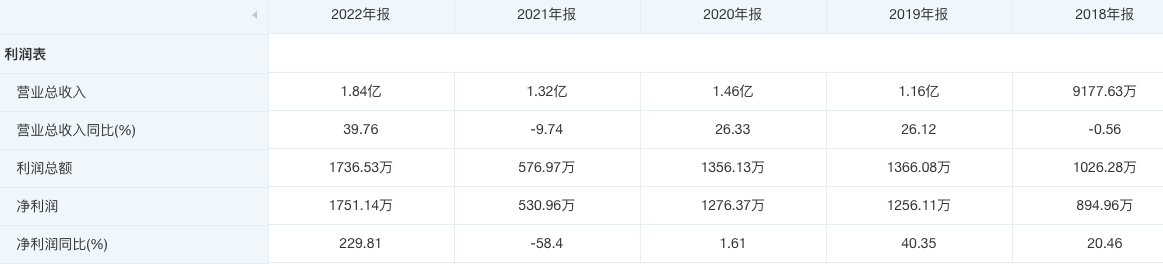
Core Viewpoint - The humanoid robot trend is intensifying, leading to significant activity in the capital market, particularly in the A-share market, with several robotics stocks experiencing substantial gains [1] Group 1: Market Activity - As of January 13, A-share robotics concept stocks have shown strong performance, with companies like Boke Co., Ltd. rising over 13% and Fenglong Co., Ltd. hitting a 10% limit up for 13 consecutive trading days [1] - The acceleration of humanoid robot mass production is highlighted, with Tesla planning to establish a production line capable of producing one million units annually by 2026 and aiming to deliver 50,000 to 100,000 units that year [1] Group 2: Company Developments - Several companies in the humanoid robot supply chain are pursuing public listings, including Yunshe Technology and Xinjian Transmission, which is a key supplier of components for Tesla's "Optimus" robot [1][2] - Xinjian Transmission's listing is seen as a revaluation of core assets in Tesla's robot supply chain, providing a new pricing reference for other high-barrier segments like screw and reducer manufacturing [2] Group 3: Financial Performance - Xinjian Transmission reported revenues of 146 million, 132 million, and 184 million yuan from 2020 to 2022, with net profits of 12.76 million, 5.31 million, and 17.51 million yuan respectively [2][3] - The company is expanding its production capabilities with a new project for planetary roller screws, with a total investment of 2.6 billion yuan planned for construction in two phases [3] Group 4: Industry Growth - The demand for planetary roller screws is rapidly increasing, with projections indicating that the market value for these components in humanoid robots will reach 22.96 billion yuan by 2030, with a CAGR of 154.1% [4] - Domestic companies are making technological breakthroughs in high-end fields like rolling screws, transitioning from followers to competitors in the market [4]
具身智能企业已超230家,行业“洗牌”风声四起
Nan Fang Du Shi Bao· 2026-01-13 07:08
Core Insights - The investment landscape for embodied intelligence startups has seen a significant surge, with a 219% increase in financing events and a 327% rise in investment amounts in 2025 compared to the previous year [1] - The current number of embodied intelligence companies in China exceeds 230, with over 100 humanoid robot firms, indicating a competitive environment reminiscent of the "hundred groups battle" during the mobile internet era [1] - Industry experts predict a potential "shakeout" in 2026 due to an oversupply of companies that may not sustain their operations without significant orders and continuous funding [2] Investment Trends - Investors are experiencing a fear of missing out (FOMO), leading to rapid valuation increases for startups, often without substantial due diligence [1][4] - Valuations for some companies have doubled within months, raising concerns about the sustainability of such growth [3] - The market is witnessing inflated valuations, with companies like Galaxy General seeing their valuation rise from over $800 million to $3 billion within a year [3] Market Dynamics - The focus of investment is shifting from flashy demonstrations to actual order fulfillment and revenue generation, as the industry matures [2][6] - Many startups are under pressure to commercialize quickly, often prioritizing immediate financial performance over long-term technological development [11][12] - The industry is facing a potential oversaturation of similar business models, leading to a risk of homogenization in product offerings [9][10] Commercialization Challenges - Companies are exploring various commercial applications, including research, entertainment, and retail, to find willing customers for their technologies [6][7] - The urgency for commercialization is driven by the need to attract further investment and prepare for potential IPOs, with several companies actively pursuing public listings [11] - There is a concern that the rush to commercialize may detract from necessary research and development efforts, potentially stalling technological progress [12][13] Future Outlook - The industry is expected to see a clearer distinction between leaders and laggards as capital and talent concentrate on companies with stronger AI capabilities and commercial viability [2] - The next wave of growth in the embodied intelligence sector is anticipated to hinge on advancements in "brain" technologies that enhance the functionality of humanoid robots [5] - The emphasis on practical applications and the ability to deliver results in real-world scenarios will be crucial for the survival and success of companies in this space [9][13]
商业航天加速发展,AI基建景气持续
Xinda Securities· 2026-01-11 15:08
Investment Rating - The investment rating for the mechanical equipment industry is "Positive" [2] Core Insights - The commercial aerospace sector is accelerating, and the demand for AI infrastructure remains strong, indicating potential investment opportunities in these areas [11][12] - The performance of excavators and other construction machinery is showing a significant recovery, with notable increases in both domestic and export sales [13][73] Company Summaries 1) Rilian Technology - Rilian Technology is a leading domestic supplier of industrial X-ray intelligent detection equipment and core components, establishing significant technological barriers in core components, AI software, and detection equipment. In the first three quarters of 2025, the company's revenue grew by 44.01% year-on-year, and net profit attributable to shareholders increased by 18.83%. The slower profit growth compared to revenue is attributed to costs related to new production bases and employee stock incentives. The company is expected to convert orders into revenue effectively, leading to profit elasticity release as cost impacts diminish [3][14]. 2) Konstar - Konstar focuses on the research and sales of digital testing instruments. Despite facing performance pressure from tariffs, the company saw a positive turning point in Q3 2025, with revenue reaching 148 million yuan, a year-on-year increase of 22.24%, and net profit attributable to shareholders growing by 30.66%. The company demonstrates strong operational resilience in international markets under tariff pressures, and its domestic business is performing well, with growth potential in MEMS sensors [4][15]. 3) Xinxin Co., Ltd. - Xinxin Co., Ltd. specializes in hard alloys and tools, reporting a revenue growth of 38.02% and a net profit increase of 75.40% in Q3 2025. The company is experiencing accelerated growth in both revenue and profit, driven by effective cost management amid rising raw material prices [5][16]. Industry Trends - The demand for AI-related infrastructure continues to thrive, with significant investments in AI technologies and related supply chains expected to benefit from this trend [12]. - The construction machinery sector is witnessing a comprehensive recovery, with excavator sales reaching 23,095 units in December 2025, a year-on-year increase of 19.2%, and loader sales growing by 30.00% [13][73].
城记 | 新年首股竞速赛:长三角硬科技企业领跑2026资本市场
Xin Hua Cai Jing· 2026-01-10 11:45
Group 1 - The Long Triangle capital market has initiated a high-tech "first stock" competition in 2026, focusing on sectors like artificial intelligence, integrated circuits, and biomedicine, highlighting a comprehensive contest of innovation ecology, industrial resilience, and institutional precision [1] - Suzhou's Kunshan Ruibo Biotech became Jiangsu's and Suzhou's first stock of 2026, raising over 1.8 billion HKD for clinical research and technology upgrades, with its core pipeline targeting chronic diseases [2][3] - In 2025, over 90% of newly listed companies in Suzhou were high-tech enterprises, indicating a deepening integration of technology, industry, and finance [3] Group 2 - Shanghai experienced a surge in AI-related IPOs, with five companies listed in a month, showcasing its strength as a source of technological innovation [4][5] - The AI industry in Shanghai is characterized by a complete vertical integration from computing power to application, with companies like Nebula and Wallen Technology leading the charge [5] - Shanghai's integrated circuit industry is robust, with over 1,200 companies and a projected revenue of over 460 billion CNY in 2025, supporting the growth of AI enterprises [5][6] Group 3 - Zhejiang's IPO landscape is developing, with companies like Zhoushan Morning Light Motor poised for listing, focusing on micro-motor technology [7][8] - Anhui is targeting the semiconductor sector, with Hefei Changxin Technology's IPO application aiming to raise 29.5 billion CNY for memory technology upgrades, marking a significant entry into the market [9][10] - The semiconductor industry in Anhui is expanding, with companies like Fuda Semiconductor also initiating IPO processes, indicating a growing ecosystem [10]

CES 2026:智元机器人、星动纪元、宇树科技、云深处、傅利叶、北京人形、魔法原子、加速进化、众擎机器人、银河通用都有哪些亮点产品?
机器人大讲堂· 2026-01-10 09:05
Core Insights - The article highlights the dominance of Chinese humanoid robot companies at CES 2026, with 20 companies participating, accounting for 58.8% of the total exhibitors, significantly outpacing the 5 companies from the US and South Korea, each representing 14.7% [2][3]. Group 1: Chinese Humanoid Robot Companies - Chinese humanoid robot companies showcased a wide range of products, including those from YuTree Technology, ZhiYuan Robotics, and others, demonstrating a collective strength in the industry [3]. - ZhiYuan Robotics presented its full series of humanoid robots, including the Expedition A2, which features multilingual interaction capabilities [4]. - The Lingxi X2 robot received positive feedback for its cultural integration through dance and Tai Chi demonstrations [6]. - The G2 robot showcased its adaptability in service scenarios by simulating a hotel waiter [7]. - ZhiYuan also launched the Genie Sim 3.0, an open-source simulation platform aimed at supporting industry technology development [9]. Group 2: Notable Exhibitors and Innovations - Xingdong Era displayed its core products, including the Xingdong L7 and Q5 humanoid robots, which have been implemented in logistics and manufacturing [10]. - The company reported collaborations with 9 of the top 10 global tech firms and secured a significant order worth nearly 50 million yuan in the logistics sector [12]. - Fourier's GR-3 humanoid robot attracted attention for its friendly design and multi-modal interaction system [13]. - YuTree Technology highlighted its humanoid robots H2, R1, and G1, along with quadruped robots, showcasing technological breakthroughs [17]. - The A2 quadruped robot is designed for industrial applications, capable of carrying a load of 25 kg [19]. Group 3: International Competitors - Boston Dynamics announced the mass production of its Atlas humanoid robot, which features advanced capabilities and has secured initial orders from major stakeholders [76][78]. - NEURA Robotics introduced its third-generation humanoid robot, designed in collaboration with Porsche, combining industrial performance with consumer-friendly aesthetics [79][82]. Group 4: Industry Trends and Future Outlook - The CES 2026 event signals a critical period for the commercialization of humanoid robots, with a shift in focus from concept demonstrations to order fulfillment and practical applications [83]. - Key areas of competition will include product reliability, scene adaptability, and scalable profitability, with industrial manufacturing, logistics, and companion services emerging as significant market segments [83].
CES变成中国科技秀:机器人跳舞、熊猫获奖
3 6 Ke· 2026-01-09 08:24
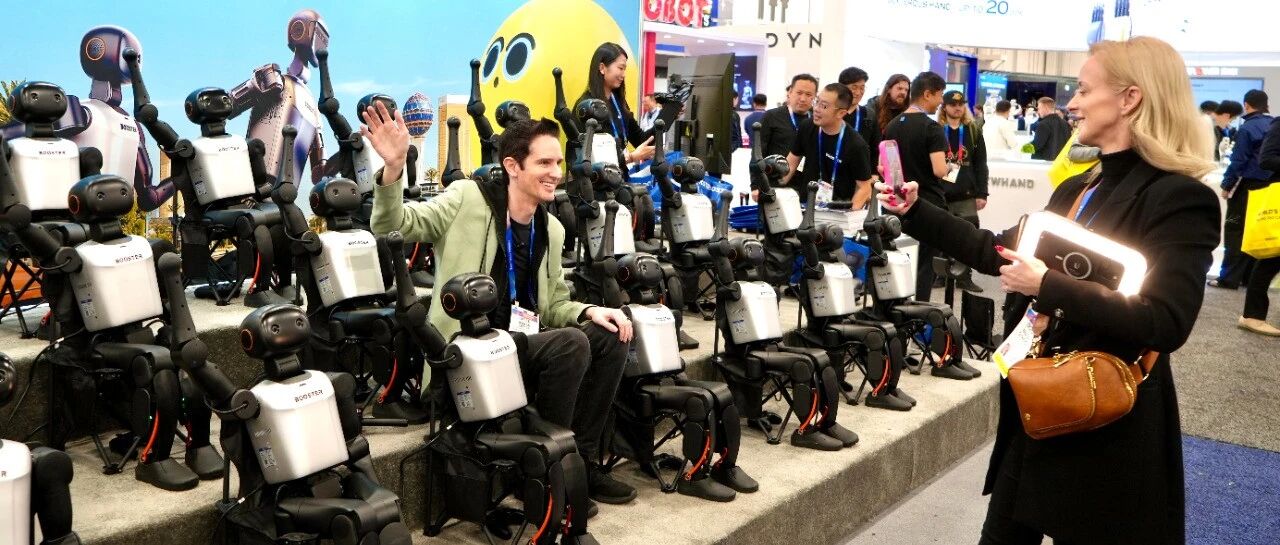
Group 1: Core Themes of CES 2026 - The main theme of CES 2026 is "human-centered" AI applications, marking a shift from traditional consumer electronics to AI-centric technological transformations [1] - Chinese companies are increasingly taking center stage at CES, with 942 exhibitors, accounting for approximately 22% of the total, maintaining their position as the second-largest exhibiting nation [1] - In specific sectors, Chinese firms dominate, with 55% of humanoid robot exhibitors and nearly 70% of AI glasses brands coming from China [1] Group 2: Robotics and AI Innovations - Chinese manufacturers are expected to continue leading in cost reduction and efficiency improvements in humanoid robots, showcasing their capabilities in unstructured environments [2] - Notable products include the Unitree H1 humanoid robot with advanced sensing capabilities and the latest generation of the "绝影" series robotic dogs, which excel in indoor navigation [4][11] - The "Care-bot" humanoid robot by Fourier demonstrates embodied intelligence in real-life interaction scenarios [7] Group 3: Consumer Electronics and Smart Devices - Over 80% of global smart glasses supply chain manufacturers are from China, with 16 Chinese companies showcasing their products at CES [15] - Innovations in smart home devices include the AI-driven "安安" companion robot designed for elderly and cognitively impaired individuals [16] - Companies like Alibaba and XREAL are launching advanced AI glasses, with features such as ultra-lightweight designs and integration with various AI services [19][20] Group 4: Automotive and AI Integration - The automotive industry is transitioning from "software-defined" to "AI-defined" vehicles, with companies like Geely and Great Wall showcasing new technologies [28] - Geely's G-ASD smart driving solution and Great Wall's focus on new energy technologies highlight the industry's shift towards AI integration [30][32] - New products like the AI-driven logistics solutions from New Stone and advanced lidar technology from Hesai demonstrate the growing importance of AI in transportation [34][35] Group 5: Home Appliances and AI - Hisense introduced new RGB-Mini LED display technology and AI-controlled smart refrigerators, showcasing the integration of AI in home appliances [41] - TCL's innovations in display technology, including the world's first printed OLED car screen, reflect advancements in consumer electronics [43][44] - Companies are increasingly focusing on AI capabilities in home security and smart home management systems [51][49] Group 6: Overall Impact of AI - CES 2026 emphasizes the profound impact of AI on the consumer electronics industry, with expectations for AI user numbers to grow significantly [59] - The event serves as a platform for global tech companies to set the foundation for future technological development and transformation [59] - The integration of AI into various sectors, including robotics, automotive, and consumer electronics, indicates a trend towards deeper AI adoption in everyday life [59]




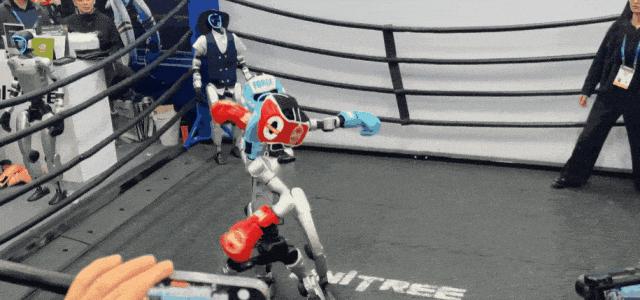
美国CES,又被中国人形机器人包围了
机器人圈· 2026-01-08 10:13
Core Insights - The article highlights the significant presence of Chinese companies at CES 2026, particularly in the humanoid robot sector, showcasing a shift from isolated technology displays to a complete industrial chain structure [6][14]. Group 1: Chinese Companies at CES 2026 - A total of 598 exhibitors related to robotics participated in CES 2026, with 149 coming from China, accounting for nearly one-fourth of the total [3]. - In the humanoid robot segment, 38 exhibitors were recorded, with 21 from China, representing over half of the participants [3]. - Notable Chinese exhibitors included Yushu Technology, which showcased the mass production version of the G1 humanoid robot, and Cloud Deep Technology, which presented the upgraded X30 series [7][9]. - Other companies like ZhiYuan Robotics and ZhongQing Robotics displayed a range of humanoid and bionic robots, emphasizing their capabilities in various applications [7][12]. Group 2: Global Competitors - American companies, such as Boston Dynamics and Hyundai, focused on the industrial application of humanoid robots, with the Atlas robot demonstrating advanced motion capabilities [15][17]. - Korean firms, represented by the K-Humanoid Alliance, showcased their ambitions in humanoid robotics, emphasizing collaboration between research institutions and industry [18][19]. - European companies, including NEURA Robotics and Humanoid, targeted industrial applications, highlighting their engineering prototypes and modular systems [23][25]. Group 3: Industry Trends and Future Directions - The article notes a shift in the perception of humanoid robots, moving from feasibility discussions to practical applications in various sectors, including industrial, household, and service environments [31]. - Different countries are adopting distinct strategies: China focuses on product showcases and mass production, the U.S. emphasizes industrial deployment and system capabilities, Korea integrates research and industry through alliances, and Europe approaches the market through industrial humanoid robots [31].