
卡尔动力

Search documents
新石器交付破万台,无人配送车的春天来了?
Jing Ji Guan Cha Wang· 2025-09-25 14:10
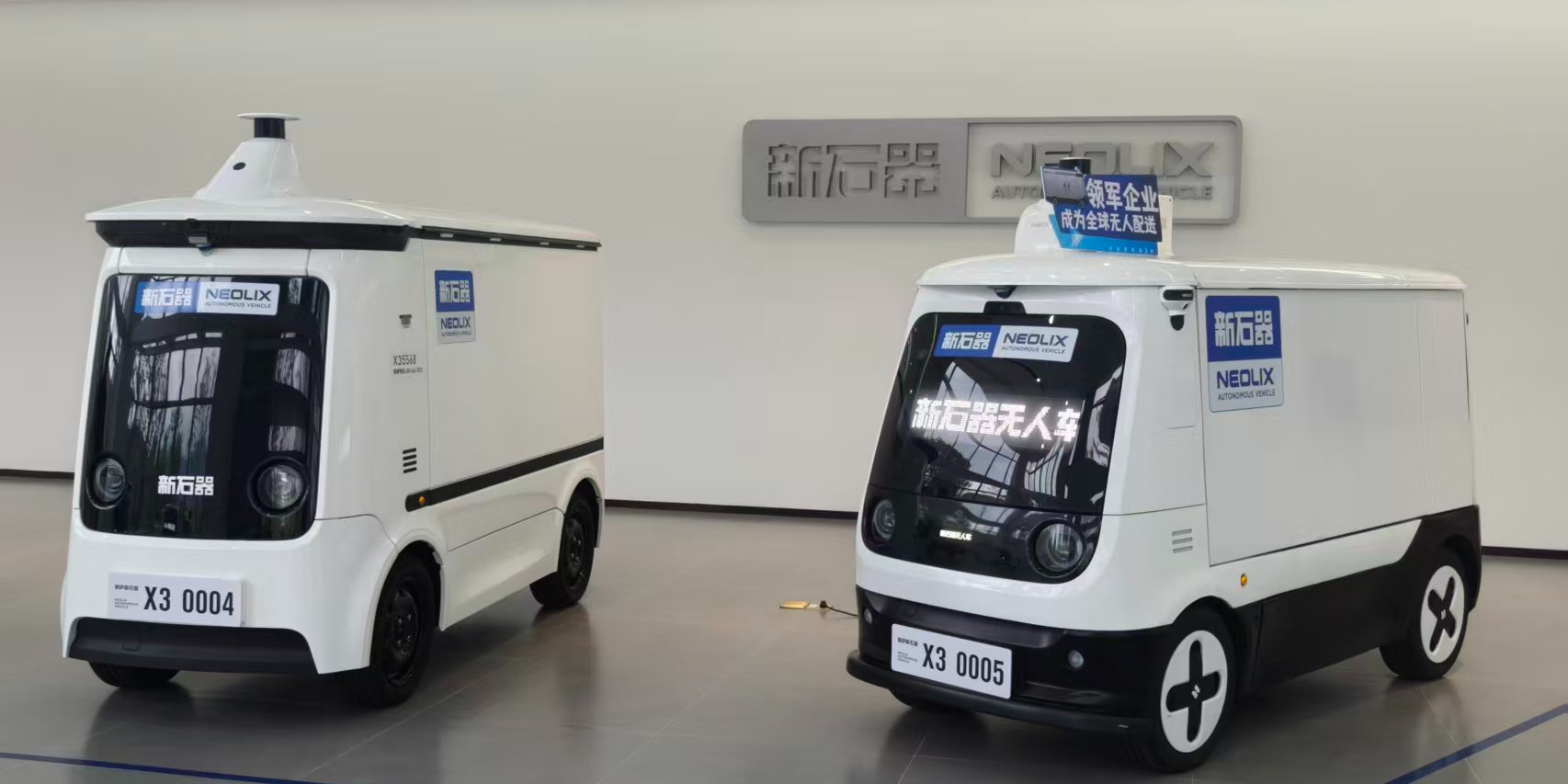
另一个决定无人车需求的重要前提是路权。截至2025年上半年,全国已有103个城市开放了无人配送车的路权。"国内也好,海外也好,管理部门也是看需求 的,要不要给无人驾驶开放路权,要看需求有多大,需求足够大,那么路权也会逐渐越来越开放。"余恩源表示。 现阶段,快递是无人车最重要的应用场景,也是极具商业化前景的领域。桐庐是国内有名的"快递之乡",申通快递、圆通快递、中通快递、韵达快递(俗 称"三通一达")都起源于此地,其每年的快递件数占全国约三分之二。新石器选择在这里设置工厂并举办万台车交付仪式,即是为了贴近客户需求。 9月23日,新石器在浙江桐庐举办第1万台车下线交付仪式。新石器成为无人配送行业第一家车队规模过万台的企业,也让这一长期处于技术验证阶段的行 业,撕开了走向大规模商业化的口子。 就在2024年,新石器的无人车交付量才刚刚过千台。短短不到一年时间里,其交付量即扩增了10倍,达到1万台。新石器无人车创始人兼CEO余恩源表 示:"这是新石器的一小步,也是无人配送行业发展的新开始。"他认为,无人车未来将重构整个全球的物流基础设施。 新石器成立于2018年,过去七年里其在L4自动驾驶技术方面持续投入,在物流配送 ...

2025年中国智能物流车行业研究报告:场景应用持续渗透,智能化升级加速落地
Tou Bao Yan Jiu Yuan· 2025-09-16 12:54
Investment Rating - The report indicates a positive outlook for the intelligent logistics vehicle industry, highlighting significant growth potential and technological advancements. Core Insights - The Chinese intelligent logistics vehicle industry is experiencing rapid development driven by digital transformation, with increasing demand for e-commerce logistics and automated delivery solutions [2][3] - The market size is projected to grow from 510 million yuan in 2025 to 8.34 billion yuan by 2030, driven by the expansion of the express delivery sector and the increasing penetration of unmanned delivery vehicles [5][49] - The report emphasizes the importance of balancing technological breakthroughs with cost control for sustainable growth in the industry [2] Summary by Sections Industry Overview - The intelligent logistics vehicle industry is entering a critical commercialization phase in 2025, with ongoing technological iterations and ecosystem collaborations [2] - The logistics industry's total social costs as a percentage of GDP remain high at 14-15%, compared to 7-8% in the US, indicating room for efficiency improvements [3][6] Market Dynamics - The demand for cost reduction and efficiency in logistics is urgent, with the expectation of reducing logistics costs by 300 billion yuan by 2025 [3][8] - The industry has established a complete ecosystem, with leading companies dominating the market and a production capacity exceeding 200,000 units [4] Technological Advancements - The report highlights significant advancements in L4 autonomous driving technology, with costs of key components like ADAS lidar and lithium batteries decreasing substantially, leading to a drop in the overall vehicle price to 20,000 yuan by 2025 [26][28] - The development of a comprehensive policy framework since 2021 has supported the growth of autonomous driving and unmanned delivery technologies [15][16] Competitive Landscape - The market is characterized by a diverse range of products, including unmanned delivery vehicles and intelligent heavy trucks, with a focus on various application scenarios from last-mile delivery to industrial logistics [30][45] - Major players in the market include companies like New Stoneware and KargoBot, which are advancing their autonomous driving capabilities and expanding their product offerings [41][42] Future Outlook - The report anticipates that the demand for unmanned logistics vehicles will increase significantly, with the number of vehicles required expected to rise from 10,000 in 2025 to 163,000 by 2030 [49] - The ongoing optimization of operational efficiency and the rise in delivery volumes are expected to drive this growth, with unmanned vehicles projected to handle half of the express delivery business by 2030 [49]
【联合发布】新能源商用车周报(2025年9月第2周)
乘联分会· 2025-09-15 08:39
Policy and Regulations - The Ministry of Transport has issued guidelines for the construction of a strong transportation country, focusing on smart logistics and data sharing [8][10] - Shanghai's updated vehicle replacement subsidy policy requires new cars purchased from September 11, 2025, to be registered in Shanghai [15][19] - Henan Province has introduced new regulations to facilitate residents' access to electric vehicle charging [20][21] Market Insights - From January to August 2023, domestic sales of new energy light trucks increased by 60.5%, with a penetration rate of 33.5% [23][28] - The main battery capacity for new energy light trucks is concentrated in the 96-110 kWh range, with pure electric vehicles being the mainstream choice [29][35] - Sales of new energy light trucks are primarily concentrated in the South China, Southwest, and East China regions, accounting for 78.8% of total sales [31][36] Company Monitoring - SAIC-GM-Wuling launched the "Wuling Yangguang Champion Edition," equipped with CATL's battery system [39] - Scania has obtained independent production qualifications in China, marking a significant step in its localization strategy [41] - Supao Technology has partnered with Karl Power to explore L4-level autonomous driving for new energy heavy trucks [47] - Qingling Motors has collaborated with Yuntai Hydrogen Energy to promote the Qingling M600 hydrogen fuel cell refrigerated truck [50]
中信证券:L4级别自动驾驶多场景积极变化 汽车智能化产业链有望受益
智通财经网· 2025-08-29 01:53
Group 1: Robotaxi - The domestic implementation of Robotaxi is progressing, with cities like Beijing and Guangzhou introducing new policies this year. The Shanghai High-Level Autonomous Driving Leading Area's action plan aims to achieve 6 million passenger trips and over 800,000 TEU of cargo by 2027, with over 5,000 kilometers of open roads and a coverage area of 2,000 square kilometers [1] - Leading companies in the Robotaxi sector have obtained demonstration operation licenses and are beginning to offer paid services to the public. Internationally, regions like the Middle East and Europe have significantly higher pricing for operational vehicles, indicating better profitability potential for Robotaxi [1] - Companies such as WeRide are expanding their operations in Abu Dhabi and accelerating their presence in Dubai and Riyadh [1] Group 2: Robovan - Robovan is in a rapid growth phase, with New Stone Technology deploying over 7,500 unmanned vehicles across 15 countries and 280 cities by July 2025. Jiangsu Province has introduced guidelines to promote the commercial application of unmanned driving equipment, which is expected to facilitate the large-scale application of Robovan [2] - The business model for Robovan is increasingly focused on cost reduction and efficiency in the express delivery sector, primarily handling fixed-route delivery tasks. Companies are working on upgrading software algorithms and vehicle scheduling to enable point-to-point operations, expanding into fresh produce, cold chain, and pharmaceutical delivery [2] - New Stone Technology has partnered with Didi's delivery service, allowing users to place orders on the Didi platform for freight services provided by Robovan [2] Group 3: Robotruck - Robotruck technology is being applied in mining, port, and trunk logistics scenarios, which are characterized by aging trends and harsh working environments. As of now, approximately 4,100 unmanned transport vehicles have been shipped for open-pit mining, with nearly 1,400 added this year [3] - The penetration of autonomous driving in ports is ongoing, with 52 automated terminals established in China by December 2024. The revenue from high-level autonomous driving business is projected to reach 65 million yuan in 2024, reflecting a year-on-year increase of 431.6% [3] - The development of a "model room" for trunk logistics is emerging, with companies like Karl Power achieving single-vehicle operational profits in Ordos for the first time in Q2 this year [3]

鄂尔多斯市装备制造企业“组团”亮家底
Nei Meng Gu Ri Bao· 2025-08-27 13:15
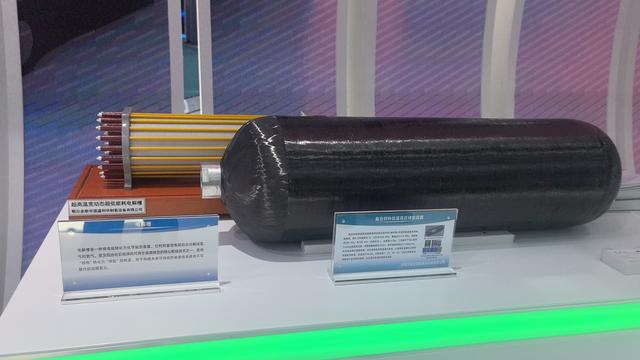
Core Viewpoint - The fifth China-Mongolia Expo showcased the capabilities of Ordos City's equipment manufacturing enterprises, highlighting the comprehensive "wind-solar-hydrogen-storage-vehicle" new energy industry chain [1][3]. Group 1: Company Highlights - CRRC Zhuzhou presented wind turbine models, while Longi showcased monocrystalline silicon rods [1]. - Guosheng Lihua displayed ultra-high temperature wide dynamic low-energy consumption electrolyzers, and Mengfu Hydrogen Energy exhibited high-pressure hydrogen storage bottles [1][3]. - Karl Power, specializing in truck autonomous driving, introduced their autonomous driving control unit, which has a computing power of up to 1000 Tops and is designed to meet L4 autonomous driving requirements [3]. Group 2: Industry Development - Ordos City is leveraging its abundant wind and solar resources to seize opportunities in the new energy sector, promoting the development of the "wind-solar-hydrogen-storage-vehicle" industry chain [3]. - The equipment manufacturing sector in Ordos City has shown a stable and positive performance, with revenue from large-scale enterprises reaching 18.79 billion yuan, marking a year-on-year growth of 25.9% [3].

独家丨“宁王”猛砸超百亿,一场精密豪赌
Hu Xiu· 2025-08-04 22:53
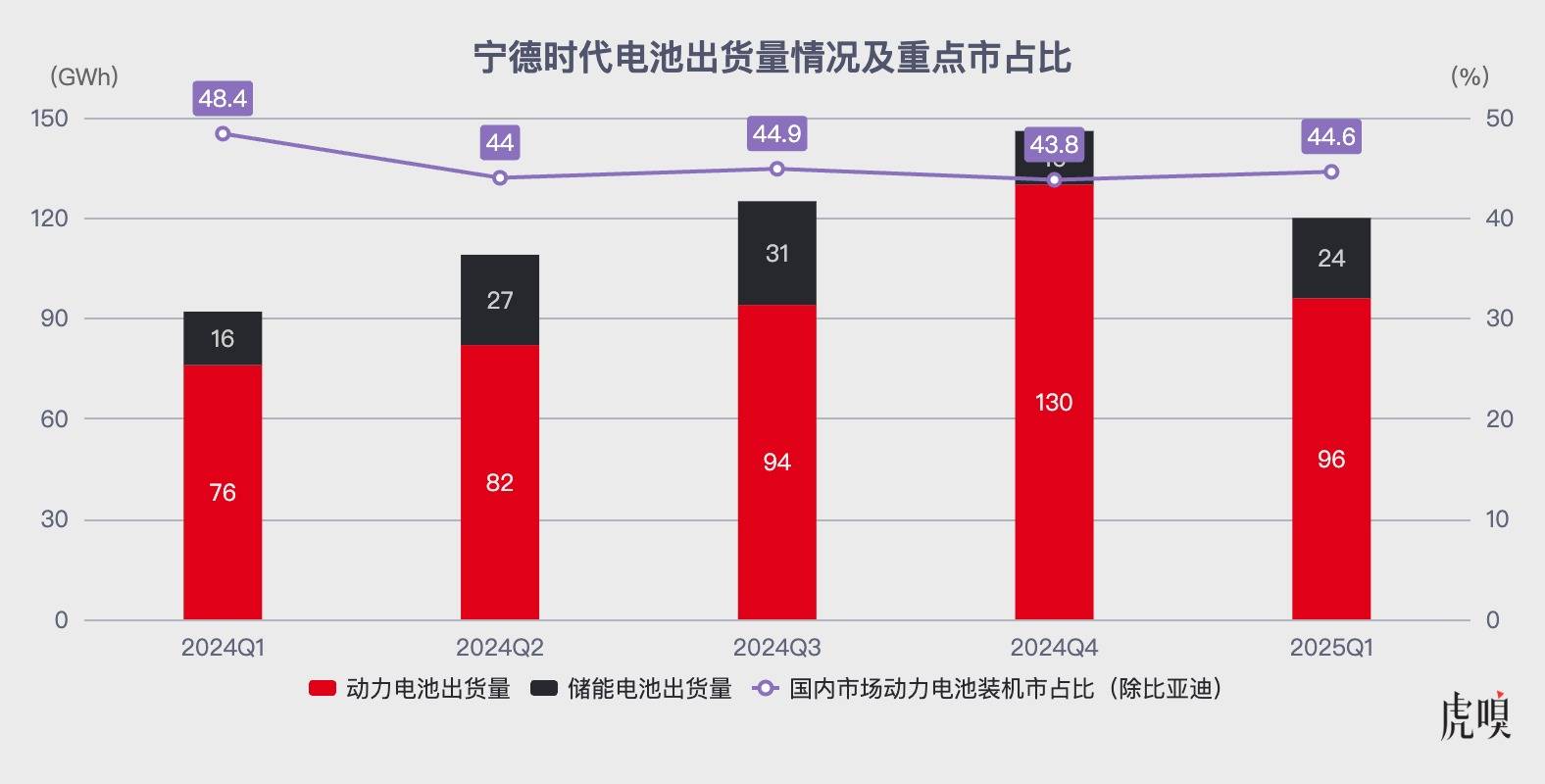
Core Viewpoint - CATL is aggressively investing over 10 billion in its battery swapping business, aiming to establish a new growth curve amidst challenges in traditional battery sales and competition in the energy storage sector [1][12][13]. Group 1: Business Performance and Strategy - CATL's energy storage battery shipments are growing rapidly, surpassing the growth of its power battery business in 2024, leading to a 15% year-on-year increase in net profit despite a slight revenue decline [1]. - The company is diversifying its business by developing battery swapping services and exploring new markets such as aviation and maritime [6][14]. - CATL's battery swapping business is being spearheaded by its subsidiaries, Times Electric and Times Qiji, which are rapidly building battery swapping stations [8][10]. Group 2: Investment and Financial Implications - To achieve its annual goals of building 1,000 chocolate battery swapping stations and 300 Qiji stations, CATL is preparing to invest approximately 3 billion yuan, with total investments expected to exceed 10 billion yuan by 2025 [11][12][13]. - Despite having over 300 billion yuan in cash, the significant capital investment reflects CATL's commitment to the success of its battery swapping business [13]. Group 3: Competitive Landscape and Challenges - The battery swapping industry faces intense competition, which could impact battery prices even if market share remains stable [4]. - CATL's entry into the battery swapping market is seen as a potential game-changer, with expectations that it will reshape the industry landscape and create new opportunities in the transportation sector [72][75]. Group 4: Technological Advancements and User Experience - CATL is focusing on improving the user experience and operational efficiency of its battery swapping stations, with a goal of achieving a 99.995% success rate in battery swaps [41][42]. - The company is leveraging its expertise in battery technology to enhance the longevity and performance of its batteries, which can achieve up to 12 years and 6,000 cycles [16]. Group 5: Future Outlook and Industry Impact - CATL aims to establish a comprehensive ecosystem around its battery swapping services, potentially transforming energy consumption patterns and creating significant commercial opportunities beyond just battery manufacturing [85][86]. - The company's ambitious goals include capturing a significant share of the market by 2030, with a vision of achieving a balanced distribution among battery swapping, home charging, and public charging stations [86][87].

互联网造车新军:货拉拉首款定制新能源货车7.68万元起售
Nan Fang Du Shi Bao· 2025-07-30 12:07
Core Viewpoint - Huo La La has launched its first customized electric van, "Duo La Da Mian," aimed at urban delivery, marking a significant step in its vehicle manufacturing initiative [1][3]. Group 1: Product Features and Market Positioning - The "Duo La Da Mian" is designed specifically for freight drivers, featuring a large cargo box, high load capacity, and quick charging capabilities, with a starting price of 76,800 yuan [1][2]. - The van has a load capacity of 1,475 kg and a cargo volume of 7.8 cubic meters, addressing common issues faced by freight drivers such as insufficient cargo space and loading difficulties [2][3]. - The vehicle's design includes a three-seat cockpit to accommodate two additional passengers, catering to the needs of freight delivery [2]. Group 2: Strategic Rationale for Vehicle Manufacturing - Huo La La's decision to manufacture vehicles is based on extensive data gathered from its platform, which includes insights from over one million active freight drivers and 14 million monthly users [2][3]. - The company aims to leverage its accumulated market experience to create vehicles that meet specific freight needs, thereby enhancing operational efficiency and reducing reliance on third-party vehicles [7]. Group 3: Industry Trends and Competitive Landscape - The move to manufacture vehicles reflects a broader trend in the logistics industry towards the integration of electric vehicles and smart technologies [4]. - Competitors like JD Logistics and Didi are also exploring vehicle manufacturing and autonomous driving solutions, indicating a shift in the logistics sector towards self-developed and customized transportation solutions [5][6]. Group 4: Financial and Operational Insights - Huo La La's prospectus indicates that it facilitated over 779 million completed orders in 2024, with a global gross transaction value (GTV) of approximately $102.74 billion [4]. - The company has reported net losses in previous years but is projected to achieve profitability in 2023 and 2024, highlighting its potential for growth in the logistics and vehicle manufacturing sectors [4].
华泰证券:关注AI Agent应用落地机会
Guo Ji Jin Rong Bao· 2025-07-29 13:49
Group 1: AI Integration in Finance - Huatai Securities is exploring the deep integration of AI with business scenarios to promote digital transformation in finance [1] - The company has developed the "Taiwei" large model platform, which combines heterogeneous computing power, large model operation management, and application development [1] - The focus is on enhancing intelligent customer service capabilities in investment research and banking [1] Group 2: Evolution of AI Paradigms - The development paradigm of AI is shifting from self-supervised pre-training to reinforcement learning post-training due to data growth bottlenecks [3] - In quantitative investment, the transition from traditional manual modeling to AI modeling is significantly improving the efficiency of financial model development and deployment [3] - End-to-end modeling and general base pre-trained models are creating opportunities for quantitative investment by reducing reliance on traditional factors and allowing for low-cost cross-market strategy migration [3] Group 3: AI Agents Reshaping Financial Services - The AI empowerment model is evolving from "human + intelligent assistant" to "human + multiple intelligent agents," enhancing team collaboration [5] - AI can significantly replace current employee tasks in certain scenarios, such as automated investment advisory services [5] - Successful implementation of AI in financial institutions relies on effective data governance and open collaboration between financial institutions and technology service providers [5][6] Group 4: Future of AI in Hardware - AI servers are expected to replace smartphones as the largest category of technology hardware, driven by the growth of AI applications [11] - The development of AI agents requires higher demands for computing power and infrastructure, with current limitations in power grid infrastructure and data center land availability [11] - The physical AI development has not met expectations due to the complexity and high cost of data acquisition in the physical world [11]

追风逐光,行稳致远——鄂尔多斯构筑“风光氢储车”全产业链矩阵
Zhong Guo Qi Che Bao Wang· 2025-07-21 09:41
Group 1: Core Insights - Ordos is positioning itself as a benchmark for the production and application of new energy vehicles, leveraging its status as a significant energy base in China [1][2] - The city has launched the first large-scale photovoltaic demonstration base in the "Shagehuang" region, integrating various solar technologies to enhance the quality of the photovoltaic industry [1][2] - The local government is actively promoting the "New Energy +" initiative, combining renewable energy development with desertification control efforts [3][4] Group 2: Industry Development - Ordos has over 300 coal mines with a production capacity exceeding 900 million tons, making it a leader in coal production among Chinese cities [2] - The region has significant potential for wind and solar energy, with approved projects covering over 6,000 square kilometers and a total installed capacity exceeding 80 million kilowatts [2][3] - The city is developing a "wind-solar-hydrogen-storage-vehicle" industrial matrix, with a focus on creating a comprehensive supply chain for new energy equipment [6][7] Group 3: Technological Advancements - The first zero-carbon industrial park has been established in Ordos, utilizing 80% renewable energy sources and aiming for 100% green electricity supply [4] - The city is home to the world's first square-shaped hydrogen system, with 12 hydrogen equipment manufacturing projects currently in operation [3][6] - Ordos has seen a 35.8% growth in its automotive manufacturing sector in the first quarter, with plans to achieve a production capacity of 500,000 vehicles by the end of 2025 [8][11] Group 4: Innovation and Collaboration - The Ordos High-tech Zone is fostering innovation by establishing multiple national and regional innovation platforms, attracting top talent and research teams [9][10] - The city is developing a smart connected vehicle demonstration area, with extensive testing infrastructure and partnerships with leading autonomous driving companies [10][11] - Collaborations with institutions like Tsinghua University are enhancing the development of intelligent connected vehicles, positioning Ordos as a key player in the smart transportation sector [11]

无人物流车:L4级自动驾驶率先落地场景
2025-07-07 16:32
Summary of Key Points from the Conference Call Industry Overview - The unmanned logistics vehicle industry is at a technological maturity and commercialization turning point, with significant growth momentum expected in early 2024 [1][2] - The urban distribution logistics sector is the pioneer for L4 level autonomous driving commercialization, with 85% of routes being fixed, making it easier to implement L4 autonomous driving [1][5] Core Insights and Arguments - The 5 cubic meter unmanned logistics vehicle has an empty mileage of 150 kilometers, meeting demand, and costs have significantly decreased due to the reduction in passenger vehicle autonomous driving kit prices [1][5] - The application of L4 autonomous driving in urban distribution logistics shows remarkable results, with a vehicle-to-driver ratio of 1:100 and a substantial decrease in insurance costs (from 2000 yuan/year to 400 yuan/year), indicating technological feasibility and application value [1][7] - Unmanned logistics vehicles achieve significant cost reductions by lowering driver salaries and delivery costs, with New Stone achieving approximately 59% cost reduction at a logistics point in Wuxi [1][8] - The Z5 model from 90 has a bare vehicle price of about 50,000 yuan, making it more market-acceptable compared to traditional electric vans priced around 60,000 yuan [1][8] Policy and Regulatory Environment - Government policies are actively promoting the development of unmanned logistics vehicles, with the central government reducing logistics costs and local governments opening road rights [1][9] - As of 2024, New Stone and 90 have obtained road rights in over 200 cities, and the State Post Bureau has proposed deepening the application of AI technologies [1][10] Market Potential - The market for replacing urban distribution vehicles in China is substantial, with an estimated annual replacement demand of 2 to 3 million vehicles, leading to a market space of approximately 1,000 to 1,500 billion yuan [1][11] - If all urban distribution vehicles were replaced with unmanned vehicles, the market space could reach 5,000 to 6,000 billion yuan annually, considering the potential for FSD subscription fees [1][11] Company Developments - Major express companies and manufacturers are actively advancing unmanned driving technology, with significant deployment plans from companies like Postal Service, SF Express, and Zhongtong [1][12][13] - Companies like Jizhi Home and Xidi Zhijia are preparing for IPOs, indicating strong market interest and potential for growth in the unmanned logistics sector [1][6][14] Future Trends - The development of robotaxi and Robo truck technologies is expected to see significant advancements, with companies like Xiaoma Zhixing and Wen Yuan Zhixing planning to go public in the second half of 2025 [1][16][18] - Regulatory policies are gradually loosening, which is anticipated to facilitate the commercialization of Robo TAXI and Robo Truck in the next one to two years [1][17]