Lundin Mining

Search documents
Lundin Mining finalises Eagle mine sale to Talon Metals
Yahoo Finance· 2026-01-12 10:35
Core Viewpoint - Lundin Mining has successfully completed the sale of its subsidiary Lundin Mining US, which owned the Eagle mine and Humboldt mill, to Talon Metals for $127 million (C$176.21 million) [1] Group 1: Transaction Details - The definitive share purchase agreement for the sale was signed in December 2025, marking the transfer of assets to Talon Metals [1] - Lundin Mining received approximately 275.1 million common shares in Talon Metals as compensation, which represents about 18.61% of Talon Metals' issued and outstanding shares on a non-diluted basis [3][4] - Following the transaction, Lundin Mining's stake in Talon Metals increased to approximately 19.86%, totaling 293.7 million shares [2][4] Group 2: Company Statements - Talon Metals CEO Darby Stacey expressed gratitude to Lundin Mining for their support over the past 13 years and expressed excitement for future collaboration [3] - Lundin Mining's president and CEO Jack Lundin stated confidence in the transaction's potential to generate sustained value for stakeholders and expressed eagerness to support Talon Metals [6] Group 3: Strategic Positioning - With the completion of this transaction, Lundin Mining is positioned as a pure-play copper company, focusing on growth to become a top-ten global copper producer through the development of the Vicuña District [7] - Prior to this transaction, Lundin Mining held 18.5 million shares in Talon Metals, accounting for approximately 1.57% of the issued shares [4] Group 4: Additional Agreements - An investor rights agreement was signed, granting Lundin Mining certain director nomination and anti-dilution rights [4] - A lock-up agreement restricts Lundin Mining from acquiring or selling Talon Metals' shares for up to 24 months [5]
Why copper, silver and gold? - Richard Mills
Investorideas.com· 2026-01-05 17:00
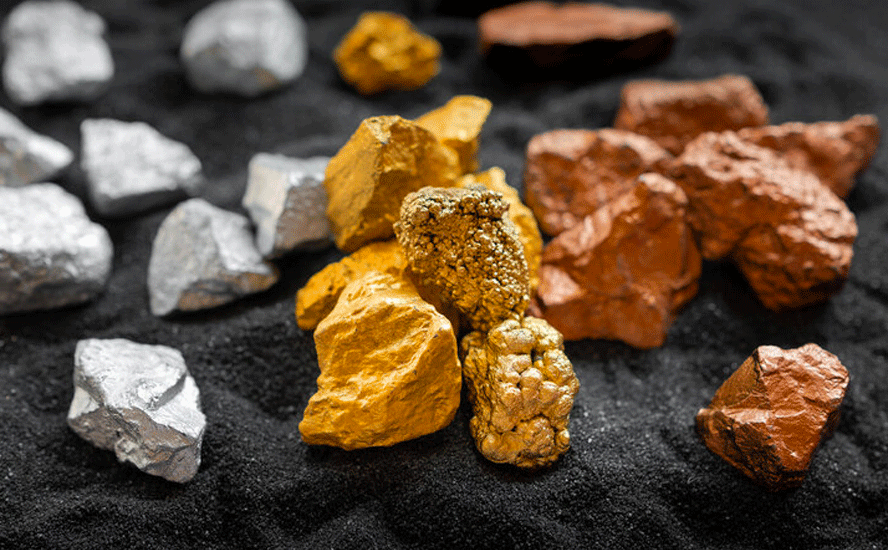
Group 1: Market Performance of Precious Metals - In 2025, gold, silver, and copper all experienced significant price increases simultaneously, marking the first occurrence in 45 years [3] - Gold prices rose by 69% to $4,331.90 per ounce, while silver surged by 157% to $72.25 per ounce, reaching a record high of $83.62 on December 28 [4] - Copper prices increased by 42% to $5.52 per pound, with a peak of $5.86 earlier in the trading session [6] Group 2: Mining Stocks and ETFs - Precious metals mining stocks, particularly gold miner ETFs GDX and GDXJ, saw extraordinary gains of 163.9% and 177.3% year-to-date as of Christmas Eve [8] - The performance of these mining stocks significantly outpaced the S&P 500's 17.9% increase, reflecting improved market psychology [8] Group 3: Factors Driving Gold Prices - Gold's price surge was attributed to safe haven demand due to geopolitical tensions, a weaker US dollar, central bank buying, and robust gold-backed ETF inflows [12] - Structural supply constraints have hindered the ability to meet demand for gold, silver, and copper without recycling [13] Group 4: BRICS and Gold's Role - The BRICS countries are moving away from the US dollar for international transactions, with gold becoming integral to their new settlement mechanism [14] - A pilot program for a gold-backed settlement "Unit" was launched within the BRICS+ bloc to facilitate trade without relying on the dollar [13][14] Group 5: Silver Market Dynamics - The silver market has faced supply deficits for five consecutive years, with mine production falling to 813 million ounces [22] - Silver futures trading volume has approached that of gold, indicating a shift in market dynamics and increasing importance of silver as an investment asset [23][24] Group 6: Copper Market Insights - Copper is experiencing its largest annual price increase since the 2008 financial crisis, driven by fears of global shortages and supply chain uncertainties [33] - Demand for copper is expected to surge due to electrification and decarbonization efforts, particularly in data centers, which could increase copper demand by 30% next year [41][44] Group 7: M&A Activity in Mining Sector - The mining sector has seen significant M&A activity, with mining and metals accounting for approximately 37% of public deal activity in Canada as of September 30, 2025 [48] - High prices for gold, copper, and silver have driven a "buy vs. build" mentality among major producers, leading to increased M&A transactions [49] Group 8: Future Outlook for Mining - The demand for critical minerals is surging, with projections indicating that copper demand could double by 2035, leading to significant supply shortfalls [45] - The current wave of M&A in the mining sector is expected to continue, as companies seek to secure future resources amid rising prices and depleting reserves [55]


Mogotes Launches C$19M Private Placement and Welcomes CD Capital
TMX Newsfile· 2026-01-05 12:30
Toronto, Ontario--(Newsfile Corp. - January 5, 2026) - Mogotes Metals Inc. (TSXV: MOG) (FSE: OY4) (OTCQB: MOGMF) ("Mogotes", or the "Company") is pleased to announce a non-brokered private placement through the issuance of 71,698,113 units (each, a "Unit") at a price of $0.265 per Unit for aggregate gross proceeds of up to C$19,000,000 (the "Offering"). Each Unit shall be comprised of one common share (each, a "Common Share") and one-half of one Common Share purchase warrant (each whole warrant, a "Warrant ...

铜冠金源期货商品日报-20251223
Tong Guan Jin Yuan Qi Huo· 2025-12-23 05:05
Group 1: Overall Market Conditions - Overseas, Fed official Milan said there's no short - term recession, but rising unemployment may prompt the Fed to turn dovish and cut rates. The market risk appetite is good, with tech stocks driving the US stocks up, the US Treasury yield rising to 4.16%, and the US dollar index dropping to 98.2. Japanese officials signaled possible foreign exchange intervention, strengthening the yen. Geopolitical issues pushed up oil prices. Risk assets are supported by sentiment and liquidity in the short - term, but caution is needed due to approaching holidays [2] - In China, the LPR has remained unchanged for seven consecutive months. The 5 - year LPR in December is 3.5%, and the 1 - year is 3%. The probability of a rate cut or reserve requirement ratio cut this year is low, with the next possible rate cut expected early next year. A - shares rose on Monday, with the ChiNext and STAR Market rebounding over 2%. Over 2900 stocks closed up, and the trading volume expanded to 1.88 trillion. The market may maintain a wide - range weak - oscillating pattern in the short - term. The bond market readjusted, lacking a clear direction [3] Group 2: Precious Metals - International precious metal futures continued to rise strongly on Monday. COMEX gold futures rose 2.13% to $4480.60 per ounce, and COMEX silver futures rose 2.37% to $69.09 per ounce. Domestic platinum and palladium futures hit the daily limit, and the overseas platinum price reached a new high. The rise is due to the resonance of macro, fundamental, and capital factors. The weakening of the US dollar credit supports gold in the long - term. Silver's strategic position in green energy and high - end manufacturing attracts funds, and platinum and palladium face supply shortages and strong industrial demand [4][5] Group 3: Copper - The Shanghai copper main contract continued to rise on Monday, and LME copper approached $12000. The spot market trading was poor, with domestic trade copper at a discount of 195 yuan/ton. The LME inventory decreased to 15.7 million tons, and the COMEX inventory increased to 46.7 million tons. Fed official Milan maintained a dovish stance, and Trump will announce a new Fed chair in early January, likely to be more dovish. The global mine supply is tight, and the long - term TC benchmark price is 0 dollars/ton. The copper price is expected to remain strong in the short - term [6][7] Group 4: Aluminum - The Shanghai aluminum main contract closed at 2220 yuan/ton on Monday, up 0.82%. The LME closed at $2941 per ton, down 0.49%. The electrolytic aluminum ingot inventory increased by 2.2 million tons to 60 million tons on December 22. The Fed's expected rate cut next year is fermenting, and the LME aluminum reached a new high this year. The domestic aluminum price is expected to oscillate at a high level in the short - term due to the fluctuating inventory [8] Group 5: Alumina - The alumina futures main contract closed at 2508 yuan/ton on Monday, down 1.18%. The spot alumina national average price was 2751 yuan/ton, down 7 yuan/ton. The supply is expected to remain sufficient in the short - term, and the alumina price will continue to be under pressure [9] Group 6: Cast Aluminum - The cast aluminum alloy futures main contract closed at 21290 yuan/ton on Monday, up 0.66%. The raw material scrap aluminum supply is tight, and the cost support is strong. The supply decreased slightly due to environmental protection and cost - profit factors. The consumption is stable, and the cast aluminum price is expected to oscillate at a high level [10] Group 7: Zinc - The Shanghai zinc main contract oscillated narrowly on Monday. The social inventory increased to 12.45 million tons. The 11 - month zinc concentrate imports increased by 13.84% year - on - year and 52.27% month - on - month. The overall zinc price is expected to oscillate due to mixed Fed officials' views, changes in imports and exports, and consumption and supply factors [11][12] Group 8: Lead - The Shanghai lead main contract oscillated weakly on Monday. The social inventory decreased to 2.02 million tons. Near the end of the year, the supply and demand of the lead industry are both weak. The lead price is expected to maintain a weak and stable oscillation [13][14] Group 9: Tin - The Shanghai tin main contract oscillated narrowly on Monday. The 11 - month tin concentrate imports increased significantly, especially from Myanmar. The supply is expected to improve, and the tin price has a high - level adjustment risk [15][16] Group 10: Industrial Silicon - The industrial silicon oscillated on Monday. The supply in Xinjiang is at a relatively high level, while that in the southwest is weak. The demand is mainly for historical orders. The industrial silicon price is expected to oscillate narrowly [17][18] Group 11: Steel Products - Steel futures oscillated and rebounded on Monday. The five major steel products' production and apparent demand adjusted slightly, and the inventory continued to decline. The steel price is expected to oscillate mainly, and attention should be paid to the acceptance of the price rebound [19] Group 12: Iron Ore - Iron ore futures oscillated and adjusted on Monday. The overseas shipment and arrival volume decreased this week, and the port inventory continued to accumulate. The demand is weak due to steel mills' production cuts and the off - season. The iron ore price is expected to oscillate under pressure [20] Group 13: Coking Coal and Coke - Coking coal and coke futures oscillated on Monday. The third round of coke price cuts was implemented, reducing coking profits and weakening the procurement of raw coal. The coking coal supply is generally stable. The prices are expected to oscillate in the short - term [21] Group 14: Soybean and Rapeseed Meal - On Monday, the soybean meal 05 contract rose 0.18%, and the rapeseed meal 05 contract rose 0.56%. The US soybean export sales are still slow, and the domestic soybean and soybean meal inventories are high. The domestic rapeseed meal is expected to oscillate weakly in the short - term [22][23] Group 15: Palm Oil - The palm oil 05 contract rose 0.94% on Monday. The Malaysian palm oil production decreased, and the export demand improved. The domestic palm oil inventory increased slightly. The palm oil price is expected to stop falling and enter an oscillating state in the short - term [24][25]
银河期货每日早盘观察-20251222
Yin He Qi Huo· 2025-12-22 02:46
1. Report Industry Investment Ratings No relevant content provided. 2. Core Views of the Report - The stock index futures are expected to have upward momentum at the beginning of the week, but face integer - level pressure. The conversion of contract months may lead to an expansion of basis. The bond market for treasury futures is cautiously optimistic in the short - term, with short - term trading opportunities in the TL contract [21][23]. - Agricultural products have different trends. Protein meal prices are under pressure, sugar is expected to bottom - oscillate, and the cotton - cotton yarn market is strong due to factors such as good sales of new cotton [27][32][54]. - Black metals show different characteristics. Steel prices are range - bound, coking coal and coke may rebound from the bottom, and iron ore prices are volatile [58][61][64]. - Non - ferrous metals also vary. Precious metals like gold and silver are likely to continue their strong trend, while base metals such as copper, aluminum, and zinc have different price trends due to various factors [70][84][91]. - Energy and chemical products have diverse situations. Crude oil prices are bottom - oscillating, asphalt has support, and fuel oil is weakly - oscillating [116][120][124]. 3. Summary by Relevant Catalogs 3.1 Financial Derivatives Stock Index Futures - **Investment Logic**: The market was first down then up last week. The Shanghai Composite Index faces the 3900 - point decision. There may be a style switch, and the acquisition plan of Shenhua may drive large enterprises. Futures contracts' basis may expand after the contract - month change, and short - selling forces have increased [21]. - **Trading Strategy**: Adopt a high - selling and low - buying strategy for unilateral trading; wait for the basis to expand for IM\IC long 2603 + short ETF cash - and - carry arbitrage; use a double - buying strategy for options [21]. Treasury Futures - **Investment Logic**: The bond market is less sensitive to weak economic data. The capital supply is loose, increasing the market's expectation of interest - rate cuts. The short - and medium - term bonds are relatively stable, while the long - term bonds' recovery is uncertain [23]. - **Trading Strategy**: Short - term, buy low and sell high for the TL contract [23]. 3.2 Agricultural Products Protein Meal - **Investment Logic**: The global soybean supply is abundant. Domestic soybean meal has an uncertain supply, and rapeseed meal is expected to oscillate [27]. - **Trading Strategy**: Adopt a bearish view for unilateral trading; narrow the MRM spread for arbitrage; sell a wide - straddle strategy for options [28]. Sugar - **Investment Logic**: Internationally, the Brazilian sugar supply pressure is easing, and the northern hemisphere is in an increasing - production cycle. Domestically, new sugar production is increasing, but there is cost support [31][32]. - **Trading Strategy**: For unilateral trading, watch for the support at previous lows; for arbitrage, go long on the January contract and short on the May contract; for options, wait and see [32]. Oilseeds and Oils - **Investment Logic**: Domestic soybean oil inventory is decreasing, but the overall supply is sufficient. There is a lack of positive drivers for oils, but the downward space is limited [35]. - **Trading Strategy**: For unilateral trading, go long on palm oil after it stops falling and rebounds, and wait and see for soybean oil and rapeseed oil; for arbitrage and options, wait and see [35]. 3.3 Black Metals Steel - **Investment Logic**: The steel price is range - bound. The replenishment expectation has not been fulfilled, and the cost has support, but the upward space is limited [58]. - **Trading Strategy**: For unilateral trading, maintain the oscillating trend; for arbitrage, short the coil - coal ratio and hold the short position in the coil - rebar spread; for options, wait and see [59]. Coking Coal and Coke - **Investment Logic**: The coking coal auction situation has improved, but the price increase is not widespread. The coking coal supply may improve in the future, but the price fluctuation is large [61]. - **Trading Strategy**: For unilateral trading, wait and see or go long lightly at low prices; for arbitrage and options, wait and see [62]. Iron Ore - **Investment Logic**: The iron ore supply is abundant, and the demand is weak. The price increase space is limited [64]. - **Trading Strategy**: For unilateral trading, the price is oscillating; for arbitrage and options, wait and see [65]. 3.4 Non - ferrous Metals Precious Metals - **Investment Logic**: The obstacles to interest - rate cuts have decreased, and gold and silver are likely to continue their strong trend [70]. - **Trading Strategy**: For unilateral trading, hold long positions in gold and silver based on the 5 - day moving average; for arbitrage, wait and see; for options, buy out - of - the - money call options [72]. Base Metals - **Investment Logic**: Different base metals have different price trends due to factors such as supply and demand, cost, and policies [79][85][91]. - **Trading Strategy**: Each metal has different trading strategies, including unilateral trading, arbitrage, and options trading, mainly depending on its specific situation [79][85][91]. 3.5 Energy and Chemical Products Crude Oil - **Investment Logic**: Geopolitical factors cause frequent disturbances, and the oil price is bottom - oscillating. The supply - demand surplus pressure is significant [116]. - **Trading Strategy**: For unilateral trading, the price is weakly oscillating; for arbitrage, the domestic gasoline is neutral, the diesel is weak, and the oil - price spread is weak; for options, wait and see [117]. Asphalt - **Investment Logic**: The raw - material risk is difficult to prove false, and the asphalt price has support. The supply - demand fundamentals may weaken [120]. - **Trading Strategy**: For unilateral trading, the price is oscillating; for arbitrage and options, wait and see [120]. Fuel Oil - **Investment Logic**: The fundamentals of high - and low - sulfur fuel oils are weakly oscillating. The supply is increasing, and the demand is weakening [124]. - **Trading Strategy**: For unilateral trading, go short; for arbitrage, the low - sulfur and high - sulfur crack spreads are weak; for options, wait and see [124].
Forget Stocks – For 2026 I'm Investing in These Two Metals
Yahoo Finance· 2025-12-19 15:20
Core Viewpoint - Stocks are popular among ordinary investors, but commodities like copper and silver are seen as better investment opportunities for the new year, with both metals experiencing significant price increases in 2025 and potential for further growth in 2026 due to supply and demand dynamics [1][2]. Group 1: Investment Opportunities - Copper can be invested in through the Global X Copper Miners ETF (NYSEMKT: COPX), which is up 80% this year [1]. - Silver can be invested in via the iShares Silver Trust (NYSEMKT: SLV), which has more than doubled this year, up 119% [2]. - Both metals reached new all-time highs in 2025, with expectations for continued price increases in 2026 [2]. Group 2: Demand Factors - Industrial demand is a significant driver for both copper and silver, as they are essential for AI infrastructure, electric vehicles, and renewable energy applications [3]. - The construction of data centers requires substantial amounts of copper and silver, contributing to increased demand [4]. Group 3: Supply Factors - There is a supply shortage of both copper and silver this year, which is bullish for their prices [5]. - The U.S. Department of the Interior has added silver and copper to its list of critical minerals in response to the growing demand for these metals in AI data center construction [5]. Group 4: ETF Details - The Global X Copper Miners ETF has net assets of approximately $3.5 billion and holds 41 stocks, with its largest positions including Lundin Mining (5.6%), KGHM Polska Miedz (5.1%), Boliden AB (5%), Southern Copper (4.7%), and Freeport-McMoRan (4.7%) [8].
2026年铅期货年度行情展望:供需双弱,上下有限
Guo Tai Jun An Qi Huo· 2025-12-19 09:59
Report Industry Investment Rating No relevant information provided. Core Viewpoints of the Report - Based on the judgment that the lead market will maintain a situation of strong supply and weak demand in 2026, prices are expected to fluctuate within a range. The main operating range for Shanghai lead is 16,000 - 18,000 yuan/ton, and for London lead, it is 1,900 - 2,100 US dollars/ton [1][67]. - In 2026, the domestic market may have a slight surplus. The supply of lead ore is expected to improve, the supply of waste batteries may increase slightly, and the production of refined lead will continue to grow. The demand side may be supported by the continued replacement consumption and the positive growth of two - wheeled electric vehicles. The energy storage demand is growing explosively, and the incremental space for lead - carbon batteries is broad. However, the export of lead - acid batteries may face pressure, and the overall supply - demand situation is weak, with prices remaining range - bound. The price - holding intention in the waste battery recycling sector is strengthening year by year, which is expected to continuously lift the bottom of the lead price [1][67]. - It is recommended to pay attention to seasonal fluctuation opportunities. After the small spring of consumption at the beginning of the year, consumption weakens marginally, and prices may fall under pressure. In the middle of the year, battery manufacturers replenish stocks in advance for the consumption peak season, while the supply of waste batteries does not increase significantly during the replacement consumption peak season, which may bring a temporary supply - demand gap and inject upward momentum into prices [2][67]. Summary by Directory 1. 2025 Review: First Decline then Rise, with a Slow Uptrend in the Center of Gravity - In January 2025, the lead price declined due to the end of downstream inventory preparation, high finished - product inventory, and a potentially longer Spring Festival holiday. In February, the price rose initially but then fluctuated after factoring in the expected production increase of large downstream manufacturers. In March, the price increased as consumption recovered and downstream battery companies increased inventory. In April, it declined due to macro - tariff impacts and the entry into the consumption off - season. In May and June, prices fluctuated in a weak supply - demand situation [7]. - From July to December, the lead price showed a complex trend. In July, it first rose and then fell due to changes in supply and demand. In August, it fluctuated weakly. In September, it rose after a period of fluctuation. In October, it trended strongly with obvious supply pressure on primary lead and incremental demand. In November, it climbed and then declined as primary lead production increased and secondary lead production grew rapidly [8][9]. 2. Supply - Demand Weakness, with Dull Fundamental Contradictions 2.1 Lead Ore Supply is Rigid, but There Will Be Increment in the Next Year - In the long - term, overseas mining enterprises' capital expenditure in lead ore has been low, resulting in relatively rigid global lead ore production. The supply cycle of lead ore is more closely related to that of zinc ore. In 2025, global lead ore supply disturbances increased, and overseas production increments were limited. For 2026, there is an expected increment of 100,000 tons, with a year - on - year growth rate of 2.2% [10][13][14]. 2.2 Domestic Mines Increased Production This Year, but Realistic Contradictions Still Exist - In 2025, from January to November, China's lead concentrate production increased by 10.4% year - on - year, mainly due to the production increase of mines such as Xinjiang Huoshaoyun. It is expected to contribute an increment of 100,000 tons in 2026. The continuous tight supply of lead concentrate has squeezed the profit margin of primary lead smelting. China's lead raw material import structure is becoming more diversified, but the import profit of lead concentrate is meager [20][26]. 2.3 Insufficient Endogenous Power, Driven by By - Product Profits - Since March 2025, the thickening of primary lead plant profits has driven high - level production. By - product profits such as silver and sulfuric acid have become the main factors driving the supply elasticity of primary lead plants. Assuming that the prices of by - products remain high in 2026, primary lead supply is expected to continue to grow slightly, and supply elasticity may increase [33][34]. 2.4 Problems in Secondary Lead Supply Still Exist, Forming a Strong Constraint - China's secondary lead production capacity is severely over - supplied, and the shortage of raw materials has led to low - level production. Since the second quarter, secondary lead enterprises have suffered losses, and it is expected that the production of secondary lead will continue to decline in 2026. Although there will be more incremental supply in the long - term, the growth rate of capacity expansion may slow down, and some enterprises are transforming to a multi - raw material production mode [36][37]. 3. Is the Demand Really Collapsing: A Flash in the Pan or a Steady Stream? 3.1 Policy Boosts Consumption, Electric Bicycles Return to Positive Growth, and Automobile Exports Contribute Significantly - In 2025, new national standards and national subsidy policies have stimulated the growth of the electric bicycle industry. Automobile consumption policies have also continuously increased, and the trade - in policy has effectively boosted consumption. It is expected that the trade - in subsidy scale will continue to be maintained at 300 billion yuan in 2026 [46][52][53]. 3.2 Explosive Growth in Energy Storage Demand, Vast Incremental Space in the Future - The energy storage demand for lead - acid/lead - carbon batteries is growing explosively. Lead - acid batteries have cost, safety, recycling, and low - temperature performance advantages, but also have performance shortcomings. In 2025, the lead consumption of lead - carbon batteries was 27,300 tons in the first three quarters, and it is expected to increase by 28,300 tons in 2026, with a marginal contribution to consumption of 0.4% [60][61]. 3.3 High Domestic - Foreign Price Ratio and Tariff Impacts Weigh on Lead - Acid Battery Exports - In 2025, the export volume of lead - acid batteries declined rapidly due to the expansion of the domestic - foreign price ratio and tariff impacts. The anti - dumping tariff imposed by the GCC on Chinese lead - acid batteries will take effect in 2026, which may significantly reduce the export volume [64]. 4. Conclusion and Investment Outlook - In 2026, the lead market will maintain a situation of weak supply and demand, with prices fluctuating within a range. The main operating range for Shanghai lead is 16,000 - 18,000 yuan/ton, and for London lead, it is 1,900 - 2,100 US dollars/ton. It is recommended to pay attention to seasonal fluctuation opportunities [67].
Talon Metals to acquire Lundin Mining US subsidiary
Yahoo Finance· 2025-12-19 09:56
Core Viewpoint - Talon Metals has entered into a definitive share purchase agreement with Lundin Mining to acquire 100% of Lundin Mining US, which owns the Eagle Mine and Humboldt Mill, valued at approximately $83.7 million [1][2] Group 1: Transaction Details - Lundin Mining will receive 275.2 million Talon shares, representing 18.4% of Talon's issued and outstanding shares upon completion of the deal [1] - Upon closing, Lundin Mining's total holding in Talon will increase to 19.99% of Talon's issued and outstanding common shares on a non-diluted basis [2] - The transaction will merge Lundin Mining's Eagle Mine and Humboldt Mill with Talon's stake in the Tamarack nickel-copper-cobalt project [2] Group 2: Exploration and Facilities - The deal includes Talon's prospective exploration land package of over 400,000 acres in Michigan, covering the Boulderdash nickel/copper discovery located eight miles from the Eagle Mine [3] - Talon's planned Beulah minerals processing facility in North Dakota will also be included in the combined arrangement [3] Group 3: Management and Governance - The transaction will result in a newly formed Talon board consisting of ten directors, with Lundin Mining nominating its president and CEO Jack Lundin, and Juan Andrés Morel [3] Group 4: Strategic Benefits - The combination of Talon and Eagle will create a pure-play US nickel company anchored by the Eagle Mine, the only primary nickel mine currently operating in the US, unlocking meaningful synergies [4] - The Humboldt Mill will serve as a shared, centralized processing facility [4] Group 5: Financial Arrangements - Lundin Mining will account for its interest in Talon using the equity method and will sign a production payment agreement covering ore processed at the Humboldt Mill that does not come from the Eagle Mine [5] - Under this agreement, Lundin Mining US will pay Lundin Mining $1 per tonne of non-Eagle ore processed at the Humboldt Mill, up to a cumulative maximum of $20 million [6] Group 6: Shareholder Rights and Lock-up Agreement - An investor rights agreement will be executed, granting Lundin Mining certain rights regarding director nominations, anti-dilution, and participation in future Talon equity financings [6] - Lundin Mining will also sign a lock-up agreement limiting its ability to acquire, sell, or dispose of Talon shares for a period of up to 24 months, with certain standard exceptions [7]
Lundin Mining将向Talon Metals出售Eagle镍铜矿
Wen Hua Cai Jing· 2025-12-19 07:19
Core Viewpoint - Lundin Mining plans to sell its Eagle nickel-copper mine and Humboldt Mill to Talon Metals in exchange for shares, creating a pure-play U.S. nickel-copper company [1] Group 1: Transaction Details - Lundin will transfer its U.S. subsidiary owning the Eagle mine in Michigan to Talon for approximately 275 million shares of Talon stock, valued at about $83.7 million based on recent prices [1] - This transaction will allow Lundin to hold approximately 20% of Talon on a non-diluted basis [1] - The Eagle mine is currently the only operating primary nickel mine in the U.S., having produced over 194,000 tons of nickel and over 185,000 tons of copper since production began, with revenues exceeding $3.2 billion expected by Q3 2025 [1] Group 2: Future Operations - Post-transaction, Talon will process critical minerals at multiple facilities in the U.S., operate the Humboldt Mill in Michigan, and plans to establish a processing facility in Beulah, North Dakota [1] - The transaction is expected to be completed by early January 2026, pending regulatory approval, after which Eagle's production will no longer be included in Lundin's production guidance [2]
矿业股 2026 年展望:铜市看涨-Mining Equities_ 2026 Outlook_ Copper Bulls
2025-12-16 03:26
Summary of Mining Equities Conference Call Industry Overview - **Sector Performance**: In 2025, mining equities outperformed equity benchmarks, primarily driven by gold and copper, while ferrous metals and energy remained flat or declined [1][15] - **2026 Outlook**: Expectations for copper, aluminium, and lithium to outperform due to supply constraints and energy transition, with a cautious view on traditional end markets in developed economies [2][15] Key Commodities Insights Copper - **Market Dynamics**: The medium-term outlook for copper remains bullish, with expectations of market tightness in 2026 due to limited growth in global mine output and a deficit in refined output [3][4] - **Investment Opportunities**: Freeport is highlighted as a top pick due to its discounted valuation and expected production recovery at the Grasberg mine [4][23] Aluminium - **Demand vs Supply**: The outlook for aluminium is mixed; while demand holds up, supply constraints are expected, particularly from China and developed markets [5][24] - **Investment Recommendation**: A buy recommendation for Norsk Hydro is reiterated, with expectations of stable operations and potential cash returns [8][24] Gold - **Market Sentiment**: Gold remains a consensus macro trade, with equities delivering strong returns in 2025. However, valuations are less compelling than at the start of the year [9][22] - **Top Picks**: Barrick and Newmont are identified as top picks, with potential for further catalysts in 2026 [10][22] Iron Ore - **Price Forecast**: The medium-term outlook for iron ore is bearish, with prices expected to stabilize around $100/t in the short term and decline to $90/t by 2027 due to increased supply from Simandou [11][20] Coal - **Market Conditions**: Met coal prices have risen above $200/t due to demand and supply disruptions, while thermal coal remains stable at $110/t [12][20] Diversified Miners - **Performance Comparison**: Vale outperformed in the bulks sector, while RIO and BHP performed in line with benchmarks. A preference for RIO over Vale and BHP is noted due to better growth prospects [13][25] Earnings and Price Target Changes - **Adjustments**: Earnings estimates and price targets have been adjusted based on commodity price forecasts, with notable upgrades for copper miners like FCX and KGHM [28][29] Conclusion - **Investment Strategy**: The report emphasizes a selective investment approach in mining equities, focusing on commodities with strong fundamentals and potential for price gains, particularly copper, aluminium, and gold [2][15][22]