
吉利汽车

Search documents
中国汽车出海调研简报-20260313
Tou Bao Yan Jiu Yuan· 2026-03-13 11:58
Investment Rating - The report indicates a strong investment outlook for the Chinese automotive industry in the UK market, particularly for electric vehicles and SUVs, highlighting significant growth potential and competitive advantages [2]. Core Insights - Chinese automotive exports to the UK have seen a remarkable increase, with sales reaching 142,684 units from January to September 2025, representing a year-on-year growth of 91%, significantly outpacing the overall UK market growth of 4.2% [6][7]. - The market share of Chinese cars in the UK has risen from 5% at the beginning of the year to 12.4% by September 2025, making China the second-largest source of cars in the UK, following Germany [6][7]. - Key factors driving this growth include a strong advantage in electric vehicle offerings, competitive pricing (15-20% cheaper than European counterparts), and a diverse product matrix catering to various market segments [7]. Summary by Sections Sales Performance - In the first nine months of 2025, Chinese automotive exports to the UK totaled 142,684 units, with a record monthly sales of 40,729 units in September, marking a 235% year-on-year increase [4][6]. - The sales performance has been characterized by a steady increase in market share, with significant monthly fluctuations reflecting market dynamics and brand strategies [7]. Market Segmentation - The electric vehicle segment dominates Chinese automotive sales in the UK, with over 70% of exported models being electric, compared to approximately 45% in the overall UK market [8]. - SUVs represent a growing segment, increasing from 55% to 60% of sales from January to September 2025, with Chinese brands becoming the second-largest SUV suppliers in the UK [8][10]. Competitive Landscape - The competitive landscape is highly concentrated, with MG, BYD, and Chery dominating the market. MG leads with 71,017 units sold, followed by BYD with 35,474 units, and Chery with a focus on differentiated SUV offerings [13][14]. - The report outlines a tiered competitive structure, with MG targeting the mainstream market, BYD positioned as a leader in the new energy sector, and Chery focusing on high-end SUVs [11][14]. Future Trends - The report anticipates a shift towards higher-end models, with BYD and Chery planning to introduce premium electric vehicles priced above £50,000, directly competing with established European brands [18]. - The evolution of business models is highlighted, moving from vehicle exports to local assembly and technology licensing, indicating a strategic shift towards integrating into the UK automotive ecosystem [19].

雷军:新一代小米SU7将于本月发布;中国首个辅助驾驶系统出海,最快今年6月出现在欧洲街头丨汽车交通日报
创业邦· 2026-03-13 10:49
Group 1 - Stellantis Group denies rumors of a potential split and asserts that such claims are baseless and fabricated, emphasizing that there are no plans to sell the Maserati brand [2] - Stellantis is reportedly in discussions with Chinese companies, including Xiaomi and XPeng, regarding potential collaborations to inject capital into its European operations [2] - Xiaomi's new generation SU7 is set to be officially released this month, with significant improvements in safety, driving control, smart experience, and luxury feel after over two years of development [2] Group 2 - Tencent's ride-hailing service has integrated with two Guangzhou-based autonomous driving companies, allowing users to call autonomous vehicles through its mini-program, with plans to launch on Tencent Maps [2] - Geely's intelligent advanced driver assistance system, G-ASD, has received UN R171 international certification, making it the first high-level assistance system from China to go abroad, with the first certified model expected to hit European roads by June [2] - Volkswagen has announced that its first jointly developed model with XPeng, the Weizhong 08, has officially entered mass production, as part of a strategy to launch over 20 new models in China this year [3]





动力电池召回潮:多家车企“踩雷”,宁德时代独稳
起点锂电· 2026-03-13 10:27
Core Viewpoint - The article highlights the increasing safety concerns in the power battery industry, with multiple automakers recalling vehicles due to battery-related issues, emphasizing the critical importance of battery safety in consumer decision-making [5][19]. Group 1: Industry Events - The second "Starting Point Lithium Battery Cylindrical Battery Technology Forum" will be held on April 10, 2026, in Shenzhen, focusing on advancements in all-tab technology and the cylindrical battery market [4]. - Major sponsors and speakers at the forum include companies like Penghui Energy, Dofluor, and others, indicating strong industry interest and participation [4]. Group 2: Recalls and Safety Issues - Geely's Smart brand is recalling 18,217 vehicles due to battery consistency issues, which could lead to performance degradation and potential safety risks [6][7]. - Similar recalls have been reported by Zeekr, Volvo, and Beijing Benz, all citing battery safety concerns related to manufacturing inconsistencies and software control issues [9][11]. - The recalls reflect a broader trend in the industry, where battery safety has become a significant concern, leading to increased scrutiny and regulatory actions [19][24]. Group 3: Market Dynamics - CATL remains the dominant player in the power battery market, achieving a 39.2% global market share in 2025, with a significant year-on-year increase in revenue and profit [21][22]. - Despite attempts by automakers to diversify battery suppliers, the reliance on CATL persists, as evidenced by companies like Li Auto choosing to continue using CATL batteries alongside their own [23][25]. - The article suggests that the focus on battery safety and quality control will shape future competition in the power battery industry, as consumer expectations rise [25].


乘联分会:2月汽车零售同比呈现下滑 吉利汽车销量约15万市场份额超14%
智通财经网· 2026-03-13 08:58
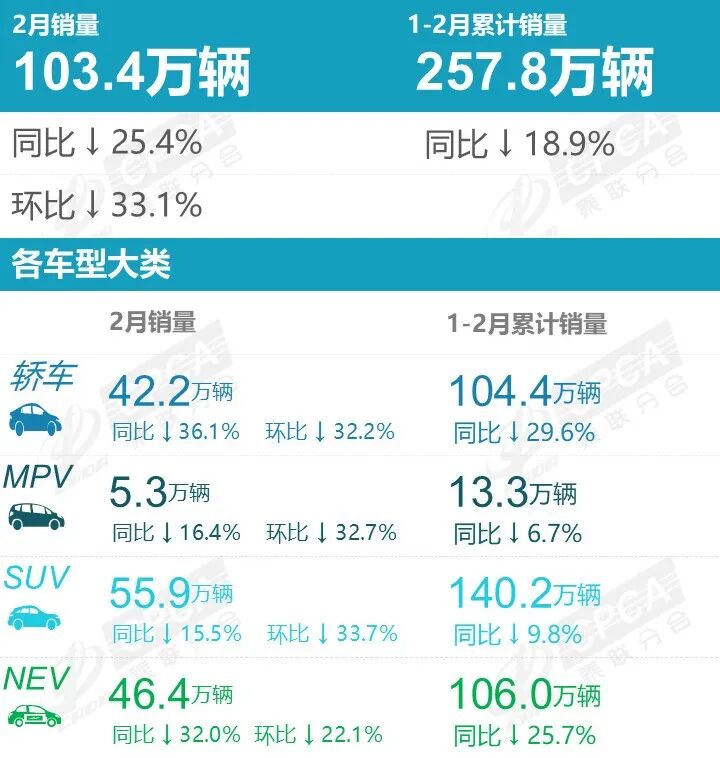
Core Insights - In February 2026, the automotive production and sales in China experienced a decline due to multiple factors including the extended Spring Festival holiday, which was in line with expectations. The retail sales of narrow passenger vehicles reached 1.034 million units, a year-on-year decrease of 25.4% and a month-on-month decrease of 33.1% [1][2]. Sales Data Summary - The retail sales for February 2026 were 1.034 million units, down 25.4% year-on-year and down 33.1% month-on-month. Cumulative sales for January and February reached 2.578 million units, reflecting an 18.9% year-on-year decline [1][2]. - In February, Geely Auto held the largest market share at 14.1%, selling 145,281 units, followed by BYD with 8.6% and FAW-Volkswagen with 7.6% [1][5]. - The wholesale sales rankings for February 2026 showed Geely Auto leading with 206,160 units, followed by BYD with 187,782 units and Chery Auto with 155,779 units [3]. Market Analysis - The decline in automotive sales is attributed to the impact of the Spring Festival and is considered a normal short-term fluctuation rather than a long-term trend. The market is expected to regain momentum with the implementation of local subsidies, the start of spring auto shows, and the launch of new models by automakers [2][4]. - The wholesale sales rankings for January and February 2026 indicated that Geely Auto maintained the top position with 476,327 units, while BYD and Chery followed with 393,300 and 349,748 units respectively [4]. New Energy Vehicle (NEV) Insights - In February 2026, BYD led the NEV wholesale sales with 187,782 units, despite a year-on-year decline of 41.0%. Geely followed with 117,488 units, marking a 19.4% increase year-on-year [8]. - The NEV retail sales for February 2026 showed BYD again in the lead with 88,697 units, while Geely sold 76,636 units, reflecting a year-on-year decline of 17.9% [10].
Geely's vehicle technolgy wins EU certification on assisted driving
Reuters· 2026-03-13 08:53
Core Viewpoint - Geely's smart driving assistance system, G-ASD, has achieved certification under EU regulations for advanced assisted driving, representing a significant milestone for Chinese automotive technology in the global market [1] Group 1: Company Overview - Geely is a Chinese automaker that has developed the G-ASD system, which is now the first of its kind from China to receive EU certification for advanced assisted driving [1] Group 2: Industry Impact - The certification of G-ASD under EU regulations highlights the growing competitiveness of Chinese automotive technology in the global market, particularly in the field of smart driving systems [1]

【联合发布】一周新车快讯(2026年3月7日-3月13日)
乘联分会· 2026-03-13 08:38
Core Viewpoint - The article provides an overview of new vehicle models set to be launched in March 2026, detailing specifications, market segments, and pricing for various manufacturers [2]. Group 1: New Vehicle Launches - FAW Car will launch the Bestune Yueyi 03 on March 8, 2026, positioned as an A SUV with a price range of 79,800 to 119,900 CNY [6]. - Geely Auto will introduce the Geely Xingyue L on March 9, 2026, also classified as an A SUV, with a price range of 139,700 to 147,700 CNY [14]. - Dongfeng Motor will release the Lantu Dreamer on March 10, 2026, categorized as a C MPV, priced at 309,900 CNY [22]. - Beam Auto will present the MINI COOPER on March 11, 2026, in the AO HB segment, with a price of 259,800 CNY [30]. - Chery Auto will launch two models, the Jietu Free and Jietu Traveler, on March 11, 2026, both classified as A SUVs, with prices ranging from 127,900 to 172,900 CNY [38][46]. Group 2: Specifications Overview - The Bestune Yueyi 03 features a pure electric engine with a range of 445 to 565 km and a power output of 122 kW [5][6]. - The Geely Xingyue L is equipped with a 2.0T engine, producing 160 kW and 325 Nm of torque, with no electric range specified [14]. - The Lantu Dreamer has a 1.5T plug-in hybrid engine, delivering 110 kW from the engine and 310 kW from the electric motor, with a pure electric range of 235 km [22]. - The MINI COOPER is powered by a pure electric engine with a power output of 160 kW and a range of 463 km [30]. - The Jietu Free features a 1.5T engine with a power output of 135 kW and 290 Nm of torque, while the Jietu Traveler offers both 1.5T and 2.0T engine options [38][46].


【月度排名】2026年2月厂商销量排名快报
乘联分会· 2026-03-13 08:38
Core Viewpoint - The domestic narrow passenger car market in China experienced a significant decline in sales in February 2026, with a year-on-year decrease of 25.4% and a month-on-month decrease of 33.1%. The cumulative sales for January and February also fell by 18.9% compared to the previous year. This downturn is attributed to multiple factors, including the extended Spring Festival holiday, which affected production and market activity. However, this is considered a short-term fluctuation and not indicative of long-term market trends. Upcoming local subsidy policies, spring auto shows, and new product launches are expected to revitalize the market and promote stable industry growth [2][4]. Sales Data Summary February 2026 Sales - The total retail sales of narrow passenger cars reached 1.034 million units, down 25.4% year-on-year and down 33.1% month-on-month [2]. - Major manufacturers' sales figures for February 2026 include: - Geely Auto: 206,160 units, down 23.7% month-on-month, up 0.6% year-on-year, with a market share of 13.6% [5]. - BYD Auto: 187,782 units, down 8.6% month-on-month, down 41.0% year-on-year, with a market share of 12.4% [5]. - Chery Auto: 155,779 units, down 19.7% month-on-month, down 10.3% year-on-year, with a market share of 10.3% [5]. - Changan Auto: 92,006 units, up 34.5% month-on-month, down 2.2% year-on-year, with a market share of 6.1% [5]. - Tesla China: 58,599 units, down 15.2% month-on-month, up 91.0% year-on-year, with a market share of 3.9% [5]. January-February 2026 Cumulative Sales - Cumulative wholesale sales for January and February 2026 show: - Geely Auto: 476,327 units, up 1.0% year-on-year, with a market share of 13.6% [6]. - BYD Auto: 393,300 units, down 36.0% year-on-year, with a market share of 11.3% [6]. - Chery Auto: 349,748 units, down 11.2% year-on-year, with a market share of 10.0% [6]. - Volkswagen: 186,228 units, down 17.7% year-on-year, with a market share of 5.3% [6]. New Energy Vehicle (NEV) Sales - February 2026 NEV sales data indicates: - BYD Auto: 187,782 units, down 8.6% month-on-month, down 41.0% year-on-year, with a market share of 26.0% [9]. - Geely Auto: 117,488 units, down 5.4% month-on-month, up 19.4% year-on-year, with a market share of 16.3% [9]. - Tesla China: 58,599 units, down 15.2% month-on-month, up 91.0% year-on-year, with a market share of 8.1% [9]. NEV Cumulative Sales (January-February 2026) - Cumulative NEV sales for January and February 2026 show: - BYD Auto: 393,300 units, down 36.0% year-on-year, with a market share of 24.7% [11]. - Geely Auto: 241,740 units, up 10.1% year-on-year, with a market share of 15.2% [11]. - Tesla China: 127,728 units, up 36.0% year-on-year, with a market share of 8.0% [11].



具身数据独角兽火了:上百家产业方找上门
投资界· 2026-03-13 07:09
Core Insights - The article highlights the emergence of embodied intelligence as a significant industry trend, with the recent financing of Guanglun Intelligent marking its entry into the unicorn club, becoming the first unicorn in the field of embodied data [2] - The focus of investment is shifting towards the foundational infrastructure of embodied data and simulation, indicating a new phase in the competition for data infrastructure in the robotics sector [2][4] Group 1: Investment and Market Dynamics - Guanglun Intelligent recently completed financing rounds totaling 1 billion RMB, attracting a diverse range of investors from both industry and financial sectors, signaling strong market interest [2] - The capital focus in the embodied intelligence sector has transitioned from hardware and model teams to the underlying data infrastructure necessary for training robots [4][5] - The competition is evolving from data route competition to data infrastructure construction, emphasizing the importance of a stable data supply system for future robotics capabilities [5][6] Group 2: Data Infrastructure Development - The article outlines a three-tiered infrastructure for physical AI: computing infrastructure, model infrastructure, and the currently scarce data and simulation infrastructure [6] - Guanglun Intelligent is building a comprehensive data engine that integrates simulation, behavior, and evaluation layers to create a sustainable data infrastructure for embodied intelligence [8][10] - The company has established the world's largest non-body data engine, generating over 50,000 hours of high-quality human behavior data weekly, which is utilized by over 80% of leading embodied intelligence teams [9][12] Group 3: Industry Implications and Future Outlook - The article suggests that real-world industrial scenarios are becoming valuable data mines, with companies seeking to secure data generation capabilities ahead of widespread robot deployment [14][19] - The anticipated year of 2026 is highlighted as a pivotal moment for the large-scale implementation of embodied data, driven by the increasing demand for high-quality training data from robotics manufacturers [17][19] - The competition in the robotics industry will increasingly hinge on who can effectively connect real-world scenarios with foundational model training, positioning Guanglun Intelligent at the center of this emerging infrastructure [19][20]

万里扬20260312
2026-03-13 04:46
Company and Industry Summary Company: Wanliyang Key Points on Robotics Business - The robotics business adopts a platform strategy covering full-size, small, and quadruped robots, with development expected to be completed by May-June 2026, achieving small-batch production capability [2][3] - Small-sized joint modules are ahead of schedule, expected to be used in complete machines and generate orders by May 2026 [2][3] - Industry consensus indicates that 2026 will be a pivotal year for commercialization, with domestic progress potentially ahead of Europe and the U.S. [2][4] - The company has engaged in discussions with 6-7 robotics clients, with products recognized for torque, noise, and control precision [2][4] - The controller software is compatible with FOC and MIT algorithms, indicating a mature and stable underlying system [2][6] Key Points on Automotive Business - The passenger vehicle business is transitioning to international markets, with a production base in Malaysia set to start operations in Q4 2026, supporting Proton [2][9] - The target is to exceed global sales of 1 million units within three years, with CVT pricing between 5,000-6,000 RMB [2][12] - The commercial vehicle sector focuses on automation and electrification of heavy trucks, aiming for a 20%-30% domestic market share (approximately 200,000-300,000 units) within three years, with automatic transmission pricing between 15,000-20,000 RMB [2][10] - The agricultural machinery business is expected to enter a rapid shipping phase in 2026, targeting a 25% domestic market share within three years, with large agricultural machinery CVT priced at 100,000-150,000 RMB, significantly lower than market prices [2][10] Collaboration with Tesla - Currently, the company has not received production approval or product recognition from Tesla, focusing on enhancing its core competitiveness rather than binding to a single client [2][5] - The strategy emphasizes optimizing product performance, ensuring quality stability, and controlling costs [2][5] Competitive Advantages - The company has demonstrated superior performance in torque, noise, communication software control, and precision, receiving high recognition from clients [2][6] - Cost control is achieved through initial design considerations for weight reduction and structural simplification, supported by a robust supply chain [2][7] Strategic Positioning and Goals - The robotics business is positioned as a long-term strategic initiative, with performance metrics not strictly enforced in the initial years [2][8] - The focus is on team building, product development, and market expansion, with performance assessments expected to begin in 2027 [2][8] Future Sales Targets - Heavy truck business aims for a 20%-30% market share, translating to approximately 200,000-300,000 units based on a domestic market of 1 million units annually [2][10] - Agricultural machinery targets a 25% market share, with the total market estimated at 500,000 units [2][10] - The passenger vehicle business aims for over 1 million units globally within three years [2][10] Pricing and Revenue Outlook - Major product pricing includes: - Passenger vehicle CVT: 5,000-6,000 RMB - Electric vehicle gearbox: 800-1,000 RMB - Heavy truck automatic transmission: 15,000-20,000 RMB - Agricultural machinery CVT: 100,000-150,000 RMB [2][12] - The company has optimistic revenue expectations for the next 3-5 years, with clear targets set [2][12]

比亚迪副总裁李柯:考虑在加拿大建厂,对收购老牌车企持开放态度
Feng Huang Wang· 2026-03-13 02:46
Core Viewpoint - BYD is actively considering building a manufacturing plant in Canada and is open to acquiring a traditional global automaker, reflecting its strategy to expand internationally and enhance competitiveness in the electric vehicle market [1][2]. Group 1: Canadian Market and Manufacturing Plans - BYD is researching the feasibility of establishing a manufacturing facility in Canada, with a preference for owning and operating the plant rather than forming a joint venture [1]. - The Canadian government is encouraging partnerships between Chinese automakers and local companies, having recently agreed to exempt up to 49,000 Chinese-made electric vehicles from a 100% tariff starting in 2024 [1]. Group 2: Acquisition Strategy - BYD is open to acquiring a traditional automaker as competitors struggle to maintain global competitiveness due to simultaneous investments in both internal combustion and electric vehicles [2]. - The company is evaluating potential acquisition targets but has not disclosed any specific candidates, indicating a strategic shift towards independence and efficiency through vertical integration [2]. Group 3: Market Challenges and Focus - BYD has paused its plans to enter the U.S. market, citing a "complex market environment" characterized by high tariffs and restrictions on connected vehicle technologies [3]. - Instead, BYD is focusing on replicating its successful "Brazil model" in other markets, including Europe, and is accelerating the establishment of its first passenger car center in Hungary [4]. Group 4: Sales Performance and Future Goals - In the first two months of the year, BYD's total sales decreased by 36% to 400,241 vehicles, although export momentum is increasing, with a target of selling 1.3 million vehicles overseas by 2026 [4]. - Recent product launches, including the latest generation of blade batteries and ultra-fast charging architecture, are expected to help reverse the sales decline [4]. Group 5: Investment in Infrastructure - In Brazil, BYD plans to invest over 500 million Brazilian Reais (approximately 97 million USD) to install 1,000 ultra-fast charging stations by the end of 2027 [5]. Group 6: Motorsport Exploration - BYD is exploring entry into competitive racing, including F1 and endurance racing, aligning with its technological priorities, although no final decision has been made yet [6].