康师傅控股

Search documents
食品饮料行业周度市场观察-20250927
Ai Rui Zi Xun· 2025-09-27 09:13
Investment Rating - The report does not explicitly provide an investment rating for the food and beverage industry Core Insights - The food and beverage industry is experiencing significant trends, including the rise of ready-to-eat meals, the popularity of low-sugar and sparkling beverages, and the emergence of health-focused drinks like bamboo sugar and reed root water [1][2][7] Industry Trends - Consumer acceptance of ready-to-eat meals varies significantly by dining context, with over 50% acceptance in fast food chains and only 8.8% in high-end restaurants [2] - The iced tea market is booming, with brands like Nongfu Spring and Yuanqi Forest entering the space, focusing on sugar reduction and carbonation innovations. The market is expected to grow from 300 billion yuan in 2024 to 350 billion yuan in 2025 [2] - The global top 100 food and beverage companies list for 2025 sees PepsiCo reclaiming the top spot with revenues exceeding $90 billion, driven by product innovation and AI technology [4] - The integration of supermarkets and restaurants is on the rise, with new business models emerging that combine high cost-performance and fresh ingredients [4] - The dairy market in China faces challenges, particularly in liquid milk, while powdered milk and cheese are experiencing growth [5] - The tea beverage industry is shifting towards fast-moving consumer goods, with brands focusing on efficiency and cost reduction [6] - Bamboo sugar and reed root water have become popular health drinks, reflecting the potential of traditional Chinese health beverages [7] - The night economy is becoming a significant growth point for the restaurant industry, with night-time consumption in cities like Shanghai and Chengdu reaching 60% [10] Brand Dynamics - Brands like Kang Shifu are launching successful sugar-free tea products, indicating a shift towards premium and health-oriented offerings in the beverage market [14] - The introduction of new products by brands like Subway, which incorporates local flavors into their offerings, highlights the trend of localization in the food industry [15] - The collaboration between Three Squirrels and JD to establish quality standards for nuts aims to elevate industry standards and meet consumer demand for high-quality products [16] - Wahaha's rebranding to "Wah Xiaozong" under the leadership of Zong Fuli aims to attract younger consumers while addressing compliance issues [17] - Zhou Hei Ya's promotional activities targeting college students reflect efforts to engage younger demographics amid declining sales [20]
快消人的人生比剧本更离奇,我卖了7年可乐,7年豆奶,最后选择去杀猪
3 6 Ke· 2025-09-26 09:35
Core Insights - The article narrates the experiences of employees in the fast-moving consumer goods (FMCG) industry, particularly focusing on the challenges faced by those working for PepsiCo and Vitasoy in China, highlighting the impact of corporate changes and market dynamics on their careers [2][3][18]. Group 1: PepsiCo and Its Strategic Alliance - In 2012, PepsiCo formed a strategic alliance with Master Kong, leading to significant changes in operations and employee dynamics within the company [3][5]. - The merger caused unrest among employees, with many fearing for their job security and future compensation, resulting in a mass exodus of nearly 10,000 employees out of 15,000 [6][18]. - The initial promises of job security from Master Kong were not upheld, leading to dissatisfaction and protests among the workforce [5][6]. Group 2: Transition to Vitasoy - After leaving PepsiCo, employees transitioned to Vitasoy, where they initially found a more relaxed corporate culture compared to the rigid structure of PepsiCo [9][10]. - However, Vitasoy faced challenges due to the rise of e-commerce, which disrupted traditional sales channels and led to internal conflicts between online and offline sales teams [11][15]. - The aggressive pricing strategies adopted by Vitasoy for online sales created chaos in the market, leading to complaints from traditional distributors and a breakdown of pricing structures [13][14]. Group 3: Industry Challenges and Employee Sentiment - The internal strife within Vitasoy escalated, with employees feeling the pressure of performance metrics while dealing with a chaotic market environment [16][17]. - The company underwent leadership changes and restructuring efforts that failed to stabilize the situation, resulting in widespread dissatisfaction among employees [17][18]. - Many former employees of the FMCG sector, like the protagonist, chose to leave the industry altogether, seeking more stable and grounded opportunities in different sectors, such as agriculture [18][20].


东鹏饮料20250924
2025-09-26 02:29
Summary of Dongpeng Beverage Conference Call Industry and Company Overview - Dongpeng Beverage has become the second-largest player in the energy drink industry, surpassing Red Bull with nearly 30% market share [2][3] - The company has expanded from the Guangdong and surrounding regions to a nationwide presence, diversifying its product line to include energy drinks, sports drinks, ready-to-drink tea, and coffee [2][3] Key Points and Arguments - **Sales Network Expansion**: By the end of 2024, Dongpeng Beverage will have 4 million sales outlets, with an expected increase to 4.5 million by the end of 2025, significantly outpacing competitors like Xiangpiaopiao and Yangyuan [2][6] - **Regional Growth**: The company has achieved over 50% growth in regions such as Southwest, Central China, and North China [2][7] - **Product Structure Growth**: Hydration products are projected to reach 1.5 billion yuan in 2024, doubling to 3.2-3.5 billion yuan in 2025. The new juice tea product's annual target has been raised to 700-800 million yuan [2][7] - **Business Model**: Dongpeng's business model is similar to Nongfu Spring, focusing on long lifecycle products to nurture new offerings. The energy drink category has high stickiness and lifecycle characteristics, with favorable ROE, net profit, and gross margin [2][8] - **Market Position**: Since its IPO in May 2021, Dongpeng has maintained a compound annual growth rate (CAGR) of approximately 30% in revenue and earnings per share (EPS), with a consistent price-to-earnings (P/E) ratio around 30 [3][4] Additional Important Insights - **Future Growth Projections**: The company anticipates a 15-20% CAGR for specific items until around 2027, despite potential growth slowdowns due to regulatory restrictions on certain products in schools [10] - **Diversification Strategy**: Dongpeng is actively exploring overseas markets in Southeast Asia and the Middle East, with significant growth potential despite current small volumes [10][15] - **Performance of Hydration Products**: Hydration products have shown remarkable growth, with sales increasing from 400 million yuan in 2023 to 1.5 billion yuan in 2024, and expected to reach 3.4-3.5 billion yuan in 2025 [12] - **Juice Tea Market Challenges**: The juice tea market is competitive, with major brands like Master Kong and Uni-President holding significant market shares. Dongpeng is cautious about profitability in this segment, setting a sales target of 700-800 million yuan for the year [13] - **Overall Performance Expectations**: For the current year, Dongpeng expects a revenue growth of approximately 33%, reaching 21 billion yuan, and a profit increase of about 37%, exceeding 4.6 billion yuan [14] Conclusion Dongpeng Beverage is positioned for significant growth in the energy drink and hydration markets, with a robust expansion strategy and a focus on product diversification. The company’s strong sales network and innovative business model provide a competitive edge in a rapidly evolving market.

谁在杀死大品牌经销商?
Sou Hu Cai Jing· 2025-09-26 00:42
Core Insights - The article highlights the decline of channel dominance by major brands in the fast-moving consumer goods (FMCG) sector, as evidenced by the inability of Inner Mongolia dairy companies to recruit new distributors in Shanghai despite significant market share losses [1][7][24] - The report indicates a 37% increase in the distributor attrition rate for leading FMCG brands since 2020, with the beverage sector facing the most severe challenges [1][6] - The shift in consumer behavior towards price sensitivity and the rise of small brands is reshaping the distribution landscape, leading to a re-evaluation of the role of distributors [6][9][12] Industry Dynamics - The era of channel dominance by major brands, characterized by a "direct + deep distribution" model, has led to the marginalization of smaller brands, forcing them into lower-tier markets [2][4] - Major brands have historically treated distributors as mere execution tools, which has contributed to their current vulnerabilities [3][4][14] - The transition from a "stockpiling" strategy to a "neglected" approach reflects the changing consumer preferences and the need for brands to adapt to a more competitive environment [6][24] Distributor Evolution - Small brands are leveraging strategies such as profit sharing and operational flexibility to redefine channel value, offering higher margins (25%-40%) compared to major brands (8%-15%) [9][10][12] - The concept of "coexistence" is emerging, where small brands prioritize long-term loyalty and investment from distributors over short-term gains [12][18] - Major brands are facing a dilemma regarding the necessity of distributors in the digital age, prompting a reevaluation of their roles and contributions [16][17] Future Collaboration Models - The future relationship between brands and distributors is expected to shift from a "management and control" model to one of "empowerment and coexistence" [18][19] - Successful brands are beginning to integrate distributors into their value networks, as seen with companies like Nongfu Spring and Coca-Cola, which focus on core competencies while allowing distributors to thrive [21][22] - The article concludes that brands that respect and collaborate with their distributors will be better positioned to navigate market challenges and sustain growth [24]

“不促不销” ! 看方便面行业的中年危机,这是衰退而非调整
Sou Hu Cai Jing· 2025-09-25 17:53
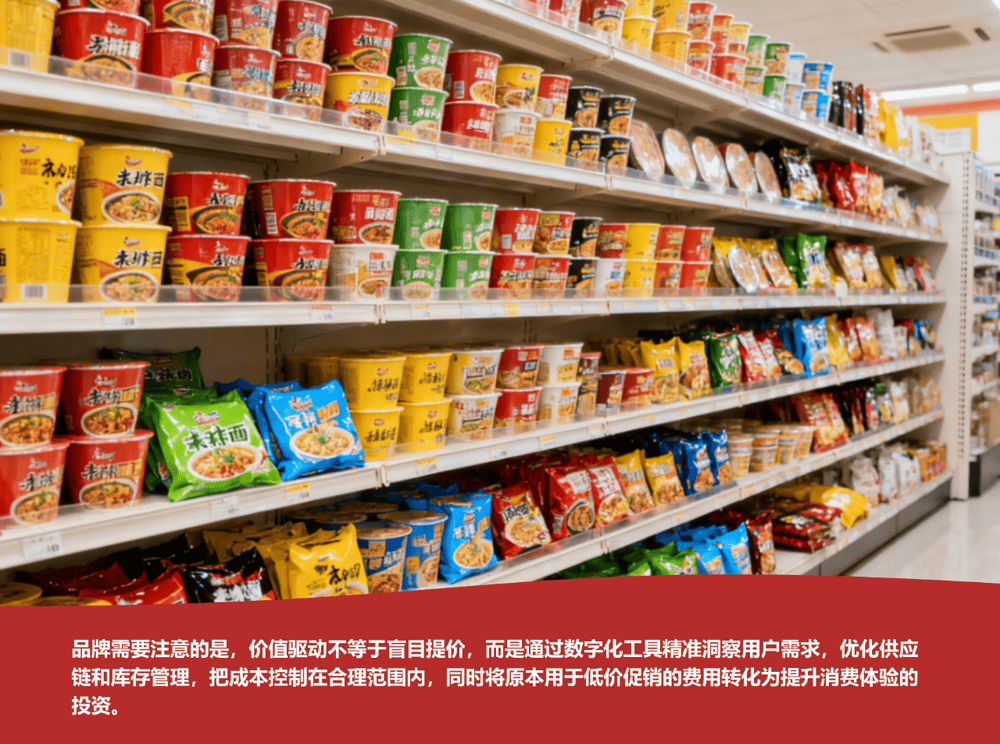
Core Insights - The convenience noodle industry is facing challenges due to the rise of alternative products and changing consumer preferences, leading to a decline in the appeal of instant noodles [1][10] - Brands are resorting to promotions to boost sales, resulting in a dilemma of "no sales without promotions, no profits with promotions" [2][6] - Rising raw material costs and increased competition are squeezing profit margins, with many brands experiencing revenue growth without corresponding profit increases [3][5] Cost Challenges - High raw material costs are a significant issue, with key ingredients like flour and palm oil experiencing price volatility, impacting overall production costs [3][4] - The cost structure of instant noodles includes approximately 35% for raw materials, 20% for packaging, 25% for production, and 20% for logistics, all of which are under pressure from rising costs [3][4] - The industry is seeing a general increase in costs over the past decade, with raw material and production costs rising by 30%-65% [3][4] Market Dynamics - The convenience noodle market is entering a phase of stagnant or declining sales, with a reported decrease of 4 billion packages from 2020 to 2023 [5] - Brands are engaging in price wars and aggressive promotions, which further erodes profitability and creates a cycle of high investment with low returns [5][6] - Consumer loyalty is declining as frequent promotions lead to a reliance on short-term incentives rather than product value [6] Global Expansion - The trend of international expansion is evident, with significant growth in exports, particularly to the U.S. and African markets, although challenges such as tariffs and supply chain issues persist [7][8] - Brands like Nongshim and Samyang are benefiting from overseas sales, but they also face increased costs due to tariffs and logistical challenges [7][8] Consumer Behavior Changes - Changing consumer habits, including the rise of food delivery services and health-conscious eating, are negatively impacting instant noodle sales [10][11] - The popularity of high-speed rail has also reduced the demand for instant noodles as a travel food option [10] - Consumers are increasingly concerned about the health implications of instant noodles, leading to a shift towards healthier alternatives [10][11] Innovation and Product Development - Brands are attempting to innovate by introducing non-fried options and enhancing nutritional value, but many still struggle to change consumer perceptions [11][14] - There is a need for brands to embrace new consumption scenarios and extend product lines to meet diverse consumer needs [16][17] - The industry is shifting from a focus on volume to a focus on value, emphasizing quality and consumer experience over mere sales growth [14][15] Supply Chain Resilience - The importance of robust supply chain management is highlighted, with brands needing to localize production to mitigate costs and improve efficiency [12][13] - The industry is moving towards smart supply chain solutions, utilizing technology for better inventory and procurement decisions [13]
康师傅要对打外卖?说不定是真的!
Zhong Guo Shi Pin Wang· 2025-09-25 07:35
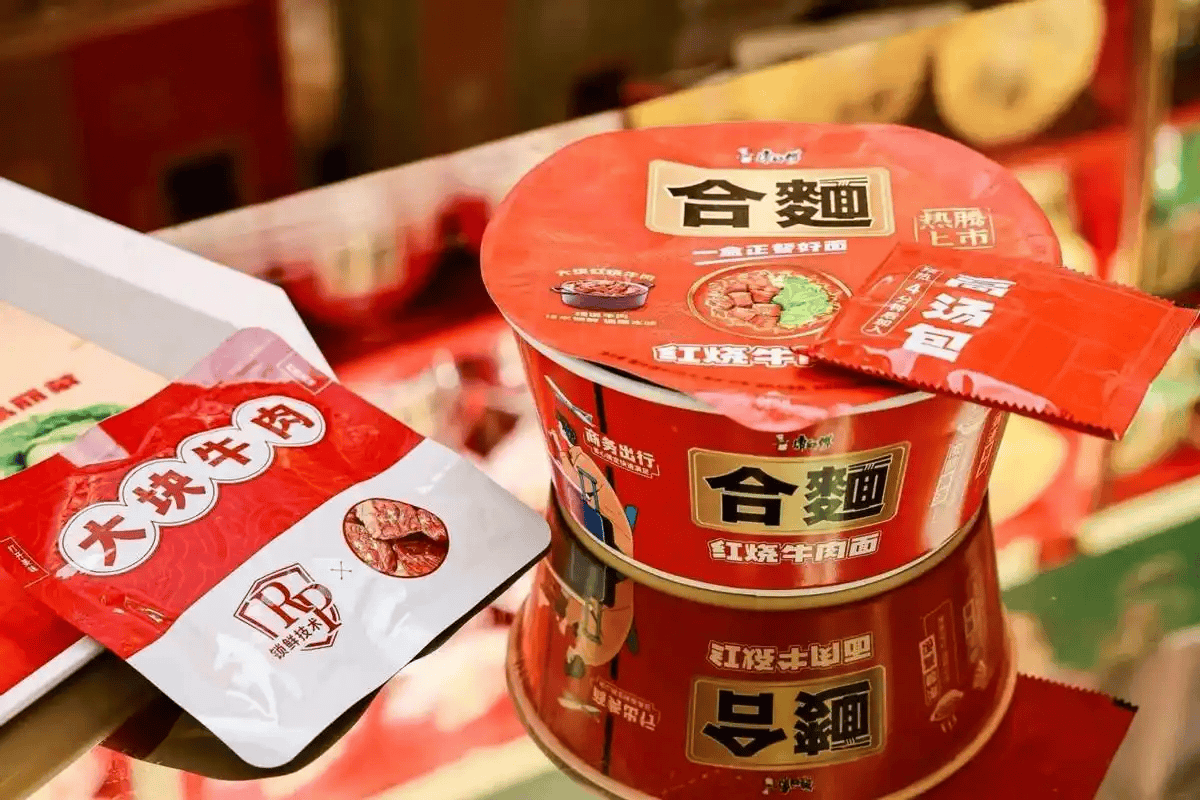
Core Insights - The takeaway from the article is that despite fierce competition from the delivery industry and the rise of new fast food and pre-packaged meal options, Kang Shifu remains a dominant player in the instant noodle market with a market share of 45% [3][4]. Group 1: Product Innovation - Kang Shifu has introduced innovative products like the "Specially Fresh Instant Noodles," which achieved nearly 1 million sales within the first week of launch, utilizing a unique "single basket boiling" technique to enhance the taste [5][6]. - The company has also launched the "He Mian" product, which offers a complete meal experience with meat, vegetables, and soup, all prepared in just four minutes, addressing consumer demand for a more substantial meal [8][9]. - Kang Shifu's focus on new channels and unique flavors, such as the "Chao Lu Beef Noodle" and "White Truffle Chicken Soup Noodle," has led to impressive market performance [7]. Group 2: Technological Advancements - The company holds over 600 patents and has integrated space technology into its production processes, enhancing flavor and safety standards [11][12]. - Kang Shifu has developed a "fresh-keeping" technology that preserves the quality of ingredients, ensuring a consistent taste across different regions [14]. - The introduction of the "Xian Q Noodles," which are non-fried and maintain a desirable texture, showcases the company's commitment to health and innovation [13][14]. Group 3: Supply Chain and Industry Leadership - Kang Shifu has restructured its supply chain and production processes to improve efficiency and reduce costs, allowing for high-quality products at competitive prices [18][19]. - The company has established vegetable bases in various regions to enhance its supply chain and ensure quality control [18]. - Kang Shifu's commitment to food safety and quality has set industry standards, as it was the first instant noodle company in China to receive AIB certification [18][22]. Group 4: Market Positioning and Consumer Insights - The company has successfully identified and catered to diverse consumer needs, offering products tailored for different demographics and consumption scenarios, such as busy professionals and health-conscious individuals [21][24]. - Kang Shifu's approach emphasizes long-term consumer satisfaction and product innovation over short-term pricing strategies, positioning it as a leader in the industry [24].

上船!首届“年度品牌力量”评选明晚揭晓|2025未来商业秀
Di Yi Cai Jing Zi Xun· 2025-09-25 07:32
Group 1 - The event "Future GALA" will take place on September 26, 2025, marking the 17th year of YiMagazine and the inaugural year of the "Annual Brand Power Evaluation" [1][3] - The event will feature industry leaders and new connections discussing trends, brands, and the future [2][5] - The 2025 Brand Power Case List will be announced during the event, showcasing brands that have been preparing for this recognition [7][8] Group 2 - The event will be held at Shanghai West Bank Longhua Wharf from 15:30 to 20:30, and attendance requires an invitation [9] - The event will be supported by various brands, including Uniqlo, and will feature online live streaming across multiple platforms [11][12]
上船!首届“年度品牌力量”评选明晚揭晓|2025未来商业秀
第一财经· 2025-09-25 07:21
Core Viewpoint - The article emphasizes the importance of innovation and new ideas in the face of budget constraints and slow growth, suggesting that now is a prime time for new developments in the business landscape [2]. Event Overview - The "2025 Annual Brand Power Night" will take place on September 26, 2025, at Shanghai West Bank Longhua Wharf, from 15:30 to 20:30 [8]. - The event will feature industry leaders and new connections, focusing on trends, brands, and future opportunities [5][12]. Agenda Highlights - The event will include discussions on five key trends influencing future consumption, led by the editor-in-chief of YiMagazine [13]. - Multiple sessions will showcase the "2025 Annual Brand Power" case releases, highlighting the challenges of maintaining brand relevance over time [15][18]. - A roundtable discussion will address the balance between creating classic products and innovating [14][19]. Special Acknowledgments - The event is supported by various brands, including Uniqlo, which will provide special attire for guests [10]. - Other supporting brands include Kudi, Qingdao Beer, and Wangchao Wine, indicating a collaborative effort within the industry [10]. Online Engagement - The event will be live-streamed across multiple platforms, including the YiMagazine app and various social media channels, allowing broader audience participation [21].
食品饮料里的周期股vs成长股比较
2025-09-24 09:35
食品饮料里的周期股 vs 成长股比较 20250923 摘要 细分赛道竞争格局良好或对手表现较弱,为相关企业带来增长机会,需 关注收入和利润双位数增长趋势,如妙可蓝多、重庆啤酒、银价和东鹏 等案例,在景气上行期实现显著收益。 成长股定价逻辑基于增长空间,复合增速或大单品增速决定估值水平。 例如,30%-50%的大单品增速对应约 30 倍估值,15%-20%的收入增 速且利润双位数增长也对应约 30 倍估值,PEG 估值可作为参考。 成长股预期回报通常以至少翻倍为目标,买入时点至关重要,景气周期 较短。风险管理核心在于选股,组织能力、品类成长趋势和竞争格局是 关键,业绩验证阶段风险降低,此类股票受公募基金青睐。 食品饮料板块存在周期股,如白酒、康师傅、万洲国际和现代牧业,具 有强周期性,可通过理性研究左侧判断买入节点,不要求高增长,但利 润率改善确定性强,价格较好时应大胆买入。 食品饮料周期股特点包括周期规律明确、产业成熟期孕育龙头、分红较 高,受保险资金和外资偏爱。风险管理重点在于周期高点的判断,买入 时点相对容易把握,判断准确应早期重仓。 成长股预期回报通常按照至少翻倍收益来评估,因此买入时间点非常重要,因 ...
装瓶商与可乐公司的关系是什么?为什么分分合合?| 声动早咖啡
声动活泼· 2025-09-24 09:04
Core Viewpoint - Elliott Management has urged PepsiCo to follow Coca-Cola's lead in divesting its bottling operations, which are crucial to the beverage business [2][3] Group 1: Historical Context of Bottling Operations - The bottling business emerged as a solution to early distribution challenges faced by Coca-Cola, which initially sold only syrup to local soda fountains [4] - By 1919, Coca-Cola's bottling network had expanded to 1,200 plants, significantly increasing syrup revenue [4] - PepsiCo adopted a similar bottling strategy, inspired by Coca-Cola's model, to facilitate its own growth [4] Group 2: Advantages of the Bottling Model - The bottling model allows beverage companies to avoid heavy capital investments in manufacturing and logistics, as these responsibilities are managed by bottlers [5] - Local bottlers can leverage regional resources and market knowledge, accelerating product distribution [5][6] Group 3: International Expansion and Partnerships - Both Coca-Cola and PepsiCo replicated their bottling strategies internationally, forming partnerships with local bottlers to enhance market penetration [6][7] - Coca-Cola's return to China involved collaborations with local firms like COFCO and Swire, while Pepsi initially attempted to maintain full control over its bottling operations [7] Group 4: Tensions Between Companies and Bottlers - There exists a tension between beverage companies and bottlers regarding pricing strategies, as companies prefer a "low-margin, high-volume" approach while bottlers seek higher prices to improve their margins [8] - New product launches often create friction, as bottlers face additional costs for production line adjustments and marketing efforts [8] Group 5: Market Dynamics and Competitive Strategies - The rise of large retail chains like Walmart has shifted the dynamics, with PepsiCo gaining an advantage by negotiating directly with retailers, while Coca-Cola had to reform its bottling network to maintain competitiveness [9][10] - Coca-Cola has restructured its bottling network by acquiring stakes in bottlers and supporting larger regional bottlers, while PepsiCo continues to maintain direct control over its bottling operations [10]