Manus

Search documents
OpenAI会杀死Manus们吗?
创业邦· 2025-07-22 03:02
Core Viewpoint - OpenAI's release of ChatGPT Agent marks a significant advancement in AI capabilities, allowing for complex task execution and planning, which poses challenges for existing AI startups in the agent space [5][9][45]. Group 1: OpenAI's ChatGPT Agent - ChatGPT Agent can autonomously plan and execute tasks, utilizing various tools for functions such as data retrieval, itinerary planning, and hotel booking [5]. - OpenAI founder Sam Altman described the ChatGPT Agent as a significant step towards achieving AGI (Artificial General Intelligence) [9]. - The model is designed to integrate task planning, tool invocation, and document generation within a single system, distinguishing it from other AI agents that rely on context management [9][25]. Group 2: Competitive Landscape - Startups like Manus and Genspark are actively competing with OpenAI, claiming superior performance in task completion and response times [13][21]. - Manus has publicly compared its capabilities with ChatGPT Agent, asserting that it outperforms OpenAI in various tasks, including data organization and financial analysis [20][24]. - Genspark also reported faster response times and higher quality outputs compared to ChatGPT Agent, emphasizing its competitive edge despite being a smaller company [21]. Group 3: Market Implications - The AI Agent market is projected to grow significantly, from $5.1 billion in 2024 to $47.1 billion by 2030, with a CAGR of 44.8% [46]. - Major tech companies are already integrating AI agents into their operations, leading to substantial workforce reductions, as seen with Microsoft and Klarna [45][46]. - The introduction of AI agents raises concerns about privacy and security, as these systems can access sensitive user information [46][48]. Group 4: Technical Aspects - OpenAI's ChatGPT Agent has demonstrated superior performance in academic tests, achieving high scores in various assessments, indicating its advanced capabilities compared to previous models [29][32]. - The agent's ability to perform complex tasks is attributed to its end-to-end training, which provides a unified model advantage over the iterative improvements seen in many startups [29][33]. - Startups are focusing on application innovation and user experience, while OpenAI emphasizes foundational model capabilities [33][34].


悄悄大撤退,Manus带走了哪些秘密?
Tai Mei Ti A P P· 2025-07-22 00:47
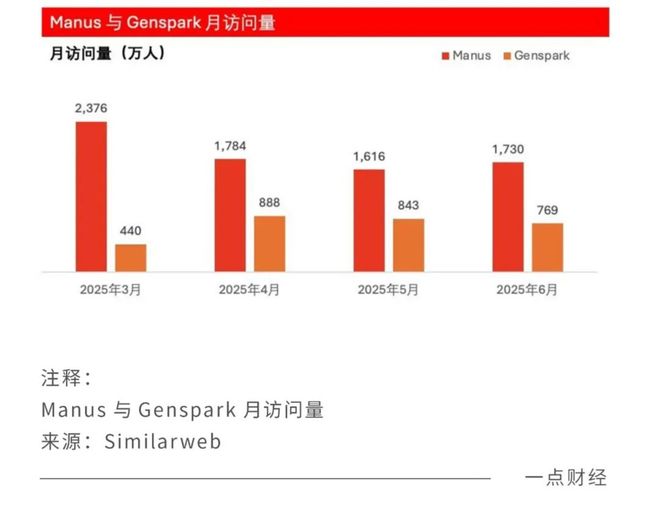
Core Viewpoint - Manus, an AI company, abruptly left the Chinese market for Singapore after a brief period of hype, raising questions about its motivations and the implications for the AI industry in China [1][2][4]. Group 1: Company Background and Initial Hype - Manus was launched in March 2023 and was quickly dubbed a "national-level product," with its internal testing invitation codes being sold for as much as 100,000 yuan, surpassing the price of concert tickets [1][5]. - The company was initially celebrated for its innovative capabilities, being compared to DeepSeek, but faced a rapid decline in reputation and user engagement shortly after its launch [1][4][12]. Group 2: Departure and Reactions - The founder, Xiao Hong, and key team members left China without prior notice, leading to a wave of criticism and speculation about the reasons behind this decision [1][8]. - Reactions to Manus's departure were mixed, with some accusing the company of exploiting users for profit before fleeing, while others expressed sympathy for the challenges it faced [1][2]. Group 3: Financial and Operational Context - Manus's parent company, Butterfly Effect, secured $75 million in Series B funding in April 2023, with a valuation reaching $500 million, indicating significant investor interest despite the company's subsequent exit [6][8]. - The departure to Singapore coincided with increasing regulatory scrutiny from the U.S. on Chinese tech companies, particularly in the AI sector, which may have influenced Manus's decision to relocate [8][9]. Group 4: User Experience and Market Performance - Despite initial excitement, Manus experienced a significant drop in user engagement, with monthly visits peaking at 23.76 million in March and falling to 16.16 million by May, attributed to poor user experience and unmet expectations [12]. - The company relied heavily on integrating external technologies rather than developing its own core models, leading to questions about its long-term viability and competitive edge in the market [12][13]. Group 5: Broader Implications for the Industry - Manus's situation reflects a broader trend among Chinese tech startups facing difficult choices between global expansion and domestic challenges amid geopolitical tensions [14][20]. - The narrative surrounding Manus raises critical questions about the sustainability of companies that prioritize rapid growth and market entry over building solid technological foundations [22][23].
Manus“跑路”风波背后,AI Agent的商业化困局
3 6 Ke· 2025-07-21 23:20
Core Insights - Manus emerged as a promising AI agent with a viral demonstration video, attracting 2 million users for reservations within a week and a valuation of $500 million after a $75 million investment from Benchmark [1][3] - However, the initial excitement faded quickly as users found the product's performance lacking, revealing that it relied heavily on third-party large model APIs and struggled with complex tasks [3][4][9] - The broader AI agent industry faces challenges, with predictions indicating that 40% of AI agent projects may be eliminated by 2027 due to high costs and unclear business models [9][10] Group 1: Rise and Fall of Manus - Manus was initially celebrated for its capabilities, such as resume screening and travel planning, leading to significant media attention and investment [3][4] - As users began to test the product, they encountered performance issues, including slow response times and inaccuracies in task execution [4][6][9] - The high subscription cost, ranging from $19 to $199 per month, did not align with the product's actual performance, leading to user dissatisfaction [6][9] Group 2: Industry Challenges - The AI agent market is characterized by a proliferation of products that merely layer a user interface over existing large models, resulting in a lack of differentiation and high vulnerability to cost increases [10][11] - Many AI agents are criticized for being "Frankenstein" products, combining various functionalities without effectively addressing user needs, leading to poor performance in real-world applications [12][14] - The high operational costs of general-purpose agents, combined with low user retention and conversion rates, create a precarious financial situation for many startups in the sector [14] Group 3: Successful Strategies in the AI Agent Space - Companies that focus on niche markets and provide tailored solutions are more likely to succeed, as they address specific pain points for clients [18][20] - Genspark, a company that pivoted to AI agents, achieved significant revenue by focusing on office automation and data analysis, demonstrating the importance of finding a specialized market [20][21] - Successful AI agents emphasize return on investment (ROI) for clients, offering transparent pricing models and clear value propositions [22][24] Group 4: Building Sustainable Ecosystems - Companies that integrate user feedback and community innovation into their products can create a competitive advantage and ensure continuous improvement [25][27] - The development of ecosystems around AI agents, where third-party developers contribute to the platform, enhances functionality and attracts more clients [27][28] - The future of AI agents lies in their ability to combine technology with real-world applications, focusing on creating tangible value rather than merely chasing trends [28]

融资飙涨背后,Agent赛道的投资逻辑正在重构
Hu Xiu· 2025-07-21 02:15
Core Insights - The AI Agent sector is becoming increasingly competitive, with major players like OpenAI launching products such as ChatGPT Agent, which combines features from existing models to handle complex tasks [1][2] - The programming tools market is witnessing significant mergers and acquisitions, with Google acquiring Windsurf's core team for $2.4 billion, indicating high talent acquisition costs and intense competition among startups and tech giants [2][3] - Vertical AI Agents are also gaining traction, with companies like Glean and HarveyAI securing substantial funding, highlighting the growing interest in specialized applications within the AI Agent landscape [3][4] AI Agent Landscape - OpenAI's ChatGPT Agent integrates capabilities from its previous models, allowing users to manage complex tasks like scheduling and competitive analysis [1] - The programming sector is characterized by fierce competition, with companies like Cursor and Anthropic's Claude Code emerging as key players, while new entrants like Grok 4 are also making significant advancements [2][6] - Investment discussions are focusing on the sustainability of vertical AI Agents as large models continue to evolve, raising questions about their competitive edge [3][4] Investment Trends - The investment community is increasingly interested in vertical AI Agents, which are perceived to have lower costs and higher barriers to entry compared to general-purpose agents [20][21] - The market is seeing rapid revenue growth, with some companies achieving significant increases in income within a year, reflecting the competitive pressure to innovate and capture market share [16][17] - Investors are cautious about general-purpose AI Agents due to the high costs associated with their development and the potential for competition from established tech giants [55][56] Programming AI Agents - Companies like Cursor and Windsurf are leveraging user-friendly interfaces and experiences to differentiate themselves in the coding AI space, which is crucial for attracting users [13][14] - The emergence of new models like Claude Code and Grok 4 is reshaping the competitive landscape, with developers increasingly adopting these tools for their coding needs [9][10] - The integration of AI coding tools into existing workflows is seen as a key factor for success, as companies strive to enhance user experience and streamline processes [12][13] Vertical AI Agents - Vertical AI Agents are gaining attention for their ability to address specific industry needs, with examples like a company automating commercial paper issuance, demonstrating the potential for significant market impact [22][23] - The focus on industry-specific applications is expected to yield substantial opportunities, as these agents can provide tailored solutions that meet regulatory and operational requirements [24][25] - The combination of large language models and reinforcement learning is becoming a common approach to enhance the performance and reliability of vertical AI Agents [29][30] Challenges and Opportunities - The AI Agent market is characterized by rapid iteration and competition, with companies needing to continuously innovate to maintain their market position [17][18] - The challenge of "hallucination" in AI models poses risks, particularly in regulated industries, necessitating robust solutions to ensure accuracy and compliance [27][28] - Investors are increasingly looking for companies that can effectively balance the use of large models with the development of specialized, cost-effective solutions for business applications [31][32]


Manus撤离中国后谈经验教训;Kimi K2登顶;奈飞首次使用AIGC做特效
Guan Cha Zhe Wang· 2025-07-21 01:07
Group 1 - Manus co-founder Ji Yichao discussed the reasons for the company's decision to "shell" rather than develop a large model, citing painful lessons from previous entrepreneurial experiences, and noted that the future of AI agents lies in context design rather than merely competing on model capabilities [1] - Kimi K2, a Chinese open-source model, has topped the global open-source model rankings, outperforming competitors like Google's Gemma3 and Meta's Llama4, indicating a significant advancement in China's AI model development [1] - China Unicom is exploring the establishment of a 100,000 card computing cluster, with an expected computing scale of 45 EFLOPS by the end of the year, highlighting the company's commitment to expanding its intelligent computing capabilities [2] Group 2 - Netflix has begun using generative AI for visual effects in its TV productions, aiming to reduce production costs and enhance content quality, with the Argentine sci-fi series "The Eternaut" being the first project to utilize this technology [2] - Delta Airlines is implementing an AI-driven dynamic pricing strategy to customize ticket prices for each passenger based on their willingness to pay, moving away from traditional fixed pricing models [2] - Elon Musk announced the development of a child-friendly AI application called "Baby Grok," although specific functionalities have not been disclosed, indicating a focus on creating friendly content for children [3] Group 3 - The Trump administration has initiated a review of Elon Musk's SpaceX contracts with various federal agencies following a reported fallout between Trump and Musk, which may impact SpaceX's operations and future contracts [4][5] - The third Chain Expo concluded with over 6,000 cooperation intentions signed, reflecting a growing interest in blockchain technology and partnerships within the industry [5] - Nvidia's CEO Jensen Huang praised China's supply chain as one of the best in the world, highlighting its scale, complexity, and diversity, which positions China as a leader in global supply chain management [6] Group 4 - The pricing of Apple's upcoming foldable iPhone is speculated to exceed 15,000 yuan, with material costs estimated at 759 USD, indicating a potential high-end market positioning for this product [6] - Zeekr responded to allegations regarding "0-kilometer used cars," clarifying that the vehicles in question are new products that have not been registered, emphasizing their commitment to industry integrity [6] - Faraday Future's new MPV model FX Super One has been accused of design plagiarism from Great Wall Motors' high-end brand, with the company removing references to "Gaoshan 9" from its website amid the controversy [7]

贾跃亭首款MPV被指抄袭长城,FF官网删除高山9宣传语;极氪否认卖「0公里二手车」虚增销量;曝NVIDIA H20供应有限
雷峰网· 2025-07-21 00:42
Group 1 - Zeekr denies selling "0 km used cars" to inflate sales, stating that the vehicles are display cars and part of normal business practices [4] - Faraday Future's first MPV, Super One, faces accusations of design plagiarism from Great Wall Motors, leading to the removal of promotional language from its website [6] - The food delivery market is experiencing a shift as platforms continue to offer high-value coupons despite regulatory scrutiny [9][10] Group 2 - ByteDance's data science head, Qin Lu, leaves the company to start a venture in the AIGC field, seeking talent for algorithm and development roles [11] - Manus, after facing operational challenges, has shifted focus to international markets and shared lessons learned from its experiences [12] - NVIDIA's H20 AI chip supply is limited, with no plans to restart production due to U.S. sales bans, impacting its revenue significantly [13] Group 3 - Japan's semiconductor industry announces successful trial production of 2nm wafers, marking a significant technological advancement [31][32] - Meta continues to attract talent from Apple, hiring two AI researchers with substantial compensation packages, indicating a competitive landscape in AI development [30][31] - NIO's legal department responds to malicious rumors, emphasizing the company's commitment to legal action against false information [24]






8点1氪|甘肃幼儿园血铅事件27人被追责问责;娃哈哈财产纠纷案将于8月1日在香港高等法院进行聆讯;新规或禁止新车登记后半年内转让
3 6 Ke· 2025-07-20 23:58
Group 1: Company Listings - Hanbo Semiconductor has initiated its listing guidance with CITIC Securities as the advisory institution, with key shareholders controlling 42.1465% of the voting rights through various platforms [1] - Bullish has submitted registration documents to the SEC for a listing on the NYSE, with strategic investments from notable figures including Peter Thiel and others [2] Group 2: Legal and Regulatory Issues - A legal case involving Wahaha is set for hearing on August 1 in Hong Kong, with multiple parties involved in a property dispute [4] - The Ministry of Industry and Information Technology is considering a new regulation to prohibit the transfer of new cars within six months of registration to curb arbitrage opportunities [5][6] Group 3: Financial and Investment News - Chuan Hydrogen Technology has completed a third round of financing exceeding $200 million, aimed at product technology development and ecosystem construction [16] Group 4: Product Developments - Apple is expected to release a foldable iPhone with a potential price exceeding 15,000 yuan, making it the most expensive iPhone to date [17]

OpenAI上新Manus撤退 AI智能体两面
Bei Jing Shang Bao· 2025-07-20 14:31
Core Insights - OpenAI has not released GPT-5 as planned, instead launching the ChatGPT Agent, which possesses autonomous thinking and action capabilities [2][3] - Manus, a previously popular AI agent, has cleared its social media content and is reportedly relocating its headquarters to Singapore, leading to significant layoffs in China [2][6] Group 1: ChatGPT Agent Features - The ChatGPT Agent can autonomously select tools from its skill set to complete complex tasks, such as analyzing competitors and creating presentations [3] - It integrates functionalities from previous features like Operator and Deep Research into a unified system, enhancing its ability to interact with websites and process information [3][4] - The system includes various tools for web interaction, text processing, and code execution, but trading and sensitive operations are restricted to prevent financial losses [4][5] Group 2: Manus Market Exit - Manus has exited the Chinese market, clearing its social media and indicating a shift in focus to operational efficiency by relocating to Singapore [6][7] - The decision to move may be influenced by U.S. investment restrictions and the challenges of maintaining different product versions for domestic and international markets [7] - Manus's co-founder reflected on the challenges faced in developing AI agents, emphasizing the complexity of building effective systems [6][7] Group 3: Industry Trends and Predictions - The global AI agent market is projected to reach $5.4 billion by 2024, with expectations for significant growth as major companies commercialize AI agent products [8] - Analysts predict 2025 could mark the "year of the AI agent," with foundational large models being crucial for agent capabilities [8][9] - Concerns exist regarding the sustainability of the AI agent market, with predictions that over 40% of projects may be canceled by the end of 2027 due to market corrections [8][9]

A股公司,密集披露;“两船”合并,获批;宇树科技开启上市辅导……周末,大消息!
Zheng Quan Shi Bao· 2025-07-20 10:41
宏观·要闻 1—6月全国吸收外资4232.3亿元人民币 据商务部网站消息,2025年1—6月,全国新设立外商投资企业30014家,同比增长11.7%;实际使用外 资金额4232.3亿元人民币,同比下降15.2%。 从行业看,制造业实际使用外资1090.6亿元人民币,服务业实际使用外资3058.7亿元人民币。高技术产 业实际使用外资1278.7亿元人民币,其中,电子商务服务业、化学药品制造业、航空航天器及设备制造 业、医疗仪器设备及器械制造业实际使用外资分别增长127.1%、53%、36.2%、17.7%。 重要会议召开:战略矿产走私出口"零容忍、出重拳" 据商务部网站消息,2025年7月19日,国家出口管制工作协调机制办公室组织商务部、公安部等单位, 在广西南宁召开打击战略矿产走私出口专项行动推进会,总结通报前期进展成效,全面分析当前打私形 势,对专项行动进行再部署、再推进。 会议指出,专项行动启动以来,各有关部门深入贯彻落实党中央、国务院决策部署,成立专班、迅速行 动,制定方案、明确任务,对战略矿产走私出口"零容忍、出重拳",不断加大执法办案力度,侦办了一 批战略矿产非法出口案件,抓获了一批走私犯罪嫌疑人, ...


周受资给加拿大工业部长写信,请求紧急面谈;估值 6.5 亿美元,这个产品做成了“美版公众号”丨Going Global
创业邦· 2025-07-20 10:37
Core Insights - The article highlights significant developments in the global expansion of companies, particularly focusing on TikTok's negotiations in Canada, Blackstone's withdrawal from the TikTok US acquisition, and the rapid localization efforts of Temu in the UK [3][5][9][11]. Group 1: TikTok Developments - TikTok is urgently seeking negotiations with the Canadian government to avoid the shutdown of its local operations, which were ordered due to national security concerns [5]. - Blackstone has reportedly exited the consortium aimed at acquiring TikTok's US operations, adding uncertainty to the ongoing negotiations [9]. Group 2: Temu's Expansion - Temu plans to increase the proportion of local orders in the UK to 50% by the end of 2025, currently boasting 22 million users in the region [11]. - The platform has seen a 68% year-over-year increase in global monthly active users, reaching 417 million, with Latin America showing a remarkable 122% growth [11][12]. Group 3: SHEIN and Manus - SHEIN's India app has surpassed 2 million downloads within six months of its relaunch, with over 20,000 products available on the platform [14]. - Manus has disclosed its technical experiences while transitioning to overseas markets but did not address the reasons for its exit from China [16][17]. Group 4: Company Challenges - The lawnmower robot company Supoman has filed for bankruptcy, attributed to technological stagnation and declining market share [19]. - Inditex plans to reintroduce its budget brand Lefties in France to compete with low-cost rivals like SHEIN [25]. Group 5: Investment and Financing - Several Chinese venture capital firms are restarting USD fundraising, targeting over $2 billion, focusing on AI and new consumer sectors [32][34]. - Substack has completed a $100 million Series C funding round, increasing its valuation by nearly 70% since 2021 [34][35]. Group 6: Market Entries and Regulations - Couche-Tard has abandoned its $47 billion acquisition of Seven & i Holdings due to negotiation breakdowns [27]. - Thailand has classified 19 e-commerce platforms, including Shopee and Lazada, as "high-risk," subjecting them to mandatory regulations [31].