长江存储

Search documents
20cm速递|科创芯片ETF国泰(589100)涨超2.8%,“价格回升+国产替代”双驱动
Mei Ri Jing Ji Xin Wen· 2025-10-21 05:33
Core Viewpoint - The "storage instead of calculation" technology significantly optimizes costs and efficiency by migrating AI inference data to SSDs, leading to a demand surge for SSDs beyond traditional growth rates [1] Industry Summary - Domestic replacement is accelerating, with Yangtze Memory Technologies planning to reach a NAND production capacity of 300,000 wafers per month by 2028, capturing a 15% global market share [1] - Longsys Memory's DRAM production is expected to become the fourth largest globally [1] - International giants are shifting towards high-end products like HBM, creating niche market opportunities for domestic manufacturers [1] - In the fourth quarter, domestic storage companies are benefiting from a dual drive of "price recovery + domestic replacement," with demand and operating rates showing a robust recovery [1] Company Summary - The Guotai ETF (589100) tracks the Sci-Tech Chip Index (000685), which has a daily price fluctuation limit of 20% [1] - The index selects listed companies from the Sci-Tech board that are involved in the entire semiconductor industry chain, including materials, design, manufacturing, and packaging/testing [1] - Comprising 50 representative securities, the index reflects the overall performance and development trends of China's semiconductor industry [1] - The index is characterized by high growth potential and industry representativeness [1]
英伟达退出中国AI芯片市场,美光计划对华停供服务器芯片
Zhong Guo Neng Yuan Wang· 2025-10-20 07:52
Market Review - The overseas AI chip index increased by 2.90% this week, with all constituent stocks showing upward movement, particularly MPS which rose over 10% [1] - The domestic AI chip index fell by 6.1%, influenced by the tense China-U.S. trade relations, with only Cambricon showing a slight increase of less than 1% [1] - The Nvidia mapping index decreased by 8.7% due to U.S. export controls, resulting in Nvidia losing its market share in China's data-centric GPU market, leading to declines in related industry stocks [1] - The server ODM index rose by 1.1%, with significant performance differences among constituent stocks; Wiwynn increased by over 10%, while Wistron fell by nearly 10% [1] - The storage chip index declined by 2.1%, with short-term supply-demand dynamics causing varied stock performance among constituents [1] - The power semiconductor index dropped by 3.2%, and both the Guoyuan A-share and Hong Kong fruit chain indices fell by 10% and 10.1% respectively [1] Industry Data - Global wearable wristband device shipments grew by 13% year-on-year in Q2 2025, with Xiaomi (61% growth) and Huawei (47% growth) leading the market significantly [2] - Global smartphone shipments increased by 4% year-on-year in Q3 2025, with Samsung maintaining the top position due to its A series and foldable models, while Apple became the fastest-growing brand among the top five, driven by demand in emerging markets [2] - High-end PC panel and OLED laptop panel shipments are expected to grow by approximately 9% in 2025, with the OLED laptop market projected to enter a high growth phase in 2026, driven by Apple's launch of the OLED MacBook Pro, with an expected annual growth rate of 30% [2] Major Events - Micron plans to cease supplying server chips to Chinese data centers while retaining its automotive and mobile business, creating market opportunities for competitors like Samsung and SK Hynix, and accelerating the replacement process for local Chinese storage chip companies such as Yangtze Memory Technologies [3] - Due to U.S. export controls, Nvidia's CEO confirmed a complete exit from the advanced AI chip market in China, resulting in a market share drop from 95% to zero, which he believes will facilitate the rise of Chinese manufacturers like Huawei and lead to a split in the global AI ecosystem [3] - Apple plans to launch its first touchscreen MacBook Pro in 2026-2027, featuring the M6 chip and an OLED display [3]


2025湾芯展收官,粤港澳大湾区半导体产业注入新动能
Zhong Guo Jing Ying Bao· 2025-10-20 07:33
Core Insights - The 2025 Bay Area Semiconductor Industry Ecological Expo concluded in Shenzhen, showcasing over 2,500 new products from various global companies, emphasizing the theme "Chip Enables Future Intelligent Creation" [1][2] - The event attracted participation from more than 20 countries and regions, featuring top semiconductor firms such as Applied Materials, KLA, and domestic leaders like SMIC and BYD, highlighting a comprehensive industry chain [1][2] Group 1 - The expo served as a platform for "technological breakthroughs," allowing domestic companies to present key achievements that challenge foreign monopolies [1] - Approximately 5,000 professional buyers from leading companies attended, including major players like Samsung and Foxconn, facilitating effective connections between domestic and international industry resources [2] - The event fostered a "dual approach" of innovation and market engagement, with many enterprises seeking solutions for technical challenges and new market demands [2] Group 2 - The participation of renowned companies from 27 countries and regions expanded the "friend circle" of the semiconductor industry in the Guangdong-Hong Kong-Macao Greater Bay Area [2] - The expo included targeted matchmaking services, enhancing collaboration on policy consultation, resource sharing, and capital investment among semiconductor hubs like Shanghai and Wuxi [2]





英伟达退出中国AI芯片市场,美光计划对华停供服务器芯片 | 投研报告
Zhong Guo Neng Yuan Wang· 2025-10-20 06:48
Market Overview - The overseas AI chip index increased by 2.90% this week, with all constituent stocks showing upward movement, particularly MPS which rose over 10% [2] - The domestic AI chip index fell by 6.1%, influenced by the tense US-China trade relations, with only Cambricon showing a slight increase of less than 1% [2] - The Nvidia mapping index decreased by 8.7% due to US export controls, resulting in Nvidia losing its market share in China's data-centric GPU market [2] - The server ODM index rose by 1.1%, with significant performance differences among constituent stocks; Wiwynn increased by over 10%, while Wistron fell by nearly 10% [2] - The storage chip index declined by 2.1%, reflecting varied stock performance due to short-term supply-demand dynamics [2] - The power semiconductor index dropped by 3.2%, and both the Guoyuan A-share and Hong Kong fruit chain indices fell by 10% and 10.1% respectively [2] Industry Data - Global wearable wristband device shipments grew by 13% year-on-year in Q2 2025, with Xiaomi (61% growth) and Huawei (47% growth) leading the market [3] - Global smartphone shipments increased by 4% year-on-year in Q3 2025, with Samsung maintaining the top position and Apple being the fastest-growing brand, driven by demand in emerging markets [3] - High-end PC panel and OLED laptop panel shipments are expected to grow by approximately 9% in 2025, with a projected annual growth rate of 30% for OLED laptops starting in 2026 [3] Major Events - Micron plans to cease supplying server chips to Chinese data centers while retaining its automotive and mobile business, creating market opportunities for competitors like Samsung and SK Hynix, and accelerating the replacement process for local Chinese storage chip companies [4] - Due to US export controls, Nvidia's CEO confirmed a complete exit from the Chinese advanced AI chip market, reducing its market share from 95% to zero, which may facilitate the rise of Chinese manufacturers like Huawei and lead to a split in the global AI ecosystem [4] - Apple plans to launch its first touchscreen MacBook Pro in 2026-2027, featuring the M6 chip and an OLED display [5]
天风证券:AI重塑存储周期逻辑 技术需求双轮驱动
智通财经网· 2025-10-20 03:57
Core Viewpoint - The essence of the storage supercycle is a transition from "cyclical" to "structural," driven by AI technology, leading to significant growth in data center storage demand and innovation in storage technology [1] Group 1: Market Trends - NAND and DRAM prices are expected to continue rising in Q4, with an estimated increase of 8-13% for conventional DRAM and 5-10% for NAND Flash products [3] - The price of 1Tb Flash Wafer has increased by nearly 15% and 512Gb Flash Wafer by over 20% in the past month, driven by supply constraints and price hikes [3] Group 2: Domestic Market Opportunities - Domestic storage chip manufacturers are gaining market share as international giants shift focus to high-end products, creating a window for domestic alternatives [4] - Companies like Yangtze Memory Technologies are rapidly penetrating the enterprise market, with their SSDs widely used by major cloud service providers [5] Group 3: Production Capacity Expansion - Yangtze Memory Technologies plans to increase its monthly production capacity to 150,000 wafers by the end of 2025, aiming for a 15% share of the global NAND market [5] - Longsys Memory's DRAM production is expected to reach 2.73 million wafers per year, positioning it as the fourth-largest DRAM manufacturer globally [5] Group 4: Technological Innovations - The emergence of "storage as computation" technology is set to revolutionize storage, allowing for significant reductions in latency and costs associated with AI inference processes [6] Group 5: Investment Recommendations - Companies to watch in the storage module and control sector include Jiangbolong, Demingli, and others, while notable storage chip companies include Zhaoyi Innovation and others [7][8]

存储芯片概念再度活跃,三孚股份4连板,万润科技等涨停
Zheng Quan Shi Bao Wang· 2025-10-20 02:47
Group 1 - The core viewpoint of the articles highlights the ongoing activity in the storage chip sector, driven by market reactions to Micron Technology's decision to cease supplying server chips to Chinese data centers, which is seen as a confirmation of the existing supply shortage in the industry [1][2] - The stock performance of companies such as Sanfo Technology, Wanrun Technology, and Tian'ao Electronics, which have seen significant gains, indicates a bullish sentiment in the storage sector following the news [1] - The exit of Micron is perceived as having limited impact on China's storage market, as local suppliers like Samsung, SK Hynix, and domestic firms such as Yangtze Memory Technologies and Changxin Memory Technologies dominate the landscape [1] Group 2 - From a macro perspective, the Micron incident reflects a long-term trend of supply chain differentiation in the context of the trade technology war, extending from high-end GPU sectors to storage and server domains [2] - The ongoing restrictions on AI chip and manufacturing equipment exports by the Trump administration are pushing China to support local suppliers for self-sufficiency, which is crucial for the storage industry's growth [2] - The overall demand in the storage sector is being driven by the global AI infrastructure construction wave, leading to a persistent supply shortage exacerbated by trade frictions [2]

投中“宁王”“寒王”后,谢诺投资为什么最看好这个AI+赛道?
2 1 Shi Ji Jing Ji Bao Dao· 2025-10-20 01:04
Group 1: Core Insights - The AIR (Artificial Intelligence and Robotics) industry is becoming a central field in global technological competition and industrial transformation, reshaping human production and lifestyle paradigms [1] - Financial empowerment is crucial for the development of the AIR industry, requiring a robust financial support system that includes long-term capital supply and strategic capital efficiency [1] - Guangdong province is leading in technological innovation and has a solid industrial foundation, serving as a model for high-quality development in the AIR industry through the "new industrial finance research" initiative [1] Group 2: Investment Focus - Xie Nuo Investment has achieved significant returns by investing in leading companies like Ningde Times and Cambricon, focusing on the "AI + healthcare" sector as their most promising investment area [3][4] - The firm emphasizes that healthcare has strong social and commercial value potential, with AI technology expected to resolve the longstanding dilemma of low-cost and high-quality medical services [3][9] - Xie Nuo's investment strategy involves deep research and a focus on breakthrough technology startups, with a history of successful investments in over 60 companies, 18 of which have gone public [5][6] Group 3: AI + Healthcare Sector - The integration of AI in healthcare is seen as a "golden track" that can break the cost-quality paradox, providing both social benefits and explosive commercial value [9][12] - AI technologies can significantly reduce drug development timelines and optimize medical processes, enhancing patient care efficiency [8][12] - Xie Nuo's investment approach includes a focus on hardware and application layers within the AI sector, with a particular interest in the hardware layer benefiting from the current industrial revolution [10][11] Group 4: Investment Methodology - Xie Nuo's investment philosophy is characterized by a cautious approach, focusing on high-quality selections through extensive research, while also being willing to make substantial investments in promising companies [7][11] - The firm has developed a multi-dimensional AI healthcare ecosystem through investments in various AI-driven medical companies, demonstrating a commitment to long-term, patient capital [10][11] - The investment methodology is summarized by three key principles: high vision with practical execution, a combination of hardware and software, and adaptability to market trends [12][13] Group 5: Role of Public Investment - Public investment funds, particularly state-owned capital, are crucial for nurturing emerging industries and should adopt a more proactive investment stance to support technological breakthroughs [13][14] - Collaboration between public investment institutions and market-oriented investment firms is essential for enhancing investment efficiency and effectiveness [15][17] - Strengthening partnerships with academic and research institutions can improve investment decision-making and increase the likelihood of successful outcomes [18][19]


今年湾芯展刚收官 明年展位几乎已抢空
Nan Fang Du Shi Bao· 2025-10-19 23:13
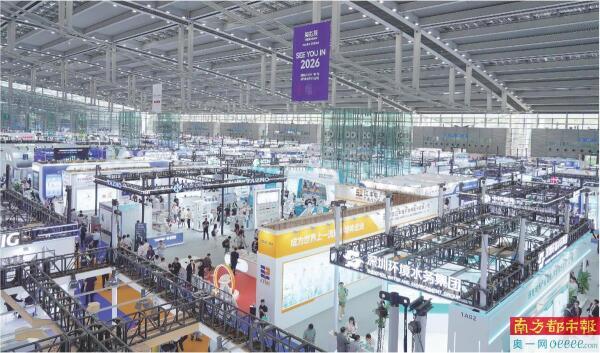
Core Insights - The 2025 Bay Area Semiconductor Industry Ecosystem Expo showcased a differentiated layout focusing on "core areas + specialty tracks," achieving full coverage of key links in the industry chain [2][3] - The event attracted over 112,300 visitors and featured approximately 2,500 new product launches from participating companies [2] - Major companies such as SMIC, Samsung, and BYD participated, facilitating precise connections between professional buyers and exhibitors [3][4] Event Highlights - The expo transformed from a technology showcase to an industry trend "weather vane," emphasizing "technological breakthroughs" [3] - Notable product launches included advanced semiconductor equipment and solutions from companies like Hangzhou Zhongxin and Alibaba DAMO Academy [3] - The event successfully connected domestic and international industry resources, fostering a collaborative ecosystem [4] Market Impact - The expo demonstrated significant market engagement, with over 5,000 professional buyers from leading companies attending [4] - The 2026 expo has already seen high demand, with over 600 companies reserving exhibition space, achieving 95% pre-sale occupancy in three core pavilions [4][5] - The event highlighted the growing importance of semiconductor and integrated circuit industries in the region, with a focus on creating a robust ecosystem [5] Regional Developments - The establishment of the Shenzhen Longgang District Semiconductor and Integrated Circuit Ecosystem Promotion Center aims to enhance the region's technological capabilities [5][6] - Longgang's semiconductor industry is projected to reach a value of 113.1 billion yuan in 2024, accounting for 40% of Shenzhen's total output [5] - The region is also focusing on operating systems, with initiatives to create an "industrial software and cloud innovation center" [6] Local Industry Contributions - The Bao'an District showcased 32 enterprises at the expo, representing a comprehensive matrix covering critical semiconductor industry segments [7] - Companies like Hengyun Chang demonstrated advancements in semiconductor equipment, showcasing products capable of supporting advanced manufacturing processes [7] - The Shenzhen Advanced Electronic Materials International Innovation Research Institute is addressing the challenge of converting research outcomes into industry applications [8][9]


AI浪潮驱动存储涨价新周期,国产替代势如破竹
Tianfeng Securities· 2025-10-19 14:46
Investment Rating - Industry Rating: Outperform the Market (maintained rating) [2] Core Viewpoints - The semiconductor industry is experiencing a structural shift driven by AI technology, leading to a significant increase in demand for large-capacity storage in data centers, as well as in smart devices like smartphones and smart cars [4][8] - NAND and DRAM prices are on the rise, with a forecasted increase in prices for various storage products in the fourth quarter, driven by supply constraints and rising production costs [9][10] - Domestic storage manufacturers are expected to benefit from a combination of price recovery and domestic substitution, leading to a robust recovery in demand and production in the fourth quarter [11][12] Summary by Sections Industry Overview - The semiconductor industry is transitioning from a cyclical to a structural growth phase, primarily due to the AI-driven demand for storage solutions [4][8] - The current "super cycle" in storage is characterized by a significant increase in data storage needs, influenced by the proliferation of AI technologies [8] Price Trends - Flash wafer prices have surged, with a 15% increase for 1Tb Flash Wafer and over 20% for 512Gb Flash Wafer in just a month and a half [9] - The prices of server memory modules have also seen substantial increases, with DDR4 RDIMM 16GB 3200 rising by 66.67% to $150.00 [9][10] Domestic Market Dynamics - International giants are shifting focus to high-end products, creating opportunities for domestic storage manufacturers to gain market share [5][11] - Companies like Yangtze Memory Technologies are expanding production capacity significantly, aiming for a 15% share of the global NAND market by 2028 [6][12] Technological Innovations - The "storage as computation" paradigm is emerging, which allows for the migration of AI inference data from expensive DRAM to more cost-effective SSDs, enhancing performance and reducing costs [13] - This innovation is expected to drive SSD demand growth beyond traditional trends [13] Investment Opportunities - Recommended companies to watch include storage module and controller manufacturers like Jiangbolong and Demingli, as well as storage chip companies like Zhaoyi Innovation and Puran [14]
不一样的展会,不一样的精彩!2025湾芯展圆满收官!
半导体行业观察· 2025-10-19 02:27
Core Insights - The 2025 Bay Area Semiconductor Industry Expo successfully concluded in Shenzhen, attracting over 600 exhibitors and more than 112,300 attendees over three days, showcasing approximately 2,500 new products [1][4][17] - The event emphasized a dual-track approach focusing on core and specialty sectors, providing a comprehensive view of the entire semiconductor industry chain [2][3] Exhibition Highlights - The expo featured major global players from over 20 countries, including top companies like AMAT, Lam Research, and KLA, alongside prominent domestic firms such as North Huachuang and Shanghai Microelectronics [3] - A differentiated layout was implemented, covering key areas such as chip design, wafer manufacturing, and advanced packaging, while also highlighting emerging sectors like AI chips and RISC-V ecosystems [3][4] New Product Launches - The event served as a platform for significant product launches, with Shenzhen Wanliyan Technology unveiling the world's first 90GHz real-time oscilloscope, marking a 500% performance improvement over previous domestic models [5][6] - Other notable launches included EDA design software by Qiyunfang Technology and various semiconductor components from companies like Hangzhou Zhongxin and Ningxia Dunyuan [6] Industry Forums and Discussions - The expo hosted over 30 specialized forums, including the 2025 Chip Conference, featuring discussions led by industry experts on topics such as core technology breakthroughs and ecosystem collaboration [9][12] - Forums addressed the entire semiconductor value chain, linking technology supply with market demand, and included sessions on advanced lithography and AI chip development [12] Market Engagement and Collaboration - The event facilitated significant market interactions, with around 5,000 professional buyers from leading companies like Samsung and BYD participating, enhancing connections between domestic and international resources [14] - The establishment of the Shenzhen Advanced Manufacturing Supply Chain Innovation Service Platform and a semiconductor fund aimed to inject momentum into the Bay Area's semiconductor industry [12][14] Awards and Recognition - The 2025 "Bay Chip Award" recognized over 100 companies based on votes from 3.7828 million professionals, highlighting excellence in various categories including technology innovation and customer service [15] Future Outlook - The success of the expo has led to high demand for the 2026 event, with over 600 companies already reserving exhibition space, indicating a growing interest in the semiconductor sector [17] - The Bay Area semiconductor industry is positioned for rapid development, driven by innovation and collaboration, contributing to global semiconductor advancements [17]