洋河股份

Search documents
90%的名酒在跌价,2026年酒企怎么活?
首席商业评论· 2026-01-14 04:34
Core Viewpoint - The article discusses the significant changes in the Chinese liquor industry, particularly the white wine sector, highlighting a shift from a focus on brand prestige and social status to a more value-driven approach based on product quality and consumer experience [3][5][21]. Group 1: Industry Overview - As of early 2026, the white wine industry is undergoing a deep adjustment, with a notable decline in both revenue and profit across major companies, marking the first time in a decade that the industry has experienced consecutive quarters of double-digit declines [14][21]. - The average inventory turnover days for 20 listed liquor companies reached 1,424 days by the end of Q3 2025, indicating that some inventory may take nearly four years to deplete [10]. - The overall revenue for 20 A-share listed liquor companies in the first three quarters of 2025 was 3,177.79 billion yuan, a year-on-year decrease of 5.90% [14]. Group 2: Market Dynamics - The price system in the white wine market has collapsed, with the market price of premium brands like Moutai dropping below 1,600 yuan, a decline of over 15% for other high-end products [12][14]. - Over 99% of famous liquor prices have fallen, with average retail prices decreasing by more than 30% [12]. - The industry is witnessing a "devaluation of value," where consumers are no longer willing to pay for brands that do not deliver tangible quality or experience [16][18]. Group 3: Future Trends - The future of the liquor industry will be characterized by a "polarization" where companies must either provide "extreme experiences" or "precise value" to survive [8][21]. - High-end products will focus on exceptional craftsmanship and unique experiences, while lower-end products will cater to specific daily needs with high cost-effectiveness [25][29]. - The younger demographic is increasingly important, with 95 post-90s consumers making up only 18% of the white wine market, prompting a need for products that resonate with their lifestyle [25]. Group 4: Strategic Shifts - Companies are exploring new distribution models, such as direct-to-consumer sales, and are innovating product lines to meet changing consumer preferences [18][20]. - Regulatory changes are pushing for clearer labeling of production processes and ingredients, moving away from vague marketing strategies [18]. - The industry is transitioning from a focus on speculative investment to a more grounded approach centered on genuine consumer value and experience [21][31].




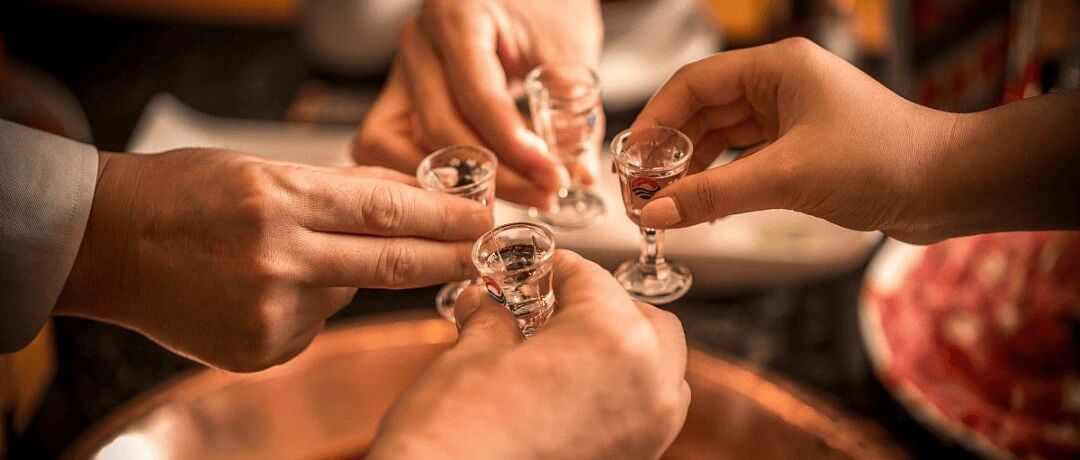
酒价内参1月14日价格发布 洋河梦之蓝M6+下跌4元
Xin Lang Cai Jing· 2026-01-14 01:32
Core Viewpoint - The Chinese liquor market is experiencing a price adjustment, with the average retail price of the top ten liquor products declining, indicating cautious market sentiment [1]. Group 1: Market Price Trends - On January 14, the average retail price of the top ten liquor products decreased by 44 yuan, bringing the total price to 8925 yuan [1]. - Eight out of the ten products saw price declines, with Feitian Moutai leading the drop at 9 yuan per bottle [1]. - Other notable declines include Gujing Gonggu 20 and Qinghua Lang, both down 8 yuan per bottle, while Guojiao 1573 and Yanghe Dream Blue M6+ fell by 4 yuan each [1]. Group 2: Market Dynamics - The market is characterized by a general downward trend, with a narrowing trading volume and a clear differentiation among products [1]. - Only Wuliangye Pu 58th generation saw a slight increase of 1 yuan per bottle, while Qinghua Fen 20 remained unchanged [1]. Group 3: Pricing Mechanism Changes - On January 13, Kweichow Moutai announced a new market-oriented pricing strategy, moving away from fixed factory prices to a dynamic pricing mechanism based on market conditions [3]. - This new pricing system aims to enhance the company's control over retail prices and stabilize the market, allowing for flexible pricing based on product, channel, and operational model differences [3]. - The company is piloting a consignment model for new products, allowing consumers to order online and pick up in-store, aiming for a win-win situation between manufacturers and channels [3].



酒价内参1月14日价格发布 青花郎下跌8元
Xin Lang Cai Jing· 2026-01-14 01:20
Core Insights - The article highlights a recent decline in the retail prices of major Chinese liquor brands, indicating a cautious market sentiment and a general downward trend in prices [1][6]. Price Trends - The average retail price of the top ten Chinese liquor products decreased to 8,925 yuan on January 14, down by 44 yuan from the previous day [1][6]. - Eight out of the ten major products experienced price drops, with Feitian Moutai leading the decline at 9 yuan per bottle [1][6]. - Other notable price decreases include Gujing Gong and Qinghua Lang, both down by 8 yuan per bottle, while Guojiao 1573 and Yanghe Dream Blue M6+ fell by 4 yuan per bottle [1][6]. Market Dynamics - The market is currently characterized by a broad decline in prices, with a notable contraction in trading volume [1][6]. - Only Wuliangye's Pu Wuhai Dai saw a slight increase of 1 yuan per bottle, while Qinghua Fen 20 remained unchanged [1][6]. Data Collection Methodology - The "Wine Price Reference" collects data from approximately 200 sampling points across various regions, including designated distributors, social distributors, e-commerce platforms, and retail outlets [2][7]. - The data aims to provide an objective and traceable representation of the market prices for well-known liquor brands [2][7]. Strategic Changes in Pricing - On January 13, 2026, Kweichow Moutai announced a new market-oriented operational plan, which includes a dynamic pricing mechanism that deviates from the traditional fixed pricing model [3][8]. - This new pricing strategy allows for flexible pricing based on market conditions, enhancing the company's ability to control retail prices and stabilize the market [3][8]. - The company is testing a consignment model where consumers can order online and pick up in-store, aiming for a win-win situation between manufacturers and distributors [3][8].

酒价内参1月14日价格发布 古井贡古20下跌8元
Xin Lang Cai Jing· 2026-01-14 01:20
Core Insights - The article highlights a general price adjustment in the Chinese liquor market, particularly for the top ten liquor products, indicating a cautious market sentiment with a total price drop of 44 yuan to 8925 yuan for a bundled sale of these products [1][6]. Price Trends - The average retail price of the top ten liquor products has decreased, with eight out of ten products experiencing price drops, reflecting a bearish market trend [1][6]. - Notable price declines include: - Feitian Moutai leading the drop with a decrease of 9 yuan per bottle - Gujinggong 20 and Qinghualang both down by 8 yuan per bottle - Guojiao 1573 and Yanghe Dream Blue M6+ each down by 4 yuan per bottle - Other products like Jingpin Moutai and Shuijing Jian'nanchun saw smaller declines of 3 yuan and 2 yuan respectively [1][6]. Market Dynamics - The market is characterized by a broad decline in prices, with only Wuliangye Pu 58th generation showing a slight increase of 1 yuan per bottle, while Qinghualang remained stable [1][6]. - The introduction of new pricing mechanisms by Kweichow Moutai aims to establish a market-oriented pricing system, moving away from fixed factory prices to a dynamic pricing model that adjusts based on market conditions [3][8]. Data Collection Methodology - The "Liquor Price Reference" collects data from approximately 200 sampling points across various regions, including designated distributors and retail outlets, to provide accurate and traceable retail price information [2][7]. - The pricing data is weighted based on actual transaction volumes to reflect true market conditions, particularly for products like Feitian Moutai and Jingpin Moutai [2][7].
专项整治假冒伪劣白酒
Xin Lang Cai Jing· 2026-01-13 21:58
Core Viewpoint - The article highlights a recent enforcement action in Liancheng County, Fujian Province, aimed at combating counterfeit and inferior quality liquor, particularly focusing on well-known brands like Moutai and Xijiu [1] Group 1: Enforcement Actions - The Liancheng Market Supervision Administration, in collaboration with several liquor companies, conducted a special enforcement action against counterfeit liquor, inspecting over 30 businesses [1] - A total of 284 bottles of infringing liquor were seized during the operation, and involved stores have been officially investigated [1] Group 2: Collaboration with Industry - The enforcement action involved a partnership between the market supervision authority and professional anti-counterfeiting personnel from major liquor brands such as Guizhou Moutai, Xijiu, and Yanghe [1] - The focus of the inspections included well-known liquor stores, specialty liquor shops, and large supermarkets [1] Group 3: Methodology and Efficiency - The enforcement utilized a combined approach of administrative law enforcement and professional identification, enhancing the precision and efficiency of the inspections [1] - During the inspections, officials verified the business qualifications and purchase invoices of operators, while brand representatives conducted on-site assessments of product packaging and anti-counterfeiting features [1]
洋河股份三季度营收规模比古井贡酒高近20亿 双方利润却相差无几?
Xin Lang Cai Jing· 2026-01-13 14:35
Core Viewpoint - The financial reports for the third quarter of 2025 from leading liquor companies Yanghe Co. and Gujing Gongjiu show significant declines in revenue and profit, highlighting the competitive challenges in the industry [1]. Group 1: Financial Performance - Yanghe Co. reported a revenue of 18.09 billion yuan for the first three quarters, a decrease of 34.26% year-on-year, while Gujing Gongjiu's revenue was 16.43 billion yuan, down 13.87% [3][6]. - Yanghe Co.'s net profit attributable to shareholders was 3.98 billion yuan, a decline of 53.66%, whereas Gujing Gongjiu's net profit was 3.96 billion yuan, down 16.57% [3][6]. - In the third quarter alone, Yanghe Co. experienced a revenue drop of 29.01% to 3.29 billion yuan and a net profit loss of 158.38%, resulting in a loss of 369 million yuan [4][6]. Group 2: Profitability and Market Position - Yanghe Co.'s gross margin decreased by 2.71 percentage points to 71.10%, while Gujing Gongjiu's gross margin slightly increased to 79.87%, indicating stronger profitability [5]. - In the first half of the year, Yanghe Co. had a domestic revenue of 7.26 billion yuan, down 25.61%, with a narrowing revenue gap of about 1 billion yuan with its competitor Jianshe Yuan [6]. - Gujing Gongjiu maintained a strong market position in Anhui province, achieving a revenue of 12.30 billion yuan in the first half, a year-on-year increase of 3.60%, securing approximately 30% market share [7].
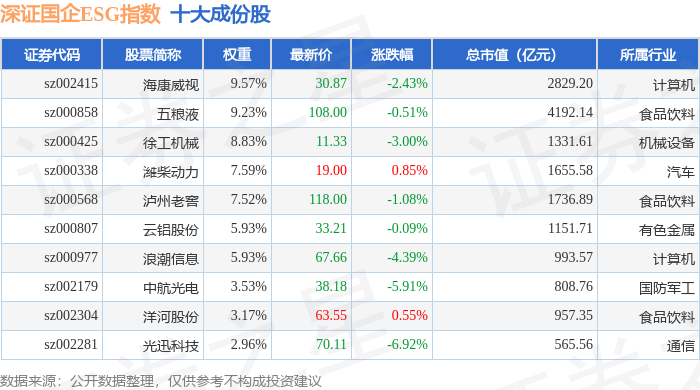
1月13日深证国企ESG(970055)指数跌1.7%,成份股中核科技(000777)领跌
Sou Hu Cai Jing· 2026-01-13 10:53
Group 1 - The Shenzhen State-owned Enterprise ESG Index (970055) closed at 1462.82 points, down 1.7%, with a trading volume of 56.526 billion yuan and a turnover rate of 2.08% [1] - Among the index constituents, 9 stocks rose while 40 stocks fell, with Dengkang Dental leading the gainers at a 6.17% increase and China Nuclear Technology leading the decliners at a 9.27% decrease [1] - The top ten constituents of the Shenzhen State-owned Enterprise ESG Index include Hikvision, Wuliangye, and Xugong Machinery, with respective weights of 9.57%, 9.23%, and 8.83% [1] Group 2 - The net outflow of main funds from the index constituents totaled 2.961 billion yuan, while retail investors saw a net inflow of 2.199 billion yuan [1] - Detailed fund flow data indicates that Yunnan Energy Investment and Yanghe Brewery experienced net inflows from retail investors, while major funds showed outflows for several stocks including Yun Aluminum and Wuliangye [2] - The fund flow analysis highlights the varying investor sentiment, with significant retail interest in certain stocks despite overall net outflows from institutional investors [2]



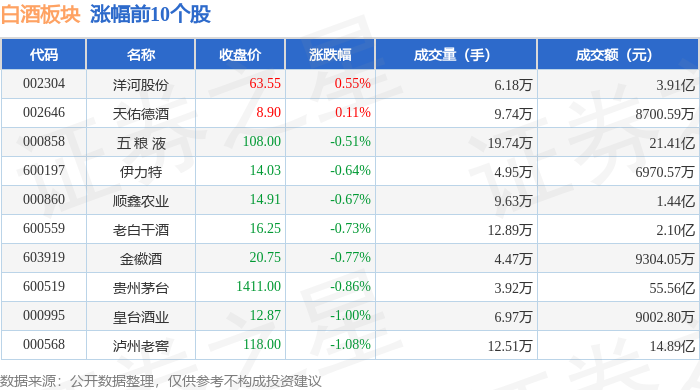
白酒板块1月13日跌0.9%,*ST岩石领跌,主力资金净流出8.17亿元
Zheng Xing Xing Ye Ri Bao· 2026-01-13 09:00
Group 1 - The liquor sector experienced a decline of 0.9% on January 13, with *ST Rock leading the drop [1] - The Shanghai Composite Index closed at 4138.76, down 0.64%, while the Shenzhen Component Index closed at 14169.4, down 1.37% [1] - Major liquor stocks showed mixed performance, with Wuliangye down 0.51% to 108.00 and Moutai down 0.86% to 1411.00 [1] Group 2 - The liquor sector saw a net outflow of 8.17 billion yuan from institutional investors, while retail investors contributed a net inflow of 3.19 billion yuan [2] - The top stocks by net inflow included Wuliangye with a net inflow of 46.20 million yuan from institutional investors, while *ST Rock had a net outflow of 38.73 million yuan [3] - Retail investors showed a preference for stocks like Moutai and Gujing Gongjiu, with net inflows of 15.08 million yuan and 15.08 million yuan respectively [3]

茅台的市场化破局之路
新财富· 2026-01-13 08:07
Core Viewpoint - The article discusses a significant shift in the marketing strategy of Kweichow Moutai, moving from a traditional dealer-centric model to a more direct company-led approach in market engagement and pricing control [5]. Group 1: Market Actions and Strategy Changes - Before December, Kweichow Moutai's actions were mainly conventional adjustments to adapt to a challenging consumption environment and high market supply, focusing on maintaining stability within the existing distribution and marketing framework [5]. - After December, the company initiated a major transformation in its marketing system due to ineffective previous adjustments, with a new strategy emphasizing direct involvement in market operations and shifting the role of distributors to service-oriented support [5]. Group 2: iMoutai App Developments - The iMoutai app will feature various series of Kweichow Moutai products, including classic, premium, and cultural series, set to launch in 2026 [6]. - Starting January 1, 2026, the purchase limit for the 500ml Kweichow Moutai will be 12 bottles per person per day, later adjusted to 6 bottles [7]. - The app will also introduce a new Zodiac Moutai edition with innovative packaging and pricing, alongside the regular offerings [7]. Group 3: Pricing and Supply Dynamics - The pricing strategy for Moutai products will follow market trends, with a focus on maintaining price stability and addressing supply issues through the iMoutai platform [8][9]. - The company plans to maintain a flexible supply strategy, with an estimated annual supply of 20,000 to 30,000 tons through the iMoutai app, indicating a responsive approach to market demand [12]. Group 4: Future Product Planning - Over the next five years, Kweichow Moutai aims to focus on developing premium products as a key growth driver, while the traditional Moutai will be positioned to attract a broader consumer base through price adjustments [14]. - The company will not completely eliminate distributors but will redefine their roles to enhance customer service and support [13].

酒价内参1月13日价格发布,国窖1573下跌3元
Xin Lang Cai Jing· 2026-01-13 01:33
Core Insights - The Chinese liquor market has seen a significant rebound in retail prices for the top ten products as of January 13, with an overall increase in prices indicating a recovery in market sentiment [1] Price Trends - The total retail price for a package of the top ten liquor products is now 8969 yuan, reflecting an increase of 44 yuan from the previous day [1] - Key products showing price increases include: - Qinghua Lang: up 14 yuan per bottle - Xijiu Junpin: up 11 yuan per bottle - Wuliangye Pu Wu Eight Generation: up 7 yuan per bottle - Gujing Gonggu 20: up 5 yuan per bottle - Premium Moutai: up 4 yuan per bottle - Feitian Moutai and Qinghua Fen 20: up 3 yuan per bottle - Shuijing Jian Nan Chun: up 1 yuan per bottle [1] Market Dynamics - The market is experiencing a broad upward trend, with most core products seeing price increases, indicating a restoration of market confidence [1] - Conversely, some products have seen price declines, such as: - Guojiao 1573: down 3 yuan per bottle - Yanghe Dream Blue M6+: down 1 yuan per bottle [1] Data Collection Methodology - The price data is sourced from approximately 200 collection points across various regions, including designated distributors, social distributors, e-commerce platforms, and retail outlets, ensuring a comprehensive and objective representation of the market [2] Price Adjustments by Moutai - Moutai has reduced the factory contract prices for several products, with significant reductions: - Chen Nian Guizhou Moutai (15): down from 5399 yuan to 3409 yuan (a decrease of 1990 yuan) - Premium Moutai: down from 2969 yuan to 1859 yuan (a decrease of 1110 yuan) - Moutai 1935: down from 798 yuan to 668 yuan (a decrease of 130 yuan) - Following these adjustments, average retail prices have also decreased by around 200 yuan, leading to increased consumer purchases by at least 15% [3]