零跑汽车

Search documents
零跑汽车朱江明:下一个十年, 要做世界级企业而非新势力
2 1 Shi Ji Jing Ji Bao Dao· 2026-01-31 04:33
21世纪经济报道记者 易思琳 2025年,车市几家欢喜几家愁。这一年,比亚迪依然一家独大,但销量、毛利都出现了下滑;理想成为 新势力里少有的销量下滑的车企;蔚来从"蔚一万"变成了"蔚四万",小鹏单月销量有上涨,但依然困在 向高的难题里。 在2025年各家车企交上的成绩单中,零跑汽车是新势力中最亮眼的。2025年,零跑蝉联新势力车企月销 冠军,全年共交付了接近60万辆新车,实现了翻倍增长。 好成绩让零跑在2026年初给出了年销破百万的目标指引,比其他竞争对手的目标都要更高一个身位。综 合各方信息,2026年理想、小米的交付目标是55万辆,小鹏是55万-60万辆,蔚来给出的销量目标是45 万辆上下。 站在2025年成立十周年的时间节点上,零跑汽车CEO朱江明不再以新势力自居。他说,"新"和"老"都是 以前的划分,新能源汽车经过十年的发展,已经经历了足够多的磨练,大家在这十年的发展里最后呈现 的产品、积累的经验,已经不相上下。"到现在,我们既要站在全国也要放眼全球去看自己的公司能在 销量排名上、经济效益上去看待自己,只有这样,才能获得更好的成长。" 向世界级车企看齐的零跑汽车,将野心藏在了下一个十年里。 目前,零跑 ...



【乘用车1月月报】内需静待改善,出口韧性较强
东吴汽车黄细里团队· 2026-01-30 14:43
Group 1: Electric Vehicle Market Insights - In December 2025, the retail penetration rate of new energy vehicles (NEVs) reached 58.7%, with a year-on-year increase of 10.9% but a month-on-month decrease of 2.5 percentage points [2][6][14] - The retail sales of passenger vehicles in December 2025 were 2.27 million units, showing a year-on-year decline of 16% and a month-on-month increase of 14.7% [11][14] - BYD maintained a market share of 25% in the NEV sector, while Geely's market share decreased to 11% [22][6] Group 2: Global Market Performance - In December 2025, Southeast Asia's NEV penetration rate exceeded expectations, with a significant contribution from VinFast, leading to a month-on-month increase [3][35] - Chinese automakers exported 641,000 passenger vehicles in December 2025, with 245,000 being NEVs, resulting in a NEV penetration rate of 38.2% [3][7] - The market share of Chinese brands in Southeast Asia reached 14.7%, with a month-on-month increase of 0.8 percentage points [51][62] Group 3: Policy and Market Outlook - The old-for-new vehicle replacement policy is set to be implemented in January 2026, which is expected to stimulate demand in the passenger vehicle market [2][6] - The industry anticipates a recovery in passenger vehicle demand in Q1 2026, driven by the new policy and a shift in consumer sentiment [4][6] - The focus for domestic investments is on companies less sensitive to policy fluctuations, such as JAC Motors, and those expected to see growth in the high-end electric vehicle segment, including Geely and Great Wall Motors [4][6]





保时捷在华战略调整,一汽奥迪全新Q5L上市|一周车评
Di Yi Cai Jing· 2026-01-30 14:32
Group 1: Porsche's Strategy in China - Porsche is adjusting its strategy in China by maintaining a "three-pronged" approach with fuel, hybrid, and pure electric vehicles while optimizing the pace of market demand and launching more exclusive models [2] - The company plans to reduce its dealer network to approximately 80 by 2026 and is implementing a new retail model to lower inventory and short-term sales pressure [2] - Porsche's CEO noted a significant change in consumer demand in China, leading to a 10% global sales decline and a 26% drop in deliveries in China by 2025, with local brands becoming more competitive [3] Group 2: New Leadership at BAIC Group - Chang Rui has been appointed as the General Manager of BAIC Group, bringing over 20 years of experience within the company [4] - BAIC Group is undergoing a critical transformation phase, with challenges in its self-owned passenger vehicle business and losses in its new energy sector [4] Group 3: Leap Motor's ESG Rating - Leap Motor has received an "AA" rating from MSCI for three consecutive years, reflecting its strong commitment to environmental, social, and governance (ESG) practices [5] - This rating is expected to help the company reduce international financing costs and enhance its investment attractiveness [5] Group 4: New Product Launches - FAW Audi launched the new Q5L, priced between 309,800 to 384,800 yuan, featuring Huawei's advanced driving technology and a 15% reduction in fuel consumption compared to the previous generation [8] - Beijing Off-road's 2026 BJ40 Explorer was launched with gasoline and diesel options, priced at 149,900 and 159,900 yuan respectively, featuring a 2.0T engine and advanced onboard systems [9]
“快消式创新”背后的浮躁与焦虑
Zhong Guo Qi Che Bao Wang· 2026-01-30 12:53
Core Viewpoint - The electric vehicle (EV) industry is experiencing a phase of "pseudo-innovation," where companies focus on quirky features rather than core technological advancements, reflecting a collective anxiety and impatience within the sector [2][4][11]. Group 1: Market Trends - The penetration rate of electric vehicles has surpassed 50%, yet the market is trapped in a cycle of superficial innovation, with companies resorting to gimmicky features to attract attention [2][4]. - By 2025, the EV market is projected to flourish, but product homogenization is becoming evident, leading to a formulaic approach to new product development [4][9]. Group 2: Product Development Issues - As core technology metrics converge, differentiation among manufacturers is shifting to peripheral features, similar to trends seen in the smartphone industry [4][6]. - The proliferation of "pseudo-innovation" products, such as the "shower system" in the Zhiji LS9 and the "car toilet" in the Jishi 01, highlights the focus on visual appeal over practical utility [4][9]. Group 3: Resource Allocation and Reliability - The focus on superficial features is distorting the allocation of R&D resources, leading to increased manufacturing costs and potential impacts on vehicle performance [6][9]. - The "arms race" in feature development is resulting in decreased product reliability, with a reported increase in vehicle faults and issues related to smart features [9][12]. Group 4: Industry Response and Future Directions - The industry is beginning to recognize the need for a return to fundamental values, with some companies exploring differentiated competition through technological advancements [11][12]. - Consumer preferences are shifting back to essential attributes such as battery safety and driving range, indicating a potential market correction away from flashy features [11][12].

4.9万辆电车名额放出,加拿大消费者在热议什么? | 电厂
Xin Lang Cai Jing· 2026-01-30 11:41
Core Viewpoint - The Canadian government has released a quota allowing 49,000 Chinese electric vehicles (EVs) to enter the market at a reduced tariff, which will gradually increase to 70,000 over five years, amidst a heated public debate on the implications for consumers and the automotive industry [1]. Group 1: Government Policy and Market Impact - Starting in 2026, Canada will allow up to 49,000 Chinese EVs annually, with a tariff of 6.1%, increasing to 70,000 over five years [1]. - By 2030, at least 50% of the imported Chinese EVs must be priced below CAD 35,000 (approximately RMB 177,000) [1]. - The 49,000 quota is expected to represent about 44.5% of the projected 2025 Canadian EV sales, which is similar to pre-tariff sales levels [13]. Group 2: Consumer Sentiment and Preferences - Canadian consumers have expressed a desire for specific Chinese models, with BYD's Atto1 and Seal being highly mentioned, alongside the Shark pickup, which is seen as a strong contender due to its hybrid structure [3][6]. - There is a general positive sentiment among Canadian consumers towards the introduction of Chinese EVs, as they believe it will not significantly disrupt the local automotive ecosystem [13]. - Concerns about the availability of charging infrastructure and after-sales service are prevalent among consumers, with many highlighting the inadequacy of current public charging facilities [16][17]. Group 3: Market Viability of Chinese Brands - Tesla's Shanghai factory has been a significant source of EVs for Canada, with 44,400 units shipped in 2023, indicating a strong existing market presence for Chinese-manufactured vehicles [9][10]. - Geely is viewed as a likely candidate for market entry due to its established presence in Canada through brands like Volvo and Polestar [10]. - The Lotus Eletre, a luxury electric SUV, has successfully passed North American certification and is expected to see a significant price reduction due to the new tariff policy, potentially boosting its sales in Canada [11]. Group 4: Challenges for Chinese EVs - The lack of a robust sales and service network for Chinese brands in Canada poses a significant barrier to market entry, as compliance with North American safety standards is still a challenge [19]. - Concerns about the supply chain for parts and the time required for repairs have been raised, particularly in light of experiences from other markets like Mexico and Australia [17]. - The current infrastructure for charging EVs in Canada is insufficient, with a need for 40,000 new chargers annually to meet federal sales targets, which could hinder the adoption of new EV models [16].

2025年中国汽车ESG十大事件出炉!
Guan Cha Zhe Wang· 2026-01-30 10:48
2025年,中国汽车产销量超过3400万辆,连续17年居全球第一;新能源汽车以超过1600万辆的产销量再创新高, 在国内乘用车市场的渗透率接近60%;汽车出口总量达710万辆,同比增长21%,继续保持全球汽车出口第一大国 的地位。 过去一年,汽车行业的价格战、60天账期、智驾安全等议题引发全社会广泛关注。国家对汽车行业过度内卷、网 络乱象等现象的治理力度空前,一系列与ESG相关的措施先后出台,推动着汽车行业的生态发展不断改善。 尤其可喜的是,汽车企业的ESG实践不断深入,从被动合规转向主动整合,在做好ESG信息披露的同时,ESG与业 务运营的融合不断深化,并延伸到价值链合作伙伴和产品全生命周期。未来,ESG更加注重实效的趋势将会持 续,成为汽车行业高质量发展的重要抓手。 新年伊始,华汽研究院与观察者网合作,共同发起"2025年中国汽车行业ESG十大事件"评选活动。通过网络投票, 结果如下: 四、中国汽车出口继续保持强势,汽车出海需重视ESG合规挑战 一、中国汽车上市公司ESG信息披露率逐年提升 近年来,中国证监会、沪深北三大交易所等监管机构相继发布了一系列关于ESG信息披露的指引和要求,要求汽 车行业上市公司 ...
研究机构数据:去年12月,欧洲每卖出十辆汽车中就有一辆是中国品牌
Guan Cha Zhe Wang· 2026-01-30 10:21
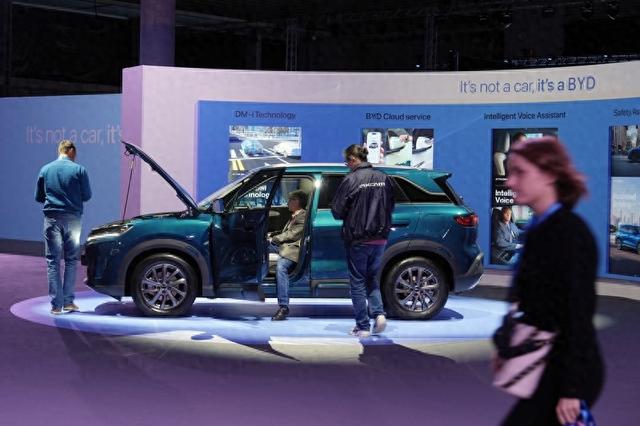
【文/观察者网 熊超然】"欧洲每卖出十辆汽车中就有一辆是中国品牌。" 彭博社1月30日报道称,上个月,中国汽车制造商在欧洲销售的乘用车中占据了近十分之一的份额,创 下历史新高。这一快速增长势头,得益于混合动力汽车和纯电动汽车的强劲销售。 根据研究机构Dataforce的数据,去年12月,中国品牌在欧洲汽车市场的份额达到9.5%,首次在季度销 量上超越了包括起亚在内的韩国竞争对手。随着贸易壁垒的降低和中国出口力度的加大,比亚迪及其中 国同行有望进一步扩大在欧洲的市场份额。 电动汽车是欧洲市场增长的主要动力,而中国车企在电动汽车领域的进展最为显著。凭借在电池技术方 面的竞争优势,从西班牙和希腊,到意大利和英国,中国厂商赢得了电动汽车和混合动力汽车消费者的 青睐。 "我们对中国汽车在南欧的快速普及感到震惊,"Dataforce分析师朱利安·利辛格(Julian Litzinger)表 示:"我们知道这些国家的消费者在品牌选择上更加灵活,但电动汽车的这种增长速度是之前无法预见 的。" 2025年11月19日,西班牙巴塞罗那,比亚迪举行ATTO 2 DM-i和Comfort Dynamic欧洲发布会。 IC Photo ...
小米汽车将出海!雷军:计划4年内英国开150家店,卖手机、汽车
Sou Hu Cai Jing· 2026-01-30 08:48
Group 1 - Xiaomi has successfully entered the overseas market, generating approximately 1 billion RMB in revenue from the UK last year and plans to open 150 stores in the UK within four years [1][3] - The company aims to introduce its entire product line, including smartphones, wearable devices, home appliances, and cars, to the UK market, with the Xiaomi car expected to launch there [3][5] - Xiaomi's automotive division plans to officially enter the European market in 2027, leveraging its existing store presence and user base in Europe, which provides a competitive advantage over other domestic car manufacturers [5][8] Group 2 - The trend of domestic car manufacturers expanding overseas is becoming more prevalent as the domestic market becomes saturated, with companies like BYD, Chery, and Geely already establishing a presence abroad [7] - Xiaomi has set an ambitious goal to become one of the top five global automotive manufacturers within 15-20 years, making international expansion a necessary step for the company [8]


零跑汽车(09863) - 根据一般授权认购新内资股之补充公告
2026-01-30 08:30
香港交易及結算所有限公司及香港聯合交易所有限公司對本公告的內容概不負責,對其準確性 或完整性亦不發表任何聲明,並明確表示,概不對因本公告全部或任何部分內容而產生或因倚 賴該等內容而引致的任何損失承擔任何責任。 ZHEJIANG LEAPMOTOR TECHNOLOGY CO., LTD. 浙江零跑科技股份有限公司 除該公告所披露的資料外,董事會謹此提供以下有關內資股認購事項的補充資料。 金義高新是聚焦城市綜合運營與新興產業投資的綜合性產業投資公司,由金華市 人民政府國有資產監督管理委員會間接全資擁有,因此其最終實益擁有人為金華 市人民政府國有資產監督管理委員會。據董事作出一切合理查詢後所深知、全悉 及確信,除上文所披露者外,金義高新以及其最終實益擁有人均為獨立於本公司 及其關連人士(定義見上市規則)的第三方。 承董事會命 浙江零跑科技股份有限公司 創始人、董事長兼首席執行官 朱江明先生 香港,2026年1月30日 於本公告日期,董事會包括執行董事朱江明先生、曹力先生及周洪濤先生;及非 執行董事Grégoire Olivier先生、Davide Mele先生及金宇峰先生;以及獨立非執行 董事付于武先生、萬家樂女 ...
【深度分析】2025年12月份全国新能源市场深度分析报告
乘联分会· 2026-01-30 08:28
Overall Market - The total market for passenger vehicles in 2025 is projected to have a production of 29.67 million units, with a retail sales figure of 23.74 million units, reflecting a year-on-year growth of 3.8% [9][10]. - The market share of new energy vehicles (NEV) is expected to reach 53.9% in 2025, up from 47.6% in 2024, indicating a significant increase in consumer adoption [10][12]. Submarket Analysis - The breakdown of the total market shows that NEVs will account for 12.81 million units in retail sales, representing a 17.6% increase compared to 2024 [10][12]. - The retail sales of fuel vehicles are projected to decline by 14.0% year-on-year, highlighting a shift in consumer preference towards NEVs [9][10]. Export Market - The export of NEVs is expected to grow significantly, with a total of 5.74 million units exported in 2025, marking a 19.7% increase from the previous year [16][17]. - The penetration rate of NEVs in the export market is projected to reach 42.2% in 2025, up from 27.1% in 2024, indicating a strong demand for Chinese NEVs abroad [20][22]. Manufacturer Performance - BYD is leading the NEV market with a wholesale volume of 414,784 units, although this represents a decline of 18.6% year-on-year [25]. - Tesla China ranks third in wholesale sales with 97,171 units, showing a modest growth of 3.6% [25]. - The top ten manufacturers collectively account for 71.5% of the NEV market share, indicating a high concentration in the industry [25][26]. Vehicle Type Segmentation - In 2025, the retail sales of sedans, MPVs, and SUVs are projected to be 12.26 million, 1.30 million, and 10.18 million units respectively, with NEVs showing a positive growth trend across all categories [30][31]. - The retail sales of fuel vehicles in the sedan category are expected to decline by 30.3%, while NEVs in the same category are projected to grow by 2.6% [30][31].