华润啤酒

Search documents
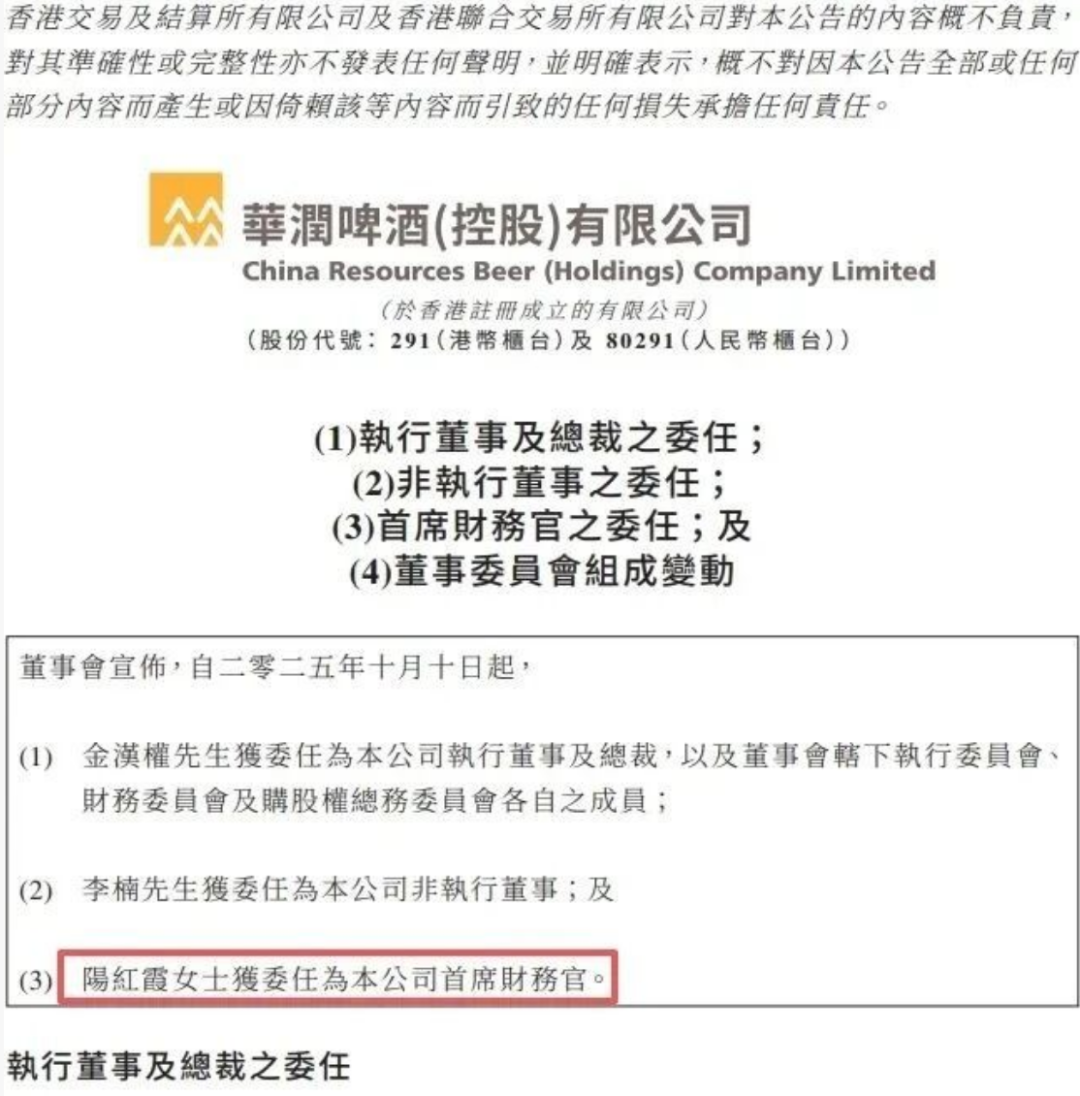
华润啤酒(00291) - 截至2025年10月31日止月份的月报表
2025-11-03 09:09
股份發行人及根據《上市規則》第十九B章上市的香港預託證券發行人的證券變動月報表 截至月份: 2025年10月31日 狀態: 新提交 致:香港交易及結算所有限公司 公司名稱: 華潤啤酒(控股)有限公司 呈交日期: 2025年11月3日 I. 法定/註冊股本變動 不適用 FF301 第 1 頁 共 10 頁 v 1.1.1 FF301 II. 已發行股份及/或庫存股份變動 | 1. 股份分類 | 普通股 | 股份類別 | | 不適用 | | 於香港聯交所上市 (註1) | 是 | | | --- | --- | --- | --- | --- | --- | --- | --- | --- | | 證券代號 (如上市) | 00291 | | 說明 | | | | | | | 多櫃檯證券代號 | 80291 | RMB 說明 | | | | | | | | | | 已發行股份(不包括庫存股份)數目 | | | 庫存股份數目 | | 已發行股份總數 | | | 上月底結存 | | | | 3,244,176,905 | | 0 | | 3,244,176,905 | | 增加 / 減少 (-) | | | | | ...
成都高新区:加速建设生物医药创新策源地
Huan Qiu Wang Zi Xun· 2025-11-03 01:59
Core Insights - The 2025 China Biotechnology Innovation Conference was held in Chengdu High-tech Zone, showcasing the region's strong innovation vitality and leadership in the biopharmaceutical industry, ranking fourth in the 2024 China Biopharmaceutical Industry Park Annual Competitiveness Ranking [1] Group 1: Innovation Platforms - Chengdu High-tech Zone established the "Global New Drug Discovery Center" to foster original scientific achievements and leading talents, addressing challenges in drug development by integrating resources and promoting collaboration [2] - The region has developed multiple high-level innovation platforms, including the National Precision Medicine Industry Innovation Center and Tianfu Jincheng Laboratory, to enhance source innovation and result transformation capabilities [2] Group 2: Industry Growth - Chengdu High-tech Zone has attracted over 3,000 biopharmaceutical companies and established more than 160 functional platforms, with over 300 projects introduced and a total investment exceeding 120 billion yuan [3] Group 3: Policy and Financial Support - The region has implemented comprehensive policies to support the biopharmaceutical industry, focusing on strategic construction, innovation enhancement, and ecosystem development [4] - Chengdu High-tech Zone has created a six-in-one capital support system, forming 25 funds with a total scale of 35.2 billion yuan, and introduced unique financial products like "Bio Loan" to alleviate funding bottlenecks for innovative enterprises [5] Group 4: Future Outlook - Chengdu High-tech Zone aims to continue gathering global innovation resources and deepen the integration of industry, academia, and research, contributing significantly to the development of China's biopharmaceutical industry [6]
古越龙山(600059):需求阶段承压,公司积极变革
Changjiang Securities· 2025-11-02 12:12
Investment Rating - The investment rating for the company is "Buy" and is maintained [6]. Core Insights - The company reported total revenue of 1.186 billion yuan for Q1-Q3 2025, a year-on-year decrease of 8.1%. The net profit attributable to the parent company was 135 million yuan, a slight increase of 0.17% year-on-year. However, the net profit excluding non-recurring items dropped significantly by 34.07% to 86.8 million yuan [2][4]. - In Q3 2025, the company achieved total revenue of 293 million yuan, down 26.96% year-on-year, while the net profit attributable to the parent company increased by 11.78% to 44.58 million yuan. The net profit excluding non-recurring items saw a drastic decline of 85.26% to 582,450 yuan [2][4]. - The decline in revenue growth is attributed to pressure on liquor consumption demand and intensified market competition. The sales revenue for mid-to-high-end liquor and ordinary liquor for Q1-Q3 2025 was 838 million yuan and 330 million yuan, respectively, both showing declines of 7.49% and 8.24% year-on-year [10]. Financial Performance Summary - The company's gross profit margin for Q3 2025 decreased by 2.89 percentage points to 33.07%, while the expense ratio increased by 7.67 percentage points to 26.28%. The increase in expense ratios was driven by higher sales, management, and R&D expenses [10]. - The company expects to activate its system further and gradually release its brand potential, which may contribute to growth in the national market. A recent strategic partnership with China Resources Beer to launch a "yellow wine + beer" crossover product is anticipated to provide additional revenue [10]. Earnings Forecast - The projected earnings per share (EPS) for 2025 and 2026 are 0.22 yuan and 0.23 yuan, respectively, corresponding to price-to-earnings (PE) ratios of 45 and 43 times [10].

酒行业周度市场观察:行业环境头部品牌动态投资运营产品技术营销活动-20251102
Ai Rui Zi Xun· 2025-11-02 09:04
Investment Rating - The report does not explicitly provide an investment rating for the industry Core Insights - The Chinese liquor industry is undergoing significant transformation, with high inventory levels and a shift in consumer preferences towards lower-alcohol and light bottle products, indicating a need for companies to adapt to new consumption trends [2][6] - The rise of instant retail is reshaping the market, with major brands like Moutai partnering with platforms for rapid delivery services, although this has led to pricing chaos and challenges for traditional distribution channels [2][5] - The whisky market is experiencing a historic shift, surpassing brandy in imports for the first time, driven by changing consumer preferences and regulatory factors [7] Industry Environment - Instant retail is becoming essential in the liquor industry, with platforms like Douyin reporting a 71% increase in monthly GMV for liquor sales, indicating a strong consumer demand for immediate purchases [5] - The white liquor market is entering a deep adjustment phase, with a notable decline in high-end liquor demand and a shift towards mid-range products as younger consumers favor more casual drinking experiences [2][6] - The market for products priced below 300 yuan is seeing increased sales, while higher price segments are struggling, reflecting a shift from face-oriented consumption to more rational choices [9] - The beer industry is also evolving, with companies like China Resources Beer surpassing Budweiser APAC in revenue, and the craft beer segment experiencing rapid growth [9] Top Brand News - Guizhou Zou Wang Liquor is leveraging a "three-wheel drive" strategy to navigate the current market adjustments, focusing on health-oriented products and digital transformation [12] - Qingdao Beer has partnered with the Australian Open to enhance brand visibility and connect with younger consumers through sports [13] - Fenjiu is integrating cultural elements into its branding strategy by collaborating with heritage artisans to create unique products, aiming to elevate the brand's cultural significance [13] - The collaboration between Guyue Longshan and China Resources Beer aims to introduce a new "yellow wine craft beer" to attract younger demographics [18]

侯孝海离职后,华润啤酒开启“赵金配”,啤酒冠军走到十字路口
Sou Hu Cai Jing· 2025-11-01 00:18
Core Viewpoint - China Resources Beer has become the market leader in the Chinese beer industry with a revenue of 23.942 billion yuan in the first half of 2025, surpassing Budweiser APAC, but faces a stark contrast in performance between its beer and liquor businesses, with the latter experiencing a significant decline of over 30% in revenue [2][6][8]. Group 1: Company Performance - In the first half of 2025, China Resources Beer achieved a total revenue of 23.942 billion yuan, a year-on-year increase of 0.83%, and a net profit attributable to shareholders of 5.789 billion yuan, up 23.04% [6][8]. - The beer segment generated revenue of 23.161 billion yuan, reflecting a growth of 2.6%, with a gross margin increase of 2.5 percentage points to 48.3% [6][8]. - Conversely, the liquor segment reported revenue of 781 million yuan, a decline of 33.7%, with a loss before interest and tax of 152 million yuan, marking the first half-year loss since the consolidation of Jinsha Liquor [6][12]. Group 2: Management Changes - A significant management transition occurred in October 2023, with Jin Hanquan appointed as the new president, following the departure of former chairman Hou Xiaohai [3][4]. - The new leadership, consisting of Chairman Zhao Chunwu and President Jin Hanquan, is expected to navigate the company through its strategic crossroads [4][9]. - Jin Hanquan's background in auditing and supervision suggests a potential shift towards enhanced risk control and cost optimization within the company [9][21]. Group 3: Strategic Challenges - The company is at a strategic crossroads, debating whether to continue investing in the liquor business or refocus on its core beer operations after facing challenges with its "dual empowerment" strategy [2][12]. - The liquor business has not yet become a second growth engine despite significant investments exceeding 10 billion yuan in acquisitions [8][10]. - The "dual empowerment" strategy has not met expectations, with the integration of beer and liquor sales proving to be limited in effectiveness [12][13]. Group 4: Market Competition - The beer industry is experiencing intensified competition, not only from traditional rivals like Tsingtao and Budweiser APAC but also from new entrants, including liquor companies venturing into the beer market [16][18]. - The overall beer production in China has been declining, with a reported production of 35.213 million kiloliters in 2024, down 0.6% year-on-year [19]. - The rise of craft beer is noted as a growing segment, with predictions indicating that craft beer sales will increase from 6.8% in 2020 to 17.2% by 2025 [19][21].


港股食品饮料板块投资启示
INDUSTRIAL SECURITIES· 2025-10-31 14:20
Investment Rating - The report provides a positive outlook for the Hong Kong food and beverage sector, indicating potential investment opportunities in resilient companies within the industry [2][9]. Core Insights - The report outlines six phases of the Hang Seng Consumer Staples Index, highlighting the cyclical nature of the industry and the impact of external factors such as economic conditions and policy changes on consumer demand [3][4][28]. - The analysis emphasizes the importance of identifying resilient stocks in the food and beverage sector, particularly in the upstream farming and downstream dairy product industries, as they are expected to benefit from market dynamics and policy support [6][7][53]. Summary by Sections Phase Review of the Hang Seng Consumer Staples Index - Phase 1: Downward trend due to slowing GDP and reduced consumer demand, leading to a decline in the index [3]. - Phase 2: Strong recovery driven by global economic recovery and improved earnings of leading consumer staples companies [3]. - Phase 3: Period of volatility influenced by trade tensions and tightening global liquidity [3]. - Phase 4: Rapid increase in the index due to the rigid demand for essential consumption during the pandemic [3]. - Phase 5: Continuous decline influenced by repeated pandemic disruptions and rising raw material costs [4]. - Phase 6: Valuation recovery initiated by domestic consumption policies and inflow of long-term capital [4][28]. Investment Opportunities in the Food and Beverage Sector - Upstream farming opportunities are highlighted, with a focus on the dairy and beef sectors, where prices are expected to stabilize and rise due to supply constraints and recovering demand [6][44]. - Downstream dairy product opportunities are supported by recent policies aimed at boosting demand and improving market competition, which will benefit leading companies in the sector [7][53]. Investment Recommendations - Companies such as Yurun Agriculture (09858.HK) and Modern Farming (01117.HK) are recommended for their strong cash flow and potential to benefit from the anticipated recovery in raw milk prices [9][57]. - The report suggests that policy support will create upward momentum for companies like Mengniu Dairy (02319.HK) and H&H International Holdings (01112.HK), which are positioned to capitalize on market opportunities [10][57]. - The potential for industry restructuring and the emergence of leading companies is noted, particularly in the coconut water segment, with recommendations for IFBH (06603.HK) [11][58].

华润酒业掌舵手离场,“啤+白”战略前路何在?
Xin Lang Cai Jing· 2025-10-31 06:21
Core Viewpoint - The beverage industry is witnessing a trend of multi-category integration, with companies exploring combinations like "beer + yellow wine" and "white liquor + beer" to seek new growth opportunities. The strategic direction of China Resources Beer, which has been a pioneer in the "beer + white liquor" strategy, is under scrutiny due to recent leadership changes and the challenges faced in executing this strategy [1][5][12]. Group 1: Leadership Changes - The departure of several key figures, including Wei Qiang, who was pivotal in the "beer + white liquor" strategy, has left the leadership of China Resources Beer in a state of uncertainty [2][5]. - Wei Qiang, a veteran of the China Resources Group, was appointed as the general manager of China Resources Liquor but resigned within a year due to underwhelming performance in achieving growth targets [4][5]. - The white liquor segment has seen multiple leadership changes, leading to a lack of direction and strategy execution, with the position of general manager remaining vacant [5][8]. Group 2: Strategic Challenges - The "beer + white liquor" strategy has proven to be difficult, with recent leadership changes indicating deeper structural issues within the strategic framework [3][6]. - Financial performance has not met expectations, with China Resources Beer reporting a revenue of 38.635 billion yuan in 2024, with the white liquor segment contributing only 5% to total revenue [8][12]. - The company is facing challenges in balancing the operational logic of beer and white liquor, which differ significantly, leading to ineffective strategy implementation [12][16]. Group 3: Strategic Adjustments - In response to the challenges faced, China Resources Beer is shifting its focus towards a "beer + yellow wine" strategy, collaborating with Gu Yue Long Shan to develop a joint product [13][14]. - The company is adopting a more cautious approach with lower investment in the "beer + yellow wine" collaboration compared to previous white liquor acquisitions, indicating a shift in strategy [13][14]. - Despite the setbacks, the company is not abandoning the "beer + white liquor" strategy but is seeking more sustainable pathways for its implementation [14][16].
智通港股沽空统计|10月31日
智通财经网· 2025-10-31 01:29
Summary of Key Points Core Viewpoint - The report highlights the top short-selling stocks in the market, indicating significant investor sentiment and potential volatility in these companies' stock prices [1]. Group 1: Top Short-Selling Ratios - JD Health-R (86618) has the highest short-selling ratio at 100.00% [2] - China Resources Beer-R (80291) follows with a short-selling ratio of 97.44% [2] - Sun Hung Kai Properties-R (80016) ranks third with a short-selling ratio of 77.85% [2] Group 2: Top Short-Selling Amounts - Alibaba-SW (09988) leads in short-selling amount with 3.449 billion [2] - Tencent Holdings (00700) has a short-selling amount of 3.116 billion [2] - Meituan-W (03690) follows with a short-selling amount of 2.066 billion [2] Group 3: Top Short-Selling Deviation Values - Dream Garden (N23076) has the highest deviation value at 33.73% [2] - Changjiang Life Technology (00775) follows with a deviation value of 32.22% [2] - Geely Automobile-R (80175) ranks third with a deviation value of 30.81% [2]






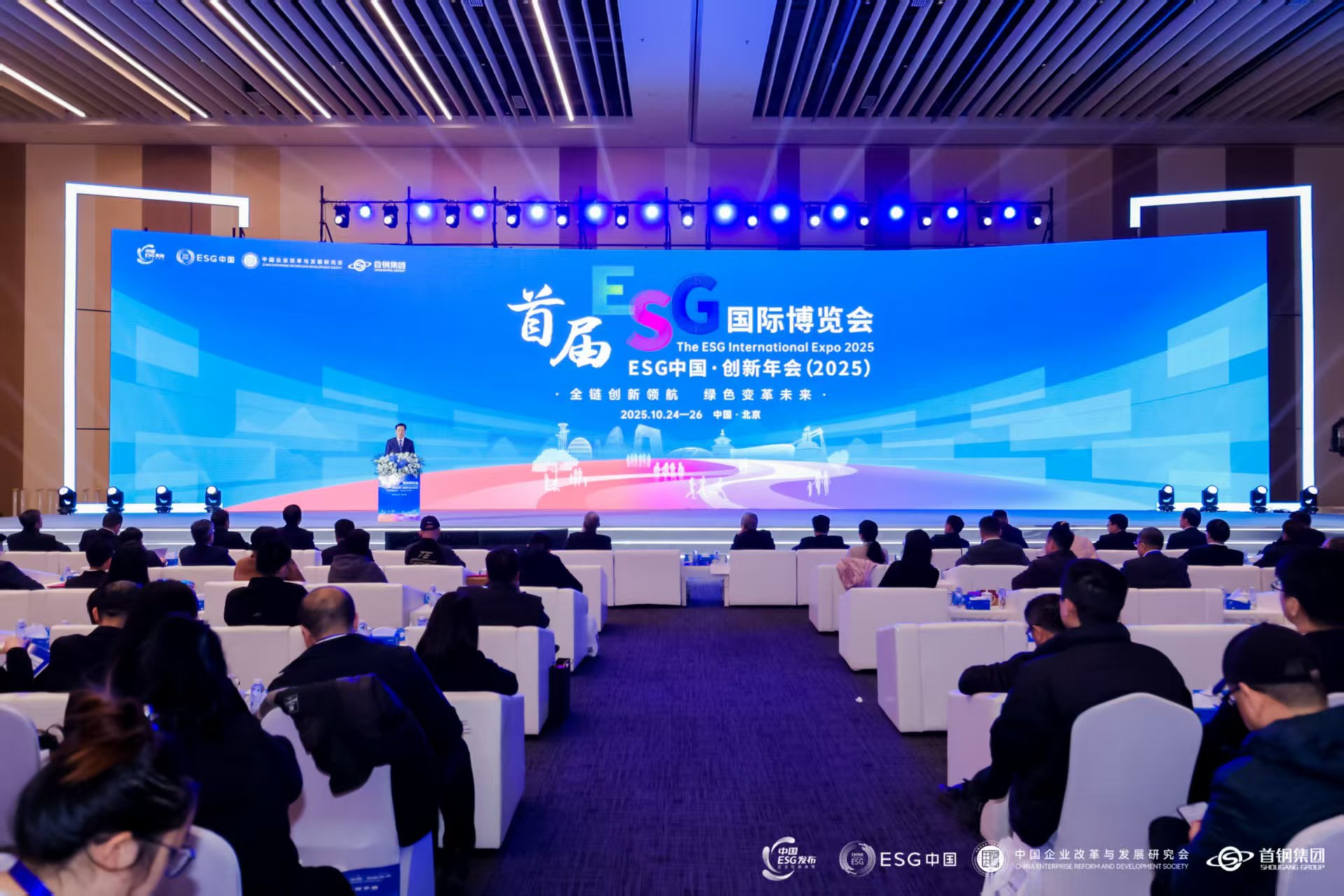
ESG中国·创新年会(2025)暨首届ESG国际博览会在京举办
Zhong Guo Neng Yuan Wang· 2025-10-29 08:26
Group 1 - The event adopts a "1+15+1" structure, consisting of one main forum, 15 parallel sessions, and one ESG international expo, focusing on core issues while covering niche areas in depth [1] - The event aims to stimulate ESG innovation actions among Chinese enterprises and promote the construction of a Chinese-style ESG system [2][3] - The energy transformation is highlighted as fundamental to green transformation, with China's new energy installed capacity growing from 820,000 kW to over 1.6 billion kW over the past 20 years, representing a significant increase in the share of new energy in total power generation [1][2] Group 2 - The event released several key reports, including the "2025 ESG Action Report" and "China ESG Model 2.0," which aim to create new pathways for collaborative development across the industry chain [2][4] - The "Micro Light Plan" was launched to promote ESG management in supply chains, transitioning from conceptual agreement to practical implementation [4] - The first ESG International Expo featured diverse participants, including state-owned enterprises, private enterprises, and international organizations, showcasing low-carbon technology research and ESG digital management practices [5] Group 3 - The event included 15 parallel sessions that combined open discussions with closed-door exchanges, covering various ESG-related topics [5] - The ESG International Expo was structured into four main areas: central enterprise ESG practice area, private enterprise innovation area, international technology area, and local achievement area, highlighting the diversity and internationalization of participants [5] - A total of 70 entities participated in the expo, including 15 central enterprises and 14 local state-owned enterprises, demonstrating a strong push for collaboration across the industry chain [5]
2025广东企业500强出炉:中国平安、华润、华为位居前三
21世纪经济报道· 2025-10-29 05:56
Core Viewpoint - Guangdong's top 500 enterprises are accelerating their transition towards innovation-driven and value-creating models, becoming key carriers for the development of new productive forces [1]. Group 1: Scale and Growth - The total revenue of the top 500 enterprises in Guangdong reached 19.36 trillion yuan, setting a historical record [2][3]. - From 2021 to 2025, the total revenue of these enterprises is projected to increase from 16.73 trillion yuan to 19.36 trillion yuan, with a growth rate of 3.36% in 2025, significantly rebounding from 0.37% in 2024 [3]. Group 2: Asset Expansion - The total assets of Guangdong's top 500 enterprises are expected to grow from 56.62 trillion yuan in 2021 to 68.33 trillion yuan in 2025, accumulating an increase of over 11 trillion yuan over five years [5]. - In 2025, the total R&D expenditure of these enterprises is projected to reach 584.96 billion yuan, indicating a shift towards investing more in fundamental research and key core technologies [5]. Group 3: Industry Structure and R&D Investment - Knowledge-intensive sectors are particularly active, with the scientific research and technical services industry having a R&D intensity of 19.00%, amounting to 191.65 billion yuan in R&D expenses [6]. - The manufacturing sector, as a cornerstone of the economy, has a total R&D expenditure of 279.51 billion yuan [6]. Group 4: Taxation and Policy Impact - Despite growth in assets and revenue, the total tax paid by enterprises has steadily decreased from 901.27 billion yuan in 2021 to 681.19 billion yuan in 2025, reflecting a cumulative reduction of over 220 billion yuan [8]. - This "two increases and one decrease" trend indicates that tax reduction policies have created favorable conditions for enterprises to increase R&D investment and expand production [8]. Group 5: Regional Coordination and Challenges - The report highlights a significant disparity in performance among regions, with the Pearl River Delta region accounting for 98.25% of the revenue and 98.91% of the net profit of the top 500 enterprises [10]. - The report suggests establishing a regional collaborative system that combines "Pearl River Delta innovation radiation + unique undertakings in eastern and western Guangdong" to enhance coordination and innovation spillover effects [12].